
Best Playtech Online Casinos in Australia: A Reader’s Guide to the Lawful Choice
Playtech is one of the most prolific software suppliers to online casinos, poker rooms and live-dealer studios in the world, and search interest in “Playtech online casinos Australia” reflects something real: Australians see Playtech-branded games advertised by offshore operators and want to know whether the games themselves, the brands that carry them, or both, are open to them. The honest answer is short. Online casino games, including Playtech titles, cannot be licensed for Australian players under the Interactive Gambling Act 2001. What offshore marketing presents as a “best Playtech casino” is, in regulatory terms, an unlawful offer to Australians. The lawful choice is to read what is licensed onshore, what the regulator has actually published, and where the marketing machinery points instead.
Current as of 23 November 2026; operator claims and licence statuses checked against the Australian Communications and Media Authority register.
Table of Contents
- What Playtech Is, and Why This Search Comes with a Caveat
- The Prohibition Behind the Marketing
- Responsible Play and Where Australians Get Help
- Deposits, Withdrawals, and What the Offshore Route Costs
- Bonuses, Free Spins, and the Wagering Underneath
- Mobile Play and Browser Apps
- The Games, the Studios, and What the Listings Actually Name
- Evaluating Offshore Playtech Brands
- Eleven Brands on the ACMA’s Formal Warning List
- Frequently Asked Questions
What Playtech Is, and Why This Search Comes with a Caveat
Playtech plc was founded in 1999, lists on the London Stock Exchange as a constituent of the FTSE 250, and runs its headquarters from Douglas on the Isle of Man. The company supplies software for online casinos, online poker, online bingo, sports betting and live-dealer games, which is a catalogue spanning the entire vertical rather than a single product line. Through acquisitions Playtech has folded in PokerStrategy.com in 2013 for $49.2 million from Etruvian Holdings Ltd, the Swedish studio Quickspin in May 2016 for €24 million plus a €26 million earn-out, rival operator Best Gaming Technology in July 2016 for €138 million, and a 70.6% stake in the Italian betting and gaming firm Snaitech in April 2018 for €291 million. The breadth of those deals explains why a single search for “Playtech” pulls in poker rooms, sports books and live-dealer lobbies alongside the more familiar slot reels.
The portfolio is broader than slots alone. Subsidiary brands inside the corporate umbrella include Virtue Fusion, the bingo platform, and iPoker, the poker network. Playtech BGT Sports serves the betting side. The studio has also produced licensed slot titles based on DC Comics films — Batman v Superman: Dawn of Justice, The Dark Knight Trilogy, Suicide Squad and Justice League — and the themed catalogue is one reason the games surface in offshore marketing aimed at Australians, who recognise the brands.
None of that corporate breadth changes the Australian legal position. The Interactive Gambling Act prohibits the supply of online casino games and online pokies to people physically in Australia, regardless of who made the software. Playtech’s status as a FTSE 250 constituent and a licensed supplier in dozens of other jurisdictions makes its offshore operators look respectable. It does not make their Australian-facing offer lawful.
The Australian-licensed supplier to mention alongside Playtech is Aristocrat Leisure, an Australian gambling-machine manufacturer with administrative and research headquarters in the Sydney suburb of North Ryde and offices in South Africa, Russia and the United States. Aristocrat was founded in 1953 by Leonard Ainsworth and listed on the Australian Securities Exchange in 1996 under the ticker ALL. The company reported 2025 revenue of A$6.30 billion, normalised net profit after tax and amortisation of A$1.55 billion, and 7,400 employees; it is described as the largest gambling-machine manufacturer in Australia and the second-largest slot-machine manufacturer worldwide, behind International Game Technology. Aristocrat develops electronic gambling machines, casino management systems, online real-money gambling technology, iLottery products and social casino games, with online arms Product Madness for social games and Aristocrat Interactive for regulated online real-money gambling. Aristocrat Interactive was formed in April 2024 from the Anaxi unit and the newly acquired NeoGames group, which includes Aspire Global, BtoBet and Pariplay. An attempted US$3.7 billion bid for Playtech in 2021 was rejected by Playtech shareholders. The two suppliers are sometimes mentioned together because both serve Australian club and casino floors, but they are not interchangeable, and only one of them is the subject of the offshore marketing that drives this search.
The Prohibition Behind the Marketing
The Interactive Gambling Act 2001, reinforced by the Interactive Gambling Amendment Act 2017, makes it an offence to provide online casino games, online pokies and in-play betting to a person in Australia. No state or territory licenses those products. The Act targets the provider, not the individual player — Australians are not prosecuted for opening an account at an offshore site — but the practical consequence for anyone playing through such a site is significant: there is no Australian consumer protection, no complaints body and no recourse if a withdrawal is refused. The site itself can be blocked by Australian internet service providers with a balance still sitting on it.

What the IGA does permit, and what the Northern Territory Racing and Wagering Commission (NTRWC) licenses in practice, is wagering on races and sport placed before the event, lotteries and keno. The NTRWC regulates 52 of Australia’s online bookmakers — including Sportsbet, Bet365 and Ladbrokes — from the Territory, primarily for tax reasons; the commission has no full-time staff and meets once a month in Darwin. That distinction matters because a licensed Australian bookmaker that takes a Sportsbet-style wager on the Melbourne Cup is not, on that fact alone, in a position to offer Aristocrat or Playtech slots to the same customer. Wagering and casino gaming sit on different sides of the line.
The Interactive Gambling Amendment (Gambling Reform) Bill 2026 passed Parliament on 19 August 2026. Its advertising and inducement measures commence on 1 January 2027, meaning the new rules are law with a future start date, not yet in force on a page read in 2026. Until those measures begin operation the enforcement picture is the one the ACMA has actually been using since 2017: investigate, issue formal warnings to operators, and direct ISPs to block illegal sites.
The enforcement record in numbers runs as follows. The ACMA asked Australian ISPs to block 12 more illegal gambling websites in the round reported on 26 June 2026: 7Signs, ChromaBet, Donbet, Duospin, Freshbet, Slots Gem, Jacks Club, Lucky Start, Pointsbetz.com, Spinrise, Vinyl Casino and Wildsino. The cumulative count of blocked illegal gambling and affiliate marketing sites stands at 1,751 since the first blocking request in November 2019, and more than 230 unlicensed gambling services have left the Australian market since enforcement was strengthened in 2017. A figure that large over a defined window gives the regulator’s pace a shape. From November 2019 to the cumulative count reported in June 2026 — a window of about six years and seven months — the working rate is roughly 22 sites blocked per month on a straight-line basis, which translates to a band of around 260 to 270 per year, assuming the regulator has held a continuous pace rather than stepped it up sharply in any one quarter. That is what “enforcement” looks like as a working rate: not one or two high-profile cases, but a steady accumulation that turns the offshore marketing into a moving target.
The other side of the prohibition is where the money goes. H2 Gambling Capital’s 2025 report estimates that Australians lose about A$3.9 billion a year to illegal gambling sites, and the share of gambling going through legal channels fell from 74% in 2021 to 64% over the same period. The market is moving in the wrong direction for the regulator’s purposes, which is part of why the blocking rate has continued rather than tailing off. The trend and the tempo both point to an enforcement regime that has kept pace with the marketing rather than got ahead of it.
Responsible Play and Where Australians Get Help
BetStop, the National Self-Exclusion Register, has been live since August 2023. It is the single Australian register that lets a person exclude themselves from every Australian-licensed online and phone wagering service at once. The limitation to know is that BetStop only binds operators that are themselves Australian-licensed — an offshore casino that markets Playtech games to Australians is not connected to the register and is not required to honour an exclusion placed through it. A self-exclusion placed through BetStop covers the wagering services the register does cover, and no more.
The National Gambling Helpline is 1800 858 858 — free, 24/7, with a chat function on the Gambling Help Online website. That service is open to anyone in Australia regardless of which products they have been using, and it is the front door for anyone whose own use, or a family member’s use, has started to feel out of control. State and territory problem-gambling services operate alongside it.
A point worth stating outright: the responsible-gambling infrastructure described above is built around Australian-licensed wagering. Offshore Playtech-branded casinos do not connect to BetStop, do not have an Australian complaints body, and are under no obligation to apply responsible-gambling limits. A player using such sites is operating entirely outside the protective layer the IGA’s prohibitions were paired with. The marketing pages for those sites may carry a “responsible gambling” footer, but the footer is not backed by an Australian enforcement mechanism; it is a self-imposed policy of an operator that is, by the ACMA’s record, already offering a prohibited product to Australians.
Deposits, Withdrawals, and What the Offshore Route Costs
For Australian-licensed wagering the payment rules are well defined. Credit cards, credit-related products and digital currency have been banned as a means of paying for licensed online wagering since 11 June 2024, with penalties up to $247,500 for operators that breach the rule. The legal deposit routes that remain are debit card, bank transfer, PayID/Osko and BPAY. A site asking an Australian customer for a credit card or a crypto deposit is, by that fact alone, operating outside the Australian rules — even when the same site presents itself as a “Playtech casino”.
At an offshore site that advertises Playtech titles to Australians the deposit and withdrawal picture is different in kind, not only in detail. Funds have to clear through a payment channel that is willing to handle Australian customers, which is itself an indicator that the operator is willing to operate around the credit-card and crypto bans. Withdrawal times are typically quoted in hours or days by the same operators, but the reality reported by players at the brands featured below is that a withdrawal request can be delayed, capped or refused, and the only available recourse is the operator’s own complaints process — which is not an Australian one. The site can also be blocked mid-process, leaving a balance in transit.
Settlement in plain banking terms is only part of the cost. The other part is recourse: an offshore operator has no obligation under Australian law to honour a complaint, and the customer is in the position of an unsecured creditor in whatever jurisdiction the operator is actually domiciled. Where that jurisdiction has its own licensing regime (Curaçao, for instance), the local regulator is the only avenue — and the response time on those routes is not designed around the Australian customer. The brand pages that publish a “fast withdrawal” promise in marketing copy are not promising a fast resolution if the withdrawal is refused.
A practical summary, then: licensed Australian wagering offers defined payment channels and an enforceable complaints process. Offshore Playtech casinos offer faster advertised settlement and no enforceable process. The trade is the one the rest of this page keeps returning to, because every other cost on the page — the wagering multiple, the max-cashout cap, the responsible-gambling footer — sits on top of this one.
Bonuses, Free Spins, and the Wagering Underneath
A welcome package at an offshore Playtech casino typically combines a deposit match and a tranche of free spins. The marketing phrases — “100% up to A$500 plus 200 free spins” is the shape — read as straightforward value. They are not. The price of converting a bonus balance into a withdrawable balance is the wagering requirement, almost always expressed as a multiple of the bonus amount, the deposit amount, or both. A 40x bonus multiple, attached to a deposit match of A$500, requires A$20,000 of wagering before the bonus portion is withdrawable. Free-spin winnings usually carry their own multiple, separate from the deposit bonus and frequently higher than it.
The arithmetic of a bonus is the part the marketing copy rarely runs through with the reader. Expected value to the player is not the headline figure; it is the headline figure net of the wagering requirement, applied to a game with a published return-to-player figure. A 96% RTP slot with a 40x wagering requirement and a small max-cashout cap returns less, on average, than a 94% RTP slot with a 15x requirement and no cap. The reader cannot tell which is which from the headline. The same “100% up to A$500” line on two different brands can carry two very different prices once the small print is read, and small print at an offshore operator is not enforceable under Australian law in the way a small print at a domestic one is.
Other conditions reshape the offer in ways that compound the wagering weight. Game-weighting rules exclude or down-weight particular games from the requirement; the games the reader most wants to play are sometimes the ones that count least. Time limits force the wagering into a window of days rather than weeks. Maximum-bet rules cap the size of a single spin while a bonus is active — a stake above the cap, often without warning, voids the bonus and any associated winnings. Maximum-cashout caps put a ceiling on what can be withdrawn from bonus-derived play, even after the requirement has been met. None of these conditions are unique to Playtech-branded casinos or to offshore operators marketing to Australians; they are the standard playbook across the offshore segment. What is unique to the Australian-facing version of the offer is that none of the terms are enforceable under Australian law. A reader who has a dispute with an offshore operator over a max-cashout clause is dealing with a counterparty that is, by definition, already offering a prohibited product to Australians.
The honest read of a “free spins” offer is that the spins are free, and the conversion of any winnings into a withdrawable balance is paid for. The marketing layer calls it “free” because that is the word that gets the click. The arithmetic layer calls it a 40x bonus multiple because that is what the small print says. Both descriptions are technically accurate, and only one of them is the one a reader should plan around.
Mobile Play and Browser Apps
Playtech’s catalogue is built for the modern smartphone. The HTML5 build of most modern titles means they open in a mobile browser without a separate download, and the studio’s live-dealer product is among the more demanding on bandwidth but still runs on a current phone with a stable connection. At an Australian-licensed operator there is no Playtech-branded casino product on offer in any case — the only licensed Australian online gambling product is wagering on races and sport, plus lotteries and keno, and these are not Playtech products. At an offshore site that markets Playtech titles to Australians the experience is a browser app or a downloadable app distributed by the operator, not from the Apple App Store or Google Play, because those stores enforce their own geolocation rules and would remove an app offering prohibited services to Australians.
The differences that matter on mobile are practical, and they line up with the operator-specific picture later in this page. A mobile-first casino runs faster and presents more games in portrait than a desktop-first one that has been retrofitted for a smaller screen. Live-dealer tables on mobile chew data, and a reader on a metered connection should know that going in. Game-loading times on a 4G connection in a regional area can run into the seconds for a heavy live-dealer table; the catalogue page that lists “all games available on mobile” tells the reader the catalogue is reachable, not that every game runs smoothly on every phone.
The Games, the Studios, and What the Listings Actually Name
This shelf is where the reader is most likely to be looking for what they came for: the actual games. Playtech’s catalogue includes slots (both the studio’s own line and the licensed DC Comics titles), table games, video poker, live-dealer tables, sports betting and bingo. Some of these — the licensed DC slots in particular — recur in marketing aimed at Australian customers because the brand recognition travels. The studios under the Playtech umbrella, including Quickspin (acquired May 2016) and the bingo and poker networks, contribute to that breadth.
The other software suppliers worth naming here are the ones whose games appear on the same offshore casinos that carry Playtech. The brand pages for some of the operators featured below note which providers they list, and the listings for National Casino and Casino Intense in particular name multiple studios alongside Playtech’s name on partner directories.
Aristocrat, the Australian-founded slot-maker with A$6.30 billion of 2025 revenue and 7,400 employees, has its own separate online arm: Aristocrat Interactive, formed in April 2024 from Anaxi and the NeoGames group, which includes Aspire Global, BtoBet and Pariplay. Aristocrat-branded games show up on land-based club and casino floors in Australia, not in the IGA-prohibited offshore online casinos targeting Australian customers. The two catalogues — Playtech offshore and Aristocrat onshore — sit on different sides of the regulatory line.
1spin4win is a slot provider founded in 2021 by a group of professionals with 15 years of iGaming experience; its games are built in HTML5 for low-bandwidth connections and it is headquartered at Scharlooweg 39, Willemstad, Curaçao, with a Curaçao gaming licence. The portfolio spans more than 190 online slots, with more than 1,000 partnerships with online casinos and aggregators reported, and a total bet sum that grew 46% in the first half of 2025 against the first half of 2024. Betsoft, founded in 2006, describes more than 200 RNG games across slots, table games, video poker and specialty titles, with a published catalogue page that names Good Girl Bad Girl 2 at 96.22% RTP, “Very High” volatility and a 15.59% hit rate across 5 reels and 20 paylines; Betsoft lists RNG certification from Quinel and Gaming Labs International (GLI) and partnerships with more than 500 operators across regulated markets in Europe, Scandinavia, Latin America and Africa. Wazdan’s catalogue, named on the Level Up Casino brand page, is part of the same ecosystem. None of these studios convert an offshore casino into a lawful Australian offer.
For the reader evaluating individual titles: a published RTP is the return-to-player percentage over a very large number of spins and says nothing about the next session. Volatility classes (“Very High” in the Betsoft example) describe how the payouts are distributed — fewer, larger wins versus more frequent, smaller ones — not how much the game returns. Hit rate, where it is published, is the share of spins that produce any return at all, which is closer to the player’s experience of “wins” but still says nothing about size. Those three numbers together do not give a reader a session forecast; they give a reader a long-run shape, and the difference is the part the marketing copy elides.
Evaluating Offshore Playtech Brands
A shortlist of “best Playtech online casinos Australia” implies that a comparison can be made and a ranking produced. It cannot, in any honest sense. The brands a reader is searching for are not licensed to offer Playtech products to Australians in the first place, and the regulator has issued formal warnings over a long list of them for doing exactly that. The honest comparison is not “which of these is best” but “what kind of offer is each one running, and what has the regulator said about it”.
What a comparison can meaningfully sort on is the following. The ACMA’s own record. The regulator publishes formal warnings by operator and brand, and a brand with one warning is in a different position from a brand whose parent company has been warned several times. A brand that has changed hands after a warning is in yet a different position, because the operator named on the warning is no longer the one running the site. The payment channels the brand actually offers Australian customers. A site that asks for a credit card or a crypto deposit is, on that fact alone, on the wrong side of the 11 June 2024 rules for any Australian-licensed wagering — and that is a useful marker even for an offshore brand, because it tells the reader what kind of operation the brand is willing to run. The subject-key support, where the studios themselves list the brand as a partner. A Playtech-branded game at a brand is one kind of offer; a brand that lists Playtech in its own marketing is another; a brand that does not list Playtech at all and only carries other studios is a third, and a reader who came for Playtech specifically has not found what they were looking for there.
The table below lays all three of those out side by side, with the ACMA action, the operator the regulator named, and the subject-key support for each of the eleven brands. The point to take into the operator write-ups is that none of these brands is a recommendation. They are listed because the ACMA has formally warned them, and the reader who came looking for “best Playtech casinos Australia” should leave knowing what the regulator’s record on each one actually says.
Eleven Brands on the ACMA’s Formal Warning List
| Brand | ACMA action and date | Operator named by the ACMA | Subject support |
|---|---|---|---|
| RocketPlay | Formal warning, March 2026 | Pulsup Ltd | — |
| Level Up Casino | Formal warning, May 2022 | Dama N.V. | Listings name other studios; Playtech not listed |
| Woo Casino | Formal warning, March 2025 | Dama N.V. | — |
| Spirit Casino | Formal warning, May 2025 | Dama N.V. | — |
| National Casino | Formal warning, July 2025 | Consolutetish S.R.L. | Listings on partner pages name Betsoft and Pragmatic Play among others; Playtech not listed |
| Bizzo Casino | Formal warning, July 2025 (earlier 2022) | Consolutetish S.R.L.; earlier TechSolutions | — |
| Ignition Casino | Formal warning, July 2025 | Bamboo Media | — |
| Instant Casino | Formal warning, February 2025 | EOD Code SRL | — |
| Jackbit | Formal warning, April 2026 | Ryker B.V. | — |
| Casino Intense | Formal warning, April 2025 | Sterplay Holding Ltd | Listings on partner pages name 1spin4win and other studios; Playtech not listed |
| Sky Crown | Formal warning, September 2022 | Hollycorn N.V. | — |
The write-ups below work through the same list in the order the regulator published its warnings, with a verdict on what each record actually establishes for a reader trying to read the marketing.
RocketPlay — A Recidivism Pattern in Two Operator Names
RocketPlay sits on the ACMA’s record twice under two different parent operators: Pulsup Ltd in March 2026, and Dama N.V. in May 2022. The brand survived the operator change and continued marketing to Australians across both periods, which is the recidivism pattern the regulator’s repeated warnings are designed to surface. A reader who took the Rocketplay.com.au domain at face value in 2022 would not have known the parent had been warned before; the March 2026 warning is the second entry on the regulator’s record for essentially the same offer. The verdict here is that the brand’s history is the offer’s history, and a reader comparing options should weigh two formal warnings from two different operators as a single piece of evidence about the kind of operation that runs the site.
Level Up Casino — A Brand That Doesn’t Advertise Playtech
Level Up Casino is one of the six brands the ACMA warned Dama N.V. about in May 2022 — alongside Bambet, Dazard, Rocketplay, Wild Tornado and Cobra Casinos. What is interesting about Level Up in the context of a Playtech search is that the brand’s own listings and the studio partner pages name Wazdan and other studios rather than Playtech specifically. The reader who came looking for Playtech-branded games has landed on a brand that does not advertise itself as a Playtech casino, but which is on the regulator’s record for offering prohibited products to Australians regardless of which studios the catalogue actually carries. The verdict here is that the ACMA action covers the offer to Australians, not the studio mix. A Playtech-curious reader has not found what they were looking for here at all, and the record against Dama N.V. remains the site’s primary association.
Woo Casino — Paytable Pitch Under a Dama N.V. Warning
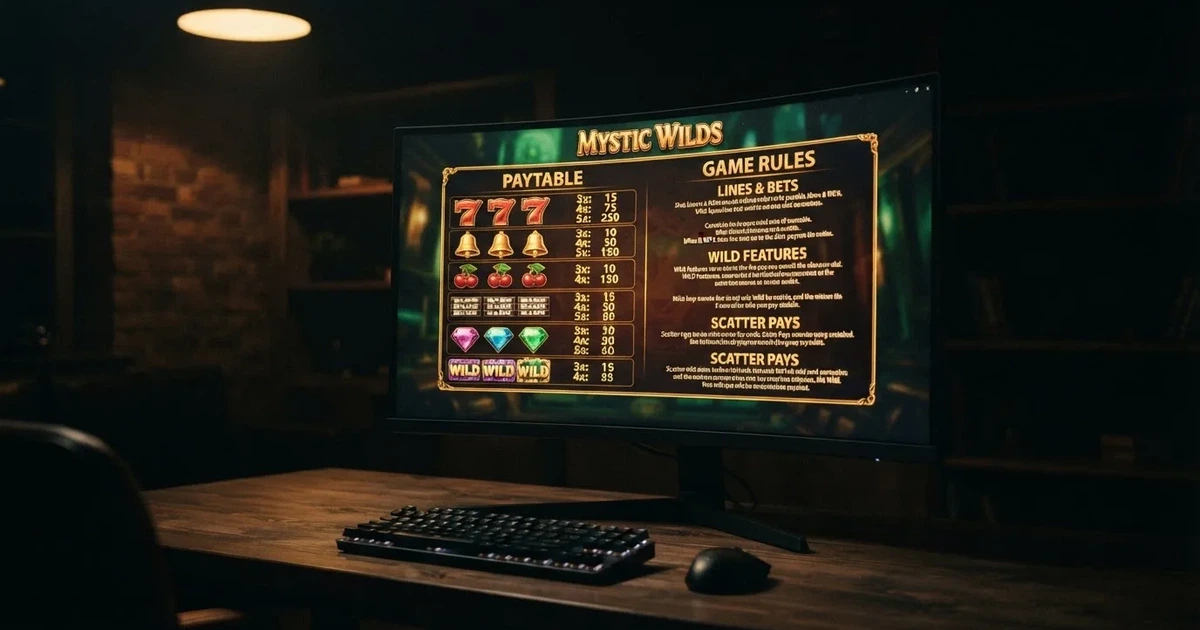
Woo Casino is on the regulator’s record with a formal warning issued in March 2025 to Dama N.V. as operator. The brand sits in the same Dama N.V. cluster as Spirit Casino further down this list, with two months between the ACMA actions. The paytable copy at an offshore brand is the marketing layer that promises return-to-player percentages and volatility classes — the visible surface that tells a reader which slots are “high” or “low” variance. What the regulator has actually published about the brand is the ACMA formal warning, which sits one click deeper than the paytable page and tells a different story. The verdict on Woo is that the paytable pitch is what the brand is selling; the ACMA warning is what the brand is on the record for.
Spirit Casino — The Second Dama N.V. Warning Within Weeks
Spirit Casino is listed by the ACMA with a formal warning from May 2025, also directed at Dama N.V. The timing is the point. Spirit is the May 2025 entry in the Dama N.V. warning sequence, with Woo Casino having received its warning only two months earlier in March 2025. A second warning to the same operator within weeks is the regulator’s way of saying the first one did not produce the result it was meant to. The verdict on Spirit is that the brand’s identity matters less than its position in the sequence: a reader looking at the Dama N.V. cluster as a whole is looking at an operator the regulator has now addressed more than once over an extended period.
National Casino — A Multi-Studio Lineup with a Consolutetish Operator
National Casino received a formal warning from the ACMA in July 2025, addressed to Consolutetish S.R.L. as operator. Unlike several of the brands in this list, National Casino actually names other studios on its partner pages and brand listings — Betsoft and Pragmatic Play are among those named. The subject-key support for Playtech specifically is not there. The ACMA warning was issued to the operator at the corporate level, and the same corporate warning covered Bizzo Casino as well. The verdict on National Casino is that the brand has a multi-studio lineup, but the regulator’s record is against the corporate operator, not against the studio mix — and a reader looking for Playtech specifically has not found that match on the brand page.
Bizzo Casino — Three Formal Warnings Under Two Operators
Bizzo Casino is the most-warned brand in this set. The 2022 warning was addressed to TechSolutions (CY) Group Limited and TechSolutions Group N.V.; the 2025 warning was addressed to Consolutetish S.R.L. Two operators, two corporate names, one brand. The brand has been on the regulator’s record under different ownership and continued to be marketed to Australians through the transition. The verdict on Bizzo is that the warning history outruns the brand identity — what the regulator’s record establishes is not “Bizzo as it is today” but “a brand name that has been used to reach Australian customers under more than one corporate umbrella”, and that distinction matters when a reader is weighing what the marketing actually represents.
Ignition Casino — The Bamboo Media Entry
Ignition Casino received a formal warning from the ACMA in July 2025, addressed to Bamboo Media as operator. The brand surfaces to Australian customers through offshore marketing rather than through any Australian-facing service, and the ACMA’s warning is the regulator’s record that the offer reached Australians despite that. Ignition’s name has appeared in different guises in offshore markets for some years, and the regulator’s record does not turn on which version of the brand reached which customer — it turns on the Australian-facing offer. The verdict on Ignition is that the ACMA action is the canonical reference for the brand’s Australian-facing activity. How the brand presents itself elsewhere is a separate matter, and does not alter the regulator’s stance.
Instant Casino — The Fundamentals of an EOD Code SRL Warning
Instant Casino received a formal warning from the ACMA in February 2025, addressed to EOD Code SRL as operator. The February 2025 warning is one of the foundational entries in the ACMA’s 2026 enforcement log, and it sits in the sequence ahead of the larger 26 June 2026 blocking round. The fundamentals of an offshore offer are the same regardless of brand: an Australian-facing product the IGA prohibits, no Australian recourse, and a regulator that names the operator in a public warning. The verdict on Instant Casino is that the formal warning is the snapshot a reader should treat as the brand’s Australian-facing record, and the EOD Code SRL operator name is the corporate hook for any further regulator action.

Jackbit — A Prohibition Snapshot Under Ryker B.V.
Jackbit is the most recent ACMA action in this set. The April 2026 Ryker B.V. warning covers both Jackbit and CasinOK, and it is a prohibition case in real time: the brand was actively marketing to Australian customers at the point the regulator published its formal action. The same Ryker B.V. operator also runs CasinOK, which appears in the ACMA’s warning record under the same corporate umbrella as Jackbit rather than as a separate entry. The verdict on Jackbit is that the warning is fresh enough to be a live enforcement signal, not a historical one, and a reader comparing the eleven brands should weigh the April 2026 date accordingly.
Casino Intense — A Sterplay Holding Ltd Warning
Casino Intense received a formal warning from the ACMA in April 2025, addressed to Sterplay Holding Ltd as operator. The brand’s subject-key support runs through 1spin4win and other studios listed on partner pages rather than through Playtech specifically — the same kind of mismatch that appears at Level Up and National Casino. The April 2025 Sterplay Holding Ltd warning covers the brand’s Australian-facing offer, regardless of which studios the catalogue ultimately includes. The verdict on Casino Intense is that the ACMA action is the regulator’s record of the offer. The studio mix on the brand page is a separate question that does not undo the warning.
Sky Crown — The Hollycorn N.V. Entry
Sky Crown received a formal warning from the ACMA in September 2022, addressed to Hollycorn N.V. as operator. The same operator also runs Blue Leo, which sits on the same formal warning. A warning from 2022 is not a recent one, but it is a warning the regulator has not retracted, and the brand remains in Hollycorn’s portfolio. The verdict on Sky Crown is that the older date matters less than the unretracted status — a reader comparing across the eleven brands should treat a still-standing formal warning as live, even if the warning itself is several years old, because the regulator’s record does not expire.
Frequently Asked Questions
Can Australians play Playtech casino games online?
No — not through any site licensed in Australia. The Interactive Gambling Act 2001 prohibits online casino games, including Playtech slots, table games and live-dealer titles, from being offered to Australians. The Act prohibits the offer, not the software itself. Eleven offshore brands have been formally warned by the ACMA for that exact offer, and that record is what the operator section lays out above.
What does Playtech actually make?
Playtech plc supplies software for online casinos, online poker, online bingo, sports betting and live-dealer games. The slot catalogue includes both the studio’s own titles and licensed-branded games based on DC Comics films — Batman v Superman: Dawn of Justice, The Dark Knight Trilogy, Suicide Squad and Justice League. Subsidiary brands cover Virtue Fusion (bingo), iPoker (poker network) and Playtech BGT Sports (sports betting supplier). Quickspin, acquired in May 2016, sits under the same corporate umbrella and contributes to the catalogue breadth.
Why do offshore casinos keep marketing Playtech games to Australians?
Because the marketing works, at least in the short term. Australians search for Playtech-branded games, and offshore operators monetise that search interest by serving Playtech-titled content through offshore-licensed casinos. The cost to the operator is a formal warning from the ACMA; the cost to the customer is the absence of Australian consumer protection, no enforceable complaints body, and the risk of a withdrawal being capped or refused with no recourse. The 26 June 2026 blocking round is the regulator’s answer to that marketing, and the 1,751 cumulative blocks since November 2019 are the cumulative scale.
How does anyone check a Playtech game is fair?
A published return-to-player percentage is the figure most operators quote; it describes the long-run return across a very large number of spins and says nothing about any single session. Studios with named testing houses — Betsoft, for instance, lists RNG certification from Quinel and Gaming Labs International (GLI) — give the reader an external reference. The deeper question is jurisdiction: a game certified for the UK Gambling Commission’s market, or for Italy’s ADM, has cleared a regulator’s testing process. An offshore brand offering the same title to Australians has cleared none of those for that specific offer.
What should an Australian do if they see Playtech games advertised by an offshore site?
The practical first step is to recognise that the offer is a prohibited one under the Interactive Gambling Act 2001. The reader can report the site to the ACMA through the regulator’s website, which is the channel the regulator uses to identify which sites to add to the next blocking round. If the reader has already deposited and is being refused a withdrawal, the only available recourse is the operator’s own complaints process, which is not an Australian one, and the brand can also be blocked mid-process. Gambling Help Online (1800 858 858, free, 24/7) is the front door for anyone whose use has started to feel out of control.