Live Casino in Australia in 2026: The Lawful Choices and the Prohibited Ones
 Available in AU
Data current as of 17 October 2026, cross-checked against the ACMA’s published register of formal warnings and the 26 June 2026 blocking round.
The phrase “best live casino online australia” reaches a market the law has already made up its mind about. Under the Interactive Gambling Act 2001, offering an interactive casino-style service to a person physically in Australia is a prohibited interactive gambling service, and the prohibition covers online blackjack, online roulette and the live-dealer variant of both. No state or territory in Australia licences the product. What a reader typing that phrase actually finds is an offshore site whose licence was issued somewhere else, a marketing pitch designed to keep the geography invisible, and an Australian regulator that has spent the last several years publishing formal warnings, asking internet providers to block the relevant domains and adding to a tally that, by the 26 June 2026 round, sat at 1,751 blocked sites. The angle this page takes is choice: what paths are open to an Australian who wants to play live casino games, what each one costs, and who each one suits.
Table of Contents
- The prohibition that shapes every other choice
- Help that is already in place for Australians
- Bonuses and free spins — the marketing word and the actual cost
- Live casino on a phone screen
- The games themselves: baccarat, blackjack, and the studios behind them
- The paytable comparison: what the brands the ACMA has acted against have in common
- The fundamentals for anyone weighing a path
- The eleven brands and the ACMA record behind them
- Frequently asked questions
The prohibition that shapes every other choice
The Interactive Gambling Act 2001 (the IGA), strengthened by the Interactive Gambling Amendment Act 2017, makes it an offence for a person or a company to provide an online casino game to a customer physically in Australia. Online casino games, online pokies and in-play betting are the three categories the Act names as prohibited interactive gambling services. What is licensed in Australia is wagering on sports and races placed before the event, lotteries and keno. Sportsbet, Bet365 and Ladbrokes — three of the country’s most recognisable wagering brands — are technically licensed by the Northern Territory Racing and Wagering Commission for tax reasons; the commission has no full-time staff and meets once a month in Darwin.
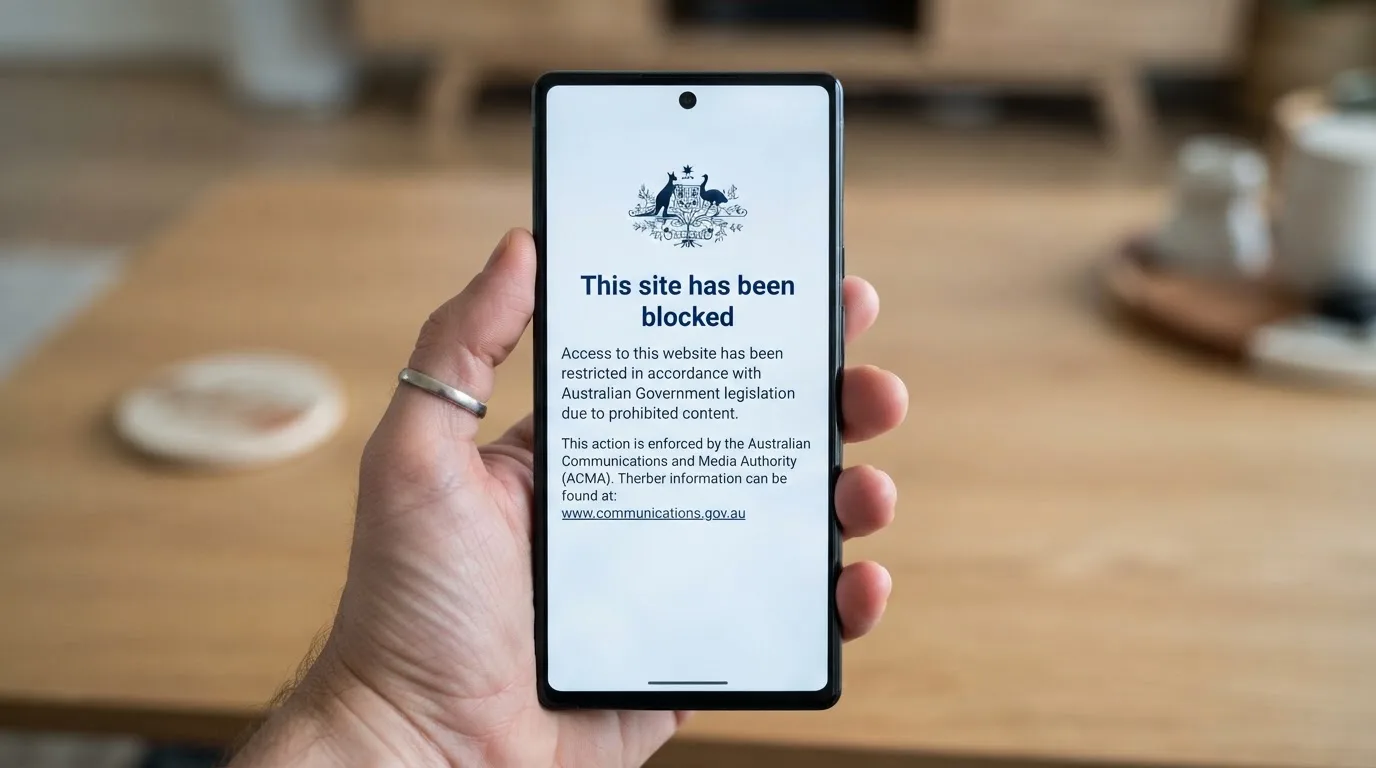
The enforcement arm is the Australian Communications and Media Authority, the ACMA. It investigates, issues formal warnings, and from November 2019 has been able to ask Australian internet service providers to block illegal gambling and affiliate marketing sites. The individual player is not the target — the IGA aims at the provider — but the practical effect on the player is that an offshore site can be added to a block list with money still in the account, that no Australian consumer protection regime applies if a withdrawal is refused, and that there is no local complaints body to escalate to. Estimated annual losses to illegal sites, by H2 Gambling Capital’s 2025 figure, sit at roughly A$3.9 billion a year, with the share of gambling going through legal Australian channels having fallen from 74 per cent in 2021 to 64 per cent by 2025. The shortfall is the offshore market the search term describes.
The blocking-rate picture in numbers
By the round reported on 26 June 2026, the ACMA’s running total of blocked sites since the first blocking request in November 2019 had reached 1,751 illegal gambling and affiliate marketing websites. More than 230 unlicensed gambling services had also left the Australian market since enforcement was strengthened in 2017. Put those two numbers together and the rate is sobering. From November 2019 to June 2026 is roughly six years and seven months — seventy-nine months in all. Dividing 1,751 by 79 gives an average of between 22 and 23 sites blocked per month, or in round terms about 260 per year. The 26 June 2026 round alone asked providers to block 12 more domains: 7Signs, ChromaBet, Donbet, Duospin, Freshbet, Slots Gem, Jacks Club, Lucky Start, Pointsbetz, Spinrise, Vinyl Casino and Wildsino. Each round sits on top of an existing one. The block list is not a one-off cleanup; it is a continuous process that the regulator carries out as new operators surface and existing ones rebrand.
Formal warnings as a parallel track
Blocking is one tool. Formal warnings are the other, and they usually precede the blocking rounds by months or years. A formal warning gives the operator named in it the chance to stop offering prohibited services to Australian customers. If the warning is ignored, a referral to the ACMA’s enforcement team usually follows. The list of brands the ACMA has named in formal warnings since 2022 reads like a roll-call of the offshore casino market: Dama N.V. in May 2022 over six brands at once, Hollycorn N.V. over Sky Crown and Blue Leo in 2022, EOD Code SRL over Instant Casino in February 2025, Sterplay Holding Ltd over Casino Intense in April 2025, Bamboo Media over Ignition Casino in July 2025, Consolutetish S.R.L. over National Casino and Bizzo Casino in July 2025, Dama N.V. again over Woo Casino in March 2025 and Spirit Casino in May 2025, Ryker B.V. over Jackbit and CasinOK in April 2026, and Pulsup Ltd over RocketPlay in March 2026. The pattern is one offshore operator running several brands, several warnings across them, and the regulator naming each as it surfaces.
What the most recent reform changed
On 19 August 2026 the Interactive Gambling Amendment (Gambling Reform) Bill 2026 passed Parliament. Its advertising and inducement measures — the parts aimed at the marketing of prohibited services to Australian customers — commence on 1 January 2027. On a page read in the second half of the year the Bill is law with a start date, not yet in force. By the time the marketing language that surrounds “live casino welcome bonus” hits the new rules, the framing the marketing has been using will itself be in scope. That is the most consequential shift in this market for the period covered here, and it is also a date operators will be reading closely.
Help that is already in place for Australians
The picture would be bleak if it stopped at the prohibition, and it does not. The Australian system has built up a layer of player-protection tooling that is specifically designed for the people who feel tempted, the people who have already lost more than they meant to, and the people who want a way to stop themselves from being able to play.
The headline tool is BetStop, the National Self-Exclusion Register, which went live in August 2023. A person who registers with BetStop agrees to be excluded from every Australian-licensed online and phone wagering service for a chosen period of between three months and a lifetime. The exclusion is enforced at the operator’s end: the operator must not let a registered user open an account, must close existing accounts and must not send marketing. The catch, and it is a real one, is that BetStop binds only Australian-licensed services. An offshore casino is not connected to BetStop. A self-excluded punter who lands on an unlicensed site is, in practice, protected only by their own willpower, their own deposit limit at that site, or their own decision to walk away.
The other tools sit alongside it. The National Gambling Helpline — 1800 858 858 — is free, runs around the clock, and connects to Gambling Help Online, which carries live chat. State and territory counselling services take referrals from the helpline, and face-to-face support is available in each capital city. The help is real and it is set up for the people who use it.
A reader thinking about offshore play owes themselves one calculation: if the helpline would matter to them in a worst week, the offshore site is not a working option, because that site will not connect them to it. The Australian-licensed environment — sports and race wagering with a state-level regulator — does. That asymmetry is the second of the two choices laid out here, and it is the one the marketing around offshore sites is least willing to discuss.
Bonuses and free spins — the marketing word and the actual cost
“Live casino welcome bonus.” “Live casino no deposit bonus.” “Live casino free spins.” Three phrases, the same shape: the word “free” or “welcome” paired with a dollar figure, an image of a stack of chips, and a small-print terms link that the marketing assumes the reader will not open.
The mechanism underneath is consistent across the offshore market. A welcome bonus is a deposit match — the casino offers to add 100 per cent of the first deposit, up to a stated cap. A no-deposit bonus is a smaller amount credited for opening an account, with no deposit required. Free spins are nominally a fixed number of slot rounds paid for by the casino. In every case, the offer is attached to a turnover requirement — also called a wagering requirement — that the player must meet before any winnings from the bonus balance can be withdrawn. A typical turnover figure is in the range of 30 to 50 times the bonus amount, sometimes higher. A “100 per cent up to A$500” bonus with a 40-times turnover on the bonus alone asks the player to wager A$20,000 before the winnings from the bonus money become withdrawable cash.
The cost of the offer is the turnover, not the headline figure. A reader looking at a “A$1,000 welcome bonus” and thinking they have just been given A$1,000 has misread the page in front of them. They have been given the right to play through A$40,000 of their own wagering before any winnings convert to withdrawable cash. The bonus is real; the marketing word for it is not.
A separate consideration is the game contribution table. Most live casino games — baccarat, blackjack, live roulette — contribute only a fraction of each wager toward the turnover requirement, often 10 per cent or 0 per cent. A player who tries to clear the bonus on live blackjack may find that only one cent of every dollar they wager counts toward the requirement, which extends the playthrough by an order of magnitude. Free spins are usually restricted to a named slot or set of slots. The bonus is sized to be cleared, in practice, on slots — not on the live-dealer tables the marketing image shows. That is a quiet contradiction worth naming.
Three other terms recur in the small print. A maximum-bet clause caps the size of a single wager during the playthrough, often at A$5 or A$10, and breaking it voids the bonus and any winnings from it. A maximum-cashout clause caps the amount a player can withdraw from a no-deposit bonus or a free-spin win, often at a few hundred dollars. A country-exclusion clause in the terms may name Australia directly and exclude Australian residents from the bonus entirely, even if the same site’s homepage still loads in a Sydney browser. Each of these is the kind of clause a reader finds only by scrolling to the bottom of the bonus page and reading every line.
The right way to read an offer like this is the same way the Australian-licensed wagering market already forces operators to read theirs: as a contract. The marketing is the cover, the contract is the terms, and the cost sits between them.
A final point about payment methods the marketing rarely highlights: credit cards, credit-related products and digital currency have been banned as payment for licensed online wagering in Australia since 11 June 2024, with penalties up to A$247,500 for operators who accept them. Legal deposit routes for licensed wagering are debit card, bank transfer, PayID, Osko and BPAY. A site that is happy to take an Australian customer’s credit card or crypto deposit is operating outside the Australian rules on payment as well as on the product itself. That detail tends to be quieter than the headline bonus, and it is one of the more honest signals a reader can take from the site’s terms.
Live casino on a phone screen
The “live casino app” search carries with it the assumption that there is one to install. For offshore sites aimed at Australian players there usually is not — not in the official app stores. Apple’s App Store and Google Play enforce their own geographic restrictions on real-money gambling apps, and the major app stores do not list offshore casinos whose licence is not from a recognised Australian or equivalent regulator. What the marketing calls an “app” is, in practice, an Android APK the user is invited to download from the casino’s own site, or a mobile-optimised website reached through the phone’s browser.
The browser route is the safer of the two. A mobile browser loads the live-dealer lobby as an HTML5 page, the studio stream runs over standard web protocols, and the user does not have to grant the casino’s installer permission to access the phone’s storage, contacts or camera. The browser route also makes it easier to leave: closing the tab takes the player out of the session, and a phone restart clears the cache. The APK route sits on the phone, requests permissions the browser does not, and continues to push notifications that look like marketing messages and are sometimes indistinguishable from them.
What does the live experience actually look like on a phone? The dealer is streamed from a studio in low resolution at first, then jumps to a higher one as the connection stabilises. Bet placement is a touch interface — chips drag onto the betting layout, the timer counts down between hands, and the player’s decisions are committed by tapping once. Battery drain is non-trivial; an hour of live play on a phone can take 15 to 25 per cent of battery, and a steady Wi-Fi connection is the difference between a watchable stream and a stuttering one. The phone is not a smaller desktop; it is a different product, with different constraints, and the experience is good when the player treats it that way.
For Australian readers the mobile question has a sharper edge. A player who would not sit down at a desktop and visit an offshore casino is, in many cases, going to use the phone they already have in their pocket. The portability that makes the phone convenient is the same portability that makes it harder to walk away from. A session that runs on a phone can run in a queue, on a train, at the kitchen table — anywhere the phone is. That is a feature from the operator’s point of view. From the player’s, it is the constraint worth thinking about before the first hand is dealt.
The games themselves: baccarat, blackjack, and the studios behind them
The core of “live casino” is the streaming of a real dealer running a real game from a studio or a land-based casino, with optical camera recognition converting the dealer’s physical actions — the card turned over, the roulette result, the dice thrown — into data that the player’s screen reads. The mechanic is straightforward; what is interesting is how few companies do it well enough to dominate the supply.
The dominant supplier is Evolution, founded in 2006 in Sweden by Jens von Bahr and Fredrik Österberg. By 2013 the company had reached 100 live tables at its Riga studios, at that point the largest single-site casino operation in Europe, and opened a Malta studio in 2014. In December 2020 Evolution completed its acquisition of NetEnt, and the wider Evolution Group now also owns Red Tiger, Big Time Gaming, Nolimit City and Ezugi — a roll-up that means most “live casino” lobbies in offshore casinos are running on Evolution infrastructure under one of those brand names. Evolution states that more than 700 gambling platforms worldwide offer its live casino games, streamed 24/7 from its studios. For a reader searching the term “live casino,” Evolution is the company whose name keeps appearing because its studios are the ones whose tables the marketing is selling.
The games that get streamed are predominantly baccarat, blackjack and roulette. The three together account for the bulk of the live-dealer floor, with baccarat especially dominant in Asian-facing studios and game-show formats — Crazy Time, Dream Catcher, Monopoly Live — building the rest of the catalogue.
Baccarat
The variant most played today is punto banco, developed in Havana during the 1940s; the casino banks the game at all times and both hands are played out by fixed drawing rules. Cards two through nine count at face value, tens and face cards count as zero, aces count as one, and hand totals are taken modulo 10. The shoe holds six or eight decks. The bettor has three choices: back the Banker, back the Player, or back the Tie. The Banker bet carries a house edge of 1.06 per cent, the Player bet 1.24 per cent, and the Tie bet 14.36 per cent — a difference so wide that the Tie exists almost entirely for the marketing of large payouts, not for the rational player.
The deeper history is contested. Some accounts place baccarat in 19th-century France, others say it was introduced from Italy at the end of the 15th century during the reign of King Charles VIII, with the writer David Parlett considering the game Macao its immediate precursor. Chemin de fer — French for “railway” — is a two-player variant that emerged from baccarat banque in the late 19th century and was named for being quicker to play than the original game. None of this matters to the player at the table; it matters to the player trying to read the marketing pitch, which often dresses the game up in the older French or Italian imagery.
In Victoria the rules under which Crown Melbourne runs baccarat are approved by the Victorian Gambling and Casino Control Commission (the VGCCC), which replaced the VCGLR as the state’s casino regulator on 1 July 2022. Crown Melbourne offers three approved variants: Traditional Baccarat, Crown Baccarat and 2 to 1 Baccarat. Under section 66 of the NSW Casino Control Act 1992, a casino operator in that state must not permit a game like baccarat to be played unless its rules are approved by the regulator, and a copy of those approved rules must be made available to patrons on request. These are the land-based, regulator-approved versions of the game the offshore live lobby is selling a stream of.
Blackjack
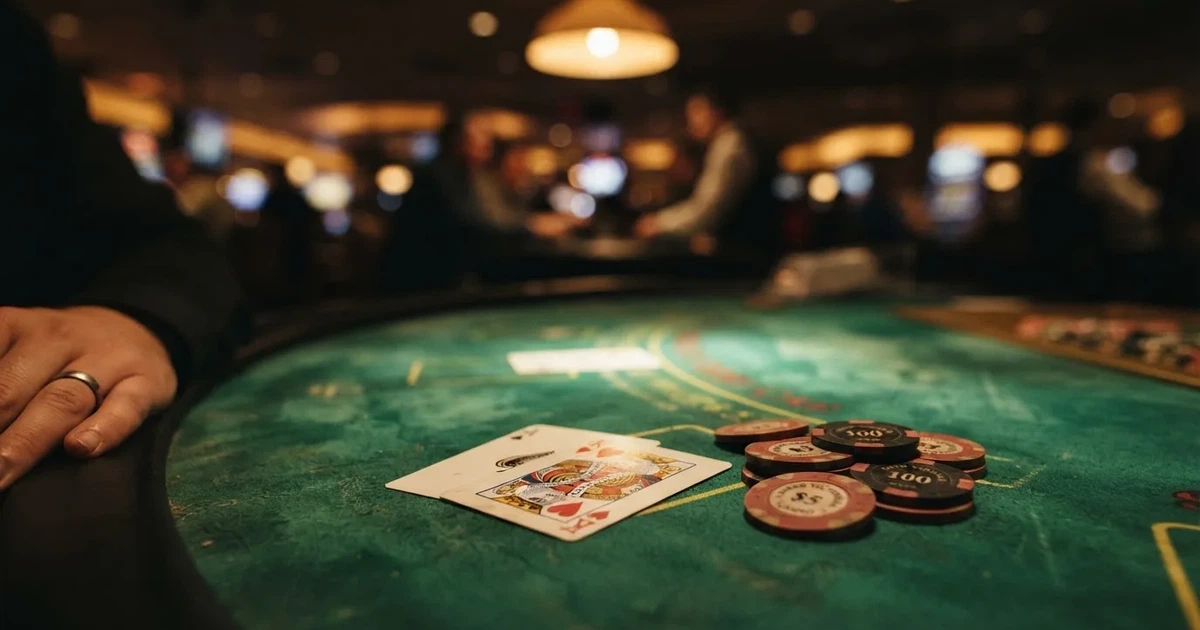
The game’s name came into common use around 1899, with prospectors during the Klondike Gold Rush of 1896–99 credited with popularising the term. Its predecessor was the English game vingt-un, and a related game called veintiuno appears in Miguel de Cervantes’ Rinconete y Cortadillo, written around 1601–1602, with formal rules published in Britain in 1800. Cards two through ten count at their face value, jack/queen/king count as ten, and an ace counts as one or eleven. A starting two-card total of 21 — a “blackjack” or “natural” — is the strongest hand. The dealer must keep drawing until reaching seventeen or higher, with some rule sets requiring the dealer also to hit on a “soft 17.”
Under optimal strategy the house edge is around 0.28 per cent with liberal Las Vegas Strip rules — dealer stands on soft 17, double on any two cards, double after split, resplit aces, late surrender — and around 0.43 per cent under Atlantic City rules. The variance with strategy is real: a player who deviates from basic strategy will see the house edge climb above 1 per cent on the same game. The marketing pitch around “perfect strategy” guides and “blackjack systems” tends to gloss over the basic-strategy floor on which everything else is built.
The variants that have been commercialised over the years include Spanish 21 — played without tens but with rules that favour the player — Double Exposure Blackjack with both dealer cards dealt face-up, Blackjack Switch where players can swap cards between two hands, and Super Fun 21 which allows up to four splits. The VGCCC’s public log of approved changes to Crown Melbourne’s blackjack variants shows the regulator renaming the “Perfect Pairs” side bet to “Crown Pairs” on 23 December 2024 and introducing a “Free Bet” option with a new “Pot of Gold” side bet on 25 March 2024. These are the regulator’s record of what changes at the table are made and when — the kind of bookkeeping an offshore live lobby does not have to do, because no regulator is asking it to.
Craps, and the games that are not the centre of the live lobby
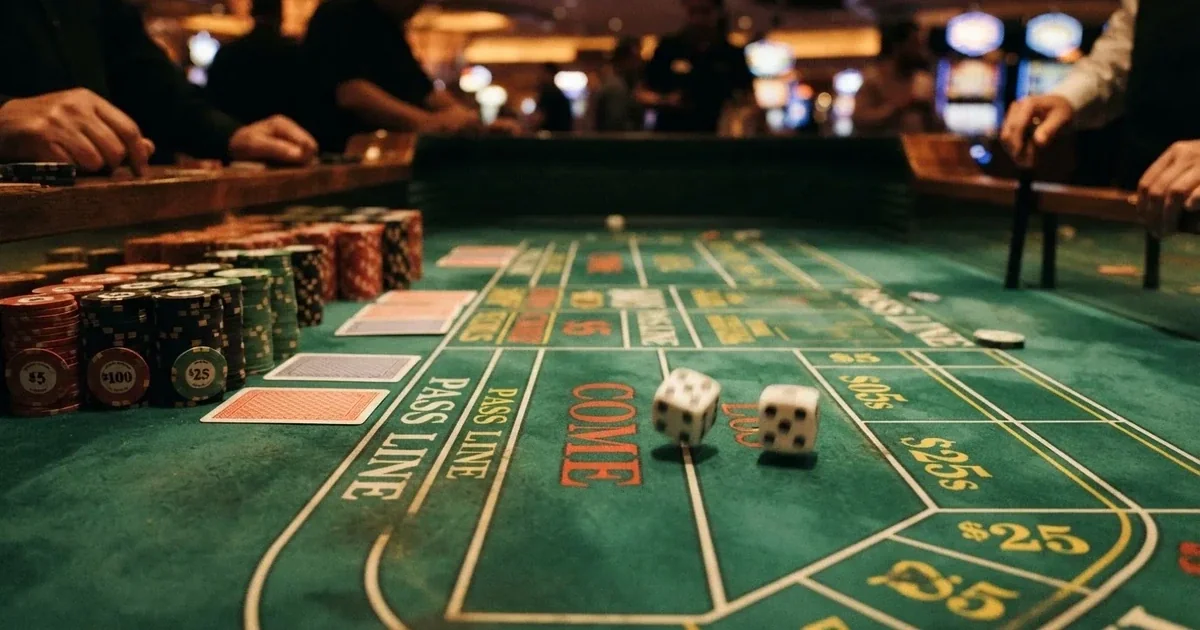
Craps, by contrast, is rarely the centrepiece of a live lobby. The Pass/Come bet carries a house edge of 1.41 per cent, Don’t Pass/Don’t Come 1.36 per cent and Any Craps 11.11 per cent, with the “come-out roll” winning immediately on 7 or 11, losing immediately on 2, 3 or 12, and any other number becoming “the point” the shooter must roll again before a 7 to win the Pass Line bet. The mechanics are simple; what is not simple is the social texture of a craps table, which is part of why the live-dealer version has not become a default offering on most studios’ floors. Baccarat and blackjack dominate because the player’s decisions are simple and the dealer can run several tables per studio at once. The supply follows the demand that the offshore market is most willing to pay for.
The paytable comparison: what the brands the ACMA has acted against have in common
This is the shelf a reader who came for the search term is actually looking for, and the truthful answer to it is the one that takes the most space to write. What follows is a comparison of the eleven brands that have been named in ACMA formal warnings, side by side on the matters that research can actually support. The table is not a ranking. It cannot be: each brand is operating outside Australian law, none holds an Australian licence, and the table is the ACMA’s record, not an endorsement of any of them.
| Brand | ACMA action and date | Operator named by the ACMA | Subject support |
|---|---|---|---|
| RocketPlay | Formal warning — March 2026 (Pulsup Ltd); earlier May 2022 (Dama N.V.) | Pulsup Ltd; Dama N.V. | — |
| Level Up Casino | Formal warning — May 2022 | Dama N.V. | Bgaming listing |
| Woo Casino | Formal warning — March 2025 | Dama N.V. | — |
| Spirit Casino | Formal warning — May 2025 | Dama N.V. | — |
| National Casino | Formal warning — July 2025 | Consolutetish S.R.L. | Wikipedia listing |
| Bizzo Casino | Formal warning — July 2025 (Consolutetish S.R.L.); earlier 2022 (TechSolutions) | Consolutetish S.R.L.; TechSolutions | — |
| Ignition Casino | Formal warning — July 2025 | Bamboo Media | — |
| Instant Casino | Formal warning — February 2025 | EOD Code SRL | — |
| Jackbit | Formal warning — April 2026 | Ryker B.V. | — |
| Casino Intense | Formal warning — April 2025 | Sterplay Holding Ltd | ABC, ACMA, Crown Melbourne listings |
| Sky Crown | Formal warning — September 2022 | Hollycorn N.V. | — |
Several things follow from the table. First, the operator behind the brand matters more than the brand itself: Dama N.V. alone appears as the named operator four times in the list (RocketPlay’s earlier warning, Level Up, Woo Casino and Spirit Casino), Hollycorn N.V. once (Sky Crown), and Consolutetish S.R.L. twice (National Casino and Bizzo Casino, with Bizzo also having been warned under TechSolutions back in 2022). Offshore groups run several brands, and the ACMA tracks the operator, not the brand. Second, the column for “subject support” — a public source other than the ACMA that identifies the brand with the live-dealer subject of this page — is mostly empty. Research named a public source for only three of the eleven: Level Up via a Bgaming listing, National Casino via a Wikipedia entry, and Casino Intense via ABC and ACMA mentions plus the Crown Melbourne site. The other eight are ACMA-named without an independent public-source tie to the live-casino subject. The blank cells are the point: they are the gap between the marketing claim and what can be verified.
Third, and most important, the dates of the warnings tell a story. The 2022 warnings are the early round — Dama N.V. over six brands, Hollycorn N.V. over Sky Crown and Blue Leo, TechSolutions over Bizzo. The 2025 and 2026 warnings are the regulator catching up with the same operators under different brand names, and adding the ones that have appeared since. By April 2026, with Rocketplay and Jackbit both added in the same quarter, the ACMA was naming a new operator roughly every couple of months.
The right read of the table is not “which of these is best.” None of them is a working choice for a reader who wants to stay inside Australian law. The right read is the ACMA’s own record: each row is a brand that has offered prohibited services to Australians and been formally told to stop. A reader who came for the term “best live casino online australia” has, in this table, the actual state of the market they were going to choose from — and the market they were going to choose from is, in this country, the wrong market.
The fundamentals for anyone weighing a path
For a reader who is still weighing a path — whether to play at all, and if so where — the fundamentals are short. They are the things the marketing pages do not say and the regulator’s pages do not put in one place.

The product itself is a real one, and it is not a con in the sense of being fake. The streams are real; the dealers are real; the cards are dealt. What the offshore live casino market offers is real gambling, with a real house edge, on games whose rules are well-known and whose outcomes are not manipulated in the way the most paranoid version of the marketing critique assumes. The house always has the edge, and on baccarat and blackjack it is small enough that a player who plays a disciplined session can expect to lose in the low single digits per cent of turnover. The arithmetic is honest. What is not honest is the framing around the offer.
The legal framing in Australia is the second fundamental. Online casino games — the live dealer product included — cannot be licensed anywhere in this country. Any site that takes an Australian customer is operating outside Australian law, and the licence the site displays is from somewhere else. That licence is real in its own jurisdiction, but it does not give the Australian customer any of the protections Australian licensing provides. A withdrawal disputed by an offshore site ends in the courts of the licence-issuing jurisdiction, not in an Australian tribunal. The earlier section on the prohibition makes the same point in the regulator’s voice; it is worth hearing in both.
The third fundamental is the alternative. Australian-licensed wagering operators are licensed to take bets on sports and racing before the event. Land-based casinos in Melbourne, Sydney, Perth, Brisbane, Adelaide, Hobart, the Gold Coast and the Northern Territory run baccarat, blackjack, roulette and the rest of the live table product under state-level regulator approval. Crown Melbourne offers three baccarat variants approved by the VGCCC. The Star Sydney runs baccarat, blackjack and roulette under the NSW Casino Control Act 1992 and Liquor & Gaming NSW. These venues are licensed, regulated and connected to BetStop and to the National Gambling Helpline. They are not a different product category from the offshore live lobby — they are the same games, played in the same way, in rooms that the regulator inspects. The choice is not “live casino or nothing.” It is “offshore live casino with no Australian protection, or land-based live casino with full Australian protection, or licensed sports and race wagering with the same.”
A fourth fundamental is the person the reader is. A punter who has set a budget and is going to walk away at the budget has, on any of those three paths, a working evening. A punter who is chasing a loss, who is borrowing to play, who has tried to stop and could not, who is playing to recover a bad week — that punter is the person BetStop is set up for, and the person the National Gambling Helpline is set up for, and the person who will not be protected by an offshore site. The advice in this register is straightforward: register with BetStop first, talk to the helpline first, and only then decide whether to play at all. The minimum age is 18; under that, no Australian operator may take a bet, and no offshore site the reader can trust will either.
A final word on tax: gambling winnings of a recreational player are not assessable income under section 6-5 of the ITAA 1997, and losses are not deductible, unless the person carries on a business of gambling. The rule cuts both ways — a big win on a Saturday night is not taxed, and a long losing run is not refundable. Anyone whose play is regular enough to look like a business should check with the ATO, because what looks recreational to the player can look like a business to the tax office. The rule applies to winnings on licensed Australian wagering and on offshore sites alike; it is not an inducement either way.
The eleven brands and the ACMA record behind them
The following is a brand-by-brand account of the eleven operators that have been the subject of an ACMA formal warning for offering prohibited interactive gambling services to Australians. None of the brands holds an Australian licence. None can lawfully offer its product to a person in Australia. Each entry names the warning, the operator behind it, and what the brand’s profile suggests it would suit if the prohibition did not apply — written that way because the prohibition does apply, and the reader needs to know what is and is not on offer.
RocketPlay: a return visit under a new operator
RocketPlay was the subject of a formal warning in March 2026, with Pulsup Ltd named as the operator; an earlier warning in May 2022 named Dama N.V. as the operator behind a group of six brands, of which RocketPlay was one. The site markets itself around an Australian audience and operates on the standard offshore model — a Curaçao-issued licence, a slot-heavy lobby with a live-casino section, and a bonus structure weighted on the deposit-match side. The Australian reader who lands on it is being told the brand is aimed at them, which is precisely what the IGA prohibits the brand from doing. Two operators, four years apart, same brand: that is the shape of the warning record.
Level Up Casino: one of six on a single warning
Level Up was named in the same May 2022 warning that covered RocketPlay and four other Dama N.V. brands. It appears in the public listings of at least one game studio — Bgaming names Level Up among its operator partners — which is the closest the public record gets to an independent confirmation that the brand is what its marketing says it is. As a Dama N.V. property, it sits inside the operator group that the ACMA has had to name four times across the same list, which is also the closest the public record gets to a portrait of the offshore market’s plumbing.
Woo Casino: the second time Dama N.V. had to be told
Woo Casino was the subject of a formal warning in March 2025, again with Dama N.V. named as the operator. The two-year gap between the 2022 warning to Dama N.V. and the 2025 warning over Woo Casino is the kind of gap that defines the ACMA’s enforcement rhythm: a warning, a quiet period, a relaunch under one of the operator’s other brands, and a new warning when the relaunch surfaces. The pattern is the same for Spirit Casino below, and for RocketPlay’s later warning under Pulsup Ltd above. The operator moves; the regulator follows.
Spirit Casino: a newer name on an older record
Spirit Casino drew a formal warning in May 2025, also with Dama N.V. as the named operator. Spirit is one of the operator’s newer brand names, surfacing after the May 2022 warning had been on the record for three years. The newer the brand, the more likely it is that the operator has rebranded to slip past a block or a search filter, and the more useful the ACMA’s record is for a reader who has only just heard the name.
National Casino: a brand Wikipedia recognises
National Casino was the subject of a formal warning in July 2025, with Consolutetish S.R.L. named as the operator. The brand appears in Wikipedia’s coverage of the offshore casino market, which is the closest the public record gets to a third-party identification of the brand for an Australian reader who has heard the name in passing and wants to check it. The Consolutetish S.R.L. name is not a household one outside the offshore market, but it surfaces twice in the formal-warning list and is worth knowing.
Bizzo Casino: two operators, two warnings
Bizzo was the subject of a formal warning in July 2025, with Consolutetish S.R.L. as the operator; an earlier formal warning in 2022 had named TechSolutions (CY) Group Limited and TechSolutions Group N.V. as the operators behind it. Two operators, two warnings, three years apart, on the same brand — the regulator’s record of an operation that has continued under new ownership. The Bizzo entry is the clearest example on the list of how an offshore brand outlives a warning.
Ignition Casino: poker-leaning, with a smaller live lobby
Ignition Casino was the subject of a formal warning in July 2025, with Bamboo Media named as the operator. Ignition’s marketing positions the brand around poker and a broader casino product, and the live-dealer lobby is a smaller share of its offering than for the brands positioned more squarely around live casino. A reader looking specifically for live-dealer tables would be choosing a brand whose centre of gravity sits elsewhere.
Instant Casino: the speed-of-payout pitch
Instant Casino drew a formal warning in February 2025, with EOD Code SRL as the operator. The brand name plays on the speed-of-payout claim that the offshore market uses to differentiate itself from the licensed one — a claim the reader is in no position to verify from Australia, and that is not backed by an Australian regulator. The pitch is also at odds with the offshore site’s own exposure to a blocking round: a site whose domain can be added to an ISP block list at any time is not, on the operator’s own terms, “instant” in any meaningful sense.
Jackbit: the crypto-friendly end of the list
Jackbit was the subject of a formal warning in April 2026, with Ryker B.V. as the operator. The site sits on the crypto-friendly end of the offshore market; the ACMA named it in the same quarter as RocketPlay and CasinOK (the latter sharing the same Ryker B.V. operator). A reader who has been told the site accepts crypto deposits should remember that credit cards and digital currency have been banned as payment for licensed online wagering in Australia since 11 June 2024, and that a site which accepts crypto from an Australian customer is operating outside that frame.
Casino Intense: a brand with a slightly wider footprint
Casino Intense drew a formal warning in April 2025, with Sterplay Holding Ltd named as the operator. The brand appears in the public listings of major Australian media (the ABC) and the regulator’s own pages, which gives it a slightly higher third-party footprint than most of the other names on this list. Its operator has had to be named once; the public record around the brand is wider than for the others without being substantially different in substance.
Sky Crown: the 2022 warning that opens the record
Sky Crown was the subject of a formal warning in September 2022, with Hollycorn N.V. as the operator. The same warning also covered Blue Leo, a sister brand. Sky Crown sits at the early end of the ACMA’s published-warning record for the 2022-onwards cohort of brands, and the regulator’s experience with the operator over the years since — including the new warning cadence — is the read of how an early warning ages.
The right way to read these eleven entries is as a single record. The ACMA has named eleven brands in formal warnings, and the operators behind those brands account for a much larger number of brand names that have surfaced in the offshore market over the same period. A reader who is reading this far has, in this list, what the Australian regulator has decided are not lawful choices. None of them is, in this country, a working recommendation — and naming them is the way of being explicit about the gap between what the marketing is selling and what the law allows.
Frequently asked questions
What makes a live casino different from a standard online slot?
A live casino game streams a real dealer from a studio or a land-based casino. The cards or roulette wheel are physical, and the player’s screen reads the result of the physical action through optical camera recognition, not a random number generator. A standard online slot, by contrast, runs entirely on software — there is no dealer, no studio, no physical event being captured. The experience is closer to a video call with a casino than to a video game.
Is it legal for an online casino to stream live dealer games to players in Australia?
No. Under the Interactive Gambling Act 2001, providing an interactive casino-style gambling service — including online blackjack, roulette and the live-dealer variant of both — to a person physically in Australia is a prohibited interactive gambling service. No state or territory in Australia licenses the product. Offshore sites offering the product to Australians are operating outside Australian law, and the ACMA has spent the last several years issuing formal warnings and asking internet providers to block the relevant domains.
Who is Evolution, and why does the name keep coming up around live casino games?
Evolution is the dominant supplier of live-dealer studio infrastructure to the offshore market. Founded in 2006, the company reached 100 live tables at its Riga studios by 2013 — at that point the largest single-site casino operation in Europe — and acquired NetEnt in 2020. The wider Evolution Group also owns Red Tiger, Big Time Gaming, Nolimit City and Ezugi. Most “live casino” lobbies in offshore casinos are running on Evolution infrastructure under one of those brand names.
What kinds of welcome offers get advertised around live casino play?
The standard offer is a deposit match — a percentage of the first deposit added as a bonus, up to a stated cap, with a turnover requirement (often 30 to 50 times the bonus amount) that the player must meet before winnings become withdrawable. “No deposit” bonuses and free-spin offers follow the same shape on a smaller scale. Most live casino games contribute only a small fraction of each wager toward the turnover requirement, so the bonus is, in practice, cleared on slots — not on the live tables the marketing image shows.
Are there licensed live table games at Australian land-based casinos?
Yes. Crown Melbourne offers three approved baccarat variants — Traditional Baccarat, Crown Baccarat and 2 to 1 Baccarat — under rules approved by the Victorian Gambling and Casino Control Commission. The Star Sydney and the other state-based casino venues run blackjack, roulette, baccarat and the rest of the live table product under their respective state-level regulators. Under section 66 of the NSW Casino Control Act 1992, a casino operator in NSW must not permit a game to be played unless its rules are approved by the regulator, and a copy of those approved rules must be made available on request. These are the licensed, regulator-inspected versions of the same product the offshore live lobby is selling a stream of.
Prepared by the Casino Jackpot Hub editorial staff.