Seven-Reel Slots in Australia: What the Format Actually Offers, and What the Law Allows
 Available in AU
There is no such thing as a legal Australian online casino. The country bans the provision of online casino games and online pokies outright under the Interactive Gambling Act 2001, so every “7-reel slot” a player in Australia reaches online is hosted offshore, outside Australian law, and every brand that offers one is, by definition, breaking the IGA on the supply side. That is the frame this page opens with, because the rest of the comparison only makes sense once it is on the table: the question is not which offshore site is best, it is what is on offer at all and what it costs a player to engage with it. Data current as of 17 October 2026, verified against the ACMA’s formal warnings register and the regulator’s published blocking notices.
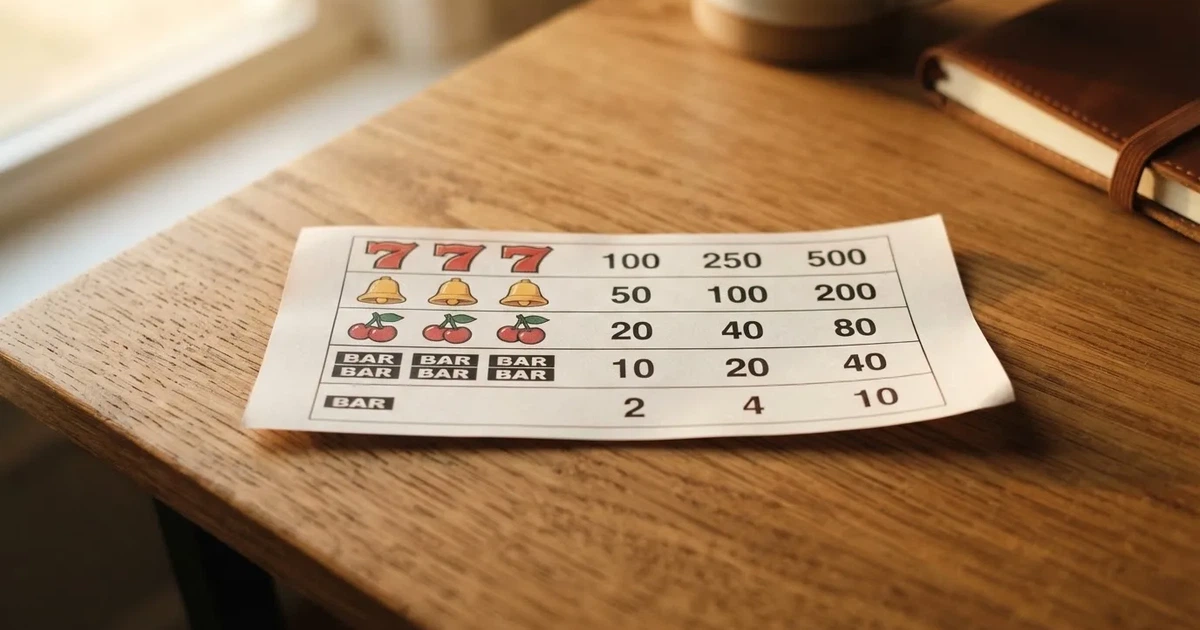
Table of Contents
- The landscape a player in Australia is actually searching within
- What the law actually says about playing online in Australia
- Responsible play, and the help available without engaging an offshore site
- Bonuses, free spins and what those offers are actually worth on an offshore site
- The seven-reel format in context: older formats, newer formats, and what the math looks like
- The blocking rate: how fast the ACMA is removing the offshore supply
- Brands the ACMA has formally warned: eleven names and the reasons behind each
- Comparing the brands the ACMA has acted against
- What a fair comparison would actually weigh
- How long the ACMA has been doing this, and what the pace looks like
- What the seven-reel format cannot change
- Frequently asked questions
The landscape a player in Australia is actually searching within
A seven-reel slot is, on the face of it, a smaller, simpler category than the five-by-three video slots that dominate modern lobbies. Three reels gave the format to Charles Fey’s Liberty Bell in the 1890s; Bally’s Money Honey added the bottomless hopper in 1963; the first true video slot emerged from Fortune Coin Co. in 1976. A seven-reel machine sits between that older three-reel mechanical tradition and the modern five-plus-reel video format, with more symbols per spin than a classic, fewer than the sprawling 50-plus-symbol layouts common today. The math sits in the same place: each extra symbol multiplies the combinations on offer, and the odds against any single top line shift accordingly.
The interesting detail is where the format lives in Australia. A seven-reel online slot, in the strict sense of a video slot with 7 spinning reels, has never been a recognised category on Australian pub or club floors — the floor machine is overwhelmingly a five-reel video pokie with a flat-screen top box. Outside casinos, Australian states and territories held roughly 87,298 pokie-style machines in New South Wales as of June 2023, 26,380 in Victoria in 2021–22, 21,122 in Queensland in October 2023, 11,672 in South Australia in September 2023 and 3,587 in the ACT in November 2023. New South Wales legalised slot machines in 1956; by 2010 Australia operated an estimated 97,103 gaming machines outside casinos, a per-capita rate about five times that of the United States. None of these are seven-reel. The seven-reel format is, for an Australian player, an online-only proposition, and online casino play in Australia is, by the IGA, an unlawful supply — which makes “best 7-reel slots Australia” a category that exists only on offshore sites, with all that implies for recourse and consumer protection.
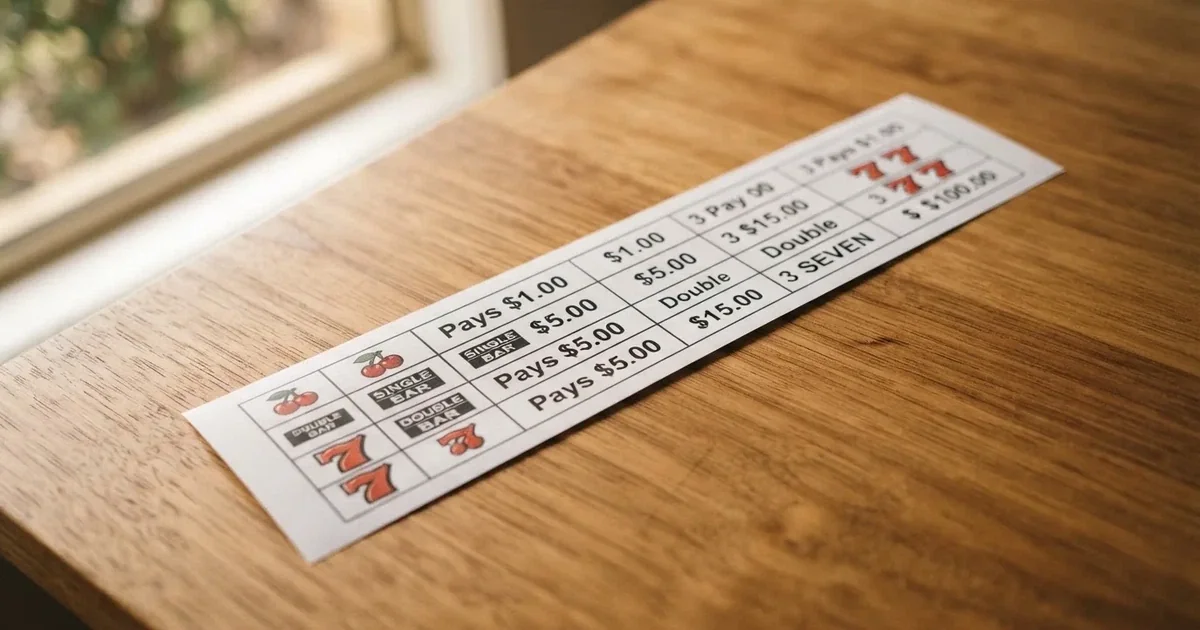
What a seven-reel paytable actually shows
A paytable on a seven-reel slot lists the symbols, the value of each combination along the active lines, and the conditions under which bonus features trigger. The reading is the same as for a five-reel video slot, with one mechanical twist: each spin has more positions to align, so the frequency of any single line is lower and the variance of the session is higher. A three-reel mechanical machine with about ten symbols per reel carries roughly 1,000 possible combinations; a modern video slot with 50 symbols across five reels produces odds as high as 300 million to one against a top combination. A seven-reel layout sits somewhere on that curve, closer to the five-reel end than to the older three-reel one. The paytable does not change the arithmetic — the house edge is whatever the operator sets and is not on the table — but it changes the feel of a session, because wins come less often and arrive in larger lumps when they do.

Why “reel count” is a worse comparison than it looks
The reel count is the most visible label on the box, and it is the least useful one for judging what a session will cost. State regulators in the United States set minimum payout percentages by jurisdiction — Nevada requires at least 75%, Mississippi at least 80%, New Jersey at least 83% — which is the regulation that determines what the player keeps over time. Reel count changes the distribution of outcomes but not the long-run return. A game with a higher reel count and a tight paytable can return less than a low-reel-count game with a generous one, and nothing on the box tells a player which one is in front of them. The better comparison is the payout percentage the operator publishes, the volatility class the provider rates the title at, and the maximum exposure on a single spin. For an Australian player considering an offshore seven-reel title, none of those figures are checked by an Australian regulator, and that is the more important number than the reel count on the cabinet.
What the law actually says about playing online in Australia
The Interactive Gambling Act 2001, tightened by the Interactive Gambling Amendment Act 2017, makes it an offence to provide online casino games, online pokies or in-play betting to a person physically in Australia. The IGA targets the supplier, not the player — an individual punter is not prosecuted for opening an offshore account — but it removes every protection the player would otherwise have. No complaints channel applies to a Curaçao- or Costa Rica-incorporated operator. No Australian court enforces a withdrawal. The site can be blocked by an ISP at the regulator’s request while a balance still sits in the account, and the player has no route to recover it. H2 Gambling Capital’s 2025 report estimates that Australians lose about A$3.9 billion a year to illegal gambling sites, and the share of gambling going through legal channels fell from 74% in 2021 to 64%. That is the market a player is joining when they sign up to an offshore seven-reel site from an Australian address.

The enforcement arm is the ACMA, the Australian Communications and Media Authority. According to the ACMA as reported in June 2026, a total of 1,751 illegal gambling and affiliate marketing websites had been blocked since the first blocking request in November 2019, and more than 230 unlicensed gambling services had left the Australian market since enforcement was strengthened in 2017. In a single round reported on 26 June 2026 the regulator asked Australian ISPs to block twelve more illegal gambling websites: 7Signs, ChromaBet, Donbet, Duospin, Freshbet, Slots Gem, Jacks Club, Lucky Start, Pointsbetz, Spinrise, Vinyl Casino and Wildsino. The pace has not slowed. A player who opens an account with one of these brands today is opening it knowing the site is on the ACMA’s radar and that a blocking notice can land while funds are still on the balance.
What the ACMA can and cannot reach
The ACMA’s three tools are formal warnings, blocking requests to ISPs and civil penalties against operators. The warnings are published on the regulator’s website and name the corporate entity behind the brand, the URL and the date. They are not court orders and they do not, on their own, force a site offline — a blocking request does that, by directing every major Australian ISP to make the domain unreachable from an Australian IP. The formal warning is, in practice, the regulator’s last attempt at getting the operator to withdraw from the Australian market voluntarily; if it does not, a blocking request follows. The supply is criminal on the supplier’s side throughout. The player is the side the regulator cannot reach directly, and is the side the operator relies on not knowing that.
The 2026 reform and what changes
The Interactive Gambling Amendment (Gambling Reform) Bill 2026 passed Parliament on 19 August 2026, with its advertising and inducement measures commencing on 1 January 2027. As of 2026 the bill is law with a start date, not yet in force on a player-facing level. The credit-card and crypto ban on licensed online wagering took effect on 11 June 2024, with penalties of up to $247,500 for operators who breach it. That ban applies to licensed wagering only — sports and racing bookmakers licensed by the Northern Territory — and not to offshore casino sites, which accept whatever the player offers. A site asking an Australian for a credit card or a crypto deposit is, by definition, operating outside the Australian rules; the same deposit, if it were a debit card through PayID, would be the kind of channel the licensed wagering market uses.
What is licensed, and where the regulator sits
The Northern Territory Racing and Wagering Commission regulates 52 of Australia’s online bookmakers — including Sportsbet, Bet365 and Ladbrokes — which are licensed in the Territory for tax reasons; the commission has no full-time staff and meets once a month in Darwin. The licensed product is wagering on races and sport placed before the event, plus lotteries and keno. Casino games and online pokies are not in that list and are not licensed by any state or territory. The minimum age is 18. A player in Australia looking for a seven-reel slot is, by definition, looking outside this licensed frame.
Tax, winnings and what the ATO will and will not do
Gambling winnings of a recreational player are not assessable income under section 6-5 of the ITAA 1997, and losses are not deductible, unless the person carries on a business of gambling. The ATO does not monitor offshore casino accounts for evidence of hobby-level play, and a casual punter who withdraws winnings from an offshore site is not creating a returnable event. The threshold where the ATO takes an interest is the professional gambler running a business, with the records and the regularity that imply one. For the player who opens an offshore account, plays a few sessions and withdraws what they have, the tax treatment is the same as for a pokies session at the local pub: not income, not deductible, and the ATO does not want to know.
Responsible play, and the help available without engaging an offshore site
If thinking about a seven-reel online slot ever starts to feel compulsive or stressful, free confidential help is available around the clock through Gambling Help Online and the National Gambling Helpline on 1800 858 858. The chat service is free, confidential, and runs 24/7. BetStop, the National Self-Exclusion Register, has been live since August 2023 and binds every Australian-licensed online and phone wagering service; an offshore casino is not connected to it. A player who self-excludes through the register is excluded from licensed wagering, and a separate conversation with the offshore operator is required if they want to be excluded from a specific site — and the offshore site has no obligation to honour that request. That gap is the practical reason the help line matters: it covers the licensed side and offers the kind of counselling the offshore side does not.
The cleaner answer for a player who feels the urge escalating is to stop before the offshore account is opened. The Australian-licensed market does not offer seven-reel slots online, and the offshore market that does is one in which the protection is the player’s own. Gambling Help Online does not require a player to have a problem with a licensed product before it will talk to them.
Bonuses, free spins and what those offers are actually worth on an offshore site
Seven-reel bonus slots, free seven-reel slots with bonus features and the broader category of free seven-reel bonus slots online are search terms that turn up affiliate pages rather than operator terms. The offers themselves are, structurally, the same as for five-reel video slots: a deposit match with a wagering requirement, a free-spins package on a named title, or a no-deposit bundle that credits bonus funds on signup. The math behind them is the same arithmetic that applies to every other online slot — the bonus credit carries a wagering multiple, the free spins carry a per-spin value, and both carry a maximum-cashout cap. None of that changes because the reel count is seven.
What does change, for an Australian player, is the legal posture. A bonus on an offshore site is being offered by a brand that is breaking the IGA on the supply side; the player is the side the regulator does not prosecute. The player’s exposure is the same exposure the site creates for every other player on the platform: a wagering requirement that has to be cleared before any withdrawal, a maximum cashout that bounds the upside, and a game-weighting table that may exclude the seven-reel title the player actually wanted to play. None of those terms are checked by an Australian regulator, because no Australian regulator has jurisdiction over the operator. They are enforced by the operator’s own terms page and by the goodwill of a customer-service team the player has no other route to.
What a wagering requirement actually costs a player
A 35x wagering requirement on a A$100 bonus means A$3,500 of qualifying turnover before the bonus balance is withdrawable. On a seven-reel slot with a 96% payout percentage the expected cost of clearing that turnover is about A$140, calculated as A$3,500 multiplied by 4% (the house edge implied by a 96% return). The bonus pays A$100 if everything goes right; the expected cost of clearing it is A$140. That is the spread the marketing copy does not print, and it is the figure a player needs before they claim. A 50x requirement on the same bonus doubles the turnover to A$5,000 and the expected cost to about A$200. A free-spin bundle worth A$0.20 per spin across 100 spins is A$20 of bonus credit with its own multiple and its own cap; on the same math, a 35x requirement on those winnings turns A$20 into A$700 of qualifying turnover with an expected cost of about A$28, and the upside is the cap.
The pattern is the same across the format. The bigger the headline number, the bigger the wagering requirement sitting behind it; the bigger the wagering requirement, the larger the share of the bonus that the house edge will eat before the player withdraws. A seven-reel title does not change that pattern, because the house edge is built into the game’s payout percentage, not into its reel count.
Where the bonus terms bite hardest
Three clauses do the work in any offshore bonus. The first is the game-weighting table: most bonuses count 100% on slots but reduce that contribution on table games and live casino. A player who wants to play the seven-reel title they signed up for should check it is on the full-weight list. The second is the maximum-cashout cap: a no-deposit bonus may cap winnings at 5x or 10x the bonus amount, which bounds the upside in a way the headline does not. The third is the maximum-bet rule while the bonus is active: a single spin above the cap, often A$5, voids the bonus and any winnings from it. The combination of those three clauses is what determines what the bonus is actually worth, and they are the clauses the affiliate page summarises rather than quotes.
The seven-reel format in context: older formats, newer formats, and what the math looks like
Modern video slot machines can use five or more reels with 50 or more symbols per reel, producing odds as high as 300 million to one against a top combination, compared with a classic mechanical three-reel machine with about ten symbols per reel offering roughly 1,000 possible combinations. A seven-reel layout sits between those endpoints: more combinations than a three-reel, fewer than the 50-symbol layouts that define the modern market. The distribution of those combinations — how often a small win lands, how often a large one does — is what the volatility rating captures, and that rating is what determines the feel of a session more than the reel count does.
The older formats the comparison sits against are baccarat, blackjack and craps, all of which appear in the casino-game section of the relevant state regulator’s approved games list. In baccarat the house edge is 1.06% on the Banker bet, 1.24% on the Player bet and 14.36% on the Tie. With optimal strategy, blackjack’s house edge is about 0.28% under liberal Las Vegas Strip rules and about 0.43% under Atlantic City rules. In craps the Pass/Come bet has a house edge of 1.41%, Don’t Pass/Don’t Come 1.36%, and Any Craps 11.11%. None of those numbers are reachable from an Australian address online; all of them are reachable on the casino floor in Melbourne, Sydney, Perth, Adelaide and the Gold Coast. A player who wants the low-edge game is, by definition, choosing a different format and a different venue.
The blocking rate: how fast the ACMA is removing the offshore supply
| Measure | Estimate |
|---|---|
| Annual blocking rate | 220–280 sites |
| Cumulative total (since 2019) | 1,751 sites |
According to the ACMA as reported in June 2026, a total of 1,751 illegal gambling and affiliate marketing websites had been blocked since the first blocking request in November 2019. Spread over the period from November 2019 to June 2026, that is roughly between 220 and 280 sites blocked per year, with the pace increasing as the regulator’s enforcement infrastructure matured. In the single round reported on 26 June 2026, twelve sites were added to the block list in one batch — already a meaningful share of a typical year’s total, in one enforcement action. The math is a band rather than a single figure because the regulator publishes cumulative totals rather than a per-year count, and the per-year rate depends on where the reader draws the start and end of the window. The trend is the more readable result: enforcement is not slowing, and the supply a player can reach from an Australian IP is shrinking, not growing.
The practical consequence for a player is short. A site that is reachable today can be on the block list next month. A balance on the account at that point is stranded unless the operator chooses to return it voluntarily, which most do not. The credit-card ban that took effect on 11 June 2024, with penalties up to $247,500 for licensed operators, does not apply to the offshore sites the ACMA is blocking — those operators have no Australian exposure to penalise. The Australian-licensed market is the only market where the credit-card ban is enforceable, and it is the market that does not offer seven-reel slots.
Brands the ACMA has formally warned: eleven names and the reasons behind each
The eleven brands below are not a ranking and not a recommendation. Each is on the list because the ACMA itself issued a formal warning over it for offering prohibited services to Australians; the entry gives the operator entity named in the warning, the date the ACMA published it, and the legal posture the brand occupies. No bonus terms are quoted, because the only sources for those terms were affiliate marketing pages and the ACMA’s register carries no bonus information at all.
RocketPlay
The ACMA issued a formal warning to Pulsup Ltd over Rocketplay in March 2026; Dama N.V. had already been warned over the same brand in May 2022. Two warnings over the same domain from two different corporate entities indicate the brand has changed hands across the period, and the corporate move did not take it out of the ACMA’s line of sight. Online casino games cannot be licensed anywhere in Australia, whatever licence the site displays.
Level Up Casino
Dama N.V. was the operator named in the May 2022 warning over Level Up Casino, alongside five other Dama brands. Level Up is one of the older entries on the register; it has been visible to the regulator for long enough that the corporate group behind it has had time to restructure. The brand is still reachable from Australian IPs at the time of writing, which is itself the relevant fact.
Woo Casino
The ACMA issued a further formal warning to Dama N.V. over Woo Casino in March 2025, in the same wave that included Spirit Casino. Woo Casino is the older of the two brands in that wave and is the one the ACMA returned to most recently. The pattern is the same: a brand that has been warned and remains reachable.
Spirit Casino
The ACMA issued a formal warning to Dama N.V. over Spirit Casino in May 2025. Spirit Casino is a newer brand than Woo Casino on the same Dama N.V. corporate shelf; the regulator named both in close succession, which suggests it acted on the operator rather than on the individual brand.
National Casino
Consolutetish S.R.L. was the operator named in the July 2025 warning over National Casino. The warning was part of a triple that included Bizzo Casino and Ignition Casino, all issued in the same month. The corporate group behind National Casino is also behind Bizzo Casino.
Bizzo Casino
Consolutetish S.R.L. was the operator named in the July 2025 warning over Bizzo Casino; TechSolutions (CY) Group Limited and TechSolutions Group N.V. had already been warned over the same brand in 2022. Two warnings over Bizzo Casino, six years apart, from two different corporate entities, is the cleanest example on this list of a brand moving between operators without moving off the ACMA’s register.
Ignition Casino
Bamboo Media was the operator named in the July 2025 warning over Ignition Casino. Ignition is the third brand in the same Consolutetish S.R.L. and Bamboo Media enforcement round and is the only one of the three that does not share a corporate parent with the other two.
Instant Casino
EOD Code SRL was the operator named in the February 2025 warning over Instant Casino. Instant Casino was warned earlier in 2025 than the July round that included National, Bizzo and Ignition, which suggests the regulator ran separate waves against separate operator groups rather than a single sweep.
Jackbit
Ryker B.V. was the operator named in the April 2026 warning over Jackbit, alongside CasinOK. Jackbit is one of the more recent entries on the register and one of the few that names two brands in the same warning.
Casino Intense
Sterplay Holding Ltd was the operator named in the April 2025 warning over Casino Intense. Casino Intense is the older brand in that warning round and the one that has been visible to the regulator longest.
Sky Crown
Hollycorn N.V. was the operator named in the formal warning over Sky Crown and Blue Leo, published by the ACMA in September 2022. Sky Crown is the oldest entry on this list and the one that has had the longest time to either comply with the warning or move off the Australian market. It has not done either.
Comparing the brands the ACMA has acted against
The table below puts the eleven brands side by side on the matters the ACMA register actually covers. The “ACMA action and date” column names the regulator’s most recent published warning over the brand; the “operator named by the ACMA” column names the corporate entity the regulator held responsible; the “subject support” column records what the research inputs carried about each brand’s relationship to the seven-reel format specifically.
| Brand | ACMA action and date | Operator named by the ACMA | Subject support |
|---|---|---|---|
| RocketPlay | Formal warning, March 2026 (earlier May 2022) | Pulsup Ltd (2026); Dama N.V. (2022) | — |
| Level Up Casino | Formal warning, May 2022 | Dama N.V. | listings-only (Bgaming) |
| Woo Casino | Formal warning, March 2025 | Dama N.V. | — |
| Spirit Casino | Formal warning, May 2025 | Dama N.V. | — |
| National Casino | Formal warning, July 2025 | Consolutetish S.R.L. | listings-only (en.wikipedia.org) |
| Bizzo Casino | Formal warning, July 2025 (earlier 2022) | Consolutetish S.R.L. (2025); TechSolutions (2022) | — |
| Ignition Casino | Formal warning, July 2025 | Bamboo Media | — |
| Instant Casino | Formal warning, February 2025 | EOD Code SRL | — |
| Jackbit | Formal warning, April 2026 | Ryker B.V. | — |
| Casino Intense | Formal warning, April 2025 | Sterplay Holding Ltd | listings-only (ABC, acma.gov.au, Crown Melbourne) |
| Sky Crown | Formal warning, September 2022 | Hollycorn N.V. | — |
The pattern the table exposes is the structural one. Five of the eleven brands sit with Dama N.V. as the named operator across two warning waves, three years apart. Three sit with Consolutetish S.R.L. in a single July 2025 wave. Two were the subject of double warnings over different corporate entities, which means the brand moved hands and the regulator chased the new owner. None of them are licensed to supply online casino games to Australians, and the formal-warning register is the public, dated evidence that the regulator treats them all the same way: as prohibited supply.
The “subject support” column is mostly em dashes for a reason. The research inputs carried no evidence that any of these brands offer a specifically seven-reel slot product under that name; the listings-only entries are where a third-party listing page mentioned the brand in a context adjacent to a seven-reel title, which is not the same as the brand offering the title itself. The category “best 7 reel slots Australia” is not one these brands have visibly built their product around; it is one the affiliate pages have built their SEO around, and the difference matters when a reader is choosing what to open.
What a fair comparison would actually weigh
For a player considering one of these offshore brands, the comparison that matters is not the reel count of the available games. It is the regulator’s enforcement history against the brand, the corporate entity behind it, the date of the most recent formal warning, and the trend in the operator’s behaviour since. A brand that was warned in 2022 and warned again in 2025 has been told twice to stop supplying to Australians and has not stopped. A brand that was warned in 2026 has been told once. A brand that has changed corporate hands between warnings has done so without changing its behaviour. None of those facts change the legal posture, which is identical across the list, but they change the predictability of the player’s access: a brand the regulator has chased twice is the one most likely to be the subject of the next blocking request.
The other comparison that matters is the payment channel. The credit-card ban of 11 June 2024 applies to Australian-licensed wagering only, and an offshore casino asking an Australian for a credit card is operating outside that frame entirely. A debit card via PayID or a bank transfer is the channel the licensed wagering market uses, and the same channel is what an offshore site will accept in practice. A site that demands crypto only is one that has structured itself outside the Australian banking system deliberately. A site that demands a credit card is one that is in violation of the rules its licensed peers follow.
How long the ACMA has been doing this, and what the pace looks like
The first blocking request was in November 2019. By June 2026 the cumulative count stood at 1,751 blocked sites. Spread across roughly six and a half years, that is a band of roughly 220 to 280 sites blocked per year on average, with the pace increasing as the regulator built its enforcement infrastructure and as more operators entered the market the regulator was tasked with policing. The single round in June 2026 alone added twelve — already a meaningful share of a typical annual total in one enforcement action. The trend is the more readable result than any single figure: enforcement is not slowing, and the supply a player can reach from an Australian IP is shrinking faster each year, not slower.
For a player who has already opened an account with one of these brands, the relevant question is not whether the regulator will act but when. A balance on the account at the point of a blocking request is stranded unless the operator chooses to return it voluntarily. The licensed wagering market does not extend to online casino games, and the protection the licensed market offers — a complaints body, an Australian regulator, a court that will enforce a withdrawal — does not exist for the offshore market. That is the gap the ACMA’s enforcement cannot close, because the regulator can block the site but cannot reach the balance.
What the seven-reel format cannot change
A seven-reel slot, whether it sits on an offshore site or on the floor of a licensed venue, is a game with a house edge built into its payout percentage. The edge does not move because the reel count is seven; it does not move because the bonus is generous; it does not move because the marketing copy says the game is “hot” or “due”. The only thing that moves the edge is the payout percentage the operator publishes and the rules the player plays under. For an offshore site, that payout percentage is published by the operator and not checked by any Australian regulator; for a licensed Australian venue, the equivalent figure is set by state law and is on the regulator’s website. The player who wants to know what they are keeping is the player who reads the published figure, on whichever side of the law the game is on.
For a player in Australia, the choice the search term “best 7 reel slots australia 2026” presents is, in practice, narrower than it looks. The licensed market does not offer the format online. The unlicensed market does, and every brand on it is on the ACMA’s register or close to it. The gambling Help line and the self-exclusion register cover the licensed side. The unlicensed side is one the player navigates alone. The format is what it is; the legal posture around it is what the player needs to know before they sign up.
Frequently asked questions
What makes a seven-reel slot different from a standard five-reel video slot?
A seven-reel slot has seven spinning reels instead of the five that dominate modern video slots, which means each spin has more positions to align. The math sits between a classic three-reel mechanical layout and a modern five-reel video format, and the variance of the outcomes is higher than for a five-reel game with the same symbol set. The reel count changes the feel of a session but does not change the house edge built into the game’s payout percentage.
Can seven-reel slot machines be found in licensed Australian pubs and clubs?
No. Australian pub and club floors run five-reel video pokies, and the state-by-state count of those machines ran to roughly 87,298 in New South Wales as of June 2023, 26,380 in Victoria in 2021–22, 21,122 in Queensland in October 2023, 11,672 in South Australia in September 2023 and 3,587 in the ACT in November 2023. None of them are seven-reel. The seven-reel format is an online-only proposition, and online casino play in Australia is prohibited under the Interactive Gambling Act 2001.
Do seven-reel slots typically pay out differently than newer five-reel formats?
The reel count changes the distribution of outcomes — wins land less often and arrive in larger lumps when they do — but does not change the long-run return, which is set by the payout percentage. State regulators in the United States set minimum payout percentages by jurisdiction: Nevada requires at least 75%, Mississippi at least 80%, New Jersey at least 83%. Australian state regulation of pokie-style machines sets equivalent minimums, but those apply to the licensed floor product, not to offshore seven-reel titles.
Is a seven-reel slot online the same game as a seven-reel machine on a casino floor?
Not necessarily. A seven-reel mechanical machine on a casino floor is a physical cabinet with seven spinning reels driven by a stepper motor; an online seven-reel slot is a video rendering of a similar layout, governed by a random number generator rather than a physical mechanism. The format looks the same to a player, but the regulatory regime is different: the floor machine is checked by the state regulator, the online game is checked by no Australian regulator at all.
Are seven-reel slots for real money available legally from an Australian-based site?
No. The Interactive Gambling Act 2001, strengthened by the Interactive Gambling Amendment Act 2017, makes it an offence to provide online casino games, online pokies or in-play betting to a person in Australia, and no state or territory licenses them. The licensed Australian online product is wagering on races and sport placed before the event, lotteries and keno. A player in Australia who opens an offshore account to play seven-reel slots is engaging with a brand that is breaking the IGA on the supply side; the player is the side the regulator does not prosecute, but is also the side with no consumer protection.
Is reel count still a useful way to compare volatility between older and newer slots?
No, not on its own. A modern video slot with five reels and 50 symbols per reel can produce odds as high as 300 million to one against a top combination, compared with a classic three-reel mechanical machine with about ten symbols per reel offering roughly 1,000 possible combinations. A seven-reel layout sits somewhere on that curve, but the volatility rating the provider assigns the title is a better guide than the reel count, because the rating captures the distribution of outcomes the player actually sees.
Published by the Casino Jackpot Hub team.