
What BGaming-Powered Online Casino Play Looks Like in Australia This Year
The search for a BGaming-powered online casino in Australia runs into a wall almost immediately: no such site is licensed to operate here. The Interactive Gambling Act 2001 makes the supply of online casino games and online pokies to anyone in Australia an offence, and no state or territory body hands out licences for them. Every brand a reader might find running BGaming slots, crash games, and table titles for real money is an offshore operator, and every one of those that has drawn regulator attention has done so under that Act.
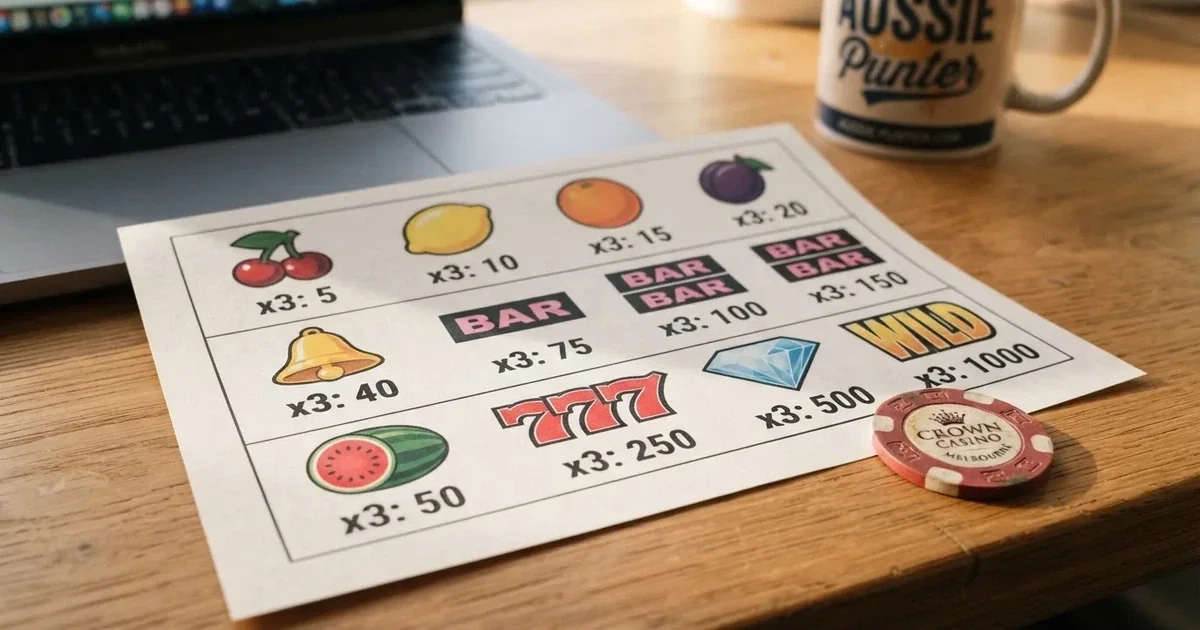
This is a different kind of guide to the “best” casinos. The BGaming catalogue itself is real — it is a long-running studio with a Malta supply licence and a 250+ game portfolio — and the interest in these titles is widespread. What a reader cannot do, however, is find a licensed Australian home for them. The page below lays out what BGaming is, what its games look like, why the offshore path is the only path, and which Australian-licensed alternatives to wagering exist for someone whose entertainment budget is being focused on these games.
23 November 2026 · Cross-referenced against the ACMA formal-warning register and the Interactive Gambling Act 2001 as published.
Table of Contents
- The picture: a studio, a prohibition, and the offshore gap
- Why the offshore path is the only path, in plain language
- The paytable, in general: what a BGaming slot is built to do
- What the ACMA has done, and to whom
- The blocking tally, in numbers
- Bonuses and free spins, as a category, not a route
- Mobile and app, in the abstract
- Responsible gambling, in Australia, by name
- Payments and payout speed, as a topic that exists elsewhere
- Tax: the part nobody enjoys reading
- The operator set, with the ACMA record as the only credential
- Where the page lands
- Frequently asked questions
The picture: a studio, a prohibition, and the offshore gap
BGaming is the B2B brand of Stable Games Ltd, a company registered in Valletta, Malta. The team’s work in iGaming dates to 2012, but the BGaming name itself launched in 2018. The studio holds a Malta Gaming Authority Critical Gaming Supply Licence (MGA/B2B/785/2020) for Type 1 B2B gaming services, issued on 18 March 2021, and the company’s own materials describe a catalogue of more than 250 certified titles — video slots, video poker, lottery, card, scratch, crash, and casual games — distributed to over 3,000 operators worldwide.
That footprint is large, but the brand’s geographic reach matters more than its size. A Malta supply licence is a credential for selling to licensed operators; it is not, and could not be, an entitlement to take bets from Australian residents. BGaming itself does not run a casino, and the same applies to every other studio a person meets on this search — 1spin4win, Betsoft, Booming Games, Aristocrat Interactive, and the rest of the supply chain. The studios make games; licensed operators host them.
In Australia the only licensed online wagering product is pre-event betting on races and sport, lotteries, and keno. Everything else — slot spins, live-dealer tables, crash games, dice — falls under the prohibition. The ACMA (Australian Communications and Media Authority) is the body that enforces this, and the list of brands it has formally warned or directed ISPs to block is the working definition of the offshore market targeting Australians.
The gap between what BGaming supplies and what Australia permits is not a paperwork problem a reader can solve. It is the shape of the market.
Why the offshore path is the only path, in plain language
The Interactive Gambling Act 2001, as tightened by the Interactive Gambling Amendment Act 2017, makes it an offence to provide online casino games and online pokies to a person physically in Australia. State and territory regulators do not issue licences for these products. The licensed wagering market — the sportsbook and tote operations — is regulated federally in the sense that the IGA governs what can be offered, but licensed through state and territory regimes. In practice the Northern Territory Racing and Wagering Commission (NTRWC) regulates around 52 of Australia’s online bookmakers, including Sportsbet, Bet365 and Ladbrokes; the commission itself is small, with no full-time staff, meeting once a month in Darwin.

What that means for the reader is this: the NTRWC is not in the business of issuing casino licences. No body in Australia is. An offshore brand that displays a licence in Curaçao, Malta, or Anjouan is displaying a credential that has no standing under Australian law. The brand is not regulated by any Australian authority, is not connected to BetStop, and is not bound by the Australian rules on credit cards, crypto payments, advertising, or responsible gambling. The formal warning the ACMA issues is the regulator telling the operator, in writing, that what it is doing is illegal under the IGA. It is not a customer-protection badge of any kind.
The IGA targets the provider, not the player. Australians who place bets on offshore sites are not prosecuted. The reverse side is that there is no Australian complaints body, no local dispute resolution, and no way to compel a payout if a withdrawal stalls or is refused. The same offshore site can be added to an ISP block list between the deposit and the withdrawal, with the balance still on it.
The paytable, in general: what a BGaming slot is built to do
The reader who has spent time on BGaming sites offshore will recognise the studio’s paytable conventions. The page is written for a reader who has not, so what follows is the lay of the paytable rather than a recipe for play.
A modern video slot’s paytable has three moving parts. The reel layout — usually five reels, occasionally six — sets the symbol grid. Paylines, or in BGaming’s case their proprietary TRUEWAYS mechanic on some titles, set how many distinct symbol combinations the machine will pay on: a traditional slot may run 20 to 40 fixed paylines, while TRUEWAYS titles can offer up to 262,144 ways to win across the grid. The hit rate — the share of spins that land any winning combination at all — sits somewhere between roughly 8% and 16% on most published titles, which is to say the majority of spins are non-wins even on a healthy session. Return to Player (RTP) is the average of what a slot pays out, expressed as a percentage of what it takes in over a very large number of spins; published RTPs in the BGaming catalogue sit in the mid-90s for the majority of titles, which is standard for the category.
Volatility is the other face of the same coin. A low-volatility slot pays out small wins often. A high-volatility slot pays out less often but in larger bursts, and a session can easily burn through a bankroll before any feature lands. The Betsoft title Good Girl Bad Girl 2, which appears on the same aggregators as BGaming’s catalogue, is published with a 96.22% RTP and “Very High” volatility; another Betsoft title, The Slotfather (live since 13 December 2012), runs 95.69% RTP and “Medium” volatility. The point is not the specific numbers but the spread: a paytable is a contract about how the game behaves on average, and a high-volatility contract means longer runs between feature triggers.
The numbers on the paytable are averages over millions of spins, not promises for any individual session. The arithmetic later in this page treats them exactly that way: a statistical estimate of what an offer costs on average, not a forecast of any single player’s outcome.
What the ACMA has done, and to whom
The ACMA’s register of formal warnings and blocking requests is the closest thing to a published list of offshore casinos targeting Australians. The pattern of action is the most reliable signal of who is currently in the regulator’s sights.
The agency has acted against the following operators and brands in the period covered by this page:
- In May 2022, the ACMA warned Dama N.V. over six casino brands: Bambet, Dazard, Level Up, Rocketplay, Wild Tornado, and Cobra Casinos.
- In March 2025, the ACMA warned Dama N.V. again, this time over Woo Casino. Two months later, in May 2025, the same operator was warned over Spirit Casino.
- In July 2025, the ACMA warned Bamboo Media over Ignition Casino, and Consolutetish S.R.L. over National Casino and Bizzo Casino. Bizzo Casino had already been the subject of a 2022 formal warning to TechSolutions (CY) Group Limited and TechSolutions Group N.V.
- In February 2025, the ACMA warned EOD Code SRL over Instant Casino.
- In April 2026, the ACMA warned Ryker B.V. over Jackbit and CasinOK.
- In April 2025, the ACMA warned Sterplay Holding Ltd over Casino Intense.
- The ACMA has also warned Hollycorn N.V. over its Sky Crown and Blue Leo services.
The pattern repeats. The same operator company — Dama N.V. alone has had formal warnings over six of its brands in 2022 and then again in 2025 — gets warned, the brand it warned over shuts or moves, and the operator reappears under a different front company. The enforcement action moves through the brand layer; the structure behind the brand is the thing the regulator finds harder to displace.
In March 2026 the ACMA issued a formal warning to Pulsup Ltd over Rocketplay.com.au. Rocketplay is the brand that had already drawn a 2022 warning to Dama N.V.; the 2026 warning is the regulator catching up with the rebrand.
The blocking tally, in numbers
The blocking arithmetic is the page’s main calculation, and the result is a rate, not a single figure.
The ACMA asked Australian internet service providers to block 12 more illegal gambling websites in a round reported on 26 June 2026: 7Signs, ChromaBet, Donbet, Duospin, Freshbet, Slots Gem, Jacks Club, Lucky Start, Pointsbetz.com, Spinrise, Vinyl Casino, and Wildsino. The same agency reported that 1,751 illegal gambling and affiliate marketing websites had been blocked since the first blocking request in November 2019, and that more than 230 unlicensed gambling services had left the Australian market since enforcement was strengthened in 2017.
The blocking arithmetic is simple in shape. The running total of 1,751 blocked sites spans from November 2019 to June 2026 — roughly 80 months. Working from those endpoints, the average blocking rate lands somewhere around 22 sites per month across the period, though the monthly rate has not been constant: the latest round removed 12 in a single action, and earlier rounds have removed comparable numbers at a time. Over the last 12 months alone the ACMA has added several hundred sites to the block list. The honest reading is a band rather than a single rate: somewhere in the range of 20 to 30 sites per month across the period, with most of that activity concentrated in the more recent rounds.
The 12-site round sits well below that monthly band, which makes sense — the ACMA batches its enforcement and the batches vary. What does not vary is the direction: the cumulative total has grown in every reporting period since the first blocking request in November 2019. The register fills; it does not empty.
The blocking action is not a fine and not a prosecution. A site on the list is unreachable through Australian ISPs; a balance sitting on it at the time of blocking is, in practical terms, gone. The total of A$3.9 billion Australians are estimated to lose annually to illegal gambling sites (H2 Gambling Capital 2025) puts a price on what that gap between supply and enforcement actually costs.
Bonuses and free spins, as a category, not a route
Bonus offers are the way offshore sites compete for sign-ups. The category is worth understanding even though no Australian-licensed route delivers one.
A deposit-match bonus credits the new account with a percentage of the first deposit in bonus funds, often 100% up to a stated cap. A no-deposit bonus credits a small amount of bonus money simply for opening an account, with no deposit required. Free spins are allocated in a fixed bundle — fifty or a hundred on a named slot, for instance — with any winnings paid as bonus money rather than as cash. Welcome packages stack these across the first few deposits.
The catch is the wagering requirement. Bonus money is not cash. To turn it into withdrawable cash the player has to wager the bonus (and often the deposit too) a stated number of times on eligible games. A 40x wagering requirement on a A$100 bonus means A$4,000 of qualifying bets before any withdrawal is allowed. Game weighting matters: most wagering requirements count slots at 100%, but live-dealer and table games often count at 10% or 0%, which means the actual turnover needed on those games is much higher. Maximum bet rules cap the size of any one wager while a bonus is being cleared, typically around A$5.
The marketing term for these packages is “free”. The arithmetic on the page covers that word’s actual price.
How long the bonus takes to clear, worked once
The wagering arithmetic on a typical 100% match up to A$500 with a 40x bonus wagering requirement is straightforward. Required turnover is the bonus amount multiplied by the wagering factor — A$500 × 40 = A$20,000 of qualifying bets. On slots at A$1 per spin, that is 20,000 spins. At five seconds per spin, the time on the reels is 100,000 seconds, which works out to roughly 27.8 hours of continuous play. The session length is the requirement’s true weight: an offer a reader could clear in a long weekend by online standards takes the better part of two working days at the slot machine.
The figures assume only the bonus is being wagered. The deposit often counts too, in which case the turnover is higher; some offers exclude the deposit, in which case it is lower. Some games count at less than 100% weighting, which extends the time further. The point of the calculation is not the specific numbers but the shape: a “free” bonus is a commitment of dozens of hours, and the games that count most efficiently toward clearing are not necessarily the ones the player would choose for entertainment.
What the bonus actually costs the player
A different calculation gives the offer’s real price. If the wagering requirement is A$20,000 and the slot’s RTP is 96%, expected loss is A$20,000 × (1 − 0.96) = A$800. That is the average amount the bonus is worth paying for across a very large number of players; in any single session the outcome will be different and could be much worse. The deposit’s own expected loss sits on top of this — A$500 × 4% (under the same 96% RTP) is another A$20 — but the dominant figure is the wagering-arithmetic loss.
The expected loss is an average over many players, not a promise to any one. It is also a figure that assumes the player walks away at the end of the wagering, which is rarely how a session ends. Real sessions extend past the wagering, past the bonus conversion, and into the player’s own cash. The expected loss on a real session is therefore larger than the calculation suggests.
The maximum cashout cap, and the cap that makes a “no deposit” offer expensive
A no-deposit bonus of, say, A$20 with a 50x wagering requirement carries A$1,000 of qualifying turnover. At 96% RTP, expected loss on that turnover is A$40 — already twice the headline value of the bonus before any cash lands. Many no-deposit offers also impose a maximum cashout cap, frequently A$100, which means any winnings above that figure are voided. The “free” A$20 has a fair price around A$40 in expected value terms and a hard ceiling around A$100 in any realistic session, with the operator retaining everything above. A no-deposit bonus is, by construction, an offer to play at a disadvantage.
Mobile and app, in the abstract
Mobile play is where most Australian wagering happens now, and offshore sites are no exception. A mobile-friendly version of an offshore casino is generally a browser-based HTML5 wrapper rather than a native app; the HTML5 build is the same code that runs on desktop, scaled to a phone screen. A native iOS or Android app would require distribution through Apple’s App Store or Google Play, and both stores have historically refused to list casino apps that target markets where the product is unlicensed. Offshore brands usually route around this with a download link on the site itself, often with instructions to install a “web clip” or to grant permission for an unknown developer.
Two practical points follow. A reader who installs such an app is granting a high level of device access to software that is not on a curated store and that has not been reviewed by Apple or Google. A mobile browser version, by contrast, runs in a sandbox and leaves no persistent code on the device; it is the less risky option in plain security terms, before any question of legality.
The Australian-licensed alternative for someone whose entertainment has shifted to a phone is the mobile app or mobile browser of a bookmaker licensed by the NTRWC or a state regulator. Those apps are on the stores, are subject to Australian rules, and connect to BetStop for self-exclusion.
Responsible gambling, in Australia, by name
The Australian responsible-gambling infrastructure is built around licensed operators, not offshore ones. Two resources matter.
Gambling Help Online offers free, confidential support around the clock. The site is at gamblinghelponline.org.au, the helpline number is 1800 858 858, and both services are free and 24-hour.
BetStop, the National Self-Exclusion Register, has been live since August 2023. It binds every Australian-licensed online and phone wagering service. A punter who registers with BetStop is excluded from those services for a stated period, and the operator is required to refuse the bets and close marketing. An offshore casino is not connected to BetStop. A self-exclusion from BetStop does not stop an offshore account from accepting a deposit, and the offshore brand does not share the exclusion across other offshore brands either.
The responsible-gambling advice that applies specifically to BGaming-powered offshore play is the same advice that applies to offshore gambling in general. Set a budget before the session starts, and stop at the budget. Do not chase losses. Do not play when angry, tired, or under the influence. If any of those rules is becoming hard to keep, the free helpline and the chat service are there.
Payments and payout speed, as a topic that exists elsewhere
The money side of an Australian-licensed wagering account is heavily regulated. Since 11 June 2024, credit cards, credit-related products, and digital currency are banned as a payment method for licensed online wagering; the penalty for an operator accepting them is up to A$247,500. Legal deposit routes for licensed wagering are debit card, bank transfer, PayID/Osko, and BPAY.
The offshore market runs on its own rails. Credit cards are routinely accepted, despite the Australian ban. Crypto deposits — Bitcoin, Ethereum, USDT — are standard, and some offshore brands accept them because the rails do not let an Australian bank reverse a transaction. Payout speed on the offshore side is one of the things that varies most across the operator set, and it is also one of the things that is hardest for a reader to verify before signing up: a “fast payout” claim is a marketing word until the cash has cleared.
This page does not cover the offshore payment path in detail, because the page does not point readers to any offshore brand. The Australian-licensed wagering operators — Sportsbet, Bet365, Ladbrokes, and the other 49 names on the NTRWC register — all run on the Australian rails, all accept PayID and BPAY, and all refuse credit cards and crypto per the rule in force since 11 June 2024.
Tax: the part nobody enjoys reading
Gambling winnings of a recreational Australian player are not assessable income. The relevant provision is section 6-5 of the Income Tax Assessment Act 1997 (ITAA 1997), which treats recreational winnings as non-assessable, and the corresponding rule on losses is that they are not deductible either. A punter who wins A$5,000 on a weekend and loses A$4,000 over the year has A$1,000 of recreational winnings on which no tax is owed, and A$4,000 of losses that do not reduce any other income.
The rule changes when the activity becomes a business of gambling. A professional gambler who relies on the activity for a living is taxed as a business, the winnings are assessable income, and the losses are deductible against that income. The Australian Taxation Office’s published guidance and case law on what counts as a business of gambling is a topic of its own; the safe reading is that “I have a day job and I have a punt on the weekend” is recreational, and “I run a gambling operation that is my livelihood” is a business. The Australian Taxation Office publishes its own guidance, and a reader whose situation is not obviously one or the other should consult it.
The operator set, with the ACMA record as the only credential
The list below is not a ranking. It is the set of brands the ACMA has acted against in the period covered by this page, presented in the order the regulator itself reached them. Each brand gets the same treatment, and the ACMA’s published record is the only data the page carries on any of them.
RocketPlay
The ACMA formally warned Pulsup Ltd over Rocketplay.com.au in March 2026. The same brand had already been the subject of a May 2022 formal warning to Dama N.V., so the 2026 action is the regulator catching up with a rebrand. The brand carries no Australian consumer protection and no Australian dispute resolution. The pattern — a warned brand returns under a different front company — is the Rocketplay verdict in a sentence.
Level Up Casino
The ACMA formally warned Dama N.V. over Level Up Casino in May 2022, as part of the same action that covered Bambet, Dazard, Rocketplay, Wild Tornado, and Cobra Casinos. Level Up Casino appears in studio listings on aggregator sites such as Wazdan’s. The brand sits on the same front-company pattern as the rest of the Dama N.V. cluster, and the same verdict applies: an offshore operator under formal warning, with no Australian protection and no Australian dispute resolution.
Woo Casino
The ACMA formally warned Dama N.V. over Woo Casino in March 2025. The 2025 action is the second time Dama N.V. has drawn the regulator’s attention: the May 2022 warning covered six other brands under the same operator company. Woo Casino is the cleanest illustration in the set of how the brand layer moves while the structure behind it does not.
Spirit Casino
The ACMA formally warned Dama N.V. over Spirit Casino in May 2025, two months after the Woo Casino warning. The cluster of Dama N.V. brands under formal warning now spans 2022 and 2025, and the second wave of warnings came after the operator re-emerged under the same corporate umbrella with different brand names.
National Casino
The ACMA formally warned Consolutetish S.R.L. over National Casino in July 2025. The brand appears in studio listings on Betsoft’s, Pragmatic Play’s, and other aggregator pages. The same formal warning covered Bizzo Casino, which had itself been warned under earlier ownership in 2022.
Bizzo Casino
The ACMA formally warned Consolutetish S.R.L. over Bizzo Casino in July 2025. Bizzo Casino had already drawn a 2022 formal warning to TechSolutions (CY) Group Limited and TechSolutions Group N.V., so the brand now carries two formal warnings from the ACMA across four years and two operator companies. The repeated appearance on the register is the longest trail in the operator set.
Ignition Casino
The ACMA formally warned Bamboo Media over Ignition Casino in July 2025. The brand has no presence in the aggregator listings this page draws on, and no further data is available on its operations beyond the regulator’s own record.
Instant Casino
The ACMA formally warned EOD Code SRL over Instant Casino in February 2025. The brand’s own marketing emphasises speed of access and a frictionless sign-up; the formal warning is the regulator’s note that what Instant Casino offers to Australians is an offence under the Interactive Gambling Act 2001.
Jackbit
The ACMA formally warned Ryker B.V. over Jackbit in April 2026. The April 2026 action also covered CasinOK, a second brand under the same operator, which is the same front-company pattern the regulator has been catching across the rest of the set.
Casino Intense
The ACMA formally warned Sterplay Holding Ltd over Casino Intense in April 2025. The brand appears in studio listings on 1spin4win’s site and on Wikipedia, which is to say it appears on the pages studios maintain to advertise their distribution footprint.
Sky Crown
The ACMA formally warned Hollycorn N.V. over its Sky Crown and Blue Leo services, with the published warning dated September 2022. Sky Crown is the oldest formal warning still active in the operator set, and the brand is paired with Blue Leo under the same front company.
Where the page lands
The phrase “best BGaming online casinos Australia” carries an assumption: that such casinos exist in a licensable form, and that the comparison is between licensed competitors on the same terms. Neither assumption holds. BGaming-powered online casino play exists only on offshore sites; offshore sites cannot be licensed in Australia; and the ACMA has, in the period this page covers, formally warned at least eleven brands across at least nine front companies for offering exactly that product to Australians.
The honest answer to the question of which sites are “best” is therefore a different kind of guide. The best course of action for a reader who has been drawn to BGaming’s catalogue is to spend the entertainment budget on something Australia does license, and to use this interest as a prompt to set up the protections that work: BetStop for self-exclusion across the licensed wagering market, Gambling Help Online for free 24/7 support, and a hard personal limit on the time and money spent at the screen.
The page’s calculations are offered in that spirit. The bonus arithmetic shows what an offshore offer costs the player in expected terms. The paytable description shows what a slot is built to do. The blocking rate shows the regulator’s response. None of these is an argument for going offshore; all of them are arguments for going in with eyes open.
Frequently asked questions
Is BGaming itself an operator?
No. BGaming is the brand under which Stable Games Ltd, a company registered in Valletta, Malta, develops and distributes games to licensed casino operators. The studio holds a Malta Gaming Authority B2B supply licence (MGA/B2B/785/2020) for Type 1 B2B gaming services, issued on 18 March 2021, and the company describes a catalogue of more than 250 certified titles distributed to over 3,000 operators worldwide. A supply licence is a credential for selling to licensed operators; it is not an entitlement to take bets from members of the public, in Australia or anywhere else.
Can BGaming titles be played for real money at any licensed Australian casino?
No. Online casino games and online pokies cannot be licensed in Australia. The Interactive Gambling Act 2001, as tightened by the Interactive Gambling Amendment Act 2017, makes it an offence to provide these products to a person in Australia, and no state or territory body issues a licence for them. BGaming titles appear on offshore sites that target Australian customers, but those sites are not licensed in Australia, are not connected to BetStop, and are not bound by Australian rules on credit cards, crypto payments, advertising, or responsible gambling.
How does a BGaming slot typically differ from other studios’ games in its paytable?
BGaming’s portfolio uses both traditional paylines and the studio’s proprietary TRUEWAYS mechanic on some titles, with TRUEWAYS offering up to 262,144 ways to win across the reel grid. The wider portfolio spans video slots, video poker, lottery, card, scratch, crash, and casual games. Other studios in the same supply chain — Betsoft, 1spin4win, Booming Games — carry their own mechanics; Betsoft’s Good Girl Bad Girl 2, for instance, is published with a 96.22% RTP and “Very High” volatility, while The Slotfather sits at 95.69% RTP and “Medium” volatility. The mechanical variety is real, but every title in the category shares the underlying structure: a published return-to-player percentage, a published volatility rating, and a hit rate that sits somewhere in the low teens of spins on average.
Does BGaming operate its own casino?
No. BGaming is a B2B supplier. The studio’s own materials name some of the operators it distributes to — Blaze, Pin-Up, Gamdom — but those are customer brands, not BGaming brands. The studio’s revenue comes from licensing its games to those operators; it does not take bets from end players, and it does not run a casino of its own.
Why do offshore casinos highlight BGaming as a selling point to Australian visitors?
BGaming’s catalogue is wide (more than 250 certified titles), the studio’s own marketing is direct, and the brand is recognised in the search. For an offshore site, listing a recognised studio is a way of borrowing that recognition. It is also worth noting that an offshore site highlighting BGaming is targeting Australians by definition, since the product it is offering is one that cannot be licensed in Australia. The brand’s name on the page is not a quality mark under Australian law; it is a marketing feature the offshore site uses to draw sign-ups.
Is it legal for a site to offer BGaming games for real money to people in Australia?
No. Under the Interactive Gambling Act 2001, as tightened in 2017, supplying online casino games to a person in Australia is an offence. The IGA targets the provider rather than the individual player, so a punter placing bets on an offshore site is not personally prosecuted; the practical consequences for the player are different. There is no Australian consumer protection, no local disputes body, and no way to compel a payout from an offshore operator. The site can be added to an ISP block list between the deposit and the withdrawal, and the balance can be locked on the site the regulator has just made unreachable through Australian ISPs.