
Pokies tips and tricks in 2026: what the reels actually do
A pokie spins, the reels stop, and somewhere on the internet an article is telling you which button to press next. Most of those articles are selling something. This one is not. What follows is what random number generators actually do, why the search-engine favourite “Dragon Link tips” keeps turning up, and what Australian law does to the offshore sites that publish these pages. Currency and licence claims were checked against current ACMA publications as of 23 November 2026.
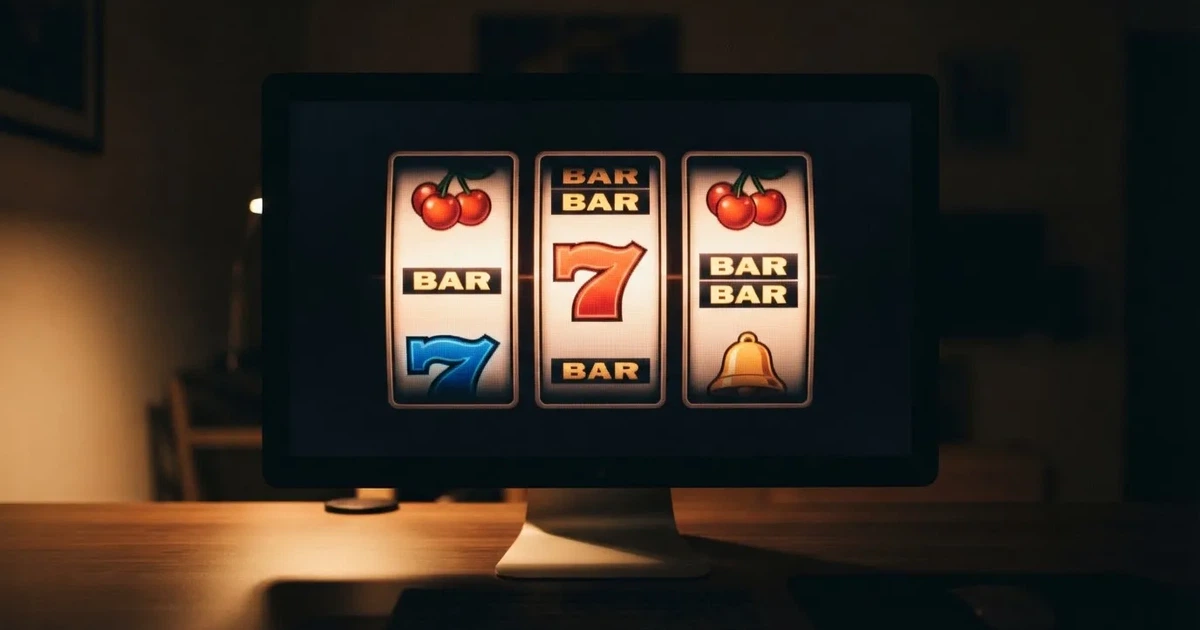
Table of Contents
- How a pokie is actually built: the paytable behind the spin
- Dragon Link and the “specific title” genre
- Pokies strategies and the regulatory view
- The fundamentals every tips article skips
- What the law actually says
- Responsible play, plainly stated
- What ACMA enforcement looks like in numbers
- The eleven brands, in turn
- The frame for the reader
- FAQ
How a pokie is actually built: the paytable behind the spin
The reel display is decoration; the RNG is the game
The visible reels on a modern video pokie are a graphic layer over a number generator. A random number generator — an RNG — produces thousands of outcomes every second, even when nobody is playing. The instant a player presses spin, the software picks the most recent number the RNG has produced and maps it to a stop on each virtual reel via the game’s paytable. The reel animation is a presentation of a result that has already been decided.
That single fact is the spine of every honest “tips and tricks” article. It means:
- Past spins do not feed forward. A machine that has not paid out in an hour is not “due.” Every spin is sampled independently from the same distribution.
- Bet size does not change the probability of a feature triggering. It changes the payout size when a feature does trigger, because the multipliers in the paytable scale with the line bet.
- Stop timing on the reels is theatrical. Holding the button, tapping it twice, or waiting for a “feeling” cannot move the RNG output, because the output has already been chosen.
- Autoplay and manual play produce the same expected return over a long session, because they call the same RNG.
A “tip” that contradicts any of those points is selling confidence, not information.
Paytable structure: what the numbers on the screen mean
The paytable lists every symbol, every line and every bonus combination, then expresses each as a multiple of the line bet. Three matching low-value symbols might pay 5×; five matching premium symbols might pay 1,000×; a scatter-triggered bonus might award 10 free spins with a multiplier on the bonus round only. The return-to-player percentage — the RTP — is the long-run average of those payouts, weighted by how often each combination occurs.
Australian law sets minimum RTP floors for licensed poker machines. New South Wales, the Northern Territory, Queensland and most of Victoria require at least 85%; Crown Melbourne is approved at 87%; the ACT, Tasmania and South Australia sit at 87 to 87.5%; Western Australia is the outlier at 90%. These are floors, not averages — the licensed machines in pubs and clubs sit at or just above them, with a small slice running higher. An offshore site that advertises “96% RTP” is naming a number that no Australian regulator has checked, on a machine no Australian regulator has approved.
Volatility: the number behind the word
Two games can both carry a 95% RTP and feel completely different. Volatility — sometimes called variance — describes the shape of the payouts. A low-volatility game returns small wins frequently, draining the bankroll slowly. A high-volatility game returns nothing for long stretches and then pays out in bursts. Neither is “better” than the other; they cost the same in the long run on a per-spin basis, but they behave very differently across a session of a few hundred spins.
A “tips” article that promises a steady return is, at heart, promising low volatility on a high-volatility machine. It cannot deliver that, and the article either knows it does not or has not read the paytable it is recommending.
Dragon Link and the “specific title” genre
Why one game dominates pokies tips pages
Search for “pokies tips” in Australia and the same name keeps appearing: Dragon Link, made by Aristocrat. The reasons are mechanical rather than mystical. Dragon Link has been installed in pubs and clubs across the country for years, which means thousands of Australians play it face-to-face each week and form opinions about how it behaves. It has a high-volatility profile and a visible “hold and spin” feature that gives the impression of agency, which makes it a natural subject for strategy write-ups. And it has a near-monopoly on attention in the genre because Aristocrat’s other big titles do not generate the same volume of forum discussion.
That volume does not mean Dragon Link is breakable. The “tips to win Dragon Link” articles that surface on aggregator pages recycle the same handful of claims — manage your bankroll, bet max on the bonus, look for machines in busy venues — none of which alter the underlying RNG. What they describe is bet sizing and session discipline, not a way to beat the game.
What a Dragon Link paytable actually shows
A Dragon Link machine typically advertises one of several return-to-player settings, with the denomination affecting how the bonus features pay. The “tips” pages rarely quote the paytable directly; they quote the bonus frequency, which is the more emotional number. The bonus frequency is real but it is a feature trigger rate, not a predictor of the next spin. It describes how often the bonus has triggered in a sample; it does not tell the next player when their own spin will hit.
The honest read of any Dragon Link tips page is: the author has read a forum, picked a denomination they like, and is telling the reader how to behave while the RNG does what it does. The advice on behaviour is mostly sensible — set a loss limit, treat each spin as independent, do not chase — and the advice on the machine is, at best, harmless; at worst, a promise the machine cannot keep.
Pokies strategies and the regulatory view
Eleven sites the ACMA itself has acted against
Eleven offshore casino brands appear in this page. None is recommended. Each is here because the Australian Communications and Media Authority issued a formal warning over it for offering prohibited interactive gambling services to people in Australia. The point of putting them side by side is not to compare their bonuses — the only sources for those are the affiliate marketing pages that monetise the warnings — but to show how regularly the same operators and their parent companies reappear across enforcement rounds.
| Brand | ACMA action and date | Operator named by the ACMA | Subject support |
|---|---|---|---|
| RocketPlay | March 2026 (Pulsup Ltd); earlier May 2022 (Dama N.V.) | Pulsup Ltd / Dama N.V. | — |
| Level Up Casino | May 2022 | Dama N.V. | listed on Bgaming.com |
| Woo Casino | March 2025 | Dama N.V. | — |
| Spirit Casino | May 2025 | Dama N.V. | — |
| National Casino | July 2025 | Consolutetish S.R.L. | listed on en.wikipedia.org |
| Bizzo Casino | July 2025; earlier 2022 (TechSolutions) | Consolutetish S.R.L. / TechSolutions | — |
| Ignition Casino | July 2025 | Bamboo Media | — |
| Instant Casino | February 2025 | EOD Code SRL | — |
| Jackbit | April 2026 | Ryker B.V. | — |
| Casino Intense | April 2025 | Sterplay Holding Ltd | listed in Abc.net.au, acma.gov.au, Crownmelbourne.com.au coverage |
| Sky Crown | September 2022 | Hollycorn N.V. | — |
Three patterns sit inside that table. First, the same parent company tends to draw multiple warnings: Dama N.V. alone accounts for four of the eleven brands, in two separate enforcement rounds a year apart. Second, the warnings are not a one-off; a brand warned in 2022 can reappear in 2025 under a different subsidiary. Third, the offshore industry as a whole moves faster than the regulator’s publication cycle, which is why the ACMA’s blocking round in mid-2026 named twelve more sites in a single week — 7Signs, ChromaBet, Donbet, Duospin, Freshbet, Slots Gem, Jacks Club, Lucky Start, Pointsbetz.com, Spinrise, Vinyl Casino and Wildsino — none of which had been on any tips page the year before.
Reading the table as a reader, not a shopper
A reader who arrived at this page through a “tips” search query is the same reader the offshore sites have been trying to acquire. The table exists so the next move — clicking through, signing up, depositing — is made with the warning already on the page rather than discovered afterwards. The “Subject support” column does not mark a brand as legitimate; it marks brands whose names appear on third-party listing pages that exist to drive traffic to those same brands. A name on a listings page is the marketing, not the licence.
The fundamentals every tips article skips
The house edge is built into the machine
A poker machine is engineered to retain a percentage of every dollar wagered, over the long run, on every spin. That retention is the house edge. In a licensed NSW pub it is at least 15 cents in the dollar. On an offshore site it is whatever the operator’s software has been set to, audited by whoever the operator has paid to audit it, and disclosed on a page the reader is unlikely to open. The “96% RTP” claim on an offshore slot is the same shape of number as the 87% on a licensed Tasmanian machine, but only one of them is enforced by a regulator with the power to inspect the code.

This is the single most important number a tips article can fail to mention. Strategies that try to recover losses, that try to “ride out” a bad streak, that try to “catch up” before quitting — every one of them faces a machine that has already taken its cut on every previous spin and will take it again on the next. There is no approach to a -EV game that produces a +EV outcome. The only variable the player controls is when to stop.
Independent spins, hot streaks, the gambler’s fallacy
The gambler’s fallacy has a precise mathematical name. It is the belief that, after a run of one outcome, the next draw is more likely to produce the other. It is wrong on a coin flip, wrong on a roulette spin, and wrong on a pokie. The machine does not remember. The machine does not compensate. A run of ten misses on a “high-volatility” game is exactly as likely, on the eleventh spin, as a hit on the very first.
Search engines know this is what readers want. The “hot” and “cold” machine language, the “loose” and “tight” venue talk, the forums where players claim to have found a pattern — these are all versions of the same misreading. The honest version of the same article tells the reader the pattern is in the eye, not on the screen.
What the marketing word “loose” actually means
A “loose” machine, in colloquial Australian gambling parlance, is one that pays out more often than its neighbours. There is no industry definition. There is no Australian regulator that certifies a machine as loose. The licensed machines in any one pub are usually set within a narrow band above the regulatory floor, with the variation between machines smaller than the variation between sessions on a single machine. A player who walks between machines looking for the loose one is, in the long run, walking between machines that all behave the same way.
What the law actually says
Online casino games are prohibited for Australians
The Interactive Gambling Act 2001, tightened by the Interactive Gambling Amendment Act 2017, makes it an offence to provide online casino games, online pokies and in-play betting to a person physically in Australia. No state or territory licenses an online casino. The Australian Capital Territory, New South Wales, the Northern Territory, Queensland, South Australia, Tasmania, Victoria and Western Australia all run their own regimes for land-based gaming machines, but the online product that the tips-and-tricks pages are about sits outside that regime entirely.
The licensed online product in Australia is narrower than the offshore product. Australians can bet on races and sporting events before they start, buy lottery tickets and play keno through licensed operators — most of them licensed through the Northern Territory Racing and Wagering Commission for tax reasons, even though the commission has no full-time staff and meets once a month. They cannot legally play online pokies, blackjack, baccarat or roulette on a site targeting Australian customers.
Credit cards and crypto are out
Since 11 June 2024, credit cards, credit-related products and digital currency have been banned as a way to pay for any licensed online wagering in Australia. Operators who break the rule face penalties up to A$247,500. The legal deposit routes for licensed wagering are debit card, bank transfer, PayID, Osko and BPAY. If an offshore pokies site is asking an Australian for a credit card number or a Bitcoin wallet address, it is operating outside the Australian rules — not at the edge of them, but past them.
The offshore site gives no Australian protection
An Australian who plays on a licensed site has somewhere to complain. An Australian who plays on an offshore site has, in practice, the site’s own customer support. There is no Australian complaints body that can compel a Curaçao-registered operator to release a withdrawal. There is no Australian regulator that can audit the offshore site’s payout record. There is no BetStop coverage, because the National Self-Exclusion Register — live since August 2023 — binds only Australian-licensed online and phone wagering services. The offshore site can be blocked by an Australian ISP while a balance sits on the player’s account, and the player has no recourse under Australian law.
The Interactive Gambling Amendment (Gambling Reform) Bill 2026
Parliament passed the Interactive Gambling Amendment (Gambling Reform) Bill 2026 on 19 August 2026. Its advertising and inducement measures commence on 1 January 2026+1, which means the bill is law with a future start date — a step closer to the perimeter of inducement marketing but not yet in force on a page written in 2026. The bonus-bonus pages that promise “free spins no deposit” to an Australian email address are the kind of inducement the bill is designed to catch; for now, the ACMA does so under the existing Interactive Gambling Act.
H2 Gambling Capital’s 2026 estimate
H2 Gambling Capital’s 2026 report estimates that Australians lose about A$3.9 billion a year to illegal gambling sites — a figure that the share of gambling going through legal channels fell into. That share dropped from 74% in 2021 to 64% in the report’s latest year. The shift is the economic face of everything else on this page: more money is leaving the regulated system than used to, and the offshore industry’s tips pages are one of the ways that shift happens.
Responsible play, plainly stated
The honest version of every “strategy”
Bankroll management is the only “strategy” that holds up to scrutiny, because it is the only one that does not try to change the machine. Decide before the session how much you are willing to lose. Stop when you reach it. Treat each spin as one of a long series of independent events. Do not chase. Do not increase the bet to “win it back.” Quit while you are ahead if you can, and accept that “ahead” on a session is rarer than the marketing suggests.
These are not tips in the sense the search engine means. They are the conditions under which the recreational experience stops being a financial one.
BetStop and the National Self-Exclusion Register
BetStop, the National Self-Exclusion Register, has been live since August 2023. It binds every Australian-licensed online and phone wagering service. A person who registers with BetStop cannot open a new account with a licensed operator and cannot be sent marketing by one. It does not cover the offshore sites listed in this page, because those sites do not connect to the Australian system.
For a person who wants to stop gambling entirely, BetStop is the strongest tool the Australian system offers. For a person who wants to stop gambling on offshore sites specifically, the tools are weaker: blocking software on the device, ISP-level blocking where the household provider offers it, and the discipline of not opening the URLs.
Help that is free and available now
The National Gambling Helpline is 1800 858 858, free, open 24 hours a day, seven days a week. There is a chat service at Gambling Help Online. Both are confidential. Both are funded outside the gambling industry. Neither will tell the reader that a strategy can beat the machine, because neither is in the business of selling a spin.
What ACMA enforcement looks like in numbers
The blocking rate
As of June 2026, the ACMA had directed Australian internet service providers to block 1,751 illegal gambling and affiliate marketing websites since the first blocking request in November 2019. The first blocking request went out in November 2019. From November 2019 to the June 2026 reporting round is roughly 79 months, which puts the long-run blocking rate at about 22 sites per month, or roughly 265 sites per year.
That figure is not a forecast; it is the pace the ACMA has actually maintained over more than six years of enforcement. Some months the agency blocks a single site; some months it blocks a dozen in one round. The 22-per-month average sits between the two. More than 230 unlicensed gambling services have left the Australian market entirely since the ACMA strengthened its enforcement posture in 2017, which is the other half of the same picture: the blocking list and the disappearance list together describe the visible side of the offshore industry’s pullback.
Why the rate matters for a reader
A blocking rate of roughly 22 sites per month means that any “tips” article recommending an offshore brand is, on average, recommending a site that will be on a blocking list within a few years — and possibly within a few months. The site that took a reader’s deposit and credited a bonus can become inaccessible before the wagering requirement is met. The balance that sat in the account at the moment of blocking does not, by default, return to the player. That is the cost the marketing pages do not show.
The eleven brands, in turn
RocketPlay
The ACMA issued a formal warning to Pulsup Ltd over Rocketplay.com.au in March 2026. The agency had already warned the same brand under its earlier operator, Dama N.V., in May 2022. Two warnings across different corporate parents, on the same product, three and a half years apart. The brand describes itself as a Curaçao-licensed casino; the ACMA describes it as a prohibited interactive gambling service. Both descriptions are accurate; the reader has to pick which authority applies.
Subject support: no verified listing on a third-party platform. The brand’s own marketing pages are the only sources for its bonus terms, and a reader who clicks through to one is on a site the ACMA has named twice.
Level Up Casino
Level Up was one of six Dama N.V. brands named in the ACMA’s May 2022 warning, alongside Bambet, Dazard, Rocketplay, Wild Tornado and Cobra Casinos. The brand surfaces on the BGaming listings page, which is a software aggregator’s directory rather than a licence register.
Subject support: listings-only on Bgaming.com. That is the entirety of the third-party evidence: a software provider’s directory entry, which tells the reader that BGaming’s games are integrated into the site, and nothing about how those games are operated, audited or paid out.
Woo Casino
The ACMA warned Dama N.V. over Woo Casino in March 2025 — two years and ten months after the same agency warned Dama N.V. over a different set of brands. The gap between the two warnings is the kind of figure that should give a reader pause: a parent company that draws one warning will, on the ACMA’s own pattern, draw another.
Subject support: none. Marketing on this site is purely internal to the operator’s own network.
Spirit Casino
Spirit Casino drew the second of Dama N.V.’s 2026 warnings, in May 2026. The name is new to the table; the operator is not. A reader searching “Spirit Casino tips” is being directed to a site the ACMA has named within the last twelve months.
Subject support: none. The brand appears only in the regulator’s publications and its own promotional material.
National Casino
The ACMA warned Consolutetish S.R.L. over National Casino in July 2025. The brand surfaces on a Wikipedia entry about the casino industry, which is the lightest possible form of “subject support”: a generalist encyclopaedia has an article that mentions the brand in passing.
Subject support: listings-only on en.wikipedia.org. A Wikipedia mention is not a licence, an audit or a regulator’s endorsement; it is an editor’s choice to include the brand in an article.
Bizzo Casino
Bizzo Casino drew two ACMA warnings: one in July 2025 over Consolutetish S.R.L. and an earlier one in 2022 over TechSolutions (CY) Group Limited and TechSolutions Group N.V. Two separate parent companies, two separate warnings, one brand. The pattern is the same one Dama N.V. shows with RocketPlay and Woo Casino: a brand that is easy to spin up under a new corporate wrapper once the warning has been issued against the previous one.
Subject support: none. Third-party evidence is absent beyond the regulatory record.
Ignition Casino
The ACMA warned Bamboo Media over Ignition Casino in July 2025. Ignition is one of the longer-running offshore brands in this table and one of the better-known in the Australian market, partly because it has historically been marketed through affiliate networks targeting Australian traffic.
Subject support: none. Marketing for this site exists outside any independent verification.
Instant Casino
The ACMA warned EOD Code SRL over Instant Casino in February 2025. Instant Casino is a comparatively recent brand name on a Curaçao-registered operator; the warning is the only Australian regulatory touchpoint on the public record.
Subject support: none. This is an operator-promoted brand with no independent third-party listing.
Jackbit
The ACMA warned Ryker B.V. over Jackbit in April 2026, alongside CasinOK. Jackbit is one of the newer brands in the offshore market, with an emphasis on crypto deposits and a Curaçao-issued wrapper licence. The April warning is the only Australian regulatory touchpoint in the public record.
Subject support: no verified listing beyond the ACMA’s own warning.
Casino Intense
The ACMA warned Sterplay Holding Ltd over Casino Intense in April 2025. Casino Intense’s “subject support” comes from mentions in mainstream Australian coverage: an ABC News article about poker machine policy, the ACMA’s own warning publications, and a Crown Melbourne table games page. None of those mentions is an endorsement; together they describe the regulatory and competitive landscape Casino Intense operates against.
Subject support: listings-only on Abc.net.au, acma.gov.au and Crownmelbourne.com.au. The combination is unusual in this table and worth noting: most of the eleven brands appear only in their own marketing and in ACMA publications. Casino Intense’s name appears in Australian journalism and in a competitor’s product page as well.
Sky Crown
The ACMA warned Hollycorn N.V. over its Sky Crown and Blue Leo casino services in September 2022, the longest-running warning in the table. Hollycorn N.V. operates a portfolio of brands under the same Curaçao wrapper, and Sky Crown is one of them. A warning that is four years old does not mean the site has stopped operating; it means the ACMA’s enforcement action against it is on the public record.
Subject support: no verified listing beyond the ACMA’s own warning.
The frame for the reader
What an honest tips page actually delivers
Strip the marketing off any pokies tips article and the advice that survives is the same: bankroll management, session length, the choice between volatility profiles, the recognition that no strategy alters the RNG. The advice is real and it is useful, but it is not what the search query was promising. The search query was promising an edge. There is no edge.
The honest version of this page is one where the reader finishes it knowing four things: how an RNG actually decides a spin, what the paytable actually says, what Australian law actually prohibits, and which offshore sites the ACMA has actually warned. None of those four things is a tip in the colloquial sense. All of them are what the page is for.
What this page does not do
This page does not recommend any of the eleven offshore brands listed above. It does not direct the reader to any of them. It does not provide a strategy that has been tested against a regulated audit. It does not suggest that any offshore site is a safer choice than another, because in Australian regulatory terms none of them is a safe choice at all.
A reader who arrived looking for a tip that wins more often will not find one here. A reader who arrived looking to understand why no such tip exists will.
FAQ
Can any tip or trick actually change the odds on a pokies machine?
No. Modern poker machines use a random number generator that produces thousands of outcomes per second, and the spin button simply selects the most recent number. No betting pattern, button-press timing or “strategy” can influence which number is chosen. The only variables a player controls are bet size (which changes the payout, not the probability) and when to stop.
What is different about tips for Dragon Link compared with pokies generally?
Dragon Link is one specific Aristocrat title with a high-volatility profile and a “hold and spin” feature. The tips written about it focus on bankroll management and bonus-feature frequency, neither of which alters the underlying math. The game’s popularity in Australian pubs and clubs makes it a frequent subject of these articles, but the underlying machine behaves the same way as any other RNG-driven pokie.
Is there a legal way for an Australian to test pokies strategies?
In licensed land-based venues — pubs and clubs in most states, the casino in Western Australia — Australians can play the regulated machines under each jurisdiction’s rules, with consumer protection and self-exclusion options. Online pokies are not legally available anywhere in Australia, so any online “strategy test” is happening on a prohibited service outside the law.
Does bet size change the odds of winning on a pokie?
No. Bet size scales the payout value when a winning combination lands, because the paytable expresses wins as multiples of the line bet. The probability of any combination landing on any given spin is independent of the bet. A larger bet produces larger wins and larger losses over the same number of spins, but the expected return as a percentage stays the same.
What do “tips to win pokies” articles usually get wrong about RNGs?
They treat the RNG as if it were a memory. They describe “hot” and “cold” machines, “due” jackpots, and patterns that supposedly predict the next spin. None of these are properties of a random number generator. Every spin is sampled independently from the same distribution. The “tips” that mention these ideas are repeating folklore that has been mathematically wrong for as long as electronic gaming machines have existed.
Why do so many tips pages specifically mention Dragon Link?
Dragon Link is widely installed in Australian pubs and clubs, has a high-volatility profile that creates dramatic session stories, and a visible bonus feature that gives the impression of player agency. The combination produces a high volume of forum discussion, which in turn produces a high volume of “tips” articles targeting search queries about the game. The volume reflects the marketing, not the machine.