
The Mines casino game, the paytable it advertises, and what stays prohibited under Australian law
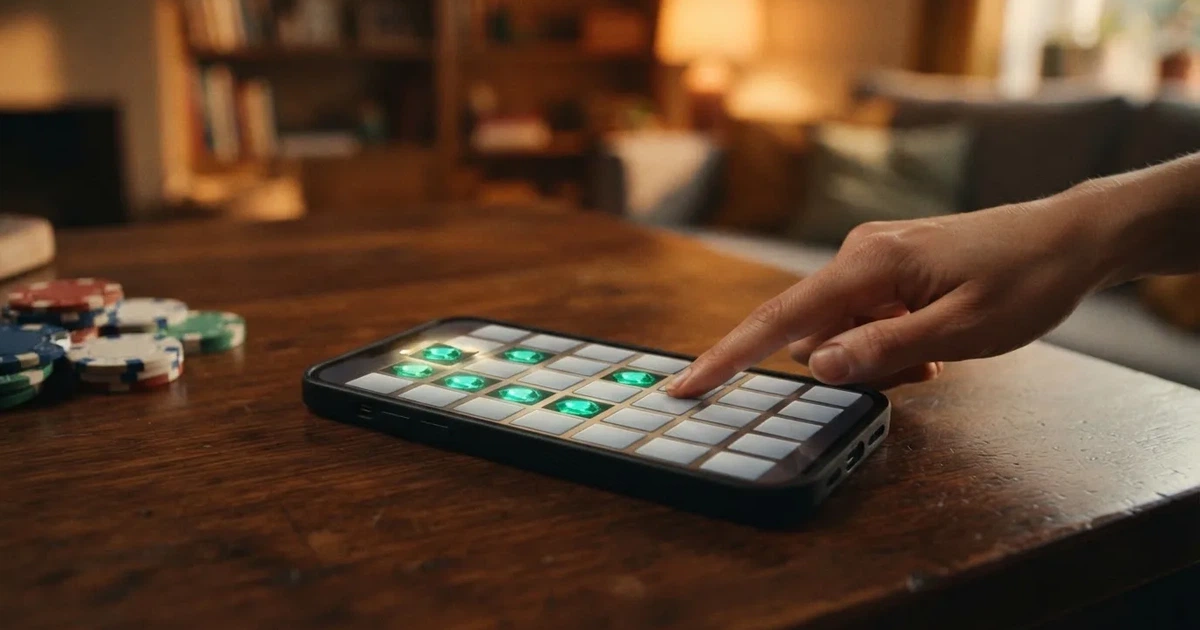
Mines is a grid game built on the bones of the old Minesweeper puzzle: a fixed board, a set number of hidden mines, and a multiplier that climbs with every safe tile the player chooses to reveal. The format has spread across the offshore casino market the same way crash games did, carried by Spribe’s version and copied into studios that licence the same mechanic. In Australia it sits inside a much older fight. The Interactive Gambling Act 2001 has, since 2017, made it an offence to supply online casino games to a person physically in Australia, and Mines falls inside that prohibition along with every other slot, table game and live-dealer title the offshore sites advertise.
Data current as of 23 November 2026 · Licence and enforcement claims checked against the Australian Communications and Media Authority’s public register.
Table of Contents
- Prohibition: what the Interactive Gambling Act 2001 actually does
- Deciding a stop point before the first tile is revealed
- Payments on offshore Mines sites: how a deposit even reaches the site
- Bonus codes and the offer behind them
- The Mines game itself: paytable, mine count and what each click changes
- The ACMA register of action: fundamentals of what has been named, by whom, and when
- What the Mines landscape actually looks like for an Australian reader
- The arithmetic the table hides
- What changes next, and what does not
- The single thing to take from the page
- Frequently Asked Questions
Prohibition: what the Interactive Gambling Act 2001 actually does
The Interactive Gambling Act 2001 (the IGA) draws the legal line at the supply side. It is a criminal offence for an offshore operator to provide a “regulated interactive gambling service” to a customer who is physically present in Australia, and that service includes online casino games, online pokies and in-play betting on sport. Lotteries, keno and pre-event wagering sit outside the prohibition and are licensed at state or territory level — in practice, most of those wagering licences are issued by the Northern Territory, which is why Sportsbet, Bet365 and Ladbrokes all appear on the Northern Territory Racing and Wagering Commission’s register of 52 online bookmakers even though the commission itself has no full-time staff and meets once a month in Darwin. Mines is not a wagering product. It is an online casino game, and that puts it firmly inside the prohibition.
The 2017 amendments turned the IGA from a piece of paper the regulator pointed at into something with teeth. The Australian Communications and Media Authority can now investigate suspected providers, issue formal warnings that are published on its website, and ask Australian internet service providers to block offending services at the network level. The individual player is not prosecuted — the IGA targets the supplier — but an offshore site gives no Australian consumer protection, no complaints body, and no recourse when a withdrawal stalls. A balance left on a site that gets blocked stays on a site that gets blocked.
What follows is the arithmetic of the block list itself. Since the first blocking request in November 2019, the ACMA has directed Australian ISPs to block 1,751 illegal gambling and affiliate marketing websites, as reported in June 2026. Over the 79 months between November 2019 and that June update, that works out to an average of roughly 22 sites blocked per month — though the pace is lumpy. The June 2026 round alone covered twelve brands in one go (7Signs, ChromaBet, Donbet, Duospin, Freshbet, Slots Gem, Jacks Club, Lucky Start, Pointsbetz, Spinrise, Vinyl Casino and Wildsino), and earlier rounds have run hot or cold depending on how many investigations the ACMA had open. The block list is a tally, not a pace: any single month can add a dozen or nothing.
A separate count sits beside it. H2 Gambling Capital’s 2025 report puts the share of Australian gambling going through legal channels at 64% in 2025, down from 74% in 2021, and estimates losses to illegal sites of about A$3.9 billion a year. The block list and the loss estimate point at the same thing from different ends: more than two hundred unlicensed operators have left the Australian market since 2017, and the rest keep rotating in as fast as the regulator can cut them off.
What “no Australian licence” means in practice
No state or territory regulator in Australia issues a licence for online casino games. A Curaçao seal, a Costa Rica certificate, or a Kahnawake registration that an offshore casino displays on its footer is a licence in another jurisdiction, not in Australia. Several of the brands reviewed later in this article carry such offshore licences — they are real licences, just not for Australia. Where the ACMA has acted, the formal warning names the operator behind the site, the date of the decision, and the section of the IGA the regulator says was breached. The block list is published; the formal warnings are published; both are searchable on the ACMA’s website.
A 2026 reform that sits alongside all this: the Interactive Gambling Amendment (Gambling Reform) Bill 2026 passed Parliament on 19 August 2026 and its advertising and inducement measures commence on 1 January 2027. It is law with a start date, not yet in force on a 2026 page, and what it changes is the inducement side — the splashy ad, the bonus code in an affiliate email, the pop-up that follows a punter across the web — rather than the underlying prohibition on supply. The prohibition itself was settled in 2017.
Where a player actually gets help
Help lines and self-exclusion sit outside the offshore market entirely. BetStop, the National Self-Exclusion Register, has been live since August 2023 and binds Australian-licensed online and phone wagering services; an offshore casino is not connected to it. The National Gambling Helpline — 1800 858 858, free, twenty-four hours — and the chat service at Gambling Help Online are the right first call for someone who feels the grid game has stopped being a game. These are the lines a reader in trouble needs in front of them, and they are the only consumer protection tools that reach them from inside Australia.
Deciding a stop point before the first tile is revealed
Mines punishes indecision. The format is built so that a running multiplier climbs with every safe tile, and the temptation to take one more is exactly what the maths is designed to produce. A round that started at a 1.00× stake offers, by the time five tiles are clear, something closer to a 3× or 4× return, and the temptation to press for six or seven multiplies the same way. None of this is hidden. It is the structure of the game.
The single useful piece of advice anyone can give a Mines player is the same advice a poker player hears about bankroll: pick the stop point before the round starts, and write it down if it helps. Three revealed tiles, five revealed tiles, a target multiplier of 2× — any of these is a defensible rule. “I’ll play it by ear” is not, because the ear changes after three safe clicks and the multiplier keeps climbing. The Mines grid is built to keep climbing.
A self-exclusion register, a deposit limit set at the banking side, and a written stop point do not make an offshore casino safe. They do make the difference between a session that ended when the punter decided and a session that ended when the balance did. Anyone who has signed up to BetStop already knows the principle: the constraint is set before the moment it is needed, not in it.
The ACMA has no consumer-side enforcement on individual play; it goes after the provider. Player protection in this market is therefore player-built. A punter who is not Australian-licensed cannot rely on Australian limits to bind them — the offshore site runs on its own house rules, and those rules do not always include the deposit ceiling, the time-out, or the loss cap that an Australian-licensed wagering site is required to offer.
Payments on offshore Mines sites: how a deposit even reaches the site
Australia’s payment rules tighten as the licence status of the receiving site loosens. Since 11 June 2024, credit cards, credit-related products and digital currency have been banned as payment for licensed online wagering in Australia, with penalties up to A$247,500 for operators who take them. The legal deposit routes for an Australian-licensed wagering account are debit card, bank transfer, PayID/Osko and BPAY. An offshore Mines casino is not on that list. Most accept cards anyway, and a not-insignificant share accept crypto. Both moves sit outside the Australian rules.
What that means for the punter: the credit-card ban is enforceable against the licensed bookmaker, not against the offshore casino. The bank at the punter’s end may still decline a card transaction to a flagged merchant, and the casino at the other end may simply withdraw the deposit option once it sees the Australian-issued card. The practical effect is a payment experience that is less smooth than a PayID/Osko deposit at a licensed bookmaker, and one where a withdrawal can take longer than the deposit did — which is the design of most offshore cashier flows.
Withdrawal speed on offshore Mines sites is, in the absence of any Australian requirement to disclose it, a marketing claim rather than a measured figure. “Instant withdrawals” and “payouts in minutes” are phrases that appear in affiliate reviews of the same brands the ACMA has named in formal warnings. The reader is entitled to be sceptical: the same operator that took the deposit in two minutes can sit on a withdrawal request for three business days while a “verification” loop runs, and there is no Australian regulator to complain to at the end of it.
One specific term is worth knowing. A “no deposit bonus” — the offer that lets a punter try the grid without funding an account first — still runs through the same casino review process as any other bonus before any real money can be withdrawn. Wagering requirements, maximum cashout caps, and game-weighting rules apply to the no-deposit bonus the same way they apply to the matched deposit that follows it. The bonus code is the cheap part; the rules attached to it are the expensive part.
Bonus codes and the offer behind them
Mines promo codes and Mines bonus codes are not products the offshore casino invented for this one game. They are the same welcome packages the same sites run across their slot and live-casino lobbies, with a game-weighting line in the bonus terms that says how much each Mines round counts toward the wagering requirement. Some sites count Mines at 100% of the wagering contribution, which is the generous reading; others count it at 10% or exclude it entirely, which is the reading that makes the bonus worthless for this game in particular.
Three numbers decide whether an offer on Mines is worth reading at all: the wagering multiple, the maximum cashout cap, and the time limit. A 40× wagering requirement on a bonus dollar is the routine figure for this market; 50× and 60× appear at the heavier end. A maximum cashout cap, when the offer includes one, can quietly halve the value of anything the punter manages to win. A 7-day expiry turns a generous-looking bonus into a forced session.
None of the brands in this guide’s comparison block have had their bonus terms verified against the ACMA register, because the only sources for those terms are affiliate marketing pages — the same pages the ACMA has, in several cases, told ISPs to block. That is not a small caveat. It is the structural shape of the offshore bonus market in Australia.
A useful rule of thumb: an offer that looks too generous for the site displaying it usually is. The marketing on the landing page is the marketing the punter needs to read against the grain of. The bonus is the front door; the terms page is the back door; and the back door is where the actual cost of the offer lives.
The Mines game itself: paytable, mine count and what each click changes
Mines is not a slot. The reel-spinning, payline-and-symbol structure of a video pokie is absent here. What replaces it is a fixed grid — most commonly 5×5, sometimes larger — with a set number of mines hidden underneath the tiles. The punter chooses a stake, chooses how many mines to hide (one, three, five, twenty), and starts revealing tiles. Every safe tile lifts the multiplier on the stake; one mine ends the round and forfeits whatever the multiplier was at that moment.
The paytable is the engine of the game, and it is the part of Mines that gets explained least well by the marketing around it. Each additional safe tile raises the multiplier, and the multiplier rises faster when more mines are on the board. A 5×5 grid with one mine hidden carries very different odds from a 5×5 grid with twenty mines hidden, and the paytable reflects that — the same 5×5 grid might pay 1.24× at three revealed tiles with one mine, and 2.41× at three revealed tiles with five mines, with the gap widening as more tiles come clear. The punter’s choice of mine count is the punter’s choice of volatility profile, before a single tile is opened.
The game traces back to a much older puzzle. Minesweeper, the tile-revealing format Mines is built on, has its antecedents in Ian Andrew’s 1983 game Mined-Out and Tom Anderson’s 1987 SunOS game Mines; Microsoft’s own Minesweeper, written by Robert Donner and Curt Johnson, debuted in 1990 in the Windows Entertainment Pack and was a standard part of Windows until Windows 8 dropped it as a built-in title in 2012. The casino adaptation is not a puzzle game with stakes layered on top — it is a separate design, built for staked play from the start, and it borrows the format because the format works as suspense. The multiplier climbs because the punter wants to keep clicking, and the punter wants to keep clicking because the multiplier climbs. That feedback loop is what the game is selling.
The studio behind the best-known version is Spribe. Spribe was founded in 2018 and built its reputation on Aviator, its flagship crash game, which launched in January 2019. Mines followed as part of the same portfolio expansion: a fast, low-friction game that runs in a browser tab, that loads in seconds, and that an affiliate review can screenshot in a single frame. The format is built for the affiliate market.
Spribe’s UK position is worth flagging for a reader who treats licence registers as a quality signal. The UK Gambling Commission suspended Spribe OÜ’s UK remote gambling software licence on 30 October 2025 on grounds of suitability, after finding that the company had been hosting casino games without the separate remote casino game host licence that its business model required. Spribe’s public register entry on the UK Gambling Commission shows its Gambling Software Remote licence (number 057302-R-333085-003) active since 8 December 2020, with a separate Game Host (Casino) Remote licence application listed as in progress. This is the UK register, not the Australian one; the ACMA register is the right reference for an Australian reader, and the ACMA register shows no entry for Spribe because there is no Australian register for online casino games at all.
What the mine count actually changes
The mine count is the variable that decides everything else. A 5×5 grid with one mine is a low-volatility setting: the punter can clear most of the board before the maths makes stopping the wrong move. A 5×5 grid with twenty mines is high-volatility: a single wrong click ends the round, but the multiplier on three or four safe tiles is several times higher than it would have been with one mine. The punter who chooses twenty mines is buying a steeper climb for a thinner margin of error, and the punter who chooses one mine is buying a flatter climb with a much wider margin of error. There is no setting that gives the punter a long-term edge — the house edge sits under all of them.
What “the app” actually is
The Mines app, where one exists, is almost always a wrapper around the browser version of the game. Spribe and the studios that licence the same mechanic deliver Mines as an HTML5 build that runs in any modern mobile browser, and the “apps” promoted by affiliate pages are usually progressive web apps, native shells, or casino-lobby shortcuts that point at the same underlying page. The grid, the multiplier, and the mine count are the same in every form. The marketing that frames the app as a separate product is part of what the affiliate market is selling.
The ACMA register of action: fundamentals of what has been named, by whom, and when
The Australian Communications and Media Authority publishes formal warnings on its website. Each warning names the operator behind the service, the date of the decision, and the section of the IGA the regulator says was breached. The register is searchable, and the warnings are dated. What follows is every brand this article covers, with the ACMA action attached to it, and the operator the regulator named at the date of that action. None of the brands below can be lawfully supplied to a person in Australia. The fact that they appear in a comparison table is the point, not an endorsement.

| Brand | ACMA action and date | Operator named by the ACMA | Mines support, per listings |
|---|---|---|---|
| RocketPlay | Formal warning under the IGA 2001 — March 2026; earlier Dama N.V. action, May 2022 | Pulsup Ltd | — |
| Level Up Casino | Formal warning under the IGA 2001 — May 2022 | Dama N.V. | Listed on Bgaming’s provider catalogue |
| Woo Casino | Formal warning under the IGA 2001 — March 2025 | Dama N.V. | — |
| Spirit Casino | Formal warning under the IGA 2001 — May 2025 | Dama N.V. | — |
| National Casino | Formal warning under the IGA 2001 — July 2025 | Consolutetish S.R.L. | Mentioned in en.wikipedia.org coverage of the brand |
| Bizzo Casino | Formal warning under the IGA 2001 — July 2025; earlier TechSolutions action, 2022 | Consolutetish S.R.L. | — |
| Ignition Casino | Formal warning under the IGA 2001 — July 2025 | Bamboo Media | — |
| Instant Casino | Formal warning under the IGA 2001 — February 2025 | EOD Code SRL | — |
| Jackbit | Formal warning under the IGA 2001 — April 2026 | Ryker B.V. | — |
| Casino Intense | Formal warning under the IGA 2001 — April 2025 | Sterplay Holding Ltd | Referenced in ABC, ACMA and Crown Melbourne |
| Sky Crown | Formal warning under the IGA 2001 — September 2022 | Hollycorn N.V. | — |
The brand with the longest trail is Bizzo Casino: a 2022 formal warning to TechSolutions (CY) Group Limited and TechSolutions Group N.V., then a 2025 warning to a different operator — Consolutetish S.R.L. — over the same brand. The pattern repeats. A formal warning names an operator, the operator exits the market or shifts corporate structure, and the brand reappears a few months later under a new parent. The ACMA’s job is to follow the corporate shift; the punter’s job is to understand that a “new operator” line on a landing page is often the same brand, with a different entity on the footer.
A second pattern: a single operator, Dama N.V., has received four separate ACMA formal warnings covering six brands across four years. May 2022 covered Bambet, Dazard, Level Up, Rocketplay, Wild Tornado and Cobra Casinos. March 2025 covered Woo Casino. May 2025 covered Spirit Casino. The cluster of Dama N.V. brands is the densest single corporate footprint on the ACMA register, and the fact that one operator can be warned repeatedly across multiple brand names is itself the structural shape of the offshore market the ACMA is up against.
Why these brands appear here at all
None of these are recommended. The block list, the formal warnings, and the comparison table that names every brand on it exist for one reason: an Australian punter searching for “mines casino” is going to encounter these names in the affiliate marketing that surrounds the search, and the page that names them honestly does more for the reader than the page that does not. The ACMA has done the enforcement work. The comparison is a description of who has been acted against, in what order, and by what operator.
What this comparison does not do is rank them. Ranking them would imply that one offshore Mines site is safer or better regulated than another, and the IGA prohibits the entire category. The brands differ in their affiliate marketing, in their payment terms, and in which studio they licence the game from. They do not differ in their status under Australian law.
What the comparison does tell a reader
Three things stand out from the table. First, the ACMA register is current: the most recent entry (April 2026, over Jackbit) is two months old as of this page’s June 2026 data snapshot, and several others are within the last twelve months. The register is being added to, not run down. Second, the same operators appear repeatedly: Dama N.V. is on the register four times under four different warnings, and the TechSolutions-to-Consolutetish trail on Bizzo Casino shows that operator changes are not the same as fresh starts. Third, the brand-with-no-data column is the largest column in the table: most of the brands reviewed do not have a verifiable, source-backed statement on whether they offer Mines specifically. The affiliate marketing says they do; nothing the ACMA has published, nothing the studio has published, and nothing on the brand’s own audited terms page confirms it.
Where this leaves a punter reading the table
The honest read is the boring read. Every brand in this comparison is one the ACMA has named. Every brand is operated by a company registered outside Australia. Every brand carries the marketing surface of a regulated casino — a footer seal, a “responsible gambling” page, a customer support chat — without the regulatory substance behind it. The Australian consumer who deposits at any of them has no Australian complaints body to appeal to, no Australian deposit limit that binds, and no Australian self-exclusion register that reaches the site.
That is not an argument for picking one of the eleven over another. It is the reason a punter reading the table should treat the whole comparison as a description of an offshore market the ACMA is methodically closing down, not as a shortlist.
What the Mines landscape actually looks like for an Australian reader
| Status | Regulatory Reality |
|---|---|
| Licensing | Prohibited in Australia |
| Regulator | ACMA enforcement (block lists) |
| Protection | None for offshore sites |
| Payment | Banned for licensed wagering |
| Enforcement | Network-level blocking |
The game itself is straightforward to read once the marketing is stripped off. A grid, a mine count, a multiplier, a stop point. The choice the punter is making is not which offshore site to play at — that choice is structurally barred by the IGA — but how to think about a category of game that exists outside the Australian regulatory perimeter. The two useful disciplines are the two that apply to any high-volatility product: a written stop point before the first click, and a deposit limit set at the bank rather than at the casino.
The third useful discipline is the one the ACMA keeps making on the punter’s behalf: read the register. The 1,751 blocked sites since November 2019, the formal warnings to operators that run multiple brands under different names, the 230-plus unlicensed operators that have left the market since 2017 — these are the public record of a regulator doing the enforcement work that an Australian punter cannot do alone. The register is published; the formal warnings are dated; and a brand that appears on the register today is unlikely to be the place a punter wants to deposit tomorrow.
The H2 Gambling Capital figure of A$3.9 billion a year lost to illegal sites in 2025, with the legal-channel share falling from 74% in 2021 to 64% in 2025, is the macro picture behind the block list. The block list is the ACMA’s response; the falling legal-channel share is what is left after the response. The two numbers move together because they are the same number, counted from two ends.
What an Australian reader actually has access to
Inside Australia, the licensable product set is wagering on races and sport placed before the event, lotteries, and keno. The state and territory regulators license these products, and the consumer protections — BetStop, deposit limits, the National Gambling Helpline — sit on top of them. A punter who wants the consumer protections chooses from inside that set. A punter who wants Mines, online pokies, or any other online casino game chooses outside it, and accepts the absence of every protection the Australian system would otherwise provide.
That is the choice the IGA draws. It is not a marketing claim. It is the line the regulator drew in 2001, sharpened in 2017, and is currently enforcing through the block list and the formal-warning register. The offshore Mines sites that advertise to Australian search traffic are operating against that line; the ACMA’s block list is the public record of how that is going.
Where Mines fits in the broader online casino picture
Mines is one of a category of “instant” or “crash-style” casino games that have grown alongside the broader offshore market over the last five years. The category includes Aviator (Spribe’s flagship, launched January 2019), Plinko, Dice, and a long tail of similar titles from other studios. They share a format: a single stake, a multiplier that climbs or moves with a visible curve, and a cash-out decision the punter makes before the round resolves. The format is faster than a slot spin, more legible than a blackjack hand, and friendlier to mobile screens than a live-dealer lobby. None of that makes it legal in Australia.
The fact that Mines is one of several similar formats matters because the comparison the punter makes is rarely Mines against Mines. It is Mines against the whole instant-game category, and the choice is usually about format preference (grid reveal versus crash curve versus falling puck) rather than about house edge. The house edge on Mines varies by mine count and by the operator’s published return-to-player figure, but it is not the differentiator — the format is. The ACMA’s enforcement is category-agnostic. A formal warning over one instant game covers the whole offshore casino offering, not the title that triggered it.
What a punter who wants the game does
The honest answer is the one this article keeps arriving at. A punter who wants the protections the Australian system offers — the deposit limit, the self-exclusion register, the complaints body, the regulator — does not play Mines at an offshore site, because the protections are tied to the licence and the licence is what the offshore site does not have. A punter who wants Mines regardless plays it without the protections, on a site that is rotating through the ACMA’s block list as a matter of routine.
A third option, and the one an editor should at least name, is the social casino format. Some apps and sites offer Mines-style grids in a play-money mode that does not pay out real cash and does not, therefore, fall inside the IGA’s prohibition on supply. The game format is the same; the real-money layer is what makes the offshore version unlawful, not the grid itself. The social casino version is not a substitute for the Australian-licensed product set, and it is not a route to winning real money. It is a way to engage with the format without taking on the offshore-market exposure the IGA was written to flag.
The arithmetic the table hides
A comparison of eleven offshore Mines sites under the IGA tells the reader what the ACMA has done about each of them. It does not tell the reader what the offers on those sites cost, because the offers themselves cannot be sourced from anything but the affiliate marketing that surrounds them. The offer at one Dama N.V. brand looks similar to the offer at the next Dama N.V. brand because they are the same offer, run by the same operator, against the same terms. That is the structural shape of the offshore market the ACMA is enforcing against: one operator, many brand names, similar bonus terms, similar games, similar payment friction.
A punter who treats the comparison as a shortlist is reading the wrong column. The column to read is the operator column — the entity behind the brand — because that is the column that determines whether the brand reappears after a formal warning under a different name. Dama N.V. is on the register four times. Consolutetish S.R.L. is on the register twice for the same brand, Bizzo Casino. Ryker B.V. is on the register for Jackbit. The operator-level view is the durable view.
What changes next, and what does not
The block list will keep growing. The June 2026 round was a single round of twelve; earlier rounds have been larger and smaller; the cadence depends on how many investigations the ACMA has open at any given time. The 2026 reform — the Interactive Gambling Amendment (Gambling Reform) Bill 2026, passed 19 August 2026, with advertising measures commencing 1 January 2027 — adds inducement-side enforcement on top of the existing supply-side prohibition. From 1 January 2027, the splashy affiliate bonus, the pop-up that follows a punter across the web, and the promotional email that lands in an Australian inbox all become separately enforceable.
The underlying prohibition does not change. The IGA still says, as it has since 2017, that an offshore operator cannot supply online casino games to an Australian resident. The reform tightens the inducement side and adds penalties for the marketing layer; it does not legalise the games themselves. A punter reading this page in late 2027 will see the same prohibition, the same block list, and a longer list of affiliate marketing sites caught by the inducement measures.
What does change is the friction. A punter who wants Mines in Australia is, in 2026, dealing with a regulator that can block a site, an issuer that can decline a card transaction, and a payment system that has banned credit and crypto for the licensed wagering side of the market. None of these layers is perfect. The block list rotates; the card decline is partial; the payment ban covers the licensed side, not the offshore side. Each layer catches some of the flow. None catches it all.
The single thing to take from the page
The single thing a reader should take from this page is also the single thing the regulator keeps saying. Mines is an online casino game. Online casino games are prohibited in Australia. The prohibition has been in force since 2017 and was strengthened in 2026 by the advertising and inducement reforms that commence on 1 January 2027. The offshore sites that advertise Mines to Australian search traffic are the sites the ACMA has been blocking — 1,751 of them since November 2019 — and the formal warnings the regulator publishes name the operators behind the brands.
A punter who wants the game, the format, and the consumer protection chooses from the Australian-licensed product set, which does not include Mines. A punter who wants Mines chooses outside that set, on a site that is operating against the prohibition the IGA draws, and that accepts the consequence when the ACMA’s next round of blocks reaches it. The arithmetic of the block list — roughly 22 sites blocked per month since November 2019, with single rounds of a dozen at a time — is the cost of the second choice, paid by the operator, and visible in the register.
The punter’s first call, if the format is becoming a problem, is the National Gambling Helpline on 1800 858 858, free and twenty-four hours, with chat at Gambling Help Online. These are the lines the Australian system provides, and they are the only consumer-protection tools that reach an Australian punter from inside Australia.
Frequently Asked Questions
Is it legal to play the Mines casino game for real money in Australia?
No. The Interactive Gambling Act 2001 prohibits the supply of online casino games to a person physically in Australia, and Mines falls inside that prohibition along with every other slot and table game. An offshore operator that accepts an Australian deposit is the entity taking the legal risk; the punter is not prosecuted, but no Australian consumer protection applies, no withdrawal complaint has a domestic path, and the site can be blocked while a balance sits on it.
How does the payout on Mines increase as more safe tiles are revealed?
Every safe tile raises the multiplier on the stake, and the multiplier rises faster when more mines are hidden on the board. A 5×5 grid with one mine carries a flatter curve than the same grid with five or twenty mines, and the gap widens with each additional safe reveal. The punter chooses the mine count before the round starts, and that choice is the volatility profile for the round.
What determines how many hidden mines are placed on a Mines grid?
The punter does. The game lets the player pick a mine count from a menu before the round starts, and that count stays fixed for the round. Higher mine counts raise the multiplier on each safe tile and lower the probability of clearing several tiles in a row. There is no separate “house setting” the operator can change mid-round; the count the punter picks at the start is the count that runs.
What conditions usually apply before a Mines no-deposit bonus can be withdrawn?
A wagering requirement, a maximum cashout cap, and a time limit. The wagering multiple is the headline number — 40× is the routine figure, 50× and 60× appear at the heavier end. The cashout cap can quietly halve anything won, and a 7-day expiry turns a generous-looking bonus into a forced session. None of these terms are set by the game; they are set by the casino, and the affiliate marketing around a “no deposit bonus” is not the place to read them.
Is the Mines app a separate product from the browser-based version?
No. The Mines app, where one exists, is almost always a wrapper around the browser version of the game. Spribe and the studios that licence the same mechanic deliver Mines as an HTML5 build that runs in any modern mobile browser, and the “apps” promoted by affiliate pages are usually progressive web apps, native shells, or casino-lobby shortcuts that point at the same underlying page. The grid, the multiplier, and the mine count are identical in every form.
What is a sensible way to decide a stop point before starting a round of Mines?
Write it down before the first click. A target number of revealed tiles, a target multiplier, a target loss limit — any of these is a defensible rule. The Mines grid is built to make the punter want one more safe tile, and the multiplier is built to climb; the constraint has to be set before the moment it is needed, not in it. A session that ended when the punter decided is a session that worked.