
Best Pokie Machine to Play Australia 2026: What Actually Decides the Spin
The phrase “best pokie machine to play” reads as a question with one answer. It doesn’t have one. Anyone who tells a stranger which machine to sit at in a pub in Parramatta or a club on the Gold Coast is selling something, and the thing being sold is rarely the machine. The honest answer is older and less exciting: the machine that fits the bankroll, the volatility the player can stomach, and the rules of the venue the player is standing in. Everything else is marketing copy that has been laundered through a review site.
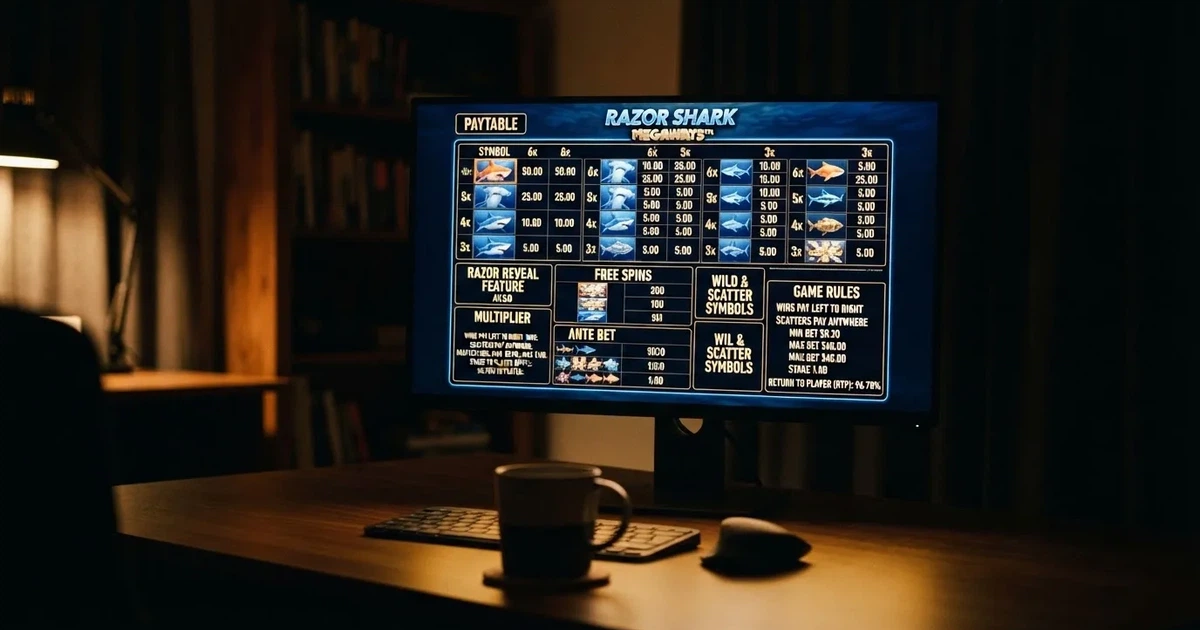
That said, the question is real. People walk up to a bank of pokies in a registered club or a casino floor and want some frame for the decision. This page is that frame. It covers what the laws in Australia actually permit and where a “pokie machine” can lawfully be played at all, what return-to-player and volatility mean in practice, how the machines differ from state to state, and how to read the brands that advertise “online pokies” to Australians even though no such product is licensed in the country. The aim is to give a reader enough to choose a machine themselves, not enough to choose a casino.
Current as of 23 November 2026, against the ACMA’s published register of formal warnings and blocking actions.
Table of Contents
- The Legal Frame: Why “Online Pokies” Cannot Exist for Australians
- Where the Machines Actually Live: Licensed Pokies Across the States
- Return-to-Player and Volatility: What Actually Decides the Spin
- Reading a Machine Before Sitting Down
- The Mechanics: What a Pokie Machine Actually Does
- Who Audits the Machines
- Responsible Play: The Tools That Already Exist
- Payments at Licensed Venues: Cash, Card and the EBT
- Mobile and Apps: Why the App Store Listings Do Not Match the Law
- Why “Online Pokie” Brands Keep Appearing, and What the ACMA Has Done About It
- The ACMA’s Record on Specific Operators
- RocketPlay
- Level Up Casino
- Woo Casino
- Spirit Casino
- National Casino
- Bizzo Casino
- Ignition Casino
- Instant Casino
- Jackbit
- Casino Intense
- Sky Crown
- What the Choices Actually Look Like
- A Note on Reform: Where the Law Goes Next
- Frequently Asked Questions
The Legal Frame: Why “Online Pokies” Cannot Exist for Australians
Australia’s online gambling market is split cleanly in two. Wagering on races and sport — placed before the event, paid out by a licensed provider — is legal. Online casino games and online pokies are not. The Interactive Gambling Act 2001, tightened by the Interactive Gambling Amendment Act 2017, makes it an offence to provide online casino games or in-play betting to a person physically in Australia. No state or territory licences these products, regardless of what licence a website claims to display in its footer.

The provider is the target of the law, not the player. Individual Australians are not prosecuted for using an offshore site, but the site itself faces enforcement from the Australian Communications and Media Authority. The ACMA can investigate, issue formal warnings, and direct Australian internet service providers to block offending sites at the network level. Once blocked, the site is unreachable from a typical Australian connection, and any balance a player had sitting with that operator is, in practice, frozen. There is no Australian complaints body, no local regulator to appeal to, and no Australian court with clear jurisdiction over a Curaçao- or Costa Rica–incorporated operator.
The minimum age for any form of legal gambling in Australia is 18. Credit cards, credit-related products and digital currency are banned as payment for licensed online wagering since 11 June 2024, with penalties of up to A$247,500 for operators who accept them. Legal deposit routes for the wagering side of the market are debit card, bank transfer, PayID and Osko, and BPAY. A site that asks an Australian for a credit card number or a crypto wallet address is operating outside the Australian rules, regardless of what licence it advertises elsewhere.
What this means for the question of “the best pokie machine to play” is straightforward. If the player is in Australia, the lawful options are the electronic gaming machines in licensed pubs, clubs and casinos. The online products that share the name do not exist as a licensed category here. The remainder of this page covers the lawful machines, then turns to the offshore sites so a reader can recognise them and know what to do when one finds them.
Where the Machines Actually Live: Licensed Pokies Across the States
Pokies — electronic gaming machines, the local word for slots — operate in every Australian state and territory, but each jurisdiction regulates their design and operation separately. The result is a patchwork. A machine in a Sydney club is not governed by the same rules as a machine in a Perth casino, and the return-to-player floor differs accordingly.
The legal minimum return-to-player, which is the long-run percentage of money wagered that the machine returns to players as winnings, sits at 85% in New South Wales, the Northern Territory, Queensland and most of Victoria, with Crown Melbourne’s machines held to a higher 87%. The Australian Capital Territory and Tasmania set the floor at 87%. South Australia is slightly higher again at 87.5%. Western Australia is the outlier at 90%, because that state effectively banned poker machines in pubs and clubs when Crown Perth opened in 1985; the only legal machines in WA are the roughly 2,500 inside Crown Perth itself, all approved by the state’s Gaming and Wagering Commission. The monopoly arrangement that was supposed to keep the number small has loosened over forty years, but the bars and clubs of Perth remain genuinely pokie-free.
The size of the market that exists outside those Western Australian walls is large. In 2020–21, Australians bet close to A$150 billion through gaming machines and lost A$12.18 billion on them, against a population that is 0.3% of the world’s people but uses about 3% of the world’s pub and club poker machines. New South Wales alone had 87,298 gaming machines outside casinos across 2,195 venues in June 2023, with player losses of A$8.18 billion in 2022–23. Queensland recorded 21,122 machines across 351 venues in October 2023. Victoria had 26,380 machines outside Crown Casino across 488 venues in 2021–22, operating under a statewide cap of 30,000.
The machines are not a recent import. Registered clubs operated the country’s first legal poker machines from 1956, in New South Wales, and the industry grew around them for decades before any state considered capping the numbers. Tasmania, which had granted the Federal Group a monopoly licence over all of the state’s poker machines from 1968, ended that monopoly with legislation passed in November 2021, moving oversight to the Tasmanian Liquor and Gaming Commission. Tasmania also planned mandatory pre-commitment cards for its machines — a system meant to force players to set loss limits before they sit down — but implementation of that reform was delayed until late 2025.
The point of these figures is not that Australia is unusual, though it is. The point is that a player in any given state is playing under one specific set of rules, with one specific RTP floor, in one specific venue class, and the choice of “machine” is the choice between products that already sit inside that frame. State-level rules do most of the regulatory work; the player’s choice is mostly about which title within those rules suits the bankroll.
Return-to-Player and Volatility: What Actually Decides the Spin
Every modern pokie carries two numbers that matter more than any other. The first is the return-to-player — the RTP — which is the percentage of all money wagered that the machine returns to players across a very long run. A machine with a 90% RTP keeps, on average, ten cents in every dollar wagered. The RTP is set by the machine’s design and is audited by state regulators before the machine can be deployed. The second is the volatility, sometimes called variance, which describes how the machine distributes its returns. A low-volatility machine pays out often and in small amounts. A high-volatility machine pays out rarely but in larger amounts. The RTP can be identical between two machines while the experience of playing them is completely different.
A player who plans to sit at a machine for half an hour on a A$50 bankroll will have a very different experience on a low-volatility title than on a high one. The high-volatility machine will eat the bankroll in long dry stretches punctuated by occasional larger wins; the low-volatility machine will produce smaller, more frequent returns and stretch the session. Neither machine is “better.” They are tuned for different players and different sessions, and the choice between them is the player’s to make once they know what the difference means in practice.
Bet size does not change the odds on a pokie machine. The mathematical edge the house holds is built into the machine’s programming and is independent of whether the player is betting one cent per line or the maximum. Higher bets do produce larger absolute payouts when a win lands, because the payout is calculated as a multiple of the line bet, but the percentage return is the same. A machine that returns 90% on a A$1 bet returns 90% on a A$5 bet. The player is risking more per spin, not improving the underlying odds.
Multi-line machines are not more likely to pay out than single-line machines. A multi-line game spreads the player’s wager across several paylines, so each spin costs more, but the odds on any individual line are the same as they would be on a single-line title. The total payback percentage is similar across the formats. The confusion comes from the fact that multi-line machines produce more visible “wins,” most of which are smaller than the total bet because they cover only some of the active lines. The machine is not being generous; it is being noisier.
Reading a Machine Before Sitting Down
A player walking up to a pokie in a licensed Australian venue can read more than they usually do. Every machine carries a help screen, accessible through a button on the console, which lists the title, the software version, and — in most jurisdictions — the theoretical return-to-player. The information is dense and small-print, and the venue has no obligation to point it out, but it is there. The rules for the venue’s player loyalty scheme, where one exists, will usually summarise RTP figures across the games in the venue; if they don’t, the player can ask a floor attendant for the help-screen access code.
Three things are worth checking before the first spin. The first is the RTP. The state minimum is a floor; individual titles sit above it, sometimes substantially. A 90% machine in a state with an 85% minimum is returning five cents more of every dollar to players than the cheapest machine on the floor. The second is the volatility, which the help screen will usually describe as low, medium or high, sometimes with a longer explanation. The third is the maximum bet, because some bonus features only trigger at maximum-coin play and the player who doesn’t realise that will never see the feature they’re paying for.
The venue matters in ways that go beyond the machine. Crown Melbourne, for example, offers baccarat variants — Traditional Baccarat, Crown Baccarat and 2 to 1 Baccarat — as approved table games regulated by the Victorian Gambling and Casino Control Commission, which replaced the VCGLR as Victoria’s casino regulator on 1 July 2022. The casino’s own games are governed by section 66 of the NSW Casino Control Act 1992 by analogy and by the corresponding Victorian statute, both of which require the operator to make the approved rules available to patrons on request. A player who asks can read them.
The Mechanics: What a Pokie Machine Actually Does
A modern pokie is a computer running a random number generator that produces a fresh outcome every fraction of a second, whether or not anyone is playing. The visible reels are a display layer on top of that generator. When the player presses the button, the machine stops on the most recent number the generator has produced, not on a result the machine has been building toward. There is no such thing as a machine being “due” to pay out, and there is no such thing as a machine that has been “cold” all night and is now “warming up.” Each spin is independent.
That independence is the core of how the game works and is the reason no strategy can overcome the house edge in the long run. Card counting works in blackjack because the cards already played change the composition of the deck still to be played. Nothing comparable exists in a pokie. The random number generator doesn’t remember the last spin, and the machine’s RTP is a long-run average over millions of outcomes, not a guarantee that the next hundred spins will return anywhere near the stated percentage.
What this means for a player is that session length matters more than session timing. A player who plans to spend A$100 over two hours at A$1 per spin is making 200 decisions, each with the same negative expectation as the last. The longer the session, the closer the actual outcome converges on the mathematical expectation. Short sessions can produce results that diverge wildly from the RTP, in either direction; long sessions always produce results close to it. The player who sits down for ten minutes and walks away with A$300 is not lucky in any systemic sense; they have simply hit the right tail of a probability distribution that the machine produces constantly.
Who Audits the Machines
Pokie machines in licensed Australian venues are not self-certified. Each state regulator — Liquor & Gaming NSW, the Victorian Gambling and Casino Control Commission, the Queensland Office of Liquor and Gaming Regulation, and so on — maintains its own approval process. Manufacturers submit a machine’s software and hardware for testing, the regulator runs its own checks, and only approved configurations can be deployed. Changes to a machine’s software require re-approval.
Independent testing houses sit between the manufacturer and the regulator. Labs such as BMM Testlabs and Gaming Laboratories International (GLI) verify that the random number generator behaves as claimed, that the published RTP is accurate across a large simulated sample, and that the machine’s logic cannot be tampered with in the field. The state regulator relies on those certifications as part of its own approval process. The result is a layered system: the manufacturer designs, the lab tests, the regulator approves, the venue operates, and the player is several steps removed from any of them.
This is one of the cleaner arguments for choosing a licensed venue over an offshore site. The offshore site does not have a state regulator checking its random number generator, does not have a local lab certification a player can read, and does not have an Australian complaints body to approach if the player believes the game is rigged. The licensed venue has all three. The RTP and volatility the player reads on the help screen in a Crown casino or a NSW club are figures that have been independently tested and are tied to an Australian licence.
Responsible Play: The Tools That Already Exist
The legal Australian system includes several player-protection mechanisms that the offshore market does not offer. The first is BetStop, the National Self-Exclusion Register, which went live in August 2023. A player who registers with BetStop is excluded from all Australian-licensed online and phone wagering services for a chosen period. The exclusion applies across every licensed operator simultaneously, which is the design point. The same exclusion does not bind an offshore casino, because the offshore operator is not connected to the register. Self-exclusion on an offshore site is, at best, a request.
The second is the National Gambling Helpline on 1800 858 858, free and available 24 hours a day, with a chat option at Gambling Help Online. The helpline is funded by the Australian government and staffed by counsellors, not by the gambling industry. State-level services sit alongside it: Gambling Help NSW, Gambler’s Help Victoria, Gambling Help Queensland, and the equivalents in other jurisdictions. These services are independent of the venues and the operators, and they exist specifically for the situations that arise around machines of this kind.
The third is the venue-level staff. Larger pubs and clubs in Australia have trained responsible-gambling officers, identifiable by badge or by the venue’s own signage. They can place a player on a venue self-exclusion, talk through the venue’s pre-commitment options, and direct the player to the state-level services. They are not there to manage the player’s bankroll, and they cannot prevent a player from entering the venue, but they exist and can be approached. Tasmania’s planned mandatory pre-commitment cards, when they finally deploy, will be the most aggressive version of this kind of intervention in the country, forcing every player to set a loss limit before they can play. That system was delayed into late 2025, and how it lands in practice is something the next year or two of Tasmanian play will determine.
Payments at Licensed Venues: Cash, Card and the EBT
A player at a licensed Australian pokie is paying in cash, or in some venues with a debit card or the venue’s own electronic betting terminal. The EBT, where it exists, takes cash, links it to a player’s loyalty card, and credits the machine. The system is closed: money goes in, money comes out, and the venue’s cashier issues a hand-pay for larger wins. There is no online wallet and no crypto option, because the venues do not need one and the licensing regime does not permit one.
The banned-payment rule that took effect on 11 June 2024 applies to licensed online and phone wagering, not to gaming machines in a venue. A player at a pokie is paying cash or a venue-issued debit instrument, not a credit card or a crypto wallet. The rule matters most for the licensed online wagering side of the market — sports betting, racing, the lotteries and keno — and the practical effect is that an Australian player using a credit card or a cryptocurrency deposit for an offshore casino is, in addition to using an unlicensed site, transacting in a way the Australian rules have explicitly closed off.
This is the cleanest indicator of whether a site is operating outside the Australian rules. An offshore casino that accepts a credit card from an Australian player, or asks for a crypto deposit, has decided to ignore the local regime. That decision tells the player a great deal about how the operator would handle a withdrawal dispute.
Mobile and Apps: Why the App Store Listings Do Not Match the Law
The App Store and Google Play carry listings for “real pokie apps” aimed at Australian players, often with names that suggest a free-play or social-casino experience. Some of those products are exactly what they appear to be: simulated slots that pay out nothing, with optional in-app purchases for coins. The product is treated as a game, not as gambling, by the app store.
The listings that advertise real-money play, that offer cash deposits and real withdrawals, are not licensed to take Australian players. The Interactive Gambling Act 2001 covers apps as well as websites: any product that provides online casino games or online pokies to a person in Australia is a prohibited interactive gambling service, and the store-level availability of an app does not change that classification. Apple’s and Google’s policies on gambling apps vary by jurisdiction, and the Australian rules are not always what an app’s listing implies.
What a player gets when they install one of these apps from outside the licensed wagering category is the offshore site’s product, with all the problems that brings. The app’s random number generator has not been audited by an Australian regulator. The app’s payout times are governed by the operator’s own terms, not by any local complaints body. The app can be removed from the store at any time, and the player’s balance with it. There is no BetStop binding, no National Gambling Helpline specific to that product, and no local self-exclusion that the app respects.
The licensed wagering apps — sports and racing, mostly — are a different category. They are licensed by the Northern Territory Racing and Wagering Commission, which regulates 52 of Australia’s online bookmakers including Sportsbet, Bet365 and Ladbrokes for tax reasons. The commission has no full-time staff and meets once a month in Darwin, a fact that has drawn criticism from those who argue the regulator is too small for the size of the industry it oversees, but the licences it issues are recognised under the Interactive Gambling Act and the products they cover are legal for Australians. None of them, however, is a pokie machine.
Why “Online Pokie” Brands Keep Appearing, and What the ACMA Has Done About It
The marketing for online pokies aimed at Australian players has not gone away because the law has not been fully enforced. The ACMA has been the main enforcement body since 2017, when the Interactive Gambling Amendment Act came into force, and the cumulative result is substantial: as of a round reported in June 2026, the ACMA had asked Australian internet service providers to block 1,751 illegal gambling and affiliate marketing websites since the first blocking request in November 2019, and more than 230 unlicensed gambling services had left the Australian market since enforcement was strengthened.
In the round reported on 26 June 2026 alone, twelve more sites were added to the block list: 7Signs, ChromaBet, Donbet, Duospin, Freshbet, Slots Gem, Jacks Club, Lucky Start, Pointsbetz, Spinrise, Vinyl Casino and Wildsino. The pattern of the list tells its own story. Most are casino brands, a few are affiliate sites that funnel traffic to them, and the names cycle through quickly because new domains are easy to register once an old one is blocked.
The blocking rate, run against the running total of 1,751 sites blocked and the date of the first blocking request in November 2019, lands between roughly 260 and 290 sites per year when averaged across the years the ACMA has been issuing these requests. The lower end of the band is the average across the entire enforcement period; the upper end reflects the more recent pace, which has accelerated as new offshore operators have appeared faster than the regulator can catalogue them. A player who tries to reach any of these brands from an Australian IP address on a major ISP will see a block page rather than a casino. The block is imperfect — VPNs route around it, mirror domains appear, and the marketing migrates to social channels — but it is the reason most of these brands are not household names in Australia.
The formal-warning side of the ACMA’s work is more pointed. A formal warning is published on the ACMA’s own website and names the operator behind a brand; it is the regulator’s public record of which companies have been told, in writing, that their Australian-facing product is prohibited. The warnings do not block the site, but they do establish a record that the operator was on notice. The brands listed further down this page are drawn from that record. None is recommended, none is described as offering a workable product to Australians, and none carries bonus terms; the only sources for bonus terms are affiliate marketing pages, which the ACMA’s enforcement actions specifically target.
H2 Gambling Capital’s 2025 report estimates that Australians lose about A$3.9 billion a year to illegal gambling sites, and that the share of gambling going through legal channels fell from 74% in 2021 to 64%. The illegal market is large because the legal market does not offer what the offshore sites offer: online pokies, online casino games, in-play betting on every sport. The trade is convenience against recourse, and the player who chooses the convenience finds out about the recourse only when something goes wrong.
The ACMA’s Record on Specific Operators
A formal warning under the Interactive Gambling Act 2001 is the regulator’s written record that a brand has been told its Australian-facing product is prohibited. The following brands are listed because the ACMA itself has published a warning naming them. None of them is a recommended destination, and none of them offers a lawful online pokie to Australians; they appear here so a reader who has seen the marketing can recognise the name and know what the regulator has already said.
| Brand | ACMA action and date | Operator named by the ACMA | Subject support |
|---|---|---|---|
| RocketPlay | Formal warning — March 2026; earlier warning May 2022 | Pulsup Ltd; earlier Dama N.V. | — |
| Level Up Casino | Formal warning — May 2022 | Dama N.V. | listings-only |
| Woo Casino | Formal warning — March 2025 | Dama N.V. | — |
| Spirit Casino | Formal warning — May 2025 | Dama N.V. | — |
| National Casino | Formal warning — July 2025 | Consolutetish S.R.L. | listings-only |
| Bizzo Casino | Formal warning — July 2025; earlier 2022 | Consolutetish S.R.L.; earlier TechSolutions | — |
| Ignition Casino | Formal warning — July 2025 | Bamboo Media | — |
| Instant Casino | Formal warning — February 2025 | EOD Code SRL | — |
| Jackbit | Formal warning — April 2026 | Ryker B.V. | — |
| Casino Intense | Formal warning — April 2025 | Sterplay Holding Ltd | listings-only |
| Sky Crown | Formal warning — September 2022 | Hollycorn N.V. | — |
The column on the operator named by the ACMA matters more than it looks. Offshore casino groups routinely rebrand, register new domains, and shift the parent company listed in a footer. The ACMA’s formal warning attaches to the operator behind the brand, not just to the domain, which is why the regulator names the corporate parent and why several of the parent names appear more than once in the table. Dama N.V. alone has been the subject of warnings in 2022, 2025 and 2026, covering six brands in the first round and two more since.
The subject-support column is empty for most of the brands. Where the listings-only tag applies, the only places a reader might have encountered a positive characterisation of the brand are affiliate marketing pages and SEO-driven directory sites, which are exactly the channels the ACMA’s enforcement actions target. The absence of any independent endorsement is the point.
RocketPlay
The ACMA issued a formal warning to Pulsup Ltd over RocketPlay in March 2026, with an earlier warning to Dama N.V. in May 2022. The brand’s Australian-facing marketing is exactly what the Interactive Gambling Act 2001 prohibits: an offshore casino product offered to people in Australia, advertised in Australian dollars, with no Australian licence. The brand does not exist in the licensed Australian market, and a player who reaches it through a mirror domain or a VPN is using a product the regulator has already named. There is no version of this operator that fits the “best pokie machine to play” question for someone in Australia.
Level Up Casino
Dama N.V. was the named operator on a May 2022 warning covering six brands, of which Level Up is one. The brand is recognisable from affiliate marketing rather than from any licensed Australian venue. The presence of the brand in third-party listings reflects SEO rather than endorsement, and the listings-only tag is the cleanest summary of what those listings are. For a player in Australia, the Level Up Casino product is no more accessible than the RocketPlay one.
Woo Casino
The ACMA issued a further formal warning to Dama N.V. over Woo Casino in March 2025, separate from the 2022 warning that named the same operator over a different set of brands. The pattern — a corporate parent warned once, then warned again as it rebrands or adds new brands — is exactly what the regulator’s enforcement record describes. Woo Casino is one entry in a longer list that the operator behind it has accumulated over four years.
Spirit Casino
Dama N.V. received another formal warning in May 2025, this time over Spirit Casino. The May 2025 warning sits alongside the March 2025 Woo Casino warning and the original 2022 round, which is three rounds in four years for the same operator. The brand itself is a newer one; the corporate parent is not. The brand is not a destination an Australian player can use lawfully.
National Casino
In July 2025 the ACMA issued a formal warning to Consolutetish S.R.L. over National Casino and Bizzo Casino. National Casino has been around the affiliate-marketing circuit for years, which is how it shows up in the SEO-driven listings that the listings-only tag references. The brand’s own product has no Australian licence. The warning is the regulator’s public record of what the operator was told.
Bizzo Casino
The July 2025 warning to Consolutetish S.R.L. over Bizzo Casino was the second for the brand. The first came in 2022, addressed to TechSolutions (CY) Group Limited and TechSolutions Group N.V. The corporate parent changed between the warnings; the regulator’s view of the underlying conduct did not. A player who tries the brand today reaches the same kind of unlicensed offshore product that was named in 2022, regardless of which entity is currently operating it.
Ignition Casino
The July 2025 warning named Bamboo Media as the operator behind Ignition Casino. The brand has been marketed to Australian players through affiliate channels for several years, framed as a US-friendly offshore casino. From an Australian perspective, the framing is irrelevant; the product is offered to people in Australia without an Australian licence. The warning is the regulator’s record.
Instant Casino
In February 2025 the ACMA issued a formal warning to EOD Code SRL over Instant Casino. The brand positions itself as a fast-payout offshore casino. The position has no Australian recognition. The Interactive Gambling Act does not care how fast the operator processes a withdrawal; it cares that the product is offered to Australians at all, which it is not licensed to be.
Jackbit
In April 2026 the ACMA issued a formal warning to Ryker B.V. over Jackbit and CasinOK. The brand is a recent entrant to the offshore market and has been marketed through the usual SEO channels. The corporate parent named in the warning is one the regulator had not previously published in this context, but the underlying issue is the same as every other brand on this page: the product is offered to Australians without an Australian licence.
Casino Intense
In April 2025 the ACMA issued a formal warning to Sterplay Holding Ltd over Casino Intense. The brand is one of the smaller names on the affiliate-marketing circuit, and the listings-only tag captures the reason it appears in any “top casino” list at all: directory sites and SEO pages, none of which is an endorsement. The brand’s Australian-facing product is prohibited.
Sky Crown
The ACMA issued a formal warning to Hollycorn N.V. over its Sky Crown and Blue Leo casino services. The Sky Crown brand has been part of the offshore circuit since before the 2022 warning that named Hollycorn as its operator. The warning covers two brands under the same parent. Neither is a lawful destination for an Australian player.
What the Choices Actually Look Like
For a player in Australia who wants to play pokies, the decision is shorter than the marketing suggests. The lawful path runs through a registered club, a licensed pub, or a casino floor. Within those venues, the machine itself is the choice, and the choice comes down to three variables: the RTP, which is the long-run return the machine has been tested to deliver; the volatility, which is the shape of the payout distribution; and the bet size, which the player sets within the machine’s range. Nothing else on the machine is a meaningful variable for the player who is choosing honestly. Themes, branded tie-ins, and bonus features are entertainment layers over a math model that has already been decided.
The illegal path runs through an offshore site or app. The product is what the marketing describes — online pokies, online casino, fast payouts, big bonuses — but the licence the site advertises is not an Australian one, the regulator that audited the random number generator is not an Australian regulator, the complaints body is not an Australian one, and the operator can be blocked at the network level with a balance still sitting in the account. The ACMA’s record on these brands is the public part of that story; the unpublished part is what happens to the player who tries to withdraw.
The reader who came to this page looking for a name — the brand, the app, the title — will not find one here, because no such name is the honest answer. The honest answer is the venue, the state rules, the machine’s RTP, the player’s bankroll, and the player’s tolerance for volatility. The rest is marketing, and the regulator has already read most of it.
A Note on Reform: Where the Law Goes Next
The Interactive Gambling Amendment (Gambling Reform) Bill 2026 passed Parliament on 19 August 2026, and its advertising and inducement measures commence on 1 January 2027. The Bill is law with a start date, which is the way to describe a piece of legislation that has been passed but is not yet in force on a page written in 2026. The advertising measures are aimed at the affiliate and bonus-incentive layer of the offshore market, and they will give the ACMA additional grounds to act against the marketing that currently reaches Australian players through search and social channels. The effect on the underlying offshore product is limited, because the operator remains offshore, but the effect on the channels that drive Australian traffic to those operators is real.
The mandatory pre-commitment system planned for Tasmania is the more substantive reform on the gaming-machine side. When it deploys, every player in the state will need a card that records loss limits before they can sit at a pokie, which is a structural change to how the machines are accessed. The system was delayed into late 2025, and how it lands in practice — whether players accept it, whether venues enforce it, whether the state’s loss numbers move — is the next chapter of the Australian pokie story.
The Northern Territory regulator’s small footprint, with no full-time staff and monthly meetings, has drawn criticism from those who argue the regulator is under-resourced for the size of the industry it oversees. Whether the criticism produces a structural change to the NTRWC’s funding or staffing is a separate question, but it sits in the background of every licensed wagering product that operates out of Darwin.
Frequently Asked Questions
What’s the difference between a low-volatility and a high-volatility pokie machine?
A low-volatility machine returns small wins often; a high-volatility machine returns larger wins rarely. The RTP, which is the long-run percentage returned to players, can be identical between two machines while the experience of playing them is completely different. The choice between them is about how the player wants the session to feel, not about which returns more in total.
Does bet size change the odds on a pokie machine?
No. The house edge is built into the machine’s programming and is independent of the bet size. Higher bets produce larger absolute payouts when a win lands because the payout is a multiple of the line bet, but the percentage return to the player is the same at A$1 per spin as at A$5 per spin. The player is risking more per spin, not improving the underlying odds.
Are mobile pokie-machine apps the same as the licensed machines in a pub or club?
No. Apps offered through app stores and aimed at Australian players are not licensed as online pokies under the Interactive Gambling Act 2001. The licensed machines in a venue have been tested by an Australian regulator and operate under state-level rules; the apps have not. The product is not the same even where the title on screen looks similar.
How can someone find the payout percentage of a specific pokie machine before playing?
Every licensed pokie in an Australian venue carries a help screen, usually accessed through a button on the console, that lists the title, software version, and theoretical return-to-player. The state minimum RTP varies by jurisdiction, and individual titles sit above that floor. The venue has no obligation to point the screen out, but the information is there, and a floor attendant can show the player how to reach it.
Are multi-line pokie machines more likely to pay out than single-line ones?
No. A multi-line machine spreads the player’s wager across several paylines, so each spin costs more, but the odds on any individual line are unchanged. The total payback percentage is similar across formats. Multi-line machines produce more visible “wins” because smaller returns trigger on individual lines; most of these wins cover only some of the active lines and return less than the total bet.
Who audits pokie machines in licensed Australian venues?
Independent testing houses such as BMM Testlabs and Gaming Laboratories International verify the random number generator, the published RTP, and the machine’s logic. State regulators — Liquor & Gaming NSW, the Victorian Gambling and Casino Control Commission, the Queensland Office of Liquor and Gaming Regulation, and their equivalents — approve the configuration before deployment. The offshore sites do not have any of these steps in the Australian regulatory chain.