
How a real-money PayID withdrawal actually clears in Australia
A player who has turned casino credit into cleared cash wants one specific thing from a “PayID withdrawal”: the cash, in an Australian bank account, on the next refresh of their banking app, at any hour of any day. That is a reasonable thing to want, and the underlying infrastructure can deliver it. What complicates the search is that the operators filling the results for “instant PayID withdrawal real money Australia” are, in nearly every case, brands the ACMA has formally warned for offering prohibited online casino services to Australian residents. The rails work. The licensed alternative is sports and racing wagering before the event. And the ACMA has, by name, told each of the eleven brands that dominate the search result in 2026 to stop.
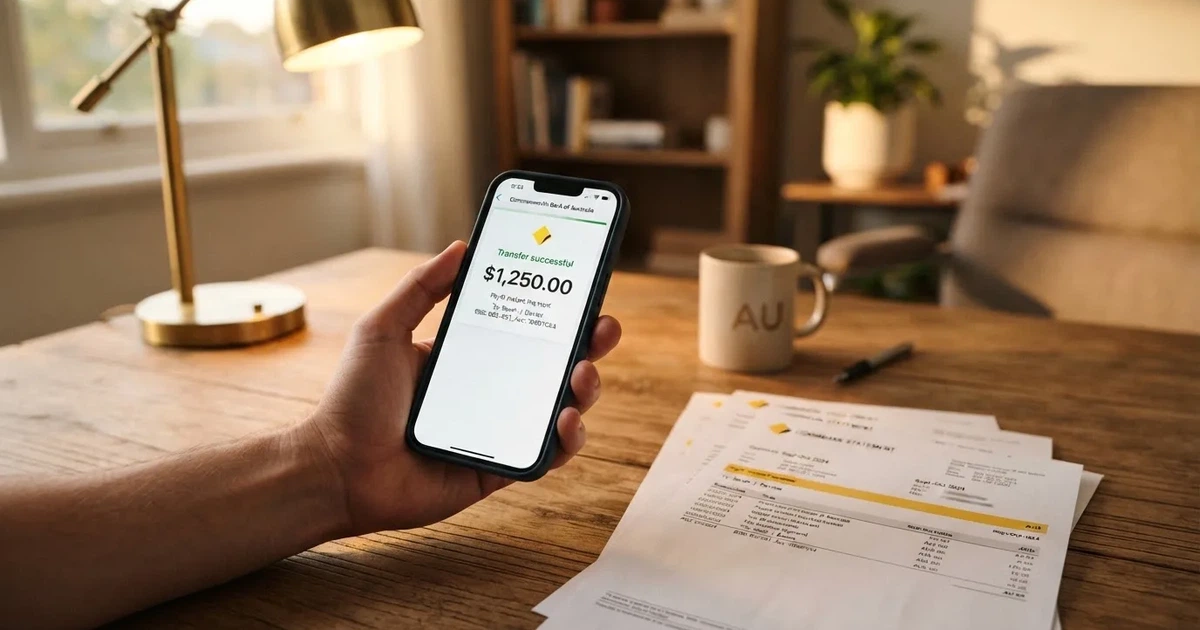
Current as of 3 November 2026 against the ACMA register and the Australian Payments Plus PayID directory.
Table of Contents
- Settlement mechanics: what actually has to happen between request and bank credit
- Landscape: ACMA-actioned operators
- Fundamentals: the four links between a cleared win and a paid bank account
- Prohibition: what the IGA 2001 forbids and how the ACMA enforces it
- Responsible play around a real-money withdrawal
- The ACMA’s record, brand by brand
- Frequently asked questions about real-money PayID withdrawals in Australia
Settlement mechanics: what actually has to happen between request and bank credit
A PayID is not a payment rail on its own. It is an easy-to-remember identifier — a mobile number, an email address, an ABN, or an Organisation Identifier — that points at a bank account somewhere in Australia. The transfer itself runs on the New Payments Platform, the infrastructure launched in February 2018 by Australian Payments Plus and the Reserve Bank of Australia to let households, businesses and government agencies move money in close to real time, twenty-four hours a day, every day of the year. The Reserve Bank is the overseer of the NPP and, separately, owns and operates the Fast Settlement Service that settles NPP transactions individually in close to real time around the clock.
What makes the “instant” claim defensible is the Osko service that sits on top of the NPP. When a participating bank sends to another participating bank — addressed to a BSB and account number, or to a PayID — Osko delivers the funds in under a minute. There is no cut-off at the close of business, no overnight queue, and no waiting for the receiving bank to “process” the deposit. As of 2026 the count of Australian financial institutions offering PayID through their online banking has passed one hundred, and the number of registered PayIDs in Australia crossed twenty-five million by April 2025.
The speed of the last mile, however, is not the speed of the whole chain. A withdrawal request at an online casino has to traverse three stages before the Osko transfer begins, and any one of them can stall the cash-out for hours or days.
The first stage is the balance itself. A real-money withdrawal can only move money that has already stopped being bonus credit. If the cleared balance is sitting under a wagering requirement — the rollover condition attached to a deposit bonus, a free-spins package, or any promotion that paid out in bonus funds — the casino will not release it for cash-out until the requirement is satisfied. Until that point, the funds on screen are not cash, no matter what label the cashier gives them.
The second stage is identity verification. Australian-licensed wagering operators are required to verify a customer’s identity before processing withdrawals, and the offshore operators that market PayID withdrawals follow the same practice, partly because their own payment processors and banking partners require it. The first cash-out at a new account is therefore typically the slow one: a driver licence or passport, a recent utility bill or bank statement as proof of address, and sometimes a selfie or live-video check against the document. Once the file is on record and the casino’s compliance team has approved it, subsequent withdrawals to the same PayID clear in minutes rather than days.
The third stage is the actual PayID transfer. Once the casino hits “release”, the instruction travels through the operator’s payment processor, lands at the customer’s bank via the NPP, and arrives in the linked account under Osko’s near-real-time settlement. The customer typically sees the funds in their banking app before the casino’s own confirmation email has been delivered.
The combination of those three stages is what an “instant PayID withdrawal” really means in practice. For a verified customer withdrawing cleared cash to a bank that supports Osko, the experience is the one the marketing describes. For a customer whose identity has not yet been confirmed, or whose balance still carries a wagering requirement, the same withdrawal button produces a queue rather than an arrival.
Two further points are worth noting about the rails themselves. First, when paying to a PayID, the sender sees the name of the account holder before the transfer is confirmed — the verification step that protects against mistaken payments and scam payments. AP+ is unusually direct about gambling: if a customer is asked to transfer funds to a PayID on an illegal gambling site, “it is almost certainly a scambling website”, their own word for a social-media-advertised scam that funnels people onto a fake or unlicensed gambling platform. Second, PayID itself does not contact customers. Emails and text messages claiming to be from PayID are a known scam pattern, and PayID does not ask anyone to send money in order to receive it.
The fee picture is straightforward for the player. Apple Pay, Google Pay and Samsung Pay now account for roughly forty-five per cent of all card payments in Australia by number. Apple charges no fee to consumers for using Apple Pay in stores, online, or in apps; any surcharge on a card-funded transaction comes from the merchant’s own processing arrangements, not from Apple itself. The Reserve Bank’s July 2025 review proposes removing surcharges on eftpos, Mastercard and Visa card transactions, explicitly leaving American Express outside the scope of the proposed ban. The bank’s discretion is on the deposit side, not the rail side — and several Australian banks, including Westpac and ANZ, now offer customer-activated gambling transaction blocks at the card level that stop authorisation on transactions carrying the merchant category code for betting and casino gambling. ANZ’s block extends to digital-wallet transactions made through a blocked card, and once it is on, removing it again requires a forty-eight-hour waiting period. The bank itself warns that not every gambling transaction will be blocked and that some non-gambling transactions might be blocked in error.
The shape of an “instant PayID withdrawal” in 2026 is therefore a settled thing technically. The unsettled thing is who is offering it to whom.
Landscape: ACMA-actioned operators
Eleven operators populate the comparison below: each of them has been formally warned by the ACMA for offering prohibited interactive gambling services to Australian residents, and each of them is, in practice, what a search for “instant PayID withdrawal real money Australia” returns in 2026.
A formal warning under the Interactive Gambling Act 2001 is a regulator-issued step that records the ACMA’s finding that a service has offered prohibited gambling to Australians and gives the operator a chance to cease. It is not a court order, and a warning does not, on its own, force an offshore operator out of any market. What it does, taken in aggregate, is build the public record the ACMA then draws on when it asks Australian internet service providers to block a service. Of the eleven brands below, all eleven are offshore operators; none holds an Australian licence to provide online casino games, and no Australian licence to provide online casino games exists, anywhere in the country.
| Brand | Latest ACMA formal warning | Operator named by the ACMA | Earlier ACMA action on this brand | PayID references in consulted listings |
|---|---|---|---|---|
| RocketPlay | March 2026 | Pulsup Ltd | May 2022, Dama N.V. | — |
| Level Up Casino | May 2022 | Dama N.V. | — | Westpac gambling-block list |
| Woo Casino | March 2025 | Dama N.V. | — | — |
| Spirit Casino | May 2025 | Dama N.V. | — | — |
| National Casino | July 2025 | Consolutetish S.R.L. | — | AUSTRAC, Wikipedia |
| Bizzo Casino | July 2025 | Consolutetish S.R.L. | 2022, TechSolutions Group | — |
| Ignition Casino | July 2025 | Bamboo Media | — | — |
| Instant Casino | February 2025 | EOD Code SRL | — | ecoPayz, PayID directory |
| Jackbit | April 2026 | Ryker B.V. | — | — |
| Casino Intense | April 2025 | Sterplay Holding Ltd | — | AUSTRAC, ITnews, NAB |
| Sky Crown | September 2022 | Hollycorn N.V. | — | — |
The “PayID references in consulted listings” column records what the source pages the research drew on actually carry — and nothing more. A dash means no consulted source mentioned the brand in any PayID-related context. A specific listing — Westpac’s gambling-block list, an AUSTRAC page, the ecoPayz or PayID directory, an ITnews or NAB reference — means the brand appears in that page, not that the page confirms the brand offers a real-money PayID withdrawal to Australian residents. The column exists so a reader can see where the brand surfaces in the consulted set; it is not a PayID endorsement. Where the ACMA has named the operator behind the brand, the operator is shown as the ACMA published it.
What the table shows, taken on its own, is the shape of the Australian enforcement landscape in 2026: a long tail of warnings against a small set of recurring operators. Dama N.V. appears four times. Consolutetish S.R.L. appears twice. The rest of the warnings are scattered across single-brand operators, several of which are themselves successors to earlier-issued warnings on the same brand under a different corporate vehicle — RocketPlay being the clearest example, with the operator of record having shifted from Dama N.V. in May 2022 to Pulsup Ltd in March 2026 without, as far as the ACMA register shows, changing the substantive offer to Australian residents.
Fundamentals: the four links between a cleared win and a paid bank account
A real-money PayID withdrawal, properly understood, is a four-link chain: cleared cash → KYC verification → casino release → bank credit. Each link has its own clock, its own failure mode, and its own practical effect on the time the money actually lands. The “instant” in the marketing copy sits at the end of the chain, not at the start.
The first link is the cleared balance. A casino will not, in practice, release a real-money withdrawal against a balance that is still bound to a wagering requirement. The requirement is the rollover condition — typically expressed as a multiple of the bonus amount, sometimes of the deposit plus the bonus — that the casino attaches to a free-spins package, a deposit bonus, or a no-deposit offer. Until that multiple is played through, the money is bonus credit, and bonus credit is not cash. A player who clears the wagering requirement on a single session sees the balance flip from bonus to cash on screen; until then, the same button that promises an instant withdrawal simply will not work at the amount the player has in mind.
The second link is the KYC file. Australian-licensed operators are required to verify identity before paying out, and the offshore operators offering PayID withdrawals have, with few exceptions, adopted the same gate because their own payment partners require it. The first cash-out is therefore the slow one. Documents typically requested are a driver licence or passport, a proof of address no more than three months old, and sometimes a selfie or live-video check. The casino’s compliance team reviews the file and, if accepted, marks the account as verified. From that point onward, withdrawals to the same PayID are not gated by the KYC process.
The third link is the casino release. Once the customer has confirmed the PayID and the amount, the cashier queues the withdrawal. The release itself depends on the casino’s own internal workflow — automated for smaller, verified-withdrawal customers, and manual for larger amounts or for accounts the risk team has flagged. The fastest operators release within minutes; the slowest can hold the request for forty-eight hours or more, particularly on a first withdrawal.
The fourth link is the bank credit. Once the release is in, the payment processor sends to the PayID via the NPP, Osko settles it, and the funds arrive at the receiving bank. Under Osko, this step takes under a minute. The customer typically sees the funds in their banking app before the casino’s confirmation email has landed in their inbox.
Where the chain breaks is the question a player is most likely to ask. If a withdrawal is taking longer than the marketing suggested, the reason is almost always at one of the first three links — the bonus has not been released, the identity file is incomplete, or the cashier has put the request into a manual review queue. The bank credit, when it is allowed to run, is rarely the slow link.
There is one further fundamental that sits behind all four links. Online casino play, in Australia, is a prohibited interactive gambling service under the Interactive Gambling Act 2001, and no Australian licence exists to provide it. That is why every brand in the comparison table is offshore, why the ACMA has acted against each of them, and why an Australian player who wants the technical experience of an instant PayID withdrawal is being offered it by operators the regulator has, by name, told to stop.
A practical reading of “the fundamentals” for 2026 is therefore this: the rails work, the licensed alternative is sports and racing wagering before the event, and everything else the search results point to is the regulator’s problem, not the player’s option.
Prohibition: what the IGA 2001 forbids and how the ACMA enforces it
The Interactive Gambling Act 2001, as tightened by the Interactive Gambling Amendment Act 2017, makes it an offence to provide online casino games, online pokies, or in-play betting to a person physically in Australia. No state or territory issues a licence for online casino gambling. What is licensable is wagering on races and sport placed before the event, lotteries and keno — services that, in practice, are licensed by the Northern Territory Racing and Wagering Commission. The NTRWC, as reported in April 2026, regulates fifty-two of Australia’s online bookmakers — including Sportsbet, Bet365 and Ladbrokes — with a commission that meets once a month in Darwin and has no full-time staff. The offshore casinos the search results return for an “instant PayID withdrawal” are not licensable under that regime, and none holds one.
What changes with the prohibition is who carries the legal weight. The IGA targets the provider, not the individual player. An Australian resident who plays at an offshore casino is not prosecuted; the operator is. The consequence for the player is not criminal liability but consumer vulnerability: an offshore casino gives no Australian consumer protection, no complaints body, no recourse if a withdrawal is refused, and the operator can be blocked by Australian internet service providers with any unpaid balance still on the account.
The ACMA’s enforcement record is the easiest way to read the regime in operation. As reported in June 2026, the ACMA has asked Australian ISPs to block 1,751 illegal gambling and affiliate marketing websites since the first blocking request in November 2019, and more than 230 unlicensed gambling services have left the Australian market since enforcement was strengthened in 2017. The June 2026 round alone added twelve sites: 7Signs, ChromaBet, Donbet, Duospin, Freshbet, Slots Gem, Jacks Club, Lucky Start, Pointsbetz, Spinrise, Vinyl Casino and Wildsino. Earlier rounds had already named the eleven brands in the comparison table.
The shape of the blocking regime, expressed as a band rather than a single figure, is something like this: from the first blocking request in November 2019 through the June 2026 round, the ACMA’s running total of 1,751 blocked sites implies an average of roughly 260 to 270 sites added to the blocking list per year, with individual rounds ranging widely — twelve in the most recent round, but a long tail of rounds in the low double digits and a handful of larger rounds when a wave of related brands is acted on at once. That average is also a moving one: in the first years after the 2017 amendment, the running total grew more slowly than it has in the last three years, and the 230-plus services that left the market under direct pressure are not all reflected in the blocking total, because some ceased voluntarily before a blocking order was sought. The band, then, is the right shape to give the reader: somewhere in the order of a quarter of a thousand sites acted on per year across the regime’s two main tools — formal warning, then blocking — with substantial variance round to round.
The formal warnings that precede a blocking request follow a pattern. The ACMA identifies a service offering prohibited gambling to Australians, publishes a formal warning naming the operator of record and the brand, and gives the operator a window to take the offer down. If the service remains available after the warning, the ACMA asks Australian ISPs to add the relevant domains to the block list. Each of the eleven brands sits at a different point along this path. RocketPlay, Jackbit, Casino Intense and Sky Crown carry warnings but, as of the regulator’s most recent published rounds, have not been added to the same blocking list the June 2026 round updated; National Casino, Bizzo Casino and Ignition Casino were warned in July 2025 and have also not, as far as the published register shows, been blocked in that round.
The 2026 reform context is worth recording. The Interactive Gambling Amendment (Gambling Reform) Bill 2026 passed Parliament on 19 August 2026. Its advertising and inducement measures commence on 1 January 2027, which means the law is enacted but the operative provisions are not yet in force on a page dated within 2026. The bill tightens the rules around inducements to gamble — the kind of “instant PayID withdrawal” language that helps the search result surface the offshore brands in the first place — and gives the ACMA additional levers against the affiliate marketing sites that promote them.
A subsidiary constraint sits in the payment stack. Since 11 June 2024, the IGA as amended in 2023 has banned Australian-licensed online wagering services from accepting credit cards or credit-related products, with penalties up to A$247,500 for operators that breach the rule. Legal deposit routes for licensed wagering are debit card, bank transfer, PayID and Osko, and BPAY. A site that asks an Australian for a credit card or a crypto deposit is, by definition, operating outside the Australian rules. PayID and Osko remain legal deposit methods for licensed wagering; the question is what they are funding, and whether the funded activity is one of the things Australia permits.
The market-side number gives the prohibition its scale. H2 Gambling Capital’s 2025 report estimates that Australians lose about A$3.9 billion a year to illegal gambling sites, and that the share of gambling going through legal channels fell from seventy-four per cent in 2021 to sixty-four per cent. The licensed alternative is being outgrown by the unlicensed offer, not because the legal channels have failed but because the unlicensed offer is what surfaces when an Australian player searches for the thing this page is about.
Responsible play around a real-money withdrawal
The mechanics of clearing a real-money PayID withdrawal look like an account-management task, but they sit on top of one of the easier ways for a recreational player to over-spend. A no-deposit bonus in particular creates a specific failure mode: the player did not put money in, the casino paid them in bonus credit, and the rollover to clear that credit to cash is steep. Chasing the cleared balance is then the activity — not the original game — and the chase is the highest-spending part of the offer. The discipline that protects a player on this side of the cashier is the same as anywhere else in gambling: a fixed budget, a fixed session length, and a refusal to deposit additional money to clear a bonus already on the books.
The Australian self-exclusion register is BetStop, run by the ACMA and live since August 2023. BetStop binds every Australian-licensed online and phone wagering service — Sportsbet, Bet365, Ladbrokes, the lotteries, keno. It does not bind an offshore casino, because an offshore casino is not connected to the Australian regime at all. A player who has registered with BetStop can still be served by the brands in the eleven-brand set, and a self-exclusion that looks comprehensive on paper is, in practice, only as comprehensive as the licensed set.
For anyone whose gambling is moving in a direction they would rather it did not, the National Gambling Helpline is 1800 858 858, free and twenty-four hours a day, with chat available at Gambling Help Online. The helpline works for the player and for the people around them, and a call does not have to wait for a crisis.
A second line of defence sits at the bank. Westpac’s gambling block works at the card level: it refuses authorisation on transactions registered under the merchant category code for betting and casino gambling on eligible personal credit and debit cards. ANZ’s gambling transaction block, activated in the ANZ app, does the same and extends to digital-wallet transactions — Apple Pay, Google Pay, Samsung Pay — made through a blocked card, not just the physical card. Once the ANZ block is on, removing it again requires a forty-eight-hour waiting period, which is itself a brake on impulse reversals. ANZ’s own terms warn that not every gambling transaction will be blocked and that some non-gambling transactions might be blocked in error; the block is a behavioural brake, not a perfect filter.
The right way to read a real-money PayID withdrawal, on the responsible-play side, is as the moment in the session when the offer’s house edge becomes visible. The offer got the player in. The wagering requirement kept them playing. The withdrawal is the moment the player asks the cashier to give them what is left, and what is left is, by the structure of the offer, less than what was played. A player who treats the withdrawal as the end of the offer rather than the end of the session is the player for whom the offer was designed. A player who treats it as a clean break is the player who has, in fact, broken even with the operator’s intent.
The ACMA’s record, brand by brand
Each of the eleven operators the ACMA has named for offering prohibited services to Australian residents deserves its own short read. The verdicts on each are deliberately different: the regulator publishes these warnings on different grounds, and the distinguishing fact about each brand is not the same.
RocketPlay: a brand that has been warned twice under two operators
Two formal warnings sit on the ACMA’s published register against RocketPlay. The earlier one, in May 2022, named Dama N.V. as the operator of record, with six Dama brands in the same round: Bambet, Dazard, Level Up, Rocketplay, Wild Tornado and Cobra Casinos. The March 2026 round names Pulsup Ltd, indicating that the operator of record changed in the intervening years without, as far as the ACMA’s published record shows, changing the substantive offer to Australian residents. The brand’s appearance in two rounds, under two different parent operators, is the clearest published example of the pattern the ACMA’s enforcement is built to handle.
Two ACMA actions over four years, against two operators, and no published sign that the offer to Australian residents has been withdrawn — that is the record on RocketPlay, and the most useful piece of information the brand’s name carries forward in 2026.
Level Up Casino: named in the 2022 Dama N.V. round
Level Up Casino was one of six Dama N.V. brands named in the ACMA’s May 2022 formal warning — Bambet, Dazard, Level Up, Rocketplay, Wild Tornado and Cobra Casinos. Of those six, four appear in the eleven-brand set the regulator’s published register makes up, which gives the May 2022 round an outsized weight in the regulator’s published enforcement against Dama N.V.
A Westpac-maintained page lists Level Up Casino among the brands triggering its merchant-category gambling block — but does not confirm a real-money PayID withdrawal.
The size of the cluster the regulator named in May 2022 is what marks Level Up Casino in the record — six Dama N.V. brands in one round, four of them under regulator watch.
Woo Casino: Dama N.V.’s first warning since 2022
March 2025 brought the ACMA’s first published action against Dama N.V. since the six-brand round in May 2022, in the form of a warning over Woo Casino. The intervening period saw no published warning to Dama N.V., and the Woo Casino action was followed in May 2025 by a further Dama N.V. warning over Spirit Casino — two warnings in two months, against a single operator, after a three-year quiet patch.
A near-three-year quiet patch against Dama N.V., broken by one warning and then a second two months later, is the shape Woo Casino and Spirit Casino cut into the record together.
Spirit Casino: the follow-on warning to the same Dama N.V. operator
May 2025’s warning to Dama N.V. over Spirit Casino came two months after the Woo Casino warning, against the same operator, on the same statutory basis. The ACMA’s enforcement pace against Dama N.V. — quiet from 2022 through to early 2025, then two warnings in two months — is the most concentrated published action against a single offshore operator in the eleven-brand set.
What Spirit Casino adds to the Woo Casino entry is the confirmation that the fresh cycle was deliberate — two warnings, two months, one operator.
National Casino: Consolutetish S.R.L., July 2025
A warning to Consolutetish S.R.L. published in July 2025 named National Casino alongside Bizzo Casino, two brands operated under the same corporate vehicle in the same round. The July 2025 round was a substantial one for the regulator, with a separate warning issued to Bamboo Media over Ignition Casino on the same day.
AUSTRAC and Wikipedia pages carry National Casino in broader enforcement and reporting contexts, but neither confirms a real-money PayID withdrawal.
Same operator, two brands, one publication day — that is the regulator’s pattern against Consolutetish S.R.L. in July 2025, and National Casino’s share of it is half the round.
Bizzo Casino: a brand with two warnings under two operators
Bizzo Casino’s record in the ACMA’s published register is two formal warnings — one in 2022, one in July 2025. The earlier warning named TechSolutions (CY) Group Limited and TechSolutions Group N.V. The July 2025 warning named Consolutetish S.R.L. The pattern is the same one RocketPlay shows: a brand that has continued to offer prohibited services to Australian residents across a corporate succession, with the regulator following the brand rather than the original operator.
Bizzo Casino’s pattern of warnings across 2022 and 2025 demonstrates the ACMA’s tendency to follow the brand through corporate changes rather than stopping at the original operator.
Ignition Casino: named in the same July 2025 round
Bamboo Media’s July 2025 warning, over Ignition Casino, was published alongside the Consolutetish S.R.L. warnings to National Casino and Bizzo Casino — three brands named on a single day. Bamboo Media is not listed as the operator for any other brand in this set.
Three brands on one publication day in July 2025 is the regulator’s pace that day, and Ignition Casino’s share of it is one brand in a coordinated sweep.
Instant Casino: the first warning of the 2025 cycle
February 2025 saw the ACMA’s first formal warning of the year, against EOD Code SRL over Instant Casino — preceding the Dama N.V. warnings over Woo Casino and Spirit Casino by a month and three months respectively. It opened the year of action that produced the largest concentration of formal warnings in the eleven-brand set.
ecoPayz and PayID directory pages list Instant Casino, though neither confirms a real-money PayID withdrawal to Australian residents.
The first formal warning of 2025, on a brand whose own name markets the speed the regulator is acting against — Instant Casino’s timing is what gives the brand its place in the record.
Jackbit: April 2026, the same round as a second brand
Ryker B.V. was the operator named in the ACMA’s April 2026 round, with Jackbit and CasinOK as the brands on the same warning. CasinOK does not appear as a separate entry in the eleven-brand set, but the published round named both brands. Ryker B.V. does not appear as the named operator on any other entry.
Pairing with CasinOK in the same April 2026 round, against the same operator — Jackbit’s entry sits in the operator-side rather than the brand-side column of the regulator’s actions.
Casino Intense: the lone brand in its 2025 round
April 2025 was a single-brand round for the ACMA — a warning to Sterplay Holding Ltd over Casino Intense, with no co-defendant brand on the same publication day. Sterplay Holding Ltd does not appear as the named operator on any other brand in the eleven-brand set.
AUSTRAC, ITnews and NAB pages carry Casino Intense in compliance-related contexts, without confirming a real-money PayID withdrawal.
Casino Intense stands as the only entry in this set without a sibling brand named by the regulator, underscoring the regulator’s varied approach to enforcement.
Sky Crown: Hollycorn N.V.’s longer-running warning
September 2022 is the publication date of the ACMA’s warning naming Hollycorn N.V. over Sky Crown (alongside Blue Leo, under the same operator). The warning was published over its Sky Crown and Blue Leo casino services together, meaning the same regulatory action covered two brands under a single operator. Hollycorn N.V. does not appear as the named operator on any other entry in the eleven-brand set.
ACMA Formal Warnings: 2022–2026
| Year | ACMA Action Focus | Operators / Brands |
|---|---|---|
| 2022 | First wave of major formal warnings | Dama N.V. (6 brands) |
| 2025 | Accelerated warning cycle | Consolutetish S.R.L., Bamboo Media, EOD Code SRL |
| 2026 | Targeted blocking and enforcement | Pulsup Ltd, Ryker B.V. |
Frequently asked questions about real-money PayID withdrawals in Australia
Does the ACMA have a problem with offshore casinos paying out via PayID?
The ACMA’s problem is not with PayID itself — it is with offshore casinos offering prohibited online casino games to Australians. PayID is the rails; the rails are not the question. What the ACMA has acted against, repeatedly, is the operator running the casino.
What is the difference between withdrawing bonus credit and real money through PayID?
Bonus credit sits behind a wagering requirement that has to be played through before the casino will release it as cash. Real money has already cleared that requirement, and the casino owes it to the player outright. The withdrawal button behaves differently on each — and so does the speed.
Do I need to clear a no-deposit bonus before I can withdraw through PayID?
Yes. A no-deposit bonus is paid out as bonus credit, and the rollover is what stands between the bonus and a real-money cash-out. The casino will not release any of it for a PayID withdrawal until the rollover has been played through in full.
What ID does a casino usually ask for before a first PayID withdrawal?
A driver licence or passport, a proof of address no more than three months old (utility bill or bank statement), and sometimes a live selfie or video check against the document. The file is reviewed once; the same PayID is then fast-tracked on subsequent withdrawals.
Why does a first PayID withdrawal often take longer than a bonus-funded one did?
Because the first withdrawal runs the KYC check, and the bonus one — if it was offered — was usually pre-cleared by the bonus terms. KYC takes longer than the bonus pre-clear, and that is the gap the player sees in the cashier.