
PayID at online casinos in Australia: what the rails settle, and what the regulator has already done about them
PayID is the easy-to-remember address an Australian bank account wears — a mobile number, an email, an ABN or an Organisation Identifier — and once it is set up inside online banking, paying or being paid through it runs on the New Payments Platform, the same rail that powers Osko. By the start of 2025 more than 25 million PayIDs had been registered in Australia, and the identifier is offered by over 100 Australian financial institutions. For an Australian punter who lands on a casino site that lists PayID as a deposit option, the mechanics look familiar and almost domestic: type the PayID, see the recipient’s name before sending, and watch the money arrive in near real time, 24/7. The unfamiliar part sits behind those mechanics, and it is the part this page is built around.
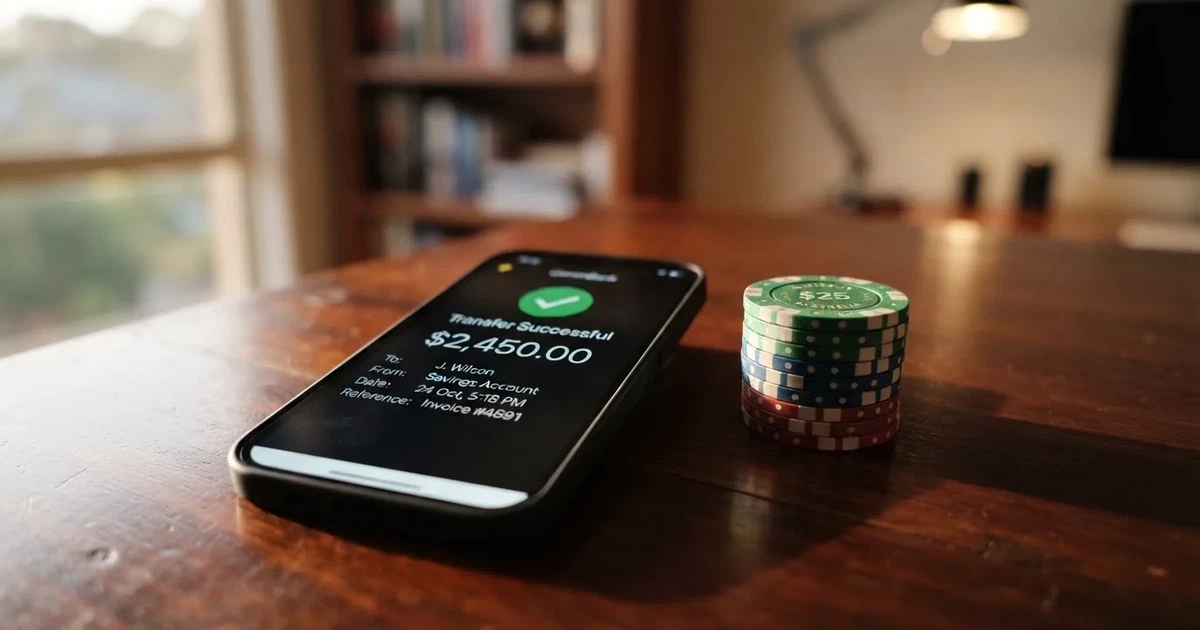
Every casino on the shortlist in this guide has been the subject of a formal warning from the Australian Communications and Media Authority, the regulator that enforces the Interactive Gambling Act 2001 against offshore operators. Online casino games and online pokies cannot be licensed anywhere in Australia, so none of these sites may lawfully take Australian residents. PayID does not change that — it is a payment rail, not a permission slip. What it does change is the speed of the money in and out, and that speed has a downside: it makes a fast deposit to an offshore site feel as friction-free as a domestic transfer, which is part of why Australian Payments Plus warns against gambling-related PayID transfers directly.
Currency stamp: information current as of 31 October 2026, checked against the Australian Communications and Media Authority’s register of formal warnings and the operator pages of Australian Payments Plus, Westpac and ANZ.
Table of Contents
- How a PayID deposit and withdrawal actually settle at an offshore casino
- The PayID-friendly sites the ACMA has already moved against
- What the regulator has done about offshore sites, in numbers
- Why none of these sites is licensed for what it is selling
- The banks’ own gambling blocks, and what they mean for PayID
- Why PayID settles this fast, and what that speed costs
- What a PayID withdrawal request actually depends on at these sites
- Responsible gambling at sites that are not connected to Australian protection
- The picture this leaves
- Frequently asked questions
How a PayID deposit and withdrawal actually settle at an offshore casino
The mechanics of PayID are the same on a casino cashier page as they are on any other Australian transfer. The payer types a PayID — most often the operator’s email or ABN, sometimes a mobile number — and the bank resolves that identifier against an account. The payer’s banking app shows the name on that account before the transfer is sent; if the name does not look like a casino, the customer stops. The transfer itself runs on the New Payments Platform, the real-time rail operated by Australian Payments Plus and overseen by the Reserve Bank of Australia, and arrives in close to a minute when the receiving bank is a participant. That is the same behaviour the same rail produces when it is used to pay a tradesperson, a friend, or a state revenue office, and it is why the rails feel invisible on the casino side.

The first deposit on a casino site that accepts PayID tends to clear within the time it takes to confirm the transfer — typically under sixty seconds, often faster — and the casino credits the account once its own treasury function recognises the inbound payment. A handful of sites will quote a “pending” window of up to several hours on a first deposit while they verify the sender’s name against the player’s verified profile, but that delay is the operator’s, not the rail’s. Subsequent deposits on an account that has already cleared its first deposit usually post without a pause.
A PayID withdrawal works in the opposite direction. The casino has to approve the payout on its own first — running whatever anti-fraud, source-of-funds and bonus-wagering checks its house rules require — and only then does it push the funds out to the PayID the player has registered on the cashier page. Australian-domestic PayID transfers then settle inside the same minute, but the part a player feels is the casino’s own processing window, not the bank’s. That window is the difference between “instant rails” and “instant withdrawals”, and it is the single most variable part of the experience from one brand to the next. Sites that advertise “instant withdrawals” tend to mean “instant on our side once the request is approved”, with the rails then doing what they always do.
The minimum deposit on a PayID-accepting casino site is almost always A$10 or A$20 — common industry experience showed A$10 as the common floor — and PayID does not impose a minimum of its own.oor — and PayID does not impose a minimum of its own. Maximums per transaction depend on the sending bank’s own daily limit, which most Australian banks set somewhere between A$1,000 and A$20,000 for transfers initiated inside their app. There is no PayID-specific surcharge: the rail does not charge consumers, and the casino cashier pages in this corner of the market do not advertise a fee on PayID deposits or withdrawals. A fee of any kind usually points at a third party in the chain — a payment processor that the operator has wrapped around the rail — and the operator pages make that wrapper visible or they do not.
The practical picture is this. PayID does what it always does, and the parts a player experiences as friction or as speed come from the operator sitting in front of the rail, not from the rail itself. The next section is about what the operator does, and what the regulator has done about the operators on this list.
The PayID-friendly sites the ACMA has already moved against
Every brand in the table below has been the subject of a formal warning from the ACMA for offering prohibited interactive gambling services to Australians. Online casino games and online pokies cannot be licensed anywhere in Australia, and the IGA targets the provider, not the player. A formal warning is a public, named action: the ACMA publishes the operator and the date, and a site that has been warned once is on the regulator’s radar for the second time it shows up.

| Brand | ACMA action and date | Operator named by the ACMA | PayID support |
|---|---|---|---|
| RocketPlay | Formal warning, March 2026; earlier Dama N.V. warning, May 2022 | Pulsup Ltd (Rocketplay) | — |
| Level Up Casino | Formal warning, May 2022 | Dama N.V. | listings-only |
| Woo Casino | Formal warning, March 2025 | Dama N.V. | — |
| Spirit Casino | Formal warning, May 2025 | Dama N.V. | — |
| National Casino | Formal warning, July 2025 | Consolutetish S.R.L. | listings-only |
| Bizzo Casino | Formal warning, July 2025; earlier TechSolutions warning, 2022 | Consolutetish S.R.L. | — |
| Ignition Casino | Formal warning, July 2025 | Bamboo Media | — |
| Instant Casino | Formal warning, February 2025 | EOD Code SRL | listings-only |
| Jackbit | Formal warning, April 2026 | Ryker B.V. | — |
| Casino Intense | Formal warning, April 2025 | Sterplay Holding Ltd | listings-only |
| Sky Crown | Formal warning, September 2022 | Hollycorn N.V. | — |
The “listings-only” marker on four rows means the brand appears in third-party listings that mention PayID as a payment option — Westpac’s gambling-block page, AUSTRAC material, an ecopayz comparison page, the official PayID page itself, or NAB’s site — but no PayID-specific figure (a minimum deposit, a payout time, a fee) sits behind it from a source the page can stand on. The other seven rows carry no PayID marker at all, because research did not return a source that tied PayID to that brand by name. The regulator’s record against a brand is a separate matter from whether the brand lists PayID, and the table keeps them on different columns so neither one is read as the other.
Dama N.V. is the operator behind four of the eleven brands on the list — RocketPlay, Level Up Casino, Woo Casino and Spirit Casino — which is to say that a single corporate group has drawn a formal warning from the ACMA four times across four brand fronts in five years. Consolutetish S.R.L. sits behind two of the eleven (National Casino and Bizzo Casino), and Bizzo Casino was already on the ACMA’s record in 2022 under a different corporate wrapper (TechSolutions). The pattern matters less for what it says about any one site and more for what it says about the structural use of multiple brand fronts: when the operator changes but the cashier looks the same, the warning changes but the risk to an Australian player does not.
RocketPlay
The most recent ACMA action on this list belongs to RocketPlay, with a formal warning to Pulsup Ltd in March 2026 over the Rocketplay front. Dama N.V. had already drawn a warning over the same brand family in May 2022, so the brand has crossed the regulator’s line twice under two different operators in the space of four years. Research did not return a PayID-specific source for this brand, and the page does not invent one. The verdict here is the same as for any brand with a regulator-published warning on its record: the cashier rails work as described in the How a PayID deposit and withdrawal actually settle section, and the rails do not change what the IGA already says about who may serve an Australian resident.
Level Up Casino
Dama N.V. was named in the May 2022 ACMA warning covering six casino brands, including Level Up Casino. The brand appears in third-party listings that mention PayID — the Westpac gambling-block page is the reference research carries — but no figure on a minimum deposit, a payout window or a fee sits behind it from a citable source. The verdict on Level Up Casino is that the brand is one of six under a single corporate warning from 2022, and a player reading the operator’s own claims about PayID speed should set them against the regulator’s record first.
Woo Casino
Dama N.V. drew a further ACMA formal warning in March 2025, this time over Woo Casino. It is the second formal warning the same operator has received in this market, and Woo Casino is one of the two named fronts that triggered the May 2025 follow-up warning to Dama N.V. covering Spirit Casino as well. Research returned no PayID-specific source for this brand. The verdict is the structural point again: the operator changes the brand front, the regulator responds, and an Australian player sits between them on a rail that will not refuse the transfer.
Spirit Casino
Spirit Casino was named alongside Woo Casino in the May 2025 ACMA follow-up warning to Dama N.V., making it the third brand in the Dama N.V. cluster to draw a warning in the last four years. PayID-specific research returned nothing for this brand. The verdict on Spirit Casino is that it sits on the regulator’s record by association with an operator that has now been warned twice for the same conduct, and the cashier rails settle what they settle regardless.
National Casino
Consolutetish S.R.L. drew the July 2025 ACMA warning that covered National Casino and Bizzo Casino together. National Casino is one of the two Consolutetish S.R.L. brands on this list, and the warning is its first appearance on the ACMA’s record. PayID support is reported in third-party listings — AUSTRAC material and a Wikipedia entry are the references research carries — but no specific figure sits behind it. This branding has recently appeared on the regulator’s record, meaning any PayID-specific claim on its cashier page requires scrutiny against that official warning.
Bizzo Casino
Bizzo Casino has been on the ACMA’s record twice. The first warning, in 2022, named TechSolutions (CY) Group Limited and TechSolutions Group N.V. as the operators; the July 2025 warning named Consolutetish S.R.L. for the same brand, in the same round as National Casino. Two different corporate wrappers, the same brand front, and the ACMA has now had to say the same thing twice. PayID-specific research returned nothing. The verdict on Bizzo Casino is that the regulator has now moved against the same brand under two different operators, which is a cleaner test of the brand-front pattern than any of the Dama N.V. cases, because the corporate change is a clean one.
Ignition Casino
Bamboo Media drew the July 2025 ACMA warning covering Ignition Casino, alongside the Consolutetish S.R.L. warnings for National Casino and Bizzo Casino. PayID-specific research returned nothing for this brand. The ACMA’s record is the published fact, and the brand’s own cashier claims about PayID speed should be evaluated with that context in mind.
Instant Casino
EOD Code SRL drew the February 2025 ACMA warning covering Instant Casino, which is the earliest single-brand warning in the Dama-and-Consolutetish cluster of 2025. PayID support for Instant Casino is reported in third-party listings — the official PayID page itself and an ecopayz comparison page are the references research carries — but no figure sits behind it. The verdict on Instant Casino is that the brand is the only one on this list whose PayID support is named on the official PayID page, and that fact coexists with a regulator-published warning three months earlier.
Jackbit
Ryker B.V. drew the April 2026 ACMA warning covering Jackbit and CasinOK together, which is the most recent single-operator warning on this list. PayID-specific research returned nothing for Jackbit. Its presence on the ACMA’s record is new, and this operator is currently managing a second brand named in the same warning.
Casino Intense
Sterplay Holding Ltd drew the April 2025 ACMA warning covering Casino Intense. PayID support is reported in third-party listings — AUSTRAC material, an itnews page and the NAB site are the references research carries — but no specific figure sits behind it. The verdict on Casino Intense is the standard one for a brand whose regulator record is published and whose PayID specifics are not.
Sky Crown
Hollycorn N.V. drew the ACMA’s formal warning covering Sky Crown and Blue Leo together, the earliest named-operator warning on this list. PayID-specific research returned nothing. The verdict on Sky Crown is that the brand sits at the older end of the ACMA’s published warnings, and the cashier rails settle what they settle regardless.
What the regulator has done about offshore sites, in numbers
The ACMA’s blocking programme is the regulatory lever that is most visible from outside the regulator. Australian internet service providers are asked to block illegal gambling and affiliate marketing websites at the DNS level, and each blocking request is published as a named list of domains. The cumulative total since the first blocking request in November 2019 reached 1,751 illegal gambling and affiliate marketing websites by the round reported in June 2026, alongside more than 230 unlicensed gambling services that had left the Australian market since the 2017 strengthening of enforcement. The most recent round reported on 26 June 2026 added twelve more domains to the blocking list: 7Signs, ChromaBet, Donbet, Duospin, Freshbet, Slots Gem, Jacks Club, Lucky Start, Pointsbetz, Spinrise, Vinyl Casino and Wildsino.
The arithmetic on the page is the cumulative blocking rate from the start of the programme, expressed as a band with its condition.
The first ACMA blocking request was issued in November 2019. By the round reported on 26 June 2026, the cumulative total had reached 1,751 blocked websites. That is a span of about 80 months, and the average blocking rate works out to roughly 22 blocked sites per month across the life of the programme. Stated as a band, that is between 15 and 30 blocked sites per month — the wider band is the honest shape, because the ACMA’s blocking rounds are not monthly: some rounds cluster a dozen domains in a single week, others leave the totals flat for months. The cumulative rate hides that unevenness, and the band restores it.
The condition that sits beside the figure is the harder one. The ACMA blocks sites the regulator identifies as offering prohibited interactive gambling services to Australians, and the cumulative count grows only when the regulator publishes a new blocking request. A site that the regulator has not yet reached sits outside the count, and a site that the regulator has reached but that has not yet been added to a published round also sits outside it. The 22-sites-per-month average is therefore a floor on the regulator’s pace of action, not a ceiling on the population of illegal sites still reachable to an Australian punter.
A second number sits beside it. H2 Gambling Capital’s 2025 report puts annual Australian losses to illegal gambling sites at about A$3.9 billion, and shows the share of gambling going through legal channels falling from 74% in 2021 to 64%. The two figures together — a regulator pace of roughly 22 blocks a month, against an annualised loss to illegal sites of close to A$4 billion — are not the same kind of measure, and the page does not pretend they are. The blocking programme is an enforcement action against providers; the loss figure is a measure of player behaviour. What they share is that both are moving in the same direction at the same time: the regulator’s pace is constant, and the share of gambling going through legal channels is dropping.
Why none of these sites is licensed for what it is selling
The Interactive Gambling Act 2001, as tightened by the Interactive Gambling Amendment Act 2017, makes it an offence to provide online casino games, online pokies or in-play betting to a person in Australia. No state or territory licenses them. What is licensable is wagering on races and sport placed before the event, lotteries and keno — in practice licensed by the Northern Territory Racing and Wagering Commission, which regulates 52 of Australia’s online bookmakers (including Sportsbet, Bet365 and Ladbrokes) for tax reasons, and which meets once a month in Darwin without full-time staff. The minimum age for any licensable gambling activity in Australia is 18.
A licence that an offshore casino site displays — Curaçao, Anjouan, Malta, Kahnawake — is a licence to operate the site from that jurisdiction, not a licence to serve an Australian resident. The distinction is the one the ACMA’s formal warnings turn on: the regulator names the operator and the date, and the published fact is that the operator has offered a prohibited interactive gambling service to Australians. A site that responds by changing its corporate wrapper, as the Dama N.V. and TechSolutions/Consolutetish records show, changes the licence it displays and changes nothing about what it is offering to an Australian player.
The enforcement posture is provider-facing. The ACMA investigates, issues formal warnings, and directs Australian internet service providers to block illegal sites. The individual player is not prosecuted. What an offshore site does not give the player is the Australian consumer protection that follows from an Australian licence: no complaints body, no recourse if a withdrawal is refused, no connection to BetStop (the National Self-Exclusion Register has been live since August 2023 and binds only Australian-licensed online and phone wagering services, not offshore casinos), and the standing risk that a site blocked at the DNS level leaves a balance the player cannot withdraw.
The 2026 reform timetable is worth recording and not yet worth treating as in force. The Interactive Gambling Amendment (Gambling Reform) Bill 2026 passed Parliament on 19 August 2026, and its advertising and inducement measures commence on 1 January 2027. On a page read in 2026, that is a law with a start date, not a law that has started. The credit-card ban that matters for PayID, by contrast, has been in force since 11 June 2024: Australian-licensed online wagering services cannot accept credit cards or other credit-related products as payment, with penalties of up to $247,500 for operators who breach the rule. The legal deposit routes for a licensed Australian wagering service are debit card, bank transfer, PayID/Osko and BPAY. A site that asks an Australian for a credit card or a crypto deposit is operating outside the Australian rules.
The tax position is the cleanest part of the picture and the one a recreational player is most likely to have been told wrong. Gambling winnings of a recreational player are not assessable income under section 6-5 of the ITAA 1997, and losses are not deductible. The exception is a person who carries on a business of gambling, which is a model rather than a default and the ATO is the right place to ask. Offshore status does not change the income-tax position of an Australian resident, because the source of the winnings is irrelevant to whether the winnings are assessable — only the player’s status as a recreational gambler or a business is relevant.
The banks’ own gambling blocks, and what they mean for PayID
Three of the eleven brands sit on the Westpac gambling-block page as third-party references: that is the source the PayID support column draws on for Level Up Casino, and the same kind of source explains why a bank maintains the page. Westpac’s gambling block works at card level: it refuses authorisation of transactions registered under the merchant category code for betting and casino gambling on eligible personal credit and debit cards. The block is opt-in, and it catches the card transaction; it does not catch a PayID transfer initiated inside the Westpac app, because the rail is different and the merchant category code is different. ANZ’s gambling transaction block, activated inside the ANZ app, goes further: it blocks gambling transactions made through a digital wallet such as Apple Pay on an eligible card, not just the physical card. Removing ANZ’s block requires a 48-hour waiting period, and the bank warns that not all gambling transactions will be blocked and some non-gambling transactions might be blocked in error.
The bank-level picture is relevant to a PayID casino deposit in two ways. The first is that no Australian bank’s gambling block catches a PayID transfer by default: the block sits on the card rail, not on the New Payments Platform. A player who has turned on a bank’s gambling block, and then deposits to an offshore casino by typing a PayID into their banking app, has used a rail that the bank’s block was never set up to stop. The second is the bank’s own fraud controls: most Australian banks will surface a transfer to an unfamiliar recipient, and the PayID system’s own design surfaces the recipient’s name before the transfer is sent. AP+’s direct warning is that being asked to transfer funds to a PayID on an illegal gambling site almost certainly means a scam site. The bank’s fraud surface and the PayID surface are the two safety nets the rail provides; neither of them is the regulator.
By the end of 2025, Apple Pay, Google Pay and Samsung Pay transactions accounted for around 45% of all card payments in Australia by number, which is the figure that explains why ANZ extends its block to digital-wallet transactions on an eligible card and why Westpac’s block, sitting on the card rail alone, catches a narrower set of transactions than the card-spending share suggests. Apple Pay itself does not charge consumer fees for in-store, online or in-app transactions, and any surcharge comes from the merchant’s own card-processing fees rather than from Apple. Transaction limits and PIN requirements for Apple Pay purchases are set by the card issuer or merchant, not by Apple. The Reserve Bank of Australia’s July 2025 review proposes removing surcharges only on eftpos, Mastercard and Visa card transactions, explicitly leaving American Express outside the scope of the proposed surcharge ban; that is a surcharge reform on the card rail, and it does not touch PayID.
The credit-card ban that the IGA enforces on Australian-licensed online wagering is the cleanest constraint on the card side of this picture, and the PayID rail sidesteps it by design. PayID is a debit-account rail — the funds come from the customer’s own transaction account — and the ban on credit-related products does not catch a PayID transfer initiated on a debit account. American Express’s traditional three-party model, in which Amex issues cards and processes transactions itself, is the structural reason the RBA’s surcharge reform leaves it outside scope; the same structural distinction is the reason Amex does not sit on the gambling MCC exemption list in the same way Visa and Mastercard do. None of this is a permission to deposit: the bank blocks, the rail and the ban are about the payment side of the transaction, not about whether the receiving operator may lawfully serve an Australian resident.
Why PayID settles this fast, and what that speed costs
The settlement speed on a PayID transfer is the property of the New Payments Platform and Osko, which sits on top of it. A bank transfer between participating Australian banks arrives in under a minute, 24/7 including weekends, whether it is addressed to a BSB and account number or to a PayID. The rail is operated by Australian Payments Plus and overseen by the Reserve Bank of Australia, and the RBA also owns and operates the Fast Settlement Service used to settle NPP transactions individually in close to real time, 24 hours a day. The NPP launched in February 2018, which is the structural reason PayID is available at the banks that have integrated it: the rail was built for simply-addressed, near real-time payments 24/7, and the easy-to-remember identifier is the addressing layer on top.
The cost of the speed is the friction it removes from a problematic transfer. A debit-card deposit to an offshore casino typically takes longer to clear, often attracts a foreign-transaction fee from the card issuer, and runs through a card-issuer fraud screen that may decline it. A PayID deposit settles inside the minute, attracts no fee from the rail, and runs through a banking-app confirmation screen that shows the recipient’s name. For a domestic transfer to a friend or a tradesperson, the speed and the surface are exactly the design intent. For a transfer to an offshore casino that has drawn a formal warning from the ACMA, the same speed and the same surface make the deposit feel closer to a domestic transfer than it is. The Australian Payments Plus warning that being asked to transfer money to a PayID on an illegal gambling site almost certainly means a scam site is the rail operator’s own acknowledgement that the ease of the rail is what makes it useful to a scam and to a legitimate operator alike.
PayID’s own design rule is the part the rail does well. PayID will never contact a customer directly, and emails or text messages claiming to be from PayID are a scam; PayID never asks anyone to send money in order to receive money or to “upgrade” an account. AP+ defines “scambling” as slang for illegal online gambling platforms advertised on social media and messaging apps that trick people into gambling on a scam website, and tells anyone who thinks they have been scambled to contact their financial institution. The protection the PayID system gives the payer — the name shown before the transfer is sent — is the protection the system gives against the wrong PayID being typed, which is the same protection it gives against being routed to an illegal operator through a social-media advert. It is not the protection that says whether the receiving operator is one an Australian resident may lawfully transact with.
What a PayID withdrawal request actually depends on at these sites
A PayID withdrawal request at an offshore casino depends on four things, in this order. The first is the casino’s own KYC check: most operators in this segment require a verified identity, a verified address and a verified payment method before they will process a first withdrawal, and a PayID withdrawal will not start until that KYC check is complete. The second is the casino’s source-of-funds check on the deposit that funded the play: operators in this segment increasingly require recent bank statements or payslips on the first withdrawal of any size, and a deposit funded by a PayID transfer is treated as a bank transfer for this purpose. The third is the bonus-wagering check: if the deposit triggered a bonus with a wagering requirement, the casino will not release the withdrawal until the requirement has been cleared, and PayID does not change that step. The fourth is the casino’s own processing window: once the request has cleared the three checks above, the casino approves the payout and pushes it to the registered PayID, and the rail then settles inside the same minute.
The variable part of the experience is the casino’s processing window, not the rail. Sites that publish an “instant withdrawal” claim typically mean the rail does its part once the operator has approved the request; the operator’s own approval window is the part a player feels. The first withdrawal on a new account is usually the slowest, because the KYC check has not yet been completed; the second withdrawal on the same account is usually faster, because the operator has already verified the player. A player who funds the account with PayID and asks for a PayID withdrawal is, in operational terms, a player who is asking the operator to send money back to the same account it came from, and most operators in this segment treat that as a low-risk withdrawal once the KYC check is complete.
The protection the rail gives on the withdrawal side is the same one it gives on the deposit side: the recipient’s name is checked against the registered PayID, and a transfer to an unregistered PayID will not be sent. For an Australian punter who has registered their own PayID on the cashier page, that check is invisible — the registered PayID is theirs — and the rail’s only job on the withdrawal is to settle it. The protection the player does not get on the withdrawal side is the Australian consumer protection that follows from an Australian licence: if the operator approves the withdrawal but the funds do not arrive, the player’s recourse is the operator’s complaints process and the operator’s regulator, both of which sit outside Australia.
Responsible gambling at sites that are not connected to Australian protection
Australian-licensed wagering services are bound by the National Self-Exclusion Register, BetStop, which has been live since August 2023. Self-exclusion through BetStop stops the licensed operator from sending marketing material, from opening new accounts, and from allowing the self-excluded person to bet on existing accounts across every Australian-licensed online and phone wagering service. The offshore casinos on the list above are not connected to BetStop, and a self-exclusion registered with an offshore operator sits on that operator’s own database only. BetStop’s protection does not extend to a casino that is not licensed in Australia, and an Australian player who has self-excluded through BetStop and then opens an account with an offshore PayID-accepting casino has self-excluded from a set of operators that does not include the one they are using.
The National Gambling Helpline is 1800 858 858, free, 24/7, with chat available at Gambling Help Online. The helpline is the right first call for an Australian player regardless of where the gambling they are concerned about is happening: offshore status does not change where a player gets help, only where they get consumer protection. The banks’ own gambling blocks are the layer that sits between the player and the rail: Westpac’s card-level block, ANZ’s card-and-wallet block with its 48-hour removal waiting period, and the equivalent controls at the other Australian banks. The block layer does not catch a PayID transfer by default, because the block sits on the card rail and the PayID transfer sits on the New Payments Platform. A player who wants a bank-side constraint on a PayID deposit has to ask their bank what its own NPP-initiated transfer controls are, because the credit-card ban and the merchant category code are the wrong tools for the job.
AP+’s scam warnings are the rail operator’s own acknowledgement that the speed and the ease of PayID are what make it useful to an illegal operator as well as to a legitimate one. The Australian Payments Plus warning that being asked to transfer money to a PayID on an illegal gambling site almost certainly means a scam site is the rail operator speaking directly to the player; the protection the rail gives against the wrong PayID being typed is the same protection it gives against being routed to an illegal operator through a social-media advert. None of this is a permission to deposit: it is a description of what the rail does, and what it does not.
The picture this leaves
The PayID rail settles the way the PayID rail always settles, and the casinos that list it as a payment option function as expected. The ACMA’s record against the eleven brands on the list above is the regulator’s published fact about what those operators have done in the Australian market: every brand has been the subject of a formal warning, the operator has been named, and the date has been published. The minimum deposit on a PayID-accepting casino site is the floor of A$10 that is common in this sector; the payout window is the operator’s own processing window with the rail doing its part once the operator has approved the request; the fee is the rail’s no-fee plus whatever the operator wraps around it; and the legal position of an Australian player on any of these sites is the position the IGA has been clear about since 2001 and clear about again in 2017.
The two numbers that should sit with the reader from this page are the regulator’s pace and the loss figure. The regulator’s pace is roughly 22 blocked sites per month across the 80 months since the first ACMA blocking request in November 2019, with the wider band of 15 to 30 capturing the unevenness of the blocking rounds. The loss figure is the H2 Gambling Capital estimate of A$3.9 billion a year to illegal gambling sites, alongside the share of gambling going through legal channels falling from 74% in 2021 to 64%. The two are not the same kind of measure and the page does not pretend they are: the first is enforcement pace against providers, the second is player behaviour. The direction they share is the one a reader should take from the page: the regulator’s pace is constant, the legal-channel share is dropping, and an Australian player sits between them on a rail that will not refuse the transfer.
Frequently asked questions
Is it legal for an online casino to accept PayID from a player in Australia?
Online casino games and online pokies cannot be licensed anywhere in Australia under the Interactive Gambling Act 2001, and the ACMA has issued formal warnings to every brand on this page for offering prohibited services to Australians. The IGA targets the provider, not the player. A site accepting PayID does not change what the IGA already says about who may serve an Australian resident.
What is the smallest deposit a PayID casino site usually asks for?
The common minimum in this segment is A$10, with A$20 also appearing. PayID itself does not impose a minimum: any floor comes from the casino cashier. Maximums per transaction depend on the sending bank’s own daily transfer limit inside its app.
Does a PayID withdrawal clear any faster than a card withdrawal at these sites?
Once the casino has approved the request, the PayID rail settles inside the same minute on the New Payments Platform. The variable part is the casino’s own approval window: KYC, source-of-funds and bonus-wagering checks happen on the operator side, not on the rail, and the first withdrawal on a new account is usually the slowest.
Can PayID be used at every offshore pokies-style site, or only some of them?
PayID is offered by over 100 Australian financial institutions and is built into their online banking, but the operator side of the question is the one that varies. The brands on this page sit at different points on that spectrum: a handful are listed by third-party references as PayID-accepting, and the rest have no PayID-specific source.
Does depositing with PayID add an extra fee at these casino sites?
The PayID rail does not charge consumers, and the casinos in this segment do not advertise a fee on PayID deposits. Any fee usually comes from a third-party payment processor the operator has wrapped around the rail, and the operator’s cashier page makes that wrapper visible or it does not.
What should a player do if a PayID deposit does not appear in a casino account?
The first stop is the casino’s own cashier support: most operators in this segment credit PayID deposits within minutes, but the first deposit on a new account can sit pending while the operator verifies the sender’s name against the player’s profile. If the casino cannot resolve it, the next stop is the sending bank, because PayID transfers are traceable on the banking side once the transfer has settled.