
Real Money Casino Table Games in Australia: What You Can Actually Play, and Where
Data current as of 17 October 2026 and checked against the Australian Communications and Media Authority’s published enforcement register.
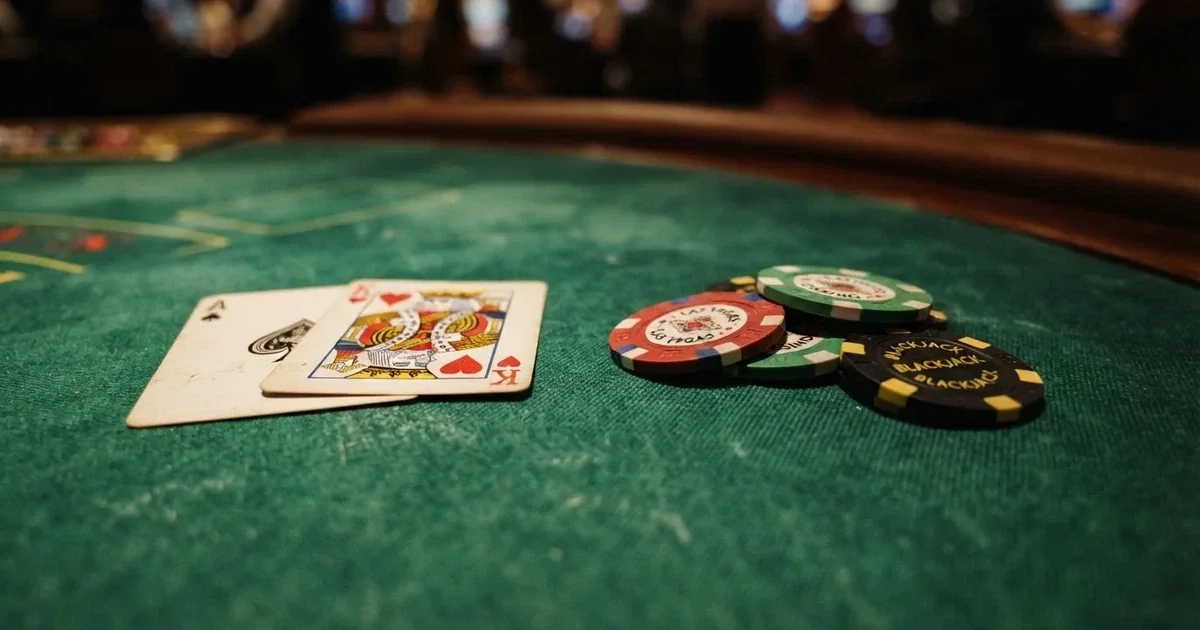
Australians who search for real money casino table games are usually after one of three things: a clear sense of which games give the house the smallest cut, an honest read on whether any offshore website can legally serve them, or both. This page addresses all three. It maps the major table games, sets out the odds each one carries, names the regulatory wall that makes online casino play unlawful in this country, and points to the licensed venues where the same games can be played on a lawful floor. Where the ACMA has acted against an offshore brand, the brand is named and the action is dated — not as a recommendation, but because those are the entries that exist on the public record.
Table of Contents
- The Australian Legal Frame Around Real Money Casino Table Games
- Responsible Play Around Real Money Casino Table Games
- Where the Lawful Tables Actually Sit in Australia
- Crypto and Anonymity at Real Money Casino Table Games
- Real Money Casino Table Games: Paytables, Origins and Where the Edge Sits
- The Offshore Brands on the ACMA’s Published List
- How Many Sites the ACMA Has Actually Blocked
- What This Page Is Actually For
- Frequently Asked Questions
The Australian Legal Frame Around Real Money Casino Table Games
No state or territory in Australia licenses an online casino to offer real money table games, online pokies or in-play betting to a person physically in the country. That is the headline finding, and the rest of this section explains how it is enforced.

The Interactive Gambling Act 2001, as tightened by the Interactive Gambling Amendment Act 2017, makes it an offence for a provider to offer those services to anyone in Australia. The offence sits with the operator, not the player — Australians are not prosecuted for placing a bet with an offshore site — but a consumer sitting on the wrong side of an offshore operator has no Australian complaints body, no local recourse if a withdrawal stalls, and a balance that can be stranded when the site is added to a blocking list.
What is licensable is wagering on races and sport placed before the event, lotteries and keno. In practice that licensed wagering industry is regulated by the Northern Territory Racing and Wagering Commission, which administers 52 of Australia’s online bookmakers, including Sportsbet, Bet365 and Ladbrokes. The Commission is unusual for a body with that reach: it has no full-time staff and meets once a month in Darwin.
Enforcement sits with the ACMA. The Authority investigates, issues formal warnings, and can direct Australian internet service providers to block illegal sites at the domain level. As of mid-2026, the ACMA reports that 1,751 illegal gambling and affiliate marketing websites have been blocked since the first blocking request in November 2019, and that more than 230 unlicensed gambling services have left the Australian market since enforcement was strengthened in 2017. The most recent published round asked ISPs to block twelve more: 7Signs, ChromaBet, Donbet, Duospin, Freshbet, Slots Gem, Jacks Club, Lucky Start, Pointsbetz.com, Spinrise, Vinyl Casino and Wildsino. H2 Gambling Capital’s 2025 estimate puts annual losses to illegal sites at roughly A$3.9 billion and shows the share of gambling going through legal channels falling from 74% in 2021 to 64%.
What the 2026 Reform Package Changes
The Interactive Gambling Amendment (Gambling Reform) Bill 2026 passed Parliament on 19 August 2026. Its advertising and inducement measures commence on 1 January 2027 — law with a start date, not yet in force on a 2026 page. The current rule set, summarised above, is what binds providers and what the ACMA enforces today.
Payment Rules That Already Bite
Credit cards, credit-related products and digital currency are banned as a means of paying for licensed online wagering in Australia since 11 June 2024. Penalties for operators accepting them reach A$247,500. Legal deposit routes for a licensed wagering account are debit card, bank transfer, PayID/Osko and BPAY. An offshore casino asking an Australian customer for a credit card or a crypto deposit is operating on the wrong side of that rule, and that is independently true of the IGA prohibition itself.
Responsible Play Around Real Money Casino Table Games
The legal prohibition is one protection. The day-to-day protections — self-exclusion, deposit limits, support lines — are another, and they only bind the licensed industry.
BetStop, the National Self-Exclusion Register, has been live since August 2023. It binds Australian-licensed online and phone wagering services only. An offshore casino is not connected to it, which means a self-exclusion lodged with BetStop does nothing to stop an Australian from creating an account at one of the eleven offshore brands discussed later on this page. That is the practical cost of an offshore site on this single dimension: the safeguard a player thinks is in place is, for that operator, not in place at all.
For someone who needs to talk, the National Gambling Helpline is 1800 858 858, free and staffed around the clock. The same service runs chat through Gambling Help Online. Both are open to anyone in Australia, whether their play is at a licensed venue, an offshore site or somewhere in between.
On the recreational tax question: gambling winnings of a non-professional player are not assessable income under section 6-5 of the ITAA 1997, and losses are not deductible. That changes only if a person carries on a business of gambling, which is a model only — anyone in that position should check with the ATO.
Where the Lawful Tables Actually Sit in Australia
The lawful place to play real money casino table games in Australia is on a licensed floor: the country’s casinos, plus the growing number of pub and club venues that hold a gaming table licence in addition to their pokies. The federal layer, the IGA, is what makes offshore online play unlawful; the state layer is what authorises every physical table.
In Victoria, the Victorian Gambling and Casino Control Commission — which replaced the VCGLR as casino regulator on 1 July 2022 — must approve any casino table game or rule change before it is introduced, under the Casino Control Act 1991. Crown Melbourne sits inside that frame and offers three approved baccarat variants alone: Traditional Baccarat, Crown Baccarat and 2 to 1 Baccarat, each signed off by the VGCCC.
In NSW, Liquor & Gaming NSW — acting under delegation from the NSW Independent Casino Commission since 5 September 2022 — approves the games and rules played at the state’s two casinos. The earlier approvals were issued by the Independent Liquor and Gaming Authority under the Casino Control Act 1992. Under section 66 of that Act, an NSW casino operator must not permit a game such as baccarat to be played unless the regulator has approved the game and its rules, and a copy of the approved rules must be available to patrons on request.
Outside the two casino states, the “casino near me with table games” question is increasingly answered by licensed pubs and clubs. Several state gaming authorities have approved table-game licences for venues that already hold gaming machine entitlements, and the relevant register — held by each state’s liquor and gaming body — lists which venues are authorised and which tables they run. The pattern differs by state: NSW and Victoria run the casino-heavy model, Queensland runs a mix of casinos and large hotel-tabletop venues, and Western Australia concentrates table play at Crown Perth.
For readers asking the local question, the useful starting point is the relevant state regulator’s venue register, not a search engine. A venue that holds a casino licence or a gaming-table permit is the only place a real money table game bet is protected by Australian consumer law.
Crypto and Anonymity at Real Money Casino Table Games
Crypto casino table games are real money casino table games with a different payment rail. The wheel, the shoe and the felt run the same way; the deposit clears on a blockchain instead of clearing through PayID or BPAY. That single difference — the rail — is what the offshore marketing leans on.
The rail is faster on the way in, and sometimes faster on the way out, than an Australian bank transfer. It is also unconnected to the Australian rules that govern licensed wagering. Credit cards and digital currency are banned as payment for licensed online wagering since 11 June 2024, which means an Australian-facing site that accepts a Bitcoin or USDT deposit is operating outside the Australian deposit framework regardless of what licence the site displays in its footer. The game played on top of the deposit, whether baccarat, blackjack or roulette, sits under the same IGA prohibition as a fiat-funded table.
A crypto payment also does not anonymise a player inside Australia. The transfer can be traced on-chain, and any operator with an Australian-facing cashier is collecting the same KYC documents an AUD cashier would collect — the difference between the rails is speed and the unit of account, not the reach of the regulator.
For Australians, the practical effect of choosing a crypto rail at an offshore table is unchanged: the game is unlawful to provide, the operator is not licensed in Australia, the deposit is unprotected if the site is blocked, and the self-exclusion register does not bind the operator. The rail swaps a one-day bank transfer for a ten-minute on-chain confirmation; nothing else moves.
Real Money Casino Table Games: Paytables, Origins and Where the Edge Sits
This section walks through the major table games — blackjack, roulette, baccarat and craps — with the house edges each carries, the rules that drive those edges, and the variants a player is likely to meet on a licensed Australian floor. The numbers come from Wizard of Odds and the relevant Wikipedia entries; the rule approvals come from the VGCCC and Liquor & Gaming NSW registers.
Blackjack
Blackjack’s modern name dates to around 1899, when the English game “vingt-un” evolved into an American variant and a two-card 21 with an ace of spades plus a black jack paid a bonus. The game’s deeper roots sit in Spain — a book by Miguel de Cervantes, written around 1601-1602, describes a related game called veintiuno in Castile. Formal rules were published in Britain in 1800. What arrived in Australia is the American descendant of that line, played with one or more standard decks.
The mechanics are simple enough to learn in a hand. Number cards count at face value, jack/queen/king count as ten, and an ace counts as one or eleven. A starting two-card total of 21 — an ace plus a ten-value card — is a “blackjack” or “natural,” and is the strongest hand. The dealer must keep drawing until reaching a total of 17 or higher, with some rule sets requiring the dealer to also hit on a “soft 17.”
The house edge on blackjack depends almost entirely on the rule sheet. Under liberal Las Vegas Strip rules — dealer stands on soft 17, double on any two cards, double after split, resplit aces, late surrender — optimal play pushes the edge down to about 0.28%. Atlantic City rules land slightly higher at around 0.43%. Basic-strategy play, across reasonable rule sets, keeps the house edge under 1%, which is what makes blackjack the lowest-edge table game most Australians will sit down at.
The variants a player is likely to meet on an Australian floor include Spanish 21 (played without 10s but with liberal player-favourable rules), Double Exposure Blackjack (both dealer cards dealt face-up), Blackjack Switch (players can swap cards between two hands) and Super Fun 21 (allows up to four splits). Each variant moves the edge around; the variants with the most rule changes in the player’s favour typically pay less on a natural to compensate.
Roulette
Roulette originated in 18th-century France and has been played in close to its present form since about 1796 in Paris. The wheel is often traced to a gaming wheel invented in 1720 combined with the Italian game Biribi. What sits on a licensed Australian floor is either the single-zero European wheel or the double-zero American wheel, and which wheel sits there is the single largest determinant of the house edge a player faces.
The European wheel carries a house edge of 2.70% on every bet except a small set of French wagers that halve the edge further under the la partage and en prison rules. The American wheel adds a double-zero slot, and that single extra slot pushes the edge to 5.26% across almost every bet. Players who sit at the American wheel because it is the one in front of them are paying the casino roughly twice as much per dollar wagered, on average, as a player at the European wheel — and they are doing it without any change to the betting options on the layout.
Outside bets — red/black, odd/even, dozens, columns — pay the same on both wheels, which is part of the marketing draw of the American layout: the bets look familiar. The edge is hidden in the extra zero. A player who wants the lowest roulette edge picks the single-zero wheel every time and asks whether la partage or en prison is in force before placing a chip.
Baccarat
Baccarat’s origins are disputed. Some accounts place it in 19th-century France; others say it was introduced from Italy at the end of the 15th century during the reign of King Charles VIII. Writer David Parlett considers the game Macao its immediate precursor. What is played on virtually every Australian floor today is Punto Banco, which developed in Havana in the 1940s: the casino banks the game permanently, both hands are played out by fixed drawing rules, and the player simply chooses which side to back.
Cards 2-9 count at face value, 10/J/Q/K count as zero, and aces count as one, with hand totals taken modulo 10. Punto Banco is dealt from a shoe of six or eight decks. The Banker bet is statistically the strongest position on the table. In an 8-deck-shoe game the Banker bet carries a 1.06% house edge, the Player bet 1.24%, and the Tie bet runs 14.36% at an 8-to-1 payout or 4.85% at a 9-to-1 payout. The Tie bet is the line that players walk past.
Two further variants sit in the baccarat family. Chemin de fer, French for “railway,” is a two-player variant that emerged from baccarat banque in the late 19th century and is named for being quicker to play than the original. Baccarat banque keeps a rotating bank. Neither is the game most Australians will meet at a table; Punto Banco is the standard offering and the one regulators approve under names such as Traditional Baccarat, Crown Baccarat and 2 to 1 Baccarat at Crown Melbourne.
A beginner’s working rule: back the Banker until the deck behaviour gives a reason not to. The edge is the smallest on the layout, the payout is even money minus a 5% commission on a winning Banker bet, and the decision is the easiest one on the table to make at speed.
Craps
Craps developed in the United States as a simplification of the European game Hazard, which Bernard de Marigny brought from London to New Orleans around 1805. The simplified American version had spread throughout the country by the 1910s. What a player meets on a licensed Australian floor is the American descendant, played with two dice on a long table and a stickman calling the bets.
The Pass line, the wager a new player is steered toward, carries a 1.41% house edge. The Don’t Pass line, betting against the shooter, is fractionally lower. Outside those two wagers, the edge climbs quickly. The Field bet runs at 5.56%, Any 7 at 16.67%, and Hard 4 or Hard 10 at 11.11%. A player who stays on the Pass line and skips the centre of the layout is paying the casino roughly the same rate as a Banker bet at baccarat; a player who chases the side bets is paying many times that.
Craps is also the table game most likely to be misunderstood by Australians walking up cold. The table looks busy, the calls come fast, and the worst bets on the felt are the ones surrounded by the most chips. A useful first session is one Pass-line bet per shooter, with no centre bets, until the table settles in.
Side Bets and Variants Across the Felt
Almost every approved table on an Australian floor offers at least one side bet — a Bonus Blackjack wager, a Lucky Lucky, a progressive baccarat side. These carry house edges that range from a few percent to over 15%, depending on the wager. The VGCCC has ruled on amendments including new side bets at Baccarat, Blackjack and Roulette in Victoria, and Liquor & Gaming NSW approves each rule change before it is introduced in NSW. A player who is choosing where to put a dollar on a table game should look at the main bet’s edge first; the side bet is the casino’s marketing, not the player’s value.
The Offshore Brands on the ACMA’s Published List
The brands below are not a ranking. Each is listed because the ACMA has issued a formal warning under the Interactive Gambling Act 2001 over an online casino game service that is prohibited from being offered to a person in Australia. No bonus terms are published here, and the page does not recommend any of them as a place to play.
| Brand | ACMA action and date | Operator named by the ACMA | Subject support |
|---|---|---|---|
| RocketPlay | Formal warning, March 2026 | Pulsup Ltd (Rocketplay.com.au) | — |
| Level Up Casino | Formal warning, May 2022 | Dama N.V. | Listed by BGaming as a partner |
| Woo Casino | Formal warning, March 2025 | Dama N.V. | — |
| Spirit Casino | Formal warning, May 2025 | Dama N.V. | — |
| National Casino | Formal warning, July 2025 | Consolutetish S.R.L. | Listed in Wikipedia as a Dama-affiliated brand |
| Bizzo Casino | Formal warning, July 2025 (and a 2022 warning over TechSolutions) | Consolutetish S.R.L. | — |
| Ignition Casino | Formal warning, July 2025 | Bamboo Media | — |
| Instant Casino | Formal warning, February 2025 | EOD Code SRL | — |
| Jackbit | Formal warning, April 2026 | Ryker B.V. | — |
| Casino Intense | Formal warning, April 2025 | Sterplay Holding Ltd | Listed in coverage by ABC News, the ACMA register and Crown Melbourne’s reporting |
| Sky Crown | Formal warning, September 2022 | Hollycorn N.V. | — |
What the table shows is the ACMA’s published enforcement, not a comparison of products. The dates are the dates the ACMA issued the warnings; the operators are the corporate names the ACMA named in each notice. Where a brand shows two warning dates — Bizzo Casino being the clearest example — that is two separate ACMA actions, often against different operating entities over the same consumer-facing brand.
A few of these names sit on more than one ACMA action because the operators behind them have been reorganised. Dama N.V. carries the May 2022 warning over six brands (Bambet, Dazard, Level Up, Rocketplay, Wild Tornado and Cobra Casinos), and a fresh Rocketplay warning was issued in March 2026 against Pulsup Ltd, the operator named by the ACMA on the more recent action. The brand name persists across the change of corporate vehicle; the legal entity behind it does not.
A second observation: the ACMA’s enforcement has accelerated. Of the eleven warnings on the table, three sit in 2025 or 2026 and a fourth — Sky Crown — sits in late 2022 but has been the subject of follow-up activity on the register. The pattern matches the blocking totals published in mid-2026: 1,751 sites blocked since November 2019, with the bulk of the action landing in the past three years.
RocketPlay
The ACMA’s most recent warning over RocketPlay was issued in March 2026 and named Pulsup Ltd as the operator of Rocketplay.com.au. A separate warning over the same brand was issued in May 2022 against Dama N.V., so the brand has been on the ACMA’s register across two corporate vehicles. The earlier 2022 batch covered six Dama N.V. brands in a single action. Online casino games cannot be licensed in Australia; that is true of the service today, independent of any licence displayed in the footer. The page carries no information on RocketPlay’s product, payment rail or bonus structure — the only sources for those are affiliate marketing pages — and the comparison this page makes between RocketPlay and the other ten brands is the comparison the ACMA’s register makes: an enforcement record against the same prohibition.
Level Up Casino
Level Up Casino was named in the May 2022 Dama N.V. warning. The brand is listed as a partner by BGaming, which is the only third-party source the research carries for any technical claim about the site. Like every brand on this list, Level Up Casino sits outside any Australian licence to offer online casino games. A player who arrives at the site from an Australian IP is being served a prohibited service, and a player who joins from outside Australia is joining an offshore operator with no Australian consumer protection if a withdrawal stalls.
Woo Casino
The ACMA issued a fresh warning over Woo Casino in March 2025, naming Dama N.V. as the operator. Woo Casino was not on the May 2022 Dama N.V. batch; the warning is the brand’s first appearance on the published register. No third-party technical documentation or bonus terms exist in the public record. For this analysis, the ACMA’s formal warning remains the only verified statement.
Spirit Casino
Spirit Casino was named in a fresh Dama N.V. warning in May 2025. Like Woo Casino, Spirit Casino was not part of the May 2022 batch, and public records contain no third-party descriptions of the site’s actual product. The formal ACMA warning stands as the complete record.
National Casino
National Casino was named in a July 2025 warning over Consolutetish S.R.L. The brand is listed in Wikipedia as one of the Dama-affiliated brands, which is the only third-party source the research carries for any structural claim about the site. The Consolutetish S.R.L. warning also covered Bizzo Casino; the two brands share an ACMA action and a corporate vehicle.
Bizzo Casino
Bizzo Casino carries two ACMA actions. The first was a 2022 warning over TechSolutions (CY) Group Limited and TechSolutions Group N.V.; the second was the July 2025 warning over Consolutetish S.R.L., issued in the same batch as National Casino. A brand on the ACMA’s register twice, against two different operating entities, is a brand the regulator has had to revisit. Unlike other brands, this site’s current operations lack independent third-party coverage on this register.
Ignition Casino
The ACMA issued a formal warning over Ignition Casino in July 2025, naming Bamboo Media as the operator. The warning sits inside the same July 2025 enforcement round that produced the National Casino and Bizzo Casino actions, but against a different operator. No public technical documentation or product reviews currently exist for this brand.
Instant Casino
Instant Casino was named in a February 2025 warning over EOD Code SRL. The action sits between the May 2022 Dama N.V. batch and the July 2025 Consolutetish S.R.L. round, on a separate operator. Technical specifications or player product reviews remain unavailable for this service.
Jackbit
The ACMA issued a formal warning over Jackbit in April 2026, naming Ryker B.V. as the operator. The April 2026 action also covered CasinOK, a sister brand on the same operator; CasinOK does not appear on this list as a separate entry because the ACMA’s published action is one warning over two brands. Independent reporting on this brand’s product or features is notably absent.
Casino Intense
Casino Intense was named in an April 2025 warning over Sterplay Holding Ltd. The brand is the only one on this list that appears in coverage by ABC News, the ACMA register and Crown Melbourne’s reporting — the third-party sources the research carries for any structural claim about the site. The coverage is reporting on the ACMA’s enforcement; it is not product information.
Sky Crown
Sky Crown was named in the September 2022 warning over Hollycorn N.V., which also covered the Blue Leo casino service. Sky Crown and Blue Leo share one ACMA action and one operating entity. The research carries no third-party source for Sky Crown’s product.
How Many Sites the ACMA Has Actually Blocked
The arithmetic on this page is the rate at which the ACMA has been blocking illegal sites. From the first blocking request in November 2019 to the latest published total in mid-2026, the ACMA’s count is 1,751 illegal gambling and affiliate marketing websites blocked. That is roughly 268 blocks per year on average across the six-and-a-bit years of the regime, or close to 22 blocks a month if the rate were constant — which it has not been. The pace has picked up sharply since 2023, when the ACMA began publishing enforcement round-ups in their current form, and the latest single round alone added twelve sites. The rate is a band, not a single figure: somewhere between one new blocked site every working day and one new blocked site every fortnight, depending on which stretch of months you measure.
The point of the band is not the precise count. It is the direction. The ACMA’s enforcement against illegal offshore operators is the most active regulatory action in Australian gambling, and it lands on a different site roughly every week or two. A player who picks an offshore brand this week is picking one that may be on the next published round.
What This Page Is Actually For
Three reader situations sit behind the searches that land on this page, and each gets a different answer here.
The reader who wants the odds: the table games with the lowest house edges are blackjack under liberal rules (around 0.28%) and the baccarat Banker bet (1.06%). Roulette’s best edge on a single-zero wheel is 2.70%, with la partage and en prison cutting it further; the double-zero wheel is 5.26%. Craps’s Pass line is 1.41%. Side bets on every one of these run higher, often much higher, and are the casino’s marketing rather than the player’s value.
The reader who wants a legal online option: there is no legal online option for real money casino table games in Australia. The IGA prohibits the supply; no state or territory licenses it; the ACMA enforces by warning and blocking. The lawful place to play these games in person is a licensed Australian casino or a pub or club venue with a gaming-table permit.
The reader who has already decided to play offshore despite the above: the ACMA’s published register lists eleven brands that have been the subject of formal warnings in the past four years, with five of those warnings issued since February 2025. A site on that list can be added to a blocking round at any time. A balance sitting on a blocked site is a balance the player cannot withdraw from Australia.
The choices look different for each reader. The numbers behind the choices are the same.
Frequently Asked Questions
How does the house edge on blackjack compare with roulette or craps at a typical casino?
Under liberal Las Vegas Strip rules, optimal blackjack carries a house edge of about 0.28%, which is the lowest of any table game on a standard floor. Craps on the Pass line runs at 1.41%, and the baccarat Banker bet at 1.06% sits between the two. Single-zero roulette is 2.70%; double-zero roulette is 5.26%. A player who picks blackjack under the best rule sheet and plays basic strategy is paying the casino a fraction of what a player at an American roulette wheel is paying on the same dollar.
Are live-dealer table games treated any differently under Australian law compared with RNG-based ones?
No. The Interactive Gambling Act 2001 prohibits the supply of online casino games to a person in Australia, and that prohibition covers both random-number-generator table games and live-dealer table games streamed from a studio. The wheel and the shoe in front of the player are irrelevant to the legal analysis; what matters is whether the service is offered online to an Australian. A licensed Australian casino can run a live-dealer table on its own floor; an offshore studio streaming the same game to an Australian laptop is offering a prohibited service.
What is the difference between American and European roulette in terms of odds for the player?
The American wheel has a double-zero slot alongside the single zero; the European wheel has only the single zero. That one extra slot roughly doubles the house edge: 5.26% on the American wheel against 2.70% on the European wheel across almost every bet. Outside bets such as red/black and odd/even pay the same on both wheels, which is why the difference is easy to miss at the table. A player who wants the lowest roulette edge picks the single-zero wheel and asks whether la partage or en prison is in force before placing a chip.
Do crypto casino table games use the same rules as a standard online table game, just with a different currency?
Yes, on the rules side. The wheel, the shoe and the felt run the same way; the only difference is the payment rail. The rail is faster on the way in and sometimes faster on the way out, and it does not change the underlying prohibition. Online casino games cannot be supplied to a person in Australia under the IGA, and credit cards and digital currency are banned as payment for licensed online wagering since 11 June 2024. A crypto deposit at an offshore site is no more lawful than a credit card deposit at the same site.
Where can someone actually play real-money table games legally near them in Australia?
The lawful place is a licensed Australian casino or a pub or club venue that holds a gaming-table permit. The state regulator — the VGCCC in Victoria, Liquor & Gaming NSW in NSW, the relevant body in Queensland, Western Australia and South Australia — publishes a register of approved venues and approved games. Crown Melbourne and Crown Sydney run the largest casino floors; Crown Perth is the licensed casino in Western Australia; the Star in Sydney and the Star Gold Coast sit inside the NSW and Queensland frameworks respectively. Outside the casino states, the local question is answered by the state’s gaming venue register, not a search engine.