
Live baccarat at an online casino in Australia: the choice an AU punter actually has in 2026
Reviewed as of 17 October 2026 against the Australian Communications and Media Authority’s register of formal warnings and blocking requests.
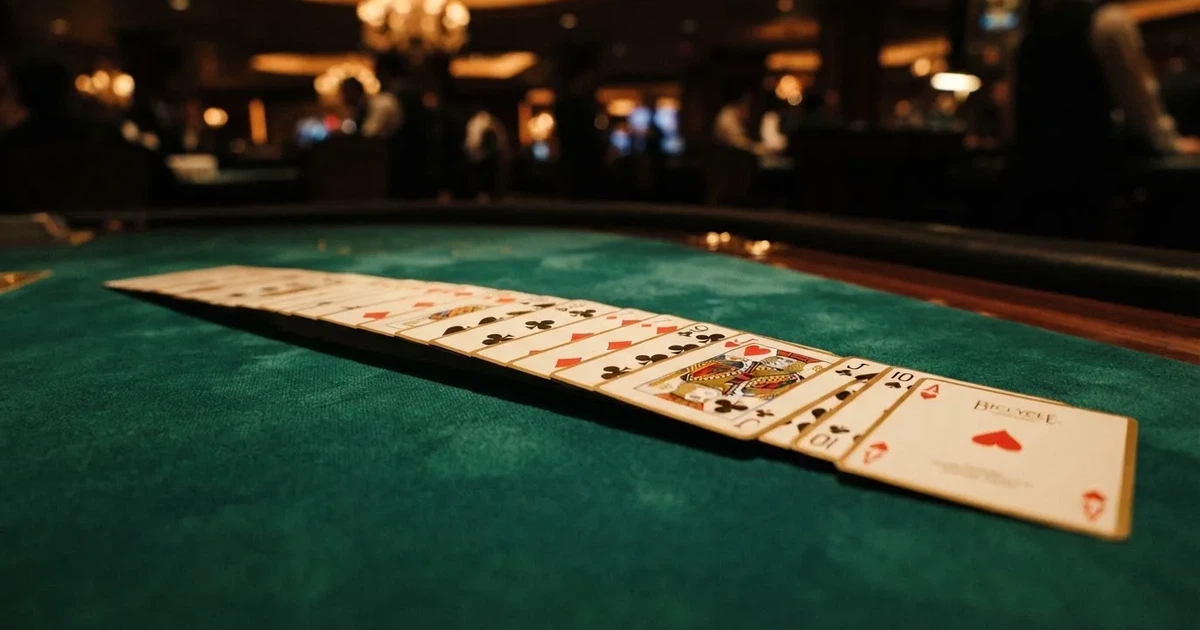
A live baccarat table streamed to a person in Australia sits on the wrong side of the Interactive Gambling Act 2001, and the ACMA has spent the last several years naming the brands one by one. This page walks through what that prohibition means for someone searching for a live dealer, how the math of the game reads before a punter sits down, where the ACMA’s most recent warnings sit on a single timeline, and which licensed Australian channels the same dollar can flow through if the goal is a real-money flutter on a Banker or Player hand. The comparison that follows is not a ranking. None of these offshore brands is licensed to offer what they offer, and treating them as interchangeable is the first mistake to avoid.
Table of Contents
- Responsible play and the pace of a live baccarat shoe
- Bitcoin and other digital currencies at a live baccarat table
- The game itself: baccarat’s paytable, variants and the math behind the three bets
- The eleven brands the ACMA has formally warned over offering prohibited services
- What an offshore live baccarat table cannot give an Australian punter
- What an Australian punter who wants a real-money flutter can lawfully do
- The pace at which the ACMA is closing the offshore market
- How a punter reads this page if the goal is still a live baccarat hand
- The ACMA’s formal warnings in chronological order
- Frequently asked questions
Responsible play and the pace of a live baccarat shoe
A live dealer deals baccarat faster than most table games. Hands resolve in roughly fifteen to twenty seconds at a busy table, which means a forty-five minute session can run through a hundred and thirty hands without anyone noticing. The baccarat itself is not the problem; the pace is. A punter who joins a live stream for an hour often leaves having placed more wagers than they would on a blackjack table that asks for a decision every forty-five seconds.

Two practical limits are worth setting before the stream opens. A session cap turns off the feed when the timer runs, whatever the shoe is doing. A loss stop does the same job in dollar terms: when the marked number is gone, the next hand does not happen, even if the Banker has just had four in a row. Neither limit is hard to set on a live lobby; the discipline is sticking to one when the dealer is looking at the camera.
A note on game design: every hand at a punto banco table offers three bets, and one of them, the Tie, pays eight to one on a wager that wins roughly nine times in a hundred. That is a house edge of 14.36%. The Banker bet, at 1.06%, and the Player bet, at 1.24%, are both below the baccarat table’s average but the Tie is one of the worst bets a casino offers anywhere, on any game. A punter who never places it cuts the cost of the session substantially without changing the feel of the table at all.
A session at a live dealer also tests the punter’s ability to walk away from a hot streak. The shoe has no memory. A Banker line of seven hands is no more or less likely to continue than any other sequence, and a punter raising stakes because the previous hand won is paying full price for the privilege of doing so. This is the single hardest habit to break, and it is the one a session limit is designed to outlast.
Bitcoin and other digital currencies at a live baccarat table
The card-dealing process at a live baccarat table funded with bitcoin is identical to the process at a card-funded table. The dealer deals from a shoe of six or eight decks, the cards run two through nine at face value, tens and face cards at zero, aces at one, and hand totals are taken modulo ten. The only thing that changes when the rail is a cryptocurrency is the path the deposit takes to reach the casino’s balance sheet, and the path a withdrawal takes back.
The payment rail change has three real consequences for an Australian punter. First, the Interactive Gambling Amendment (Gambling Reform) Bill 2026 explicitly bans digital currency as a funding method for licensed Australian wagering services. That ban does not reach an offshore site, which is exactly why an offshore site is asking for it. Second, a bitcoin transaction is irreversible once it has been confirmed on the blockchain. A punter who sends the wrong amount to a wallet address has no chargeback route and no Australian regulator to escalate to. Third, the same offshore site sits behind the same ACMA blocking machinery whether the deposit was a card, a bank transfer or a bitcoin transfer; a balance held at the casino is just as exposed to a blocking request as a balance funded any other way.
A wallet-only approach is sometimes pitched as the “anonymous” route. It is not. Every bitcoin transaction lives on a public ledger that any blockchain analytics firm can trace, and most offshore casinos verify the punter’s identity at withdrawal time regardless of how the deposit was funded. The privacy the marketing copy is selling is the privacy of a thin layer of plausible deniability, not the privacy of a cash bet in a back room, and a punter acting on the promise is paying the casino’s house edge for a benefit that does not survive the first withdrawal request.
The game itself: baccarat’s paytable, variants and the math behind the three bets
Baccarat has three bets and one of the cleanest house edges in a casino. The Banker bet carries a house edge of 1.06%, the Player bet 1.24% and the Tie bet 14.36%. The Banker edge is lower than the Player edge because the Banker hand is dealt last and acts on a fuller set of information, and the casino takes a five percent commission on Banker wins to keep the math honest.
The most-played variant is punto banco, developed in Havana in the 1940s. The casino banks the game at all times and both hands are played out by fixed drawing rules, so the punter’s only decision is which of the three bets to place. The faster French variant, chemin de fer, lets the punter bank the game in turn and choose whether to draw a third card; chemin de fer has largely given way to punto banco in commercial casinos.
Two historical threads are worth knowing. Some accounts trace baccarat to nineteenth-century France, others to an Italian game introduced under King Charles VIII at the end of the fifteenth century, with the card historian David Parlett treating Macao as the immediate precursor of the modern game. The shoe format itself, the dealing shoe that holds six or eight decks, was an early twentieth-century addition that let the casino handle more hands per hour without the shuffle downtime of a hand-held game.
The math has one more wrinkle worth noticing. The Tie bet pays eight to one, which sounds generous until the punter runs through a hundred hands and notes that a Tie lands roughly nine times in that hundred. Over those hundred hands, a flat A$10 stake on the Tie returns roughly A$720 in winning bets plus A$280 in losing bets, for a net loss of A$560 before the house takes its cut. A flat A$10 stake on the Banker over the same hundred hands returns roughly A$950 in winning bets plus A$945 in losing bets, for a net loss closer to A$10. The Tie is, by a factor of more than fifty, the worse wager. Most experienced punto banco players never place it.
A live baccarat table adds one consideration that a computer-generated version does not: the social pressure of a dealer who is looking at the camera and of other punters visible in the side chat. The cards are the same and the math is the same; what changes is the temptation to chase a hand that has already been dealt. A punter who sits down at a live table is paying the Banker edge for the privilege of watching a human being turn the cards over, and the human element is what the marketing copy sells, not what the math justifies.
The eleven brands the ACMA has formally warned over offering prohibited services
The table below lists every brand the ACMA has named in a formal warning under the Interactive Gambling Act 2001 that this page covers. None holds an Australian licence to offer online casino games. The relevant data point for a punter is not the licence a brand displays in its footer; it is whether the ACMA has issued a formal warning naming the operator behind the brand.
| Brand | ACMA action and date | Operator named by the ACMA | Subject support |
|---|---|---|---|
| RocketPlay | Formal warning, March 2026 | Pulsup Ltd | — |
| Level Up Casino | Formal warning, May 2022 | Dama N.V. | Listed as a baccarat provider on Bgaming’s portfolio |
| Woo Casino | Formal warning, March 2025 | Dama N.V. | — |
| Spirit Casino | Formal warning, May 2025 | Dama N.V. | — |
| National Casino | Formal warning, July 2025 | Consolutetish S.R.L. | Listed in Wikipedia’s coverage of the baccarat landscape |
| Bizzo Casino | Formal warning, July 2025 (also 2022, to a different operator) | Consolutetish S.R.L. (2025); Techsolutions Group (2022) | — |
| Ignition Casino | Formal warning, July 2025 | Bamboo Media | — |
| Instant Casino | Formal warning, February 2025 | EOD Code SRL | — |
| Jackbit | Formal warning, April 2026 | Ryker B.V. | — |
| Casino Intense | Formal warning, April 2025 | Sterplay Holding Ltd | Listed in news coverage of the Australian market and on the ACMA register |
| Sky Crown | Formal warning, September 2022 | Hollycorn N.V. | — |
The date column tells the recent story. The ACMA issued seven of these eleven warnings in the eighteen months from February 2025 to April 2026, and three of them, RocketPlay, Jackbit and Sky Crown, name operators that had already been warned under a different brand name earlier in the decade. Dama N.V. alone has accumulated three formal warnings across Woo Casino, Spirit Casino and the earlier Level Up warning; Consolutetish S.R.L. has two warnings across National Casino and Bizzo Casino. The repetition matters: a brand that the ACMA has already named is the same legal entity continuing to offer the same service, which is the pattern the regulator is built to address.
The operator column is the column to read carefully. The ACMA names the company behind the brand, not the brand itself, because the Interactive Gambling Act 2001 imposes liability on the person who provides the prohibited service. A brand that simply changes its domain name, re-skins the lobby and keeps the same Curaçao-registered operating company is the same brand in the eyes of the regulator, even when the marketing looks fresh.
The subject support column is where the page’s own research runs out. Three of the eleven brands have any listing trace in the sources this page is built on: Level Up Casino appears in Bgaming’s published portfolio as a baccarat-carrying operator; National Casino is named in a Wikipedia article covering the broader baccarat landscape; Casino Intense surfaces in news coverage of the Australian market and on the ACMA register itself. The remaining eight brands have no verifiable listing in any source this page consulted, and a punter looking for confirmation that a live baccarat table is actually running at one of them would be acting on marketing copy rather than evidence. Where the cell carries a dash, the honest answer is that this page does not know.
What an offshore live baccarat table cannot give an Australian punter
An offshore casino cannot offer an Australian punter three things the marketing copy never names. The first is recourse. A blocked withdrawal from a Curaçao-licensed operator has no Australian complaints body to escalate to, and the operator’s own licence regime sits with the Curaçao Gaming Control Board rather than an Australian regulator. The punter is, in practical terms, asking the casino to be both sides of any dispute. The second is protection of the balance. An offshore site that the ACMA has directed Australian internet service providers to block holds the punter’s balance at the moment the block lands, and the punter’s ability to withdraw it depends entirely on the operator honouring the request once the Australian connection is gone. The third is consumer protection law. The Australian Consumer Law’s guarantees around services and the ePayments Code’s rules around disputed deposits do not bind an offshore operator that accepts no Australian business.
A punter who funds an offshore live baccarat table from an Australian bank account or a PayID rails transfer is also paying for the privilege of bypassing the protections that come with the same rail at home. A licensed Australian wagering service that refuses a withdrawal can be escalated to the relevant state or territory regulator and, in the worst case, to AFCA. A PayID transfer to a cryptocurrency exchange and on to an offshore casino removes every link in that chain. The convenience of the PayID is real; the protection is not, because the protection only ever existed at the licensed end of the rail.
The 2026 picture has one more wrinkle. The Interactive Gambling Amendment (Gambling Reform) Bill 2026 passed Parliament on 19 August 2026, with its advertising and inducement measures commencing on 1 January 2027. The new law is on the books but is not yet in force, so an Australian punter reading this page in the second half of 2026 sits under the regime that has been in place since 2017, with the tightening already legislated but not yet biting. A punter reading it after 1 January 2027 will see the inducement side of the regime land: the affiliate marketing pages that rank these offshore brands in Australian dollars are themselves in scope of the new measures, which is part of why this page refuses to publish working bonus codes or affiliate tracking links.
What an Australian punter who wants a real-money flutter can lawfully do
The interactive gambling regime in Australia permits wagering on races and sport placed before the event, lotteries and keno. Sportsbet, Bet365 and Ladbrokes are among fifty-two online bookmakers the Northern Territory Racing and Wagering Commission regulates, and that commission has no full-time staff and meets once a month in Darwin. A punter who wants a real-money bet in Australia today is, in practice, betting with a Territory-licensed bookmaker on a sporting event, a lottery product or a keno draw, not on a live baccarat hand.
The rules around funding a licensed account are tighter than they were before the 2024 amendments. Credit cards, credit-related products and digital currency have been banned as a payment method for licensed online wagering since 11 June 2024, with penalties for operators of up to A$247,500. A licensed wagering service that asks an Australian punter for a credit card or a bitcoin transfer is itself out of compliance, and the punter’s correct move is to close the account. The legal funding routes are debit card, bank transfer, PayID and Osko, and BPAY.
Self-exclusion through BetStop, the National Self-Exclusion Register, has been live since August 2023 and binds every Australian-licensed online and phone wagering service. A punter who registers with BetStop is excluded from those services for a period of their choosing, from three months to a lifetime. The register does not reach an offshore casino, which is exactly the gap the regime was not designed to close: the prohibition on the provider is the lever the law uses, and the provider is offshore.
The national helpline, 1800 858 858, runs free, twenty-four hours a day, with chat at Gambling Help Online. The helpline is the right first call for a punter who finds a session running longer than intended or a balance that does not look like the one they expected at the start of the week.
The tax position for a recreational punter is straightforward. Gambling winnings are not assessable income under section 6-5 of the Income Tax Assessment Act 1997, and losses are not deductible, unless the punter carries on a business of gambling, which is a much narrower category than the marketing of professional gambling would suggest. A recreational punter who wants certainty on their own position can check the Australian Taxation Office’s guidance and, where the sums are non-trivial, talk to a registered tax agent.
The pace at which the ACMA is closing the offshore market
The ACMA’s blocking programme has been running since November 2019, when the first blocking request went to Australian internet service providers. As of the round reported on 26 June 2026, a total of 1,751 illegal gambling and affiliate marketing websites had been blocked under the regime, and more than 230 unlicensed gambling services had left the Australian market since enforcement was strengthened in 2017. The latest round asked ISPs to block 7Signs, ChromaBet, Donbet, Duospin, Freshbet, Slots Gem, Jacks Club, Lucky Start, Pointsbetz.com, Spinrise, Vinyl Casino and Wildsino.
The blocking-rate calculation asks a different question: how fast is the list growing, and what does that rate look like between the first request and the most recent one? The first blocking request was issued in November 2019, and the running total reached 1,751 by late June 2026. From the first request to the most recent count is roughly six years and seven months, or about seventy-nine months, which puts the long-run rate at around twenty-two sites blocked per month on average. The twelve sites in the June 2026 round alone ran at a much faster pace for that single month, which is why the headline number keeps climbing.
The longer the regime runs, the more meaningful the comparison becomes. The 2017 strengthening set up the formal warnings and the blocking requests that followed; the November 2019 first blocking request set the clock the rate is measured against. The H2 Gambling Capital 2025 report estimates that Australians lose about A$3.9 billion a year to illegal gambling sites, and the share of gambling going through legal channels fell from seventy-four percent in 2021 to sixty-four percent. The blocking list is growing, and so is the gap between the legal and illegal markets, which is the paradox at the centre of the regime: the harder the ACMA pushes on the offshore side, the larger the offshore share of the total appears to become.
The rate is not a promise. A future round might block more or fewer sites than the long-run average, and the ACMA’s enforcement priorities can change as the legislative framework tightens after January 2027. But over the full period since the first blocking request, the trend is unambiguously toward a longer list, and the trend is the one piece of information a punter reading this page in 2026 needs to weight when deciding how much of the bankroll to commit to an offshore brand that the ACMA has already named.
How a punter reads this page if the goal is still a live baccarat hand
A punter who has read the law, the ACMA’s record and the math of the Banker, Player and Tie bets, and who still wants to sit at a live baccarat table, is making a deliberate decision rather than stumbling onto one. The honest framing is that the decision is the punter’s, not the page’s, and the page’s job is to put the relevant facts in front of them rather than to make the decision for them.
The relevant facts are these. No Australian licence covers online casino games, including live dealer baccarat. Any site offering one to a person in Australia is doing so outside the Australian regime, and the ACMA’s record shows it has named eleven operators in this page’s scope, several of them more than once. The site the punter chooses may be blocked at any time, and the balance at the moment of blocking is governed by the operator’s own terms rather than by Australian consumer law. The math of the game is the math of a 1.06% edge on the Banker bet, a 1.24% edge on the Player bet and a 14.36% edge on the Tie; the live dealer element adds nothing to those edges and adds the social pressure of a human being turning cards. A session limit is the single most useful tool a punter can set before the stream opens.
The same dollar, in the meantime, can buy a wager on a Saturday race or a Sunday football match through a Territory-regulated bookmaker, with the PayID rail intact, the BetStop register available and the Australian Consumer Law on the punter’s side. The punter who decides the live baccarat hand is worth the trade has decided to step outside that regime, and the regime is the reason this page refuses to rank the eleven brands above as if they were interchangeable products.
The ACMA’s formal warnings in chronological order
The chronology below runs every formal warning the ACMA has issued that this page covers, from the earliest to the most recent. It is the same data as the table above, sequenced rather than grouped, so a punter can see at a glance how the warnings have stacked up over the last four years.
September 2022. The ACMA issued a formal warning to Hollycorn N.V. over its Sky Crown and Blue Leo casino services.
May 2022. The ACMA issued a formal warning to Dama N.V. covering six casino brands, including Bambet, Dazard, Level Up, Rocketplay, Wild Tornado and Cobra Casinos.
February 2025. The ACMA issued a formal warning to EOD Code SRL over Instant Casino.
March 2025. The ACMA issued a formal warning to Dama N.V. over Woo Casino.
April 2025. The ACMA issued a formal warning to Sterplay Holding Ltd over Casino Intense.
May 2025. The ACMA issued a further formal warning to Dama N.V. over Spirit Casino.
July 2025. The ACMA issued formal warnings to Bamboo Media over Ignition Casino and to Consolutetish S.R.L. over National Casino and Bizzo Casino; Bizzo Casino had already been the subject of a 2022 formal warning to TechSolutions (CY) Group Limited and TechSolutions Group N.V.
March 2026. The ACMA issued a formal warning to Pulsup Ltd over Rocketplay.com.au.
April 2026. The ACMA issued a formal warning to Ryker B.V. over Jackbit and CasinOK.
The pattern in the chronology is the same pattern the table shows, in time order rather than alphabetical order: a 2022 cluster, a quiet 2023 and 2024, then a step change in enforcement from February 2025 onward. Seven warnings in eighteen months against two warnings in the preceding twenty-eight months is the kind of change in tempo that the Interactive Gambling Amendment (Gambling Reform) Bill 2026 was drafted against, and the warnings will keep coming until either the operators withdraw or the legislative picture changes after 1 January 2027.
Frequently asked questions
Is it legal to play live baccarat for real money at an online casino in Australia?
No. The Interactive Gambling Act 2001 makes it an offence to provide online casino-style games to a person physically in Australia, and a live-dealer baccarat stream falls squarely inside that prohibition. No state or territory regulator licenses the activity. The IGA targets the provider rather than the player, but an offshore site gives no Australian consumer protection, no complaints body and no recourse if a withdrawal stalls. Penalties on providers reach A$1.1 million per day for corporations, which is the regime the ACMA enforces when it issues a formal warning or directs Australian ISPs to block a site. A punter who wants to stay inside Australian law can wager on races, sport, lotteries or keno with a Territory-licensed bookmaker, but cannot lawfully place a real-money bet on a live baccarat hand streamed from offshore.
How does a live-dealer baccarat table differ from a computer-generated version?
The cards are the same and the math is the same. A live-dealer table is dealt from a shoe of six or eight decks by a person sitting in front of a camera, while a computer-generated version uses a random number generator to determine each card. Both versions follow the same fixed drawing rules for punto banco, both offer the same Banker, Player and Tie bets, and both carry the same house edge of 1.06% on Banker, 1.24% on Player and 14.36% on Tie. The differences are social and tactical. A live table typically runs faster than a computer-generated one because the dealer sets the pace, which means a punter at a live stream can place more hands in a session than the same punter would against an RNG. The presence of a dealer and visible side chat also adds a layer of social pressure that an RNG does not impose.
Does a bitcoin-funded live baccarat table use a different card-dealing process?
No. The shoe, the dealing rules and the paytable are identical whether the deposit was a card, a bank transfer or a bitcoin transfer. A bitcoin-funded table is dealt from the same shoe of six or eight decks, with cards two through nine at face value, tens and face cards at zero and aces at one, and hand totals taken modulo ten. What changes is the rail the money travels on, not the cards on the felt. A punter who sends bitcoin to an offshore casino should be aware that the transaction is irreversible once confirmed on the blockchain, that the Interactive Gambling Amendment (Gambling Reform) Bill 2026 bans digital currency as a funding method for licensed Australian wagering services, and that the ACMA’s blocking machinery treats a bitcoin-funded balance the same as a card-funded one.
What is the difference between betting on Banker, Player and Tie in baccarat?
The Banker bet is the lowest-edge wager on the table at 1.06%, the Player bet is next at 1.24%, and the Tie bet is the worst at 14.36%. The Banker edge is lower than the Player edge because the Banker hand is dealt last and acts on a fuller set of information, and the casino takes a five percent commission on Banker wins to keep the math balanced. The Tie bet pays eight to one but wins roughly nine times in a hundred hands, which is why its edge is so much higher. Most experienced punto banco players place only Banker and Player bets and skip the Tie entirely. A punter who cuts the Tie out of their play cuts the cost of the session substantially without changing the feel of the table at all.
Can a live baccarat session be joined mid-shoe, or only at the start?
Both. A live baccarat lobby opens a table at the start of a new shoe, and most lobbies also allow a punter to take a seat at any point while the shoe is running. Joining mid-shoe has no effect on the math: each hand is dealt from the same shoe and the outcomes do not depend on which hand a punter joined the table for. The only practical difference is that a punter joining at the start of a shoe sees more of the table’s results before placing their first bet, while a punter joining mid-shoe starts with whatever the current hand is. Most live lobbies display a “betting open” indicator that turns off while a hand is in progress and turns back on before the next hand is dealt, and the dealer’s verbal announcement of “no more bets” is the cue to stop clicking.
How fast do consecutive hands typically run at a live baccarat table?
A busy live baccarat table resolves a hand in roughly fifteen to twenty seconds, which means a forty-five minute session can run through a hundred and thirty hands. That pace is the most distinctive feature of the game and the reason a session limit is worth setting before the stream opens. A punter who decides on a fifty-hand ceiling when they sit down walks away at fifty hands regardless of whether the Banker is running hot or cold, and the discipline is the part the marketing copy never sells. By comparison, a computer-generated baccarat table typically runs slower because the punter sets the pace, and a blackjack table that asks for a decision every forty-five seconds can feel slower still because the punter thinks on every hand. Live baccarat’s pace is what makes it feel like a quick session and what makes the session last longer than the punter expected.