
Low Deposit Online Casino Australia: Reading the Marketing Around the Minimum
A “low deposit” online casino in Australia tends to be marketed as a soft entry: ten dollars here, twenty there, a small first deposit that does not look like the kind of stake that needs much thinking through. The marketing has a settled shape. The reality behind it does not match, and the gap is worth setting out before any reader weighs one offer against another. Online casino games and online pokies cannot be licensed anywhere in Australia, no matter how modest the deposit floor the site advertises, and the Australian Communications and Media Authority has been acting on that position for years. The minimum-deposit mechanic itself is real, and so is what it costs the player who walks through the door.

Data current as of 17 October 2026 and verified against ACMA enforcement notices, BetStop and the National Self-Exclusion Register.
Table of Contents
- Responsible Play Comes Before the Deposit Amount
- Crypto and the Smallest Deposit Sizes: Cheap Entry, Real Friction
- How Australian Payment Rails Shape the Deposit Decision
- Mechanical Enforcement
- What the Minimum Itself Costs to Hit
- How to Read the ACMA’s Blocking Record
- Why the Legal Framework Looks the Way It Does
- The Real Choice a Low-Deposit Page Poses
- Frequently Asked Questions
Responsible Play Comes Before the Deposit Amount
A small first deposit is psychologically the easiest stake to place and the easiest stake to repeat. It feels low-risk precisely because the entry amount is low. That is the feature the marketing is selling, and it is also the reason the personal-protection layer matters most at this end of the market. The legal framework treats offshore sites as prohibited services; the responsible-gambling framework is built around the licensed side of the market, so the practical tools an Australian player has are tools that sit between them and the deposit button, not tools that sit inside the casino.
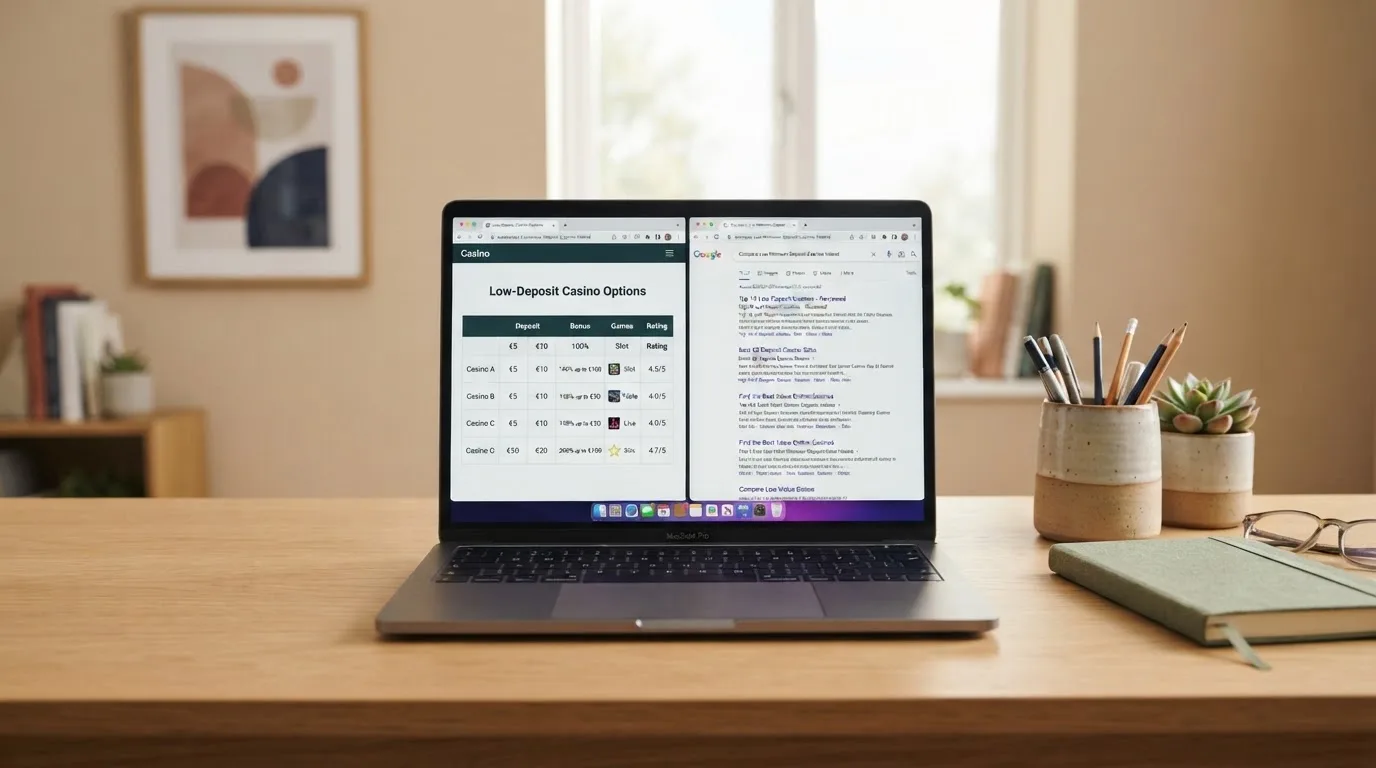
BetStop, the National Self-Exclusion Register, has been live since August 2023. It binds Australian-licensed wagering services — sportsbooks and the like, not online casinos — so registering is the right step for a punter who wants licensed wagering closed off, and it does not connect to the offshore brands this page is reviewing. The National Gambling Helpline on 1800 858 858 is free, runs around the clock and accepts chat sessions through Gambling Help Online. It is the single piece of practical infrastructure that works regardless of which side of the law a player happens to be on, and it is the place to start if any of this page prompts a thought about cutting back.
Two bank-side controls matter here because they sit at the payment rail rather than at the casino. Westpac’s gambling block operates at card level and refuses authorisation of transactions registered under the merchant category code for betting and casino gambling on eligible personal credit and debit cards. ANZ offers a similar block through its app, with the same gap a casino cashier creates and one extra wrinkle worth knowing: ANZ’s block also catches gambling transactions routed through a digital wallet such as Apple Pay on an eligible card, but the bank warns that not every gambling transaction will be blocked, and some non-gambling transactions might be blocked in error. Once ANZ’s block is on, removing it requires a 48-hour wait. Commonwealth Bank runs a comparable gambling lock inside the CommBank app, with the same no-guarantee caveat — most gambling transactions are stopped, the bank states, but not all. These are blunt instruments against offshore sites, which sit outside Australian licensed rails in the first place, and they are worth turning on even when they cannot reach every last transaction.
The layer that does not exist for an Australian playing at an offshore casino is the one the marketing never mentions. There is no Australian complaints body for a withdrawal refused by a Curaçao-licensed brand. There is no local regulator to escalate to. There is no Australian consumer law in the background. If the site is later blocked by the ACMA while a balance still sits on it, that balance is, in practical terms, unrecoverable. The protection that matters most is the choice not to deposit, and the second-most-important protection is the personal spending cap a player sets for themselves before they ever open the cashier.
Crypto and the Smallest Deposit Sizes: Cheap Entry, Real Friction
Crypto deposits are the route offshore casinos tend to push when they want to advertise the lowest minimums. Five or ten dollars’ worth of a coin is technically possible at the cashier, but the comparison a reader is being asked to make is between a small fiat deposit and a small crypto deposit, and the friction sits on the crypto side of that line in ways the marketing does not name.
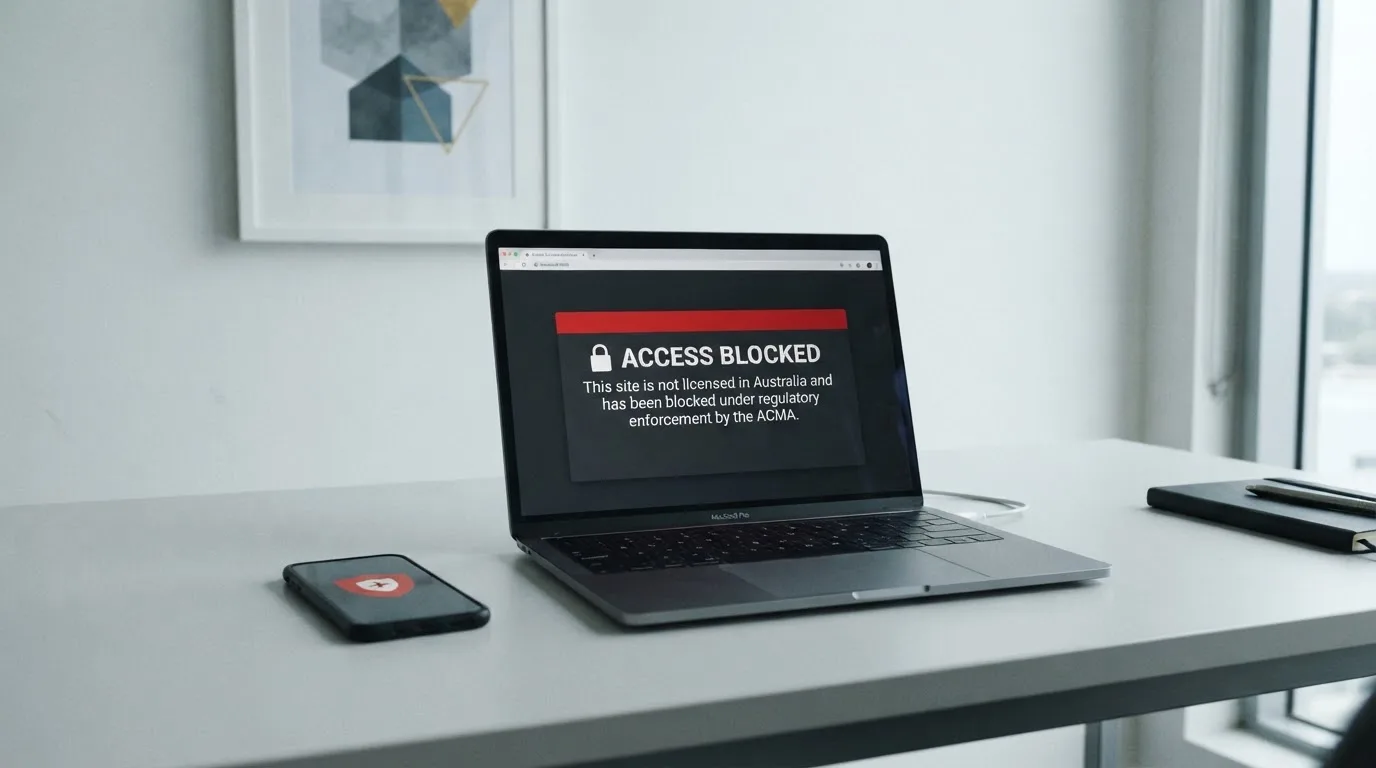
A low minimum deposit bitcoin casino still requires a full blockchain confirmation before the funds show in the player account. That confirmation carries a network fee, and the fee does not scale with the deposit amount in any useful way. A twenty-dollar deposit can eat a five-dollar network fee; a two-hundred-dollar deposit pays the same fee and shrugs it off. The dollar value of the entry shrinks and the percentage the fee takes of it grows, so the practical minimum is set by the network rather than by the casino, and the casino’s advertised minimum is, on a small deposit, a fiction dressed up as a feature.
Crypto casinos also tend to be where the offshore licence is most aggressively marketed and least productively probed. A Curaçao sub-licence from an operator the ACMA has already warned is not a stronger licence because the deposit was placed in coin rather than in dollars. The Interactive Gambling Act 2001 does not draw a distinction by payment method; the prohibition on providing online casino games to a person in Australia applies regardless of whether the funds arrived through a bank transfer, a credit card, a PayID or a Bitcoin wallet.
The practical compromise is the one responsible-play writers have made for a decade: a small first deposit in fiat, sized to the entertainment budget a player has actually decided on, paid through a method whose fees and limits are known in advance. If crypto is the only route a site accepts, the network fee relative to the deposit is the number to look at before the casino’s stated minimum is.
How Australian Payment Rails Shape the Deposit Decision
The deposit methods an offshore site accepts are usually drawn from a short list. The Australian rules around each one are not, and they are worth understanding because they sit between the player and the casino cashier rather than inside it.
PayID and Osko settle in under a minute, twenty-four hours a day, whether the transfer is addressed to a BSB and account number or to a PayID. Over a hundred Australian financial institutions sit on the New Payments Platform, and more than twenty-five million PayID identifiers were registered on it by April 2025. Paying to a PayID also surfaces the name of the account holder before the transfer is sent — AP+ warns that being asked to transfer money to a PayID on an illegal gambling site almost certainly means a scam site, on top of whatever the broader prohibition does. New Payments Platform Australia became publicly accessible on 13 February 2018; the platform is owned by New Payments Platform Australia Ltd, a non-profit whose shareholders include the Reserve Bank of Australia and the major banks, and participants must keep monthly outages to under two minutes. PayID’s value to a low-deposit punter is speed and the absence of card surcharges; its value to an offshore casino is that it makes a small deposit look and feel like a domestic transfer, which it is not.
BPAY is the older rail: a bill-payment service inside online banking, available at over 140 banks and financial institutions, with billers and payers exchanging a Biller Code and a Customer Reference Number. APA Plus runs both PayID and BPAY, after the 2021 ACCC authorisation that merged BPAY Group, eftpos and NPP Australia under the holding entity Australian Payments Plus. A BPAY deposit to a casino is, in structural terms, a bill payment to a biller code, and the casino’s status under the IGA does not change because the rail is domestic. Credit cards and credit-related products have been banned as a payment method for licensed online wagering since 11 June 2024, with penalties of up to A$247,500 for operators — a restriction that, by the same logic, constrains the gambling use of linked digital wallets. The AUSTRAC threshold-transaction report, which kicks in at A$10,000 or more, applies only to physical cash, so an electronic transfer of any size is not reportable on that basis alone.
The deposit-method picture matters because a low deposit is a small financial commitment and the rail is the same regardless of size. A bank-side gambling block works the same on a ten-dollar deposit as on a thousand. A licensed wagering service accepts PayID and BPAY and refuses credit; an offshore casino has its own payment policy and the player’s bank has its own block, and the two are the only checks in the system. The deposit decision is therefore less about which method is cheapest and more about which method the player can themselves stop the next ten from going out on.
Mechanical Enforcement
Eleven operators sit behind the eleven formal warnings the ACMA has most recently issued over online casino brands reaching Australian residents. They are listed because the ACMA itself acted against them, not because they represent a shortlist of safe places to play. Online casino games cannot be licensed anywhere in Australia under the Interactive Gambling Act 2001, so the table below is a record of enforcement action, not a ranking.
The table maps the eleven brands against the date the ACMA acted, the operator the regulator named in its formal warning, and the picture the available sources paint of the subject side of the relationship — the payment or responsible-play layer the brand touches, where the inputs carry one.
| Brand | ACMA action and date | Operator named by the ACMA | Subject support |
|---|---|---|---|
| RocketPlay | Formal warning, March 2026 | Pulsup Ltd (RocketPlay) | listings-only |
| Level Up Casino | Formal warning, May 2022 | Dama N.V. | listings-only |
| Woo Casino | Formal warning, March 2025 | Dama N.V. | — |
| Spirit Casino | Formal warning, May 2025 | Dama N.V. | — |
| National Casino | Formal warning, July 2025 | Consolutetish S.R.L. | listings-only |
| Bizzo Casino | Formal warning, July 2025; earlier 2022 | Consolutetish S.R.L.; earlier TechSolutions | listings-only |
| Ignition Casino | Formal warning, July 2025 | Bamboo Media | — |
| Instant Casino | Formal warning, February 2025 | EOD Code SRL | listings-only |
| Jackbit | Formal warning, April 2026 | Ryker B.V. | — |
| Casino Intense | Formal warning, April 2025 | Sterplay Holding Ltd | listings-only |
| Sky Crown | Formal warning, September 2022 | Hollycorn N.V. | — |
The list looks longer than any single year’s enforcement round because it spans the ACMA’s record rather than a single quarter. Dama N.V. alone accounts for four of the eleven entries — Level Up Casino in 2022, Woo Casino in March 2025, Spirit Casino in May 2025 and the earlier RocketPlay warning that ran to its May 2022 file. Consolutetish S.R.L. accounts for two adjacent entries from July 2025: National Casino and Bizzo Casino, the second named brand having already drawn a 2022 warning to TechSolutions. The remaining five are spread across EOD Code SRL, Ryker B.V., Sterplay Holding Ltd, Hollycorn N.V. and Bamboo Media, each named once. Eleven brands, eight operators, and a single offshore regulator under which all of them sit. The pattern is the point: this is a market the ACMA has been closing, in waves, since 2017.
RocketPlay
The most recent formal warning the ACMA has issued to a brand on this list landed in March 2026, naming Pulsup Ltd as the operator behind RocketPlay. That sits on top of a 2022 warning to Dama N.V. over the same brand, so the same casino has drawn the regulator’s attention in two separate corporate guises within four years. The subject support the available sources show for RocketPlay is thin — listings-only — which is a way of saying no payment or self-exclusion picture was carried by the inputs beyond what the brand’s own affiliate pages describe. The verdict is structural rather than competitive: a brand on which the ACMA has acted twice in four years is the brand most likely to be on the regulator’s next blocking list, and a deposit placed there this quarter is a deposit that may face a balance-inaccessible event before the next one.
Level Up Casino
Level Up Casino was named alongside RocketPlay in Dama N.V.’s 2022 warning — one operator, six brands, May 2022 — and the subject support the inputs carry is listings-only on Westpac’s gambling-block reference page rather than any deeper payment detail. Four years on from the original warning, the brand is still operating under the same corporate umbrella. For a reader comparing two Dama N.V. brands, the relevant question is not which of the two offers the lower minimum deposit; the relevant question is what recourse either gives them, and the answer for both is the same as it was in 2022.
Woo Casino
Woo Casino earned Dama N.V. a second formal warning, this one in March 2025, three years after the 2022 wave. The pattern of repeat action against the same operator — same parent, different month, same prohibited service — is what the ACMA’s record looks like for brands that did not change their offering. The subject side of Woo Casino’s record carries no data on the inputs available, which makes it the harder brand to characterise beyond the regulator’s own description. Read across to the Dama N.V. block above: a brand on a parent’s second warning has fewer places left to move.
Spirit Casino
Spirit Casino is the third of Dama N.V.’s three 2025 entries, warned in May 2025, two months after the Woo Casino action. The pairing is worth noting because the ACMA tends to name an operator with multiple tied brands in a single round rather than spread them out, which is the structural shape May 2025 takes here. A reader looking at Spirit Casino and Woo Casino as separate brands is, in practice, looking at the same operator twice. The same offshore rules apply. The same Australian prohibition applies. The same absence of consumer recourse applies.
National Casino
National Casino’s July 2025 warning sits with Consolutetish S.R.L., the same operator named over Bizzo Casino in the same round. The subject-side record is fuller here: listings on the ACMA’s own pages, AUSTRAC and BetStop all reference National Casino in some way, which is a useful indicator of how broadly the brand has circulated in Australian-facing material. The pair of warnings, run from the same operator at the same moment, is the ACMA treating two brands as one operational matter. National Casino is what that operational matter looked like at the time.
Bizzo Casino
Bizzo Casino is the rare brand on this list with two warnings on the regulator’s record at different operators: Consolutetish S.R.L. in July 2025, and TechSolutions Group N.V. — and its earlier TechSolutions (CY) Group Limited — in 2022. Three years apart, two corporate structures, the same prohibited service. The brand has outlasted two parent companies and remains a focus of the regulator’s attention. For a reader trying to read what an offshore licence means for a brand’s longevity, Bizzo is the longer-running case on this list. The subject-side record is listings-only through Gambling Insider. The warning history is the more informative of the two.
Ignition Casino
Ignition Casino’s July 2025 warning names Bamboo Media as the operator. The brand sits alone on the list for that corporate parent, and the subject-side record carries no data on the inputs available. Ignition is one of the better-known offshore casino brands globally, which is what makes the ACMA’s action against it more legible to a casual reader who has seen the name before. Legibility is not the same as legal status, and the warning is what determines that. There is no Australian licence behind the brand, no matter how widely the name has circulated.
Instant Casino
Instant Casino’s February 2025 warning named EOD Code SRL as the operator. The subject-side record is the most developed of the eleven: listings on ecoPayz and on PayID both reference Instant Casino, which is a sign of how the brand has been positioned around instant-payment rails in marketing material. The irony is that PayID is the rail Australian Payments Plus itself warns against for illegal gambling sites: paying to a PayID on an illegal gambling site, AP+ states, almost certainly means a scam site, on top of the deeper IGA issue. A brand that markets itself around the PayID name is borrowing the credibility of a domestic rail it has no standing to use.
Jackbit
Jackbit’s April 2026 warning named Ryker B.V. as the operator and the same parent is named over CasinOK in the same round. The subject-side record carries no data on the inputs available, which means the brand’s profile is the regulator’s description alone. Jackbit is one of two crypto-led brands on the list — the kind of operator that markets the lowest deposit minimums — and the warning landed in the same enforcement window as the kind of small-deposit crypto marketing this page is about. The crypto entry point does not change the legal status.
Casino Intense
Casino Intense’s April 2025 warning named Sterplay Holding Ltd as the operator. The subject-side record is the broadest of the eleven: listings on AUSTRAC, on BetStop, on Gambling Insider and on the ACMA’s own pages all carry some reference to the brand. That breadth is a marker of how far Casino Intense has circulated in Australian-facing material over the years. For a reader trying to read what an offshore brand’s Australian footprint looks like, Casino Intense is the densest example on the list. The warning is the same shape as the others: a regulator’s formal notice that the brand was offering a prohibited service to Australian residents.
Sky Crown
Sky Crown’s warning named Hollycorn N.V. as the operator, and the same warning also covered Blue Leo, which sits outside this list because the inputs only routed eleven brands. The subject-side record carries no data on the inputs available. Hollycorn is one of the larger Curaçao sub-licence holders in the offshore market, which gives Sky Crown a corporate parent with a broad offshore footprint — and a corresponding pattern of regulator attention in markets that have taken a position against offshore casino brands. The Australian warning is one piece of that pattern.
What the Minimum Itself Costs to Hit
The arithmetic that matters on a low-deposit casino page is not the deposit amount. It is the work a small deposit has to do to clear whatever the site’s terms attach to it, and the time that work takes. A player who deposits the minimum and then has to wager that deposit dozens of times before withdrawing is a player whose “small entry” was, in effect, a long commitment in disguise.
The cleanest way to read this is to take the casino’s stated bonus and the wagering factor it carries, multiply the bonus by the factor to get the required turnover, divide by the stake-per-spin to get the number of spins, and divide the spins by twelve — the rough number of spins a player gets through in a minute at the slower pace of a real session, or by seven if the figure should be quoted at the faster cadence of five-second spins. The result is hours. The same arithmetic, expressed as expected loss, multiplies the required turnover by one minus the game’s return-to-player. The expected loss is what the bonus is statistically going to cost, before the small deposit is added back.
The inputs the page carries are not sufficient to run that arithmetic on a single one of the eleven brands above, because no brand here carries a confirmed bonus and a confirmed wagering multiple in the inputs. That absence is itself the information: an offshore brand’s bonus terms live on affiliate marketing pages whose figures the page’s own inputs do not back, and the only honest way to render that absence is to leave it as an absence. A reader who wants a ballpark can take a ten-dollar bonus at a forty-times wagering requirement, which is a moderate version of what this market runs, and walk the arithmetic themselves: four hundred dollars of turnover at the casino’s stated stake-per-spin, and somewhere between four and seven dollars of expected loss on a slot with a ninety-six per cent return. The figure is small; the hours are not. Forty times a small bonus, played at a stake-per-spin that makes the bonus last the session, runs into hours of play the marketing did not name.
How to Read the ACMA’s Blocking Record
The ACMA’s enforcement record is the most concrete number an Australian reader can hold on this market. By the end of June 2026, 1,751 illegal gambling and affiliate marketing websites had been blocked since the first blocking request in November 2019, and more than 230 unlicensed gambling services had left the Australian market since enforcement was strengthened in 2017. The 26 June 2026 round alone asked Australian internet service providers to block twelve more sites: 7Signs, ChromaBet, Donbet, Duospin, Freshbet, Slots Gem, Jacks Club, Lucky Start, Pointsbetz, Spinrise, Vinyl Casino and Wildsino. Each of those twelve is a brand the ACMA had earlier investigated, with a name that has circulated in affiliate marketing and a footprint that has now been cut off at the ISP layer.
The blocking-rate figure that matters is what the running total looks like over the years between the first blocking request and now. From November 2019 to the end of June 2026 is roughly seventy-nine months. A running total of 1,751 blocked sites across that span sits in the band of about twenty-two blocked sites per month, which is the regulator’s working pace against a market that has added new brands throughout the same period. The shape of the rate is harder to read than the headline number, because the number of sites available to block has also moved; the figure that holds is that the ACMA has, on average, asked Australian ISPs to block more than one illegal gambling or affiliate site every business day since the first request in November 2019. That pace is the context in which any single deposit decision is being made.
The other large figure worth holding alongside the blocking record is the size of the market the regulator is trying to cut down. H2 Gambling Capital’s 2025 report estimates that Australians lose about A$3.9 billion a year to illegal gambling sites, and that the share of gambling going through legal channels fell from seventy-four per cent in 2021 to sixty-four per cent in 2025. The legal share is moving the wrong way: more dollars are now going through offshore channels, not fewer, which is what makes the ACMA’s blocking record a band-aid on a wound the underlying rules are not yet closing.
Why the Legal Framework Looks the Way It Does
The Interactive Gambling Act 2001 is the spine of the Australian prohibition. Strengthened by the Interactive Gambling Amendment Act 2017, it makes it an offence to provide online casino games, online pokies or in-play betting to a person in Australia. No state or territory licenses those products. What can be licensed is wagering on races and sport placed before the event, lotteries and keno — and in practice the licensing work is concentrated in the Northern Territory, where the Northern Territory Racing and Wagering Commission regulates fifty-two of Australia’s online bookmakers, including Sportsbet, Bet365 and Ladbrokes. The Commission has no full-time staff and meets once a month in Darwin, a structural feature of how thin the Australian licensed market is on the administrative side. Minimum age for any gambling activity is eighteen.
The Interactive Gambling Amendment (Gambling Reform) Bill 2026 passed Parliament on 19 August 2026. Its advertising and inducement measures commence on 1 January 2027, which is a law with a start date, not yet in force on a 2026 page. The relevant fact for a reader in 2026 is that the rules in force today are the rules that were in force before the bill; the new advertising framework will change what licensed operators can offer in promotions once it is live.
The IGA targets the provider, not the player. Individual Australians are not prosecuted for depositing at an offshore casino, which is sometimes read as permission and is not. The offshore site gives no Australian consumer protection, no complaints body and no recourse if a withdrawal is refused. The site can be blocked while a balance is still on it. The Australian licensed side, by contrast, ties wagering to a small set of accepted payment methods — debit card, bank transfer, PayID/Osko and BPAY — and bans credit cards, credit-related products and digital currency as payment for licensed online wagering since 11 June 2024. The contrast is the point: an Australian punter who sticks to the licensed rails gets a complaints body and a payment framework; an Australian punter at an offshore site gets neither.
Payment Methods and Banking
| Payment Method | Status in Australia | Notes |
|---|---|---|
| Debit card | Licensed | Accepted by Australian-licensed wagering services |
| Bank transfer | Licensed | Accepted by Australian-licensed wagering services |
| PayID/Osko | Licensed | Accepted by Australian-licensed wagering services |
| BPAY | Licensed | Accepted by Australian-licensed wagering services |
| Credit card | Prohibited | Banned for licensed online wagering since 11 June 2024 |
| Digital currency | Prohibited | Banned for licensed online wagering since 11 June 2024 |
Recreational gambling winnings are not assessable income in Australia and losses are not deductible, unless the player carries on a business of gambling. That is the model; the ATO is the right place to confirm an individual position, because a reader’s circumstances are not the model. The tax treatment does not depend on whether the site was licensed in Australia, only on whether the activity was a business.
The Real Choice a Low-Deposit Page Poses
A page on low-deposit casinos in Australia is read by someone who is already thinking about a small stake. The honest answer to that frame is that the size of the stake is the smallest of the variables, and the licensed-or-not variable is the largest. The smallest deposit a site will accept is, in most cases, between five and twenty dollars; the choice that determines whether the deposit is recoverable, whether a balance can be withdrawn and whether there is a complaints body to escalate to is made the moment the player decides whether to use a licensed wagering service or an offshore casino.
The licensed route is what the Australian framework is built around. It accepts debit card, bank transfer, PayID and BPAY; it bans credit and digital currency; it ties the operator to BetStop, the National Self-Exclusion Register; it gives the punter a regulator to complain to. The bank-side gambling blocks at Westpac, ANZ and Commonwealth Bank sit on top of the licensed route, blunt instruments that catch most gambling transactions and miss others. Offshore casinos sit outside all of it. The minimum deposit they advertise is real; the deposit’s status under Australian law is what the ACMA’s enforcement record has been describing since 2017.
The right reader for the licensed route is anyone who values the protection and is content with the smaller product set — pre-event sports and racing wagering, lotteries, keno. The right reader for the offshore route is, in practical terms, no Australian resident who can stake the same dollar through a licensed service, because the offshore route gives the player nothing the licensed route does not, and gives up protection the licensed route provides. A reader who is reading this page because they want the entertainment of a small stake has, in either case, a clearer path than an offshore casino: the licensed side of the Australian market, sized to a personal entertainment budget, paid through a method the player has set their own limit on.
Frequently Asked Questions
Is it legal for an online casino to accept a low deposit from a player in Australia?
No. Online casino games and online pokies cannot be licensed anywhere in Australia under the Interactive Gambling Act 2001, so the size of the deposit does not change the legal status. The provider is the party the IGA targets, and the ACMA has issued formal warnings and asked ISPs to block sites on a regular basis since 2017.
What is typically the smallest deposit a low deposit casino site will accept?
Offshore casinos commonly advertise minimum deposits in the five-to-twenty-dollar band, sometimes lower for crypto rails. The figure is real at the cashier but the practical minimum is set by the network fee for crypto or by the bank’s gambling block for fiat, not by the casino’s own threshold.
Do network fees make a low-value bitcoin deposit less worthwhile at a crypto casino?
Yes, and the imbalance grows as the deposit shrinks. A full blockchain confirmation carries a flat-ish fee that does not scale with the deposit amount, so a small coin deposit can lose a meaningful share of its value to the fee before any spin is played. The casino’s stated minimum is, in those cases, a fiction dressed up as a feature.
Does a low deposit paysafecard casino apply the same terms as a higher-deposit site?
The terms a casino attaches to a deposit are the casino’s own terms and do not, in general, vary with deposit size. The only difference a small deposit tends to produce is a smaller absolute bonus amount and, where the site has a minimum qualifying deposit for promotions, exclusion from the bonus altogether.
Is a low deposit casino subject to the same withdrawal checks as a high-roller account?
Offshore casinos run their own internal review on every withdrawal, and the review does not scale down with the deposit amount. A small withdrawal can be held by the same identity, source-of-funds and bonus-clearing checks a larger one would. The licensed Australian side ties the review to a known framework and a known regulator; the offshore side does neither.
Why might a casino advertise a low minimum deposit specifically to attract new players?
A low advertised minimum lowers the psychological cost of trying the site, which is the marketing function the figure is built to serve. Once a player has an account and a balance, the casino’s actual economics begin, and the size of the entry deposit is, from that point on, a small part of the relationship the casino is building.