
$5 minimum deposit online casinos in Australia: what the small-deposit pitch really costs
Current as of 17 October 2026 against the ACMA’s published register of formal warnings and blocking actions.
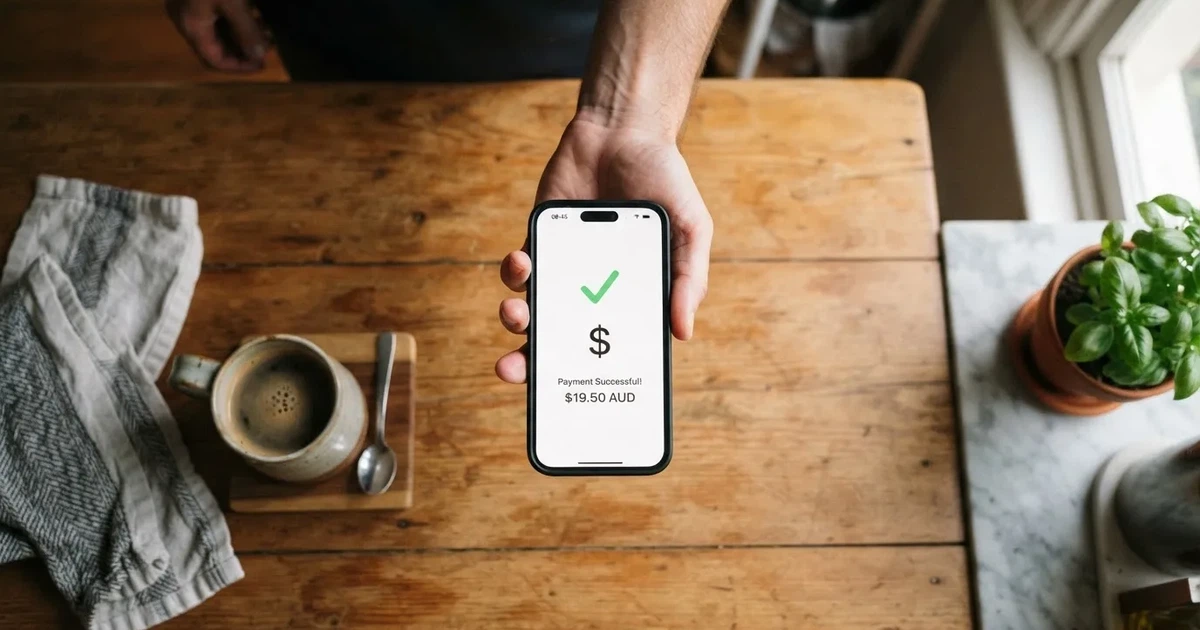
A five-dollar minimum deposit sounds like the cheapest possible way into online pokies, and that is exactly why the pitch is everywhere. In Australia, though, the pitch runs straight into a wall of law. The Interactive Gambling Act 2001 prohibits the supply of online casino games and online pokies to anyone in Australia, and no state or territory issues the licence a $5-minimum site might display in its footer. The sites quoting the figure are offshore operators of the kind the ACMA has been warning and blocking for the better part of a decade, and the deposit is small for one reason only: a small deposit lowers the barrier to a first wager, which is the moment the offshore operator wants the player on the other side of the page.
This page is not a ranking of those sites and not a directory of where to send five dollars. It walks through how the small-deposit offer is marketed, how an Australian bank actually moves the money when it moves at all, why the ACMA’s formal-warning list reads the way it does, and where the legal alternative sits. The point is to give a reader who has typed the phrase “5 minimum deposit casino australia” enough to know what they have actually been offered — and what they have not.
Table of Contents
- How a $5 deposit normally settles through Australian banking
- Where $5-minimum casinos sit in the wider Australian landscape
- The eleven brands the ACMA has warned, and what each one tells a reader
- The legal frame, and the alternative that actually exists in Australia
- A blocking-rate note, on the pace of the ACMA’s enforcement
- Frequently asked questions
How a $5 deposit normally settles through Australian banking
A punter who reads “from $5” on a casino landing page is usually imagining an instant, friction-free top-up. The mechanism that would deliver that, if the receiving account sat inside Australia, is the New Payments Platform and Osko by extension. With Osko, a transfer between participating Australian banks arrives in under a minute, around the clock and through the weekend, whether the payment is addressed to a BSB and account number or to a PayID. PayID in particular shows the name of the account holder before the transfer is sent, which is the moment a punter gets to see whether the merchant they are about to pay matches the merchant they think they are paying. Australian Payments Plus, the operator of PayID and Osko, warns that being asked to send a PayID transfer to an illegal gambling site almost certainly means the destination is a scam. PayID-based instant transfers are available at more than 100 Australian financial institutions and over 25 million PayID identifiers had been registered on the New Payments Platform by April 2025. The platform itself became publicly accessible on 13 February 2018 and is owned by New Payments Platform Australia Ltd, a non-profit whose 13 shareholders include the Reserve Bank of Australia and the country’s major banks, and participants in it must keep monthly outages to no more than two minutes. None of that stops the platform from carrying a payment to a prohibited destination, but it is the rail the rest of the Australian economy uses when it wants a five-dollar transfer to land instantly.

BPAY is the other rail a reader will see advertised. It is a bill-payment service inside online banking: the payer enters a Biller Code and a Customer Reference Number printed on the bill. BPAY has run in Australia since 18 November 1997, is available in the online banking of over 140 banks and financial institutions and is offered by more than 95,000 businesses. It is run, alongside PayID and Osko, by Australian Payments Plus, and it is owned equally — through parent company Cardlink Services Limited — by Australia’s four major banks: ANZ, Commonwealth Bank, National Australia Bank and Westpac. In September 2021 the ACCC authorised the merger that brought BPAY Group, eftpos and NPP Australia under that single holding entity. A $5 bill payment clears through BPAY in much the same way a phone bill does; the channel is built for known billers, not for casinos.
A side note on the small figure itself. AUSTRAC’s threshold-transaction-report rule, which requires reporting of transfers of A$10,000 or more, applies only to physical cash; ordinary electronic bank transfers are not subject to that per-transaction reporting requirement regardless of the amount sent. A $5 transfer is, on its own, a non-event for the regulator.
Why the small minimum has nothing to do with how the money moves
The minimum-deposit number is set by the casino, not by the rail. A PayID transfer clears in under a minute whether it is for $5 or $500, and the same is true of an Osko transfer between banks. The figure is a marketing threshold, not a technical one. Offshore operators set it low because the value they are actually selling is not the dollar amount of the deposit but the act of opening an account, the first wager and the data the casino now holds on the player. Every dollar above the minimum simply moves the same way the five does.

Card networks, wallets and the bank-side gambling block
The same offshore operators that quote a $5 minimum also typically push players toward Visa, Mastercard, American Express or a digital wallet. American Express is itself a different shape from the other two: it was established in 1850 as a freight-forwarding company, launched its first charge card on 1 October 1958, and unlike Visa or Mastercard’s four-party model it issues cards and processes transactions itself as a three-party scheme. The Reserve Bank of Australia’s July 2025 review proposes removing surcharges only on eftpos, Mastercard and Visa transactions and leaves American Express explicitly outside the scope of the proposed ban, which is why an Amex charge from an offshore casino often shows a surcharge a Visa transaction does not. By the end of 2025, Apple Pay, Google Pay and Samsung Pay transactions collectively accounted for around 45% of all card payments in Australia by number, which is the share of the rail an offshore casino is trying to reach when it asks a punter to tap rather than enter card details.
What that rail looks like from the Australian bank side is what makes the channel narrower than the marketing suggests. Westpac’s gambling block works at card level: it refuses authorisation of transactions registered under the merchant category code “Betting/Casino Gambling” on eligible personal credit and debit cards. ANZ’s gambling transaction block, activated inside the ANZ app, blocks gambling transactions made through a digital wallet such as Apple Pay on an eligible card, not just transactions on the physical card itself. Commonwealth Bank lets customers apply a gambling lock to eligible cards via the CommBank app, which blocks most gambling transactions, with the bank stating it cannot guarantee every gambling-related purchase will be stopped. Once a customer turns on ANZ’s gambling block, removing it again requires a 48-hour waiting period, and ANZ warns that not all gambling transactions will be blocked and that some non-gambling transactions might be blocked in error. The Interactive Gambling Act 2001 as amended in 2023 forbids Australian-licensed online wagering services from accepting payment by credit card or other credit-related products, a restriction that also constrains gambling use of linked digital wallets such as Apple Pay. Apple Pay itself does not charge a consumer fee in stores, online or in apps — any surcharge comes from the merchant’s card-processing fees — and Apple states that transaction limits and PIN requirements are set by the card issuer or merchant rather than by Apple. A punter who has switched any of these blocks on has, in practice, cut several of the routes an offshore casino would prefer them to use; the punter who has not will find the casino’s small minimum still has to land in an account willing to take it.
Where $5-minimum casinos sit in the wider Australian landscape
The phrase “$5 minimum deposit casino australia” tends to bring up three kinds of result. The first is the offshore casino itself, with a page headline promising play from a low figure. The second is a comparison or affiliate page that ranks a list of those casinos against each other on criteria that often turn out to be unverified or invented. The third is Australian-licensed wagering, which is a different product under a different law: online sports and racing bookmakers, licensed by the Northern Territory Racing and Wagering Commission in practice — the commission regulates 52 of Australia’s online bookmakers, including Sportsbet, Bet365 and Ladbrokes, and operates with no full-time staff, meeting once a month in Darwin — but licensed wagering in Australia does not include online casino games or online pokies, so the $5 minimum that an offshore site advertises has no licensed equivalent to be compared against.
That is the wider landscape a reader searching the phrase is actually inside: a prohibited product category on one side, an Australian-licensed wagering category that does not contain the product being searched for, and a regulatory authority in the middle issuing warnings and directing ISPs to block the offshore side.
| Payment Type | Status for Australian-Licensed Wagering | Status for Offshore Casinos |
|---|---|---|
| Debit Card | Legal | Often blocked |
| Bank Transfer | Legal | Prohibited (as casino deposit) |
| PayID / Osko | Legal | Prohibited (as casino deposit) |
| BPAY | Legal | Prohibited (as casino deposit) |
| Credit Card | Prohibited | Pushed (often blocked) |
What the ACMA’s blocking list has actually caught up to
The Australian Communications and Media Authority has been the enforcement arm of the Interactive Gambling Act 2001 since the 2017 amendments came into force. As reported in June 2026, a total of 1,751 illegal gambling and affiliate marketing websites had been blocked since the first blocking request in November 2019, and more than 230 unlicensed gambling services had left the Australian market since enforcement was strengthened in 2017. The same June 2026 round directed Australian internet service providers to block a further 12 websites: 7Signs, ChromaBet, Donbet, Duospin, Freshbet, Slots Gem, Jacks Club, Lucky Start, Pointsbetz.com, Spinrise, Vinyl Casino and Wildsino. The cumulative figure of 1,751 since November 2019 is not a snapshot of the live market; it is the cumulative count of distinct domains the regulator has asked ISPs to make unreachable, layered on top of the warnings that have already pushed some operators out.
The blocking numbers and the warnings sit on top of each other for a reason. The blocking request is what makes a domain unreachable for an Australian residential connection. The formal warning is the regulator’s record that an operator has been told, in writing, that the service it is offering is prohibited under the Interactive Gambling Act 2001. The warning is what makes a future blocking request easier to justify. Many of the operators appearing in the warnings section of this page were already the subject of a warning before the most recent one — Rocketplay, for example, was the subject of a May 2022 warning to Dama N.V. before the March 2026 warning to Pulsup Ltd over RocketPlay, and Bizzo Casino was the subject of a 2022 warning to TechSolutions before the July 2025 warning to Consolutetish S.R.L. The repetition is the regulator’s own record of how often the same brand resurfaces under a new parent company.
What the ACMA’s formal-warning list reads like
The formal warnings give the clearest view of how offshore operators offering $5 minimum deposits to Australians present themselves. Each warning names the parent company behind the brand, the date the warning was issued and the prohibited service the regulator found the operator offering. The full set, as published by the ACMA and drawn on for this page, is as follows.
| Brand | ACMA action and date | Operator named by the ACMA | Earlier ACMA action against the brand |
|---|---|---|---|
| RocketPlay | Formal warning, March 2026 | Pulsup Ltd (Rocketplay.com.au) | Dama N.V., May 2022 |
| Level Up Casino | Formal warning, May 2022 | Dama N.V. | — |
| Woo Casino | Formal warning, March 2025 | Dama N.V. | — |
| Spirit Casino | Formal warning, May 2025 | Dama N.V. | — |
| National Casino | Formal warning, July 2025 | Consolutetish S.R.L. | — |
| Bizzo Casino | Formal warning, July 2025 | Consolutetish S.R.L. | TechSolutions, 2022 |
| Ignition Casino | Formal warning, July 2025 | Bamboo Media | — |
| Instant Casino | Formal warning, February 2025 | EOD Code SRL | — |
| Jackbit | Formal warning, April 2026 | Ryker B.V. | — |
| Casino Intense | Formal warning, April 2025 | Sterplay Holding Ltd | — |
| Sky Crown | Formal warning, September 2022 | Hollycorn N.V. (Sky Crown and Blue Leo) | — |
Two things stand out from the table. The first is that the parent company matters more than the brand name. Dama N.V. accounts for four of the eleven rows and was the recipient of warnings stretching from 2022 to 2026 across five different brand names. The second is that the warnings are not the only enforcement: the Sky Crown warning also covered Blue Leo, the RocketPlay warning arrived after the brand had already cycled parent companies, and several of the brands on this list are likely to surface again under a new operator name once their current domain is blocked. The shape of the table is the shape of the offshore industry: parent companies moving, brand names recycling, and a regulator that has to warn the same corporate group more than once.
How much Australian money flows through this market
The scale of the underground side of the market is the reason the regulator has the apparatus it has. H2 Gambling Capital’s 2025 report estimates that Australians lose about A$3.9 billion a year to illegal gambling sites, and that the share of gambling going through legal channels fell from 74% in 2021 to 64%. The licensed share has been dropping as the offshore share has grown, which is the only market-level reading of the $5-minimum pitch the page needs: every punter who signs up to an offshore site for the small minimum is on the side of that 64% line that is moving the wrong way.
The eleven brands the ACMA has warned, and what each one tells a reader
The brands below are not ranked. Each is presented because the ACMA itself has issued a formal warning about it, because the regulator’s own record is the most useful piece of information an Australian reader can have about an offshore casino, and because the same record is the page’s single non-negotiable source. No bonus terms or promotions are quoted, because the only sources for those are affiliate marketing pages whose figures cannot be verified; the ACMA record is what stays.
RocketPlay
RocketPlay has been the subject of two ACMA formal warnings. The first, in May 2022, named Dama N.V. as the operator; the second, in March 2026, named Pulsup Ltd over Rocketplay.com.au. The two warnings, four years apart, cover the same prohibited service under two different parent companies, which is the typical shape of an offshore brand that has cycled through operators without leaving the Australian market. The regulator’s view of RocketPlay is that it has offered prohibited interactive gambling services to Australians across more than one corporate structure. For a reader comparing brands on the ACMA’s record alone, RocketPlay is the longest-running entry on this list.
Level Up Casino
Level Up Casino was the subject of the same May 2022 warning to Dama N.V. that covered RocketPlay, alongside Bambet, Dazard, Wild Tornado and Cobra Casinos. The warning is six Dama N.V. brands in a single regulator action, which is the most economical way to read how the same offshore operator presents itself to Australians under multiple names. The brand’s Australian status is the same as RocketPlay’s: a prohibited service with a regulator warning on file.
Woo Casino
Woo Casino received a formal warning in March 2025, again under Dama N.V. The brand sits on the same Dama N.V. track as the 2022 warnings but a year after the regulator had already pushed the operator once. That Woo Casino has a fresh warning in 2025 is the regulator’s own evidence that a 2022 warning is not the end of the matter.
Spirit Casino
Spirit Casino received a formal warning in May 2025, the second Dama N.V. warning of that year and the fifth Dama N.V. brand covered by the regulator’s 2022–2025 cycle. The brand’s position on this page is identical to Woo Casino’s: another name on the same operator, another formal warning for the same prohibited service.
National Casino
National Casino was the subject of a July 2025 formal warning to Consolutetish S.R.L., which the regulator issued alongside the warning to Bizzo Casino in the same enforcement action. National Casino appears on the ACMA’s own pages, on AUSTRAC’s pages and on BetStop’s pages; the cross-references between the three regulators are themselves a useful piece of information about how visible the brand is across the Australian enforcement landscape.
Bizzo Casino
Bizzo Casino has been the subject of two formal warnings. The first, in 2022, was issued to TechSolutions (CY) Group Limited and TechSolutions Group N.V.; the second, in July 2025, was issued to Consolutetish S.R.L. The 2022 warning did not stop the brand from reappearing under a new parent company in 2025, which is the clearest example on this list of an offshore brand surviving an enforcement round by changing the corporate wrapper. The brand also appears on Gambling Insider’s listings, which is the source the regulator’s record sits beside.
Ignition Casino
Ignition Casino was the subject of a July 2025 formal warning to Bamboo Media. The brand’s profile on this list is the shortest: a single warning, a single parent company, the same prohibited service. The fact that it sits next to National Casino and Bizzo Casino in the same month’s enforcement actions shows that the ACMA is willing to put several offshore operators on the warning list at once.
Instant Casino
Instant Casino received a formal warning in February 2025, issued to EOD Code SRL. The brand appears on EcoPayz and on the official PayID page, which is unusual: the second of those is the official PayID page, and its appearance there is a marker of how broadly the brand’s payment footprint has been advertised across the Australian payments ecosystem. The regulator’s view is the same: Instant Casino is offering a prohibited service to Australians under a parent company the ACMA has named.
Jackbit
Jackbit was the subject of an April 2026 formal warning to Ryker B.V., alongside CasinOK in the same enforcement action. The warning is the most recent of the 2026 entries on this list and the second time in the same calendar year the ACMA has had to direct a new enforcement action at a brand a reader might encounter when searching for small-deposit offers.
Casino Intense
Casino Intense was the subject of an April 2025 formal warning to Sterplay Holding Ltd. The brand appears on AUSTRAC’s pages, on BetStop’s pages and on Gambling Insider’s listings, which is a different cross-regulator footprint from Instant Casino’s: the Australian financial-intelligence regulator rather than a payments-network page.
Sky Crown
Sky Crown was the subject of the earliest formal warning on this list, issued to Hollycorn N.V. in September 2022, which also covered Blue Leo. Sky Crown is the only brand on the list whose warning predates the 2025 wave of enforcement, which makes it the brand against which the regulator’s most sustained track record sits.
The legal frame, and the alternative that actually exists in Australia
The legal frame around $5-minimum online casino play in Australia is short enough to set out in full. The Interactive Gambling Act 2001, strengthened by the Interactive Gambling Amendment Act 2017, makes it an offence to provide online casino games, online pokies or in-play betting to a person in Australia. No state or territory issues a licence for any of those services. What is licensable is wagering on races and sport placed before the event, lotteries and keno, in practice licensed by the Northern Territory for tax reasons; the NTRWC regulates 52 of Australia’s online bookmakers, and the commission has no full-time staff and meets once a month in Darwin. The minimum age is 18.
The IGA targets the provider, not the individual player. A punter in Australia is not prosecuted for using an offshore site; the regulator’s job is to investigate, issue formal warnings and direct internet service providers to block illegal sites. The number of those sites blocked since the first blocking request in November 2019 reached 1,751 by June 2026, and more than 230 unlicensed gambling services have left the Australian market since enforcement was strengthened in 2017. The most recent round, reported on 26 June 2026, directed ISPs to block a further 12 sites. None of that enforcement reaches a balance an Australian player has already placed with an offshore site, and none of it forces a refund; what it does is reduce the number of Australians the offshore casino can reach next time.
The protections an offshore site cannot offer are the protections an Australian-licensed wagering service has to. BetStop, the National Self-Exclusion Register, has been live since August 2023, but it binds only Australian-licensed online and phone wagering services, and an offshore casino is not connected to it. The National Gambling Helpline, on 1800 858 858, is free, available 24/7 and reachable by chat through Gambling Help Online. Both work for an Australian punter regardless of where the gambling actually happens. Credit cards, credit-related products and digital currency have been banned as payment for licensed online wagering since 11 June 2024, with penalties up to A$247,500 for operators; the legal deposit routes for licensed wagering are debit card, bank transfer, PayID/Osko and BPAY. A site asking an Australian for a credit card or a crypto deposit is, by definition, not operating under the Australian rules.
A separate stream sits alongside the existing regime. The Interactive Gambling Amendment (Gambling Reform) Bill 2026 passed Parliament on 19 August 2026, and its advertising and inducement measures commence on 1 January 2027. As of 2026 the bill is law with a start date; it is not yet in force. A reader comparing the small-deposit pitch in 2026 against the regulatory state of play needs to know that the inducement side of the rules — the marketing of those $5-minimum offers in the first place — is the next thing on the regulator’s timetable.
The legal alternative to a $5 online casino deposit is, in plain terms, the land-based one. A$5 will buy a spin on a poker machine in a licensed Australian pub, club or casino. The machine is regulated, the venue is licensed, and the consumer protection that the offshore site cannot offer is built into the venue’s licence. The product is not the same product — the experience, the line-up of games, the bonus mechanics, none of them transfers — but the consumer protection does.
Tax
Gambling winnings of a recreational Australian player are not assessable income, under section 6-5 of the ITAA 1997, and losses are not deductible. The exception is a person who carries on a business of gambling. The ATO’s own guidance is the source for any specific position, and that is the line a punter reads before treating any return as taxable.
A blocking-rate note, on the pace of the ACMA’s enforcement
The pace of the ACMA’s enforcement is the rate at which the ACMA has been moving through its blocking list, because the rate is what tells a reader how current the warning list is and how much shelf-life a particular offshore brand still has.
Since the first blocking request in November 2019, the ACMA has directed Australian internet service providers to block a cumulative 1,751 illegal gambling and affiliate marketing websites, as reported in June 2026. Spread over the roughly 79 months between November 2019 and June 2026, that is a working rate of about 22 blocked domains a month, or close to one a working day. That figure is the average across the full period; it smooths over the early months, when the regulator was still building the blocking apparatus, and over the most recent rounds, when the same operator has sometimes been blocked across several domains at once. In any given month the rate has moved between low single digits and the 12 added in the 26 June 2026 round alone. The cumulative figure is the headline; the rate is the way to read it.
The band matters because a reader comparing two offshore brands by recency of warning is reading a noisier signal than the cumulative rate suggests. A brand warned in 2022 has, on average, had more than 40 months of further warnings issued around it. A brand warned in 2026 has had only a handful. The chance that a given warning leads to a domain being blocked is high but not certain, and a brand can cycle through new domains faster than the regulator can block them. The shape of the list, not the date of any single entry, is what tells a reader how settled the offshore industry is.
Frequently asked questions
Is there actually a licensed Australian online casino I can deposit $5 into?
No. The Interactive Gambling Act 2001 prohibits the supply of online casino games and online pokies to anyone in Australia, and no state or territory issues a licence for them. What is licensed is wagering on races and sport placed before the event, lotteries and keno, which do not include the casino games a $5 minimum deposit advertises. A site quoting a $5 minimum for online pokies or table games is, by definition, offshore.
Why do so many sites advertise a $5 minimum deposit for Australian players?
The figure is a marketing threshold, not a technical one. PayID and Osko settle a $5 transfer in under a minute just as they settle a $500 one; the rail does not care about the amount. The minimum is set low to lower the barrier to opening an account and placing a first wager, which is the moment the offshore operator wants the player on the other side of the page. The number signals “easy to try”, and the rest of the page is built to convert that try into a customer.
How would a $5 bank transfer clear if it were sent through Osko?
A $5 transfer between participating Australian banks over Osko arrives in under a minute, around the clock and through the weekend, addressed to a BSB and account number or to a PayID. The rail is the same one a phone bill or a rent payment uses; the amount does not change the timing. PayID-based instant transfers are available at more than 100 Australian financial institutions, and the platform’s monthly outages are kept to no more than two minutes.
Is a $5 deposit at an offshore casino covered by any Australian consumer protection?
No. Australian-licensed wagering services are covered by BetStop, by AUSTRAC reporting and by Australian consumer law; offshore casinos are not. The Interactive Gambling Act 2001 itself targets the provider, not the punter, and there is no Australian complaints body the punter can take an unresolved withdrawal to. If an offshore casino refuses a withdrawal, the punter’s recourse is whatever the operator’s own terms say it is — and the operator’s terms are not Australian law.
What is the legal, land-based alternative to a $5 deposit online casino in Australia?
A$5 will buy a spin on a poker machine in a licensed Australian pub, club or casino. The venue is licensed by the relevant state or territory regulator, the machine is regulated, and the consumer protection built into the venue’s licence is the protection an offshore site cannot offer. The product is not the same product, but the legal frame around the spend is.
Does the ACMA’s ban on online casino sites apply no matter how small the first deposit is?
Yes. The Interactive Gambling Act 2001 prohibits the supply of the service, not the size of the payment. A $5 deposit and a $500 deposit are both payments to the same prohibited service. The ACMA’s enforcement apparatus — formal warnings, blocking requests, and the cumulative 1,751 blocked domains since November 2019 — operates at the level of the service, not at the level of the transaction.