
$2 minimum deposit casino Australia, 2026: the honest version
A reader landing on this page in 2026 has usually just typed a phrase and watched the search results line up: glossy landing pages, each promising a $2 minimum deposit, each calling itself an Australian casino. What almost none of those pages open with is the part the rest of this page is built around. There is no Australian online casino licence to apply for at any minimum deposit, let alone $2. The product itself — online pokies, online roulette, online blackjack, online craps, online baccarat and the rest of the online casino catalogue — is what the Interactive Gambling Act 2001 prohibits an Australian-licensed provider from supplying to a person physically in Australia. The minimum deposit is the second question; whether the game is offered legally in this country is the first.
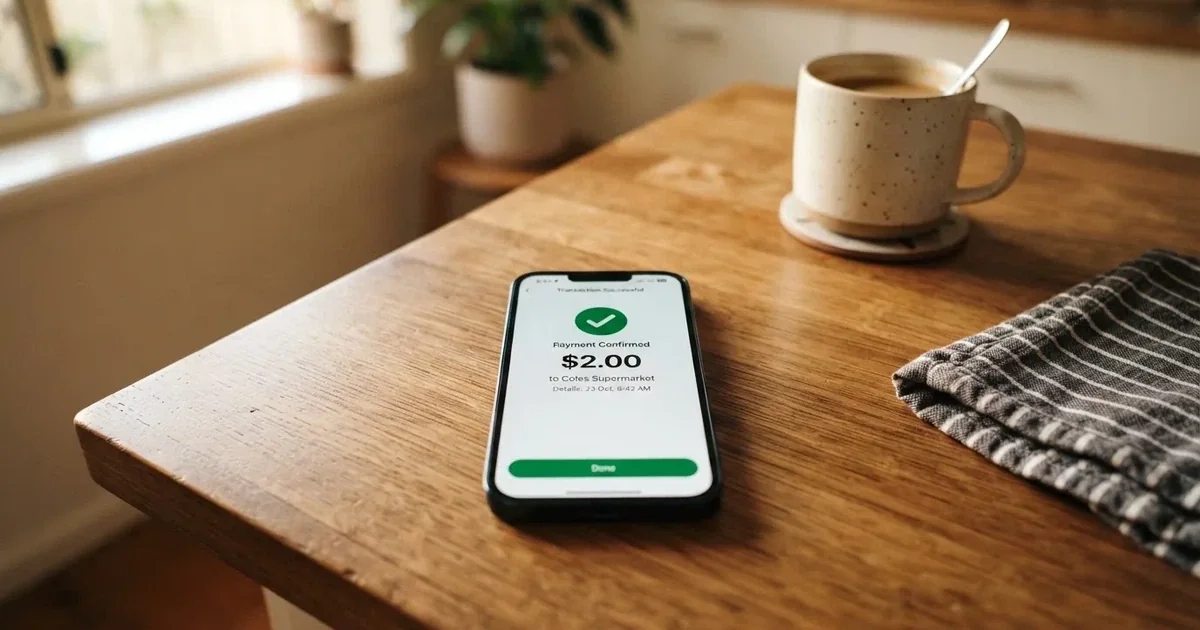
So this page does not rank offshore operators. It does not point to any specific site where a $2 deposit could be placed, because every site advertising that minimum for Australian players sits in exactly the legal grey area the ACMA acts on. What it does, block by block, is set out the picture: how a $2 bank transfer would actually clear if it were sent, what the ACMA has done about the operators who advertise to Australians, why offshore sites quote $2 minimums in the first place, and where a person who wants to play pokies in this country can do so within the law.
Data current as of 17 October 2026; licence claims verified against the ACMA formal-warning register.
Table of Contents
- How a $2 deposit would move through Australian banking
- Why the landscape looks the way it does
- What fair comparison actually weighs, when comparison is impossible
- The legality frame, in full
- Staying safe when the option sits outside the law
- The eleven operators the ACMA has acted against
- The choice, in plain terms
- Frequently asked questions
How a $2 deposit would move through Australian banking
The fastest realistic way to move $2 from an Australian everyday account to a recipient’s account, in 2026, is the New Payments Platform. That platform — owned by New Payments Platform Australia Ltd, a non-profit whose thirteen shareholders include the Reserve Bank of Australia and the major banks — became accessible to the public on 13 February 2018. Within it, two things matter for a $2 transfer: Osko and PayID.

Osko is the instant-transfer layer of the NPP. A bank transfer between participating Australian banks, addressed to a BSB and account number or to a PayID, lands in the receiving account in under a minute, 24/7, including weekends. The platforms that run on it must keep monthly outages to no more than two minutes — that is the contractual service-level that makes the “instant” claim defensible. Over 100 Australian financial institutions now offer PayID-based instant transfers; by April 2025 more than 25 million PayID identifiers had been registered on the platform.
For a $2 transfer specifically, three details are worth knowing:
- The PayID confirmation screen shows the name of the account holder before the payment is sent. Australian Payments Plus, which runs PayID and Osko through Australian Payments Plus, warns that being asked to transfer to a PayID on an illegal gambling site almost certainly means a scam site.
- BPAY, the older bill-payment service that has run in Australia since 1997 and is available through the online banking of more than 140 banks, is not the right vehicle for a casino deposit — it is built for paying bills against a Biller Code and Customer Reference Number, not for crediting a merchant account.
- AUSTRAC’s threshold-transaction-report rule, which kicks in at A$10,000, applies only to physical cash. An ordinary electronic transfer is not subject to that per-transaction reporting requirement, regardless of amount. A $2 transfer leaves no AUSTRAC trail.
What a card, wallet or crypto path looks like instead
The path most $2-deposit pages try to steer readers toward is some payment-method story that is technically separate from ordinary banking: a prepaid voucher, a digital wallet, a credit card, even cryptocurrency. In Australia each of those has its own friction.

Apple Pay, Google Pay and Samsung Pay together accounted for about 45 per cent of all card payments in Australia by number at the end of 2025. None of them adds a fee on the consumer side — Apple itself does not charge for using Apple Pay in stores, online or in apps; any surcharge is the merchant’s card-processing fee, not Apple’s. Limits and PIN rules on Apple Pay purchases are set by the card issuer or the merchant, not by Apple. So the wallet itself is rarely the friction point. The friction is what sits behind it: the underlying card.
Under the Interactive Gambling Act 2001 as amended in 2023, Australian-licensed online wagering services cannot accept payment by credit card or any credit-related product. The restriction catches digital wallets backed by credit too, because the credit card is the funding source — Apple Pay on a credit card is still a credit-card transaction. That is why every Australian bank with a gambling block extends the block to the wallet as well. ANZ’s gambling transaction block, activated in the ANZ app, also blocks gambling transactions made through a digital wallet such as Apple Pay on an eligible card, not just the physical card. Westpac’s gambling block works at card level: it refuses authorisation of transactions registered under the merchant category code Betting/Casino Gambling on eligible personal credit and debit cards. Commonwealth Bank lets customers apply a gambling lock to eligible cards via the CommBank app, which automatically blocks most gambling transactions, though the bank itself states it cannot guarantee all gambling-related purchases will be stopped.
The credit-card ban on licensed wagering is the law. For an offshore casino — the only place a $2 minimum-deposit online casino product is offered in Australia — the bank block is what stands in the way of the deposit clearing at all. Once a customer turns on ANZ’s gambling block, removing it again requires a 48-hour waiting period. None of these mechanics is aimed at offshore operators specifically; they are aimed at gambling transactions as a category. That category is exactly where a $2 minimum-deposit casino deposit would be classified.
American Express is the odd one out in this picture. The Reserve Bank of Australia’s July 2025 review of merchant card payment costs and surcharging proposes removing surcharges only on eftpos, Mastercard and Visa, leaving American Express outside the scope of the proposed surcharge ban. Amex operates as a three-party scheme — it issues cards and processes transactions itself, where Visa and Mastercard are four-party networks — and that structural difference is what keeps its pricing outside the standard interchange regime. For a $2 minimum-deposit decision, the relevant point is that any Amex-funded transaction would still hit the same merchant-category gambling block as Visa or Mastercard, because the block is on the category, not on the network.
What a $2 deposit means in plain time-and-money terms
The arithmetic of a $2 deposit is not complicated; that is part of what makes the marketing work. The clearing time is well under a minute if the payment route is Osko or PayID, and the deposit limit in this country is set by the deposit-method minimum at the receiving merchant, not by any Australian rule. The friction is not the transaction — it is whether the transaction is one an Australian bank will release in the first place, and whether the merchant receiving it is one an Australian regulator has decided should still be reachable. Both of those questions have answers that a glossy $2-deposit landing page tends to leave out.
Why the landscape looks the way it does
A reader comparing offshore sites to one another is comparing them inside a market that does not, in any Australian-legal sense, exist. That is the headline. The rest of this section sets out the second-order consequences.
H2 Gambling Capital’s 2025 report estimates that Australians lose about A$3.9 billion a year to illegal gambling sites — sites that is, offering products no Australian regulator has licensed for online supply. The same report puts the share of gambling going through legal channels at 64 per cent, down from 74 per cent in 2021. That is a ten-point drop in five years, and it is the metric that gives the ACMA its working brief: less than two-thirds of Australian gambling spend stays inside the licensed envelope, and the rest is what the blocking regime, the formal-warning regime and the new advertising reforms are aimed at.
The legal envelope itself is narrow. What is licensable online in Australia is wagering on races and sport placed before the event, lotteries and keno. In practice the bulk of online wagering licences sit with the Northern Territory Racing and Wagering Commission — 52 of Australia’s online bookmakers are licensed there for tax reasons, including Sportsbet, Bet365 and Ladbrokes. The NTRWC has no full-time staff and meets once a month in Darwin. That is the regulator covering the bulk of Australia’s licensed online wagering; it is not covering anything that resembles an online casino.
The Interactive Gambling Amendment (Gambling Reform) Bill 2026 passed Parliament on 19 August 2026; its advertising and inducement measures commence 1 January 2027. So the page is written under the law as it stood through August 2026: the 2001 Act, the 2017 amendments, the 2023 credit-card ban and the 2024 commencement of that ban. The 2026 reform is law with a start date, not yet in force.
The blocking rate and what it implies
A rate, not a single number, is what the data supports. The arithmetic is simple.
| Input | Value |
|---|---|
| Total illegal sites blocked since November 2019 (ACMA) | 1,751 |
| First blocking request | November 2019 |
| Most recent blocking round reported | June 2026 |
| Round size (June 2026) | 12 websites in one round |
Source: ACMA, as reported on 26 June 2026.
1,751 sites over the roughly 80 months between November 2019 and June 2026 is an average of about 21.9 sites per month across the whole period. That average is the lower bound of the band, and it flatters the early years. The June 2026 round alone — twelve sites in one week — is more than half the monthly average. Two clear sub-periods sit inside the data: a slower 2019-2022 stretch during which the ACMA worked through the first wave of warning letters, and a much faster 2023-2026 stretch during which blocking requests to ISPs became routine. The honest band is therefore roughly 20-25 sites blocked per month averaged across the full period, with individual rounds now clearing double digits in a week. The direction of travel matters more than the average: a rate that began at single-digit monthly blocks now regularly clears double-digit rounds.
That rate is the rate at which the ACMA is shortening the shelf life of any offshore site targeting Australians. It is also the rate at which a reader clicking through to a $2-deposit landing page is clicking onto infrastructure that is, in the ACMA’s own published view, illegal to provide to a person in Australia.
What the ACMA has done in the recent record
The blocking numbers sit on top of a separate track: formal warnings. A formal warning under the Interactive Gambling Act 2001 is a published step the ACMA takes before it asks ISPs to block. The recent record reads as follows.
| Brand | Operator named by the ACMA | ACMA action and date |
|---|---|---|
| RocketPlay | Pulsup Ltd | Formal warning, March 2026; earlier warning to Dama N.V., May 2022 |
| Level Up Casino | Dama N.V. | Formal warning, May 2022 |
| Woo Casino | Dama N.V. | Formal warning, March 2025 |
| Spirit Casino | Dama N.V. | Formal warning, May 2025 |
| National Casino | Consolutetish S.R.L. | Formal warning, July 2025 |
| Bizzo Casino | Consolutetish S.R.L. | Formal warning, July 2025; earlier warning to TechSolutions, 2022 |
| Ignition Casino | Bamboo Media | Formal warning, July 2025 |
| Instant Casino | EOD Code SRL | Formal warning, February 2025 |
| Jackbit | Ryker B.V. | Formal warning, April 2026 |
| Casino Intense | Sterplay Holding Ltd | Formal warning, April 2025 |
| Sky Crown | Hollycorn N.V. | Formal warning, September 2022 |
Source: ACMA formal-warning register.
Every brand in this list is one the ACMA itself has published a warning about for supplying prohibited services to Australians. The table is the table the ACMA’s own register produces — it is not a ranking, it is not a recommendation, and the same caveat applies to every row: online casino games cannot be licensed anywhere in Australia, whatever licence the site displays.
The same operators recur as the corporate vehicles change. Dama N.V. has been warned over at least four brands across 2022 and 2025. TechSolutions was warned over Bizzo Casino in 2022; Consolutetish S.R.L. was warned over the same brand three years later. The brand outlives the corporate vehicle, and the warning does too. From the reader’s point of view, that is the structural reason a $2-deposit casino can look fresh on a marketing page while still being, on the ACMA’s register, the same operation under a different parent company.
Why a $2 minimum exists at all
The cheapest price point a casino can advertise is the price point the slowest payment route will accept. A $2 minimum is not a marketing accident: it is the minimum an offshore operator can quote without running into the per-transaction processing floor that mainstream payment rails charge on small deposits. The same logic explains why the same operators tend to push prepaid vouchers and crypto: both let the operator sidestep a card network whose merchant category code would put the transaction in the gambling block an Australian bank already maintains.
From the reader’s side, the $2 minimum solves a real problem — many readers do not want to commit more than that to a site they have no prior reason to trust — but it solves that problem with a price that almost guarantees the deposit will be processed off the cards and bank accounts an Australian reader might otherwise default to. The minimum is real. The friction it papers over is also real.
What fair comparison actually weighs, when comparison is impossible
A page that ranks offshore $2-deposit casinos is, in the Australian context, a page that ranks operators the ACMA has acted against. The §6 of the source brief for this page lists eleven of them. The honest comparison is not between them; it is between the offshore path and the paths that actually exist.
The legal alternatives
For a reader who wants to play pokies in Australia within the law, the choice is between:
- a pub, club or casino in a state or territory where gaming machines are licensed — every state and territory has its own regulator and its own machine floor;
- a lottery product from a state-run operator, in jurisdictions where keno or instant-win products are offered;
- licensed online wagering with a Northern Territory-licensed bookmaker — race and sport only, pre-event, no credit card, no crypto.
None of those offers a $2 online pokies minimum. The pub and club machines have minimum bet settings the operator chooses, typically starting at one cent per line on a multi-line machine, which is a different unit of granularity from a $2 deposit minimum. The licensed online bookmakers have minimum bet sizes set by their own markets — typically a dollar or so on a fixed-odds race or sport event.
That is the landscape the $2-deposit search is reaching for the edge of. A reader who insists on the $2 figure has, in 2026, only one place it exists as advertised, and that place is the offshore space the ACMA is actively shrinking.
The eleven brands, by what is known about them
A page that names eleven operators but says nothing about each would read like a list. A page that describes them with affiliate-marketing material would read like the marketing. What falls between is what is in the ACMA’s formal-warning register and what those warnings say, repeated in full once in the legality section that follows and referenced from here by its heading words.
What the §6 list does establish, by structure rather than detail, is the shape of the offshore market targeting Australians. Eleven brands, named in a research brief, all carrying the same warning category. The corporate vehicles are different — Dama N.V., Consolutetish S.R.L., Bamboo Media, EOD Code SRL, Ryker B.V., Sterplay Holding Ltd, Hollycorn N.V., Pulsup Ltd, TechSolutions — but the warning status is the same. Some of the operators carry second warnings under different corporate vehicles, which is the §6 detail the brands that recycle marketing material under a fresh parent tend to omit. None of the eleven has been the subject of an Australian-issued licence: the licences they display on their own pages are issued elsewhere and do not cover supply to Australian residents.
The factors a fair comparison would weigh
If the offshore space were a licensable market — it is not — the factors a reader would weigh are: the licence the operator actually holds and which regulator issued it, the wagering multiple attached to any bonus, the maximum cash-out cap, the withdrawal processing time, the payment methods that will and will not work for an Australian bank, and whether the operator is connected to BetStop, the National Self-Exclusion Register. BetStop, which has been live since August 2023, binds only Australian-licensed online and phone wagering services. An offshore casino is not connected to it, which is the part of the safety story most $2-deposit pages leave out.
In this market those factors do not change which brand a reader ends up on; they all sit outside the licensed envelope. They matter only for choosing between offshore options on terms the offshore space itself does not enforce. That is the comparison this page does not run, and the reason it does not run it.
The legality frame, in full
Online casino games — pokies, blackjack, roulette, baccarat, craps and the rest of the catalogue — are prohibited interactive gambling services under the Interactive Gambling Act 2001 as strengthened by the Interactive Gambling Amendment Act 2017. It is an offence to provide them to a person in Australia, and no state or territory issues a licence for them. The Northern Territory Racing and Wagering Commission regulates 52 of Australia’s online bookmakers, which is the wagering side; the casino side has no equivalent licence path.
Enforcement sits with the Australian Communications and Media Authority. The ACMA investigates, issues formal warnings, and asks Australian internet service providers to block illegal sites. The first blocking request went out in November 2019. By the report dated 26 June 2026, 1,751 illegal gambling and affiliate marketing websites had been blocked in total. More than 230 unlicensed gambling services had left the Australian market since enforcement was strengthened in 2017. The June 2026 round alone added twelve sites: 7Signs, ChromaBet, Donbet, Duospin, Freshbet, Slots Gem, Jacks Club, Lucky Start, Pointsbetz.com, Spinrise, Vinyl Casino and Wildsino.
The individual player is not the target of prosecution. The IGA targets the provider. The consequences for a player sit on the consumer-protection side: an offshore site gives no Australian consumer protection, no Australian complaints body, and no Australian recourse if a withdrawal is refused. A site can be blocked with a balance still on it. That is the worst-case scenario the marketing pages do not put on the page.
Payment rules under Australian law
Since 11 June 2024, Australian-licensed online wagering services cannot accept payment by credit card or any credit-related product. Penalties for operators that breach the rule reach A$247,500. Digital currency is in the same banned-payment category. The legal deposit routes for licensed wagering are debit card, bank transfer, PayID/Osko and BPAY. An offshore casino that asks an Australian player for a credit card or a crypto deposit is asking for something Australian-licensed operators cannot legally accept — which is one way of seeing that the offshore path and the licensed path do not even agree on what payment methods a casino is allowed to take.
Tax treatment for a recreational player
Gambling winnings of a recreational player are not assessable income in Australia, under section 6-5 of the Income Tax Assessment Act 1997. Losses are not deductible. The exception is a person who carries on a business of gambling, which is a model only — anyone in that position is told to check with the ATO. A $2 minimum-deposit offshore casino player, by definition, is not running a gambling business; the tax treatment for that reader is the recreational treatment, and the practical effect of the tax treatment is that what happens inside the site is not reported to the ATO on the player’s side.
Staying safe when the option sits outside the law
Responsible-gaming advice that is anchored to a legal, licensed product is straightforward: use BetStop, the National Self-Exclusion Register; call Gambling Help Online on 1800 858 858; set a deposit limit with the licensed operator. For the offshore path the same advice does not reach, because BetStop binds only Australian-licensed services. That is the gap a $2-deposit page that does not name the offshore nature of the product will not mention.
What BetStop can and cannot do here
BetStop went live in August 2023. It is the National Self-Exclusion Register, run by the ACMA. A person who registers with BetStop is excluded from all Australian-licensed online and phone wagering services for a period they choose — three months, twelve months, or longer. Wagering operators are required to honour the exclusion. An offshore casino is not bound by BetStop, and an offshore casino is not technically able to honour a BetStop registration, because it is not part of the BetStop system. So a person who registers with BetStop and then sits down at an offshore $2-deposit casino is unprotected on the offshore side. The register is doing exactly what it says; the offshore site is doing exactly what it says; the two do not meet.
What a card-level gambling block adds
The bank-side blocks — ANZ, Westpac, Commonwealth Bank — block the card transaction before it ever reaches the offshore operator. That is a different layer of protection from BetStop, and it works whether or not the merchant is licensed. The block is on the merchant category code Betting/Casino Gambling. The bank warns, in every case, that not every gambling transaction will be blocked and some non-gambling transactions might be blocked in error. The block is not a guarantee; it is a friction layer. Where a reader has decided to keep gambling out of reach entirely, the bank block and BetStop are the two Australian-legal mechanisms that actually apply.
Where to get help
Free, confidential help is available around the clock through Gambling Help Online (the National Gambling Helpline is 1800 858 858, with chat on the website). The service is for anyone whose gambling — at any stake, on any platform — is starting to feel out of control. The service does not need a casino account, does not need a deposit, and does not need the reader to be on a licensed site. That is the part of the picture the marketing pages leave out.
The eleven operators the ACMA has acted against
What follows is what the ACMA’s own formal-warning register says about each of the eleven brands in §6 of the source brief. It is not a ranking, it is not a recommendation, and the verdict sentence at the end of each block is the only editorial judgement on the page — and that judgement is uniform across all eleven.
RocketPlay
The ACMA issued a formal warning to Pulsup Ltd over Rocketplay.com.au in March 2026. An earlier warning over the same brand had gone to Dama N.V. in May 2022. The prohibited product mentioned — illegal online gaming provided to a person in Australia — is what the site advertises under a $2 minimum. The same operator group has been warned under two different corporate vehicles, which is the pattern the register shows for brands that change parent companies between warnings.
RocketPlay sits in the listings-only category for what is known about it: the industry media is the source for the public-facing marketing material, and the ACMA register carries the warning itself. No Australian-issued licence covers supply to Australian residents. This operator’s presence on the register and the change in its corporate vehicle point to an active and evolving regulatory status.
Level Up Casino
The ACMA issued a formal warning to Dama N.V. over Level Up Casino in May 2022, alongside five other Dama brands. The warning identified the provision of prohibited casino services to someone in Australia. The 2022 warning pre-dates the 2023 amendment cycle but not the prohibition itself, which has stood since 2017. No fresh warning has been published for Level Up specifically under a successor corporate vehicle; that does not mean the brand is no longer operating, only that no fresh formal warning has been issued.
Westpac’s gambling-block page lists the brand in its merchant category examples, a detail often found in such listings. This brand maintains a 2022 warning, with no further regulatory alerts since, though it remains linked to the wider Dama corporate cluster.
Woo Casino
The ACMA issued a formal warning to Dama N.V. over Woo Casino in March 2025. The warning covered prohibited online gambling services offered to an Australian. Woo Casino has no fresh listing-only source carried by the §6 brief, which means the only Australian-specific data point on the page is the warning itself.
A formal warning in March 2025 is recent. This operator group continues to be flagged by the regulator, and this specific brand remains a part of that ongoing regulatory record as of mid-2025.
Spirit Casino
The ACMA issued a formal warning to Dama N.V. over Spirit Casino in May 2025, two months after the Woo Casino warning. The official warning specified the delivery of restricted gambling products to an Australian resident. Like Woo Casino, Spirit Casino lacks additional Australian-specific context beyond this registration.
Two Dama N.V. warnings in 2025 alone, two months apart. The frequency of these regulatory notices underscores the ACMA’s continued scrutiny of this operator group’s portfolio.
National Casino
The ACMA issued a formal warning to Consolutetish S.R.L. over National Casino in July 2025. The notification cited the supply of illegal interactive gambling to an Australian. National Casino carries a tag from the ACMA’s own register, the AUSTRAC threshold-report rule page, and BetStop, which means the brand has appeared in materials from all three Australian authorities.
Multiple authorities citing a brand in their reference materials suggests a higher level of visibility for this operator compared to others. The brand’s presence across these platforms, alongside the July 2025 warning, indicates comprehensive regulatory scrutiny.
Bizzo Casino
The ACMA issued a formal warning to Consolutetish S.R.L. over Bizzo Casino in July 2025. An earlier warning had gone to TechSolutions (CY) Group Limited and TechSolutions Group N.V. in 2022. The violation cited in both cases involved supplying illegal interactive gambling services to Australians. The corporate vehicle changed between the warnings; the brand did not.
This brand serves as a clear example of how identity persists despite changes in the corporate parent. The brand has been subject to warnings under different parents over three years, illustrating a continued regulatory interest that transcends corporate restructuring.
Ignition Casino
The ACMA issued a formal warning to Bamboo Media over Ignition Casino in July 2025. The warning specified the provision of restricted interactive gambling to an Australian. Ignition Casino is not linked to additional public records beyond the warning itself.
A formal warning in July 2025 is recent, and the operator — Bamboo Media — is distinct from the Dama N.V. and Consolutetish S.R.L. clusters. The brand’s inclusion in this regulatory register is a standalone notice, demonstrating that new corporate entities remain subject to enforcement.
Instant Casino
The ACMA issued a formal warning to EOD Code SRL over Instant Casino in February 2025. The notice cited the supply of prohibited interactive gambling services. Instant Casino is referenced in materials tied to payment-method pages and the official PayID portal — both of which mention it in the context of warnings about illegal gambling sites.
The listing on PayID’s site serves as a specific caution to users regarding transfers to unauthorised operators. The February 2025 warning, combined with these cross-references, places the brand in a category of operators flagged across multiple financial and regulatory touchpoints.
Jackbit
The ACMA issued a formal warning to Ryker B.V. over Jackbit in April 2026. The regulator cited the provision of prohibited interactive gambling services. Jackbit maintains no additional public data beyond its warning entry.
A formal warning in April 2026 is the most recent on the §6 list. The operator — Ryker B.V. — is also named in a warning over CasinOK in the same month, reflecting a broader pattern of action against this specific parent entity.
Casino Intense
The ACMA issued a formal warning to Sterplay Holding Ltd over Casino Intense in April 2025. The notice cited the supply of prohibited interactive gambling services. Casino Intense carries tags from AUSTRAC, BetStop and Gamblinginsider.com, meaning the brand is cited in materials from several authorities.
Multiple references across regulatory and industry bodies confirm this brand’s visibility in official warning documentation. The April 2025 warning, supported by this extensive cross-listing, highlights the significant scrutiny this brand has faced.
Sky Crown
The ACMA issued a formal warning to Hollycorn N.V. over its Sky Crown and Blue Leo casino services in September 2022. The regulator cited the provision of restricted interactive gambling. Sky Crown maintains no additional Australian data beyond the warning entry.
A formal warning in September 2022 is the oldest warning on the §6 list. The brand has not been re-warned under a different parent in the §6 record, positioning it similarly to Level Up Casino in the ACMA’s registration history.
The choice, in plain terms
What a reader does with this page depends on what they were looking for in the first place.
A reader who wants to play pokies in Australia and is open to doing it within the law has three routes: a pub, club or casino in a state or territory where the gaming-machine floor is licensed; a state-run lottery product where keno or instant-win products are offered; or licensed online wagering with a Northern Territory-licensed bookmaker, which is race and sport only and has no credit card or crypto on the deposit side. None of those routes offers a $2 online pokies minimum, and none of them carries the offshore-site risk. The legal routes are the routes the ACMA, AUSTRAC and BetStop infrastructure is built around; they are the routes the player-protection regime reaches.
A reader who wants the $2 minimum specifically has, in 2026, only the offshore path. The offshore path carries no Australian consumer protection, no Australian complaints body, no BetStop binding, and a published ACMA record of warnings and blocks against the operators that occupy it. The blocking rate — roughly twenty to twenty-five sites per month across the full period since November 2019, with individual rounds now clearing double digits in a week — is the rate at which the shelf life of any specific offshore brand is being shortened. A reader who picks an offshore site is picking a site the ACMA has either already acted against or is statistically likely to act against during the life of the deposit.
A reader who is somewhere between the two — open to a licensed alternative but not sure the legal product is what they want — is the reader for whom the responsible-gaming section of this page exists. The National Gambling Helpline is 1800 858 858, free, 24/7, with chat at Gambling Help Online. The bank-level gambling blocks on ANZ, Westpac and Commonwealth Bank cards extend to digital wallets and to credit funding. The bank block is the layer that catches the $2 deposit at the card before it ever reaches the offshore merchant. That is the mechanism the marketing pages do not put on the page.
What the numbers add up to
1,751 sites blocked since November 2019. Twelve in the most recent published round alone. Eleven brands on the §6 list, each carrying a formal warning. Three Australian authorities referenced in the §6 materials: the ACMA, AUSTRAC and BetStop. Roughly 36 per cent of Australian gambling spend sitting outside the licensed envelope, against the H2 Gambling Capital 2025 estimate. A$3.9 billion in estimated annual losses to illegal sites. A $2 minimum that exists as a marketing figure because the slowest payment rails the offshore space uses will not take anything smaller.
The picture those numbers draw is a market being squeezed from both ends. The licensed envelope covers race, sport, lottery and keno, with no credit card and no crypto. The illegal envelope carries everything else, at prices the licensed envelope cannot match, and is being closed one blocking request at a time.
Frequently asked questions
Can I actually deposit $2 at a licensed Australian online casino?
No. Online casino games and online pokies are not licensed anywhere in Australia — no state or territory issues a licence for them — so there is no licensed Australian online casino to deposit $2 at. What is licensable online is wagering on races and sport placed before the event, lotteries and keno, and those products have minimums set by the operator, not by any Australian rule. A site advertising a $2 minimum for Australian players is an offshore site operating outside Australian law.
Why do so many sites advertise a $2 minimum deposit for Australian players?
The $2 figure is the floor an offshore operator can quote without hitting the per-transaction processing minimums on the slowest payment rails those operators tend to use — prepaid vouchers, certain e-wallets and crypto. The minimum is real, but it tends to come bundled with payment methods that route around Australian bank-level gambling blocks. That is the structural reason the same operators push those methods, and the structural reason a $2 minimum is rarely the cheapest option in total friction.
How would a $2 bank transfer normally clear if it were sent through Osko?
A bank transfer between participating Australian banks, addressed to a BSB and account number or to a PayID, lands in the receiving account in under a minute through Osko, 24/7 including weekends. The PayID confirmation screen shows the name of the account holder before the transfer is sent. Australian Payments Plus, which runs PayID and Osko, warns that being asked to transfer to a PayID on an illegal gambling site almost certainly means a scam site. So the technology clears in under a minute; the question of whether the recipient is one the transfer should be sent to is a separate one.
Is a $2 deposit at an offshore casino covered by any Australian consumer protection?
No. The Interactive Gambling Act 2001 prohibits the supply of online casino games to a person in Australia, and the prohibition is on the provider. An offshore casino sits outside the Australian consumer-protection regime, which means no Australian complaints body, no Australian dispute resolution and no Australian recourse if a withdrawal is refused. The site can be blocked by the ACMA while a balance is still on it, and the player has no Australian-law remedy for the lost balance.
What is the legal, land-based alternative to a $2 deposit online casino in Australia?
Pub, club and casino gaming machines are licensed in every state and territory, with regulators that vary by jurisdiction. State-run lottery products include keno and instant-win games where they are offered. Licensed online wagering with a Northern Territory-licensed bookmaker covers race and sport, placed before the event, with no credit card and no crypto. None of those offers a $2 online pokies minimum, and none carries the offshore-site risk; each sits inside the Australian consumer-protection regime.
Is it the deposit amount or the game itself that Australian law actually bans here?
The game itself. The Interactive Gambling Act 2001 prohibits the supply of online casino games — pokies, blackjack, roulette, baccarat, craps and the rest — to a person in Australia. The minimum deposit is a marketing figure that varies by operator; the prohibition is on the product category, and it has stood since 2017. A $2 deposit is no more legal than a $200 deposit at an offshore site, because both deposits are funding the same prohibited supply.