
Casinos that accept Tether (USDT) in Australia — what the offshore model actually does
Tether promised a stable on-ramp into crypto for people who did not want to ride the price of Bitcoin. Casinos noticed. The pages that take USDT today are the same offshore brands the ACMA has been writing to for years — Dama N.V., Hollycorn, Consolutetish, Ryker B.V. — the operators behind the sites sitting on every “Tether casino Australia” list. The token is new. The legal problem is the one Australians have carried since the Interactive Gambling Act 2001 came in: the prohibition is on the activity, not on the coin used to fund it. A USDT deposit changes nothing about whether a casino can lawfully take an Australian bet.

This page runs through what a Tether casino actually does on-chain, why the marketing sells stablecoin deposits as if they were a separate product, what the ACMA has done to the brands running them, and where an Australian player sits when something goes wrong. It is not a ranking in the usual sense. The eleven brands covered here were not chosen because they outperform anyone; they are the brands the ACMA itself has formally warned, which is the closest thing the regulator produces to a public list. Reading the list is what tells a reader whether a site is even reachable from an Australian IP address today.
Data current as of 17 October 2026, checked against the ACMA Register of blocked and warned operators.
Table of Contents
Crypto, anonymity and the on-chain reality of a USDT deposit
Why offshore casinos lean on Tether as a deposit rail
Tether launched in 2014 as digital tokens pegged to fiat currencies and issued across multiple blockchains, marketed specifically to sidestep the volatility of other cryptocurrencies. The pitch to a casino punter is simple: a Bitcoin deposit can lose ten per cent of its value between sending and crediting, and a USDT deposit does not. For a player deciding whether to fund an account with 1,000 in value, that is a real difference, and the marketing leans on it hard. None of the noise around “anonymous Tether casino” changes the underlying product — a casino account that takes USDT is still an account, and the operator still sees who is on the other end of every session.
The deeper appeal is the rails themselves. Tether is a token on top of other chains, not its own blockchain. As of January 2024 the token operates across fourteen protocols, including Ethereum, Tron, Solana, Polygon and Bitcoin via Omni. A casino that wants to offer “Tether deposits” is really picking one or two of those chains it will accept on, because each network has different fees and different confirmation speeds, and the operator picks the cheapest workable path. The player picks the chain. A wrong-network send is one of the few genuinely irreversible mistakes a person can make here, and most of the questions sent to casino support desks come from it.
Anonymity is not what the word suggests in this corner of the market
The marketing term is “anonymous Tether casino” — and it is misleading, because the word does not mean what a player hopes it means. A Tether wallet is a string of characters; it does not have a name on it. The transactions that move USDT, however, are written permanently to a public blockchain. Every casino deposit is therefore a matter of public record the moment it is confirmed, and a chain-analysis firm can follow those tokens from wallet to wallet with no warrant, no court order and no cooperation from the casino. The address is anonymous in the sense that no one asked the depositor for ID at the time of the transaction. It is not anonymous in the sense that the transaction is hidden.
What the casino itself does is the half the marketing does not discuss. A site offering a withdrawal by bank transfer, card or PayID will end up asking for the documents an Australian bank asks for, because it has to send money to a real account. A site offering a Tether-only withdrawal is doing something narrower: it is moving the privacy cost from the casino’s compliance team to the player’s wallet. The Australian bank’s KYC happens at the on-ramp where the tokens are sold for AUD, or it does not happen, and the latter case is a choice the player is making. Either way, the player is not invisible to the Australian tax office: the ATO classifies crypto assets including USDT as property, not money or foreign currency, so most disposals — selling for AUD, swapping for another token, spending it — are CGT events.
How a USDT deposit actually confirms on-chain
The mechanics are worth a paragraph, because every “instant Tether casino” claim is built on them. New Bitcoin blocks are added approximately every ten minutes on average, but block discovery is probabilistic — a confirmation can arrive much sooner or much later, with no guaranteed minimum or maximum delay. Bitcoin Cash, the other major chain USDT circulates on, targets the same ten-minute average with the same SHA-256 proof-of-work and the same probabilistic discovery. The Bitcoin Cash project describes transaction fees as “under a penny” and confirmations in minutes. Ethereum’s base layer produces blocks on a different cadence entirely, and the EVM-compatible side-chains USDT also rides on (Polygon, Avalanche, Arbitrum) confirm in seconds. Tron, the chain most retail USDT actually moves on, has block times of around three seconds.
A casino advertising “instant” deposits means one of two things, and they are not the same. It means either that the operator credits on the first network confirmation (seconds on Tron, minutes on Bitcoin) and bears the double-spend risk itself, or that it credits on zero confirmations and reserves the right to claw back the balance if the transaction later fails to settle. The first is faster for low-value deposits; the second is faster for everything but exposes the player to a reversal that nobody warned them about. Either way the “instant” is on the operator’s side of the system, not the blockchain’s.
What a player gains, and what they pay for it
The honest accounting is short. A Tether deposit gives a player a stable-value funding rail, a withdrawal path that does not depend on an Australian bank’s view of offshore gambling, and a slightly lower fee profile on the chains USDT moves cheapest on. The same choice costs the player the Australian consumer protection that exists for a debit-card deposit with Sportsbet or Ladbrokes — both licensed in the Northern Territory and bound by BetStop, the National Self-Exclusion Register, and the ACMA’s complaints pathway. An offshore Tether casino gives no Australian complaint route, no AFCA-equivalent dispute body, and no recourse if a withdrawal is refused. The site can also be blocked at the ISP level with the balance still sitting in it, because the ACMA has been requesting blocks since November 2019 and asks for new rounds every quarter.
Then there is the price of the token itself, which is not as stable as the name promises. In October 2021 the US Commodity Futures Trading Commission fined Tether $41.6 million for falsely claiming that its USDT stablecoin was fully backed by fiat currency reserves at all times, when in fact only 74% was cash-backed. In February 2021 Tether and Bitfinex settled a separate investigation by the New York Attorney General for $18.5 million, without admitting wrongdoing. The peg has held through stress events; the disclosures behind it have not been what marketing presents them as. A player reading a Tether casino page as if USDT were a digital dollar is reading a simplified fiction.
Offshore brands the ACMA has formally warned
The shape of the field in 2026
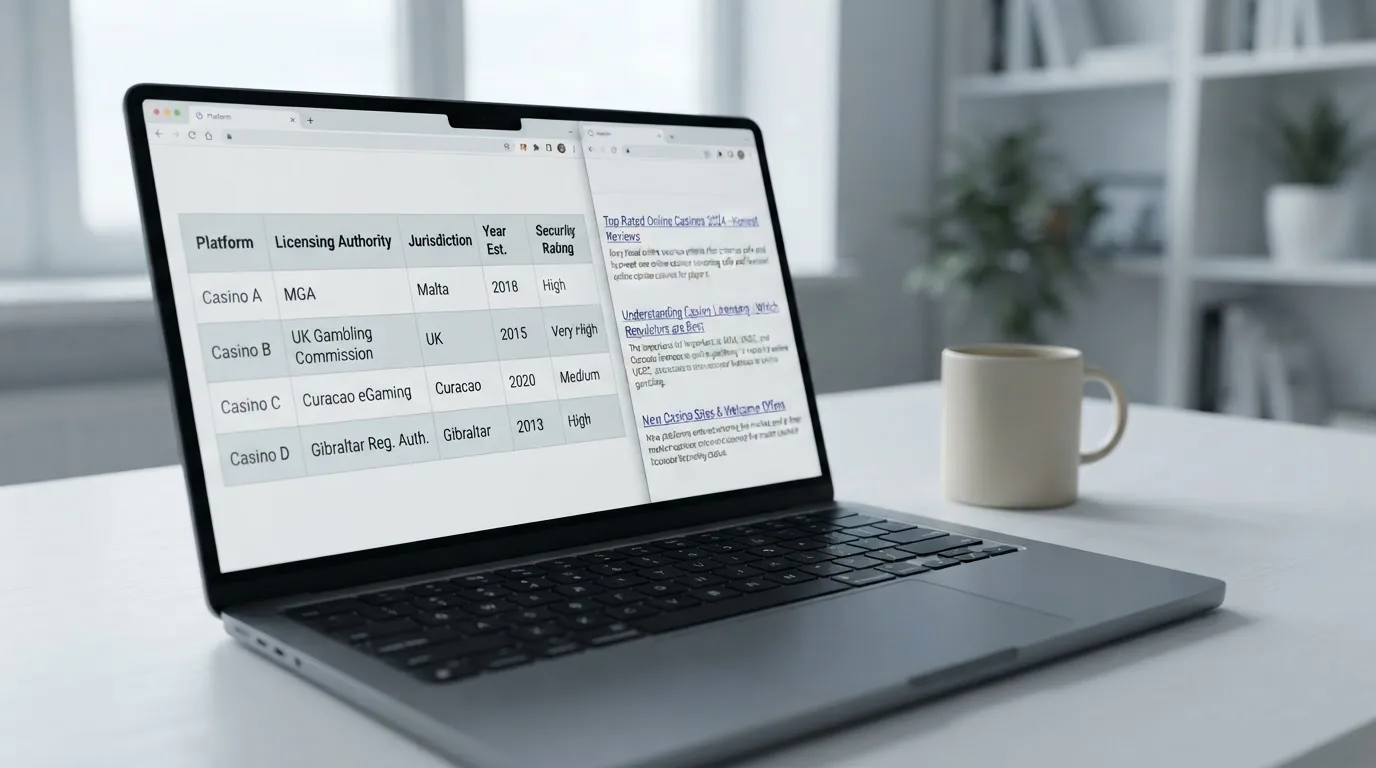
Eleven brands sit on the public side of the ACMA’s warning record. None of them is licensed to take an Australian casino bet, and that is true whether or not the page that hosts the site says otherwise. The “top Tether casino” rankings that surface in search results are essentially the same eleven names rearranged by affiliate commission, because the supply of operators that are simultaneously offshore, USDT-friendly and reachable from Australia is small enough that every list converges on the same handful.
What changes between lists is the order and the bonus number, and the bonus numbers are not worth taking seriously. The only sources for them are affiliate marketing pages, which means the figure shown to a reader is whatever number that affiliate thinks will convert a click. The operators themselves have no incentive to enforce a particular figure, because the affiliate does the selling. The eleven brands below are ordered as the ACMA’s own record presents them, with the most recent formal warning first.
Brand-by-brand read
| Brand | ACMA action and date | Operator named by the ACMA | Subject support |
|---|---|---|---|
| RocketPlay | Formal warning, March 2026 | Pulsup Ltd | — |
| Jackbit | Formal warning, April 2026 | Ryker B.V. | — |
| Woo Casino | Formal warning, March 2025 | Dama N.V. | Tether accepted per listings |
| Spirit Casino | Formal warning, May 2025 | Dama N.V. | — |
| National Casino | Formal warning, July 2025 | Consolutetish S.R.L. | Tether accepted per listings |
| Bizzo Casino | Formal warning, July 2025; earlier 2022 | Consolutetish S.R.L. (2025); TechSolutions (2022) | — |
| Ignition Casino | Formal warning, July 2025 | Bamboo Media | — |
| Instant Casino | Formal warning, February 2025 | EOD Code SRL | — |
| Casino Intense | Formal warning, April 2025 | Sterplay Holding Ltd | — |
| Sky Crown | Formal warning, September 2022 | Hollycorn N.V. | — |
| Level Up Casino | Formal warning, May 2022 | Dama N.V. | — |
Three things stand out in the table. The first is that one operator, Dama N.V., accounts for four of the eleven brands — RocketPlay, Woo Casino, Spirit Casino and Level Up Casino. The ACMA has now warned Dama three times across three years, with each warning naming different brand fronts. The second is that the brands vary widely in how they present themselves: Woo and National Casino carry Curacao-issued credentials and lean hard on affiliate networks, Ignition presents as a poker-and-casino hybrid, Instant Casino markets around speed of payout, and Jackbit runs a sportsbook attached to its casino. The legal status is identical across all of them. The third is the gap on subject support: only two brands in the table — Woo and National — show any public mention of Tether as a deposit method, and both of those mentions come from listings rather than from the operators’ own statements. The rest of the brands either do not list USDT publicly or do not make the information easy to find; what they actually take in practice is undocumented, which is its own kind of risk.
The blocking-rate arithmetic
Since the ACMA made its first blocking request in November 2019, 1,751 illegal gambling and affiliate marketing websites had been blocked as of June 2026, and more than 230 unlicensed gambling services had left the Australian market since enforcement was strengthened in 2017. Working the rate against the elapsed period of roughly six and a half years, the ACMA has been directing ISPs to block just under 270 illegal sites per year on average — or about 22 a month. The most recent round, reported on 26 June 2026, asked for twelve sites to be added to the block list in a single action: 7Signs, ChromaBet, Donbet, Duospin, Freshbet, Slots Gem, Jacks Club, Lucky Start, Pointsbetz.com, Spinrise, Vinyl Casino and Wildsino.
Two of the eleven featured brands on this page have been named in 2026 alone. The trend line of blocks per quarter is the part of the picture that matters most: a brand can be on today’s “best Tether casino” list and on tomorrow’s blocking request, with no warning to a player holding a balance. The ACMA does not publish a de-listing mechanism. Once an ISP is told to block a domain, the block stays in place until the operator successfully argues for its removal under the IGA — and the bar for that argument is high.
How to read the eleven as a group
The honest read is that the group is small, finite and tracked. The ACMA’s enforcement record is the closest thing the regulator produces to a public ranking of which offshore brands are currently active against Australian residents. A reader scanning the table is looking at the answer to a question — “which offshore casino brands is the ACMA currently trying to keep out of Australia?” — and the answer is these eleven, plus the longer list behind them. Whether the ACMA has named a brand or not, the IGA’s prohibition on providing online casino games to Australians applies to every site in this market, so absence from the table is not evidence of compliance; it is evidence the regulator has not yet got to it.
Overview — how Tether ended up on the cashier page
A short history of the token
Tether was announced in July 2014 under the name “Realcoin” by co-founders Brock Pierce, Reeve Collins and Craig Sellars. The first tokens were issued on 6 October 2014 on the Bitcoin blockchain via the Omni/Mastercoin protocol. The project was renamed Tether in November 2014. From those first Omni issuances the token spread to other chains as those chains became viable for retail transfers — Ethereum first, then Tron, then the wider list of fourteen protocols it now circulates on.
The early product was a digital token claimed to be fully backed one-for-one by fiat reserves held by Tether Limited, with each USDT intended to be redeemable for one US dollar. The structural claim — that the peg is real, and that the reserves genuinely cover the float — has been contested repeatedly. The October 2021 CFTC fine settled the question of whether “always fully backed” was an accurate statement of the situation at the relevant time; it was not. The February 2021 settlement with the New York Attorney General, without an admission of wrongdoing, was a separate matter around disclosures and the relationship between Tether and Bitfinex. The peg has nonetheless held through stress events, and that is the practical fact a casino cashier page does not dwell on.
How a casino cashier implements Tether
A casino that wants to accept USDT sets up one or more deposit addresses on the chains it has chosen to support, and credits the player’s account when the network confirms a transaction to those addresses. The flow on the player’s side is: copy the casino’s deposit address, choose the matching token and chain in the wallet, send, wait for confirmations, see the balance updated. The flow on the casino’s side is: monitor the addresses, credit at whatever threshold of confirmations the operator has set, and — at withdrawal time — the reverse.
The choice of chain drives the experience. A USDT send on Tron is settled in seconds and costs fractions of a cent. The same send on Bitcoin via Omni can cost several dollars in miner fees and waits minutes to hours. Ethereum sits between the two, with fees and times that vary with network congestion. Most retail USDT now moves on Tron precisely because the cost-per-transfer is the lowest of the major options, and casino cashier pages have largely followed the market there.
Why the deposit is “instant” but the on-ramp and off-ramp are not
A USDT-to-AUD on-ramp is the most expensive and slowest part of the chain. Buying USDT on a registered Australian exchange is a KYC process that takes days to verify fully; selling it back to AUD is the same. From 31 March 2026, AUSTRAC’s Digital Currency Exchange registration requirement was expanded beyond crypto-to-fiat exchange to also cover crypto-to-crypto exchange platforms, digital asset transferors, digital asset custody providers, and stablecoin issuers and distributors — meaning the regulatory floor for every service the tokens move through has risen. The casino deposit itself, by contrast, is fast. The asymmetry — slow at the edges, fast in the middle — is what gives Tether its retail appeal, and it is also the part of the pipeline that produces the most disputes, because the player is being credited before the Australian end of the chain has had its say.
Legality and regulation — the Australian frame
The Interactive Gambling Act 2001 and what it actually prohibits
The Interactive Gambling Act 2001, strengthened by the Interactive Gambling Amendment Act 2017, makes it an offence for a provider to supply online casino games, online pokies or in-play betting to a person physically in Australia. The prohibition is on the activity, not on the payment instrument. A casino cannot lawfully offer a slot machine game to an Australian IP address whether the player funds the account by debit card, by bank transfer, by PayID, by Bitcoin or by Tether. The choice of coin does not move the activity across the line.
What is licensable is wagering on races and sport placed before the event, lotteries and keno. In practice that means online bookmakers — Sportsbet, Bet365, Ladbrokes and the rest — licensed in the Northern Territory through the NTRWC, which regulates 52 of Australia’s online bookmakers for tax reasons. The NTRWC has no full-time staff and meets once a month in Darwin, a quirk of how the regime is structured, but it is the body that issues the licences the Australian-licensed bookmakers carry. Casino games do not sit in that licensable set anywhere in the country.
The enforcement picture, year by year
The ACMA has been issuing formal warnings under the IGA since 2017, and the cadence has not slowed. May 2022 brought a warning to Dama N.V. over six brands: Bambet, Dazard, Level Up, Rocketplay, Wild Tornado and Cobra Casinos. September 2022 brought a warning to Hollycorn N.V. over Sky Crown and Blue Leo. February 2025 brought a warning to EOD Code SRL over Instant Casino. March 2025 brought a second Dama N.V. warning, this one over Woo Casino. April 2025 brought a warning to Sterplay Holding Ltd over Casino Intense. May 2025 brought a third Dama N.V. warning, this one over Spirit Casino. July 2025 brought a warning to Bamboo Media over Ignition Casino and to Consolutetish S.R.L. over National Casino and Bizzo Casino — the second time Bizzo had been the subject of action, after a 2022 warning to TechSolutions. March 2026 brought a warning to Pulsup Ltd over Rocketplay.com.au. April 2026 brought a warning to Ryker B.V. over Jackbit and CasinOK. June 2026 brought the blocking request for the twelve-site round.
The pattern is one of accumulated fronts. The same operator group — Dama, Hollycorn, TechSolutions, Consolutetish — has cycled through multiple brand shells, and each new warning names a new label. The names on the front page change; the corporate entity doing the warning stays on the regulator’s list.
Payment rules that bind even when the activity does not
From 11 June 2024, Australian online wagering service providers have been banned by law from accepting cryptocurrency such as Tether, credit cards, or credit-linked digital wallets as payment, with the rule enforced by ACMA and penalties of up to $247,500 for non-compliance. The rule binds Australian-licensed providers, which a Tether casino is not. It does, however, explain why a licensed Australian bookmaker cannot accept a USDT deposit even though the offshore casino down the page can: the licensed providers are subject to the credit ban and the prohibition on crypto deposits simultaneously, and the offshore operator is subject to neither.
The other side of the payment story is the bank’s view. From 18 July 2023, National Australia Bank began declining some card and digital payments, including PayID transfers, to accounts it assessed as high-risk cryptocurrency exchanges, citing rising cryptocurrency scam losses. That is a private-sector decision, not a regulatory one, but it has reshaped which on-ramps and off-ramps work for an Australian punter moving AUD into crypto and back. The major exchanges still operate, and the AUSTRAC registration regime gives them a framework to work inside — but the friction is real, and it is the friction that makes offshore casino cashier pages look attractive in the first place.
The 2026 reform and the calendar that goes with it
The Interactive Gambling Amendment (Gambling Reform) Bill 2026 passed Parliament on 19 August 2026, and its advertising and inducement measures commence on 1 January 2027. It is law with a start date, not law in force on a 2026 page. The change matters in two ways. It will tighten what Australian-facing affiliates can publish, which will reduce the volume of “best Tether casino” content a reader sees in Australian search results from January 2027 onwards. It will not change the underlying prohibition on the activity, which has been in place since 2017 and which the reform does not touch. Anyone reading this page after the new year will be reading a 2026-as-of article under a 2026+1CY$$. From 1 July 2027 that flat discount is replaced by CPI indexation of the cost base plus a 30% minimum tax rate on net capital gains, which will change the arithmetic for longer-held positions. The casino side of the activity is the ATO’s own line: gambling winnings of a recreational player are not assessable income and losses are not deductible, unless the person carries on a business of gambling. The two pieces of tax treatment — CGT on the token movements, no income treatment on the casino winnings — sit side by side, and a reader who assumes Tether “isn’t really money” loses the CGT side of the picture.
Responsible gaming — what a Tether casino does not give a player
The protection a player gives up by going offshore
A licensed Australian bookmaker is bound by a set of rules the offshore operator is not. BetStop, the National Self-Exclusion Register, has been live since August 2023 and binds every Australian-licensed online and phone wagering service. A player who registers with BetStop is excluded from every licensed wagering account they hold, and from opening new ones, for the period they choose. An offshore Tether casino is not connected to BetStop, and a self-exclusion on the licensed side does not touch the offshore side. A player who has registered with BetStop can still deposit USDT with the operators named in this page’s table, because the operators are not parties to the agreement.
The other protections follow the same line. There is no Australian complaints body with jurisdiction over a Curaçao-licensed casino refusing a withdrawal. There is no requirement to publish payout times, no obligation to follow the Australian Consumer Law, no path through AFCA. The casino’s own terms govern. If those terms say a max-cashout cap applies, that is the rule. If the player disagrees, the dispute is with the casino, then with the offshore licensor if one exists, and then it is over. The IGA does not prosecute individual players, but it also does not give a player a route back from a refused withdrawal.
The figure that sits underneath all of this
H2 Gambling Capital’s 2025 report estimates that Australians lose about A$3.9 billion a year to illegal gambling sites, and that the share of gambling going through legal channels fell from 74% in 2021 to 64%. The losses are estimates, not audited figures, and the methodology is not transparent — but the trajectory is the part the methodology cannot soften. Australians are sending more money, in aggregate, to offshore sites every year. The number does not distinguish between Tether-funded and card-funded play; it treats the offshore market as one pool. A player who thinks the stable-value token has insulated them from the underlying math is mistaken. The bet still has a house edge. The token just makes the funding rail cheaper.
Practical steps for a player who still decides to play offshore
The market’s own terms, not the casino’s, are what protect a person who has decided to deposit anyway. Set a firm budget before the deposit, in AUD, and stick to it. The USDT value moves with the dollar; the AUD budget does not change. Pick the chain for the deposit deliberately — Tron for low fees and fast confirmations, Ethereum if the wallet is already there, Bitcoin via Omni only if no other option is available. Check the wallet’s network selection at the send screen; wrong-network sends are the commonest irreversible mistake and the casinos do not refund them. Withdraw small and often rather than letting a balance build; a balance sitting offshore is exposed to the next ACMA blocking round. Keep records of every transaction for the ATO side, because the CGT treatment is on the player, not the casino.
Help that is reachable from Australia regardless of where the bet is placed
The National Gambling Helpline is 1800 858 858, free, 24/7. Chat is available at Gambling Help Online. Neither line asks which site the caller has been playing on. Both will treat an offshore-play problem the same way they treat a licensed-play problem. For self-exclusion, BetStop is the binding register on the Australian-licensed side, and an offshore exclusion is whatever each casino offers, which is none of them in the same sense — most accept a player’s account closure on request, and a player who has self-excluded on the licensed side and is still playing offshore has not, functionally, self-excluded.
Frequently asked questions
Is it legal for a casino site to accept Tether (USDT) from a player in Australia?
No. The Interactive Gambling Act 2001 prohibits the supply of online casino games to people in Australia, and that prohibition applies regardless of the deposit method. No Australian licence exists for an online casino, so a site accepting USDT from an Australian IP is operating outside the Australian rules. The Tether deposit does not change the legal status of the activity.
Why would someone deposit Tether instead of Bitcoin at an offshore casino?
Because USDT is pegged to fiat currencies and does not move in price the way Bitcoin does between sending and crediting. The volatility that affects a Bitcoin deposit — sometimes a few per cent in either direction over an hour — does not affect a USDT deposit. The trade-off is that Tether is a token on a public blockchain, and the deposit path is permanently visible to chain-analysis firms.
Does Tether’s value change the way a casino calculates deposits and withdrawals?
No. A USDT deposit is denominated in tokens at the casino’s stated rate, and the same rate typically applies to a withdrawal. The casino does not reprice the balance against Bitcoin or AUD; the displayed USDT balance is what is paid out. What can change is the AUD value of the USDT balance between deposit and withdrawal, because the peg is not absolute and the secondary market for USDT can move.
Which blockchain does a casino usually expect a Tether deposit to arrive on?
The casino picks one or two of the chains USDT operates on, most often Tron for low fees, and shows the chosen deposit address on the cashier page. The player must match the chain in their wallet; a USDT send on Tron to an ERC-20 address, or vice versa, will not credit and the funds are not recoverable through the casino. Tron and ERC-20 are the two chains most retail Tether casino cashier pages use.
Can a Tether deposit sent on the wrong network still be credited to a casino account?
Almost never. The tokens sent on the wrong network do not arrive at the casino’s address on the right one; they are not lost in the colloquial sense, but they are not reachable from the casino’s wallet either, and recovering them requires a wallet that can sign transactions on the chain they were sent on, plus cooperation from the casino. In practice the answer is no, which is why checking the network selection on the wallet’s send screen is the step that matters most.