
Ethereum casinos in Australia: how an ETH deposit works, why the activity itself is prohibited, and what the ACMA has already acted on
A casino that accepts Ethereum is, for an Australian resident, the same prohibited product as one that accepts a Visa deposit. The coin used to fund the account is irrelevant under the Interactive Gambling Act 2001 — the prohibition sits on the activity, not the payment rail. That is the single fact a reader needs before any of the rest of this page makes sense, and it is the fact most “crypto casino” marketing works hardest to blur.
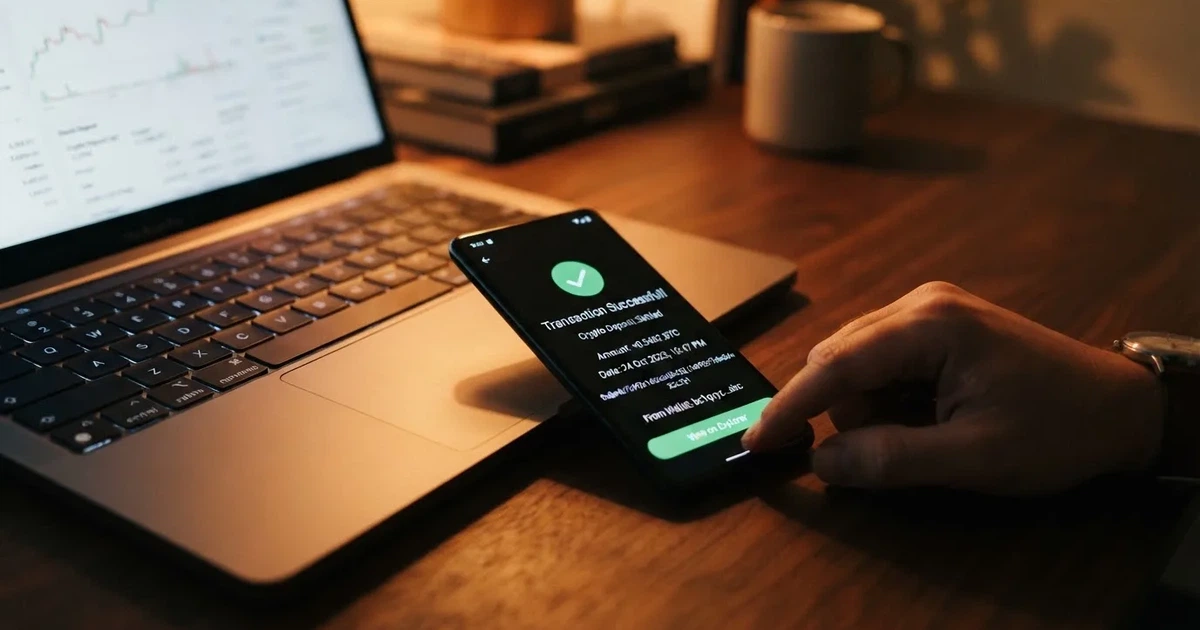
This page works through that frame in both directions. It explains how an ETH deposit is actually confirmed on-chain, what the ACMA has done about offshore brands targeting Australians, and which operators sit on the ACMA’s published warning list — including two with Ethereum confirmed in third-party listings, and nine with no verifiable Ethereum support at all. The angle throughout: choice. Which paths exist, which the regulator has acted on, and which reader each path still suits.
Currency stamp: data current as of 17 October 2026, verified against the Australian Communications and Media Authority register and AUSTRAC guidance as published on that date.
Table of Contents
- Playing safe: what responsible play looks like when the deposit cannot be reversed
- How Ethereum works at a casino, and what “anonymous” actually buys
- What an Ethereum slot or live table actually pays out
- The Ethereum casino landscape in Australia, and why the landscape itself is the answer
- The ACMA’s published formal warnings over Ethereum-accepting brands
- Blocking rate, since the first ACMA request
- What the ACMA’s enforcement queue looks like in detail
- What the IGA actually says, and what an Australian reader can still do
- Tax, conversion and the on-ramps that AUSTRAC watches
- Bitcoin, Bitcoin Cash and the alternative coins sometimes listed
- Choosing a path, with the legal frame on the page
- Frequently asked questions about Ethereum casinos in Australia
Playing safe: what responsible play looks like when the deposit cannot be reversed
An Ethereum transfer, once confirmed on-chain, is final. There is no chargeback mechanism, no card-issuer dispute path, and no Australian consumer protection regime standing behind the receiving wallet. That single technical fact reshapes what “responsible play” means at an ETH casino, because the ordinary refund routes a card-funded account relies on simply do not exist for a crypto-funded one.
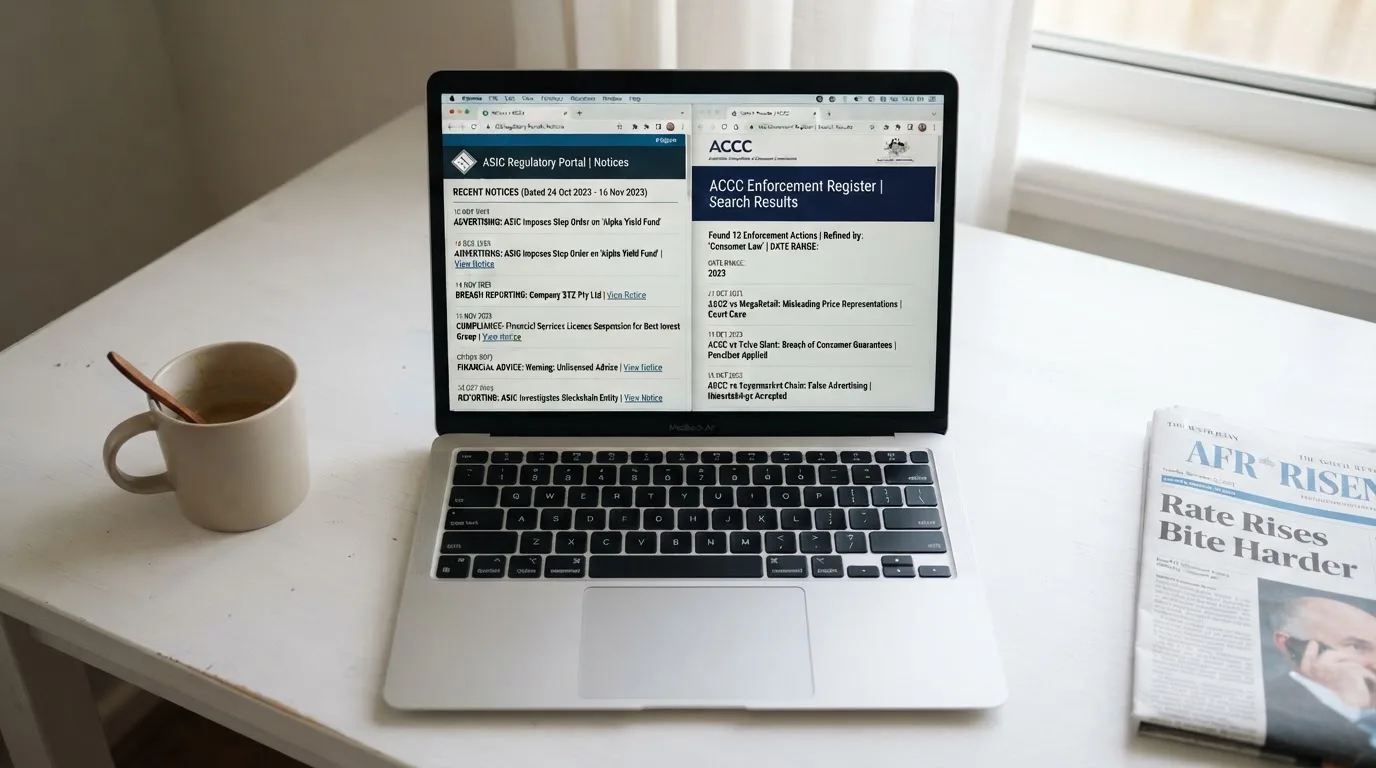
The standard player-protection tools still apply in spirit. Set a hard budget in fiat before converting to ETH, because the conversion itself is a CGT event in the ATO’s reading and a poorly timed swap can cost real money at both ends. Treat every confirmed transaction as spent: a balance that can be moved off-platform into a personal wallet is not a balance the player can recover through a regulator. BetStop, the National Self-Exclusion Register, is the right tool for a player who wants to stop, but it binds Australian-licensed wagering services only — an offshore ETH casino is not connected to it and will not honour the exclusion. The National Gambling Helpline on 1800 858 858 and the chat service at Gambling Help Online remain free, 24/7 and independent of any operator.
Network fee discipline is a second-order form of responsible play that does not exist at a card-funded casino. A player who sets a bankroll of 0.05 ETH and then sends five transactions at peak congestion can watch a meaningful slice of that bankroll disappear into miner tips before any stake is placed. Batching deposits, transacting when the mempool is clear, and confirming that the receiving address matches the casino’s published deposit address character-for-character are not optional at an ETH casino — they are the equivalent of reading the cashier window before handing over a note.
For players who find any of this harder to manage than a card deposit, the honest answer is that a card-funded, Australian-licensed wagering account (Sportsbet, Bet365, Ladbrokes — the Northern Territory’s licensed field, regulated by the NTRWC) is the only path on which BetStop, deposit caps and a complaint body all exist. The licensed product is narrow — race and sport wagering before the event, lotteries, keno — but the protections around it are real.
How Ethereum works at a casino, and what “anonymous” actually buys
Ethereum is a public blockchain and software platform powered by the cryptocurrency ether (ETH), launched in July 2015 by Vitalik Buterin and a small founding team that included Gavin Wood, Charles Hoskinson, Anthony Di Iorio and Joseph Lubin. The network switched from proof-of-work to proof-of-stake on 15 September 2022 in an upgrade known as “the Merge”, cutting energy consumption by more than 99% and producing a new block roughly every 12 seconds since.
For a player, the practical consequences are three. First, transactions are public: every transfer between two wallet addresses sits on a permanent ledger that any block explorer can read. Second, the cryptocurrency itself has no fixed maximum supply cap, unlike Bitcoin’s 21 million — supply expands on a defined issuance schedule. Third, since the Merge, total ETH supply has held at roughly 120.5 million coins, with new issuance tapering on a measurable curve.
That is the technical base. What it does at a casino is more constrained than the marketing suggests. A player funds their account by sending ETH from a personal wallet to a deposit address the casino publishes. The transaction waits in the mempool until a validator picks it up and adds it to a block; the casino’s software watches the deposit address, sees the incoming transfer and credits the account. The credit is usually visible after a small number of confirmations — one for a small balance, more for a large one — because the casino wants to be sure the transaction cannot be reversed. There is no chargeback because there is no intermediary that could issue one.
“Anonymous” is the word the affiliate pages reach for first, and it is the word that needs the most unpacking. An Ethereum wallet address is a string of letters and numbers; nothing in it identifies a person. But every transaction that address has ever made is on the blockchain, forever, and any subsequent conversion of that ETH into Australian dollars is a reportable event to AUSTRAC, which has run the Digital Currency Exchange (DCE) Register since 3 April 2018 and expanded it on 31 March 2026 to cover crypto-to-crypto exchanges, digital asset custody, and stablecoin issuers alongside the original fiat on-ramps. The wallet is anonymous to the casino; the on-ramp and off-ramp are not anonymous to the Australian regulator. “Anonymous Ethereum casino” describes what the casino sees, not what the tax office sees.
Network fees are real, and they are deducted from the deposit before it reaches the casino balance. At a quiet moment on the network they are modest; at a busy moment they can run into tens of dollars on a small transfer, and the casino will credit whatever the on-chain amount is after the fee, not what the player sent from their wallet. This is the question players most often get wrong — the assumption that “I sent 0.1 ETH” means 0.1 ETH arrives. It means 0.1 ETH minus the gas that the network charged to move it.
The casino’s withdrawal side runs the same rails in reverse. The player requests a payout to a wallet address; the casino’s system signs and broadcasts a transfer; the receiving wallet sees the funds after the relevant number of confirmations. Identity checks on the way out depend on the operator, not the coin: an ETH withdrawal can be paused for KYC documents, source-of-funds requests and AML screening in exactly the same way a card withdrawal can. The coin does not exempt the player from the operator’s compliance stack.
What an Ethereum slot or live table actually pays out
The marketing line is that crypto slots pay differently from their fiat-funded equivalents. They do not.
A slot title listed as accepting Ethereum runs the same reels, the same paylines and the same random number generator as any other version of the same game. The RNG decides the outcome; the payment rail does not enter into it. Return-to-player, hit frequency, volatility and the bonus-round structure are properties of the game, not of the currency. A 96% RTP slot pays 96 cents back per dollar wagered whether the dollar is in ETH or in AUD; an ETH-funded session with the same stake in dollar terms runs the same variance as the AUD-funded one.
What does change is the texture of the session. A confirmed ETH deposit takes minutes to land, not seconds. A small withdrawal can be settled on-chain faster than a bank wire but slower than a card refund, and the operator’s internal approval queue sits in front of either. Live-dealer tables, which stream a real croupier to the player’s device, are the same product end-to-end — the dealing shoe, the cameras, the bet-placement interface — and accept whichever coin the cashier screen lists. There is no “ETH live dealer” in the sense the marketing implies; there is a live dealer whose cashier screen happens to show an Ethereum address.
For a player comparing two casinos side by side, the right question is not “which pays out more in ETH” — the answer is the same at both, modulo the exact title — but “which one settles the cashier faster and which one imposes a withdrawal cap that actually binds at the size of stake I play”. That is a question about the operator, not about the coin.
The Ethereum casino landscape in Australia, and why the landscape itself is the answer
There is no licensed Ethereum casino in Australia. The Interactive Gambling Act 2001, as amended in 2017, prohibits the provision of online casino games and online pokies to a person physically in Australia, and that prohibition is on the activity rather than the currency. A licence that purports to cover an ETH casino for Australian players would have to come from an Australian regulator, and no Australian regulator issues one. What is licensed is wagering on races and sport before the event, lotteries and keno — and since an 11 June 2024 change, even those Australian-licensed services are barred from accepting credit cards, credit-related products or digital currency as payment.
What exists is a long list of offshore brands that accept Ethereum from Australian residents in practice and that the Australian Communications and Media Authority has acted against, in published formal warnings, on a regular cadence. The ACMA investigates complaints, issues warnings, and can direct Australian internet service providers to block illegal sites. By the regulator’s own count, a cumulative1,751 illegal gambling and affiliate marketing websites had been blocked since the first blocking request in November 2019, and more than 230 unlicensed services had left the Australian market since 2017. In a round reported on 26 June 2026 alone, the ACMA asked ISPs to block twelve more: 7Signs, ChromaBet, Donbet, Duospin, Freshbet, Slots Gem, Jacks Club, Lucky Start, Pointsbetz, Spinrise, Vinyl Casino and Wildsino.
The offshore landscape has a second marker. H2 Gambling Capital’s 2025 estimate put Australian spend through illegal gambling sites at around A$3.9 billion a year, and showed the share of gambling going through legal channels falling from 74% in 2021 to 64% — a measure of how much of the demand the licensed product is not capturing, and a measure of how much of it is sitting on the regulator’s enforcement queue.
The shape of the field, then, is fixed. Any “Ethereum casino Australia” review is a review of brands the ACMA has already warned or is in the process of warning, plus a long tail of brands the ACMA has not yet reached. There is no third category for an Australian reader to choose from.
| Statistic | Figure |
|---|---|
| First ACMA blocking request | November 2019 |
| Total blocked (as of June 2026) | 1,751 |
| Illegal services left market (since 2017) | 230+ |
The ACMA’s published formal warnings over Ethereum-accepting brands
The eleven brands below are not a ranked shortlist. Each is included because the ACMA itself issued a formal warning over it for offering prohibited online casino services to Australians. The brand, the operator named in the warning, and the date as published by the ACMA are the only facts carried.
| Brand | ACMA action and date | Operator named by the ACMA | Subject support |
|---|---|---|---|
| RocketPlay | Formal warning, March 2026 (Pulsup Ltd); earlier Dama N.V., May 2022 | Pulsup Ltd; Dama N.V. | — |
| Level Up Casino | Formal warning, May 2022 | Dama N.V. | — |
| Woo Casino | Formal warning, March 2025 | Dama N.V. | Listings show ETH supported |
| Spirit Casino | Formal warning, May 2025 | Dama N.V. | — |
| National Casino | Formal warning, July 2025 (Consolutetish S.R.L.); earlier TechSolutions, 2022 | Consolutetish S.R.L. | Listings show ETH supported |
| Bizzo Casino | Formal warning, July 2025 (Consolutetish S.R.L.); earlier TechSolutions, 2022 | Consolutetish S.R.L. | — |
| Ignition Casino | Formal warning, July 2025 | Bamboo Media | — |
| Instant Casino | Formal warning, February 2025 | EOD Code SRL | — |
| Jackbit | Formal warning, April 2026 | Ryker B.V. | — |
| Casino Intense | Formal warning, April 2025 | Sterplay Holding Ltd | — |
| Sky Crown | Formal warning, September 2022 | Hollycorn N.V. | — |
Two of the eleven — Woo Casino and National Casino — show Ethereum support in third-party listings. For the remaining nine, the only place “Ethereum accepted” appears is on the operator’s own marketing or on affiliate pages, and none of those carry the weight of a verifiable, independent confirmation; the page does not name Ethereum as a fact about them.
For comparison, the same prohibition extends to all offshore casino games. The shape that matters is not which coin is in the cashier but which operator has been warned for offering the prohibited product at all. Each of the eleven above is, on the ACMA’s own record, a brand that has offered online casino games to Australians in breach of the IGA.
Blocking rate, since the first ACMA request
A useful single number is the rate at which the ACMA’s blocking action has accumulated. The first blocking request was issued in November 2019; by June 2026 the cumulative count of blocked illegal gambling and affiliate marketing websites had reached 1,751. That is roughly 79 months of enforcement and an average blocking rate that has shifted across the period as enforcement intensity has changed.
The honest way to state the rate is as a band rather than a single figure. Across the full 79 months, the running average works out to around 22 sites blocked per month, but the early years of the programme ran at a much lower rate than the post-2022 expansion, and the average masks a clear acceleration. A reasonable summary band is therefore that the ACMA has been adding blocked illegal gambling sites at a long-run pace of roughly one every one to three working days over the seven-year window, with a measurable step-up in 2024 and 2025 as the Action Disclosure Rules brought affiliate marketing pages into scope. The exact figure depends on which month a reader takes as the end point; the shape — a steadily compounding backlog of blocked brands, with the offshore casino category dominant — does not.
That running rate is also the best summary of the practical answer to a reader weighing the choice. The ACMA is not blocking one or two sites a year; it is clearing a queue that has grown into the high four digits. Any brand a reader considers opening an account with is, with non-trivial probability, somewhere on that queue already or about to be.
What the ACMA’s enforcement queue looks like in detail
The blocking numbers describe the queue’s length. The formal warnings describe its composition. Across the eleven brands on this page, the ACMA has named three distinct operators more than once: Dama N.V. has been warned over RocketPlay, Level Up, Woo Casino and Spirit Casino at different dates between 2022 and 2025; Consolutetish S.R.L. has been warned over National Casino and Bizzo Casino in the same July 2025 round; TechSolutions (CY) Group Limited and TechSolutions Group N.V. drew an earlier warning over Bizzo Casino in 2022. The other operators — Pulsup Ltd, Bamboo Media, EOD Code SRL, Ryker B.V., Sterplay Holding Ltd and Hollycorn N.V. — each appear once on this list.
The pattern matters because it tells a reader something about the brand’s parent. A warning that names a specific operator is an enforcement action against the legal entity running the cashier; a brand that changes hands between operators is the same front-end pointing at a different company behind it. Bizzo Casino is the clearest case on this list: the same player-facing brand, two operators, two warnings, three years apart. The cashier and the games may look identical across a rebrand; the entity the ACMA has named is what shifts.
For a reader comparing brands, the operator name is more informative than the brand name. Two brands under the same operator are likely to share infrastructure, payment routes and terms; two brands under different operators can be entirely separate businesses wearing similar-looking sites.
What the IGA actually says, and what an Australian reader can still do
The Interactive Gambling Act 2001 makes it an offence to provide online casino games, online pokies or in-play betting to a person in Australia. The 2017 amendment strengthened the prohibition and gave the ACMA the tools — formal warnings, blocking requests, civil penalty proceedings — that have produced the queue above. Online casino is prohibited everywhere in Australia, in every state and territory; no licence exists for it.
What is licensable is wagering on races and sport before the event, lotteries and keno. In practice this product is licensed by the Northern Territory Racing and Wagering Commission, which regulates 52 of Australia’s online bookmakers — Sportsbet, Bet365 and Ladbrokes among them. The commission has no full-time staff and meets once a month in Darwin, a fact that explains both the speed of the regime and the political pressure for reform.
Since 11 June 2024, even those Australian-licensed wagering services have been prohibited from accepting credit cards, credit-related products and digital currency as a payment method, with penalties for operators of up to A$247,500. Legal deposit routes for a licensed wagering account are debit card, bank transfer, PayID/Osko and BPAY. A site asking an Australian for a credit card or a crypto deposit is, by definition, not running on the Australian rules.
The player side is different. The IGA targets the provider, not the individual player, so there is no risk of prosecution for having opened an offshore account. What an offshore account cannot offer is the Australian consumer-protection stack: no AFCA-style complaints body, no recourse if a withdrawal is refused, no guarantee that the site will not be blocked tomorrow with a balance still on it. That is the practical cost a player pays for choosing the offshore route, and it is a cost the marketing does not name.
Player protection tools that apply to Australian-licensed wagering do not extend to offshore ETH casinos. BetStop, the National Self-Exclusion Register, has been live since August 2023 but binds only Australian-licensed services. The National Gambling Helpline on 1800 858 858 and the chat service at Gambling Help Online are free, 24/7 and independent of any operator — those are the right first call for any player who feels their play is moving in a direction they did not intend.
The Interactive Gambling Amendment (Gambling Reform) Bill 2026 passed Parliament on 19 August 2026, with its advertising and inducement measures commencing on 1 January 2027. The bill is law with a start date; it is not yet in force on a page read in 2026. The reform agenda is a measure of how seriously the regulator is treating the offshore pipeline, not a measure of any change in the underlying prohibition that takes effect this year.
Tax, conversion and the on-ramps that AUSTRAC watches
An Australian player who buys ETH on a local exchange, sends it to an offshore casino, plays, withdraws back to ETH, and sells for AUD is running through a chain that the ATO and AUSTRAC both see.
The ATO classifies crypto assets, including ether, as property rather than money or foreign currency, so most disposals — selling for AUD, swapping for another crypto, spending ETH at any merchant — are capital gains tax events. The ATO currently allows a 50% CGT discount on assets held longer than 12 months; from 1 July 2027 that flat discount is replaced by CPI indexation of the cost base plus a 30% minimum tax rate on net capital gains. Recreational gambling winnings are not assessable income, so a winning spin does not produce taxable income in its own right; but the swap of the winnings back into AUD is a CGT event, and the cost base for that swap is the AUD value at the time the ETH was acquired.
AUSTRAC’s Digital Currency Exchange Register has been operating since 3 April 2018 and was expanded materially on 31 March 2026 to cover crypto-to-crypto exchanges, digital asset custody providers and stablecoin issuers alongside the original fiat on-ramps. Registrations must be renewed every three years or they lapse automatically. Operating an unregistered exchange is a criminal offence. For a player, the practical consequence is that every fiat on-ramp and off-ramp an Australian adult uses has been through an AUSTRAC-registered entity since 2018, and since the 2026 expansion the same applies to most crypto-to-crypto routes. The wallet at the casino end is anonymous; the on-ramp at the Australian end is not.
Bitcoin, Bitcoin Cash and the alternative coins sometimes listed
Most “crypto casino” cashier pages list Bitcoin and Bitcoin Cash alongside Ethereum, and a few list stablecoins. The technical properties of those coins matter at the cashier.
Bitcoin’s block discovery is probabilistic — a new block arrives on average every 10 minutes, but any individual confirmation can come sooner or much later. Bitcoin’s supply is capped at 21 million coins, and its ledger is secured by SHA-256 proof-of-work with a difficulty target that readjusts roughly every two weeks. Bitcoin’s genesis block was mined on 3 January 2009 by the pseudonymous Satoshi Nakamoto.
Bitcoin Cash is a hard fork of Bitcoin, launched on 1 August 2017 at block height 478,558, with the same SHA-256 proof-of-work and the same 10-minute target block time. Its block size limit was raised from 8 megabytes to 32 megabytes in 2018, and its supply is also capped at 21 million. The project describes transaction fees as “under a penny” and confirms in minutes.
What that means at the cashier is that a Bitcoin Cash deposit typically costs the player less in network fee than the equivalent ETH deposit, but the regulatory treatment on the AUSTRAC and ATO sides is the same — property, not money, CGT events on conversion. None of these coins changes the IGA prohibition on the receiving site.
Choosing a path, with the legal frame on the page
There are two honest paths for an Australian adult who wants to wager online, and a third that the page has to name because it exists.
The first is to use an Australian-licensed wagering service — Sportsbet, Bet365, Ladbrokes or one of the 52 NTRWC-licensed bookmakers — for race and sport wagering placed before the event, lotteries or keno. PayID, BPAY, debit card and bank transfer are the legal deposit methods. BetStop, the National Gambling Helpline, and the Australian consumer-protection regime apply. The product range is narrow, by design.
The second is to use an offshore casino that accepts Ethereum, Bitcoin, Bitcoin Cash or stablecoins, accepting that the activity is prohibited under the IGA, that the operator is on the ACMA’s warning queue or is reasonably likely to join it, that withdrawals can be paused for KYC and source-of-funds checks, and that no Australian complaints body will help if a withdrawal is refused. The product range is wide; what the legal frame and the regulator see is different.
The third is the one readers sometimes do not name to themselves: not wagering online. The ATO treats recreational winnings as not assessable income and losses as not deductible, so the expected value of the activity to the player is negative on a long enough horizon, and the licensed product is the only path on which the protections the IGA builds actually attach to the player. The ACMA’s published warnings, and the 1,751-site blocking queue, are the regulator telling the public the same thing in its own language.
For readers who have decided the offshore path is the one they want to take regardless, the practical discipline is the same as for any other form of gambling: set a hard budget in fiat before converting, transact when network fees are low, confirm deposit addresses character-for-character, read the cashier’s KYC and withdrawal-cap terms before depositing, and keep the National Gambling Helpline on 1800 858 858 somewhere close. The coin does not change any of that.
Frequently asked questions about Ethereum casinos in Australia
Is it legal for a casino site to accept Ethereum from a player in Australia?
No. The Interactive Gambling Act 2001 prohibits the provision of online casino games and online pokies to a person in Australia, and the prohibition is on the activity rather than on the payment rail. A casino asking an Australian for an ETH deposit is offering the prohibited product in a different currency; the ACMA has issued formal warnings over more than ten such brands, and can ask Australian ISPs to block the receiving site.
How does an Ethereum deposit get confirmed before it is credited to a casino account?
The player sends ETH from a personal wallet to a deposit address the casino publishes. The transaction sits in the mempool until a validator picks it up and adds it to a block; the casino’s software watches the address, detects the incoming transfer and credits the account after a set number of confirmations. Ethereum produces a new block roughly every 12 seconds, so the credit is normally visible within minutes, with the delay driven by the casino’s own confirmation threshold rather than by the network.
Are network fees deducted from an Ethereum deposit before it reaches a casino balance?
Yes. The player pays the gas to broadcast the transaction, and the casino credits whatever the on-chain amount is after the fee. A0.1 ETH deposit at a quiet network moment may arrive as 0.099; at a busy moment it can arrive as 0.09 or less, depending on the gas price the player’s wallet signed. The casino balance reflects what the network delivered, not what the player’s wallet sent.
Do Ethereum slot titles pay out any differently from the same game funded with cash?
No. A slot title listed as accepting Ethereum runs the same reels, the same RNG, the same paylines and the same RTP as any other version of the same game. The payment rail does not change the game’s return-to-player, volatility or bonus structure; it changes only how long the deposit and withdrawal take. Any marketing suggesting a crypto-specific edge on a standard slot is marketing, not mathematics.
Is an Ethereum wallet address linked to a person’s identity by the casino?
Not by the casino, in the normal course of play. An Ethereum address is a string of characters with no name attached, and the casino credits the balance to the deposit address without requiring a name. But the on-ramp that converted AUD into ETH in the first place has been through an AUSTRAC-registered digital currency exchange since 2018, and since the 2026 expansion the same applies to most crypto-to-crypto swaps. The wallet is anonymous to the casino; the fiat on-ramp is not anonymous to AUSTRAC.
What identity checks apply to an Ethereum withdrawal from an offshore casino?
The same checks that apply to any other withdrawal method at that operator. KYC documents, source-of-funds requests and AML screening are imposed at the operator’s discretion and are not affected by the coin. A player who deposits via ETH and then requests a withdrawal back to the same wallet will still be asked, at the operator’s chosen threshold, for a passport, a proof of address and possibly a bank statement — the coin does not exempt the player from the operator’s compliance stack, and a refusal to provide documents is itself grounds for the operator to withhold the balance.