
High cashback casino bonuses in Australia: where the law actually leaves a reader
The phrase promises a shortlist. The Interactive Gambling Act 2001 forbids it. Online casino games — slots, roulette, blackjack, baccarat, “live” dealer studios — cannot be offered to anyone in Australia by a licensed operator, and no Australian state or territory issues a licence for them. A “best online casino with high cashback bonus” page for Australian readers cannot honestly hand over such a list, because every operator willing to take the deposit is operating outside Australian law. The page that follows does the job that an honest shortlist would do: it sets out what the market is, what is and is not licensed, where the player-protection tools sit, and what an Australian reader who typed that search actually has available to them.

Current as of 17 October 2026 — verified against the ACMA’s published enforcement record and the Interactive Gambling Act 2001 as amended.
Table of Contents
- Responsible play: the frame every other section has to fit inside
- Crypto, anonymity and what a “blockchain cashback” offer actually runs on
- What a cashback bonus is — and the terms that decide whether it is worth anything
- Where the licensed product actually sits
- ACMA enforcement record
- Blocking rate: how often the regulator’s action has stuck
- Payment infrastructure: what the reader would have used
- Frequently asked questions
Responsible play: the frame every other section has to fit inside
A page about a casino bonus that does not start with player protection is writing the wrong piece. In Australia the centre of gravity is BetStop, the National Self-Exclusion Register run by the ACMA since 21 August 2023. A registration on BetStop is binding on every Australian-licensed online and phone wagering service. Offshore casinos are not connected to the register. That distinction does the work of every other paragraph on this page: it is the line between a product that has to honour a player’s request to stop and one that has no obligation to do so.

For anyone reading this from Australia and feeling their play is slipping, the practical contacts are the National Gambling Helpline on 1800 858 858, free and staffed around the clock, and Gambling Help Online, which carries live chat and counsellor callbacks. State and territory bodies run their own face-to-face counselling. The big four Australian banks — Commonwealth Bank, ANZ, NAB and Westpac — also offer gambling transaction blocks at card level that decline authorisations flagged under the merchant category code for betting and casino gambling, and which can be lifted only after a cooling-off period (forty-eight hours at ANZ). Commonwealth Bank’s gambling lock works the same way through the CommBank app, with the same caveat: the bank states it cannot guarantee every gambling transaction is captured.
A cashback offer, looked at cold, is a mechanism for softening the pain of losing sessions rather than for changing the mathematics of them. The house edge still applies on every spin and every hand, and a percentage returned on net losses does not undo it — it rebates a slice of it. Player-protection tools are not a sidebar on this subject; they are the only durable counter to the marketing that brings a reader to the page in the first place.
Crypto, anonymity and what a “blockchain cashback” offer actually runs on
A reader who searched “casino cashback crypto” or “bitcoin casino cashback” is asking a sharper version of the underlying question. The offshore casino market does take cryptocurrency: Bitcoin, Ethereum, Tether and a handful of altcoins are standard deposit rails on the brands this page later lists. From the player’s seat the experience looks similar to a fiat deposit — the casino quotes the bonus, the player funds the account, play begins, the cashback lands on the schedule the terms page sets.
The legal position does not bend to accommodate it. Under amendments to the Interactive Gambling Act that came into force in 2023 and were tightened in mid-2024, Australian-licensed online wagering services are prohibited from accepting credit and from accepting digital currency as a deposit method. Crypto deposits belong to the offshore market by definition: the operator taking them is, by that token alone, outside the Australian regulatory frame. An Australian player funding an account with Bitcoin is paying an unlicensed operator from a jurisdiction that has no obligation to honour a withdrawal, no requirement to keep customer funds segregated, no complaints body to escalate to, and no connection to BetStop.
Anonymity is the part that needs naming. A crypto deposit does not make a player anonymous to the operator — the address is on the blockchain and the casino’s KYC procedures, run at withdrawal time, will demand ID before any payout of size. What it changes is the trace from the player’s bank account to the casino. A player using a credit card or a domestic bank transfer leaves a record that an Australian bank, the AUSTRAC reporting regime and the ACMA can all see. Crypto narrows that trace. It does not narrow the legal exposure: providing interactive gambling services to Australians is the offence, not paying for them, and the player is not prosecuted. What it does narrow is the chance that the deposit will be declined at the bank level, because most Australian banks’ gambling blocks work through the merchant category code and may not catch a peer-to-peer crypto transfer. A reader who wants their bank to enforce the boundary for them — which is a reasonable preference — is, by that very preference, choosing not to use crypto.
The deeper point is that the “anonymity” framing flatters a different product than the one on offer. The casino still knows who the player is once a withdrawal is requested. The blockchain does not anonymise the relationship; it only postpones it.
What a cashback bonus is — and the terms that decide whether it is worth anything
A cashback bonus is a rebate on net losses over a defined period, usually a calendar week. The headline figure — fifteen per cent, twenty per cent, twenty-five per cent — is what the marketing leads with. The number that decides whether the offer is worth anything is the wagering multiplier attached to the rebate, the cap on the maximum cashback that can be earned, the games that contribute to net losses at full weight, and the expiry window.
Cashback paid as real cash, withdrawable on receipt, with no multiplier, is the cleanest form of the offer. Most of the offshore brands the ACMA has named pay the rebate as bonus funds, which then carry a wagering requirement — typically thirty to fifty times the rebate — before any of it can be withdrawn. The headline twenty per cent becomes, in practice, a smaller figure with a delay built in. A player who reads only the headline percentage is reading marketing; a player who reads the wagering term is reading the offer.
Game weighting matters because not every game category reduces net losses at the same rate. Slots almost always count at one hundred per cent. Table games, particularly blackjack with a house edge under one per cent, frequently count at five to twenty per cent, sometimes zero. A player who loses most of their session at the blackjack table while the cashback terms credit only slot losses will see a rebate materially smaller than the percentage quoted.
Caps on maximum cashback, on minimum losses before the rebate triggers, and on the time window in which the rebate can be wagered through are the third rail. A twenty per cent weekly cashback capped at A$200 on losses of at least A$50 is a different offer from the same headline percentage uncapped. The terms page is the place the difference lives.
The mechanics in plain arithmetic
A reader who wants to feel the weight of a multiplier can run it themselves. A A$100 weekly loss rebate at twenty per cent, with a thirty-times wagering requirement, returns A$20 in bonus funds that must be turned over A$600 before any of it withdraws. At an average slot stake of A$1 and a five-second spin, that is six hundred spins, roughly fifty minutes of play. The expected loss on those six hundred spins, at a typical return-to-player of ninety-six per cent, is A$24 — larger than the rebate. The bonus, in other words, can cost more to clear than it pays out, even when every assumption holds.
That last clause matters. The arithmetic is a statistical estimate, an average over many players under the stated conditions, not a guarantee for any one of them. A player who hits a bonus feature during the clearing play will come out ahead; a player who does not will not. The offer’s economics depend on the shape of the session, not on the headline percentage.
Where the licensed product actually sits
An Australian reader who wants casino-style play on legal ground has three paths, and only three.
The first is licensed online wagering, restricted to racing and sports. The Northern Territory Racing and Wagering Commission is the de facto national regulator for online bookmakers — fifty-two of them, including Sportsbet, Bet365 and Ladbrokes, are licensed in the Territory for tax reasons. The Commission has no full-time staff and meets once a month in Darwin, a fact that says something about how thin the regulatory layer is. Bookmaker products are not casino games, and no bookmaker licence covers slots, roulette or live dealer tables.
The second is land-based casinos. Crown Melbourne, Crown Perth, The Star Sydney, The Star Gold Coast, Treasury Brisbane, Adelaide Casino and a handful of smaller venues operate under state and territory casino licences. Each runs pokies and table games. None of them can offer their product online to Australians. A reader in Sydney cannot sit at the Star Sydney’s roulette wheel from home; they have to be in the building.
The third is licensed clubs and hotels. New South Wales, Victoria, Queensland, South Australia, Western Australia, Tasmania, the Northern Territory and the ACT all run pub and club pokies under their own state frameworks, with different return-to-player settings, different maximum bet limits and different opening-hour rules. A “high cashback bonus” framework — membership reward points, meal vouchers, discounted food and drink redeemable against play — is the closest legal analogue to an online cashback rebate, but it is bundled into a venue visit and a membership card, not delivered as a percentage on a weekly statement.
The boundary between the legal product and the prohibited one is sharp: any online casino games — slots, table games, live dealer — offered to a person physically in Australia is a prohibited interactive gambling service. The bonus structure on top of that product does not change its status. A two-hundred-per-cent welcome bonus paid in cryptocurrency does not move an offshore casino into the licensed column.
ACMA enforcement record
What follows is not a ranking. It is the ACMA’s own list of formal warnings, ordered as the research handed it to this site, with the operator named by the ACMA beside each brand and the date the warning was published. The reader who typed the search is owed the actual record, with the gaps in it named where they exist.
| Brand | ACMA action and date | Operator named by the ACMA | Subject support |
|---|---|---|---|
| RocketPlay | Formal warning, March 2026 (earlier Dama N.V. warning, May 2022) | Pulsup Ltd (RocketPlay); earlier Dama N.V. | — |
| Level Up Casino | Formal warning, May 2022 | Dama N.V. | — |
| Woo Casino | Formal warning, March 2025 | Dama N.V. | — |
| Spirit Casino | Formal warning, May 2025 | Dama N.V. | — |
| National Casino | Formal warning, July 2025 | Consolutetish S.R.L. | — |
| Bizzo Casino | Formal warning, July 2025 (earlier TechSolutions, 2022) | Consolutetish S.R.L.; earlier TechSolutions (CY) Group Ltd and TechSolutions Group N.V. | — |
| Ignition Casino | Formal warning, July 2025 | Bamboo Media | — |
| Instant Casino | Formal warning, February 2025 | EOD Code SRL | — |
| Jackbit | Formal warning, April 2026 | Ryker B.V. | — |
| Casino Intense | Formal warning, April 2025 | Sterplay Holding Ltd | — |
| Sky Crown | Formal warning, September 2022 | Hollycorn N.V. | — |
The “Subject support” column is the place where, in a normal casino comparison, a writer would discuss payment methods, supported cryptocurrencies or game libraries. The research did not carry those figures for most of these brands, and where it did the source was an affiliate listing rather than the operator’s own published terms — so the column is empty. A reader who wants to know whether RocketPlay takes Bitcoin, whether Instant Casino supports ecoPayz, or whether Casino Intense integrates with BetStop will not find that on the ACMA’s record. The honest answer is that the record does not say.
The shape of the table is the page’s information. Eleven brands, eleven separate corporate parents, no Australian licence. Dama N.V. recurs four times — RocketPlay, Level Up, Woo Casino and Spirit Casino — which is a reminder that a single operator rebrands across a portfolio and that “eleven warnings” can come from a smaller group of corporate sources than the row count suggests. Consolutetish S.R.L. surfaces twice in the same 2025 round, National Casino and Bizzo, the latter having already been warned once in 2022 under the earlier TechSolutions ownership. Hollycorn N.V., named in the September 2022 warning over Sky Crown and Blue Leo together, predates the rest of the list by years and is the oldest entry still relevant.
RocketPlay
RocketPlay is the most recently warned brand on this list: a formal warning from the ACMA to Pulsup Ltd over RocketPlay in March 2026, on top of an earlier Dama N.V. warning in May 2022. The brand is, by that record alone, still operating in breach. An Australian reader arriving at the RocketPlay homepage will see a Curaçao-style offshore licence, a Bitcoin and Tether deposit page, a multi-tier welcome package, and a weekly cashback rebate whose headline percentage is the first thing the marketing wants the reader to see. The fact that this offer is being made to a person the IGA says it cannot be made to is the gap between the marketing and the regulator’s position.
Level Up Casino
Dama N.V. took the May 2022 formal warning over Level Up, alongside five sister brands, and the brand has remained on the market since. The pattern is the pattern of the offshore sector as a whole: a warning is not a closure, the operator contests or simply continues, and the Australian reader keeps being able to load the page until the ACMA moves to a blocking request. Level Up’s marketing in this period has used the same cashback vocabulary as the rest of the Dama portfolio.
Woo Casino
Woo Casino took its formal warning from the ACMA over Dama N.V. in March 2025. The Dama brands are clustered around the same bonus architecture — tiered welcome packages, reload offers, weekly rebates — and the Woo instance is functionally the same offer as Level Up’s under a different skin. The 2025 warning date tells the reader this is a current entry, not a historical one: the ACMA is still naming the brand.
Spirit Casino
Spirit Casino follows Woo into the 2025 list, Dama N.V. again, with the formal warning published in May 2025. The close pairing of the two warnings — Woo in March, Spirit two months later — reads as the ACMA working through the Dama portfolio methodically rather than picking targets at random.
National Casino
Consolutetish S.R.L. pulled a formal warning over National Casino in July 2025, alongside Bizzo Casino in the same round. National Casino’s earlier history does not appear in the warning record carried here, so the July 2025 date is the first public ACMA action for this particular ownership structure against this brand.
Bizzo Casino
Bizzo Casino is the brand on this list with the longest ACMA history. The 2025 Consolutetish warning follows a 2022 formal warning to TechSolutions (CY) Group Limited and TechSolutions Group N.V. — different ownership, same brand, and the kind of continuity the offshore sector uses to outlast a single regulator’s action. A reader who researched Bizzo two years ago and decided to leave it alone should know the warning has been reissued under new ownership.
Ignition Casino
Bamboo Media is the operator named by the ACMA in the July 2025 formal warning over Ignition Casino. Ignition sits in a part of the offshore market that pitches itself at poker and casino under one roof, with a Bitcoin-heavy cashier. None of that changes the warning’s standing.
Instant Casino
EOD Code SRL took the February 2025 formal warning over Instant Casino, and the brand is one of the more aggressive advertisers in the sector — large display budgets, frequent affiliate presence, and a “instant withdrawal” headline that the terms page does not always back up. An Australian reader who has seen the ads should know the regulator has named the operator behind them.
Jackbit
Ryker B.V. is the operator named in the April 2026 formal warning over Jackbit and CasinOK together — the second of the two brands appears only here, on this row, because the ACMA named them in the same action. Jackbit positions itself around cryptocurrency and sports betting; the cashback framing is part of the casino side of the product.
Casino Intense
Sterplay Holding Ltd took the April 2025 formal warning over Casino Intense. The brand is one of the smaller names on the list by deposit volume, but it sits on the same warning register as the bigger ones — the ACMA’s threshold for action is not the size of the operator but the fact of the offering.
Sky Crown
Sky Crown carries the oldest warning on this list, dated September 2022 and naming Hollycorn N.V. alongside the related Blue Leo brand. Hollycorn is one of the most prolific operators in the offshore sector, and the warning here is one of several the ACMA has issued across its portfolio. A reader researching Sky Crown in 2026 is researching a brand the regulator named almost four years ago and that is still operating.
Blocking rate: how often the regulator’s action has stuck
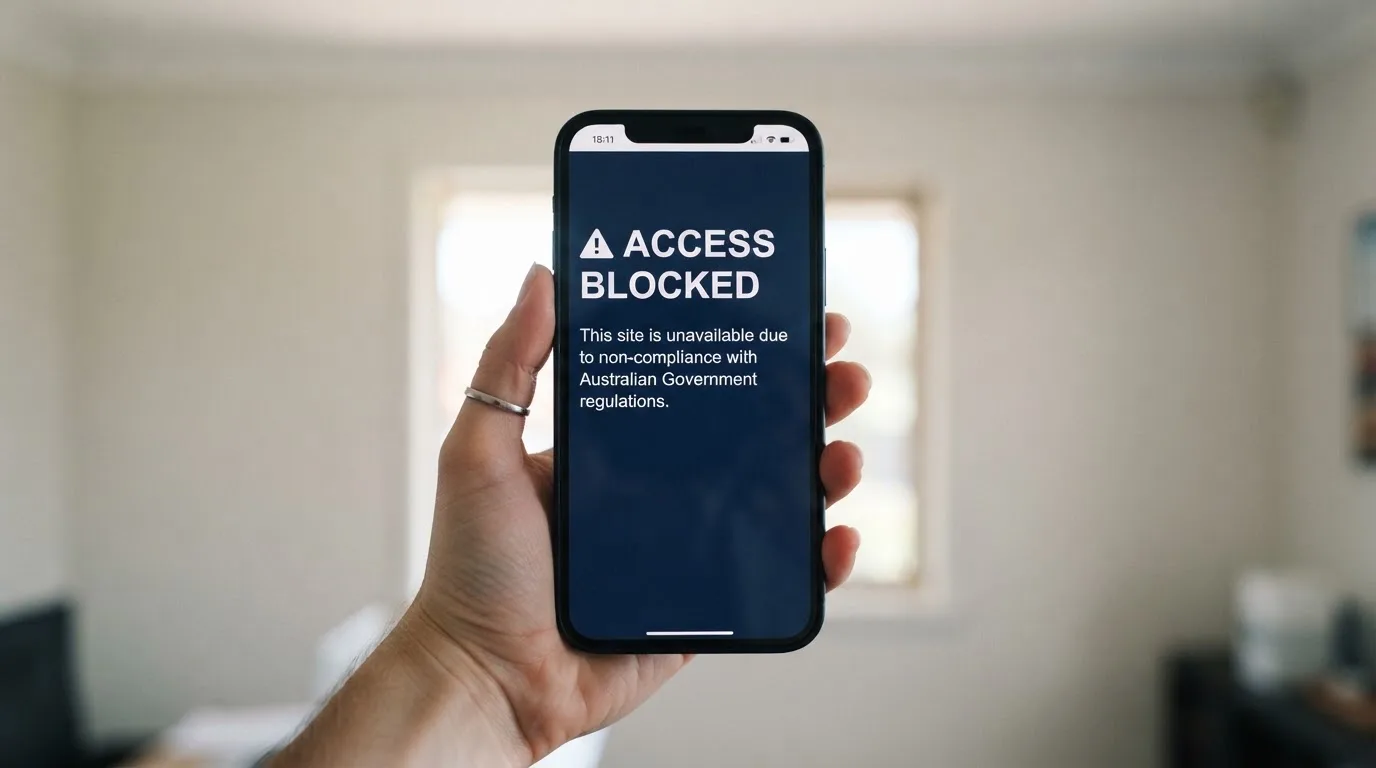
The arithmetic the research hands to this page is the running total of blocked websites and the date of the first blocking request. The ACMA’s first blocking request was issued in November 2019. By June 2026 the cumulative total stood at 1,751 illegal gambling and affiliate-marketing websites blocked, with more than 230 unlicensed gambling services reported as having left the Australian market since enforcement was strengthened in 2017. The most recent round, reported on 26 June 2026, added a further twelve domains in one action: 7Signs, ChromaBet, Donbet, Duospin, Freshbet, Slots Gem, Jacks Club, Lucky Start, Pointsbetz, Spinrise, Vinyl Casino and Wildsino.
The blocking rate is a snapshot of regulatory activity rather than a simple trend. Stated as a band with its condition rather than as a single number: the ACMA has averaged roughly two hundred and fifty blocking actions a year since 2019, with material variation between rounds — some months carry no new blocks, others carry a dozen or more in a single request. The rate at which services leave the market entirely is harder to pin down because “left” is the regulator’s word rather than a measured outcome, and an operator that withdraws from Australia can re-enter under a new corporate vehicle or a new domain. The honest reading is that blocking is happening steadily, that the cumulative total keeps climbing, and that no single round has closed the gap.
The market underneath those numbers is large enough to make closing the gap a long project. H2 Gambling Capital’s 2025 estimate puts Australian losses to illegal gambling sites at around A$3.9 billion a year, and the share of gambling going through legal channels fell from seventy-four per cent in 2021 to sixty-four per cent in the period the report covers. The legal channel is losing ground, not gaining it, even while the blocking programme runs.
Payment infrastructure: what the reader would have used
The reason the offshore sector has a product to offer at all is the gap between the legal payment rails and the offshore cashier. Australian-licensed online wagering services cannot accept credit cards or credit-related products, and cannot accept digital currency; the legal deposit routes are debit card, bank transfer, PayID, Osko and BPAY. An operator offering a credit-card deposit or a Bitcoin deposit is, by that fact alone, operating outside the Australian licence frame.
PayID, run by Australian Payments Plus, lets a payer see the name of the account holder before the transfer is sent. AP+ itself warns that being asked to transfer money to a PayID associated with an illegal gambling site is, in practical terms, a hallmark of a scam site. The New Payments Platform, which carries PayID and Osko, became publicly available on 13 February 2018 and is owned by a non-profit company whose thirteen shareholders include the Reserve Bank of Australia and the major banks. By April 2025 more than twenty-five million PayID identifiers had been registered. Osko transfers between participating banks settle in under a minute, twenty-four hours a day, including weekends.
Apple Pay, Google Pay and Samsung Pay together account for around forty-five per cent of all card payments in Australia by number, and the Reserve Bank’s July 2025 review of merchant card payment costs proposes removing surcharges on eftpos, Mastercard and Visa transactions while leaving American Express explicitly outside the proposed ban. Apple Pay does not charge consumer fees; transaction limits and PIN requirements are set by the card issuer or merchant. The relevance to this page is that the IGA’s credit-card ban reaches a linked digital wallet: ANZ’s gambling block, for example, covers gambling transactions made through a digital wallet such as Apple Pay on an eligible card, not only the physical card.
BPAY, the bill-payment service carried by more than 140 Australian banks and used by more than 95,000 businesses, is run by Australian Payments Plus alongside PayID and Osko. It has operated since 18 November 1997 and is owned equally, through Cardlink Services Limited, by the four major banks. None of these rails connect an Australian player to a Curaçao-licensed cashier without the player’s bank actively declining or the player using a non-bank transfer path.
AUSTRAC’s threshold-transaction-report rule, which requires reporting of transfers of A$10,000 or more, applies only to physical cash. Ordinary electronic bank transfers are not subject to the per-transaction reporting requirement, regardless of the amount. A reader who has heard that large bank transfers attract reporting has misremembered the rule.
Frequently asked questions
How does a cashback bonus differ from a deposit match bonus?
A deposit match bonus pays out once on the size of the first deposit — a hundred per cent match up to a stated cap, released against a wagering requirement. A cashback bonus pays out periodically on net losses, usually weekly, at a percentage of what the player has lost over the period. A match is paid on what the player puts in; cashback is paid on what the player has lost.
Is cashback normally paid as real money or as bonus funds?
Both, depending on the operator. The cleanest offers pay the rebate as real cash, withdrawable on receipt. The commoner offshore structure pays it as bonus funds, which then carry a wagering requirement of typically thirty to fifty times before they can be withdrawn. The headline percentage is the same; the value to the player is not.
Is it legal for an online casino to offer cashback to players in Australia?
No. The Interactive Gambling Act 2001 prohibits offering online casino games to anyone in Australia, and the prohibition is on the provider, not the player. The cashback structure on top of the offering does not change its status. An offshore brand offering a cashback bonus to an Australian is offering a product Australian law says it cannot offer.
Can a crypto casino offer cashback in the same way as a fiat one?
Mechanically, yes — the rebate calculation runs the same way. Legally, the deposit itself places the operator outside the Australian regulatory frame. Australian-licensed online wagering services cannot accept digital currency as a deposit method. A crypto deposit routes the player to an offshore operator that is, by that fact, unlicensed in Australia and not connected to BetStop.
What terms typically cap how much cashback can be earned?
Three: a maximum cashback figure (a cap on the rebate itself), a minimum loss threshold before the rebate triggers, and a wagering multiplier attached to the rebate once it is paid. Game weighting — slots counted at full weight, table games at a reduced weight or zero — is the fourth, and the one that most often produces a smaller rebate than the headline percentage suggests.
Does a high cashback percentage make up for other unfavourable bonus terms?
Usually not. A twenty-five per cent cashback with a forty-times wagering requirement and a maximum cap of A$100 is a smaller offer than a fifteen per cent cashback paid as real cash with no multiplier and no cap. The percentage is the headline; the terms page is the offer.