
What a high-roller casino actually looks like in Australia in 2026
The phrase “best high roller casino with bonus Australia” gets typed into search bars every week, and the search results oblige with glossy comparisons, deposit multipliers and welcome packages pitched at five-figure deposits. The basic problem with every one of those pages is that the product they are reviewing is illegal to sell to the person reading the page. Online casino games — slots, roulette, blackjack, baccarat, live dealer tables — cannot be licensed anywhere in Australia under the Interactive Gambling Act 2001, and the Australian Communications and Media Authority has spent the past eight years sending that message to the operators behind them.

Data current as of 17 October 2026, verified against the ACMA’s published formal-warning register and the Australian Communications and Media Authority’s blocking-order round dated 26 June 2026.
This page is built around that gap. It looks at what high-roller casino play actually requires — large deposits, fast settlement, generous table limits, a real complaints path — and then maps those requirements onto the two paths that do exist for an Australian reader in 2026: the regulated offline alternatives (licensed land-based casinos and pokies venues), and the offshore sites the ACMA has been formally warning against for years. The point is not to dress one up as the other. It is to give a high-spending player the comparison a marketing page never does.
Table of Contents
- The fundamentals of high-roller play
- The Australian legal landscape
- How ACMA enforcement actually works
- ACMA enforcement record — the featured brands
- Player wellbeing in a market without licensed online casino
- The licensed offline alternatives
- Money movement — deposits and withdrawals at high-stakes scale
- Bonuses and free spins — the maths the marketing page skips
- The phone-screen experience
- Games, providers and table limits
- The 11 brands — what the ACMA record says
- What is left for the Australian reader
- Frequently asked questions
The fundamentals of high-roller play
A high roller in casino terms is a player whose stake and turnover sit well above the average. In practical terms that usually means single bets in the low thousands, deposits measured in tens of thousands over a year, and table limits that ordinary online rooms do not offer. The label has no fixed dollar figure — a venue’s loyalty team decides who gets a host, a private room and a higher max bet — but the operational fingerprint is consistent: a willingness to lose more in a single session than a casual player loses in a year.
That profile is what the offshore sites are pitched at. The pitch itself is built on three mechanics: a matched deposit bonus that scales with the size of the first deposit, a wagering requirement that multiplies the bonus amount into required turnover, and an upper table limit that lets a real bankroll be deployed in a single hand. Each mechanic has a marketing word attached — “exclusive”, “tailored”, “VIP” — and each has a real cost the marketing page rarely names in the same sentence.
A matched deposit bonus is not free money. A 100% match on a A$5,000 deposit looks like A$5,000 of house credit; in practice the player must wager the bonus between thirty and fifty times before any winnings can be withdrawn, which is a turnover figure between A$150,000 and A$250,000. At a typical slot house edge of around 4% that is an expected cost of A$6,000 to A$10,000 before the original bonus is unlocked. The bonus is a way of paying the player back a fraction of the expected loss, not a way of circumventing it.
A wagering requirement is the multiplier on the bonus that sets the required turnover. Offshore sites quote it in the fine print; the bigger the bonus headline, the bigger the multiplier that almost always sits beside it. A 35x bonus is on the modest end; 50x is ordinary; anything above that is a number a player should walk away from.
An upper table limit is the most legitimate piece of the offer. Online roulette and baccarat at the high end cap out at around A$5,000 to A$10,000 per hand, and the offshore sites that pitch themselves at high rollers either lift those caps or move the player to a private table. That part of the deal is real, and it is the part no legal Australian product currently matches online.
The remaining piece is the complaints path. A legitimate dispute with a Curacao-licensed operator runs through that jurisdiction’s regulator, which historically has not been a responsive one; a dispute with a Malta Gaming Authority site goes through the MGA, which is more structured but slow. A dispute with an Australian-licensed operator — only available for sports and racing, not casino games — runs through the relevant state body or the Australian Financial Complaints Authority if a financial angle is involved. The offshore sites that accept Australian deposits offer none of those protections, because none of those regulators have jurisdiction over a player in Australia playing on a prohibited site.
The Australian legal landscape
The Interactive Gambling Act 2001 is the statute, the Interactive Gambling Amendment Act 2017 is the version that made the prohibition enforceable, and the Australian Communications and Media Authority is the body that does the enforcing. The Act makes it an offence to provide a prohibited interactive gambling service — online casino games, online pokies, in-play betting on sport — to a person physically in Australia. The individual player is not prosecuted; the operator is.
What is licensed and legal online is narrower than most readers expect. Wagering on races and sporting events placed before the event is legal, and is in practice licensed through the Northern Territory Racing and Wagering Commission — a small body that regulates 52 of Australia’s online bookmakers, including Sportsbet, Bet365 and Ladbrokes, and operates with no full-time staff and a monthly meeting in Darwin. Lotteries and keno are licensed by the states and territories. Online casino games are not licensed anywhere in Australia and cannot be.
The credit card ban completed the picture on 11 June 2024. From that date, Australian-licensed online wagering services cannot accept credit cards or credit-related products as payment. The rule covers linked digital wallets such as Apple Pay and Google Pay when they are drawing on a credit facility, and it was paired with penalties of up to A$247,500 for operators that breach it. A licensed Australian wagering site will not accept a credit card deposit; an offshore casino offering casino games will, because it is not bound by the Australian rule and is not subject to the Australian penalty.
A bill that passed Parliament on 19 August 2026 — the Interactive Gambling Amendment (Gambling Reform) Bill 2026 — adds advertising and inducement restrictions to the framework, but those measures do not commence until 1 January 2027. As of 2026 the new rules are law with a start date, not yet in force.
How ACMA enforcement actually works
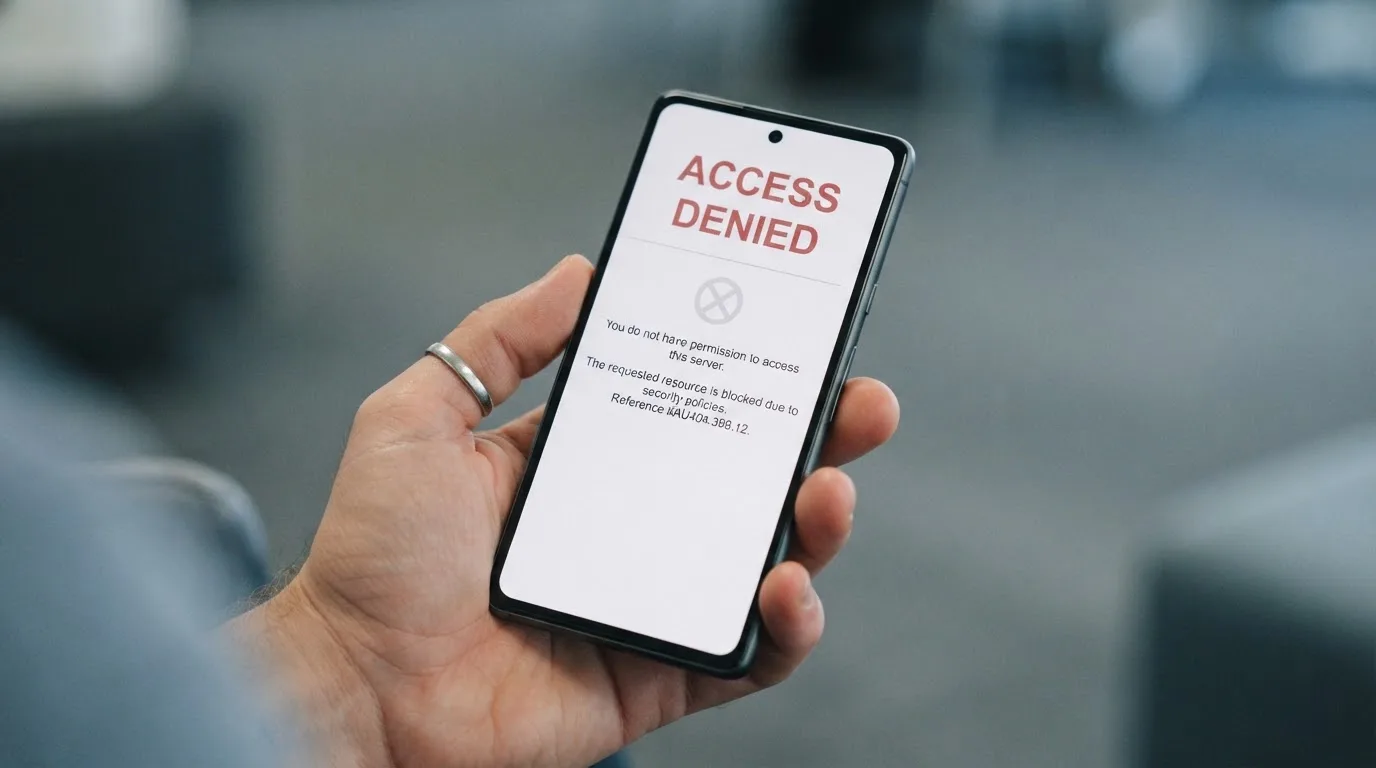
The ACMA’s main levers are the formal warning, the infringement notice, the civil penalty and the blocking order. The blocking order is the one that physically stops Australians reaching an offshore site: the ACMA asks Australian internet service providers to block specific domains at the network level, and the ISPs comply under section 313 of the Telecommunications Act 1997.
By the ACMA’s own count reported in June 2026, a total of 1,751 illegal gambling and affiliate marketing websites had been blocked since the first blocking request in November 2019, and more than 230 unlicensed gambling services had left the Australian market since enforcement was strengthened in 2017. The ACMA’s blocking data illustrates the acceleration of enforcement measures:
| Period | Total Sites Blocked | Average Rate |
|---|---|---|
| Nov 2019 – June 2026 | 1,751 | ~270 sites/year |
| 2026 (partial) | Accelerated | Multiple times average |
The figures show that while enforcement began slowly, the ACMA’s current pace involves several rounds per year, with twelve or more domains in each round — recent examples include 7Signs, ChromaBet, Donbet, Duospin, Freshbet, Slots Gem, Jacks Club, Lucky Start, Pointsbetz, Spinrise, Vinyl Casino and Wildsino. An Australian player who tries an offshore casino today is reaching a site the ACMA has either already blocked, formally warned about, or has on a list somewhere — the choice between those three states is the choice between “blocked when the ISP’s DNS catches up”, “named on a regulator’s website” and “next in line”.
ACMA enforcement record — the featured brands
The table below is built from the ACMA’s own formal-warning register. It is not a recommendation and not a ranking. Every brand on it is named because the regulator named it for offering prohibited online casino games to Australians. The brands are ordered by the date the ACMA’s formal warning was published.
| Brand | ACMA action and date | Operator named by the ACMA | Subject support |
|---|---|---|---|
| Bizzo Casino | Formal warning July 2025; earlier warning 2022 | Consolutetish S.R.L.; earlier TechSolutions (CY) Group Limited and TechSolutions Group N.V. | listings-only |
| National Casino | Formal warning July 2025 | Consolutetish S.R.L. | listings-only |
| Ignition Casino | Formal warning July 2025 | Bamboo Media | — |
| Woo Casino | Formal warning March 2025 | Dama N.V. | — |
| Spirit Casino | Formal warning May 2025 | Dama N.V. | — |
| Casino Intense | Formal warning April 2025 | Sterplay Holding Ltd | listings-only |
| Instant Casino | Formal warning February 2025 | EOD Code SRL | listings-only |
| Sky Crown | Formal warning September 2022 | Hollycorn N.V. | — |
| Level Up Casino | Formal warning May 2022 | Dama N.V. | listings-only |
| RocketPlay | Formal warning March 2026; earlier warning May 2022 | Pulsup Ltd; earlier Dama N.V. | listings-only |
| Jackbit | Formal warning April 2026 | Ryker B.V. | — |
The “Subject support” column records what external listings say about each brand — nothing more. An em dash means no such listing was carried by the inputs consulted. A “listings-only” entry is exactly what it says: a directory mentions the brand, not the regulator, not the operator and not an Australian authority.
The brands cluster under three operator groups. Dama N.V. alone has had six of its brands named across two separate warning rounds, which is more than any other operator the ACMA has gone after. TechSolutions Group entities received the original 2022 warning over Bizzo Casino, with Consolutetish S.R.L. picking up the same brand in 2025 — a reminder that operators reshuffle their corporate shells and that the ACMA has been willing to follow them across the boundary. Hollycorn N.V., Bamboo Media, Sterplay Holding Ltd, Pulsup Ltd and Ryker B.V. each appear once in the published record, which is enough to put a brand on the regulator’s list and does not require a second round.
Player wellbeing in a market without licensed online casino
The responsible-gambling framework that exists in Australia was built for licensed wagering, not for the offshore sites the ACMA is warning against. BetStop, the National Self-Exclusion Register, has been live since August 2023 and binds every Australian-licensed online and phone wagering service; an offshore casino is not connected to it, and a BetStop registration will not stop a deposit at any of the brands in the table above. For a player who has decided to keep their activity offshore, that is a fact worth knowing before they assume an exclusion is in place.

For players who want Australian-bounded protections, the alternative is to use the wagering and lottery products that are licensed and to engage the harm-minimisation tools those products offer. The National Gambling Helpline is 1800 858 858, free, open 24/7, with chat at Gambling Help Online. State-based counselling services run alongside it. None of these are casino-specific, because the licensed product in Australia is not casino.
The bank side has filled part of the gap. Westpac’s gambling block works at the card level and refuses authorisation on transactions registered under the merchant category code for betting and casino gambling on eligible personal credit and debit cards. ANZ’s gambling block works in the app and also blocks digital wallet transactions on the underlying card, including through Apple Pay, with a 48-hour wait for removal. Commonwealth Bank offers a comparable lock via the CommBank app. Each bank states that not every gambling transaction will be caught and that some non-gambling transactions can be blocked in error — which is honest about the limits of card-level controls and is also the reason BetStop, the proper register, exists for licensed wagering.
For a player who is reading this from Australia and who has decided that offshore casino play is not for them, the practical path is BetStop first, then bank-level gambling blocks on every card they hold, then a hard look at the licensed offline alternatives in the section below.
The licensed offline alternatives
The “high roller” label is older than online gambling, and the venues that built it are still operating in every Australian state and territory. Crown Melbourne, Crown Perth, Crown Sydney, The Star Sydney, The Star Gold Coast, Treasury Brisbane, Adelaide Casino and the Sky City Darwin complex run full table floors with roulette, blackjack, baccarat and poker at limits that begin where most online rooms cap out. Private gaming salons exist for the top tier and are invitation-only. The financial settlement is on the floor, in cash, by cheque or by electronic transfer to an Australian bank account. The complaints path is the relevant state regulator — the Victorian Casino and Gambling Regulator, Liquor & Gaming NSW, the Office of Liquor and Gaming Regulation in Queensland, the Independent Gambling Authority in South Australia and Consumer and Business Services in the Northern Territory.
A high-roller weekend at Crown Melbourne or The Star Sydney involves a host, a private salon, complimentary accommodation, restaurant bookings and a willingness to lose well into six figures. None of that happens online, and none of it can be substituted by an offshore site that streams a live dealer from Eastern Europe at 3 a.m. AEST. The two experiences are not equivalent, and the marketing on the offshore side is built around pretending they are.
For poker-machine players — the term in Australia is “pokies” — every state and territory has licensed venues with limits that begin at A$5 per spin and climb into the dollars. High-stakes pokies rooms exist at Crown and at a small number of state-licensed clubs, and the product is regulated, the payout is on the floor and the machine’s return-to-player is published and audited. The choice between a regulated pokie in a Melbourne club and a 96% RTP slot on an offshore site is not a choice between two versions of the same product; it is a choice between a regulated product with a real complaint path and an unregulated product without one.
Money movement — deposits and withdrawals at high-stakes scale
A high-roller transaction is several orders of magnitude larger than a casual one, and the payment system the player chooses has to clear it without friction. The four rails an Australian player actually has are debit card, bank transfer including PayID and Osko, BPAY, and a digital wallet such as Apple Pay or Google Pay drawing on a debit account. Credit cards, credit-related products and digital currency are not lawful methods for Australian-licensed wagering; offshore sites still accept them because they are not bound by the rule.
PayID is the address label for the New Payments Platform. A PayID is a phone number, an email address or an ABN that resolves to a BSB and account number, and over 100 Australian financial institutions participate. More than 25 million PayIDs were registered on the platform as of April 2025. The transfer itself runs through Osko, and an Osko transfer between participating banks arrives in under a minute, 24/7 including weekends. For a high-roller deposit that means the money is in the receiving account before the player has put the phone down. Australia Payments Plus, which runs PayID and Osko, also warns that being asked to send money to a PayID on an illegal gambling site is almost certainly a scam — the legitimate use of PayID in gambling is to fund licensed wagering accounts, not offshore casinos.
BPAY is the older bill-payment rail and has been operating since November 1997. It is available in over 140 banks and financial institutions and is offered by over 95,000 Australian businesses, although a gambling site is not a typical BPAY biller. BPAY is owned equally through Cardlink Services Limited by the four major banks — ANZ, Commonwealth Bank, National Australia Bank and Westpac — and since September 2021 has operated under the Australian Payments Plus holding structure alongside eftpos and NPP Australia.
Digital wallets are a real rail for an Australian player: by the end of 2025 Apple Pay, Google Pay and Samsung Pay together accounted for around 45% of all card payments in Australia by number. The wallet itself does not charge a consumer fee; any surcharge comes from the merchant’s own card-processing costs, and Apple’s own terms put transaction limits and PIN requirements in the hands of the card issuer or merchant. The catch is that an Australian-licensed wagering service will refuse a credit-funding wallet transaction under the 11 June 2024 credit card ban; an offshore site will not. That difference is one of the ways a player can tell which side of the legal boundary a site sits on.
The settlement side is where offshore play becomes structurally expensive. A win on an offshore casino has to be returned through a bank transfer or, less often, a digital wallet, and the receiving Australian bank has its own monitoring. AUSTRAC’s threshold-transaction-report rule requires reporting of cash transfers of A$10,000 or more; ordinary electronic bank transfers are not subject to that per-transaction report, but they can still trigger a bank’s own AML transaction monitoring if the pattern looks unusual. The player’s bank may place a hold, ask for source-of-funds documentation or close the account. None of this is theoretical; it is the lived experience of high-roller players withdrawing from offshore sites, and the cost of the friction falls on the player, not the casino.
Bonuses and free spins — the maths the marketing page skips
The bonus headline is the part of the pitch that gets the click. The wagering requirement is the part that determines whether the bonus is worth anything.
A “high roller” welcome package usually sits in the A$2,000 to A$10,000 matched-deposit range, sometimes paired with a few hundred free spins on a named slot. The headline value is calculated as the bonus amount plus the cash value of the free spins at the slot’s stake-per-spin; it is not a payout, it is a target. To withdraw any winnings derived from the bonus, the player must wager the bonus amount by the stated multiplier, and every spin counts toward that target at the stake’s face value.
A worked example shows the gap between headline and outcome. Take a A$5,000 matched deposit at 40x wagering on the bonus. The required turnover is A$5,000 multiplied by 40, which is A$200,000. At a typical online slot house edge of around 4% the expected loss across that turnover is A$8,000. The original bonus was A$5,000. The player has paid A$3,000 in expected loss for the privilege of having A$5,000 of “house credit” to play through. The bonus is a partial rebate of the expected loss, not a way around it.
The free-spin component adds a small layer on top. A package that includes 200 free spins at A$1 each on a 96% RTP slot has a face value of A$200 and an expected payout of A$192; the expected loss on the spins is around A$8. That is trivial against the deposit bonus cost and is included mostly because it shows up well on the marketing page.
The two conditions that change the picture are the maximum cashout cap and the game weighting. A bonus with a 5x maximum cashout on bonus-derived winnings pays out, at most, five times the bonus amount regardless of how much the player actually won; a 50x turnover bonus with no cashout cap and a wide range of contributing games is a fundamentally better deal than a 30x turnover bonus that excludes table games and caps cashouts at 3x. Research does not carry the specific terms for any of the brands in the ACMA table above, because the only sources for those terms are the operators’ own affiliate marketing pages — and the operators’ affiliate marketing pages are precisely what the ACMA has been warning against. A player who wants the real terms has to read the bonus terms page of the site they are considering, which for an Australian reader is a page describing terms on a product they cannot lawfully use.
The phone-screen experience
A high-roller who plays on a phone is using the same offshore site the desktop player uses, with the same games and the same bonus terms. There is no separate “high roller mobile casino” product; the offshore operators run a single account across desktop, mobile browser and a native app where the app store allows one. The casino end of the deal is the same; the only thing that changes is the screen.
The player end is different in two ways. The first is friction: an Australian bank may treat an app-initiated transaction differently from a desktop one if the merchant category code resolves differently, and a phone browser is more likely than a desktop to be inside a banking app with stronger merchant controls in place. The second is data: a mobile session generates location, device and network metadata that an offshore site can capture, and an Australian player’s IP address resolves to a country the site’s terms of service may already prohibit.
The native-app side of the market is constrained by the app stores themselves. Apple and Google have, at various points, removed real-money gambling apps from their Australian stores and have at other points restricted them to licensed wagering operators. A player who downloads an offshore casino app from a site rather than an app store is bypassing those controls, and the absence of an app-store review is one of the reasons a player should not assume the same vetting has happened.
For the offshore brands in the ACMA table, none carries a mobile product different from the desktop one. The mobile experience is a smaller window onto the same product the regulator has warned against.
Games, providers and table limits
The “high roller slots” pitch is built on a small number of high-volatility titles — games with a long dry spell between wins and a large top payout when the win lands. The names recur: Book of Dead, Gates of Olympus, Wanted Dead or a Wild, San Quentin, the Pragmatic Play “1000” series, and a handful of Nolimit City titles. These games are not the property of any casino; they are licensed from a small number of studios to operators that pay a revenue share, and the same titles appear at every offshore site that pitches itself at high-stakes play.
The relevant number on the slot side is volatility, not the return-to-player percentage alone. A 96% RTP slot with high volatility will return A$96 for every A$100 wagered across millions of spins but may pay nothing for hundreds of spins in a row and then return a single payout of several thousand times the stake. That is what the high-roller label is pricing in: the player is paid for sitting through the dry spells by being given the chance of catching the rare big win. Research does not carry volatility ratings for the specific titles named at any of the featured brands, and the only sources for those ratings are the operators’ own marketing pages, which are the same pages the ACMA has warned against.
The table-game side is where the real offshore differentiator sits. Online roulette at the high end caps out at A$5,000 to A$10,000 per hand; the offshore brands that pitch themselves at high rollers either raise those caps or move the player to a live dealer table run by Evolution, Pragmatic Play Live or a smaller studio. Live blackjack has hand limits in the A$10,000 to A$25,000 range on the premium tables; baccarat goes higher. Those limits are real. The licensed Australian alternative is the table floor at a Crown or Star property, and the limits there begin higher than any online room — the practical ceiling is the player’s bankroll and the host’s discretion.
For the featured brands in the ACMA table, research carries no specific RTP, no specific volatility rating and no specific table limit; the input sources for those figures would have been the operators’ own game pages. A player who wants the figure has to read the game information panel inside the site itself, which is not a source the regulator recognises.
The 11 brands — what the ACMA record says
The brands below are not ranked, recommended or reviewed in the marketing sense. Each is described by what the regulator’s published record says about it, and each ends on the page’s judgement of what that record means for an Australian reader.
RocketPlay
The ACMA issued a formal warning to Pulsup Ltd over RocketPlay in March 2026, and an earlier warning over the same brand went to Dama N.V. in May 2022. Two formal warnings over the same domain is unusual — the regulator usually warns once and then escalates to blocking — and the second round is a signal that the brand had not changed its conduct after the first. Subject support is limited to third-party listings that name the brand; the regulator’s record is the load-bearing source. The case for engaging with this brand in Australia is the case for engaging with a site the regulator has now told twice to stop.
Level Up Casino
Dama N.V. received the May 2022 formal warning that included Level Up among six brands named together. The same corporate parent covers five other entries in this list, which is more overlap than any other operator in the ACMA’s published record. A player who treats the brand as one of six under a single operator’s control is reading the regulator’s warning more accurately than the marketing site that presents Level Up as an independent product.
Woo Casino
The ACMA’s March 2025 warning to Dama N.V. named Woo Casino as one of the brands in scope. As with Level Up, the relevant operator is the holding company rather than the brand; a player evaluating Woo Casino is evaluating one product inside a Dama N.V. portfolio the ACMA has been working through for years. Subject support is absent from the listings consulted, which is itself a signal about how visible the brand is outside the affiliate pages that promote it.
Spirit Casino
Dama N.V. received the May 2025 warning naming Spirit Casino, the second of two consecutive warnings the regulator sent to the same operator over different brands. The pattern — Dama N.V., two warnings, twelve months apart — is the regulator’s way of signalling that the operator’s compliance posture has not improved. An Australian reader who reads Spirit Casino as an independent offering is reading the marketing; the regulatory reading is that Spirit Casino is one brand in a Dama N.V. portfolio under active enforcement.
National Casino
The ACMA’s July 2025 warning named Consolutetish S.R.L. as the operator behind National Casino. The same warning covered Bizzo Casino, with the same operator name — two brands, one operator, one warning. National Casino has listings-only support in the inputs consulted: a regulator’s website, AUSTRAC documentation and the BetStop register all name the operator in passing, but the substantive record is the ACMA’s warning itself.
Bizzo Casino
Bizzo Casino is the brand in this list with the longest enforcement history. The ACMA issued a formal warning to TechSolutions (CY) Group Limited and TechSolutions Group N.V. over Bizzo Casino in 2022, and then issued a second formal warning in July 2025 to Consolutetish S.R.L. — a different corporate entity — over the same domain. The regulator has followed the brand across the corporate reshuffle, which is exactly the conduct pattern the warnings are designed to deter. Two warnings, two operators, one brand.
Ignition Casino
The July 2025 warning named Bamboo Media as the operator behind Ignition Casino. Ignition has no current listings-only support in the inputs consulted — the only source the ACMA itself maintains is the formal warning publication. A reader who reaches Ignition from an Australian IP address is reaching a brand whose operator the ACMA has named and whose site the ACMA’s blocking programme targets.
Instant Casino
The February 2025 warning named EOD Code SRL as the operator. Instant Casino carries listings-only support from payment-rail pages — ecoPayz and PayID — which is worth flagging because those are not endorsements; they are the rails a player might use to fund the account, and the regulator’s record on the brand is unchanged by the existence of those rails. The BetStop register does not bind this site, and an Australian bank may still refuse the transaction at its own discretion.
Jackbit
Ryker B.V. received the April 2026 warning naming Jackbit. The same operator was named over a second brand — CasinOK — in the same warning, which is the same one-operator-many-brands pattern that runs through most of this table. Jackbit has no listings-only support in the inputs consulted, and the regulatory record is the load-bearing source.
Casino Intense
Sterplay Holding Ltd received the April 2025 warning naming Casino Intense. The brand has listings-only support from AUSTRAC documentation, the BetStop register and third-party gambling listings, all of which name the operator in passing without altering the regulator’s published position. Casino Intense is, by the ACMA’s own record, an active enforcement target.
Sky Crown
The ACMA’s September 2022 warning named Hollycorn N.V. as the operator behind Sky Crown, with Blue Leo covered in the same action. The brand has no listings-only support in the inputs consulted; the ACMA warning is the source for everything that can be said about it. The 2022 date is worth noting because it is the oldest current entry in this table, and the regulator’s warning is now nearly four years old without a published follow-up.
What is left for the Australian reader
There are two honest paths and a third that is built on ignoring the regulator.
The first is the regulated offline market: licensed land-based casinos at Crown’s three properties, the two Star properties, Treasury Brisbane, Adelaide Casino and Sky City Darwin, and the state-licensed pokies venues in every state and territory. Table limits begin where the offshore sites’ online rooms cap out and go higher. Pokies have published RTPs and a state regulator behind them. The complaints path is real. The product is real. The only thing it is not, is online.
The second is licensed Australian wagering: sports and racing, online and over the counter, through Sportsbet, Bet365, Ladbrokes and the other 49 bookmakers licensed by the Northern Territory Racing and Wagering Commission. The credit-card ban, the BetStop register, the bank-level gambling blocks, the state-licensed harm-minimisation services — all of it applies. The product is not casino, and there is no honest way to make it one.
The third is the offshore sites in the ACMA’s record. The marketing is glossy, the bonuses are large and the limits are real. None of it is licensed in Australia, none of it binds to BetStop, and none of it offers a complaints path an Australian player can use against an offshore operator that declines a withdrawal. The brand might be a casino that has been operating for a decade; the regulator’s record is shorter and points the other way.
For a high-roller player in Australia in 2026, the choice is between the offline product and the licensed wagering product, with the offshore sites reserved for the players who have read the regulator’s record and decided to take the risk on their own account. The marketing pages that put the offshore sites at the top of a “best of” list are not describing what is best; they are describing what is loudest.
Frequently asked questions
What deposit level usually counts as high-roller play?
There is no fixed dollar figure that turns a player into a high roller; the label is set by the venue’s loyalty team and tracks single-stake size and annual turnover rather than any one deposit. In practical offshore terms a player who bets in the low thousands per hand and deposits in the tens of thousands over a year will be treated as high-roller; in a land-based Australian casino the equivalent threshold is set by the host’s discretion and is typically higher.
Are high-roller bonuses tied to heavier wagering requirements?
Generally yes. The matched-deposit bonus scales with the deposit size, and the wagering multiplier — usually between 30x and 50x the bonus amount — applies to the full bonus. A A$5,000 bonus at 40x is A$200,000 of required turnover, and the expected loss across that turnover at a 4% house edge is well above the bonus itself, which is why the bonus is best understood as a partial rebate of expected loss rather than a free amount.
Is it legal for an online casino to offer high-roller bonuses to Australians?
No. The Interactive Gambling Act 2001 makes it an offence to provide online casino games to a person in Australia, and the ACMA has been issuing formal warnings to operators that pitch high-roller bonuses at Australian players since at least 2022. The individual player is not prosecuted, but the operator is, and the player has no Australian regulatory recourse if a withdrawal is refused.
Can high-roller status be reached through a PayID deposit?
A PayID deposit is just a payment rail; it does not by itself confer high-roller status. The status is set by the venue’s review of the player’s stake size and turnover, which a PayID transfer simply moves money into the account more quickly than older rails. An Osko transfer against a PayID typically arrives in under a minute, 24/7, and the high-roller decision is downstream of the deposit, not a function of how the deposit was made.
Are high-roller tables offered at licensed Australian land-based casinos?
Yes. Crown Melbourne, Crown Perth, Crown Sydney, The Star Sydney and The Star Gold Coast all run private gaming salons with limits set by the host and the venue, and Treasury Brisbane, Adelaide Casino and Sky City Darwin run table floors at the upper end of what is available in Australia. The limits begin higher than any online room’s maximum and the regulatory oversight is through the relevant state body.
What should a high-spending player check before trusting a casino site?
The first check is whether the product is licensed in the player’s jurisdiction at all; in Australia, online casino games are not, and any site offering them is operating outside the local framework. Beyond that, the practical checks are the licence jurisdiction, the complaints path that jurisdiction provides, whether the bank will process withdrawals from that operator, and whether the player will still have BetStop, bank-level gambling blocks and recourse to the National Gambling Helpline at 1800 858 858 if the relationship goes wrong.