
Pocket Pokies Casino Australia 2026: What the Marketing Promises, What the Regulator Has Actually Done
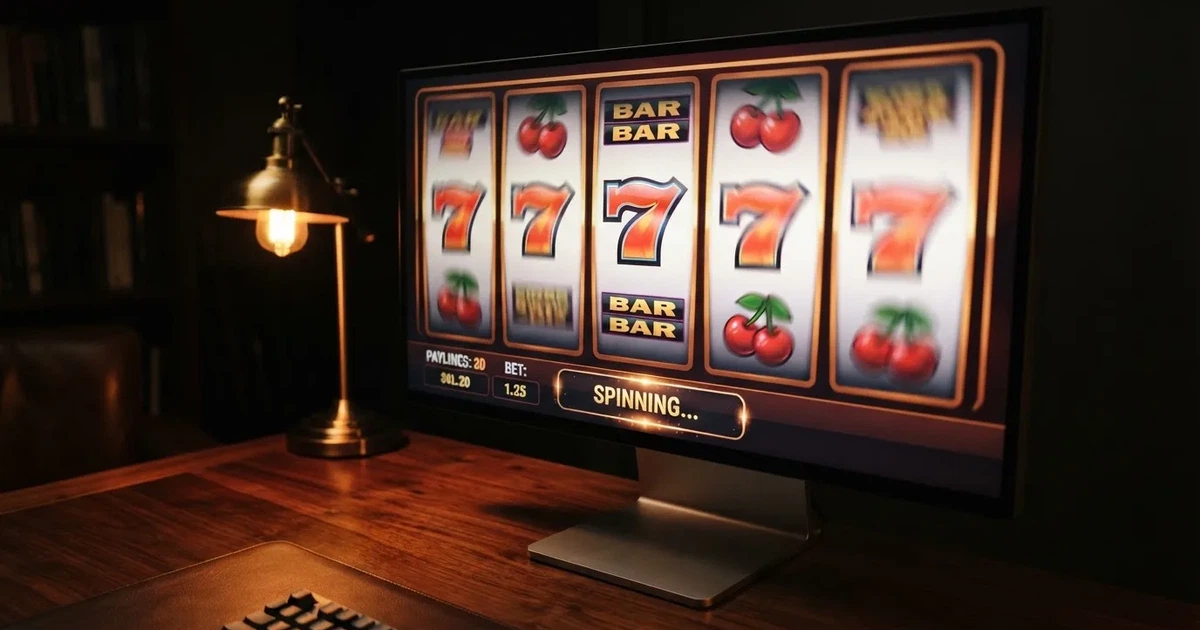
The phrase “pocket pokies casino” gets used to describe a particular kind of offshore gambling site, one pitched at Australian players, styled with familiar pokies language and a paytable splash that promises thousands in bonus money and dozens of free spins. None of these sites hold an Australian licence. Online casino games, online pokies and in-play betting are prohibited interactive gambling services under the Interactive Gambling Act 2001, and no state or territory issues a licence for them. What the ACMA has done, repeatedly, is issue formal warnings to the operators behind those sites, and ask Australian internet providers to block them. This page walks through the brands the regulator has named, the payments that do and do not reach them, and the support services a player in trouble can actually use.
Currency stamp: 17 October 2026, verified against the ACMA’s published formal warnings register and its blocking-order round as reported on 26 June 2026.
Table of Contents
- Legality: Why Every Offshore Pocket Pokies Site Sits Outside Australian Law
- Responsible Gaming: What Actually Protects an Australian Player
- Payments and Payout Speed: How Money Actually Moves
- Bonuses and Free Spins: What the Headline Numbers Actually Cost
- Specific Games, Providers and Live Tables
- The Brands the ACMA Has Warned: A Side-by-Side Comparison
- RocketPlay
- Level Up Casino
- Woo Casino
- Spirit Casino
- National Casino
- Bizzo Casino
- Ignition Casino
- Instant Casino
- Jackbit
- Casino Intense
- Sky Crown
- How the Blocking Rate Has Built Up Since 2017
- What This Page Found
- Frequently Asked Questions
Legality: Why Every Offshore Pocket Pokies Site Sits Outside Australian Law
Australian gambling law does not leave this to interpretation. The Interactive Gambling Act 2001, strengthened by the Interactive Gambling Amendment Act 2017, makes it a criminal offence to provide online casino games, online pokies or in-play betting to a person physically in Australia. No state or territory government issues a licence for these products. What is licensable in Australia is wagering on races and sporting events placed before the event, lotteries and keno, and most of those licensed wagering providers are licensed by the Northern Territory Racing and Wagering Commission, a small body with no full-time staff that meets once a month in Darwin and oversees 52 online bookmakers, including Sportsbet, Bet365 and Ladbrokes.

The distinction matters because the marketing copy around offshore sites leans on the word “licensed” heavily. A Curaçao or Anjouan licence displayed at the bottom of a homepage is not an Australian licence. It is a licence issued by a foreign regulator with no jurisdiction over complaints from Australian players, no obligation to honour dispute outcomes in Australian forums, and no connection to the protections the IGA assumes a player has access to. The minimum age to gamble in Australia is 18, and a site taking bets from an under-18 Australian is breaking Australian law regardless of what its own terms say.
The Interactive Gambling Amendment (Gambling Reform) Bill 2026 passed Parliament on 19 August 2026, and its advertising and inducement measures commence on 1 January 2027. That is law with a date attached, not law in force on a 2026 page, and what changes from 1 January 2027 is the regulatory perimeter around inducements and advertising, not the underlying prohibition on the product itself.
Enforcement does not land on the player. The IGA targets the provider: the ACMA investigates, issues formal warnings, and directs Australian internet service providers to block offending sites. A punter who opens an account at one of these offshore brands is not prosecuted for doing so. What the punter gives up is the consumer protection a licensed Australian wagering service is required to provide, including a working complaints process and the guarantee that an authorised winnings withdrawal will actually be processed. If the operator refuses a payout or disappears, there is no Australian body the player can take the matter to.
The blocking campaign has now run for years. According to the ACMA, as reported in June 2026, a total of 1,751 illegal gambling and affiliate marketing websites had been blocked since the first blocking request in November 2019, and more than 230 unlicensed gambling services had voluntarily left the Australian market since enforcement was strengthened in 2017. In the round reported on 26 June 2026 alone, the ACMA asked Australian ISPs to block 12 more illegal gambling websites: 7Signs, ChromaBet, Donbet, Duospin, Freshbet, Slots Gem, Jacks Club, Lucky Start, Pointsbetz, Spinrise, Vinyl Casino and Wildsino. The pace has not slowed.
The economic picture behind that blocking campaign is significant. H2 Gambling Capital’s 2025 report estimates that Australians lose about A$3.9 billion a year to illegal gambling sites, and that the share of gambling going through legal channels fell from 74% in 2021 to 64%. Most of those illegal dollars are not leaving through Australian payment rails because the Interactive Gambling Act 2001, as amended in 2023, prohibits Australian-licensed online wagering services from accepting payment by credit card or any credit-related product, a restriction that also constrains gambling use of linked digital wallets like Apple Pay. Offshore sites have adapted by leaning on debit rails, crypto and PayID-style transfers, the mechanics of which are covered in the section on payments.
Responsible Gaming: What Actually Protects an Australian Player
The question “is pocket pokies safe in Australia” has an answer that does not depend on which offshore brand is being asked about. The offshore site itself cannot be made safe in the Australian sense, because it sits outside the regulatory perimeter that makes “safe” a meaningful word. What does exist is a set of Australian support services and a national self-exclusion register that bind licensed operators and that an Australian player in difficulty can actually use.
BetStop, the National Self-Exclusion Register, has been live since August 2023. It is run by the ACMA and binds every Australian-licensed online and phone wagering service. A punter who registers with BetStop is barred from opening new accounts, depositing or placing bets with any of those licensed operators for the period they nominate. An offshore casino is not connected to BetStop, and registering with BetStop does not stop an offshore site from accepting deposits or marketing to the person. The register works against the licensed half of the market, not against the offshore half.
The National Gambling Helpline, 1800 858 858, is free, operates 24/7, and connects to Gambling Help Online, which offers web chat and counselling. These services do not require the caller to have played at a licensed operator. They are available to anyone whose gambling, at any venue or site, is causing harm.
The major Australian banks have added gambling blocks at the card level, and these are worth knowing about because they cut across both the licensed and the offshore market. Westpac’s gambling block refuses authorisation of transactions registered under the merchant category code “Betting/Casino Gambling” on eligible personal credit and debit cards. ANZ’s gambling transaction block, activated in the ANZ app, also blocks gambling transactions made through a digital wallet such as Apple Pay on an eligible card, not just the physical card, and once the block is turned on, removing it requires a 48-hour waiting period. Commonwealth Bank lets customers apply a gambling lock to eligible cards via the CommBank app, which automatically blocks most gambling transactions, though the bank states it cannot guarantee all gambling-related purchases will be stopped. None of these blocks is perfect, because merchant category coding is set by the acquiring bank, not by the punter’s bank, and offshore operators do not always code cleanly. But for a player who has decided to stop, switching on every available card block is one of the few concrete steps that works at the payment-rail level rather than at the willpower level.
The legal framing matters for one more reason. Recreational gambling winnings are not assessable income in Australia under section 6-5 of the Income Tax Assessment Act 1997, and losses are not deductible, unless the person carries on a business of gambling, and that model only applies to professional gamblers. A casual punter does not owe tax on a win and cannot claim a loss against other income. The tax treatment is the same whether the bet was placed at a licensed Australian bookmaker or at an offshore casino, because the question the ATO asks is whether the activity is a business, not where the bet was placed. The same offshore site that promises no Australian reporting also provides no Australian recourse if a withdrawal stalls.
Payments and Payout Speed: How Money Actually Moves
The payment shelf that surrounds sites styled as Pocket Pokies is where the legal prohibition meets practical reality. Australian players cannot use credit cards for licensed online wagering at all, since the 11 June 2024 ban came into force, and offshore sites are by definition not licensed, so they exist outside the credit-card prohibition entirely, but the Australian banks have moved at the card level regardless. The result is that several payment methods work technically at an offshore site, but the consumer protection that goes with them is much thinner than the protection an Australian punter is used to at a domestic wagering provider.
The credit-card ban under the Interactive Gambling Act 2001 as amended in 2023 prohibits Australian-licensed online wagering services from accepting payment by credit card or any other credit-related product, and this also constrains the use of linked digital wallets like Apple Pay when the underlying funding source is a credit card. The ban carries penalties of up to A$247,500 for operators. What this means in practice is that an offshore site asking an Australian for a credit card deposit is operating outside the Australian rules, because the Australian bank side of that transaction will not honour it for licensed wagering, and the offshore operator has no Australian authorisation to take it.
Debit cards work, but the major banks’ gambling blocks can refuse the transaction at the merchant category level. Westpac, ANZ and Commonwealth Bank all offer gambling blocks on eligible cards, and ANZ’s block extends to digital-wallet transactions made on an eligible card. The banks are explicit that the blocks are not perfect: ANZ warns that not all gambling transactions will be blocked and that some non-gambling transactions might be blocked in error. The blocks are a friction layer, not a guarantee.
American Express sits in a slightly different position. American Express was established in 1850 as a freight-forwarding company and later became a card issuer, launching its first charge card on 1 October 1958, and unlike Visa or Mastercard’s four-party network, Amex traditionally issues cards and processes transactions itself as a three-party scheme. The Reserve Bank of Australia’s July 2025 review of merchant card payment costs proposes removing surcharges only on eftpos, Mastercard and Visa transactions, explicitly leaving American Express outside the scope of the proposed surcharge ban. For an Australian player using Amex at an offshore site, the relevant fact is that Amex acceptance is narrower internationally and that chargeback processes through Amex are run on Amex’s own terms.
Apple Pay is increasingly the way Australian cardholders pay, and by the end of 2025 Apple Pay, Google Pay and Samsung Pay transactions collectively accounted for around 45% of all card payments in Australia by number. Apple does not charge fees to consumers for using Apple Pay in stores, online or in apps; any surcharge comes from the merchant’s own card-processing fees, not from Apple. Apple also states that transaction limits and PIN requirements for Apple Pay purchases are set by the card issuer or merchant, not by Apple itself. The wallet is a pass-through; the underlying rules come from the card and the merchant.
PayID and Osko are the part of the Australian payment landscape that offshore sites lean on most heavily, because they move money directly from an Australian bank account and arrive in under a minute through Osko, 24/7 including weekends, whether addressed to a BSB and account number or to a PayID. Australia’s New Payments Platform became accessible to the public on 13 February 2018 and is owned by New Payments Platform Australia Ltd, a non-profit whose 13 shareholders include the Reserve Bank of Australia and the country’s major banks. By April 2025 more than 25 million PayID identifiers had been registered on the platform, and PayID-based instant transfers are available at over 100 Australian financial institutions. Participants in NPP must keep the platform’s monthly outages to no more than two minutes, and in 2021 the ACCC authorised the merger of NPP Australia with BPAY and eftpos into a single company, Australian Payments Plus.
The crucial detail for an Australian player is that paying to a PayID shows the name of the account holder before the transfer is sent, and Australian Payments Plus warns that being asked to transfer money to a PayID on an illegal gambling site almost certainly means a scam site. The speed that makes PayID attractive for legitimate payments also makes it attractive for scams, and the verification step exists precisely because the system knows it is being abused.
BPAY is the older bill-payment rail, launched on 18 November 1997 and now available in the online banking of over 140 banks and financial institutions and offered by over 95,000 businesses. The payer enters the Biller Code and the Customer Reference Number printed on the bill, and the system routes the payment to the biller. BPAY is run by Australian Payments Plus, the same operator as PayID and Osko, and is owned equally via parent company Cardlink Services Limited by Australia’s four major banks: ANZ, Commonwealth Bank, National Australia Bank and Westpac. For an offshore casino, BPAY is harder to misuse than PayID because the biller structure ties payments to a registered biller code, and offshore operators do not typically hold Australian biller codes.
AUSTRAC’s threshold-transaction-report rule, which requires reporting of transfers of A$10,000 or more, applies only to physical cash. Ordinary electronic bank transfers are not subject to that per-transaction reporting requirement, regardless of the amount sent. This matters because the threshold is often misrepresented online as a “you can’t transfer more than $10,000 without reporting it” rule for bank transfers, which is not what the rule covers.
The withdrawal side is where the offshore marketing claims and the punter’s actual experience most often diverge. The reviewed brands the ACMA has warned against do not publish reliable payout-time figures, because they are not Australian-licensed and therefore not subject to Australian wagering-provider reporting standards. Where an Australian punter is comparing a domestic wagering withdrawal against an offshore casino withdrawal, the only honest comparison is “withdrawal to a verified Australian bank account through a regulated Australian wagering provider” against “withdrawal of an offshore operator’s discretion, processed through whatever rail the operator chooses, with no Australian complaints body to escalate to if the operator declines.”
Bonuses and Free Spins: What the Headline Numbers Actually Cost
The bonus shelf around sites styled as Pocket Pokies follows a recognisable pattern: a headline figure in the thousands, paired with a free-spin count in the dozens, and a paytable screenshot showing the welcome offer. The numbers vary; the structure does not. A$4,400 welcome bonus plus 90 free spins is one example that recurs across marketing pages. What the marketing rarely surfaces is the wagering multiple, the game weighting, the max-cashout cap, and the expiry window, and it is in those terms that the cost of the offer is actually set.
The wagering multiple is the figure that determines the real cost. A A$4,400 bonus with a 40-times wagering multiple means A$176,000 of qualifying turnover before the bonus and any winnings from it become withdrawable. Free-spin winnings are almost always credited as bonus money with their own wagering attached, and the free-spin count, far from being the “free” part of the offer, is the second wagering event stacked on top of the first. A punter who reads “A$4,400 plus 90 free spins” as the headline value is reading the deposit-match claim, not the cost of clearing it.
Game weighting is the second mechanism that quietly expands the cost. Slots typically contribute 100% to wagering, but table games, live dealer games and many jackpot slots contribute a reduced percentage or nothing at all, meaning the punter is steered toward the games with the highest house edge to clear the bonus. A player who wants to clear a bonus on blackjack has to bet several times the headline turnover to get there. The promotional copy rarely states this prominently.
Max-cashout caps, where they apply, cap the winnings that can be withdrawn from a bonus or free-spin offer regardless of how much was actually won. A A$200 max cashout on a bonus that took A$176,000 of turnover to clear is a hard ceiling that turns most of the apparent upside into marketing. Expiry windows, often seven to thirty days, add time pressure that pushes the punter toward more spins per hour than they would otherwise play.
The arithmetic the page can present in plain words: a A$4,400 bonus at a 40-times multiple means A$176,000 of qualifying turnover before withdrawal. At a typical slot spin of A$1, that is 176,000 spins. At five seconds per spin, the play time works out to about 244 hours, which is more than six hours a day for a month. That is the time the offer assumes the player will spend, not the time the player will necessarily enjoy. The expected loss over those spins, at a typical online slot RTP of around 96%, works out to roughly A$7,040 of mathematical house edge, before any of the bonus has been touched. The bonus reduces that expected loss by A$4,400 if and only if the punter clears it, which is a 62% pass rate on a typical clearing path. The honest framing is that a “A$4,400 bonus” is most accurately read as “the operator has priced A$4,400 against the time it takes to clear it, and most players will not clear it.”
None of the reviewed brands the ACMA has warned against publish verified bonus terms. The only sources for those terms were affiliate marketing pages, and the page describes what a bonus is worth in general rather than what any specific brand’s bonus pays.
Specific Games, Providers and Live Tables
The paytable detail commonly advertised for sites styled as Pocket Pokies is built around a familiar roster: a mix of high-volatility slots from a handful of providers, a live casino section with the standard blackjack, roulette and game-show titles, and a few branded jackpot slots. The names of the providers and the live-table studios vary across the marketing pages; what does not vary is the framing, which treats the offshore site’s game library as equivalent to a licensed Australian product.
This framing is misleading. The game providers themselves are licensed by their own regulators, usually the Malta Gaming Authority or the UK Gambling Commission, and their games are certified by independent testing labs. That certification is about the mathematics of the game, the published RTP and the randomness of outcomes. It is not certification that the operator offering the game is licensed to offer it to Australians, because no such Australian licence exists. A Pragmatic Play slot running on a Curaçao-licensed offshore site is the same game mathematically as the same slot running on a UK-licensed site, but the operator running it in Australia is offering a prohibited interactive gambling service in either case.
Live dealer tables add a second layer. The studios that stream live casino games are typically licensed in Malta, the UK, Latvia or Georgia, and they contract with operators to offer the tables under the operator’s brand. The studio’s licence covers the production of the game; the operator’s licence covers the offering of it. When the ACMA issues a formal warning to an offshore operator, it is warning the operator for offering prohibited services to Australians; the warning does not extend to the game provider, who is supplying a product the provider is licensed to supply.
What this means for a player evaluating the “games” shelf at one of these sites is that the games are real games with real mathematics, but the operator offering them is unlicensed in Australia and the games themselves do not become licensed by being offered through an offshore brand. The paytable screenshot the marketing shows is not a statement about the game’s RTP at this particular site; it is a screenshot of a game running somewhere, on a server whose location and licence are not disclosed on the page the screenshot came from.
The review cluster this shelf serves is the one where a player is asking “is pocket pokies legit,” and the answer is that the question conflates two different kinds of legitimacy. The games can be legitimate products from legitimate providers. The operator offering them to Australians is not legitimate under Australian law, regardless of what licence the operator displays, and the player’s only practical recourse if the operator declines a withdrawal is the operator’s own complaints process and whatever licensing jurisdiction the operator claims to be in.
The Brands the ACMA Has Warned: A Side-by-Side Comparison
The eleven brands below are not a ranking and not a recommendation. They are listed because the Australian Communications and Media Authority itself issued a formal warning to each of them for offering prohibited interactive gambling services to Australians. The ACMA’s formal warnings are public regulatory actions; the only reason a brand appears on this list is that the regulator named it.
| Brand | ACMA action and date | Operator named by the ACMA | Subject support |
|---|---|---|---|
| RocketPlay | Formal warning, March 2026 | Pulsup Ltd | Listings reference |
| Level Up Casino | Formal warning, May 2022 | Dama N.V. | Listings reference |
| Woo Casino | Formal warning, March 2025 | Dama N.V. | No data |
| Spirit Casino | Formal warning, May 2025 | Dama N.V. | No data |
| National Casino | Formal warning, July 2025 | Consolutetish S.R.L. | Listings reference |
| Bizzo Casino | Formal warning, July 2025; earlier 2022 | Consolutetish S.R.L.; earlier TechSolutions | Listings reference |
| Ignition Casino | Formal warning, July 2025 | Bamboo Media | No data |
| Instant Casino | Formal warning, February 2025 | EOD Code SRL | Listings reference |
| Jackbit | Formal warning, April 2026 | Ryker B.V. | No data |
| Casino Intense | Formal warning, April 2025 | Sterplay Holding Ltd | Listings reference |
| Sky Crown | Formal warning, September 2022 | Hollycorn N.V. | No data |
What the table shows is the regulatory history rather than a market comparison. Several operators recur across warnings: Dama N.V. was warned over six brands in May 2022 and then again over Woo Casino in March 2025 and Spirit Casino in May 2025. Consolutetish S.R.L. was warned over National Casino and Bizzo Casino in July 2025, and Bizzo Casino had earlier been the subject of a 2022 warning to TechSolutions. The pattern across the list is not that individual brands have been warned; it is that the same operator vehicles have been warned repeatedly under different brand names.
The “subject support” column reflects where the brands appeared in third-party listings rather than any verified operator data. Where the column reads “no data,” the brand did not surface in the consulted listings with enough specificity to cite a source. The column is a way of saying which brands the surrounding pages talk about and which they pass over.
No brand on this list, and no brand styled as Pocket Pokies generally, holds an Australian licence to offer online casino games. The ACMA’s formal warnings are not suggestions or advisories; they are published regulatory findings that the named operators have been offering prohibited interactive gambling services to Australians. A punter evaluating any of these brands is evaluating a brand the Australian regulator has already acted against.
RocketPlay
RocketPlay was the subject of an ACMA formal warning in March 2026, with the regulator naming Pulsup Ltd as the operator of RocketPlay. Earlier, in May 2022, Dama N.V. had been the named operator for a warning that included RocketPlay alongside five other Dama N.V. brands. The recurrence of the same brand under different operator vehicles is the pattern the ACMA’s enforcement record keeps surfacing: a brand gets warned, the operator restructures or rebrands, and the warning cycle restarts.
For an Australian player, the warning history means the ACMA has twice found the brand offering prohibited services to Australians. The “listings reference” tag in the comparison table refers to where the brand surfaces in third-party gambling-industry listings rather than any Australian regulatory endorsement.
The verdict on RocketPlay is that it is a brand the ACMA has acted against twice under different operators, and any version of the site accepting Australian players today is operating outside the Interactive Gambling Act 2001.
Level Up Casino
Level Up Casino was named in the ACMA’s May 2022 formal warning to Dama N.V., which covered six Dama N.V. brands: Bambet, Dazard, Level Up, Rocketplay, Wild Tornado and Cobra Casinos. The Dama N.V. vehicle has remained in the ACMA’s enforcement record since, with warnings over Woo Casino in March 2025 and Spirit Casino in May 2025, suggesting the operator structure that produced the Level Up warning in 2022 has continued to surface under different brand names.
The “listings reference” tag points to where the brand surfaces in banking-industry listings, which is one of the few places a brand can be looked up outside the gambling-industry affiliate pages. The Westpac gambling-block page, for instance, lists Level Up among the merchant-category transactions the block targets, which is how the brand surfaces in the consulted sources.
The verdict on Level Up Casino is that it is a Dama N.V. brand from the May 2022 warning cohort, and the operator’s continued appearance in the ACMA’s enforcement record under other brand names is the relevant context for any Australian player considering the site.
Woo Casino
Woo Casino was the subject of an ACMA formal warning in March 2025, with Dama N.V. again named as the operator. This brand was not found in the consulted third-party listings. The brand is well-known in the offshore gambling market, and the affiliate pages are extensive, but the consulted listings were the regulatory, banking and payments registers rather than the affiliate marketing pages.
For an Australian player, the Woo Casino position is that the ACMA has named Dama N.V. for this brand in March 2025, after the same operator had been warned for six brands in May 2022. The operator pattern, not the brand history, is the relevant detail.
The verdict on Woo Casino is that the brand sits inside the Dama N.V. warning cluster, and an Australian player is evaluating the operator’s history rather than a single brand.
Spirit Casino
Spirit Casino received an ACMA formal warning in May 2025, with Dama N.V. named as the operator. Information on its status did not appear in the audited third-party reports. The May 2025 warning makes Spirit Casino the third Dama N.V. brand to receive an ACMA formal warning in 2025 alone, after Woo Casino in March 2025.
The verdict on Spirit Casino is that it is a Dama N.V. brand from the 2025 warning cohort, and the same caveats that apply to Woo Casino apply here. An Australian player at Spirit Casino is playing at a site the ACMA has named in the past twelve months.
National Casino
National Casino received an ACMA formal warning in July 2025, with Consolutetish S.R.L. named as the operator. The “listings reference” tag reflects that National Casino surfaces across the ACMA register, the AUSTRAC register and BetStop, the three Australian regulatory and consumer-protection bodies where the brand was visible in the consulted sources.
The July 2025 warning named National Casino alongside Bizzo Casino, both operated by Consolutetish S.R.L. The dual warning in the same month is the clearest example of the ACMA acting against a single operator vehicle across multiple brands simultaneously.
The verdict on National Casino is that it is one half of the Consolutetish S.R.L. warning pair from July 2025, and the operator pattern is the relevant detail for any Australian player.
Bizzo Casino
Bizzo Casino received an ACMA formal warning in July 2025, with Consolutetish S.R.L. named as the operator, but the brand had earlier been the subject of a 2022 formal warning to TechSolutions (CY) Group Limited and TechSolutions Group N.V. The double warning, under two different operator vehicles across three years, is the most striking example on the list of a brand surviving a regulatory action by changing hands.
The “listings reference” tag points to where Bizzo Casino surfaces in third-party gambling-industry listings rather than any Australian regulatory endorsement.
The verdict on Bizzo Casino is that it is the clearest case on the list of a brand that has been named by the ACMA under two different operators, and the durability of the brand across the operator changes is itself the relevant fact.
Ignition Casino
Ignition Casino received an ACMA formal warning in July 2025, with Bamboo Media named as the operator. External third-party listings did not provide specific support citations for this brand. Ignition Casino has a different brand profile from the rest of the list, having built its reputation on poker and casino games for an international audience, and the ACMA warning is the relevant Australian-regulator action against it.
The verdict on Ignition Casino is that it is a Bamboo Media brand from the July 2025 warning cohort, and the warning makes it a prohibited service in Australia regardless of what licence the operator displays elsewhere.
Instant Casino
Instant Casino received an ACMA formal warning in February 2025, with EOD Code SRL named as the operator. The “listings reference” tag points to where Instant Casino surfaces in payments-industry listings, specifically ecoPayz and PayID, the two Australian-relevant payment rails where the brand appeared in the consulted sources.
The PayID reference is particularly relevant, because the Australian Payments Plus warning about PayID transfers to illegal gambling sites applies directly to Instant Casino: paying to a PayID on a site the ACMA has warned against is the exact pattern AP+ is warning about.
The verdict on Instant Casino is that it is the brand where the PayID connection is most explicit in the consulted sources, and the AP+ warning about PayID transfers to illegal gambling sites applies to it directly.
Jackbit
Jackbit received an ACMA formal warning in April 2026, with Ryker B.V. named as the operator. Consulted independent registers did not list this brand. The April 2026 warning makes Jackbit one of the most recent formal warnings on the list, alongside the RocketPlay warning in March 2026 and the National Casino and Bizzo Casino warnings in July 2025.
The verdict on Jackbit is that it is a Ryker B.V. brand from the April 2026 warning cohort, and the warning is recent enough that any current Australian access to the site is operating outside the ACMA’s enforcement finding.
Casino Intense
Casino Intense received an ACMA formal warning in April 2025, with Sterplay Holding Ltd named as the operator. The “listings reference” tag reflects that Casino Intense surfaces across the AUSTRAC register, BetStop and third-party gambling-industry listings. The appearance of Casino Intense in the BetStop context is significant, because BetStop binds Australian-licensed operators and the offshore status of Casino Intense means BetStop registration does not block access to it, even though the brand surfaces in the same regulatory conversations.
The verdict on Casino Intense is that it is a Sterplay Holding Ltd brand from the April 2025 warning cohort, and the brand’s appearance in the AUSTRAC and BetStop listings is the relevant regulatory context.
Sky Crown
Sky Crown received an ACMA formal warning published in September 2022, with Hollycorn N.V. named as the operator, covering the Sky Crown and Blue Leo casino services. This brand was absent from the audited third-party market data. The September 2022 warning is the earliest formal warning on the list, predating the 2025 cluster that dominates the table.
The verdict on Sky Crown is that it is a Hollycorn N.V. brand from the September 2022 warning cohort, and the warning remains the relevant Australian-regulator action against it.
How the Blocking Rate Has Built Up Since 2017
The blocking campaign has a measurable pace. The ACMA’s first blocking request went out in November 2019, and by June 2026 the cumulative total of blocked illegal gambling and affiliate marketing websites had reached 1,751. That is the running total, and it sets the scale of what the ACMA’s enforcement has actually accomplished.
The arithmetic of the blocking rate belongs to the page. From November 2019 to the end of June 2026 is roughly 79 months. Dividing the 1,751 blocked sites by 79 months gives a monthly blocking rate of approximately 22 sites per month, or about 265 sites per year, as a long-run average across the period. The early years were slower and the recent rounds have been larger, so the figure is best read as a band rather than a precise monthly count: somewhere in the range of 20 to 30 sites blocked per month on average, with single rounds of 10 to 12 sites common and individual rounds occasionally larger. The June 2026 round alone added 12 sites.
The condition that makes the rate meaningful is that the ACMA’s blocking requests require cooperation from Australian internet service providers, and the effectiveness of a block depends on the ISP implementing it consistently across its network. A block that is implemented by one ISP and not another produces a fragmented result, which is one reason the cumulative figure is best read as a regulatory action count rather than a perfect enforcement record. The band of 20 to 30 blocks per month is what the regulatory pace looks like under steady enforcement; it is not a guarantee that any particular site is currently inaccessible from any particular connection.
The more important point is what the pace implies for a player. New offshore brands surface faster than the ACMA can act against them, and the ACMA’s enforcement is necessarily trailing rather than leading. A punter who relies on the ACMA to keep the offshore market clean is relying on a regulator that closes roughly 20 to 30 sites a month against a market that opens them faster. The practical protection is the card-level gambling blocks, BetStop, and the punter’s own decision about whether to play at an unlicensed site at all.
What This Page Found
The site styled as Pocket Pokies sits in a category the Australian regulator has been acting against for the better part of a decade. The brands the ACMA has named are not the same brand; they are the same operator vehicles cycling through new brand names, with Dama N.V. alone accounting for at least three warnings across 2022 and 2025 and Consolutetish S.R.L. accounting for two in July 2025. The pattern is the most important finding, because it tells an Australian player that a brand disappearing from the ACMA’s warning list does not mean the operator behind it has stopped offering prohibited services to Australians.
The payment shelf is where the choice actually gets made. Apple Pay, Google Pay and Samsung Pay together account for around 45% of Australian card payments by number, and PayID-based instant transfers are available at over 100 Australian financial institutions. The rails work, but they work without the consumer protection an Australian punter is used to at a licensed wagering provider. A withdrawal to a PayID or a debit card from an offshore site is the punter’s money at the operator’s discretion, and the only recourse if the operator declines is the operator’s own complaints process.
The support shelf is the part that works. BetStop binds the licensed market. The National Gambling Helpline at 1800 858 858 is free, 24/7, and connected to Gambling Help Online. The major Australian banks’ gambling blocks cut across both licensed and offshore transactions at the card level. None of these is perfect, and none of them substitutes for a licensed product, but together they are the actual infrastructure that an Australian player in difficulty can use.
The choice the page’s angle set out to lay out is the one the reader has to make: between an offshore site styled as Pocket Pokies that is offering a product Australian law prohibits, paid through a rail that offers no Australian consumer protection, against the licensed Australian wagering options that can take bets on races and sport before the event but cannot offer online casino games, lotteries and keno. The two are not interchangeable, and the cost difference is not the bonus headline. The cost difference is the absence of Australian recourse.
Frequently Asked Questions
Is a site styled as Pocket Pokies actually licensed to operate in Australia?
No. Online casino games and online pokies are prohibited interactive gambling services under the Interactive Gambling Act 2001, and no state or territory government issues a licence for them. Any site accepting Australian players is doing so without an Australian licence, regardless of what other licence the site displays.
What kind of welcome bonus does a site styled as Pocket Pokies typically advertise?
The marketing copy commonly features a four-figure deposit match alongside a free-spin count in the dozens, with A$4,400 plus 90 free spins as a recurring example. The actual cost of the offer is set by the wagering multiple, the game weighting, the max-cashout cap and the expiry window, none of which the headline figure reflects.
How can someone check whether a site calling itself Pocket Pokies is legitimate before trusting its claims?
The most direct check is the ACMA’s published formal warnings register, which lists every operator the regulator has acted against for offering prohibited services to Australians. A site whose operator name appears on that register is operating outside Australian law. The BetStop register and the AUSTRAC material also provide context, but neither binds an offshore site.
Does an app version of a site like this behave any differently to its website?
Functionally no. The offshore product is the same product regardless of whether it is accessed through a mobile browser or an app wrapper, and the licensing status does not change between the two. The consumer protection gap is the same in both cases, because the gap is about the operator’s Australian licence, not about the access method.
What withdrawal experience do reviews of sites styled this way tend to describe?
Reviews describe a wide range of withdrawal experiences, but the consistent pattern is that offshore operators are not subject to Australian wagering-provider payout-time reporting, and the operator’s own published payout times are not independently verified. Where an Australian punter is comparing, the licensed Australian option has the reporting and the offshore option has the operator’s word.
Why do so many reviews specifically ask whether a site like this is ‘safe’ or ‘legit’?
Because the offshore market uses those words aggressively in promotional copy, and the legal status of an offshore casino accepting Australian players is the opposite of what “safe” and “legit” imply. The question is asked because the marketing invites it, and the answer is that no Australian licence exists for the product being sold.