
Best GameBeat online casinos in Australia: what the law actually permits
A reader landing on this page from Australia with a query about GameBeat casinos has run into a wall that no review can quietly route around. The Interactive Gambling Act 2001 makes it an offence to supply online casino games — including online pokies, the form in which GameBeat and similar studios distribute their slots — to anyone physically in Australia. No state or territory issues the licence that would legitimise such a site. The Australian Communications and Media Authority, the ACMA, has spent seven years converting that prohibition into blocked domains, formal warnings and a public list of operators it has acted against.
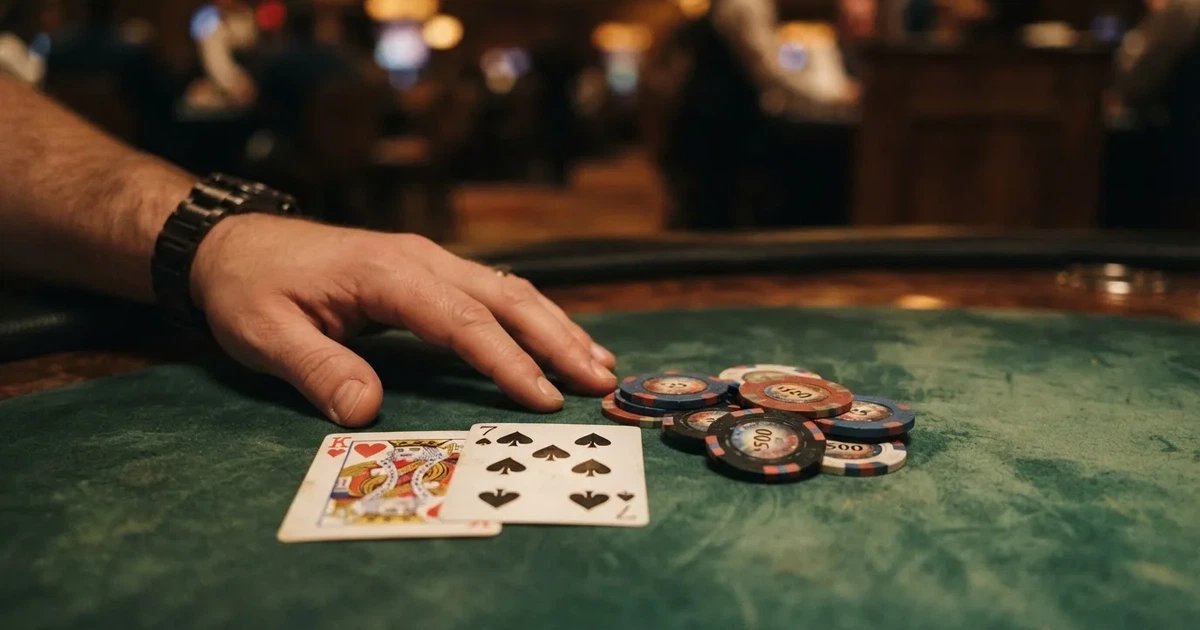
So the page a reader actually needs is not a ranked list of GameBeat casinos. It is a clear-eyed account of what the prohibition means in practice, which brands the ACMA has named for offering this product to Australians, what lawful alternatives exist for someone who wants to play pokies or casino games on Australian soil, and the consumer-protection tools that apply.
Current as of 23 November 2026 · licence claims and ACMA enforcement actions cross-checked against ACMA formal-warning publications.
Table of Contents
- How GameBeat sits inside the online casino stack
- The Australian prohibition, in plain terms
- How the ACMA has enforced the prohibition against GameBeat-affiliated brands
- Why an Australian reader looking for GameBeat ends up with offshore sites
- What is lawful in Australia, and where GameBeat-style slots do appear
- Player-protection tools that actually apply in Australia
- The mechanics behind a GameBeat-style slot, briefly
- Reading the ACMA’s enforcement record
- What this looks like for the reader making a choice
- Frequently asked questions
How GameBeat sits inside the online casino stack
GameBeat describes itself as a business-to-business slot studio established in 2021. It does not run a casino. It supplies its games to operators that already hold licences elsewhere — Curaçao, Malta, the United Kingdom, sometimes more than one of these at once. From an Australian reader’s point of view, the studio matters less than what sits around it: an offshore-licensed operator that accepts Australian sign-ups is still offering a prohibited service in Australia, regardless of which studio wrote the slots in its lobby.

The mechanics GameBeat titles share with the rest of the iGaming market are the usual ones — reels, paylines, a published return-to-player percentage and a volatility class. None of that changes the Australian legal position. A slot built by GameBeat and a slot built by Betsoft, BGaming or Aristocrat are equally unavailable to an Australian player through an offshore casino website.
The Australian prohibition, in plain terms
The Interactive Gambling Act 2001, tightened by the Interactive Gambling Amendment Act 2017, prohibits the supply of “interactive gambling services” to customers in Australia. The categories that matter for a GameBeat reader are online casino games — table games, slots, online pokies — and in-play betting on sport. Lotteries, keno and pre-event wagering on races and sport are not caught by the prohibition and can be supplied under state and territory licences.

Three things follow, and each one shows up in the ACMA’s enforcement record.
The provider, not the player, is the target. The Act criminalises the operator that offers a prohibited service to Australians; an individual punter signing up and depositing is not prosecuted. That asymmetry is sometimes read as a green light. It is not. It means the offshore operator has no obligation to behave under Australian consumer law, no obligation to pay out a disputed withdrawal, and no complaints body to answer to. A reader who loses a balance to a site the ACMA blocks has no Australian recourse.
The offshore licence displayed on the operator’s footer is irrelevant to Australian law. A Curaçao or Anjouan licence authorises the operator to offer services in jurisdictions where those licences are recognised. Australia is not one of them. Several of the brands named later in this article display one or more of these licences, and the ACMA has warned each of them anyway.
Blockings are cumulative, not one-off. The first ACMA blocking request went to Australian internet service providers in November 2019. As of June 2026, the cumulative count of blocked illegal gambling and affiliate-marketing websites had reached 1,751. A site a reader can reach today may be on tomorrow’s block list, with the funds on it still inside.
How the ACMA has enforced the prohibition against GameBeat-affiliated brands
The ACMA does not publish a list of “casinos using GameBeat”. What it publishes is a running record of formal warnings issued under the Interactive Gambling Act and a sequence of blocking requests sent to Australian ISPs. The brands below are the ones the ACMA has warned for offering prohibited services to Australians and which, on the listings carried by GameBeat, Betsoft, BGaming and similar providers, appear alongside GameBeat in offshore casino lobbies.
Each entry below is built from the ACMA’s own formal-warning publications, not from affiliate marketing pages. The date attached is the date the ACMA issued the warning, not the date the brand launched.
| Brand | ACMA action and date | Operator named by the ACMA | Subject support |
|---|---|---|---|
| RocketPlay | Formal warning, March 2026 | Pulsup Ltd | — |
| Level Up Casino | Formal warning, May 2022 | Dama N.V. | Listed on Wazdan |
| Woo Casino | Formal warning, March 2025 | Dama N.V. | — |
| Spirit Casino | Formal warning, May 2025 | Dama N.V. | — |
| National Casino | Formal warning, July 2025 | Consolutetish S.R.L. | Listed on Betsoft, Wikipedia and Pragmatic Play |
| Bizzo Casino | Formal warning, July 2025 (and 2022) | Consolutetish S.R.L. | — |
| Ignition Casino | Formal warning, July 2025 | Bamboo Media | — |
| Instant Casino | Formal warning, February 2025 | EOD Code SRL | — |
| Jackbit | Formal warning, April 2026 | Ryker B.V. | — |
| Casino Intense | Formal warning, April 2025 | Sterplay Holding Ltd | Listed on 1spin4win, en.wikipedia.org and gamblingcommission.gov.uk |
| Sky Crown | Formal warning, September 2022 | Hollycorn N.V. | — |
The “subject support” column is read strictly. It names only providers whose own pages list the brand as a partner. The “—” mark for the rest is not a denial; GameBeat itself does not publish a public partner list, so for most of these brands the question of GameBeat distribution simply has no published answer. The ACMA action stands regardless.
A short note on Dama N.V., which recurs in this list. The ACMA warned Dama in May 2022 over six brands — Bambet, Dazard, Level Up, Rocketplay, Wild Tornado and Cobra Casinos — and again in March 2025 over Woo Casino and in May 2025 over Spirit Casino. Three warnings, seven brands, one operator entity. The pattern is worth what it is: a single operator running more than one offshore brand through different front names, all of them on the ACMA’s radar.
What the blocking rate means in practice
The ACMA’s blocking programme is the single most quantifiable piece of this story. Between November 2019 and June 2026 the regulator moved from the first request to a cumulative total of 1,751 blocked websites. In the round reported on 26 June 2026 alone, twelve more domains went on the list: 7Signs, ChromaBet, Donbet, Duospin, Freshbet, Slots Gem, Jacks Club, Lucky Start, Pointsbetz, Spinrise, Vinyl Casino and Wildsino.
Run the arithmetic the only way it can be run, given that the count is cumulative and the elapsed time is fixed. Across roughly seventy-nine months the ACMA averaged just over twenty-two new blocked domains a month, and the trend has not slowed. The June 2026 round alone added twelve, which on a single-month basis is well above that long-run average. State the result as a band rather than a single figure: somewhere between twenty and twenty-five blocks a month on average across the programme’s life, with monthly rounds well above that band now. The headline is the pace, not the precise ratio.
The list is also incomplete by design. A blocking request goes to ISPs after the ACMA has investigated a service and found grounds to act; a site that has not yet drawn the regulator’s attention is not on the list. The 1,751 figure is the count of what the ACMA has acted on, not the count of prohibited services in the market.
Why an Australian reader looking for GameBeat ends up with offshore sites
GameBeat does not publish a list of Australian-facing operators, and there is no Australian-licensed site that would carry its games. What happens, in practice, is that an Australian punter searching for “GameBeat casino Australia” meets an offshore brand through an affiliate page, often in the form of a “best GameBeat casinos” list. Several of the brands the ACMA has warned sit in exactly that position: the brand’s own pages do not refuse Australian sign-ups, and the affiliate pages advertise GameBeat, Betsoft or Pragmatic Play content as a feature.
The structure of the problem matters because it shapes the reader’s choices. The brand does not need to be Australian-licensed for an Australian to deposit; the deposit route will be a debit card or a cryptocurrency transfer, the verification step may or may not involve an Australian address, and the brand’s “terms of service” usually excludes Australia by a clause an Australian reader will not have read. Once a balance is on the site, the absence of an Australian complaints body starts to bite if a withdrawal stalls.
What “Australian-friendly” means on these sites
Marketing language is the first thing to discount. An offshore site described as “Australian-friendly” typically means one of three things, none of them equivalent to an Australian licence. It accepts Australian dollars as account currency. It lists Australia among the countries it serves. It runs AUD deposit bonuses. None of these is a statement of legal status. The legal status of an offshore operator offering casino games to Australians is, under the Interactive Gambling Act, an offer of a prohibited interactive gambling service.
The payment-method tell
Since 11 June 2024, credit cards, credit-related products and digital currency have been banned as payment for online wagering in Australia. The penalty for an operator accepting them is up to A$247,500. An Australian-licensed bookmaker will not offer credit-card or crypto deposits; a debit card, bank transfer, PayID/Osko or BPAY is what the lawful routes look like.
An offshore casino almost universally does offer crypto deposits, and frequently accepts credit cards. The presence of either is a near-certain signal that the site is operating outside the Australian regime, and that the consumer protections built into the regime — dispute resolution, audited payout obligations, the BetStop connection — do not apply.
What is lawful in Australia, and where GameBeat-style slots do appear
An Australian reader who wants to play pokies has three lawful paths.
The first is land-based venues. Every Australian state and territory licenses pubs and clubs to operate poker machines, and the larger cities host licensed casinos. The machines in those venues are not, in the main, GameBeat slots. The Australian-facing slot market is dominated by Aristocrat Leisure, with its administrative and research headquarters in North Ryde in Sydney’s north. Aristocrat is the largest gambling-machine manufacturer in Australia and the second-largest slot-machine manufacturer worldwide, behind International Game Technology. Its 2025 revenue was A$6.30 billion on a normalised net profit after tax and amortisation of A$1.55 billion, and the company employed 7,400 people across offices in Australia, South Africa, Russia and the United States. The catalogue of pokies in a Sydney pub is, with very high probability, Aristocrat-built.
Aristocrat does run an online arm. Aristocrat Interactive, formed in April 2024 from the old Anaxi unit and the newly acquired NeoGames group, is the regulated real-money online business; the social-casino arm is Product Madness. The NeoGames acquisition closed in April 2024 at roughly US$1 billion and brought Aspire Global, BtoBet and Pariplay into the fold. None of this changes the Australian position: Aristocrat Interactive is regulated in the markets where it holds licences, and Australia is not among them.
The second path is licensed online wagering on sport and racing. Sportsbet, Bet365 and Ladbrokes are licensed by the Northern Territory Racing and Wagering Commission, alongside forty-nine other Australian online bookmakers — fifty-two in total. The NTRWC, for its part, has no full-time staff and meets once a month in Darwin. What it regulates is wagering, not casino games; none of those fifty-two brands offer online pokies to Australian customers.
The third path is lottery and keno products licensed by state and territory authorities. They sit outside the Interactive Gambling Act’s prohibition.
So for an Australian reader, “GameBeat online casino” maps, in practice, to one of two things: an offshore site the ACMA can block on a month’s notice, or a poker-machine seat in a pub or club. Those are the only two routes, and the first is illegal to operate against Australians even though the punter is not the regulator’s target.
A brief note on the 2026 reform
The Interactive Gambling Amendment (Gambling Reform) Bill 2026 passed Parliament on 19 August 2026. Its advertising and inducement measures commence on 1 January 2027. The Bill does not legalise online casino games. It tightens what is already a prohibition, with the new rules landing in 2027 rather than taking effect immediately. The legal position a reader is in today is the position the ACMA has been enforcing since 2017.
Player-protection tools that actually apply in Australia
The Australian consumer-protection framework for online gambling is built around licensed operators and does not extend offshore. Two tools matter.
BetStop, the National Self-Exclusion Register
BetStop went live in August 2023 and binds every Australian-licensed online and phone wagering service. A person who registers with BetStop is excluded, for a chosen period, from opening new accounts or betting with any licensed Australian operator; existing accounts are closed. The mechanism is enforceable against the operator, not the player, and the period chosen at registration runs out at the end of its term.
The mechanism an Australian reader needs to understand is that BetStop does not bind offshore casinos. An Australian punter who registers with BetStop and then deposits with an offshore site has not closed off the offshore route, only the licensed one. For someone whose gambling is causing harm, that distinction matters.
National Gambling Helpline
The National Gambling Helpline is 1800 858 858, free, twenty-four hours a day, with a chat option through Gambling Help Online. Counselling, financial counselling and self-exclusion support are routed through the same network. The line is funded by the Australian government and is the single most reliable starting point for a punter whose gambling has stopped being fun.
State and territory problem-gambling programmes — Gambler’s Help in Victoria, GambleAware in New South Wales, Gambling Help in Western Australia, and so on — provide face-to-face counselling, peer support and recovery programmes. They run alongside BetStop; they do not replace it.
The mechanics behind a GameBeat-style slot, briefly
For a reader who has not played a slot before — or has only played one or two — the underlying mechanics of a GameBeat title do not differ materially from those of any other modern slot. A published return-to-player (RTP) figure, expressed as a percentage, indicates the average proportion of wagers the slot returns to players over a very large number of spins; a five-reel, twenty-payline slot with a 96.22% RTP and a “Very High” volatility returns a smaller share of spins as wins, but the wins, when they arrive, are larger on average than a “Medium” volatility slot.
Volatility classes — “Low”, “Medium”, “High”, “Very High” — describe the shape of the payout distribution, not the long-run return. A “Very High” volatility slot is not “better” than a “Medium” one in expectation; the long-run RTP is closer to the same number in both cases, and the difference is how bumpy the ride is in between.
Hit rate is the share of spins that produce any return at all, including a payout smaller than the wager. A 15.59% hit rate, for instance, means roughly one spin in six and a half returns something; the other five-and-a-half spins return nothing. The figures for individual titles are published by the studios on their game pages; the same figure does not transfer from one slot to another.
This matters in an Australian context because the offshore marketing of these slots rarely quotes the volatility class or hit rate, and almost never explains that the published RTP is an average over millions of spins. The “you could win up to X” language on a banner is the language of the long tail, not the language of the next spin.
Reading the ACMA’s enforcement record
The ACMA publishes each formal warning on its website with the operator’s name, the brand or domain affected, the section of the Interactive Gambling Act the warning cites, and the date. The warnings above are summarised from those publications. The ACMA also publishes each round of blocking requests, naming the domains added to the block list and the date the request was sent to ISPs.
For a reader trying to assess a specific site, the ACMA’s published register is the authoritative reference. An operator may describe itself as licensed in Curaçao, Malta, the United Kingdom or Anjouan. None of those licences authorises the supply of online casino games to Australians. The presence of an offshore licence on a footer is not a counter-argument to an ACMA warning; the ACMA warns under Australian law, and Australian law applies to any operator offering prohibited services to people in Australia.
The corollary is the harder one. An offshore brand the ACMA has not yet warned is not, by that fact alone, lawful. The ACMA acts after investigation; a brand that has not yet drawn attention is not approved, it is simply uninvestigated. The right way to read the absence is “no ACMA action on record” rather than “no problem”.
What this looks like for the reader making a choice
For an Australian reader, the practical decision is not which offshore brand is best. The Interactive Gambling Act does not give that question a legal answer, and the ACMA’s enforcement record gives a long list of answers that are bad. The decision is between two lawful paths and the rest.
The land-based path: a poker machine in a pub or club, or a table game in a licensed casino. The machines are not GameBeat titles; they are predominantly Aristocrat. The expenditure is in cash, in person, in a venue that closes at the end of the night.
The licensed online path: a sports or racing wager with one of the fifty-two NTRWC-licensed Australian bookmakers, paid through debit card, bank transfer, PayID/Osko or BPAY. No online pokies, no online casino games, no GameBeat, no crypto, no credit card. The consumer protections of the Australian regime apply.
The offshore path: an Australian reader who chooses this route is using a site that, under Australian law, is offering a prohibited service. The ACMA can block the domain on a month’s notice. The reader’s balance is exposed to that risk. There is no Australian complaints body to approach if a withdrawal stalls. BetStop does not bind the operator. The credit-card and crypto bans under Australian law do not apply, because the site is not under Australian law.
Each of the brands the ACMA has warned above is a brand the reader can reach today. None of them is a brand the reader can rely on for Australian consumer protection, and none of them is a brand that the Australian regime treats as anything other than a target for enforcement.
Frequently asked questions
What kind of games does GameBeat make?
GameBeat is a slot studio established in 2021. It builds slots for offshore-licensed casino operators rather than running a casino of its own; the catalogue is supplied through B2B partnerships, with operators across Curaçao, Malta and other licensing jurisdictions publishing the games in their lobbies. GameBeat titles share the standard mechanics of modern video slots — reels, paylines, a published RTP and a volatility rating.
Is GameBeat used by any casino licensed to operate in Australia?
No. Online casino games, including online pokies, cannot be licensed anywhere in Australia. The Interactive Gambling Act 2001 prohibits the supply of these services to people in Australia, and no state or territory issues the licence that would make such a supply lawful. GameBeat’s distribution, like that of every comparable studio, runs through offshore-licensed operators only.
Can Australians legally play GameBeat slots at an online casino?
No. The Act targets the operator, not the player; an individual punter is not prosecuted for signing up and depositing with an offshore casino. The site itself is offering a prohibited interactive gambling service under Australian law, the ACMA has the power to direct Australian ISPs to block it, and the consumer-protection tools that apply to Australian-licensed wagering — BetStop, the credit-card and crypto bans, the disputes framework — do not extend to the offshore site.
Are GameBeat games available at land-based Australian casinos?
Not on the evidence of the studio’s own pages or the ACMA’s record. Land-based Australian pokies are dominated by Aristocrat Leisure, the largest gambling-machine manufacturer in Australia and the second-largest slot-machine manufacturer worldwide. An Aristocrat machine in a Sydney or Melbourne pub is a much more typical Australian slot experience than any GameBeat title.
What should someone check before trusting a site that claims to offer GameBeat games?
The first check is whether the site is offering online casino games or pokies to people in Australia. If it is, the Interactive Gambling Act applies and the site is operating outside Australian law regardless of any offshore licence. The second check is whether the ACMA has issued a formal warning over the brand or its operator, which the ACMA publishes on its own website. The third check is the payment method: a site accepting credit cards or cryptocurrency for casino play in Australia is operating outside the Australian regime, which has banned both as deposit methods since 11 June 2024.
Does GameBeat software run on mobile browsers?
Modern slot studios, GameBeat included, build their games in HTML5, which means the same game runs in a mobile browser and a desktop browser without a separate download. The legal position is unchanged by the device: a mobile browser accessing an offshore casino offering GameBeat slots is still accessing a prohibited service under Australian law.