
What Booongo casinos actually look like for an Australian player in 2026
A reader looking for Booongo casinos in Australia arrives with two assumptions that the market quietly refuses. The first is that “Booongo casino” is a category, like a brand of venue. It is not — Booongo is a studio that used to design 3D slots for offshore operators, and its successor carries on licensing those games to other sites. The second is that there is a licensed Australian casino to choose between. There is not. Under the Interactive Gambling Act 2001, online casino games and online pokies cannot be licensed anywhere in Australia, and the studio’s titles therefore reach Australian players through offshore operators only. This page sketches that landscape, names the brands the ACMA has warned over, and sets out what protections a player actually has.
Data current as of 23 November 2026 and checked against the ACMA’s register of formal warnings and blocking requests.
Table of Contents
- The Australian online casino market in plain terms
- Why Booongo is a brand name without an Australian home
- How the ACMA’s enforcement record reads against the brand list
- What a “Booongo” paytable shows a player
- The blocking rate, as a running tally
- What an offshore casino does not give an Australian player
- What “casino bonus” and “free spins” mean in this market
- What “mobile casino” and “casino app” mean here
- Reading the brand list as a player, not as a directory
- What “responsible gambling” looks like under a prohibition
- Bonus and free-spin terms, as background only
- Frequently asked questions about Booongo casinos in Australia
The Australian online casino market in plain terms
The legal frame is short. The Interactive Gambling Act 2001, tightened by the Interactive Gambling Amendment Act 2017, makes it an offence to supply online casino games or online pokies to anyone in Australia. Wagering on sport and racing before the event is licensable; lotteries and keno are licensable; everything else is a prohibited interactive gambling service. Minimum age is 18. The Australian Communications and Media Authority enforces the regime by investigating complaints, issuing formal warnings to operators, and asking Australian internet service providers to block offending domains.

The numbers tell the story. By June 2026 the ACMA had asked ISPs to block 1,751 illegal gambling and affiliate marketing websites since the first blocking request in November 2019, and more than 230 unlicensed gambling services had left the Australian market since enforcement was strengthened in 2017. The most recent published round added twelve more names: 7Signs, ChromaBet, Donbet, Duospin, Freshbet, Slots Gem, Jacks Club, Lucky Start, Pointsbetz, Spinrise, Vinyl Casino and Wildsino. The block list grows; it does not shrink.
A separate H2 Gambling Capital estimate puts Australians’ annual losses to illegal gambling sites at about A$3.9 billion, and shows the share of gambling flowing through legal Australian channels falling from 74 per cent in 2021 to 64 per cent by 2025. A$3.9 billion is a dry figure, but it is also the annualised cost of every page, every banner and every “trusted” badge on an offshore site that fails to mention it cannot legally serve the reader.
What is licensed is narrow. The Northern Territory Racing and Wagering Commission regulates 52 of Australia’s online bookmakers — Sportsbet, Bet365, Ladbrokes among them — under Northern Territory licences taken out for tax reasons rather than a head office in Darwin. The commission has no full-time staff and meets once a month. The same regulatory perimeter covers lottery products; online casino play sits outside it.
Why Booongo is a brand name without an Australian home
The studio now marketing the old Booongo catalogue is 3 Oaks Gaming, the regulated-market brand that grew out of Booongo’s 2021 restructuring. On 9 February 2024 the UK Gambling Commission granted 3 Oaks a remote operating licence under number 063055-R-338209-005, with the company operating from Douglas, Isle of Man under Green Rock Ltd. The Malta Gaming Authority followed with a recognition notice on 4 August 2025, after earlier approvals in the UK, Portugal and Romania. More than fifty of 3 Oaks’ slot titles — including 3 Pots of Egypt, Storm of Olympus, 777 Fruity Classic and Hawaii Riches — are now UKGC-certified.
That record is real, and it is also irrelevant to an Australian player. A UK or Maltese licence does not extend to Australia. The Interactive Gambling Act targets supply, not licence display, and a Curaçao-registered offshore site showing a Maltese badge in its footer is still operating outside Australian law when it accepts an Australian customer. A player reading the footer is reading a piece of marketing, not a legal entitlement.
So the practical answer to the question on the page is a single line. No online casino carrying Booongo content is licensed to operate in Australia, and the brands that surface in search results — RocketPlay, Level Up, Woo Casino, Spirit Casino, National Casino, Bizzo, Ignition, Instant Casino, Jackbit, Casino Intense, Sky Crown — are precisely the names the ACMA has issued formal warnings over for offering prohibited services. Each has been warned. None is licensed for this market.
How the ACMA’s enforcement record reads against the brand list
The ACMA’s register of formal warnings is the cleanest single source on which offshore operators are presently targeting Australians. The 2026 picture, drawn from the ACMA’s own publications, looks like this.
| Brand | ACMA action and date | Operator named by the ACMA | Subject support |
|---|---|---|---|
| RocketPlay | Formal warning, March 2026; earlier Dama N.V. warning, May 2022 | Pulsup Ltd (Rocketplay), March 2026 | — |
| Level Up Casino | Formal warning, May 2022 | Dama N.V., May 2022 | Listings reference Wazdan’s published partner list |
| Woo Casino | Formal warning, March 2025 | Dama N.V., March 2025 | — |
| Spirit Casino | Formal warning, May 2025 | Dama N.V., May 2025 | — |
| National Casino | Formal warning, July 2025 | Consolutetish S.R.L., July 2025 | Listings reference Betsoft, Pragmatic Play and other studios |
| Bizzo Casino | Formal warning, July 2025; earlier 2022 warning to TechSolutions | Consolutetish S.R.L., July 2025 | — |
| Ignition Casino | Formal warning, July 2025 | Bamboo Media, July 2025 | — |
| Instant Casino | Formal warning, February 2025 | EOD Code SRL, February 2025 | — |
| Jackbit | Formal warning, April 2026 | Ryker B.V., April 2026 | — |
| Casino Intense | Formal warning, April 2025 | Sterplay Holding Ltd, April 2025 | Listings reference 1spin4win, Aristocrat and UKGC material |
| Sky Crown | Formal warning, September 2022 | Hollycorn N.V., September 2022 | — |
Two things stand out. First, a single corporate group can be warned repeatedly under different brand names — Dama N.V. alone accounts for RocketPlay, Woo Casino and Spirit Casino across 2022 and 2025. Second, the warnings stretch over four years, which means the regulator’s enforcement is durable rather than a flash campaign. Where a subject support column shows no entry, the page records nothing for that brand on that subject; the absence is not an assertion about the brand either way.
What a “Booongo” paytable shows a player
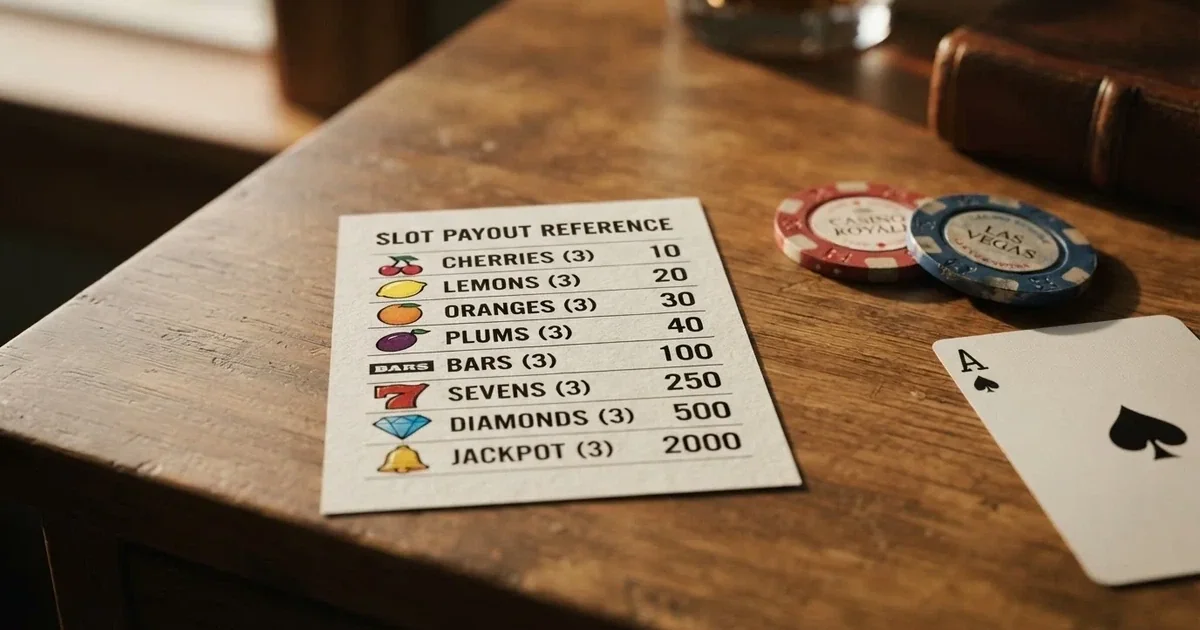
A paytable is a slot’s reference page: symbol values, win lines and the rules for each bonus feature. For the titles now released under 3 Oaks Gaming, the paytable generally works like other Hold-and-Win-style slots. A scatter pays on any position, free spins trigger on three or more scatters, and bonus symbols lock in place across respins while the feature pays out only when a full collection lands. None of this is unusual; what is unusual is how often these mechanics are stacked onto the same five-reel frame.
The wider catalogue sits inside a portfolio that includes studios of quite different reach. Betsoft, founded in 2006, describes more than 200 RNG games and a partner base of more than 500 operators across regulated markets in Europe, Scandinavia, Latin America and Africa. BGaming, operated by Stable Games Ltd of Valletta, debuted under that brand in 2018 and now offers 250+ certified games under an MGA Critical Gaming Supply Licence issued 18 March 2021. 1spin4win, founded in 2021, holds a Curaçao licence and reports more than 1,000 partnerships with operators and aggregators, with total bet sum up 46 per cent in the first half of 2025 against the same period in 2024. A player who treats a “Booongo casino” page as a category is in fact looking at one studio sitting among several, and the supplier ecosystem is broader than the marketing implies.
A close look at one comparison sharpens the point. Betsoft’s Good Girl Bad Girl 2 lists a 96.22 per cent RTP, “Very High” volatility and a 15.59 per cent hit rate over 5 reels and 20 paylines. Betsoft’s The Slotfather, live since 13 December 2012, lists 95.69 per cent, “Medium” volatility and an 8.17 per cent hit rate on 5 reels and 30 paylines. Two games from the same supplier, published on the same page, and the variance tells very different stories. A page that lists “RTP” as a single number for “Booongo slots” is therefore averaging past the only fact that matters for bankroll management.
The blocking rate, as a running tally
The ACMA’s blocking record, taken from the regulator’s own reports, is the cleanest measure of how the offshore supply side responds to enforcement. By June 2026, 1,751 illegal and affiliate sites had been blocked since the first request in November 2019. That is 80 months of enforcement, and the running total puts the average blocking rate at roughly 22 sites per month over the whole period, with the rate accelerating rather than slowing as more rounds are added.
The blocking rate and the dollar losses provide the two sides of the same story. A$3.9 billion a year in losses to illegal sites is the macro figure; the ACMA’s monthly cadence is the micro one. Read together, they describe a market in which enforcement removes supply while consumer money keeps flowing through new domains. The relevant comparison for a player is not whether a brand on the ACMA’s warning list is “safer” than one not on it — every brand named here is unlawful for Australian supply — but how durable the operator’s domain actually is. A site blocked in March can reappear under a new name in April. That is the texture of offshore supply, and a reader looking for a stable place to play is looking for something this market does not offer.
What an offshore casino does not give an Australian player
The easiest mistake to make is to assume an offshore licence is “lighter” Australian cover rather than no Australian cover. The framework could not be clearer. A Curaçao-registered site accepting Australian customers is operating outside Australian law, and an Australian player has no Australian consumer protection, no complaints body and no recourse if a withdrawal is refused. A balance on a blocked site is a balance on a blocked site.
BetStop — the National Self-Exclusion Register, live since August 2023 — covers Australian-licensed online and phone wagering services only. An offshore casino is not bound by it and does not check against it. Self-excluding with BetStop does not close the door at an offshore brand; it closes the door at the licensed bookmaker, which is a different door.
Payment routes tell a parallel story. Credit cards, credit-related products and digital currency are banned as payment for licensed online wagering since 11 June 2024, with operator penalties up to A$247,500. Legal deposit routes for a licensed Australian wagering account are debit card, bank transfer, PayID / Osko and BPAY. An offshore site that asks for a credit card or a crypto deposit is operating outside Australian rules from the moment it requests the deposit, and the player’s bank or card issuer may decline the transaction on those grounds.
If gambling is starting to feel compulsive or stressful, free confidential help is available 24/7 through the National Gambling Helpline on 1800 858 858 or via chat at Gambling Help Online. The offer is free, the conversation is confidential, and the route is open whether or not the player has been using a licensed product.
What “casino bonus” and “free spins” mean in this market
In the licensed Australian wagering market, an offer is uncommon; online casino games are prohibited, so a casino welcome package has no licensed home. Offshore, a “casino bonus” or “free spins” offer typically means bonus money or a fixed number of free spins credited on registration or first deposit, with conditions attached to almost every figure on the page.
A deposit bonus multiplies the first deposit by a stated percentage and credits the matched amount as bonus money. A 100 per cent bonus on a A$100 deposit adds A$100 in bonus funds, taking the playable balance to A$200. Free spins are a fixed number of rounds at a fixed stake on a named slot, with winnings paid as bonus money. A “no deposit” offer credits a small bonus or a handful of spins without requiring a deposit, usually as a registration incentive.
What the marketing rarely leads with is the wagering requirement, also called the playthrough. A 35x bonus wagering requirement on a A$100 bonus means the player must place A$3,500 in qualifying bets before the bonus and any winnings from it become withdrawable. Free-spin winnings carry their own playthrough, often higher. Most offers cap the amount that can be withdrawn from a no-deposit or free-spin win — A$100 is a common ceiling, with anything above it voided at withdrawal. Game weighting usually restricts wagering to slots at 100 per cent, with table games and live dealer contributing 10 per cent or nothing at all. Maximum bet rules during wagering — typically A$5 per spin — are enforced, and breaking them voids the bonus and the winnings.
None of this is described here as a recommendation to claim such an offer, because the underlying product is one the ACMA has warned operators about supplying. It is described as the shape an offshore offer usually takes, so a reader who lands on one knows what the small print is doing.
What “mobile casino” and “casino app” mean here
A mobile-friendly casino is a website that loads responsively in a phone browser, with touch-friendly buttons and games coded in HTML5. A casino app is a downloadable application, distributed either through an app store or, more commonly for offshore brands, as an APK file direct from the operator. HTML5 — the technology 1spin4win’s portfolio is built on — runs in any modern browser without installation, which is why most offshore brands describe their site as “mobile-ready” rather than recommending a download.
The practical shape is consistent. A reader opening an offshore brand on a phone gets a vertical slot layout, a deposit button prominent on the lobby, and a bottom-bar menu for cashier and account. Loading times vary by operator and by the studio’s content delivery network; older Booongo-era titles run heavier than newer 3 Oaks releases because the assets were built for desktop first. Nothing about a mobile site changes the legal position: a page rendered on a phone in Sydney is still a prohibited interactive gambling service under the IGA.
Downloading an APK from an offshore site also requires the phone to accept installs from outside the official app store, which means relaxing the operating system’s security setting. That step is necessary for the file to run, and it is the player’s decision alone. The ACMA has no record of warnings over mobile apps specifically; the warnings target the websites Australians actually visit.
Reading the brand list as a player, not as a directory
The eleven brands named above are not a ranking. Each is on the page because the ACMA issued a formal warning over it for offering prohibited services to Australians, not because it has been assessed against criteria that would matter under Australian law. Treating the list as a ranked shortlist is the second mistake a reader might make; treating it as the only set of offshore operators in this market is the third. The ACMA’s warning list names those it has acted against; it is not exhaustive.
Within the list, some structural points hold. Dama N.V. has been warned repeatedly, with the RocketPlay, Woo Casino and Spirit Casino entries showing enforcement across three years for one corporate group. National Casino and Bizzo Casino share an operator in Consolutetish S.R.L. and were also the subject of an earlier TechSolutions warning in 2022, which is the kind of repetition the ACMA notes when escalation follows. The most recent entries — Rocketplay — are warnings for current activity rather than legacy conduct.
A reader comparing two brands on this list will find that the practical differences are not legal but commercial. One accepts a wider range of cryptocurrencies; another restricts deposit methods and pays withdrawals faster; a third restricts bonuses to residents of specific countries and excludes Australians from its welcome package. Those differences exist and they are real, but none of them converts an unlawful supply into a lawful one. The legal position is the same for all eleven: prohibited interactive gambling service, no Australian licence, no Australian recourse.
What “responsible gambling” looks like under a prohibition
For the licensed Australian wagering market, responsible gambling has a clear architecture. The National Self-Exclusion Register — BetStop — closes Australian-licensed online and phone wagering accounts for a chosen period. The National Gambling Helpline takes calls 24/7 on 1800 858 858. Gambling Help Online offers live chat. State-based services add face-to-face counselling.

For offshore casino play, that architecture is partial. BetStop binds only Australian-licensed services, so self-excluding with BetStop does not close an offshore account. The Helpline and Gambling Help Online are open to anyone, regardless of where they played, and conversations are confidential. The advice given does not depend on the operator’s licence status. For someone whose gambling has started to feel compulsive or stressful, the right first move is the Helpline, not a search for a “responsible” offshore brand.
The page that lists eleven warnings from the ACMA is not in a position to add a softer tone than the regulator’s own record, and the regulator’s own record is the page’s primary source. Responsible play under prohibition means recognising that the only Australian-licensed products are sport and racing wagering, lotteries and keno, and that everything else carries no Australian protection.
Bonus and free-spin terms, as background only
A short note on offer mechanics, since the search results a reader might click through will all be wrapped in them. A “deposit bonus” matches a percentage of the first deposit as bonus money, with playthrough of typically 30x to 50x the bonus. “Free spins” are a fixed number of rounds at a fixed stake on a named slot, with winnings paid as bonus money and subject to a separate playthrough. A “no deposit bonus” credits a small bonus or a handful of spins without a deposit, almost always with a withdrawal ceiling — anything above the ceiling is voided at cashout.
The “wagering requirement” is the only figure on the offer that determines what the bonus costs in real time. A 35x bonus on a A$100 bonus means A$3,500 in qualifying bets before any withdrawal. Game weighting — slots at 100 per cent, table games at 10 per cent or excluded — extends the time and the bets needed to clear the bonus. Maximum bet rules during wagering are enforced strictly. None of this is presented here as an offer to take; it is presented as the shape of the offers that will be on every page a reader clicks.
Frequently asked questions about Booongo casinos in Australia
Is Booongo itself an online casino, or just a game studio?
Booongo is a slot studio. It was restructured in 2021 and its regulated-market successor is 3 Oaks Gaming, which holds a UK Gambling Commission remote operating licence granted on 9 February 2024 and a Malta Gaming Authority recognition notice dated 4 August 2025. The studio designs and licences titles to operators; it does not run a casino of its own and never has.
Can Booongo titles be played for real money at a licensed Australian casino?
No. Online casino games and online pokies cannot be licensed anywhere in Australia under the Interactive Gambling Act 2001, and no state or territory issues a licence for them. The only licensable online products in Australia are pre-event wagering on sport and racing, lotteries and keno. Booongo titles reach Australian players only through offshore operators operating outside Australian law.
How does a Booongo slot typically differ from other studios’ games in its paytable?
The titles released under 3 Oaks Gaming follow a Hold-and-Win structure that has become common across the supplier ecosystem: scatters pay anywhere, free spins trigger on three or more scatters, and bonus symbols lock across respins until a full set collects. Within the catalogue, individual titles vary sharply on volatility and hit rate, so an RTP stated for one title is not a meaningful figure for another. Comparing two slots from the same supplier on RTP alone is a comparison that misses the variance.
Does Booongo operate its own casino, or licence its games to other operators?
3 Oaks Gaming licences its titles to operators, including in the UK, Portugal, Romania and under MGA-recognised supply. The studio does not operate a casino of its own. The brands that surface under a “Booongo casino” search are offshore operators carrying 3 Oaks content among other studios’ games; the studio is the supplier, not the venue.
Why do offshore casinos highlight Booongo as a selling point to Australian visitors?
A studio brand functions as a marketing handle offshore. Booongo’s successor carries recognised licences in the UK and Malta, which gives an offshore brand a defensible-looking badge for its game lobby even though those licences do not extend to Australia. The ACMA’s enforcement record suggests that highlighting Australian-friendly payment routes and AUD support is the more decisive factor in attracting Australian traffic, and the studio badge is decoration around it.
Is it legal for a site to offer Booongo games for real money to people in Australia?
No. The Interactive Gambling Act 2001, as amended in 2017, makes it an offence to supply online casino games — including slot titles such as those from 3 Oaks Gaming — to a person in Australia. The ACMA enforces by formal warning and by requesting ISPs to block offending domains; the individual player is not the target of prosecution, but the operator’s supply is unlawful and the player’s consumer protection is none.