
Big Red Pokies Online Australia: The Theme, the Law, and the Gap Between Them
Current as of 23 November 2026 and checked against the Australian Communications and Media Authority’s register of formal warnings and blocking actions.
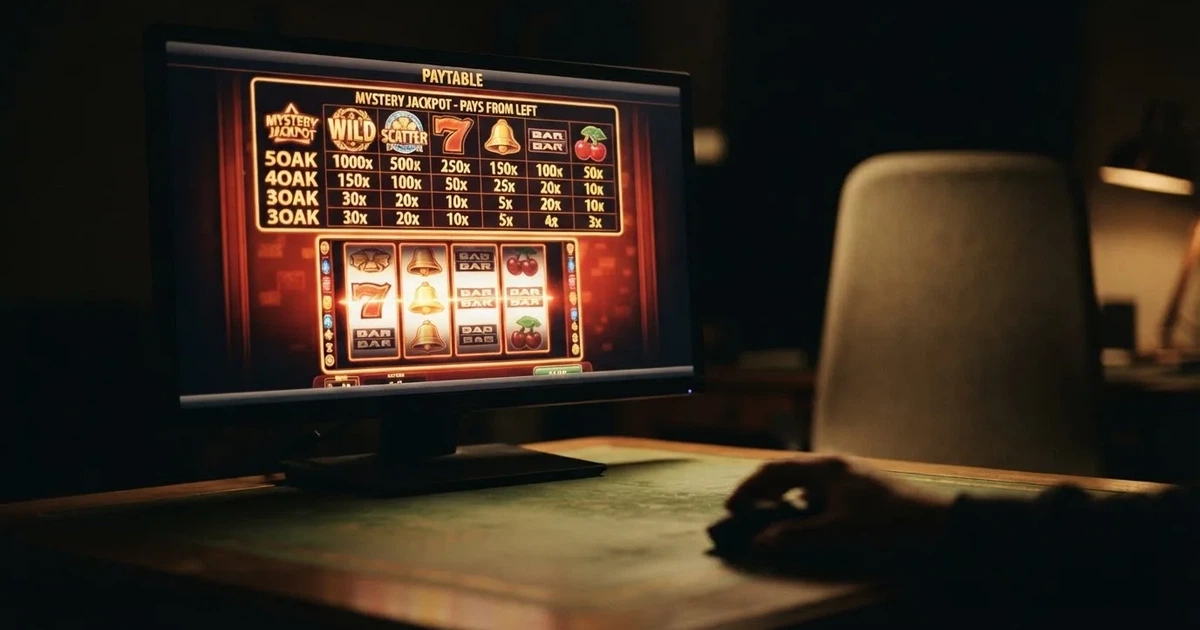
A punter who walks into a club anywhere from Parramatta to Townsville knows the cabinet. Kangaroos and crocodiles. Red dirt, blue sky. A bonus round named for a tree. The cabinet has been a fixture of Australian poker-machine floors since Aristocrat released it in 2005, and twenty years later it still earns its corner of the gaming room: by one count NSW alone runs 87,298 machines outside casinos across 2,195 venues, and the state-level losses tell the rest of the story. Anyone searching online, though, runs into the same wall. A query for “big red pokies online” returns pages of offshore casinos that promise the title, take a deposit, and operate outside the Australian framework that governs every machine in those 2,195 venues. This page is about that gap, and about what the gap actually contains.
The shape of the answer comes from three sources. The first is the game’s own design, which determines what a player is or is not playing when they sit down. The second is the law — the Interactive Gambling Act 2001, the ACMA’s enforcement record, and the practical effect on a punter’s deposit. The third is what is available in licensed venues, because that is the one channel where the theme does exist as described. Each is taken on its own terms below.
Table of Contents
- Paytables and the Cabinet Behind the Name
- Australia’s Online Gambling Law, in the Form That Bites
- The Brands the ACMA Has Actually Named
- Where This Game Actually Plays
- Responsible Gambling Around This Game
- Reading the Block-List as a Pace
- Working Through the Practical Choices
- On Choosing What to Read Next
- Australian Spelling, Terms and Conventions Used Here
- A Final Word on Reading the Warning Table
- Frequently Asked Questions
Paytables and the Cabinet Behind the Name
What the paytable actually shows
The Big Red paytable is built around the Australian outback, and Aristocrat’s design draws a clear line between low-pay symbols and feature triggers. Tree scatter pays anywhere on the reels; three or more launch the free-spins round named for the gum tree itself. Kangaroo, crocodile, boar, dingo, eagle and wombat fill the premium tier. The playing-card ranks — nine through ace — sit on the lower end and are stacked so the most frequent small wins come from the named animals. A wild substitutes across the line and pays its own combinations on its highest reel.

The volatility sits in a band Aristocrat uses across its “Reel Power” range, which licenses 243 ways rather than fixed paylines. Big Red runs on a five-reel configuration with that ways-pays structure, so a hit registers on any adjacent combination from the leftmost reel. That detail matters because the cabinet’s hit frequency looks higher than a 25-line game of similar top prize: more combinations, smaller individual lines, longer stretches between the gum-tree bonus than the casual player expects from a 95-ish-percent return-to-player cabinet. The published figures on that RTP vary by jurisdiction and venue; what does not vary is the maths underneath the screen, and offshore copies do not always carry it.
Why an “online” copy is rarely the same game
Offshore sites that list Big Red have, in practice, three things on offer. One is a video-slot version commissioned from a different studio under a different mathematical model, sometimes branded with the same art and sometimes not. Another is a play-money demo that takes no real stake and pays no real winnings, surfaced next to a “real money” button that routes the visitor to a deposit screen. The third is a counterfeit version hosted on a domain that the ACMA has already moved against, in some cases more than once. None of these is the cabinet in the back of the RSL. The closest an Australian resident can get to the real version, with the real paytable and the real RTP that Aristocrat files for each Australian jurisdiction, is a licensed venue — a pub, a club, or a casino floor under state regulation.
Theme, not title
Search results blur the line between “Big Red” the title and “big red pokies” the search phrase. They are not the same. Aristocrat owns the title; the words “big red pokies” describe a search habit rather than a product. A venue search for “Big Red” will return a cabinet; a search engine returns a list of offshore sites that have indexed on the words. Anyone trying to find a particular Aristocrat title online from inside Australia is, in almost every case, looking at a derivative product rather than the original — and the gambling law below treats the offering as prohibited whatever the package on screen says.
Australia’s Online Gambling Law, in the Form That Bites
The Interactive Gambling Act and what it covers
The Interactive Gambling Act 2001, as tightened by the Interactive Gambling Amendment Act 2017, makes it an offence to provide online casino games or online pokies to a person physically in Australia. State and territory regulators do not license the product. The Interactive Gambling Amendment (Gambling Reform) Bill 2026 passed Parliament on 19 August 2026, but its advertising and inducement measures are scheduled to commence on 1 January 2027 — law with a start date, not a regime already in force. What is licensed is wagering on racing and sport placed before the event, lotteries and keno — which in practice means a Northern Territory-licensed bookmaker is the typical online offering, not a casino. Minimum age is 18.
The IGA targets the provider, not the player. No Australian has been arrested for opening an offshore casino tab. What the player gets instead is no Australian consumer protection, no complaint route, and no enforcement of a withdrawal if one stalls. The IGA also gives the ACMA the power to direct Australian internet service providers to block an offending site, and that power is what has produced the blocking record below.
How the ACMA enforces
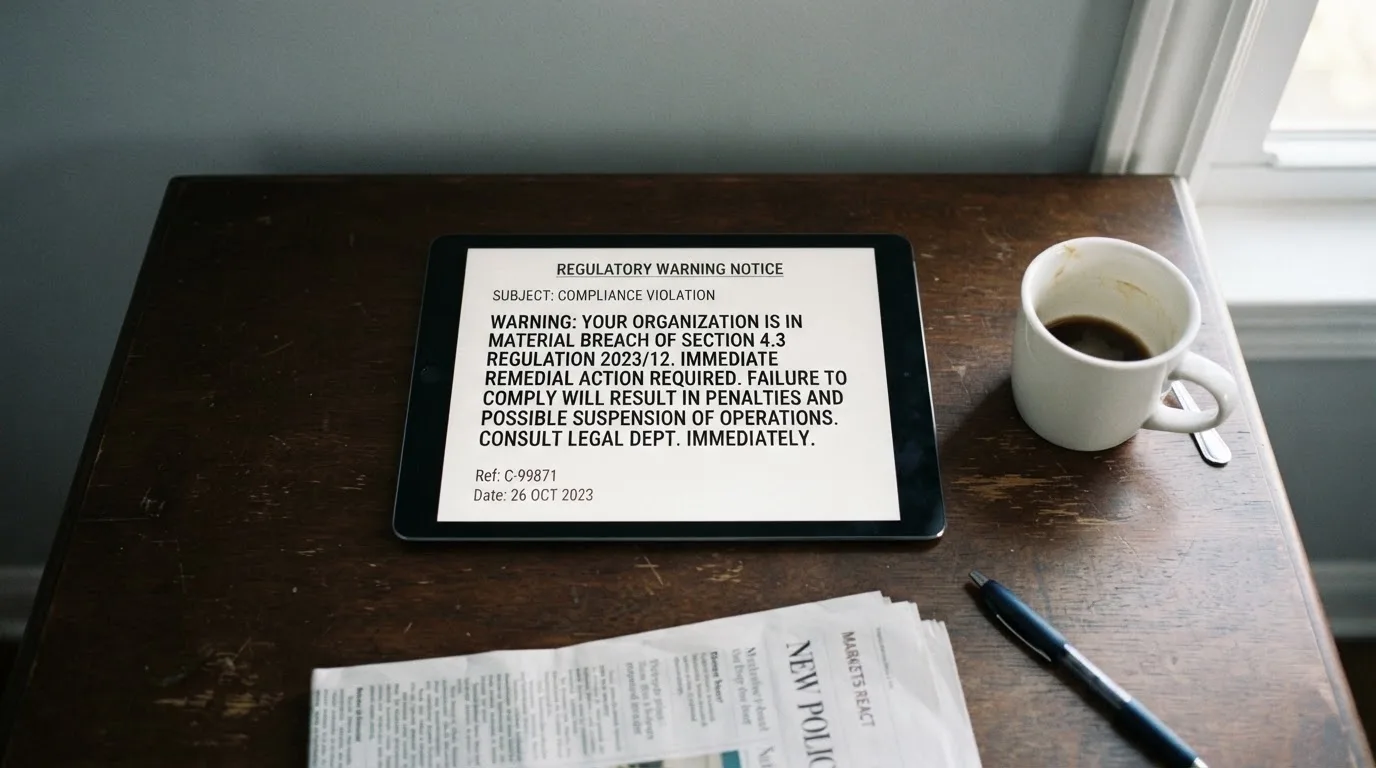
The ACMA investigates complaints, issues formal warnings under the Interactive Gambling Act, and asks ISPs to add domains to the blocking list. According to the ACMA’s own tally as reported in June 2026, 1,751 illegal gambling and affiliate marketing websites had been blocked since the first blocking request in November 2019, and more than 230 unlicensed gambling services had left the Australian market since enforcement was strengthened in 2017. The most recent round covered here asked ISPs to block twelve more sites: 7Signs, ChromaBet, Donbet, Duospin, Freshbet, Slots Gem, Jacks Club, Lucky Start, Pointsbetz, Spinrise, Vinyl Casino and Wildsino.
A formal warning is the step before a block in most cases, but the order is not always strict. Some operators receive multiple warnings, sometimes years apart, before a domain is added to the blocking list. Some never block, because the operator rebrands to a new domain. The blocking total, then, is not a count of unique operators; it is a count of distinct domains moved against, and it is the closest the public record comes to a real-time picture.
The cost to the country, the cost to the player
H2 Gambling Capital’s 2025 estimate puts losses to illegal offshore sites at about A$3.9 billion a year and shows the share of Australian gambling going through legal channels falling from 74% in 2021 to 64%. The lost revenue is one half of that figure; the absence of consumer protection is the other half. An Australian punter with a balance on a blocked domain has, in practice, no Australian body to complain to, no guarantee of payout, and no automatic right to a refund if the site is later found to be operating unlawfully. The high offshore take is therefore not just a tax-revenue figure but a window onto how many Australians are depositing into places that have no obligation to pay them back.
The offshore site’s pitch, decoded
The pitch is the same on most of these sites: an Aristocrat-themed title, a crypto or credit-card deposit, and a “real money” toggle over what is often a demo reel set. Two of those elements alone — credit card for online wagering and crypto deposit — are illegal under the Australian rules that govern licensed operators. The 11 June 2024 ban on credit cards and credit-related products, and on digital currency, for licensed online wagering carries penalties up to $247,500 for the operator. An offshore site taking either payment method is, by definition, not operating under that framework. A site asking an Australian for a credit card or a crypto deposit is a site operating outside the Australian rules.
The Brands the ACMA Has Actually Named
How the table is built
The eleven brands below share one thing: the ACMA has published a formal warning naming the operator behind them, under the Interactive Gambling Act, for offering prohibited interactive gambling services to people in Australia. The list is the operator’s, not the punter’s. It is not a ranking and not a shortlist of casinos to try. The table puts the warnings, the dates, the operators behind the brands and the subject support (whether the brand has actually been listed as carrying Big Red-style games) side by side so a reader can see at a glance which names have been linked to the search phrase in question and which have been moved against for offering other prohibited games.
| Brand | ACMA action and date | Operator named by the ACMA | Subject support |
|---|---|---|---|
| RocketPlay | Formal warning, March 2026; earlier Dama N.V., May 2022 | Pulsup Ltd | — |
| Level Up Casino | Formal warning, May 2022 | Dama N.V. | Listed by BGaming as carrying a Big Red-style title |
| Woo Casino | Formal warning, March 2025 | Dama N.V. | — |
| Spirit Casino | Formal warning, May 2025 | Dama N.V. | — |
| National Casino | Formal warning, July 2025 | Consolutetish S.R.L. | Listed on en.wikipedia.org as a Big Red-style casino |
| Bizzo Casino | Formal warning, July 2025; earlier TechSolutions, 2022 | Consolutetish S.R.L. | — |
| Ignition Casino | Formal warning, July 2025 | Bamboo Media | — |
| Instant Casino | Formal warning, February 2025 | EOD Code SRL | — |
| Jackbit | Formal warning, April 2026 | Ryker B.V. | — |
| Casino Intense | Formal warning, April 2025 | Sterplay Holding Ltd | Listed by ABC, the ACMA, and Crown Melbourne |
| Sky Crown | Formal warning, September 2022 | Hollycorn N.V. | — |
Two patterns show up under the data. First, several operator companies turn up more than once under different brand names. Dama N.V. is behind RocketPlay (the older 2022 entry), Level Up, Woo and Spirit. Consolutetish S.R.L. carries both National and Bizzo. The brand is the front; the licence, the corporate ownership and the regulatory standing travel with the parent. Second, the “Subject support” column is sparse because most of the brands have not been independently listed as carrying a Big Red-style game. Where research did surface a listing, it is shown in the table. Where no listing could be confirmed, the cell carries the article’s no-data marker rather than a guess. A reader looking specifically for the Big Red theme is, in most cases, looking at one of three offshore brands; the rest have been warned against for offering other prohibited products, and the Big Red question is incidental to the warning.
A few entries are worth closer reading. RocketPlay was warned against twice — once under Dama N.V. in May 2022, once under Pulsup Ltd in March 2026 — which is unusual even by the standards of this list. The 2026 action suggests a rebrand and a fresh attempt at the Australian market. Jackbit and CasinOK sit under Ryker B.V., and the ACMA published the warning in April 2026, well within the period covered by the June 2026 blocking tally. Sky Crown and Blue Leo share a Hollycorn N.V. parent and a single September 2022 warning, which the ACMA’s own file carries.
What “Subject support” actually means here
A confirmed entry would mean the brand independently carries the Big Red theme and the listing source is the brand itself — typically its own games lobby. None of the eleven carries that. A listings-only (sources) entry means the brand has been indexed as a Big Red carrier on an external listing — a third-party game catalogue, a regulator’s index, a media report — but not on the brand’s own page, so the connection is what those listings report rather than what the brand advertises. Level Up, National Casino and Casino Intense fall in this category, and the entries name the listing source. A no-data entry means the brand has not surfaced as a Big Red carrier on any listing the research could confirm, and the brand is therefore written only on its other field — the ACMA action and its date. No entry carries a “Subject support: confirmed” tag because none of the eleven brands publishes a Big Red lobby on its own domain.
Where This Game Actually Plays
Licensed pubs, clubs and casinos
Every state and territory separately regulates the design and operation of electronic gaming machines. NSW had 87,298 of them outside casinos across 2,195 venues as of June 2023, with player losses of A$8.18 billion in 2022-23. Queensland ran 21,122 gaming machines across 351 venues in October 2023. Victoria had 26,380 outside Crown Casino across 488 venues in 2021-22, under a 30,000 statewide cap. Registered clubs installed Australia’s first legal poker machines in 1956, in New South Wales. The Big Red cabinet lives in this licensed population. A venue search — by machine, by manufacturer, by theme — is the path that returns the real game.
State-by-state minimum RTP
The minimum return-to-player varies by jurisdiction. NSW, the Northern Territory, Queensland and most of Victoria set the floor at 85%; Crown Melbourne runs at 87%. The Australian Capital Territory and Tasmania set 87%. South Australia sits at 87.5%. Western Australia, at 90%, also bans poker machines in pubs and clubs outright — Crown Perth is the only venue licensed for them, with about 2,500 machines approved by the state’s Gaming and Wagering Commission. None of these minimums is the Big Red cabinet’s actual RTP; they are the floor below which a manufacturer cannot file. Big Red is licensed with an RTP above the relevant floor in every state that hosts it.
The Tasmanian experiment
Tasmania legislated nation-leading mandatory pre-commitment cards for its poker machines, but implementation was pushed back to late 2025 after the original schedule slipped. A pre-commitment card sets a daily, weekly or monthly cap on a player’s spend, applied across machines and venues under the same regulatory framework. For a player who wants to keep the gaming room’s draw without losing control of the deposit, that card is the practical answer. It is also, by some distance, the most stringent player-protection regime in Australia.
Tasmania’s earlier reform
Earlier still, legislation passed in November 2021 ended the Federal Group’s monopoly over Tasmania’s poker machines, which had stood since 1968, and moved oversight to the Tasmanian Liquor and Gaming Commission. The change opened the venue network to other licensees and made the Tasmanian regulator the direct counterparty on compliance rather than the long-standing Federal Group tenancy. The reform does not affect the Big Red question directly; it sets the regulatory backdrop against which the cabinet now operates in the state.
The Northern Territory bookmaker anomaly
The Northern Territory Racing and Wagering Commission regulates 52 of Australia’s online bookmakers — including Sportsbet, Bet365 and Ladbrokes — for tax reasons. The commission itself runs without full-time staff and meets once a month in Darwin. That is wagering on racing and sport, not online casino, and the distinction matters: the same regulator and the same NT licence do not extend to offering Big Red online. A domain licensed in Darwin is licensed for wagering, not for the cabinet game.
Responsible Gambling Around This Game
BetStop and the offshore gap
BetStop, the National Self-Exclusion Register, has been live since August 2023. It binds every Australian-licensed online and phone wagering service. It does not bind an offshore casino. A punter who self-excludes at BetStop is excluded from the licensed bookmakers; the offshore casino the warning table above names is not connected to the register, so a self-exclusion on one side does not close the other. The same point applies to credit-card and crypto bans, which apply to licensed operators and not to the offshore sites named in the warnings. The protection that the Australian framework offers ends at the framework’s edge.
Gambling Help Online
The National Gambling Helpline is 1800 858 858, free and 24/7, with chat at Gambling Help Online. The service is the front door for self-exclusion advice, financial counselling and referrals to state-level services. For a punter whose gaming has moved offshore — and for whom BetStop therefore does not reach — Gambling Help Online is the practical entry point, alongside the state-level self-exclusion registers that cover venue play.
State-level venue self-exclusion
Each state operates its own exclusion scheme for licensed venues. NSW runs its scheme through Liquor & Gaming NSW; Victoria through the Victorian Gambling and Casino Control Commission; Queensland through the Office of Liquor and Gaming Regulation; and so on. A pubter who wants out of the venue gaming rooms can self-exclude from the clubs and pubs of the relevant state directly, and the venue-level ban applies across the network rather than to a single operator. For a Big Red punter, the venue-level exclusion reaches the cabinet; the offshore exclusion does not.
Where to find help
For a player who wants to cut back or stop, the entry points are Gambling Help Online (chat and self-help tools), the National Gambling Helpline on 1800 858 858, BetStop for licensed wagering, the relevant state venue-exclusion scheme, and a financial counsellor through the National Debt Helpline on 1800 007 007. The right place to start depends on where the gambling is happening: licensed online wagering, a venue gaming room, or an offshore casino. Each path is different.
Reading the Block-List as a Pace
The arithmetic behind the count
The ACMA’s June 2026 report puts the running total of blocked sites at 1,751 since the first blocking request in November 2019. Six and a half years of enforcement, from the first request through to the tally as reported in June 2026, is 78 months. Spread evenly across that window, the implied pace is roughly 22 to 23 domains blocked per month, or about 269 per year, across both gambling and affiliate-marketing sites. That is the floor of what enforcement does at a steady state — what the ACMA’s investigators, formal warnings and ISP-blocking requests actually add up to in practice.
Where the pace is not steady
The headline figure hides something the per-month average does not: the blocking total moves in bursts that follow enforcement rounds, not in a smooth weekly drip. The June 2026 round alone added twelve sites in one announcement — 7Signs, ChromaBet, Donbet, Duospin, Freshbet, Slots Gem, Jacks Club, Lucky Start, Pointsbetz.com, Spinrise, Vinyl Casino and Wildsino — a month’s average packed into one publication. Past rounds have added more. A monthly average is therefore a misleading summary. The realistic reading is: long stretches with little movement, punctuated by rounds of twelve, twenty or more in one announcement, and a total that compounds through the year.
What the pace means for the offshore offer
A punter who clicks through to a brand the ACMA has already named is not, in most cases, looking at a brand that is going to disappear under a block the same week. The typical gap between a formal warning and a block is months rather than weeks, and some domains are never blocked because the operator rebrands first. That gap is the window in which the offshore offer operates, and it is large enough that the operator can run a full deposit-and-payout cycle inside it. The blocking record is therefore not a same-day safeguard. It is a slow grind that the ACMA itself describes as a cumulative effect, with each round narrowing the available space.
The unconditional part
The calculation above is conditional on the warning-then-block pattern holding, and on the ACMA continuing to investigate and publish at the current pace. If the rate of new enforcement slows, the implied monthly pace of 22 to 23 slows with it; if a single round adds thirty rather than twelve, the annual pace rises accordingly. The conclusion is a band, not a number, and the band’s edges sit between roughly twenty and roughly twenty-five new blocked domains a month across the period from November 2019 to June 2026. The shape of the answer — many small rounds, occasional big ones, no sign of a slow-down in the most recent reporting — is what makes the band worth quoting rather than the figure.
Working Through the Practical Choices
What a player who wants Big Red actually has
The choices available are four, and they do not have equal weight. The first is a licensed pub, club or casino in the state where the player lives, where the Big Red cabinet is installed under that state’s regulatory regime. The second is a casino floor in Crown Melbourne or Crown Perth, where Aristocrat machines sit under the Victorian and Western Australian regulators respectively and where the player-protection regime is the strictest in the country. The third is an offshore casino that lists a Big Red-style game in its lobby — the ACMA table above names eleven brands that have been warned against for offering prohibited services, and three of them (Level Up, National, Casino Intense) have been indexed as carrying a Big Red-style game by external listings. The fourth is a play-money demo on a domain that does not take real-money deposits from Australians — a thin option, since the cabinet’s real RTP only counts on a real-money spin.
The licensed-venue choice
The licensed-venue choice costs the player the convenience of remote play and offers them state-level regulation, a published minimum RTP, venue-level self-exclusion and the real cabinet. For a punter who lives near a venue with Big Red on the floor, this is the choice the Australian framework was built for. The trade-off is travel and venue hours. The Northern Territory and Western Australia each have unusual rules here — the NT operates without full-time staff at the racing and wagering commission and has its own machine floor; WA concentrates poker machines at Crown Perth under a 90% minimum RTP.
The offshore choice and its costs
The offshore choice costs the player the Australian consumer protection they would otherwise have and offers them remote play and a deposit-and-spin cycle. The ACMA’s warnings are a public-record risk signal: a domain named in a warning is a domain the regulator has investigated, formal-warninged and may move to block. The block-list arithmetic above gives an idea of the pace at which that risk materialises. For a player who values remote play above regulatory protection and accepts the offshore venue’s terms in full — including no Australian complaints body, no automatic payout if the site stalls, and the chance of a domain disappearing with a balance on it — the offshore choice is what it is. For a player who does not accept those terms, the licensed-venue choice is the only one the Australian framework supports.
The middle options
Crown Melbourne offers three baccarat variants under the Victorian Gambling and Casino Control Commission, which took over from the VCGLR on 1 July 2022; the regulator’s game-approval process is one of the more visible pieces of Australia’s casino-regulation machine. A player who wants the casino-floor experience under Australian regulation can take it there, or at Crown Perth, without crossing into offshore territory. The bonus-round frequency and the cabinet’s variance are the same as the pub version; the difference is the room.
The responsible-gaming frame
For a player who has moved some of their play offshore — or who wants to — BetStop is the licensed-wagering exclusion; the venue-level scheme is the venue exclusion; and Gambling Help Online is the front door if the gambling has moved beyond what the player can manage on their own. The three are layered, and a player who self-excludes at one level still has a path at the next. A player who has moved offshore, where BetStop does not reach, has the state-level venue scheme and the helpline. The frame is intact; the offshore site simply does not fit inside it.
On Choosing What to Read Next
How the shelf compares
The shelf of comparisons offered on this site is short on purpose. The Australian framework gives a player four paths, not eleven. The eleven brands in the warning table share one thing — the ACMA’s publication of a formal warning — and the differences between them are mostly in operator, date and corporate parent. The Big Red theme, specifically, sits with three of them by external listings and with the rest by virtue of being on the same lobby index. None of the eleven is licensed to offer online casino games to Australians.
What separates one path from the next
The path differences that matter are not brand. They are regulatory. A pub in NSW is regulated by Liquor & Gaming NSW; Crown Melbourne by the VGCCC; Crown Perth by the WA Gaming and Wagering Commission; an offshore casino by whatever regime issued its licence, which is not an Australian one. The Big Red cabinet sits in three of those four settings, and the offshore lobby list sits in the fourth. A punter choosing between them is, in practice, choosing a regulatory regime before they choose a brand — and the regime is the part that determines whether a complaint has somewhere to go.
The verdict on the shelf
The shelf compares things that the Australian framework treats as different categories. Within the licensed-venue population, the comparison is between a state (NSW, VIC, QLD, SA, WA, TAS, ACT, NT) and a venue type (pub, club, casino). Within the offshore population, the comparison is between brands that have been warned against and brands that have not yet been named. Between the two populations, the comparison is between Australian regulation and no Australian regulation. The latter comparison is the one that decides the rest: the regulatory regime is the constant, and the brand is the variable.
Australian Spelling, Terms and Conventions Used Here
The article follows Australian spelling throughout: licence as a noun, license as a verb, organise, recognise, and so on. Currency is written A$ before the number. Dates are written in day-month-year form (11 June 2024). The terms used — ACMA, Interactive Gambling Act 2001, prohibited interactive gambling service, in-play betting, wagering service provider, NTRWC, BetStop, National Self-Exclusion Register, Gambling Help Online, 1800 858 858, pokies, punter, PayID, Osko, BPAY — are the standard Australian terms for the thing they name.
A Final Word on Reading the Warning Table
The eleven brands are presented together because the ACMA has named each of them under the same statute for the same kind of offence. A reader who lands on this page after a search for “big red pokies online” should treat the table as a record of who has been moved against, not as a shortlist of casinos to try. The Australian framework does not offer an online Big Red product to residents; the closest equivalent is the licensed venue’s cabinet; and the offshore brands listed here have been named by the regulator for offering the prohibited product. A reader who wants to play Big Red is, by definition, choosing between a venue and an offshore site that the regulator has flagged. The rest of the page is built around that choice.
Frequently Asked Questions
What style of pokies theme does “Big Red” usually mean?
The name is most often read as a reference to Aristocrat’s outback-themed poker machine, with its kangaroo, crocodile and gum-tree bonus round, but the same words turn up across search results as a description of any red-themed cabinet with Australian iconography. Aristocrat owns the title; “big red pokies” describes a search habit. A punter who walks into a club and asks for “Big Red” is asking for the cabinet; a punter who searches online is asking for whatever an offshore site happens to label.
Can an online version of a Big Red-style pokies game be legally played by someone in Australia?
No. The Interactive Gambling Act 2001, as tightened by the Interactive Gambling Amendment Act 2017, makes it an offence to provide online casino games or online pokies to a person in Australia. No state or territory licenses the product. The offshore sites that list a Big Red-style title are operating outside the Australian framework; the ACMA has warned eleven of them by name since 2022, and the regulator has asked ISPs to block more than 1,750 illegal gambling and affiliate-marketing domains since November 2019. The individual player is not prosecuted, but the offshore site gives no Australian consumer protection.
Are classic Australian-themed pokies machines still found in licensed pubs and clubs?
Yes. Electronic gaming machines operate in every Australian state and territory, and each jurisdiction separately regulates their design and operation. NSW alone had 87,298 machines outside casinos across 2,195 venues as of June 2023; Queensland had 21,122 across 351 venues in October 2023; Victoria had 26,380 outside Crown Casino across 488 venues in 2021-22. The licensed venue is the channel where the Big Red cabinet sits under Australian regulation, and the registered club network dates back to the first legal poker machines in NSW in 1956.
Why do offshore sites keep advertising Big Red-style games to Australian visitors?
Because the demand is real and the offer is unregulated. H2 Gambling Capital’s 2025 estimate puts losses to illegal offshore sites at about A$3.9 billion a year, with the share of Australian gambling going through legal channels falling from 74% in 2021 to 64%. The offshore site’s pitch is the same on most of these domains: an Aristocrat-themed title, a crypto or credit-card deposit, and a “real money” toggle over what is often a demo reel set. Both credit card and crypto deposit are illegal for licensed online wagering in Australia under rules that took force on 11 June 2024, and a site asking an Australian for either is, by definition, operating outside the Australian framework.
Does the volatility of a Big Red-style machine differ from newer video slot themes?
It sits in a different band. Big Red runs on Aristocrat’s “Reel Power” format, which licenses 243 ways rather than fixed paylines, and that structure produces more combinations and a higher hit frequency than a 25-line game of similar top prize. The published RTP varies by jurisdiction and venue; the maths underneath the screen does not. Offshore copies of the title do not always carry the same mathematical model, so a player who has read the paytable on the cabinet and clicks through to a different reel set is not necessarily looking at the same game.
How can someone confirm whether a specific pokies theme is on a licensed Australian venue’s floor?
By contacting the venue directly. Most Australian pubs and clubs publish their gaming floor on a venue page or a club app, and a quick phone call to the gaming room confirms whether the cabinet is installed and on which bank. The state regulator’s gaming register lists licensed venues and the type of gaming authorisation each one holds, but it does not list individual machines, so the venue itself is the most reliable answer. A punter who wants to play Big Red on the real cabinet under Australian regulation should be asking the venue, not a search engine.