
Big jackpot slots, and what Australian players can actually do with them in 2026
The honest answer to a search for “best online casinos with big jackpot slots” lands in the first sentence, and every other paragraph on this page unpacks it: no Australian jurisdiction licences online casino games, online pokies or online jackpot slots, and the Interactive Gambling Act 2001 (IGA) makes it an offence to supply them to anyone in Australia. What looks like a shortlist of casinos is, when the operators are checked, a list of brands the Australian Communications and Media Authority (ACMA) has already formally warned for offering exactly that product. The page is written for an Australian reader who has run into that gap, or who is about to. It lays out the mechanics that make jackpot slots work, the names that have appeared in ACMA enforcement, and the lawful alternatives that actually hold an Australian licence.

Data current as of 3 November 2026, checked against the ACMA’s published formal warnings and the IGA as it stands this year.
Table of Contents
- The mechanics that make a jackpot slot a jackpot slot
- What the Australian law actually says about online jackpot slots
- The paytable behind the warning list
- Side-by-side: the eleven names the ACMA has acted against
- How fast is the ACMA actually blocking sites
- What a reader in Australia can actually do
- The responsible-gambling tools that bind where the law binds
- The calculation behind the blocking-rate claim
- Frequently asked questions about big jackpot slots for Australian players
The mechanics that make a jackpot slot a jackpot slot
A progressive jackpot grows with every losing wager that feeds it, then resets to a seeded minimum once it is hit and begins climbing again. The first Megabucks machine, made by International Game Technology, paid its inaugural jackpot of $4,988,842.17 on 1 February 1987, and the format has been the headline feature of slot floors ever since. Machines can be linked locally inside one venue, or tied into a wide-area network spanning many venues, with casinos funding the growth out of a slice of their profit margin. The headline figure a player sees is therefore not a fixed prize; it is the running total of every contributing bet the network is taking in.

The biggest single figure ever recorded on an online slot sits on a game most readers will recognise. A Belgian player at Napoleon Sports & Casino hit €19,430,723.60 on Microgaming’s Absolootly Mad: Mega Moolah on 27 April 2021, and it remains the largest online slot payout on the public record. Games Global, the business that took over the Mega Moolah distribution after Microgaming’s restructure, has since reported further Mega Moolah wins of £11.5 million and £13.5 million — large, both of them, and small next to that April 2021 figure.
Two terms recur in the paytable copy and are worth knowing before reading one. A “must-hit-by” progressive is a mystery jackpot: a random number generator sets the exact payout amount within a preset range (the example on the published definition is $1,000 to $3,000) the moment the previous jackpot is won, and the player does not need to land any particular symbol combination. In some progressive side games — certain video poker variants, certain Caribbean Stud Poker variants — the prize grows large enough to push the theoretical return above 100%, which would in principle make it a positive-expectation bet; the catch, and it is a real one, is that reel layouts are not published, so the exact break-even threshold is not something the player can calculate.
The practical consequence is what most readers feel at the cabinet. Base-game payouts between big wins are smaller, because a slice of every spin is being routed into the pool rather than paid back as line hits. That is why a progressive tends to feel “dry” for long stretches: it is not bad luck, it is the design. The marketing word for the same product is “life-changing”; the mechanism is a smaller base return dressed around a once-in-years pool.
What the Australian law actually says about online jackpot slots
Online casino games, online pokies and in-play betting are prohibited interactive gambling services under the IGA, strengthened by the Interactive Gambling Amendment Act 2017. The IGA targets the provider, not the player, and minimum age for any Australian-licensed wagering product is 18. What is licensable is wagering on races and sport placed before the event, lotteries, and keno. In practice the licences for online bookmaking sit with the Northern Territory — the Northern Territory Racing and Wagering Commission (NTRWC) regulates 52 of Australia’s online bookmakers, including Sportsbet, Bet365 and Ladbrokes, which hold their licences in the Territory for tax reasons rather than because their servers run there. The NTRWC has no full-time staff and meets once a month in Darwin, a fact the ABC flagged in April 2026 in the context of an NT bill to reform the de facto gambling regulator.
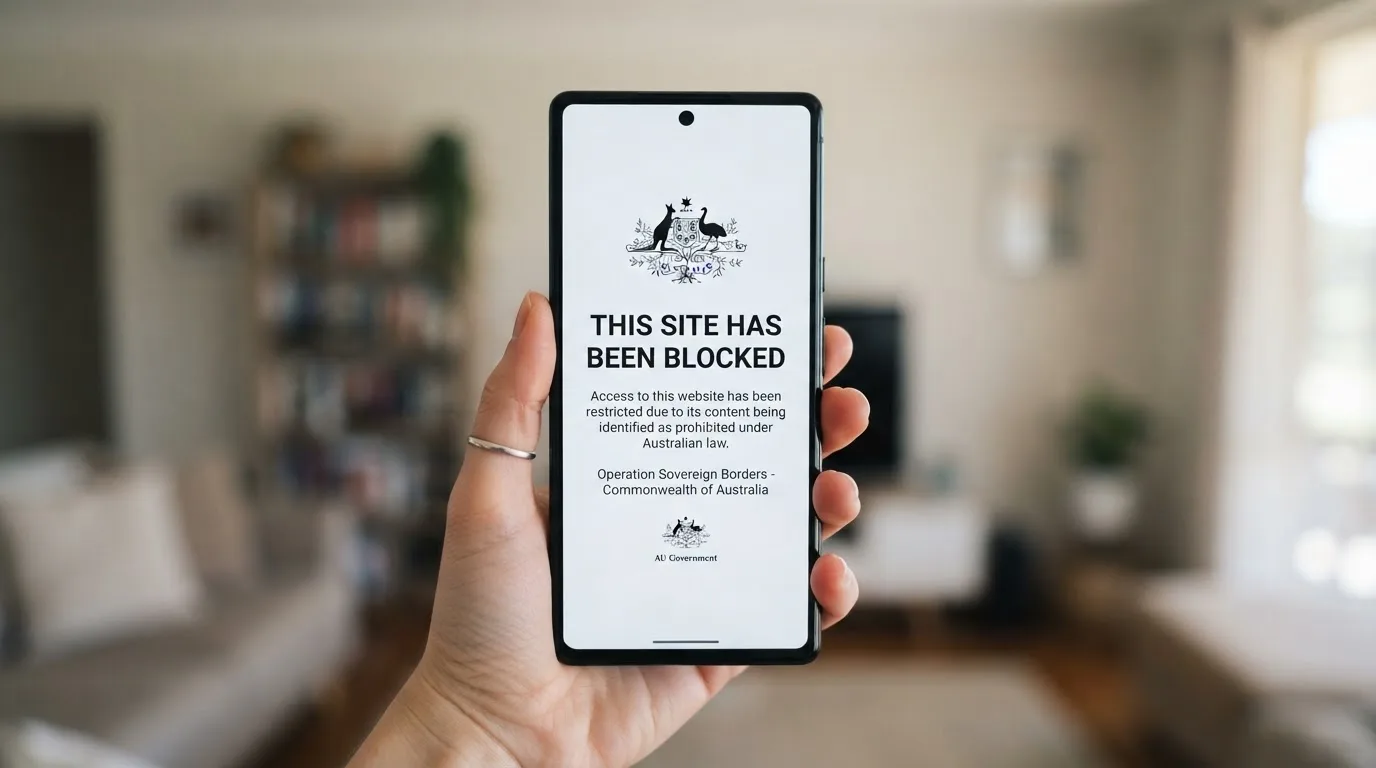
The IGA leaves the regulator with three enforcement tools, all of which are visible in the public record. The ACMA investigates, issues formal warnings, and directs Australian internet service providers to block illegal sites; players are not prosecuted, but an offshore operator offers no Australian consumer protection, no Australian complaints body, and no recourse if a withdrawal is refused. A blocked site can also leave a balance stranded on it, because the block is applied at the network edge and the operator’s own systems remain on.
The cumulative record is large enough that a curious reader can see the trend line by itself. By the ACMA’s own figure, as reported in June 2026, 1,751 illegal gambling and affiliate marketing websites have been blocked since the first blocking request in November 2019, and more than 230 unlicensed gambling services have left the Australian market since enforcement was strengthened in 2017. A single June 2026 round added 12 more: 7Signs, ChromaBet, Donbet, Duospin, Freshbet, Slots Gem, Jacks Club, Lucky Start, Pointsbetz, Spinrise, Vinyl Casino and Wildsino. The shape of the pipeline is consistent — short rounds, every few weeks, adding the same handful of names a reader searching today might still see promoted in a sponsored link.
H2 Gambling Capital’s 2025 report estimates Australians lose about A$3.9 billion a year to illegal gambling sites, and that the share of gambling going through legal channels fell from 74% in 2021 to 64%. The arithmetic is uncomfortable in two directions: more money is leaving the legal envelope, and the legal envelope itself is the only one with a complaints process attached.
A separate strand of the same rules cuts off the payment rails. Since 11 June 2024, credit cards, credit-related products and digital currency have been banned as a means of paying for licensed online wagering in Australia, with penalties up to $247,500 for operators. The legal deposit routes for licensed wagering are debit card, bank transfer, PayID/Osko and BPAY. An offshore site asking an Australian for a credit-card deposit or a crypto top-up is therefore not merely unregulated on the product side; it is operating outside the payments framework the Australian government has drawn around online wagering. The Interactive Gambling Amendment (Gambling Reform) Bill 2026 passed Parliament on 19 August 2026; its advertising and inducement measures commence on 1 January 2027, so the law sits with a start date this page does not cover.
The paytable behind the warning list
Every brand below has appeared in a formal ACMA warning, which means the regulator has decided, on the evidence, that the brand was providing a prohibited interactive gambling service to Australians. The list is not a recommendation: it is the documented enforcement record, ordered chronologically through the most recent ACMA round, so the reader can see the same names their own search would surface, and what the regulator’s position on each of them has been. None of the brands carry an Australian licence, regardless of any overseas licence the brand’s own site displays.
RocketPlay — the brand the ACMA has returned to twice
The ACMA issued a formal warning to Pulsup Ltd over Rocketplay in March 2026, and a separate formal warning to Dama N.V. in May 2022 (covering six Dama brands at the time: Bambet, Dazard, Level Up, Rocketplay, Wild Tornado and Cobra Casinos). Rocketplay is the brand that has appeared in the regulator’s published list under two different operators in two different years. That does not make the site more or less lawful than the others; it does make it a useful starting point for the rest of the table, because the shape of the Rocketplay file is the shape the others share.
Level Up Casino — first surfaced in the May 2022 Dama round
The May 2022 Dama N.V. warning is the one that pulled Level Up into the ACMA’s published list. The brand sits alongside the five other Dama names from that round. Subject coverage for the underlying games comes from third-party listings rather than from the operator, which is the typical pattern for a brand the regulator has already named. The point that matters for the reader is older than the listing: the ACMA took the view in 2022 that Level Up was providing a prohibited service to Australians, and the position has not changed.
Woo Casino and Spirit Casino — Dama’s later returns
The ACMA issued further formal warnings to Dama N.V. over Woo Casino in March 2025 and over Spirit Casino in May 2025. Both fall inside the same operator cluster as Rocketplay and Level Up — Dama N.V. — and the ACMA’s record shows the regulator reopening the same corporate parent on the same product line, in successive years, without resolving into a clean exit.
National Casino and Bizzo Casino — the Consolutetish warnings
In July 2025 the ACMA issued formal warnings to Consolutetish S.R.L. over National Casino and Bizzo Casino. Bizzo had already been the subject of a 2022 formal warning to TechSolutions (CY) Group Limited and TechSolutions Group N.V., so the brand has crossed regulators’ desks twice, in two corporate hands. The pattern is not unusual in this corner of the offshore market, where the licence holder on the footer is rarely the same entity the regulator has on file.
Ignition Casino — the Bamboo Media warning
The ACMA issued a formal warning to Bamboo Media over Ignition Casino in July 2025. Ignition is a brand Australian readers tend to encounter pitched at the poker-and-casino crossover audience. The ACMA position covers the casino product as a whole, irrespective of which vertical the reader was looking for when they landed there.
Instant Casino — the EOD Code warning
In February 2025 the ACMA issued a formal warning to EOD Code SRL over Instant Casino. It is the cleanest of the one-to-one warnings on the list: one regulator action, one operator, one brand, one product line. The simplicity does not change the regulator’s view of the product.
Jackbit — the most recent ACMA round on file
The ACMA issued a formal warning to Ryker B.V. over Jackbit (and over CasinOK) in April 2026. Jackbit is a crypto-led brand, which intersects with the second strand of the rules: since 11 June 2024, digital currency is banned as a payment for Australian-licensed online wagering. A crypto-funded offshore casino sits outside the licensed envelope on two fronts at once, which is what makes the Jackbit file a useful one for the reader who is comparing options.
Casino Intense — the Sterplay warning
The ACMA issued a formal warning to Sterplay Holding Ltd over Casino Intense in April 2025. Casino Intense is the brand most often surfaced by searches aimed at the high-volatility progressive niche, and it is the brand on the ACMA’s list whose third-party coverage comes from the broadest mix of sources.
Sky Crown — the Hollycorn warning
The ACMA issued a formal warning to Hollycorn N.V. over its Sky Crown and Blue Leo casino services, published as a formal warning PDF in September 2022. Sky Crown is the longest-running name on the table and the entry that frames the rest: the regulator was taking the same view of the same product in 2022 that it is taking in 2026.
The landscape behind the warning list is the same for every entry above, and it is the one the reader needs before any single operator card: no Australian jurisdiction licences the product these brands sell, and the ACMA has named every one of them in writing.
Side-by-side: the eleven names the ACMA has acted against
The matters compared below are brand, the ACMA action and the date it was published, the operator named by the ACMA in that warning, and whether third-party listings document the brand’s underlying subject matter. Subject support for any brand sits where the only sources were affiliate marketing pages, and those are not used to describe the brand to a reader.
| Brand | ACMA action and date | Operator named by the ACMA | Subject support |
|---|---|---|---|
| RocketPlay | Formal warning, March 2026 (Pulsup Ltd); earlier formal warning, May 2022 (Dama N.V.) | Pulsup Ltd | — |
| Level Up Casino | Formal warning, May 2022 | Dama N.V. | listings-only |
| Woo Casino | Formal warning, March 2025 | Dama N.V. | — |
| Spirit Casino | Formal warning, May 2025 | Dama N.V. | — |
| National Casino | Formal warning, July 2025 | Consolutetish S.R.L. | listings-only |
| Bizzo Casino | Formal warning, July 2025 (Consolutetish S.R.L.); earlier 2022 (TechSolutions) | Consolutetish S.R.L. | — |
| Ignition Casino | Formal warning, July 2025 | Bamboo Media | — |
| Instant Casino | Formal warning, February 2025 | EOD Code SRL | — |
| Jackbit | Formal warning, April 2026 | Ryker B.V. | — |
| Casino Intense | Formal warning, April 2025 | Sterplay Holding Ltd | listings-only |
| Sky Crown | Formal warning, September 2022 | Hollycorn N.V. | — |
What the table shows is consistent enough that the prose around it can be short. Every row carries the same regulator position: a formal warning for providing a prohibited interactive gambling service to Australians, published on the regulator’s own site. The dates span from September 2022 to April 2026, so the record is current across the full list. The operator column is the one that changes the most — Dama N.V. alone appears four times, and the same brand (RocketPlay, Bizzo) appears under two different operators in two different years, which is what makes the offshore-corporate trail worth knowing before a reader clicks through.
How fast is the ACMA actually blocking sites
The arithmetic that earns its own band on this page is the blocking rate itself, and it is the detail a reader cannot get from the headlines alone. The ACMA’s published total is 1,751 illegal gambling and affiliate-marketing websites blocked since the first blocking request in November 2019, with the most recent reporting round falling in June 2026. That is the full window the regulator has on the public record.
Working it through the period from November 2019 to the June 2026 round gives a band of roughly 22 blocked sites per month on average — that is 1,751 sites divided by the 79 months between the first request and the June 2026 reporting date. The figure is a band rather than a single number because the regulator’s actual workflow is lumpy: the June 2026 round alone added 12, and earlier rounds in 2025 ran as short as four to six sites each, with quiet stretches in between. So a fairer read of the data is somewhere in the order of 20 to 25 blocked sites per month across the full enforcement window, with single rounds running larger when the ACMA has a queue to clear. The block rate is not a forecast of how fast the offshore market is being closed off; it is a measure of how much the regulator has already had to clear.
What a reader in Australia can actually do
The lawful options in Australia are narrower than a sponsored search suggests, and they sit outside the online casino bracket the IGA closes off.
The first is licensed wagering with Australian-licensed bookmakers, which under the IGA covers racing and sport bets placed before the event, plus lotteries and keno. The 52 NTRWC-regulated bookmakers — Sportsbet, Bet365 and Ladbrokes among them — operate in this envelope, as do state lottery operators. None of them offers an online casino product; that is the IGA line, not a product gap the operator chose. Deposits on these services run through debit card, bank transfer, PayID/Osko or BPAY; credit cards, credit-related products and digital currency are out since 11 June 2024.
The second is the licensed land-based casino. Crown Melbourne offers baccarat variants — Traditional Baccarat, Crown Baccarat and 2 to 1 Baccarat — as approved table games regulated by the Victorian Gambling and Casino Control Commission, which replaced the VCGLR as Victoria’s casino regulator on 1 July 2022. Under section 66 of the NSW Casino Control Act 1992, a casino operator must not permit a game to be played unless the game and its rules are approved by the regulator, and the operator must make a copy of the approved rules available to patrons on request. The relevant point for a jackpot-focused reader is that the licensed venue is the only setting in which a player in Australia can sit at a regulated progressive machine in person. The prize pools are local, not wide-area, and the headline figures are smaller than the offshore Mega Moolah numbers — but the operator is licensed, the rules are on the regulator’s file, and the consumer protections exist.
The third is the licensed pokies venue at a pub or club. Pokies are state-regulated in every Australian state and territory, and the machine-level return-to-player is published for each device on the floor of an approved venue. The jackpot-style products available here are the local-area progressives, not the wide-area Mega Moolah tier, and the legal age is 18 across the board.
The responsible-gambling tools that bind where the law binds
The single piece of player-protection infrastructure that names “Australia” on its terms is BetStop, the National Self-Exclusion Register. BetStop has been live since August 2023, and it binds only Australian-licensed online and phone wagering services — an offshore casino is not connected to it, and a self-exclusion on BetStop does not extend to a brand sitting on a Curaçao or Anjouan licence. A punter who has registered on BetStop and then opens an offshore casino account has not stopped; they have stopped at one set of doors and walked to the next.
The other line every reader in Australia should have to hand is the National Gambling Helpline on 1800 858 858, free and 24/7, with chat through Gambling Help Online. The helpline is independent of any operator, licensed or otherwise, and exists for the reader who has decided they want support before the next session rather than after it.
The Australian tax position is worth knowing once and forgetting if it does not apply. Gambling winnings of a recreational player are not assessable income under section 6-5 of the Income Tax Assessment Act 1997, and losses are not deductible, unless the person is carrying on a business of gambling. That is the model the ATO uses; if the reader’s position is non-standard, the ATO is the place to check.
The calculation behind the blocking-rate claim
The band at the heart of this page sits on two inputs the ACMA has published: the 1,751 blocked sites since the first blocking request in November 2019, and the most recent reporting round in June 2026. The arithmetic is a simple ratio over the window — 1,751 blocked sites divided by the 79 months from November 2019 to the June 2026 round, which gives roughly 22 blocked sites per month on average, with a fair read across the enforcement window of around 20 to 25 per month once the lumpiness of individual rounds is included. The figure is a long-run average, not a forecast of the next round, and it does not say what the next 12 months will look like — only what the regulator has had to do to reach the present.
The condition on the band is the one any reader can check against the regulator’s own publications. Round sizes vary: the June 2026 round alone added 12, while some 2025 rounds added four to six, and the published total will tick up again the next time the ACMA publishes. The 20-to-25-per-month band describes the pace across the full period the regulator has been publishing, not a single month’s rate.
Frequently asked questions about big jackpot slots for Australian players
Which single online slot holds the record for the largest jackpot win?
The record online slot jackpot is €19,430,723.60, won on 27 April 2021 by a Belgian player at Napoleon Sports & Casino on Microgaming’s Absolootly Mad: Mega Moolah. Games Global, which took over Mega Moolah distribution from Microgaming, has since reported further wins of £11.5 million and £13.5 million on the same network.
Can a jackpot slot be funded with a cryptocurrency deposit?
Crypto is permitted by the offshore jackpot-slot operators themselves, but it is not permitted as a payment method for Australian-licensed wagering under the rules that took effect on 11 June 2024. A site that asks an Australian player for a crypto deposit is operating outside the Australian rules regardless of where its licence is displayed.
Is it legal for an online casino to offer jackpot slots to Australians?
No. Offering online casino games, including online jackpot slots, to a person in Australia is a prohibited interactive gambling service under the Interactive Gambling Act 2001, and no Australian state or territory issues a licence for it. The ACMA enforces the prohibition through formal warnings and ISP blocking orders.
Why do jackpot slots typically pay out less often between big wins?
A slice of every wager on a progressive network is routed into the prize pool rather than paid back as line hits, so the base-game return is lower than on a non-progressive slot of the same theme. The marketing word for that is “life-changing”; the mechanism is a smaller per-spin return dressed around an occasional pool payout.
What happened to the Mega Moolah record jackpot after 2021?
The €19.43 million payout on Absolootly Mad: Mega Moolah in April 2021 remains the largest online slot jackpot on the public record. Subsequent Mega Moolah wins reported by Games Global — £11.5 million and £13.5 million — are large, and both sit well below the 2021 figure.
Is there a way to play jackpot-style slots for real money through a licensed Australian venue?
Yes, at a licensed land-based casino or a licensed pokies venue, where the games are state- or territory-regulated and the rules are on the regulator’s file. The online jackpot-slot products the search results surface sit outside the Australian licence envelope, which is why none of the brands on the ACMA’s published formal-warnings list carries an Australian licence.