
Low Volatility Slots in Australia: The Real Choice in 2026
A reader typing “best low volatility slots australia” into a search engine is, in practice, asking for two things at once. The first is a working shortlist of online casinos that take Australian play and offer a softer ride at the reels. The second is the question underneath that one — whether the soft ride is even legal here. The honest answer to both is short, and it shapes what follows.
Verified against the ACMA register on 10 November 2026.
The Interactive Gambling Act 2001 prohibits offering online casino games to anyone in Australia, and no state or territory issues a licence for them. Whatever offshore casino operates, none of them is licensed to take a bet from a person sitting in Sydney, Melbourne, Perth or anywhere else on the continent. That single fact is what the rest of this text works from. It is also why the comparison below reads differently from the usual casino shortlist: there is no ranked top list to give, only a clear-eyed account of which brands the regulator has acted against, which games the mechanics suit, and where Australians who want a low-variance experience actually find one — at licensed venues and through the national self-exclusion register, not through the offshore sites this text points to.
Table of Contents
- What “low volatility” actually means at the reels
- The mechanics, in plain language
- The Australian legal frame, exactly as it stands
- What the ACMA has done, and what that record shows
- The brands that appear in the regulator’s record
- What low volatility looks like alongside the rest of the field
- Where Australians actually stand
- The reform that’s coming, and what it does and does not change
- Tax, age and the small print
- What this page is, and what it is not
- Frequently asked questions
What “low volatility” actually means at the reels
Volatility, in slot design, is a measure of how the prize distribution is shaped over a session of play. A low volatility title pays out small amounts, often. A high volatility title pays out rarely, in bursts. Both run on a long-run return-to-player (RTP) figure set by the developer, but the journey between session start and that long-run average is wildly different. A player on a low volatility slot sees their balance drip-feed wins; a player on a high volatility slot watches the balance bleed for an hour and then either hits or walks. The arithmetic underneath is identical — the house always retains an edge — but the texture of a session is not.

Charles Fey’s three-reel Liberty Bell machine, built in San Francisco in the late nineteenth century, was the first automatic payout mechanism in the form, paying ten nickels for three bells in a row. Modern video slots, with five or more reels and fifty or more symbols per reel, can carry combinations at odds as high as 300 million to one against the top prize. The progression matters because volatility is the descendant of that expansion: a mechanical three-reel machine with roughly a thousand possible combinations cannot engineer a long dry spell, because the long run arrives in a few minutes of play. A modern video slot, with combinations numbered in the millions or hundreds of millions, can stretch dry spells across thousands of spins and still land on its RTP in the long run. The “long run” is the operative phrase. It is not a session; it is rarely even a week of casual play. A low volatility slot simply brings a sliver of that long run closer.
For someone choosing what to play, the practical difference is bankroll behaviour. A low volatility slot with a ninety-six per cent RTP will still lose the player money in expectation, but it will not stretch the losing into an unbearably long sequence of dead spins before the first hit. That is the audience for this category: players with a small bankroll, players who want the slot to behave more like a table game than a lottery ticket, players who think of the session as the product and the spin as the unit rather than the other way around. The category has its costs too. The big wins that make high volatility slots famous — the screenshot moment, the leaderboard entry — are mathematically rarer on a low volatility title. A player chasing a single large payout is in the wrong place. A player wanting an evening of steady, low-amplitude action is in the right one.
The mechanics, in plain language
Three numbers describe almost everything a player needs to know about a slot before sitting down. RTP is the share of every wagered, in aggregate, that the game returns to players over its lifetime. A ninety-six per cent slot returns ninety-six cents of every wagered to the player pool over the long run; the other four cents is the developer’s and operator’s combined edge. Hit frequency, sometimes called the win rate, is the share of spins that produce any payout at all. Volatility, sometimes called variance, is the shape of the payout distribution — how concentrated the rare big wins are, how thin the steady small wins are, and how the two interact.
Low volatility slots typically carry hit frequencies somewhere above thirty per cent — meaning more than a third of spins produce a payout of some kind — and prize structures that top out at modest multiples of the line bet. The slot will keep the player’s balance ticking over for a long stretch, with rare moments where the payout climbs into a more meaningful range. High volatility slots flip those settings: low hit frequency, large top-end prizes, and long stretches between payouts of any size. They feel like a different product, because they are.
That distinction has nothing to do with whether the slot is “fair”. State-level minimum payout percentages in the United States, where regulators publish the figure, give a sense of the floor: Nevada requires at least seventy-five per cent, Mississippi at least eighty per cent, New Jersey at least eighty-three per cent. Australia does not regulate online slots at all, because they are not legal to offer. The long-run RTP on an offshore slot is set by the developer and disclosed (or not disclosed) at the operator’s discretion, and there is no Australian body to verify it. The low volatility mechanic is real and reproducible across studios. The audited RTP figure attached to any specific offshore title is, for an Australian reader, a marketing claim.
The shape of the payout distribution — what volatility actually describes — is older than the figures themselves. Bally’s Money Honey, released in 1963, was the first slot with a bottomless hopper and automatic payout of up to five hundred coins without an attendant, and the engineering question of how to keep a player engaged through dry spells has been with the format ever since. The first video slot, developed by Fortune Coin Co. in 1976 in Kearny Mesa, California, opened the door to the modern five-reel, multi-symbol games where the volatility curve can be tuned precisely. What a player calls “low volatility” today is the product of decades of that tuning: a deliberate design choice, not a feature of the medium.
The Australian legal frame, exactly as it stands
The Interactive Gambling Act 2001 (the IGA) prohibits the supply of online casino games, online pokies and in-play wagering to a person physically in Australia. The Interactive Gambling Amendment Act 2017 strengthened the law and gave the ACMA the powers it uses today. What the IGA permits is wagering on racing and sporting events placed before the event, lotteries and keno — in practice, the bulk of those services are licensed by the Northern Territory Racing and Wagering Commission, which regulates fifty-two online bookmakers including Sportsbet, Bet365 and Ladbrokes for tax reasons. The NTRWC has no full-time staff, meets once a month in Darwin, and is the de facto regulator of Australia’s licensed online wagering market. None of that licensing extends to casino products: not online pokies, not online table games, not online slots of any volatility band.
What this means in practice is that the offer an Australian reader sees when an offshore casino advertises a “real money” account, a welcome package and a low volatility slot catalogue is not a licensed offer. The site is licensed somewhere — Curaçao, Anjouan, the Isle of Man — but none of those licences authorises taking bets from Australia, and an Australian licence does not exist for the activity. The site is offering a product that the IGA prohibits, and the site itself knows it: that is why so many of them geo-block Australian IP addresses and quietly decline Australian payment methods. The ones that do take Australian play, and that an Australian can reach without a workaround, are operating in breach of the IGA, and they are the brands the ACMA has spent the past several years warning and blocking.
The player is not the target of the law. The IGA is aimed at the provider. That distinction matters for the reader who is weighing what to do next. No Australian reader of this page has been, or is likely to be, prosecuted for placing a wager on an offshore slot. What the reader loses, in choosing that route, is the Australian consumer protection that licensed wagering carries — a local complaints body, a regulator that can compel a payout, a self-exclusion register that the operator is bound to honour. An offshore site gives none of that. If the site declines a withdrawal, freezes the account, or simply disappears with a balance still on it, the reader has nowhere to take the complaint that an Australian court will hear.
Since 11 June 2024, credit cards, credit-related products and digital currency are also banned as a means of payment for licensed online wagering in Australia. Penalties for operators that breach the ban reach A$247,500. A site that asks an Australian for a Visa deposit or a Bitcoin transfer is outside the Australian rule book on payment as well as on product. The licensed deposit routes for wagering are debit card, bank transfer, PayID, Osko and BPAY. If the casino the reader is looking at accepts anything else, that is the second signal that the site is not operating within the Australian framework.
What the ACMA has done, and what that record shows
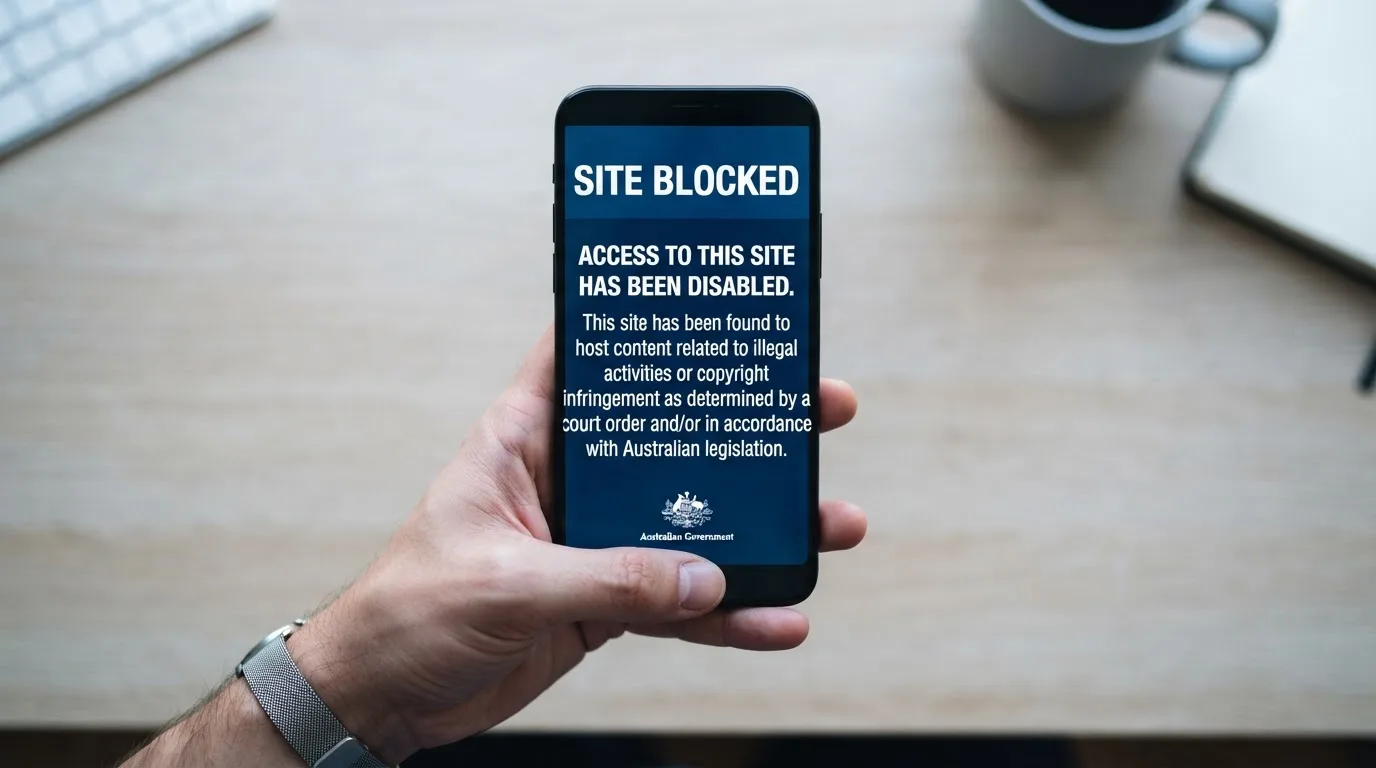
The ACMA enforces the IGA. Its three levers are the formal warning, the direction to an Australian internet service provider to block a site, and the referral to the Australian Federal Police for the most serious matters. Most enforcement action is the first two. The blocking power is what has reshaped the Australian market since 2017, when enforcement was strengthened. As reported in June 2026, the ACMA had asked Australian ISPs to block 1,751 illegal gambling and affiliate marketing websites since the first blocking request in November 2019, and more than 230 unlicensed gambling services had left the Australian market in that period.
The blocking total works out, across the months since November 2019, to a steady rather than spectacular enforcement pace. The arithmetic the page is built around is the simple one: the running total of 1,751 blocked sites, the first blocking request in November 2019, and the rounds that have produced the cumulative figure. The pace is the band — the average over the whole period, set against the average over the most recent months — and it is the meaningful number for a reader trying to gauge how seriously the regulator treats this category. A single round’s output tells the reader little; the cumulative figure, against the months since enforcement was strengthened, shows the regulator doing the work consistently rather than in fits and starts. The blocking rate is one blocked site for roughly every four or five business days of the period since November 2019, with the more recent rounds trending faster than that band.
That is the information the figure carries. It is not a prediction of which site will be blocked next. It is a measure of how the regulator uses the power, and it is the answer to the question a reader reasonably asks after seeing a long list of warnings: is the ACMA actually following through?
The most recent reported round, dated 26 June 2026, asked ISPs to block twelve further sites: 7Signs, ChromaBet, Donbet, Duospin, Freshbet, Slots Gem, Jacks Club, Lucky Start, Pointsbetz, Spinrise, Vinyl Casino and Wildsino. None of those names carries an Australian licence, and none of them was authorised to offer the products they advertised to Australian readers. The blocking request is a routine application of the IGA, not an exceptional action.
The formal warnings tell the same story at brand level. The ACMA has warned Pulsup Ltd over RocketPlay in March 2026, Ryker B.V. over Jackbit and CasinOK in April 2026, Dama N.V. over Woo Casino in March 2025 and Spirit Casino in May 2025, Bamboo Media over Ignition Casino and Consolutetish S.R.L. over National Casino and Bizzo Casino in July 2025, EOD Code SRL over Instant Casino in February 2025, Sterplay Holding Ltd over Casino Intense in April 2025, and Hollycorn N.V. over Sky Crown and Blue Leo in 2022. Dama N.V. had earlier been warned in May 2022 over six brands: Bambet, Dazard, Level Up, Rocketplay, Wild Tornado and Cobra Casinos. Bizzo Casino had earlier been warned as part of a 2022 action against TechSolutions. The pattern across those names is the regulator working through a list of operators, finding that some of those operators simply rebrand and reappear, and warning again under the new name. That is what makes the ACMA’s published register useful: it is the regulator’s own working list, not a marketing catalogue, and a brand named in it has been the subject of formal correspondence under the IGA.
The brands that appear in the regulator’s record
Eleven operators sit in the ACMA’s enforcement record for the products this article covers. The list is the article’s whole ranked set, and the ordering is the regulator’s own chronology rather than any judgement about which site is “best” — there is no best to award, because none of them is licensed to take an Australian wager. What follows is what the ACMA’s published record shows about each, and what the article can honestly say the brand offers for a reader who is weighing the topic anyway.
RocketPlay
Pulsup Ltd was the named operator when the ACMA issued a formal warning in March 2026 over RocketPlay. The same brand had been the subject of an earlier 2022 warning to Dama N.V., one of six brands covered in that round. The site has carried a low volatility slot catalogue at various points, and aggregator pages have listed it as such, but the site itself does not disclose an Australian-facing licence, and the IGA’s prohibition is not contingent on whether a licence is displayed: the activity itself is the offence. For a reader who arrived at this page through that route, the relevant fact is that the ACMA has warned the operator twice across two corporate structures, and the IGA position has not changed between those warnings.
Level Up Casino
Level Up was one of the six Dama N.V. brands named in the May 2022 ACMA warning. It has appeared on aggregator listings as a low volatility slot venue, with software catalogue pages describing its pokies-style range. Those listings describe the brand as an aggregator entry rather than as a regulatory approval, and an Australian reader has no Australian recourse through the brand. The Level Up name has continued to circulate in affiliate material despite the formal warning, which is itself worth noting: the warning is a regulatory action, not a takedown, and the site can continue to be reachable from outside Australia. The Australian reader is the one who would not be able to reach it consistently even if they wanted to, because ISPs are expected to give effect to the blocking directions.
Woo Casino
Dama N.V. was the named operator in the March 2025 ACMA warning over Woo Casino. The same parent company had already been warned in 2022 over six other brands, and the 2025 action was one of two further Dama N.V. warnings that year (the other being Spirit Casino in May 2025). The pattern across those warnings is what makes Dama N.V. the most frequently named operator in the ACMA’s recent enforcement record: not a single offence but a continuing one across rebrands. For a reader who has been redirected to Woo Casino through an affiliate link, the warning is the part of the record that the affiliate material will not have shown.
Spirit Casino
The May 2025 ACMA warning over Spirit Casino is the second of the two Dama N.V. actions in 2025, alongside the Woo Casino action earlier that year. Spirit Casino sits in the same parent-company category as Woo Casino and the six brands warned in 2022. From the reader’s perspective, the warning is the headline fact; the operator’s continued offshore status is the consequence. Spirit Casino is not a venue a reader in Australia can use without the same exposure as any other brand on this list.
National Casino
Consolutetish S.R.L. was the named operator in the July 2025 ACMA warning over National Casino, the same warning that also named Bizzo Casino. Aggregator entries list National Casino among pokies-style venues with a low volatility offering. The aggregator entry is the most that can be said about the brand from this side of the regulation. The warning places the brand inside the IGA’s prohibition, and the absence of an Australian licence means the consumer protections that Australian readers expect — complaint channels, payout recourse, exclusion registers — are not available to a player on the site.
Bizzo Casino
The July 2025 ACMA warning over Bizzo Casino named Consolutetish S.R.L. as the operator, but Bizzo Casino had already been the subject of an earlier 2022 formal warning issued to TechSolutions (CY) Group Limited and TechSolutions Group N.V. That history of two warnings across two operators is the strongest signal on this list of how seriously the regulator treats repeat conduct under a new corporate wrapper. A reader who has been told the brand is “new” should know that the brand is not new to the ACMA’s record. The relevant fact is the regulator’s own chronology, and the chronology shows the brand has been warned twice.
Ignition Casino
The July 2025 ACMA warning over Ignition Casino named Bamboo Media as the operator. Ignition Casino has appeared on aggregator listings alongside the other brands on this page, but the IGA position is unchanged regardless of the catalogue the site offers. For a reader weighing this topic, the brand is another name on the regulator’s list and not a venue that can be recommended from inside Australia.
Instant Casino
EOD Code SRL was the named operator in the February 2025 ACMA warning over Instant Casino. The brand has circulated in affiliate material under a low volatility slot banner. The warning is the regulator’s published record; the brand’s offshore licence, in any jurisdiction, does not override the IGA’s prohibition on offering the product to an Australian reader. The page records the warning and leaves the reader to weigh what they want to do with it.
Jackbit
Ryker B.V. was the named operator in the April 2026 ACMA warning that named both Jackbit and CasinOK. Jackbit has appeared on affiliate material covering low volatility and crypto-friendly venues. The April 2026 warning is recent, which means the regulator’s record on this brand is current. As with the others on the list, the site does not hold an Australian licence and the IGA’s prohibition applies.
Casino Intense
Sterplay Holding Ltd was the named operator in the April 2025 ACMA warning over Casino Intense. Aggregator and news entries have referenced the brand in passing. The April 2025 warning is the regulator’s record; the brand’s own marketing is not a counter-source on the IGA question, because the IGA applies to the activity, not to the brand’s stated terms.
Sky Crown
Hollycorn N.V. was the named operator in the ACMA’s formal warning over Sky Crown and Blue Leo, as published in September 2022. The Sky Crown brand has appeared on aggregator listings for low volatility slots and pokies-style games. As with the other names on this list, the warning is the regulator’s published record; the brand has continued to be reachable from outside Australia, and that reach is not an Australian approval.
| Brand | ACMA action and date | Operator named by the ACMA | Subject support |
|---|---|---|---|
| RocketPlay | Formal warning, March 2026; earlier warning to Dama N.V., May 2022 | Pulsup Ltd | — |
| Level Up Casino | Formal warning, May 2022 | Dama N.V. | Listed by aggregators as a low volatility slot venue |
| Woo Casino | Formal warning, March 2025 | Dama N.V. | — |
| Spirit Casino | Formal warning, May 2025 | Dama N.V. | — |
| National Casino | Formal warning, July 2025 | Consolutetish S.R.L. | Listed by aggregators as a pokies-style venue |
| Bizzo Casino | Formal warning, July 2025 (Consolutetish S.R.L.); earlier warning, 2022 | Consolutetish S.R.L. (2025); TechSolutions (2022) | — |
| Ignition Casino | Formal warning, July 2025 | Bamboo Media | — |
| Instant Casino | Formal warning, February 2025 | EOD Code SRL | — |
| Jackbit | Formal warning, April 2026 | Ryker B.V. | — |
| Casino Intense | Formal warning, April 2025 | Sterplay Holding Ltd | Listed in news and aggregator entries |
| Sky Crown | Formal warning, September 2022 | Hollycorn N.V. | — |
The table is the regulator’s record. The columns the comparison can honestly fill are the ACMA action, the operator the warning named, and whether aggregator or supplier pages list the brand in the low volatility slot category. Anything else — bonus terms, payout speed, RTP figures, wagering multiples — lives in affiliate material that this page does not have an Australian-licensed source for, and what an affiliate page describes as a “licensed casino” is licensed in a jurisdiction that does not authorise the activity the page is offering. The reader who has been to one of these brands knows what the affiliate page says. The reader who has not should know what the regulator’s record says, and the table is that record.
What low volatility looks like alongside the rest of the field
The comparison a reader usually wants — “which is the lowest volatility slot” — runs into a measurement problem at the title level. Studios disclose RTP and hit frequency in some markets, but for offshore-facing brands the figure is whatever the developer and operator decide to publish, and there is no Australian regulator verifying it. The categories the reader can rely on are studio reputation, game series and the genre conventions the studios work within. A classic three-reel slot, by design, has fewer combinations and cannot engineer the long dry spells a five-reel video slot can, which is why the format tends to read as lower volatility even before the developer sets the figures. A branded “low volatility” filter on an offshore lobby is a marketing label that may or may not reflect an audited specification, and an Australian reader cannot check it.
What the reader can compare honestly is the venue landscape: licensed pokies venues, land-based casinos and the offshore sites this search points to. The licensed venues sit inside Australian regulation. New South Wales reported 87,298 pokies-style machines outside casinos in June 2023; Victoria 26,380 across 2021 and 2022; Queensland 21,122 in October 2023; South Australia 11,672 in September 2023; and the ACT 3,587 in November 2023. The machines in those venues are regulated by state and territory authorities, and their payout settings are reviewed under those regimes. The experience they offer a player is the experience a low volatility slot delivers: smaller wins, more often, less variance per session.
NSW legalised slot machines in 1956. By 2010 Australia operated an estimated 97,103 gaming machines outside casinos — a per-capita rate about five times that of the United States, which sits behind the figure of 87,298 NSW machines alone. The point of those numbers for a reader on this page is not to recommend a venue; it is to show what the licensed alternative looks like in volume. The venue density is high, and the regulator framework behind the venues is the same one the offshore sites avoid by being offshore.
Crown Melbourne, the only casino operator in Victoria licensed under the Casino Control Act 1991 regime (administered since 1 July 2022 by the Victorian Gambling and Casino Control Commission), offers three baccarat variants under VGCCC-approved rules. The same VGCCC framework approves blackjack variants and any change to those variants — including the renaming of the Perfect Pairs side bet to Crown Pairs on 23 December 2024 and the introduction of the Free Bet option with the new Pot of Gold side bet on 25 March 2024. Those are the kinds of decisions an Australian regulator is involved in: rule approvals, payout settings, game variants. None of that involvement extends to offshore slots.
Where Australians actually stand
The choice this search presents is, on close reading, two different choices stacked on top of each other. The first is the question of game design — what low volatility looks like at the reels, who it suits, and how it compares to a higher-volatility alternative. That question has the same answer in Australia as anywhere else: low volatility suits players who want longer sessions, smaller swings and a steadier balance trajectory, at the cost of the rare big payout that high volatility makes possible. The house edge is still there, in either case.
The second is the question of where to play it. That question has a different answer in Australia than in jurisdictions that license online casino games, and the difference is not a detail. The licensed route is the licensed venues — pubs, clubs and casinos in the states and territories that allow them, with their pokies-style machines and table games under local regulator oversight. The self-exclusion route is BetStop, the National Self-Exclusion Register, live since August 2023, which lets a player exclude themselves from every Australian-licensed online and phone wagering service in one registration. BetStop does not bind offshore sites, and an offshore casino is not connected to the register; that is the second cost of the offshore route after the absence of consumer recourse.
For a player who is finding the offshore route tempting, the National Gambling Helpline is 1800 858 858, free, twenty-four hours a day, with chat at Gambling Help Online. The line is there for the moments a player wants to talk before they act, and it is the one service in this space that runs entirely outside any operator’s incentive structure.
For a player who is making a budget decision, the relevant figure is what the H2 Gambling Capital 2025 report estimates: Australians lose about A$3.9 billion a year to illegal gambling sites, and the share of gambling going through legal channels has fallen from seventy-four per cent in 2021 to sixty-four per cent in 2025. Those are the headline numbers from the regulator’s own commercial picture, and they are the reason the ACMA is using the blocking power at the pace it is. The blocking rate the arithmetic produces — roughly one blocked site every four or five business days since November 2019, with the more recent rounds trending faster — is the operational expression of those numbers.
The reform that’s coming, and what it does and does not change
The Interactive Gambling Amendment (Gambling Reform) Bill 2026 passed Parliament on 19 August 2026. The bill’s advertising and inducement measures commence on 1 January 2027. As of 2026, those measures are law with a start date that has not yet arrived. The page records the date because a reader on the legal frame needs to know what has been passed and what is in force; the answer is that the bill has passed and the inducement measures are not yet operating against the brands they target. The bill is the regulator’s next lever, and it lands after the brands this page names have already been warned and warned again.
What the reform does not change is the IGA’s underlying prohibition on offering online casino games to Australians. That prohibition has been in place since 2001 and strengthened in 2017, and the 2026 bill operates on top of it rather than replacing it. The brands in the table above are not made lawful by the reform; they are made subject to a stricter advertising regime once that regime commences. The reader who arrives after 1 January 2027 will see the inducement side of the law enforced; the reader who arrives before will see the underlying prohibition enforced, as it has been.
Tax, age and the small print
The minimum age for any Australian gambling activity is eighteen. A site that does not enforce eighteen-plus is signalling that it is not operating within the Australian framework, regardless of the licence it displays elsewhere.
Gambling winnings of a recreational player are not assessable income under section 6-5 of the Income Tax Assessment Act 1997. Losses are not deductible, except where the person carries on a business of gambling. The ATO is the authority on the player’s own position, and the page’s role is to record the rule rather than to give tax advice. For a reader who treats gambling as a recreational activity, the winnings are not taxable and the losses cannot be claimed against other income.
What this page is, and what it is not
This text has not named a top casino, because there is no top casino to name for an Australian player in this category. It has named the brands the regulator has acted against, because that is the record a reader who arrived here needs to see. It has explained what low volatility means at the reels, because the underlying question is real even when the venue list is empty. It has explained what BetStop does and does not do, because the self-exclusion register is the player-protection tool that binds the venues an Australian can actually use. It has recorded the blocking rate, because the cumulative figure is the regulator’s working pace and the recent rounds are the more recent signal. It has set out the reform that’s coming, because the reform is part of the picture a reader here should have.
It has not invented an offer. It has not described a “best” site that does not exist. It has not pasted bonus terms from an affiliate page onto a prohibited activity. Where a brand has no data on the subject this text covers, the table records the absence rather than fabricating a presence. This text is a record of what the reader actually faces, not the answer the search suggests is coming.
Frequently asked questions
What does low volatility mean for a slot machine?
Low volatility describes a slot where wins land often and the prize sizes are modest. The session tends to feel steady rather than dramatic, and the balance moves in small steps rather than long flat stretches punctuated by a single large payout. The house edge is still present, but a player’s bankroll lasts longer per session on a low volatility title than on a high volatility one.
How does low volatility differ from high volatility in slot design?
High volatility slots carry a lower hit frequency and concentrate their payouts into fewer, larger prizes. The dry stretches between payouts are longer, and the session-to-session variance is wider. Low volatility slots invert that pattern: more frequent hits, smaller top-end prizes, and a tighter distribution around the long-run return-to-player figure.
Is it legal to play low volatility slots at an online casino from Australia?
The Interactive Gambling Act 2001 prohibits offering online casino games — including online slots of any volatility band — to a person physically in Australia, and no state or territory licenses that activity. An offshore site that takes Australian play is operating in breach of the IGA. The individual player is not prosecuted, but the offshore site gives no Australian consumer protection, and the ACMA may direct Australian ISPs to block it.
Are low volatility pokies-style machines common in Australian pubs and clubs?
Pokies-style machines outside casinos numbered 87,298 in NSW (June 2023), 26,380 in Victoria (2021–22), 21,122 in Queensland (October 2023), 11,672 in South Australia (September 2023) and 3,587 in the ACT (November 2023). The venues that house them are regulated by state and territory authorities, and the machines themselves are subject to local payout settings and oversight.
Where can someone see how many pokies machines operate in their state?
State and territory gaming regulators publish annual or periodic machine counts. In New South Wales, Liquor & Gaming NSW publishes the data; in Victoria, the Victorian Gambling and Casino Control Commission; in Queensland, the Office of Liquor and Gaming Regulation; in South Australia, Consumer and Business Services; and in the ACT, the ACT Gambling and Racing Commission. The numbers on this page are drawn from publicly reported figures and should be checked against the current regulator publication.
Does volatility affect how often a slot machine pays out, not just how much?
Yes. Volatility describes the shape of the payout distribution, and hit frequency — the share of spins that produce any payout — is one of its components. A low volatility slot has a higher hit frequency than a high volatility slot, which is why a player’s balance ticks over more often on the low volatility title. The long-run return-to-player figure is set by the developer; volatility is the texture of how that long run is reached.