
Best Aus Pokies Online Australia 2026: What The Search Actually Returns
A player typing “best aus pokies online australia 2026” is asking for a ranked list of safe sites to play pokies from Australia. The honest, sourced answer is that no such licensed list exists. Online pokies — slot machines reachable over the internet — are prohibited under the Interactive Gambling Act 2001. No state or territory issues a licence for them. The brands that surface in the search results operate offshore, outside Australian law, and have generally been on the receiving end of warnings from the Australian Communications and Media Authority.
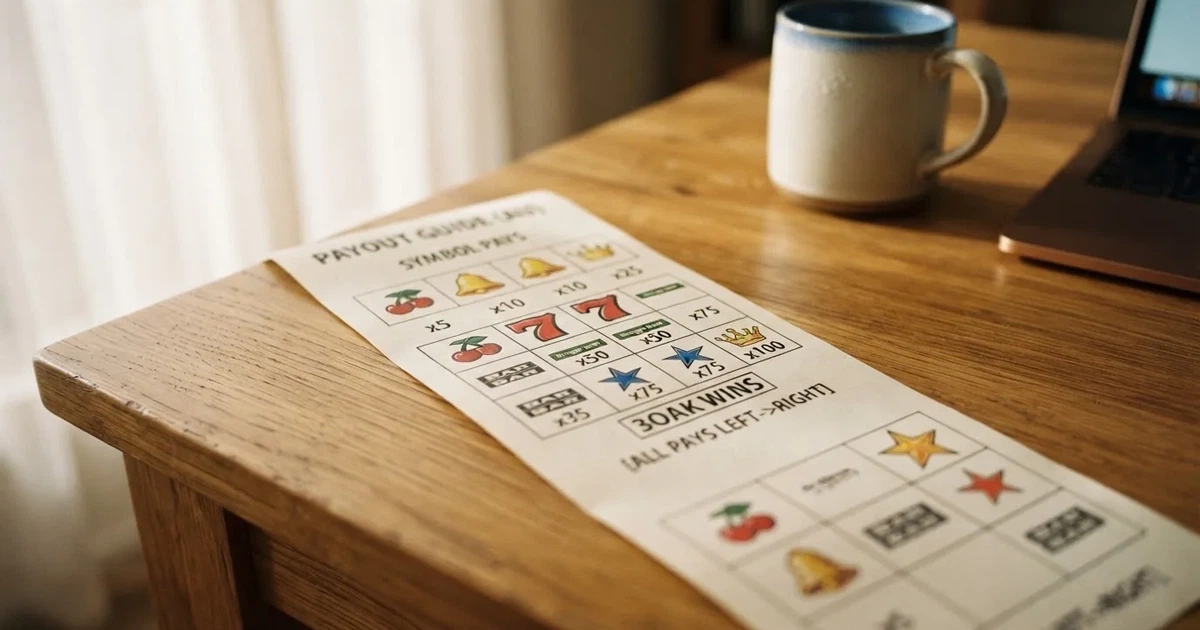
This page lays out what a person searching for online pokies in Australia actually encounters: the legal frame, the offshore brands the ACMA has named, the rough arithmetic of how fast those brands get blocked, and the responsible-gambling help that applies whatever path a reader takes.
Data current as of 2 November 2026; cross-checked against ACMA formal-warning publications and H2 Gambling Capital’s 2025 estimate.
Table of Contents
- The Legal Frame: Why No Australian Operator Can Run Online Pokies
- Responsible Gambling Help In Australia
- Payments And Payout Speed On Offshore Pokies Sites
- What Online Pokies Bonuses Generally Look Like
- How Online Pokies Actually Work: The Paytable And The Symbols
- The ACMA’s Record Against Offshore Pokies Brands
- Brand-By-Brand: What The ACMA Record Shows
- How To Compare Offshore Pokies Sites, Honestly
- The Australian-Legal Alternative: Pub, Club And Casino Pokies
- The Bigger Picture: Why This Page Reads The Way It Does
- Frequently Asked Questions
The Legal Frame: Why No Australian Operator Can Run Online Pokies
The Interactive Gambling Act 2001, tightened by the Interactive Gambling Amendment Act 2017, makes it an offence to provide online casino games — and online pokies sit inside that category — to a person physically in Australia. No state or territory licensing body issues a permit for the product. What is licensable is wagering on races and sport placed before the event, lotteries and keno, and in practice those licences are issued by the Northern Territory Racing and Wagering Commission, which oversees 52 of Australia’s online bookmakers (Sportsbet, Bet365 and Ladbrokes among them) from Darwin on a one-meeting-a-month cadence and without any full-time staff.
Two consequences fall out of that frame, and they shape every other shelf on this page.
First, an “Australian” online pokies site is a contradiction in terms. A site can display a Curaçao or Kahnawake licence on its footer, and that licence is real — but it is not an Australian licence, and it carries none of the consumer protections Australian-licensed wagering services must offer. The provider is offshore. The player is in Australia. The IGA targets the provider, not the player, so readers are not at personal legal risk by accessing these sites; the site is.
Second, an Australian-licensed brand running online pokies does not exist, and so the normal checklist that a casino review would run — local dispute resolution, an Australian complaints body, recourse if a withdrawal is refused — has no counterpart on this side of the law. The National Self-Exclusion Register, BetStop, binds only Australian-licensed online and phone wagering services. An offshore casino is not connected to it.
Minimum age and the enforcement arm
The minimum age for any licensed Australian gambling product is 18. The enforcement arm is the ACMA, which investigates complaints, issues formal warnings, and directs Australian internet service providers to block illegal sites. As reported in June 2026, the ACMA’s running total of blocked illegal gambling and affiliate-marketing websites had reached 1,751 since the first blocking request in November 2019, and more than 230 unlicensed gambling services had left the Australian market since enforcement was stepped up in 2017.

That running total is the closest thing to a market measurement an Australian reader can get. The search result listing offshore pokies brands is in effect a snapshot of the inventory the ACMA has not yet reached.
H2 Gambling Capital’s 2025 estimate
H2 Gambling Capital’s 2025 report puts annual losses by Australians on illegal gambling sites at roughly A$3.9 billion. The same report records the share of gambling going through legal channels falling from 74% in 2021 to 64% — a ten-point slide that the offshore sites have been quietly absorbing. Australia’s overall legal-and-illegal gambling market is unusually concentrated on the product Australians call “pokies”: about 3% of the world’s pub and club poker machines sit in the country, with 0.3% of the global population. The pull is structural, and the offshore market has read it correctly.
The 2026 reform that has not yet started
The Interactive Gambling Amendment (Gambling Reform) Bill 2026 passed Parliament on 19 August 2026. Its advertising and inducement measures commence on 1 January 2027. On a page written in the current year, the law is enacted but not yet in force: the operative change sits in the future, and the existing IGA remains the binding instrument.
Responsible Gambling Help In Australia
If thinking about play ever starts to feel compulsive or stressful, free confidential help is available around the clock. The National Gambling Helpline is 1800 858 858, free and open 24/7, with chat and self-help tools available through Gambling Help Online. The service is run for anyone affected — players, partners, family members — not only people who have already decided to stop.
BetStop, the National Self-Exclusion Register, has been live since August 2023, and is the national instrument for a person who wants Australian-licensed wagering services to refuse their play. A self-exclusion can run for a chosen period of three months or longer, up to a permanent exclusion. The register binds only Australian-licensed online and phone wagering services; an offshore casino is not part of the scheme, and a self-exclusion there does not propagate to the offshore sites a reader may also be using.
For a person already playing on offshore sites, the practical step is the same: contact the helpline, talk through what is happening, and ask for the local counselling referral in your state or territory. The state-based services are funded by the relevant jurisdiction and are independent of any operator.
Self-check questions worth asking before any session
The land-based regulator framework offers a usable checklist, even though it does not cover the offshore product directly:
- Have you set a spend ceiling for the session, and is it a number you are comfortable losing?
- Is the session being paid for with money earmarked for something else — rent, bills, savings?
- Are you playing to chase a previous loss, or to fund something specific?
- Has anyone close to you expressed concern about your gambling?
A “yes” to the second and third, or any “yes” to the fourth, is a reason to contact Gambling Help Online before the next session.
Payments And Payout Speed On Offshore Pokies Sites
The legal payments frame for Australian-licensed wagering has tightened sharply. Since 11 June 2024, credit cards, credit-related products and digital currency have been banned as payment for licensed online wagering; penalties reach A$247,500 for operators that breach the rule. The deposit routes that remain legal for licensed wagering are debit card, bank transfer, PayID/Osko and BPAY.
That frame, importantly, does not bind an offshore site. An offshore online pokies site can and does accept credit cards, cryptocurrencies and a range of e-wallets that licensed Australian wagering cannot use. The convenience reads as a feature. The trade-off is the absence of an Australian payments regulator standing behind the transaction.
A site that asks an Australian player for a credit card or a crypto deposit is, by definition, operating outside the Australian rulebook, because the rulebook does not allow those routes for the licensable product the player would otherwise be using. The payment method is therefore a marker, not just a method — it tells the player which side of the law the operator is on.
PayID specifically
PayID is a fast settlement layer for Australian bank transfers, layered on the Osko service, and it is one of the legitimate deposit routes for Australian-licensed wagering. An offshore pokies site that displays a PayID deposit option is not, by virtue of displaying it, any more Australian or legal. The same offshore provider, the same offshore licence, the same lack of Australian consumer protection — the PayID rail is just faster than a normal bank transfer. The reader-side question, “does PayID make this site Australian?”, is a question the page can answer cleanly: no, it does not. PayID is a payment rail; the operator’s regulatory position is set by the Interactive Gambling Act, not by what logo is on the cashier page.
What payout speed actually looks like
For Australian-licensed wagering, payout times are governed by the operator’s internal processes and by the choice of payment rail; PayID and Osko settle in near real time. For offshore pokies, no such benchmark applies. Withdrawal times depend on the operator’s internal queue, the verification checks it chooses to run, and the rail it sends the money back through. A reader can plan for a minimum of several business days for any payout from an offshore site, longer if the operator decides to run additional verification, and indefinite if the operator decides not to pay at all. There is no Australian complaints body the reader can take that problem to.
What Online Pokies Bonuses Generally Look Like
A sign-up bonus credit, a deposit match, free spins — these are the standard promo vocabulary of any offshore pokies site, and they appear in affiliate marketing copy as though the offer were a free lunch. The shape of the offer is broadly consistent: a match on the first deposit, expressed as a percentage up to a capped bonus amount, with a wagering requirement attached. The arithmetic underneath is less generous than the marketing suggests.
A wagering requirement is a multiplier on the bonus, or on the bonus plus the deposit, that determines how much the player must turn over before any of the bonus balance can be withdrawn. A 35x wagering requirement on a A$100 bonus means A$3,500 of qualifying wagers before withdrawal. Free-spin offers come with their own conversion rules: winnings from the spins are typically credited as bonus money, subject to the same wagering requirement, and often with a maximum cashout cap that limits what the player can actually walk away with.
The bonus’s real cost
The cost to the player is the expected loss over the wagering requirement, given the return-to-player of the games being played. A simple version: required turnover of A$3,500 against a 96% RTP slot is expected loss of A$3,500 × (1 − 0.96) = A$140. The “free” A$100 bonus has an expected price of A$140 in qualifying wagers before any of it can be withdrawn, and the player is also exposed to the cashout cap if the bonus terms include one. The reader who treats the bonus as cash is the reader the bonus is built to capture.
This page is not a place to claim such offers; the calculation is given as background, and the same arithmetic applies to any bonus the reader encounters elsewhere.
How Online Pokies Actually Work: The Paytable And The Symbols
The honest description of what an online pokie is sits apart from any particular brand. A pokie is a slot machine with reels, paylines and a paytable. The reels spin and stop on a random combination of symbols; a winning combination along an active payline pays out at the rate set out in the paytable.
The paytable
The paytable lists every symbol and the credit value for each winning combination it forms. Lower-paying symbols are typically the high-cards — 9, 10, J, Q, K, A — and the higher-paying symbols are themed to the game. Wild symbols substitute for other symbols to complete a winning combination. Scatter symbols usually pay out regardless of position and frequently trigger a free-spins feature when three or more land on the reels.
Most modern online pokies run on five reels with between 10 and 50 paylines, though the megaways format (popularised by Big Time Gaming) varies the number of symbols per reel on every spin and produces up to 117,649 ways to win on a single spin. The maths change; the structure does not.
Return-to-player and volatility
Return-to-player, RTP, is the percentage of wagered money the game returns to players over a very large number of spins. It is not a guarantee for any individual session. A 96% RTP slot returns A$96 for every A$100 wagered across a long enough sample, and the player will see that average work out across thousands or tens of thousands of spins, not the few hundred a session provides.
Volatility describes the shape of the payout distribution. A low-volatility slot pays small amounts often. A high-volatility slot pays larger amounts rarely. The same 96% RTP can be packaged as either — a game that pays A$1 ten times a minute, or one that pays A$500 once an hour, both returning A$96 per A$100 in the long run. The experience of playing them is nothing like the experience of playing the other.
How this maps to Australian-licensed pokies
Australian-licensed pub, club and casino pokies — the legal, land-based version of the product — have a regulated minimum RTP that varies by jurisdiction: 85% in New South Wales, the Northern Territory, Queensland and (generally) Victoria, with Crown Melbourne’s machines set at 87%; 87% in the Australian Capital Territory and Tasmania; 87.5% in South Australia; and 90% in Western Australia, where pokies exist only inside Crown Perth. Those minimums apply to the legal product. Offshore pokies carry no Australian minimum, and the RTP printed in the help file is whatever the developer set.
The ACMA’s Record Against Offshore Pokies Brands
The brands a search for online pokies surfaces in Australia are, almost without exception, brands the ACMA has acted against for offering prohibited services. The list below names each brand, the operator named in the ACMA’s formal warning, and the date the warning was published. It is a record of the regulator’s enforcement, not a review of the brand’s product — there is no licensed product to review.
The page’s table below consolidates the ACMA’s enforcement footprint against eleven brands. The columns are: the brand name as it appears in the search; the ACMA action and the date it was published; the operator the ACMA named on the formal warning; and whether the page’s other research surfaced any subject-specific data for the brand beyond the ACMA record itself.
| Brand | ACMA action and date | Operator named by the ACMA | Subject support |
|---|---|---|---|
| RocketPlay | Formal warning, March 2026 (earlier May 2022 against Dama N.V.) | Pulsup Ltd | — |
| Level Up Casino | Formal warning, May 2022 | Dama N.V. | Bgaming listings reference |
| Woo Casino | Formal warning, March 2025 | Dama N.V. | — |
| Spirit Casino | Formal warning, May 2025 | Dama N.V. | — |
| National Casino | Formal warning, July 2025 | Consolutetish S.R.L. | Wikipedia listing reference |
| Bizzo Casino | Formal warning, July 2025 (earlier 2022 against TechSolutions) | Consolutetish S.R.L. | — |
| Ignition Casino | Formal warning, July 2025 | Bamboo Media | — |
| Instant Casino | Formal warning, February 2025 | EOD Code SRL | — |
| Jackbit | Formal warning, April 2026 | Ryker B.V. | — |
| Casino Intense | Formal warning, April 2025 | Sterplay Holding Ltd | Cross-source reference |
| Sky Crown | Formal warning, September 2022 | Hollycorn N.V. | — |
The pattern across the eleven brands is striking. Two operators — Dama N.V. and Hollycorn N.V. — account for multiple brands. Dama N.V. has been warned over Rocketplay (May 2022), Woo Casino (March 2025), Spirit Casino (May 2025) and the cluster of Bambet, Dazard, Level Up, Wild Tornado and Cobra Casinos warned in the same May 2022 letter. Hollycorn N.V. was warned over Sky Crown and Blue Leo in September 2022. The same operator running multiple brands is the standard offshore structure; the ACMA’s warnings name the operator, not the brand, and the same operator can rebrand with a new domain and start over.
The absence of subject support in the table for most rows is itself the point: research did not surface payment methods, game libraries, payout times or licence terms specific to these brands from a source other than affiliate marketing pages. The brand-level audit the table records is the ACMA’s record, and nothing more.
Understanding the table
A reader who arrived at this page looking for the “best” pokies site has, on this evidence, landed on a list of sites the Australian regulator has formally warned. The table does not adjudicate which brand is “best” — that frame is unsupported, because no Australian regulator is in a position to evaluate these brands for Australian players, and the brands themselves are not subject to Australian consumer law. The page’s job is to surface what is true, and the truth is the ACMA record.
The blocking rate the ACMA is running at
The ACMA’s running total of 1,751 blocked illegal gambling and affiliate-marketing websites since November 2019 puts a measurable pace on the enforcement work. Spread across the approximately 79 months between November 2019 and the June 2026 figure, the long-run blocking rate sits at roughly 22 websites per month, with the most recent rounds running at twelve or more sites directed to ISPs in a single reporting cycle. The rate has been climbing as the ACMA’s enforcement processes have matured: the early years averaged well under twenty per month, while the 2025 and 2026 cycles have cleared several dozen each year. For an offshore pokies operator, the expected shelf life before an ACMA blocking request names the site is on the order of months, not years.
Brand-By-Brand: What The ACMA Record Shows
The eleven entries below restate the ACMA’s record for each brand in narrative form, with the operator’s name as the ACMA published it, the warning date, and one sentence on what the record does and does not cover. Each entry ends on a judgement the table itself cannot make — what the brand’s record means for a reader comparing it to the others.
RocketPlay
Pulsup Ltd was the operator named when the ACMA issued a formal warning over RocketPlay in March 2026, and an earlier warning in May 2022 had already named Dama N.V. across a six-brand group that included Rocketplay. Two warnings over the same brand, four years apart, and the underlying operator having changed in the interim, is the standard rebranding cycle rather than a sign of compliance. The brand has not been the subject of any other Australian regulator action on the record this page draws on.
Level Up Casino
Level Up Casino sat inside the May 2022 Dama N.V. warning letter, one of six brands named in the same action. The BGaming listing for the brand is a developer-page reference rather than an endorsement. The 2022 warning remains the most recent ACMA action the page has on file for this brand.
Woo Casino
Woo Casino was the subject of a March 2025 formal warning to Dama N.V., one of two warnings to the same operator in 2025 alongside Spirit Casino. The ACMA’s published reasoning was the same as for every other brand on this list: the provision of prohibited interactive gambling services to customers in Australia. An offshore brand that the ACMA is still naming in 2025 is a brand the regulator has not yet blocked.
Spirit Casino
Spirit Casino was named alongside Woo Casino in the same Dama N.V. enforcement cluster, with the ACMA’s formal warning published in May 2025. The pairing of two warnings to the same operator in adjacent months is consistent with the ACMA working through the operator’s portfolio systematically rather than reacting to a single complaint.
National Casino
Consolutetish S.R.L. was named on the ACMA’s July 2025 formal warning covering National Casino, alongside Bizzo Casino. The two warnings were published in the same letter. A Wikipedia listing references the brand; that is the depth of the independent footprint the page can vouch for.
Bizzo Casino
Bizzo Casino was named in the same July 2025 Consolutetish S.R.L. letter, and had already been the subject of a 2022 formal warning to TechSolutions (CY) Group Limited and TechSolutions Group N.V. The 2022-to-2025 gap illustrates the rebranding-and-relicensing cycle the ACMA’s enforcement has to keep up with: the brand came back under new ownership and the regulator had to warn it again.
Ignition Casino
Bamboo Media was the operator named on the ACMA’s July 2025 formal warning over Ignition Casino. Ignition has a separate profile in the United States market; the ACMA’s record concerns only its offer to Australian customers.
Instant Casino
EOD Code SRL was the operator named on the ACMA’s February 2025 formal warning over Instant Casino. The warning was one of the earlier entries in the 2025 enforcement cluster that continued through the year.
Jackbit
Ryker B.V. was named on the ACMA’s April 2026 formal warning over both Jackbit and CasinOK, two brands under the same operator. The April 2026 warning is one of the most recent on the page’s record.
Casino Intense
Sterplay Holding Ltd was named on the ACMA’s April 2025 formal warning over Casino Intense. Cross-source references surface the brand in Australian media and the ACMA’s own publication pages; the page draws on both for this entry.
Sky Crown
Hollycorn N.V. was the operator named on the formal warning covering Sky Crown and Blue Leo casino services, published in September 2022. Hollycorn N.V. is one of the two operators in this list that runs multiple ACMA-named brands — the other being Dama N.V.
How To Compare Offshore Pokies Sites, Honestly
A “best online pokies Australia” list, stripped of the marketing veneer, would weigh at least the following:
- The site’s regulatory position. Offshore, with no Australian licence, by definition. The display licence on the footer is a real licence somewhere; it is not an Australian licence.
- The ACMA record. Any formal warning on file for the brand or its operator is a published fact. Absence of a warning is not endorsement.
- The payment rail. A site accepting credit cards or crypto from Australian players is outside the Australian payments rulebook that applies to the licensable product.
- The bonus terms. The wagering multiplier, the maximum cashout, the game contribution table — all of these set the real cost of any promotion.
- The withdrawal process. The internal queue, the verification steps, the rail used for the payout. None of these are guaranteed by an Australian regulator.
The reader who runs that checklist against any of the eleven brands above will arrive at the same conclusion: every brand on the list fails the first criterion, and the rest is detail. The comparison the search query asks for cannot be answered on Australian terms, because the comparison is between brands that are not, in this product category, Australian-legible.
The Australian-Legal Alternative: Pub, Club And Casino Pokies
For a reader who wants to play pokies within Australian law, the licensed product sits in pubs, clubs and casinos, regulated state by state. The first legal poker machines in Australia were the registered clubs’ machines in New South Wales in 1956. Electronic gaming machines now operate in every state and territory, each jurisdiction regulating design and operation separately.
The scale of the legal market is large. New South Wales had 87,298 gaming machines outside casinos across 2,195 venues in June 2023, with player losses of A$8.18 billion in 2022-23. Queensland had 21,122 machines operating in 351 venues in October 2023. Victoria had 26,380 outside Crown Casino in 488 venues in 2021-22, under a 30,000-machine statewide cap. Western Australia banned pokies in pubs and clubs when Crown Perth opened in 1985; Crown Perth’s own count has since grown from about 200 in 1985 to roughly 2,500. Tasmania held a monopoly licence over all of its poker machines with the Federal Group from 1968 until November 2021, when legislation ended the monopoly and moved oversight to the Tasmanian Liquor and Gaming Commission. Tasmania also planned mandatory pre-commitment cards for its machines, with implementation delayed until late 2025.
The land-based product is heavily used. In 2020-21 Australians bet almost A$150 billion through gaming machines and lost A$12.18 billion on them. The volume is the structural reason offshore sites target Australian customers: a population that already plays the legal version at scale is a population that searches for the offshore version in volume.
The Bigger Picture: Why This Page Reads The Way It Does
A reader who arrived at this page looking for a top-ten ranking is, by the time they reach this section, reading a page that has refused to produce one. The refusal is not editorial reticence; it is the substance of the answer. The Australian market for online pokies is illegal to supply, the enforcement arm is blocking sites at a long-run rate of around 22 per month, the brands the search surfaces are the brands the ACMA has warned, and the legal alternative sits in licensed venues under state-by-state regulation with mandatory pre-commitment on the horizon in Tasmania and similar reforms under discussion elsewhere.
The honest version of the search query is a description of the landscape, not a ranking. That is what this page is.
Frequently Asked Questions
Is there any licensed, ranked list of online pokies sites for Australian players?
No. Online pokies are prohibited for supply to anyone in Australia under the Interactive Gambling Act 2001, and no Australian regulator issues a licence for the product. Any ranked list circulating online is produced by affiliate marketers and ranks brands the ACMA has warned, not brands an Australian regulator has approved.
Does a PayID deposit option make an online pokies site any more Australian or legal?
No. PayID is a payment rail used by Australian banks; it does not confer an Australian licence. An offshore pokies site displaying a PayID deposit option is still an offshore operator, still outside Australian consumer law, and still subject to the Interactive Gambling Act. The payment method is a rail; the regulatory position is set by the Act.
What separates a licensed pub or club poker machine from an online pokies site?
The pub, club or casino machine is licensed and regulated by the relevant state or territory, with a regulated minimum return-to-player (between 85% and 90% depending on jurisdiction), mandatory harm-minimisation requirements, and access to Australian complaints bodies. The offshore online pokie is none of those things: no Australian licence, no Australian minimum RTP, no Australian complaint path, and no connection to the National Self-Exclusion Register.
Can an offshore online pokies site legally advertise a sign-up bonus credit to Australians?
No. The Interactive Gambling Act 2001 prohibits the offer of prohibited interactive gambling services to customers in Australia, and a sign-up bonus is part of the offer. The Interactive Gambling Amendment (Gambling Reform) Bill 2026 tightens the advertising and inducement rules further, with commencement on 1 January 2027; the existing prohibition is already in force.
How would payouts on an offshore online pokies site be verified as fair?
They cannot be, by an Australian body. The offshore site is not subject to Australian consumer law, and the reader cannot complain to an Australian regulator if a withdrawal is refused. The only protections are the site’s own terms, its licence in its own jurisdiction (which is not Australia), and the operator’s willingness to pay. The ACMA can block the site, but that does not return a player’s balance.