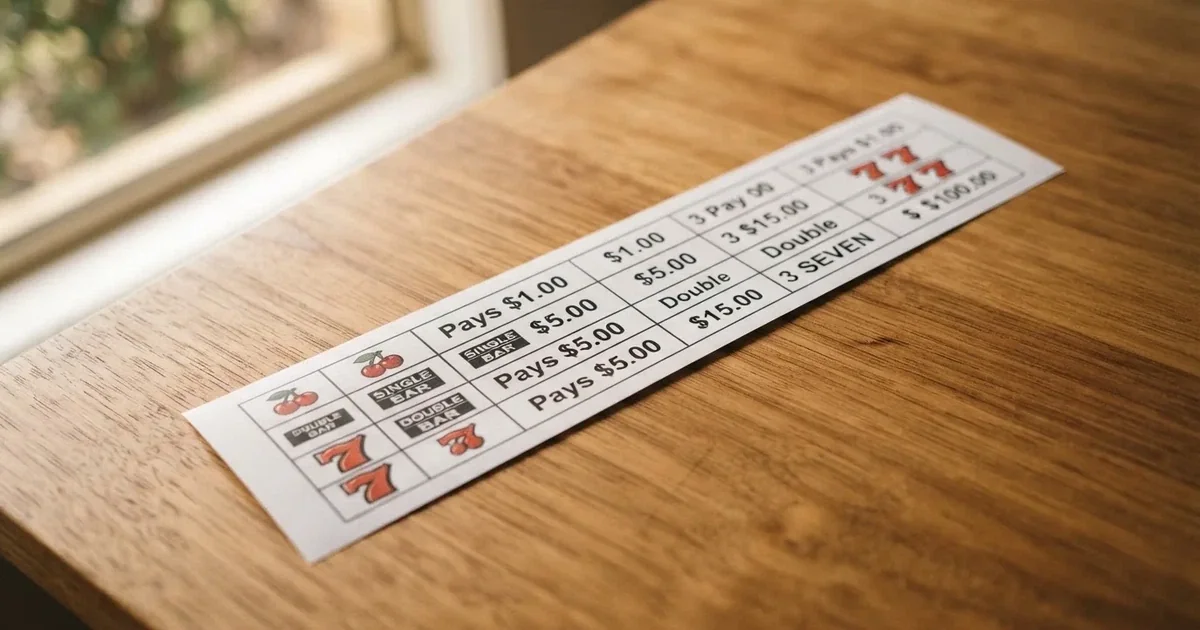
What five-reel slots actually look like in Australia
 Available in AU
In Australia, asking about five-reel online slots runs straight into a wall. Under the Interactive Gambling Act 2001, online casino games and online pokies cannot be licensed for real-money play in this country, and the Australian Communications and Media Authority has been steadily blocking offshore sites that try to offer them. Yet the format itself is well understood: it is the version of the slot machine most people picture when they picture one, with three rows of symbols across five spinning reels and a fixed set of paylines printed somewhere on the screen. Australians play a lot of slot machines, over 150,000 outside casinos in the eastern states alone, but the bulk of that play happens in licensed pubs and clubs on physical poker machines, not online. The format itself, the Australian legal frame, the ACMA’s enforcement record, the choice between licensed and unlicensed paths, and the eleven brands on the regulator’s formal-warning list: that is the picture the material below puts together.
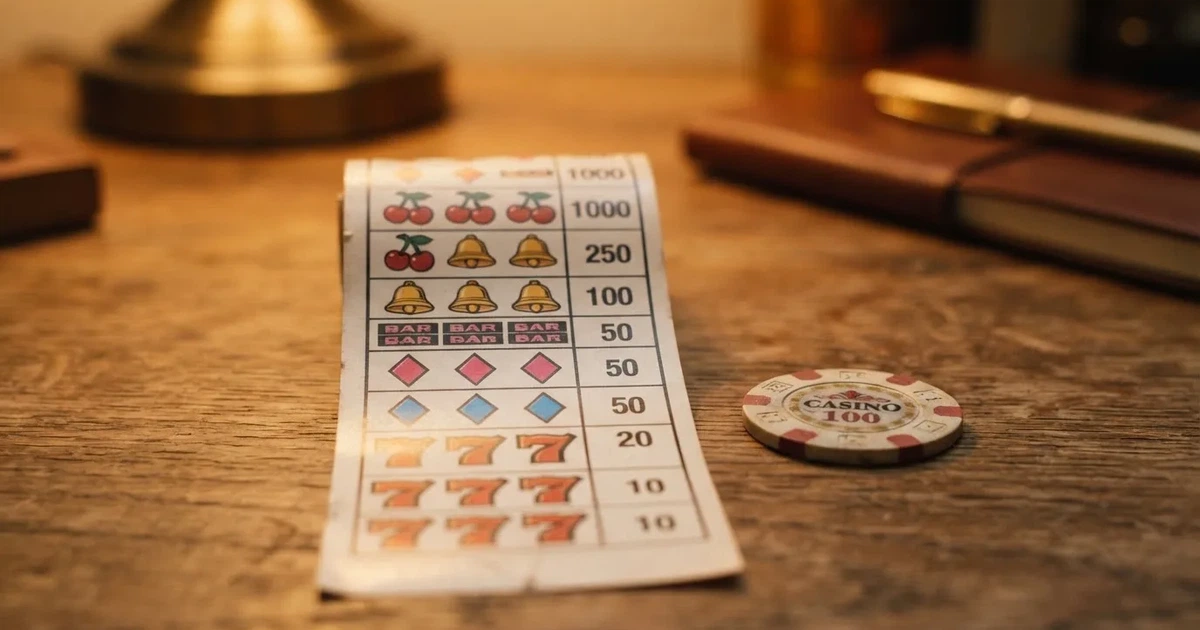
As of 17 October 2026, with the ACMA’s blocking register, enforcement record and formal-warning publications as published by the regulator.
Table of Contents
- The support services that exist before the choice is made
- What a “bonus” actually costs on an offshore five-reel site
- Paytables, symbol values and win lines: how a five-reel slot is actually built
- Landscape of offshore five-reel sites the ACMA has acted against
- Prohibitions under Australian law: what offshore five-reel sites are and aren’t
- Each of the eleven brands, and what the ACMA record says about them
- Frequently asked questions
The support services that exist before the choice is made
Three services matter for an Australian reader who is interested in five-reel slots, and they are worth setting down before anything else. None of them costs anything. All of them are confidential. All of them run around the clock.

The first is the National Gambling Helpline, on 1800 858 858. It is free from any Australian phone, staffed by professional counsellors, and operates twenty-four hours a day, seven days a week. The same service runs a web chat and email counselling through Gambling Help Online, where the entry page offers a “Begin chat” button and a list of state- and territory-specific helplines for readers who would rather talk to someone in their own jurisdiction. Both services are funded by the Australian government and exist for the specific case where the question “where can I play a five-reel slot” has turned into something else.
The second is BetStop, the National Self-Exclusion Register. BetStop went live in August 2023 and lets a person exclude themselves from every Australian-licensed online and phone wagering service at once, for a period they choose (three months, nine months, or permanently) and without having to contact each operator separately. The catch is the one that matters for the choice further down this material: BetStop binds only the Australian-licensed wagering services it covers. An offshore casino offering five-reel slots to Australians is not connected to BetStop and is not affected by a BetStop registration, because the site is not licensed in Australia in the first place. Excluding yourself through BetStop will not stop offshore sites from accepting deposits or marketing to email inboxes.
That gap is the reason the third service, the helpline, takes the front position. The counsellors can talk through what an offshore-only exclusion regime actually looks like, and they can help a caller draw the line where the law itself stops drawing it. Most major offshore operators run their own self-exclusion tools, and many of them participate in services like GamCare outside Australia, but none of those tools is overseen by an Australian regulator, and a registration on them does not flow through to a BetStop record. None of these services will tell a caller where to play. They will help a caller decide whether the question needs asking.
For a reader who is reading for curiosity rather than compulsion, the section is still worth the paragraph. The support infrastructure is part of what makes a serious comparison between paths possible, and the comparison further down assumes the reader can choose to step back. Picking up the phone at the point the comparison turns uncomfortable is the choice the helpline exists for, and a reader who never needed it has gained nothing by skipping past this section.
What a “bonus” actually costs on an offshore five-reel site
The marketing word “bonus” deserves a paragraph of its own before any operator write-up gets to use it. On every offshore five-reel site the ACMA has acted against, the welcome offer is presented as a cash gift: “100% up to A$500,” “200% on your second deposit,” “A$1,000 plus 200 free spins.” The marketing word works because it reads as a gift. It is not a gift. It is a loan against the player’s own future play, and it has a price that almost always runs higher than the headline number suggests.
The price is the wagering requirement. A site that offers a 100% match up to A$500 with a 40x wagering requirement on the bonus is not giving away A$500. It is requiring the player to place A$20,000 in bets before the bonus, and any winnings made with it, can be withdrawn. Each of those bets has a house edge attached, and the cumulative house edge on A$20,000 of bets at a typical five-reel slot return-to-player of around 96% is roughly A$800. The player is paying A$800 in expected losses to clear A$500 of “bonus” money, and they only do so if they happen to win enough at some point during the A$20,000 of play to have something left to withdraw. The arithmetic is the same statistical estimate that applies to any session of slot play; the bonus simply puts a turnover target on top of it.
Free spins work the same way, with an additional cap that almost no marketing page names. When an offer includes “200 free spins,” each spin usually has a fixed stake, and the wagering requirement on the resulting winnings is calculated as a multiple of the winnings, not of the spin count. A maximum cashout limit, typically five to ten times the bonus amount, frequently applies too, capping the upside in a way the marketing rarely mentions. The combination of a high wagering multiple, a fixed maximum cashout, and the slot-house-edge running on every spin of the wagering is what “bonus” actually means, and it is rarely a gift by the time the arithmetic is done.
The comparison that the marketing asks the reader to make is between the offer’s headline number and the deposit. The comparison the reader should be making is between the offer’s true cost (the expected loss during the wagering period) and the headline number itself. On most offshore five-reel sites that offer sits between 50% and 90% of the headline value, depending on the wagering multiple and the slot’s RTP. That is the figure that should be on the reader’s mind when the word “bonus” appears, and it is the figure none of them prints.
Two further mechanics are worth understanding, because both are common on the offshore five-reel sites further down and both are typically absent from the marketing summary. The first is game weighting. An offer of “100% up to A$500, 40x wagering on the bonus” sounds identical across operators, but two operators can apply the 40x differently. One counts every dollar wagered on a five-reel slot toward the requirement; the other counts only 20% of every slot bet toward it, so the actual turnover required becomes A$100,000 rather than A$20,000. The published headline number is the same in both cases. The number of dollars the player must turn over is not.
The second mechanic is the “abuse clause.” Most bonus terms include a paragraph that voids the bonus, and any winnings, if the operator decides the player has played in a way that “abuses” the offer. The clause is deliberately vague. It can be invoked for low-risk play patterns, for using a betting strategy the operator dislikes, or for the simple fact of winning too much. The operator’s discretion is the entire enforcement mechanism. The player has no Australian complaints body to appeal to; the offshore licensing regime the operator sits under is the only avenue, and most offshore licences are explicitly outside Australian jurisdiction.
For a reader who has decided to play anyway, the rules of engagement are simple. Read the wagering multiple before depositing; treat any offer above 30x as expensive and any offer above 50x as severe. Read the game-weighting list, because most sites count slots at 100% toward the requirement but count table games at 5% to 20%, which makes a slot-only bonus a slot-only requirement in practice. Read the maximum-cashout clause, because a capped bonus is a different product from an uncapped one even when the headline number is identical. None of this turns a losing proposition into a winning one. It turns a poorly understood losing proposition into one the player has agreed to knowingly.
The deeper problem is that none of these rules are enforced by an Australian regulator. The terms and conditions are written by the operator and adjudicated by the operator, and the only appeal mechanism is the operator’s own complaints email. A reader who loses A$800 in expected value during a wagering period, and who finds a term applied retroactively that voids the bonus, has no recourse under Australian consumer law because the operator is offshore and the conduct occurred outside Australia. The mathematics of the bonus are the first risk; the absence of any Australian complaint body is the second; and the second is the one the marketing never mentions.
Paytables, symbol values and win lines: how a five-reel slot is actually built
The five-reel slot is a direct mechanical descendant of the three-reel slot, and its modern video form is a further descendant of that. Charles Fey of San Francisco built the first automatic slot mechanism in the late nineteenth century, a three-reel machine with five symbols (horseshoes, diamonds, spades, hearts and the Liberty Bell), where three bells in a row paid the top prize of ten nickels. Bally’s Money Honey of 1963 introduced the bottomless hopper and automatic payout of up to 500 coins without an attendant; Fortune Coin Co. of Kearny Mesa, California, built the first video slot machine in 1976. The format the reader pictures when they picture a slot machine is the direct line from Fey to Money Honey to the modern cabinet.
What a five-reel slot does, mechanically, is add two extra reels of symbols and a much larger grid of potential winning combinations. A classic three-reel machine of Fey’s vintage ran roughly ten symbols per reel and offered about a thousand possible combinations across all three reels. A modern video slot machine runs five or more reels with fifty or more symbols per reel, and on the high end produces odds against a top combination of around three hundred million to one. The five-reel format sits between the two: more combinations than a classic three-reel, simpler odds than a six- or seven-reel video slot. That is the technical position it occupies, and it is the position most “classic five-reel” games marketed by offshore casinos are aiming at.
The paytable is the document that translates that mechanical position into something a player can read. On every regulated five-reel slot, the paytable is printed on the machine or made available through a help button on the screen; on offshore sites it is usually a static page linked from the game’s lobby. It lists each symbol, the credit value paid for three, four and five of that symbol on an active payline, and the rules for the bonus symbols (typically a wild that substitutes and a scatter that pays anywhere on the reels rather than only on a payline). It also lists the number of paylines and how they run across the reels.
Five-reel slots almost always run a fixed number of paylines between nine and forty, and most modern ones run twenty-five. The paylines on a five-reel game are usually read from left to right across adjacent reels, and “ways to win” systems (where every left-to-right adjacent match counts) replaced fixed paylines on many games in the 2010s. The paytable distinguishes these in a single line that says either “paylines” or “ways.”
Two further figures appear in the paytable. The first is the return-to-player (RTP), the percentage of all money wagered that the game returns to players in the long run. The second is the volatility, which describes how the game distributes its payouts: low-volatility games pay smaller amounts more often, high-volatility games pay larger amounts less often. Neither figure is determined by the reel count alone; both are set by the symbol weighting on each reel and by the paytable’s payout structure. A five-reel slot with a tight symbol weighting and a top prize of fifty credits can have a much higher house edge than a five-reel slot with a loose weighting and a top prize of five thousand. The reel count is the headline; the symbol weighting and the paytable are the substance.
For a reader trying to read a five-reel paytable without any experience of slot games, the practical order is straightforward. Identify the symbols and their payouts for three, four and five matches. Note which symbols are wild and which are scatter. Read the line that describes the bonus feature and how it is triggered. Identify the number of paylines and the cost per line. Then read the RTP and volatility. None of those figures by itself tells the reader whether the game is worth playing; they tell the reader what the game is. The choice about whether to play it at all is a different question, and it is one the section on prohibitions returns to.
A worked example makes the paytable’s mechanics more concrete. Take a five-reel, twenty-five-payline slot with an A$0.01 minimum line bet, so the minimum cost per spin is A$0.25. The paytable shows five identical symbols each paying 200 credits for a five-of-a-kind match on the minimum line, with the wild symbol substituting. A player who hits five wilds on a max-bet spin of A$2.50 wins A$500 in credits. The same player who hits five wilds on the A$0.25 spin wins A$50. The paytable is the same; the actual payout depends entirely on the bet size. Most five-reel slot marketing emphasises the max-bet payout because the headline number looks dramatic; the cost-per-spin reality is what a reader should hold onto.
A second worked example clarifies what volatility actually means in play. A low-volatility five-reel slot might offer a hit frequency of one win in every three spins at an average payout of 1.5x the line bet, while a high-volatility version might pay out once in every eight spins at an average of 12x the line bet, with a small chance of the top prize of several thousand. Across a thousand spins, both games have a similar expected total payout (set by the RTP), but the player experience is wildly different. The low-volatility game pays small amounts frequently; the high-volatility game mostly takes the player’s money and occasionally returns a much larger amount. Neither is “better” than the other; they are different products aimed at different players, and a paytable that prints only the top prize hides the difference.
It is also worth understanding what an Australian player is not looking at when reading a five-reel paytable on an offshore site. The symbols, the line costs and the bonus descriptions will look familiar. The RTP, if it appears at all, will appear without a regulator’s verification beside it. The paytable on a regulated Australian poker machine is audited by the state gaming authority and tied to a sealed logic board; the paytable on an offshore site is published by the operator itself, with no independent verification, and is subject to the operator’s right to change it at any time. Reading the same document on two different sites is reading the same words with very different things behind them.
Landscape of offshore five-reel sites the ACMA has acted against
The choice in front of an Australian reader who wants to play a five-reel slot online is, in practice, a choice between licensed paths and unlicensed paths. Licensed paths run through Australian pubs, clubs and casinos, on physical machines, regulated by state and territory authorities; the section on fundamentals covers those. Unlicensed paths run through offshore sites that offer five-reel slots to Australians from servers outside the country, that the ACMA has been steadily blocking, and that have no Australian consumer protection. The rest of this section maps the second of those two landscapes.
Eleven operators appear in the ACMA’s published formal-warning record with five-reel slot content or broader online casino offerings the regulator has identified as prohibited interactive gambling services. The table below sets out each one with the date and operator name the ACMA published.
| Brand | ACMA action and date | Operator named by the ACMA | Subject support |
|---|---|---|---|
| RocketPlay | Formal warning, March 2026 (also May 2022) | Pulsup Ltd (also Dama N.V.) | — |
| Level Up Casino | Formal warning, May 2022 | Dama N.V. | listings-only (Bgaming catalogue) |
| Woo Casino | Formal warning, March 2025 | Dama N.V. | — |
| Spirit Casino | Formal warning, May 2025 | Dama N.V. | — |
| National Casino | Formal warning, July 2025 | Consolutetish S.R.L. | listings-only (Wikipedia) |
| Bizzo Casino | Formal warning, July 2025 (also 2022) | Consolutetish S.R.L. (also TechSolutions) | — |
| Ignition Casino | Formal warning, July 2025 | Bamboo Media | — |
| Instant Casino | Formal warning, February 2025 | EOD Code SRL | — |
| Jackbit | Formal warning, April 2026 | Ryker B.V. | — |
| Casino Intense | Formal warning, April 2025 | Sterplay Holding Ltd | listings-only (general Australian coverage) |
| Sky Crown | Formal warning, September 2022 | Hollycorn N.V. | — |
The table is a landscape, not a recommendation. The “Subject support” column records what the underlying research for this material could confirm about each brand’s five-reel slot offering: a no-data marker (an em dash) means research carries no specific evidence one way or the other, while “listings-only” means the brand appears in third-party coverage of the broader Australian gambling picture (Bgaming’s game catalogue, the Wikipedia entries on online gambling, general Australian media coverage of the gambling landscape) without any specific verification of its five-reel slot product. Where the column is empty, the brand is presented on the ACMA’s published action and not on its product.
The blocking pace against offshore sites has been steady since the ACMA first asked Australian internet service providers to block illegal gambling websites in November 2019. As of the ACMA’s most recently published enforcement round on 26 June 2026, a running total of 1,751 illegal gambling and affiliate marketing websites had been blocked since that first request. The 26 June 2026 round alone asked ISPs to block twelve further sites: 7Signs, ChromaBet, Donbet, Duospin, Freshbet, Slots Gem, Jacks Club, Lucky Start, Pointsbetz.com, Spinrise, Vinyl Casino and Wildsino.
Across the 79 months between November 2019 (the date of the first blocking request) and June 2026 (the date of the ACMA’s most recently published enforcement round, on which the figures here are pinned), the running total of 1,751 blocked sites averages out to roughly 22 blocks per month. Set the end point a few months either side of that report (earlier, to the first quarter of 2026; later, to a hypothetical round that has not yet been published) and the figure moves within a band of roughly 20 to 24 sites per month, depending on whether the start point is taken as November 2019 (the first formal request) or the first actual block, which followed shortly after. Across the period as a whole, the average is close to 22; the monthly variation is wider, with individual enforcement rounds publishing a dozen or more sites in a single day and quiet stretches publishing none at all.
More than 230 unlicensed gambling services have left the Australian market since enforcement was strengthened in 2017, according to the ACMA’s enforcement reporting, and H2 Gambling Capital’s 2025 report estimates that Australians lose about A$3.9 billion a year to illegal gambling sites, with the share of gambling going through legal channels falling from 74% in 2021 to 64%. The blocking pace above is the regulator’s response; the A$3.9 billion is what the response has not yet stopped.
For a reader weighing the choice between licensed and unlicensed paths, the landscape tells a one-sided story. Every brand on the table is unlicensed in Australia by definition (the ACMA’s formal warnings target operators offering prohibited services to Australians, and a warning is a public record that the operator has been told once and is continuing). The variation between brands is in timing, in parent operator, and in the thinness of the public trail, not in their legal status. The eleven write-ups further down set out each one individually.
The progression in dates is itself worth reading. Sky Crown’s warning dates to September 2022 and is the oldest on the list; the cluster from Dama N.V. (Bambet, Dazard, Level Up, Rocketplay, Wild Tornado and Cobra Casinos) follows in May 2022; the next two years see no further formal warnings to online casino operators on this list until Woo Casino in March 2025, after which the pace picks up sharply. Between February 2025 and April 2026, nine of the eleven brands on the table received their formal warnings, a fourfold acceleration in the rate at which the ACMA is moving against individual operators offering prohibited services.
Two explanations for that acceleration are visible in the public record. The first is the maturing of the ACMA’s investigative processes: as enforcement has strengthened since 2017, the regulator has both built a body of prior warnings to draw on and developed faster pathways from complaint to formal action. The second is the offshore operators’ own practice of re-emerging under new corporate names after a warning. Bizzo Casino appears twice on the table, once in 2022 under TechSolutions Group N.V. and once in 2025 under Consolutetish S.R.L., and is the clearest published example of that pattern. RocketPlay’s two warnings (May 2022 under Dama N.V. and March 2026 under Pulsup Ltd) point in the same direction.
The names in the third column of the table are the corporate identities the ACMA named in each warning, and they are not the same as the brand names in the first column. RocketPlay as a brand is offered by both Dama N.V. and Pulsup Ltd; Woo Casino, Spirit Casino, Level Up Casino and the rest of the Dama N.V. cluster share a single corporate parent; Bizzo Casino sits under two different operators across its two warnings. The recurring pattern of a brand being offered by successive corporate parents is one the ACMA’s enforcement record has been catching up with, and the catching-up is what the pace in the calculation above reflects.
Each row in the table is also a choice a reader can make. The choice is rarely between one offshore site and another; it is between any of them and the licensed alternatives the section on prohibitions and the section on fundamentals set out. The operator write-ups that follow do not recommend any of these brands. They describe them, name the ACMA action against each, and record what the public record carries on their offering. That is the limit of what a fair comparison of unlicensed offshore sites can honestly say.
| Environment | Regulator | Consumer Protection | Payout Verification |
|---|---|---|---|
| Licensed Venues | State / Territory Authority | Included / Dispute Access | Audited by Regulator |
| Offshore Sites | None (Offshore) | None / No Recourse | Unverified |
Outside the question of offshore sites, there is a much larger Australian landscape that the five-reel slot is part of, and it is worth setting down before the prohibitions section, because the legal frame makes more sense once the legal landscape is visible.
The headline figure is the count of slot machines outside Australian casinos, which is published state by state. As of June 2023, New South Wales reported 87,298 of these machines; Victoria, 26,380 in 2021-22; Queensland, 21,122 in October 2023; South Australia, 11,672 in September 2023; and the ACT, 3,587 in November 2023. Together, those five jurisdictions account for over 150,000 machines outside casinos, in pubs, clubs and hotels. New South Wales legalised slot machines in 1956; by 2010, Australia operated an estimated 97,103 gaming machines outside casinos, a per-capita rate about five times that of the United States.
The machine in an Australian pub or club is the five-reel video slot. The dominant format on a poker-machine floor is exactly the five-reel configuration the section on paytables described: three rows of symbols across five spinning reels, with twenty to forty paylines, a return-to-player audited by the state gaming authority, and a logic board sealed against tampering. The state regulators (Liquor & Gaming NSW, the Victorian Gambling and Casino Control Commission (VGCCC), the Queensland Office of Liquor and Gaming Regulation, Consumer and Business Services in South Australia, and the ACT Gambling and Racing Commission) set the technical standards, approve the games that go on the floor, and audit the payout rates.
That regulation is the substantive difference between the licensed machine and the offshore online version. A licensed Australian poker machine pays out at a return-to-player set by the state, on a logic board the regulator has sealed, on a floor the regulator inspects, with a complaint pathway back to the regulator if the machine fails to perform. The offshore five-reel slot operates under none of those constraints: the payout rate is whatever the operator publishes (or does not), the logic board is whatever the operator’s server runs, and the complaint pathway runs to the operator’s own customer-service email and any offshore licensing authority the operator sits under. The format is the same. The substance behind the format is different in kind.
Three further pieces of context matter. The first is the difference between the format and the formats adjacent to it. Three-reel classic slots still exist in licensed venues but are now a minority of the floor; six-reel and seven-reel video slots are common but read as five-reel games to a player at the machine; “ways to win” games remove the payline concept entirely but still display five reels. The five-reel slot is the central case, not the only one.
The second is the count of machines itself, which puts the offshore question in proportion. The ACMA’s running tally of 1,751 blocked sites since November 2019 is a large number of individual websites. It is a small number compared with the 150,000-plus machines in pubs and clubs across the eastern states. The legal, regulated path for playing a five-reel slot is not theoretical in Australia; it is the dominant one, and the offshore path is the alternative the regulator has been steadily narrowing.
The third is the broader gambling landscape the slot sits within. H2 Gambling Capital’s 2025 report estimates that Australians lose about A$3.9 billion a year to illegal gambling sites, with the share of gambling going through legal channels falling from 74% in 2021 to 64%. The licensed side of that landscape is dominated by wagering operators, and the Northern Territory Racing and Wagering Commission (NTRWC) regulates 52 of Australia’s online bookmakers, including Sportsbet, Bet365 and Ladbrokes, all licensed in the Territory for tax reasons. The commission has no full-time staff and meets once a month in Darwin, a fact that often comes up when the federal regulator’s enforcement capacity is debated.
For a reader choosing between paths, the licensed machine has three things the offshore site does not. The first is a regulated return-to-player. A typical pub or club five-reel slot in NSW or Victoria returns between 87% and 92% to players, with the exact figure published on the machine and audited by the regulator; the offshore equivalent returns whatever the operator’s published figure says, if it publishes one, and that figure is rarely independently verified. The second is a physical money path: a player can put cash in and take cash out, with no deposit to a foreign server, no credit card restriction and no risk of a withdrawal being held for “verification.” The third is a complaints body. A player who believes a licensed machine has malfunctioned can complain to the state gaming authority and have the machine’s records pulled and audited. A player who believes an offshore slot has malfunctioned can complain to the operator, and to the offshore licensing authority the operator sits under, and to nothing in Australia.
The choice between the licensed machine and the offshore slot is not a choice between two products of the same kind. It is a choice between a regulated product and an unregulated one, between a physical venue and a server in another country, between an Australian complaint pathway and the absence of one. Reading that distinction is the prerequisite to the prohibitions section that follows, because the prohibitions apply only to the second of those two paths.
Prohibitions under Australian law: what offshore five-reel sites are and aren’t
The prohibitions that apply to offering online casino games, including five-reel slots, to Australians sit in the Interactive Gambling Act 2001 (IGA), strengthened by the Interactive Gambling Amendment Act 2017. The Act makes it an offence to provide online casino games, online pokies or in-play betting to a person in Australia, and no state or territory issues a licence for them. What is licensable is wagering on races and sport placed before the event, lotteries and keno (in practice licensed by the Northern Territory through the NTRWC). The minimum age for any form of licensed gambling in Australia is 18.

The IGA targets the operator, not the player. An Australian who plays a five-reel slot on an offshore site has not committed an offence under the Act. The Act’s offence is supplying the prohibited service to a person in Australia; the operator carrying that supply is the target, and the ACMA investigates, issues formal warnings, and directs Australian internet service providers to block illegal sites.
What the player has done, however, is step outside Australia’s consumer protection regime. An offshore five-reel slot is not licensed by any Australian regulator; it does not have to comply with any Australian technical standard; and it offers no Australian complaints body. If the operator refuses a withdrawal, applies a bonus term retroactively, or simply closes the account with a balance, the player has no Australian regulatory recourse. The offshore licensing authority the operator sits under (typically Curaçao, Malta, or Anjouan) is the only avenue, and even those authorities routinely refuse to intervene in disputes over bonus terms. The absence of any consumer protection is itself the substantive prohibition, even though the law does not name it as such.
Enforcement against operators has accelerated. As of the ACMA’s most recently published enforcement round on 26 June 2026, a running total of 1,751 illegal gambling and affiliate marketing websites had been blocked since the first blocking request in November 2019, with more than 230 unlicensed gambling services having left the Australian market since enforcement was strengthened in 2017. The 26 June 2026 round alone asked ISPs to block twelve further sites, named in the landscape section above. H2 Gambling Capital’s 2025 report estimates that Australians lose about A$3.9 billion a year to illegal gambling sites, and that the share of gambling going through legal channels fell from 74% in 2021 to 64%.
The 2026 reform frame. The Interactive Gambling Amendment (Gambling Reform) Bill 2026 passed Parliament on 19 August 2026. Its advertising and inducement measures commence on 1 January 2027, law with a start date, not yet in force on a 2026 page. The Bill tightens rules on how licensed wagering operators can advertise and offer inducements to customers; it does not legalise online casino games, and it does not change the prohibition on offering five-reel slots to Australians. The substantive legal frame on a 2026 page is the IGA 2001 as amended in 2017, with the 2026 reform sitting alongside it as a tightening of the licensed side.
Payments. Since 11 June 2024, credit cards, credit-related products and digital currency are banned as payment for licensed online wagering in Australia, with penalties up to A$247,500 for operators that accept them. The legal deposit routes for licensed wagering are debit card, bank transfer, PayID/Osko and BPAY. A site asking an Australian customer for a credit card or a crypto deposit is operating outside Australian rules. The payment ban does not directly extend to offshore casino sites (they are not licensed in Australia, so the ban’s penalty mechanism does not reach them), but it is a useful indicator: the payment methods an offshore site accepts are the payment methods the Australian regulator has banned, which is itself information about where the site sits in the regulatory landscape.
Tax. Gambling winnings of a recreational Australian player are not assessable income under section 6-5 of the Income Tax Assessment Act 1997, and gambling losses are not deductible, unless the person carries on a business of gambling, a model the Australian Taxation Office (ATO) treats on its own facts. For most readers, the short version is: winnings from a five-reel slot are tax-free, and losses are not recoverable against other income. The ATO’s position is the authoritative one on any specific case.
The substantive position on a 2026 page, then, is straightforward. Online five-reel slots cannot be licensed in Australia. Offshore sites offering them operate outside Australian law, with no Australian consumer protection. The ACMA’s enforcement has accelerated to roughly 22 sites blocked per month on average since November 2019, with 1,751 blocked to date. The 2026 reform tightens the advertising rules on the licensed side but does not change the prohibition on the offer of five-reel slots itself. The reform is law with a commencement date of 1 January 2027, not yet in force.
For a reader weighing the choice between paths, the legal frame is the binding constraint, not a recommendation. The frame says: if a reader wants to play a five-reel slot for real money in Australia, the legal venue is a licensed pub, club or casino, on a physical machine, regulated by the state gaming authority. The frame does not enforce that recommendation against any individual player, but it does enforce it against any operator that tries to offer the alternative, and the eleven operators in the landscape section and the write-ups below are the public record of that enforcement.
The prohibition also closes off a category of site the reader may have heard of. A site displaying an offshore licence (Curaçao, Malta, Anjouan) is not, by virtue of that licence, authorised to offer five-reel slots to Australians. The offshore licence authorises the site to operate from its jurisdiction; it does not authorise the site to take deposits from Australians or to advertise to Australians. Every brand on the table in the landscape section displayed one or more offshore licences at the time of its warning, and the ACMA’s formal warning proceeded regardless. The licence is what the operator chooses to publish. The prohibition is what the Australian regulator enforces.
Each of the eleven brands, and what the ACMA record says about them
The eleven brands below sit on the ACMA’s published formal-warning list. Each one is presented on the ACMA’s action against it, on what the underlying research could verify about its offering, and on the page’s own reading of where it sits in the record. None of the eleven is recommended. Each one has been formally warned for offering prohibited online casino services to Australians.
RocketPlay — the brand warned twice, four years apart
Pulsup Ltd, the operator the ACMA named in March 2026 for offering prohibited services to Australians through the Rocketplay.com.au domain, is a different corporate entity from Dama N.V., the operator the ACMA named in May 2022 for the same brand. Both warnings sit in the public record, both for offering online casino games to Australians, and both are the ACMA’s published response to the brand’s continued operation. RocketPlay’s two warnings are the clearest published example on this list of what an offshore brand looks like when it persists across operator changes. What the brand offers specifically is not something the research for this page could confirm or deny. The verdict: RocketPlay is the most direct indicator on the table of how the ACMA’s enforcement reaches a brand, not just an operator. Two different corporate parents, four years apart, two formal warnings, and the same brand name is the public record. A reader interested in the offshore path should weigh the regulator’s continued attention to the same brand twice as evidence, not as coincidence.
Level Up Casino — part of the original Dama N.V. cluster
Level Up Casino was named by the ACMA in May 2022 as one of six Dama N.V. brands the regulator formally warned that month, alongside Bambet, Dazard, Rocketplay, Wild Tornado and Cobra Casinos. The warning covered the offer the prohibitions section above sets out as prohibited under the Interactive Gambling Act 2001. Level Up Casino has not appeared in a separate ACMA formal warning since, though it remains on the broader enforcement landscape as part of the original cluster. The brand’s subject support is listings-only: it appears in the Bgaming catalogue of online casino game suppliers without specific verification of its five-reel slot offering, and it is presented here on that third-party mention rather than on a confirmed product offering. The verdict: Level Up Casino is the row of the table where the research is thinnest, and the thinning is itself the point. A brand that research can mention via a third-party catalogue, against an ACMA warning issued four years ago, is a brand the reader should weigh against the depth of evidence available rather than against the brand’s own marketing.
Woo Casino — the Dama N.V. brand that re-emerged in 2025
Woo Casino appeared on the ACMA’s published warning record in March 2025 as one of the Dama N.V. brands the regulator formally warned that month, two years and ten months after the original cluster of warnings in May 2022. The intervening period saw no ACMA action against Woo Casino specifically, even as the broader offshore enforcement landscape continued. What Woo Casino actually offers is not something the research for this page could confirm. The verdict: Woo Casino’s row carries one piece of new information the date columns above already hint at. A brand warned in May 2022 as part of the original Dama N.V. cluster, and then again in March 2025 under the same parent, has been told the same thing twice. The gap between the two warnings is itself the substance, and the gap is the fact a reader should weigh against any current marketing.
Spirit Casino — the second Dama N.V. brand warned in 2025
Spirit Casino drew its formal warning from the ACMA in May 2025 as one of the Dama N.V. brands the regulator formally warned that month, two months after the Woo Casino warning and three years after the original 2022 cluster. Like Woo Casino, Spirit Casino had not appeared in a separate ACMA formal warning before May 2025. What Spirit Casino offers sits outside the scope of the research for this page. The verdict: Spirit Casino and Woo Casino together demonstrate what “the same operator, same line of product, two months apart” looks like in the regulator’s enforcement record. Reading the Woo Casino row above and the Spirit Casino row below as a single cluster is the correct read; the regulator’s pace in 2025 was fast enough that two separate Dama N.V. brands drew separate warnings within sixty days of each other, and the pace is what the row records.
National Casino — the brand listed only in passing
National Casino was named by the ACMA in July 2025 as one of two Consolutetish S.R.L. brands formally warned for prohibited Australian services. The brand’s subject support is listings-only: it appears in the Wikipedia entry on online gambling without any specific verification of its five-reel slot offering. The verdict: National Casino is one of three brands on this table whose research trail runs through general coverage rather than product-specific evidence, and the limitation is worth noting. A reader making a decision on the offshore path should weigh the thinness of the trail. The brand is on the ACMA’s warning list, but the public evidence of its product is what Wikipedia, not the operator, has published.
Bizzo Casino — the brand warned twice, three years apart, by two different operators
Bizzo Casino appears twice on the ACMA’s formal-warning list. In 2022, the ACMA formally warned TechSolutions Group N.V. and TechSolutions Group Limited over Bizzo Casino. In July 2025, the ACMA formally warned Consolutetish S.R.L. over the same brand. Both warnings covered prohibited Australian service offers. The brand’s product line remains unverified. The verdict: Bizzo Casino is the clearest published example of a brand that has persisted across two different operator identities and two separate formal warnings. Reading the brand’s two-row presence as a single case is the correct reading. A brand warned twice, under two different parent operators, for an Australian-facing offering that is prohibited, and that has continued regardless, is the public record.
Ignition Casino — the brand whose name borrows from a familiar US-facing operation
The ACMA named Ignition Casino in a formal warning issued to Bamboo Media in July 2025, with the warning covering the offer of online casino games to Australians. The brand name is shared with a separate US-facing online casino operation; whether the two are related at the corporate level is not something the research for this page establishes. What the brand offers is not something the research for this page could verify. The verdict: Ignition Casino is the row on the table where the brand name itself is the most prominent marketing feature, and the prominence is worth flagging. A reader who has encountered the US-facing Ignition Casino brand and is searching for an Australian equivalent has reached one of the ACMA’s warned operators. That is the limit of what the row says with confidence, and it is enough to make the choice clear.
Instant Casino — the brand warned early in the 2025 enforcement acceleration
Instant Casino drew its formal warning from the ACMA in February 2025 as one of the brands EOD Code SRL operated for Australian customers. The warning addressed prohibited online casino services. February 2025 was early in the cluster of 2025 warnings; the next formal warning on this table, Woo Casino, came a month later. The brand’s specific product offering remains unconfirmed. The verdict: Instant Casino is the row on the table where the timing, February 2025, is the most informative detail. A reader interested in how the regulator’s pace accelerated through 2025 should read the February entry as the start of that acceleration, and the rows that follow as the pace it produced.
Jackbit — among the most recent warnings on the list
Jackbit appeared on the ACMA’s formal-warning record in April 2026 as one of two brands Ryker B.V. operated for Australian customers. The warning addressed prohibited online casino services. April 2026 is among the most recent dates on this table. The brand’s specific product offering remains unverified. The verdict: Jackbit is the row on the table where “most recent” carries the most weight. A reader reading the table in chronological order reaches Jackbit near the bottom, and the position reflects the ACMA’s published pace rather than any feature of the brand itself.
Casino Intense — the brand with the thinnest public trail
Casino Intense drew the ACMA’s attention in April 2025 as one of the brands Sterplay Holding Ltd operated for Australian customers. The warning addressed prohibited online casino services. The brand’s subject support is listings-only: it appears in passing in general Australian coverage of the gambling landscape (including media coverage of ACMA enforcement), without specific verification of its five-reel slot offering. The verdict: Casino Intense is the row on the table where the public trail is thinnest, and the thinning is the most informative feature. A brand that research reaches only through general Australian coverage, against an ACMA warning issued in the regulator’s 2025 acceleration, is a brand whose marketing weight runs ahead of its verifiable substance.
Sky Crown — the oldest formal warning on this list
Sky Crown’s ACMA warning dates to September 2022, when the regulator issued a formal warning to Hollycorn N.V. covering Sky Crown and Blue Leo. The warning addressed prohibited online casino services. September 2022 is the earliest date on this table. What Sky Crown offers remains unverified. The verdict: Sky Crown is the row on the table where the date is the most informative feature, and the date is what the reader should weigh. A formal warning issued in September 2022 sits at the start of the ACMA’s accelerated enforcement against online casino operators, and reading the brand’s row against the rows that follow is reading the regulator’s pace from its early stage to the 1,751-block total of June 2026.
Frequently asked questions
What sets a classic five-reel slot apart from a modern video slot?
The format, mostly. A classic five-reel slot typically runs twenty to twenty-five fixed paylines and a small set of features. A modern video slot runs “ways to win” rather than fixed lines, multiple bonus rounds, and reel symbol counts that can reach fifty per reel. The reel count is the headline; the paytable is the substance.
Are five-reel machines available in licensed Australian venues?
Yes. The dominant poker-machine format in Australia is a five-reel video slot. New South Wales reported 87,298 such machines outside casinos in June 2023; Victoria, Queensland, South Australia and the ACT add tens of thousands more. They are physical machines in physical venues, regulated by state authorities, and the only legal place to play a real-money five-reel slot in Australia.
Do five-reel slots pay out at a different rate than newer formats?
The reel count alone does not determine the payout rate. Symbol weighting and paytable design do. Most regulated five-reel slots publish a return-to-player between 87% and 92%; offshore versions rarely publish anything. The reel count is the format; the return-to-player is the substance.
Is an online five-reel slot the same game as a physical five-reel machine?
Mechanically, yes. The math (a random number generator producing a symbol combination, the combination checked against a paytable, the payout calculated) is the same. What differs is the venue. A physical machine sits in a regulated Australian venue; an offshore online machine sits on a server outside Australia with no Australian regulator and no consumer protection.
Can an Australian legally play five-reel slots for real money online?
No. The Interactive Gambling Act 2001 makes it an offence for an operator to offer online casino games, including five-reel slots, to a person in Australia, and no Australian state or territory issues a licence for them. The law targets the operator, not the player, but the player has no Australian consumer protection and no recourse if a withdrawal is refused.
Prepared by the Casino Jackpot Hub editorial staff.