
PayID, no-deposit pokies bonuses, and the choice that isn’t on the table
Data current as of 4 November 2026 and verified against the Australian Communications and Media Authority’s register of formal warnings and its published blocking notices.
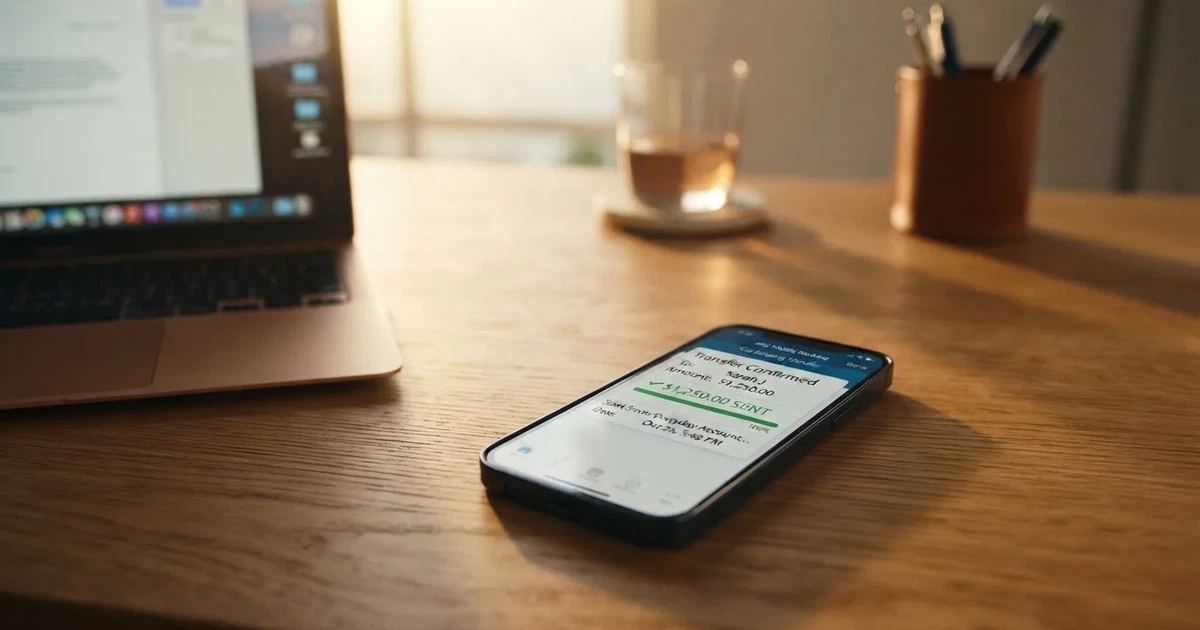
The combination “PayID + no deposit pokies bonus” is sold to Australians as a frictionless experience. PayID is the rail; the bonus is the offer; the casino is the product behind it. Two of the three pieces are legitimate in Australia. The third is not. The page below is the work of separating the pieces: what PayID actually delivers on a bank-to-bank transfer, what a “no deposit” bonus actually costs the player who claims it, what the ACMA has actually said about the operators running them, and what the only legal paths through the Australian market look like.
Table of Contents
- Settlement speed: what PayID actually delivers on a bank-to-bank transfer
- Landscape of PayID pokies no-deposit bonus claims
- Summary of enforcement actions
- Fundamentals of PayID pokies no-deposit bonus offers
- Prohibition under Australian law: what the Interactive Gambling Act actually says
- When the marketing has gone too far
- RocketPlay — the brand re-warned under a new operator
- Level Up Casino — an early Dama N.V. brand still on the list
- Woo Casino — a March 2025 Dama N.V. addition
- Spirit Casino — the most recent Dama N.V. brand
- National Casino — a July 2025 Consolutetish brand
- Bizzo Casino — the brand warned twice under two operators
- Ignition Casino — a Bamboo Media brand sharing a July 2025 notice
- Instant Casino — the brand appearing in payment-rail listings
- Jackbit — the brand sharing an April 2026 notice with CasinOK
- Casino Intense — the brand with the most Australian directory entries
- Sky Crown — the oldest warning in the set
- The blocking rate behind those numbers
- Frequently asked questions
Settlement speed: what PayID actually delivers on a bank-to-bank transfer
The thing being marketed when an offshore casino offers “PayID pokies no deposit bonus” is two separate products welded together. PayID is real infrastructure. It is an Australian payment identifier run on the New Payments Platform, offered through more than 100 Australian financial institutions and built into their online banking. It links a bank account to something easier to remember — a mobile number, an email, an ABN or an Organisation Identifier — so a transfer goes through without typing in a BSB and account number. The New Payments Platform launched in February 2018 to let households, businesses and government agencies make simply-addressed, near real-time payments around the clock, and the Reserve Bank of Australia is its regulator and overseer. The Reserve Bank also owns and operates the Fast Settlement Service that lets those transactions settle individually in close to real time, twenty-four hours a day. The whole thing sits inside the Australian financial system, not alongside it.
The “no deposit bonus pokies” half is something else. It is a marketing promise attached to a product — online casino games and online pokies — that no Australian state or territory licenses. Offshore operators spend considerable effort attaching the words “PayID” and “instant withdrawal” to those offers because the Australian payment system makes the deposit side feel legitimate. The site is still an offshore casino. PayID just makes the money move quickly into it.
What “instant” actually means on a PayID transfer
Under Osko by Australian Payments Plus, a bank transfer between participating institutions typically arrives in under a minute, twenty-four hours a day, including weekends, whether it is addressed to a BSB and account number or to a PayID. That figure describes the network. It does not describe what happens after the money lands at the offshore operator’s bank. The receiving end still has to credit the player’s casino balance, run any verification the operator requires, and — when a withdrawal is requested — clear whatever internal review the operator imposes before sending money back. The transfer itself is fast. The casino workflow that wraps around it is not part of the PayID network and is not covered by PayID’s consumer protections.
This is the line that gets blurred in marketing. “Instant PayID withdrawal” sounds like the network will deliver winnings the moment the player hits cashout. It will not. The network delivers the transfer at the speed the network promises; everything upstream is on the operator’s clock, and the operator’s clock is governed by the operator’s own terms page.
The payment-system operator’s own warning
Australian Payments Plus, which runs PayID, has taken the unusual step of publishing a direct warning about gambling transfers. It tells Australians plainly: “If you are asked to transfer funds to a PayID on an illegal gambling site, it is almost certainly a scambling website.” The same notice defines “scambling” as slang for illegal online gambling platforms advertised on social media and messaging apps that trick people into gambling on a scam site, and advises anyone who thinks they have been scambled to contact their financial institution. PayID will never contact a customer directly; emails or text messages claiming to be from PayID are a scam, and PayID never asks anyone to send money in order to receive money or to “upgrade” an account.
This is a payment-system operator calling out the pattern by name. The combination “PayID + no deposit bonus + pokies” is the pattern AP+ is warning about.
What a name check actually shows you
PayID transfers display the account holder’s name before the sender confirms the payment — a fraud check built into the rail. On an offshore casino site, the name displayed is the receiving business, not a personal account. A punter transferring to a casino’s PayID sees the casino’s registered business name and nothing else, and the rail gives no protection beyond that one display. The bank may still process the payment. The recourse if something goes wrong is with the offshore operator, which sits outside every Australian consumer protection regime.
By April 2025, more than 25 million PayIDs were registered in Australia — a figure that puts the system among the most heavily used real-time payment rails in any country, and explains why offshore operators want their brand attached to it.
Why “no deposit” still needs a payment rail
The marketing pitch that needs unpicking is structural. A no-deposit bonus is meant to require no deposit from the player, so why would the site need PayID at all? The answer is that any withdrawal, when one is permitted, has to go somewhere. The deposit side is what the bonus waives. The withdrawal side — what happens when a player meets a wagering requirement and tries to cash out — is where PayID becomes useful to the operator. A PayID payout arrives fast and looks like a normal Australian bank transfer, which is why it appears in the marketing.
PayID also lets the operator route the payment through a system most Australian banks already accept, which keeps the transaction inside the customer’s ordinary transaction history rather than flagging as an international wire. The licensed side of the market, by contrast, may not take credit at all: under the Interactive Gambling Act 2001 as amended in 2023, Australian-licensed online wagering services cannot accept credit cards or other credit-related products, a restriction that also shapes how PayID-linked bank transfers can be used for wagering on the legal side. Banks’ own controls fill the gap on the card path — Westpac’s card-level gambling block refuses authorisation on transactions carrying the merchant code “Betting/Casino Gambling” on eligible personal credit and debit cards. ANZ’s app-level block, when turned on, blocks gambling transactions made through a digital wallet such as Apple Pay on an eligible card as well as the physical card, with a 48-hour waiting period before the block can be removed and a candid warning that not all gambling transactions will be blocked and some non-gambling transactions may be blocked in error. Those controls are built for the card path. The PayID path clears as a normal bank transfer, with no merchant category to filter on.
Landscape of PayID pokies no-deposit bonus claims
Every brand below is one the Australian Communications and Media Authority has issued a formal warning to under the Interactive Gambling Act 2001. None is licensed in Australia to offer the products it advertises. The list exists because the ACMA itself has named each one in a published warning; the function of the table is to make the pattern visible. It is not a ranking, and it is not a recommendation.
| Brand | ACMA action and date | Operator named by the ACMA | Subject support |
|---|---|---|---|
| RocketPlay | Formal warning March 2026 (Pulsup Ltd); earlier May 2022 to Dama N.V. | Pulsup Ltd; Dama N.V. (2022) | — |
| Level Up Casino | Formal warning May 2022 | Dama N.V. | Westpac merchant reference |
| Woo Casino | Formal warning March 2025 | Dama N.V. | — |
| Spirit Casino | Formal warning May 2025 | Dama N.V. | — |
| National Casino | Formal warning July 2025 | Consolutetish S.R.L. | AUSTRAC and Wikipedia entries |
| Bizzo Casino | Formal warning July 2025 (Consolutetish S.R.L.); earlier 2022 to TechSolutions | Consolutetish S.R.L.; TechSolutions (2022) | — |
| Ignition Casino | Formal warning July 2025 | Bamboo Media | — |
| Instant Casino | Formal warning February 2025 | EOD Code SRL | EcoPayz and PayID directory entries |
| Jackbit | Formal warning April 2026 | Ryker B.V. | — |
| Casino Intense | Formal warning April 2025 | Sterplay Holding Ltd | AUSTRAC, iTnews and NAB merchant lists |
| Sky Crown | Formal warning September 2022 | Hollycorn N.V. | — |
(Subject support lists what Australian banking and regulator directories show for the brand name. A dash means the directory search came back without a record, and the brand is presented here only on its ACMA field.)
What the table is actually showing
Three patterns stand out. The first is operator re-use: the same operator group shows up under different brand names. Dama N.V. alone is named in four warnings on this list — RocketPlay (May 2022), Level Up Casino (May 2022), Woo Casino (March 2025) and Spirit Casino (May 2025). The legal entity changes; the brand catalogue does not. The second pattern is operator succession: RocketPlay was warned under Dama N.V. in May 2022 and re-warned under Pulsup Ltd in March 2026. Bizzo Casino was warned under TechSolutions (CY) Group Limited and TechSolutions Group N.V. in 2022 and re-warned under Consolutetish S.R.L. in July 2025. The brand keeps operating; the operator name on the licence page changes. The third pattern is recency: five of the eleven warnings are dated 2025 or 2026, which puts them inside the most recent enforcement cycle and explains why several of these brand names still surface in current search results.
The subject support column, where populated, is what the directories themselves report. Westpac’s gambling-block merchant reference carries Level Up Casino. AUSTRAC and a public Wikipedia entry carry National Casino. EcoPayz and PayID directory listings carry Instant Casino. AUSTRAC, an iTnews report and NAB merchant lists all carry Casino Intense. None of these directory listings is evidence that the brand is licensed in Australia — they are evidence that the brand name appears in systems Australians actually use, which is itself the point.
Why a re-warning is the most useful signal
RocketPlay and Bizzo Casino each appear twice in the table under two different operator names and two different dates. That is the ACMA’s clearest signal that the brand has continued to operate regardless of which shell company signs the licence page. A single formal warning is not always followed by visible enforcement; a second warning, years later, under a different operator, is the regulator saying the first one didn’t change the behaviour. By contrast, a warning that is several years old and not followed by a successor tells a different story: the brand may have been rebranded, withdrawn from the Australian market voluntarily, or simply stopped being the marketing face — but the prohibition it was warned for is unchanged, and the ACMA has not relicensed any successor.
In the round reported on 26 June 2026, the ACMA asked Australian internet service providers to block twelve more illegal gambling websites: 7Signs, ChromaBet, Donbet, Duospin, Freshbet, Slots Gem, Jacks Club, Lucky Start, Pointsbetz, Spinrise, Vinyl Casino and Wildsino. None of those names appears in the table above. The two lists — the formal warning list and the blocking list — are different enforcement tools with different publication rhythms, and the table above is the formal warning list, not the blocking list.
Summary of enforcement actions
| Action Type | Frequency | Impact |
|---|---|---|
| Formal Warning | Ongoing | Public notice |
| Blocking Request | Periodic | URL access removal |
| Civil Penalty | Rare | Financial sanction |
Fundamentals of PayID pokies no-deposit bonus offers
What an Australian is actually being offered when an offshore casino site pairs the word “PayID” with a “no deposit pokies bonus” is a marketing bundle, not a product. Each piece has a separate reality; the bundle is what gets sold.

The basic structure of an offshore pokies bonus
A pokies bonus is a credit the casino extends to a player’s account that can be played on slot games, usually with strings attached. The strings vary, but the standard pattern is a wagering requirement — the player has to wager the bonus (or the bonus plus any deposit) a fixed number of times before any winnings can be withdrawn — and a maximum cashout cap that limits what can be taken out even after the requirement is met. The structure exists because, without it, a casino would be giving away cash that the player could immediately withdraw. With the structure, the casino collects the statistical value of the wagering turnover, which is where its edge lives.
A “no deposit” bonus is the same structure with the deposit waived. The player signs up, the casino credits a small amount of bonus money or a handful of free spins, and the player tries to turn it into something withdrawable. The headline offer rarely mentions the wagering requirement, the cap, the game restrictions, or the country list that excludes the player’s jurisdiction. Those sit in the site’s terms page, and the terms page is the contract that governs what the bonus actually pays.
What “no deposit” actually means at offshore sites
For a player in Australia, “no deposit” does not mean “no conditions.” It means the casino will not ask for an initial deposit before extending the bonus. The conditions that come after the bonus is credited are the same conditions that apply to any other bonus: the wagering requirement, the cap, the game weighting (most pokies count 100% toward the requirement, but some contribute less), the maximum bet while the bonus is active, the list of countries the bonus is available to, and the rule that any withdrawal request voids unused bonus money. These conditions are usually set by the operator; they are not standardised across the industry.
A “no deposit” offer of A$10 with a 50x wagering requirement on slots and a maximum cashout of A$50 means the player has to wager A$500 on slots before any winnings can be withdrawn, and even then, only up to A$50 can come out. The arithmetic does not favour the player. The wagering requirement consumes the bonus’s expected value before the cap finishes the job. The only way the player wins, statistically, is to get lucky within a narrow band of outcomes — large enough that the wagering requirement is met, small enough that the cap is not triggered.
Why “PayID” gets bolted onto this offer
Three reasons, each one a marketing calculation. First, PayID is widely used in Australia — over 100 banks, more than 25 million registered PayIDs by April 2025 — so attaching the name to a deposit method signals “this works like your everyday banking app.” Second, PayID transfers arrive fast — under a minute, twenty-four hours a day — which the marketing reframes as “instant withdrawal” without explaining that the network delivers the transfer and the casino delivers everything else. Third, the Interactive Gambling Act 2001 as amended in 2023 prohibits Australian-licensed online wagering services from accepting credit cards or other credit-related products; the offshore side of the market cannot legally target Australians anyway, so any rail that does not look like a credit card is preferable from a friction standpoint. PayID checks all three boxes. The brand of the Australian payment system is doing work the offer itself cannot justify.
What the punter is actually signing up for
An account at an offshore casino site that has been formally warned by the ACMA. The site’s terms page sits between the punter and any withdrawal. If the punter requests a withdrawal, the operator decides whether to honour it; there is no Australian complaints body for an offshore operator, no Australian regulator to escalate to, and no requirement that the operator pay out at all. If the ACMA moves to block the site during the dispute — which it has done to more than 1,750 sites since November 2019 — the punter’s account, balance and any pending withdrawal vanish with the URL. The transfer into the site was instant. The transfer out, if it happens at all, runs on the operator’s clock, against the operator’s terms, with no Australian backstop.
The wider cost of this market is not theoretical. H2 Gambling Capital’s 2025 report estimates that Australians lose about A$3.9 billion a year to illegal gambling sites, and that the share of gambling going through legal channels fell from 74% in 2021 to 64%. The decline tracks the period in which offshore casino marketing to Australians expanded.
Prohibition under Australian law: what the Interactive Gambling Act actually says
Online casino is prohibited in Australia. The Interactive Gambling Act 2001, strengthened by the Interactive Gambling Amendment Act 2017, makes it an offence to provide online casino games, online pokies or in-play betting to a person physically in Australia. No state or territory licenses these products. What is licensable is wagering on races and sport placed before the event, lotteries and keno — in practice licensed by the Northern Territory, where the Racing and Wagering Commission regulates 52 of Australia’s online bookmakers (including Sportsbet, Bet365 and Ladbrokes) for tax reasons, despite having no full-time staff and meeting once a month in Darwin. The minimum age is 18.

What the prohibition actually covers
The 2001 Act targets the provider, not the individual player. It is the offshore casino offering online pokies to an Australian customer that commits the offence, not the Australian customer who accepts the offer. That distinction matters for two reasons. First, an Australian player using an offshore site is unlikely to face prosecution personally. Second, it leaves the player’s actual protection in a strange place: the law stops the operator, but the player has no statutory recourse if the operator refuses a withdrawal, cancels a bonus, or closes an account. The protection the Act offers is that the regulator can make the site harder to reach. The protection it does not offer is anything that sits between the player and the operator’s terms page.
The 2017 amendments gave the regulator — the Australian Communications and Media Authority — the power to direct Australian internet service providers to block illegal sites. The 2023 amendments extended the existing credit card ban into statute and made the prohibition sharper. The combined effect is that the regulator can name the operator in a public warning, direct ISPs to block the URL, and pursue civil penalties — and the player has no parallel protection regime of their own to invoke.
How the ACMA enforces it
Two mechanisms, both visible to the public. The first is the formal warning, published on the ACMA’s website with the operator name and the date. A formal warning is not a fine and not a prosecution; it is a public notice that the operator has been told, in writing, that its service breaches the Act. Most of the brands on this page have at least one. The second is the blocking request, by which the ACMA asks Australian ISPs to render the offending URL unreachable. According to the ACMA as reported in June 2026, a total of 1,751 illegal gambling and affiliate marketing websites had been blocked since the first blocking request in November 2019, and more than 230 unlicensed gambling services had left the Australian market since enforcement was strengthened in 2017.
The blocking mechanism has a quiet consequence for players. Once a site is blocked, the player’s account and any balance held against it become inaccessible through the same URL. There is no migration plan and no obligation on the operator to refund balances when the regulator intervenes. That is the structural risk an offshore casino account carries, and it is not visible on the marketing page.
What “legal” actually looks like for an Australian
A wagering service licensed in Australia can offer bets on horse races, harness races, greyhound races and sporting events, provided the bets are placed before the event starts. In-play betting on those events is prohibited. Lotteries and keno are also licensable. Online casino games, online pokies, online blackjack, online roulette and online baccarat are not. A licensed Australian wagering service will not offer a PayID-credited “no deposit” bonus on a pokies game. It is not a product the licence covers.
What it will accept for payment, after the 2023 amendments and the 11 June 2024 commencement, is debit card, bank transfer, PayID/Osko and BPAY. Credit cards, credit-related products and digital currency are banned as payment for licensed online wagering; an operator accepting one from an Australian faces penalties up to A$247,500. A site asking an Australian for a credit card or a crypto deposit is operating outside the Australian rules. Apple Pay and Google Pay also sit inside that restriction: under the IGA as amended in 2023, the credit ban also constrains gambling use of linked digital wallets, which is why bank-rail payment methods — PayID among them — are the legitimate path.
The 2026 reform bill
The Interactive Gambling Amendment (Gambling Reform) Bill 2026 passed Parliament on 19 August 2026. Its advertising and inducement measures commence on 1 January 2027 — law with a start date, not yet in force on a 2026 page. The bill targets the marketing side of offshore offers — the affiliate pages, the bonus headlines, the inducements to sign up — rather than the blocking mechanism itself. Its effect on the brands named in this comparison is that the surface area for marketing to Australians is set to narrow once the new year starts. The blocking list and the warning list remain the regulator’s main tools in the meantime.
Tax and what a recreational player needs to know
Gambling winnings of a recreational player are not assessable income in Australia, and losses are not deductible, unless the person carries on a business of gambling. That is the ATO’s general position under section 6-5 of the ITAA 1997. A punter playing offshore pokies does not become a business by accident. They also do not become a taxpayer in a way that gives them any extra protection. The tax framework and the consumer protection framework are different regimes, and the offshore side of the market sits outside both.
When the marketing has gone too far
A page about a prohibited product has a duty to point readers toward support services before it points them toward any operator. This section does that.
BetStop and the offshore gap
BetStop — the National Self-Exclusion Register — has been live since August 2023. It binds Australian-licensed online and phone wagering services: a person who registers with BetStop is excluded from opening new accounts, depositing or betting with those services, and the licensed operator must enforce the exclusion. The mechanism works for the licensed half of the market. An offshore casino is not connected to BetStop and is under no obligation to honour an Australian’s self-exclusion. A punter who excludes themselves from BetStop and then opens an account with an offshore site the next day has excluded themselves from half the problem and not the other half.
The National Gambling Helpline
The National Gambling Helpline is 1800 858 858. It is free, twenty-four hours a day, and the chat service runs through Gambling Help Online. The helpline covers the licensed and unlicensed market equally — the operator a punter is using is not a precondition for getting help. The advice is confidential, the counsellors are trained for the offshore as well as the domestic pattern, and there is no requirement that a caller have already decided to stop.
Signs the casual offer has become something else
Three signals worth naming. First, an offer whose marketing budget dwarfs its payout history — large bonuses, short windows, aggressive affiliate pages — is structurally designed to convert casual interest into repeat play. Second, a pattern of reloading bonuses aimed at existing players, particularly after a loss, is the classic sign of an operator shifting from acquisition to retention. Third, a punter who finds themselves transferring to a PayID on a site they have already been told is illegal — or who is reading this page because the affiliate page sent them here — is past the casual threshold already. The right move is the helpline, not the bonus.
RocketPlay — the brand re-warned under a new operator
RocketPlay was the subject of a formal ACMA warning to Dama N.V. in May 2022, part of a six-brand batch that also named Bambet, Dazard, Level Up, Wild Tornado and Cobra Casinos. In March 2026 the ACMA issued a new formal warning, this time to Pulsup Ltd, over RocketPlay. Same brand, different operator, four years apart.
The brand has surfaced in search results tied to “PayID” and “no deposit bonus” offers throughout that period. The relevant fact for an Australian reader is that the ACMA has now told two different operator entities, on two different dates, that the brand’s offer to Australians breaches the Interactive Gambling Act. The intervening four years did not resolve the warning through a licence change — it changed the name on the licence page, which is the opposite of resolving it.
Re-warned in March 2026 after a May 2022 warning to a different operator, RocketPlay is the table’s clearest sign that a brand keeps operating while the operator name on the licence page changes.
Level Up Casino — an early Dama N.V. brand still on the list
Level Up Casino was named alongside RocketPlay in the May 2022 warning to Dama N.V. over six brands. It sits at the older end of the warnings on this list — the ACMA’s standing position has not been updated since, which means it has not been re-warned, but it has also not been relicensed by any Australian jurisdiction.
The brand appears in Westpac’s gambling-block merchant reference, which is one of the directory entries Australian banks maintain to filter transactions at card level. The presence of the name there is a record of how often the brand has presented itself to Australian cardholders; it is not a clearance and not a sign of compliance.
Four years on, the ACMA’s standing position has not changed. The operator’s name on the licence page may have; the law’s view of the offer hasn’t.
Woo Casino — a March 2025 Dama N.V. addition
Woo Casino was the subject of a March 2025 formal warning to Dama N.V., separate from the 2022 batch. The warning is two and a half years newer than the Level Up notice and shows the same operator group continuing to produce brands that surface in Australian search results.
A second Dama N.V. brand on this list, three years after the first batch, Woo Casino’s legal situation is unchanged under a different name.
Spirit Casino — the most recent Dama N.V. brand
Spirit Casino received its formal warning to Dama N.V. in May 2025, two months after Woo Casino. The two warnings form a pair — same operator group, two brands, a short window apart.
A third Dama N.V. brand. The verdict is structural, not brand-specific.
National Casino — a July 2025 Consolutetish brand
National Casino was named in a July 2025 formal warning to Consolutetish S.R.L. The same notice also named Bizzo Casino. The brand appears in AUSTRAC’s directory and in a public Wikipedia entry — both listings are what those directories report, not endorsements.
Warning dated July 2025, National Casino’s situation is recent enough that the operator may still be reaching Australian customers through affiliate channels.
Bizzo Casino — the brand warned twice under two operators
Bizzo Casino is the only brand on this list with two warnings under two different operator names. The first was issued to TechSolutions (CY) Group Limited and TechSolutions Group N.V. in 2022. The second was issued to Consolutetish S.R.L. in July 2025, in the same notice as National Casino. The brand has continued to operate through the change in operator entity.
Two warnings under two different operator names in three years is Bizzo Casino’s clearest signal — the prohibition is what the ACMA names, and it has been named twice for the same brand.
Ignition Casino — a Bamboo Media brand sharing a July 2025 notice
Ignition Casino was the subject of a July 2025 formal warning to Bamboo Media, in the same round of notices that named National Casino and Bizzo Casino. The brand’s Australian marketing has historically targeted the same offshore-pokies audience as the other names on this list.
Named in the same July 2025 reporting round as National Casino and Bizzo Casino, Ignition Casino’s only meaningful difference from those two is the operator entity behind the licence page.
Instant Casino — the brand appearing in payment-rail listings
Instant Casino received a formal warning in February 2025 to EOD Code SRL. The brand surfaces in EcoPayz’s directory and in PayID’s own listings — meaning the rail that Australians use to send money also sees the name, in directories run independently of any casino’s marketing.
The brand is on the EcoPayz and PayID directory listings, which is Instant Casino’s distinctive feature: the payment rail itself carries the brand’s footprint, separate from any casino listing or affiliate page.
Jackbit — the brand sharing an April 2026 notice with CasinOK
Jackbit was the subject of an April 2026 formal warning to Ryker B.V., issued alongside a warning over a sibling brand, CasinOK, in the same notice. The brand has been one of the more recent additions to the ACMA’s published list.
April 2026 warning, named alongside a sibling brand (CasinOK) in the same notice — Jackbit’s situation is the same legal frame applied to two URLs.
Casino Intense — the brand with the most Australian directory entries
Casino Intense was the subject of a formal warning in April 2025 to Sterplay Holding Ltd. The brand surfaces in more Australian directories than most on this list: AUSTRAC, an iTnews report and NAB’s merchant lists all carry the name.
An AUSTRAC entry, an iTnews report and NAB’s merchant lists all carry the name — Casino Intense is the entry with the most Australian directory references of any on this list.
Sky Crown — the oldest warning in the set
Sky Crown was the subject of a September 2022 formal warning to Hollycorn N.V., issued alongside a notice over Blue Leo Casino. The warning is the oldest in this comparison, and the legal frame has only tightened in the years that have followed.
The legal frame has only tightened since September 2022, and Sky Crown’s status under it has not been amended, reissued, or retired by the ACMA in the time since.
The blocking rate behind those numbers
The ACMA’s enforcement numbers sit in two figures: a running total of 1,751 illegal gambling and affiliate marketing websites blocked since the first blocking request in November 2019, and a reported round of twelve more sites blocked in June 2026. From the first request in November 2019 to the most recent published round in June 2026, that is roughly six years and seven months, or about seventy-nine months. Across that window, the long-run average rate of blocking falls in the band of about 20 to 25 sites per month, or roughly 250 to 280 per year.
The condition on that band matters. Blocking does not happen on a steady schedule. Some months see no round at all; some rounds add a dozen sites or more, and the June 2026 round added twelve in one go. The long-run average hides that cadence. So does the inclusion of “affiliate marketing” sites in the total — affiliate pages that link to offshore casinos count toward the 1,751 figure alongside the casino domains themselves. The figure also does not separate one brand’s various domains, so Jackbit and CasinOK, for example, count as separate URLs even though they share an operator and a notice. What the band measures is the rate at which the ACMA’s enforcement arm is bringing new URLs into the block list. At 20 to 25 per month, the rate implies that for every brand the regulator takes action against, several more remain reachable when the round closes.
For an Australian reader, the band is the rate at which the alternative list keeps growing.
Frequently asked questions
Does pairing ‘PayID’ with a no-deposit bonus claim change what the offer actually is?
No. PayID is an Australian payment rail; a no-deposit bonus is a casino credit with conditions. Bolting the two together does not change the legal status of the casino offering it — no Australian state or territory licenses online pokies — and does not change the conditions on the bonus. The “instant” attached to PayID describes the bank transfer, not the casino workflow around it.
How fast would a PayID withdrawal move if a no-deposit bonus win were ever actually paid out?
The PayID transfer arrives in under a minute, twenty-four hours a day, between participating Australian banks. Everything before that transfer — verification, internal review, the operator’s decision to honour the request — runs on the operator’s clock, not the network’s. AP+ has warned Australians directly that paying a PayID on an illegal gambling site is almost certainly a scambling site.
Is a PayID no-deposit bonus offer from an offshore pokies site something an Australian can lawfully accept?
No. Under the Interactive Gambling Act 2001 as amended, providing online casino games and online pokies to a person in Australia is an offence; no state or territory licenses these products. The offence sits with the provider, not the player — but the player has no Australian regulator to escalate to if a withdrawal is refused or an account closed mid-dispute.
What’s the usual cap on withdrawing winnings from a PayID pokies no-deposit bonus?
The marketing rarely states the cap; the terms page usually does. The typical pattern is a maximum cashout that limits withdrawals to a small multiple of the bonus — often a few tens of dollars — combined with a wagering requirement the player must clear before any withdrawal is permitted. The arithmetic is the offer: the requirement consumes the expected value before the cap finishes the job.
Why would a site need PayID at all if the bonus itself requires no deposit?
The deposit side is what the bonus waives. The withdrawal side is where PayID becomes useful — payouts that arrive in under a minute and look like ordinary Australian bank transfers are easier to market than international wires. PayID also lets the operator route payments through a rail most Australian banks already accept, keeping transactions inside normal banking history.