
POLi at Australian casinos in 2026: which offshore sites still list it, what the ACMA has said about each one, and why the payment method itself is no longer running
A reader looking for a casino that takes POLi in Australia in 2026 is hunting for a payment method that stopped existing here in 2023. POLi Payments’ Australian operation was wound down by Australia Post and closed for good on 30 September 2023, and the banks that briefly tolerated it had already begun refusing it before then. The Commonwealth Bank stopped accepting POLi payments from mid-July 2023 over security concerns, a step that helped finish the product locally. What is left is a list of offshore casino sites whose deposit pages still carry a POLi logo, a regulator that has warned most of them by name, and a law that says none of them may lawfully take an Australian customer at all. This page works through that gap: who lists POLi, what the ACMA has done about it, how a deposit by POLi would have worked when it still worked, and what a reader in Australia is actually being offered when an offshore cashier shows the POLi option today.

The figures and operator actions below are current as of 4 November 2026, checked against the ACMA register of formal warnings and the published blocking-round notices.
Table of Contents
- The settlement side: what POLi actually was, and why the cashier button is still there
- The fundamentals: how the cashier button translates into a deposit, and what the bank does on the way
- The legal frame: the Interactive Gambling Act and what it does to the choice
- Responsible play: what is available inside the law, and what is not
- The eleven sites the ACMA has warned: what each one is, and what the warning actually says
- How the ACMA’s record sits together
- The blocking-rate calculation: how fast the list is shrinking
- The wider payment picture: what is on the cashier when POLi is not
- What to take from this
- Frequently asked questions
The settlement side: what POLi actually was, and why the cashier button is still there
How a POLi deposit reached the casino in the first place
POLi was not a card, a wallet or a transfer in the normal sense. It was a third-party screen that sat between the casino’s cashier and the customer’s own bank, logging into the customer’s online banking on their behalf and pushing a direct debit from the chosen account. From the casino’s side, the deposit looked like an ordinary instant bank transfer; from the customer’s side, no card was entered and no new account was opened. The Commonwealth Bank and several other institutions had long advised customers against using any service that captures online-banking credentials, and the Commonwealth Bank moved first among major banks, refusing POLi payments from mid-July 2023. That pressure, combined with the cost of running the local business, is what Australia Post cited when it began winding the product down, closing POLi Payments’ Australian operations by 30 September 2023. The brand and the developer team moved to Merco in New Zealand, where POLi still operates under a separate local owner. Nothing on the Australian side was transferred: no Australian bank accepts POLi as a paying-in rail any longer, and no Australian merchant is signed up to take POLi deposits the way the offshore casino cashiers still describe.
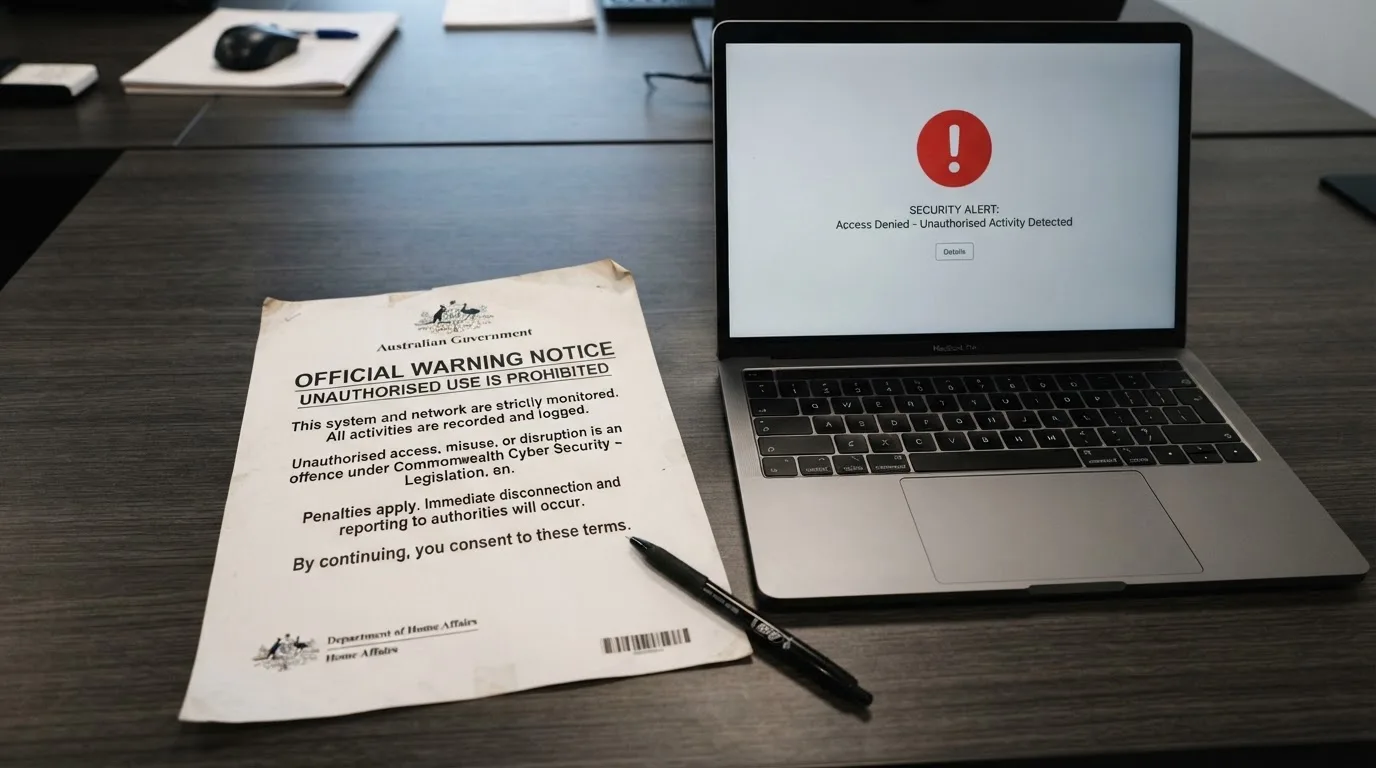
Why the button has not been removed
Offshore casino sites run their deposit pages on a global template. The cashier is a single configuration that the operator pushes to every market they serve, and a payment option is only removed when enough of that operator’s banks or payment partners stop accepting it. From a Curaçao-licensed cashier’s point of view, POLi is still a live rail somewhere in the world, and the cashier shows it in every market until somebody asks the operator to take it down for Australia specifically. The local market does not ask, because most Australians cannot reach the cashier any more — the bank side of the rail is gone — and the operator does not ask, because removing the option costs nothing and may still catch the rare Australian whose bank tolerates an overseas push-debit. A reader who lands on one of these cashier pages in 2026 is therefore looking at a payment method that has been closed in this country for more than two years, presented as if it still worked.
What replaces it in practice for an Australian reader
For a reader in Australia who actually wants to move money from a bank account to an offshore casino today, the realistic options are a Visa or Mastercard debit card, a handful of cryptocurrencies where the cashier accepts them, and an e-wallet where the e-wallet is funded by a local transfer. Each of those rails has its own local friction. Card payments to offshore gambling merchants are declined outright by some banks as a matter of policy, and several banks now run a gambling transaction block at the card level that refuses any transaction tagged under the merchant category code ‘Betting/Casino Gambling’ on an eligible personal credit or debit card. Westpac’s gambling block works exactly this way. ANZ’s gambling block does the same and covers digital-wallet transactions on the same card as well, with a 48-hour cooling-off period built into any attempt to turn the block off. None of that is specific to POLi; it is the surrounding rails tightening up at the same time as POLi itself disappeared from the menu.
What a POLi withdrawal looked like when the rail still ran
A POLi withdrawal was never a same-rail return. POLi was a push-debit service, not a push-credit one: it could send money from a customer to a merchant but could not pull money back the other way. Casinos that accepted POLi deposits processed withdrawals through a separate channel, normally a bank transfer to the customer’s Australian account, and the speed of that return depended entirely on the casino’s own internal checks. A POLi withdrawal request still needs the casino’s own manual checks completed before the settlement lands back in an Australian account. The POLi logo on the deposit side made the deposit feel instant; the same logo on the withdrawal side, where it appears on some cashier pages, is decorative, and the actual money comes back through the standard banking system.
The fundamentals: how the cashier button translates into a deposit, and what the bank does on the way
The mechanics, end to end
A POLi deposit at a working offshore cashier ran through four steps. The customer picked POLi from the cashier, chose their bank from a list, was handed off to POLi’s hosted screen, signed in to their own bank through that screen, and authorised a direct debit to the casino’s nominated account. The money cleared to the casino in seconds, the casino credited the player’s balance in real time, and the customer saw their deposit before they closed the tab. The customer never typed card numbers into the casino page; the casino never saw the bank credentials. That separation is what made POLi attractive to customers who did not want to use a card at a gambling merchant, and it is also the mechanism the banks eventually refused, because handing over online-banking credentials to a third party is the security practice banks had been telling their customers to stop doing for years.

The bank’s role
A POLi transaction looked like a normal direct debit or instant transfer to the customer’s bank, and the bank had no specific way to know it was funding a casino. That is part of why the ACMA’s enforcement strategy leaned on blocking the receiving end: the bank could not be expected to filter these payments out without knowing which merchants to refuse, and the merchants were the ones the Act already prohibited. Once the bank did know — once POLi itself had become a public concern — the bank side moved quickly. The Commonwealth Bank’s mid-July 2023 cut-off was the first major-bank refusal, and it accelerated POLi Australia’s wind-down rather than started it.
Why a deposit page still showing POLi is a marketing artefact, not a working rail
For a reader landing on an offshore cashier today, the practical question is not what POLi was. It is whether pressing that button does anything. For the vast majority of Australian bank accounts in 2026, the answer is no: the Australian end of the rail has been closed since 2023, the receiving Australian bank is not a participant, and the operator cannot push a debit into a local account without a partner it no longer has. What the button does instead is direct the customer towards the casino’s alternative payment methods — usually a card or a wallet — once the customer has reached the cashier screen and chosen POLi. In that sense the POLi button has become a way of routing a customer who specifically searched for it to a cashier that still works for other methods.
The legal frame: the Interactive Gambling Act and what it does to the choice
What the Act actually prohibits
The Interactive Gambling Act 2001, as tightened by the Interactive Gambling Amendment Act 2017, makes it an offence to provide online casino games, online pokies or in-play betting to a person physically in Australia. No state or territory issues an online casino licence; what is licensable is wagering on races and sport placed before the event, lotteries and keno — in practice licensed by the Northern Territory through the Northern Territory Racing and Wagering Commission, which regulates 52 of Australia’s online bookmakers including Sportsbet, Bet365 and Ladbrokes, and which has no full-time staff and meets once a month in Darwin. The ACMA enforces the prohibition on the supply side: it investigates, issues formal warnings and can direct Australian internet service providers to block illegal sites at the DNS level.
What this means for an offshore site that lists POLi
An offshore casino is not exempt from the Act because it accepts POLi, and it is not exempt because it holds an overseas licence. The Act follows the supply of the service to the Australian customer, not the operator’s place of incorporation or the operator’s gambling regulator. A Curaçao-licensed casino, a Costa Rica-licensed casino, an Anjouan-licensed casino and an unmounted-licence casino all fall under the same prohibition when their customer is in Australia. The deposit method is irrelevant to the legality of the offer. A casino page in 2026 still advertising POLi deposits for Australians is offering a payment method that closed in Australia in September 2023, and it is offering that closed payment method inside an offer the Act already prohibits.
What enforcement looks like on the ground
The ACMA’s enforcement is not a single action; it is a layered one. The agency issues formal warnings naming the operator and the offending URL, it directs Australian ISPs to add offending domains to a blocking list, and it works with international counterparts to take down mirror sites. By the ACMA’s own reporting in June 2026, a total of 1,751 illegal gambling and affiliate marketing websites had been blocked since the first blocking request in November 2019, and more than 230 unlicensed gambling services had left the Australian market since enforcement was strengthened in 2017. In a round reported on 26 June 2026 the ACMA asked Australian internet service providers to block 12 more illegal gambling websites: 7Signs, ChromaBet, Donbet, Duospin, Freshbet, Slots Gem, Jacks Club, Lucky Start, Pointsbetz.com, Spinrise, Vinyl Casino and Wildsino. The blocking list is one part of the picture; the formal warnings, which name the operator behind the site, are the other.
The rate at which the ACMA is blocking
The blocking record from November 2019 to June 2026 gives a pace of roughly 260 sites a year across both gambling services and affiliate marketing pages, or about 22 a month if the volume is spread evenly. That is an average, not a ceiling: the June 2026 round alone added 12 domains, and other rounds have been smaller. The cadence is enough that a site which was reachable in one month can be on the block list the next, which means an Australian reader who follows a link today may find the same site unreachable by next month. The blocking rate is the reason the cashier buttons change quickly too: an operator that loses its domain rebuilds, and the rebuilt cashier carries the same payment options as before until the new domain lands on the list.
What this means for an Australian player using an offshore site
The individual player is not prosecuted under the Act; the law targets the supplier. That is the only real protection an Australian reader has, and it is not a protection of money. An offshore site gives no Australian consumer protection, no complaints body and no recourse if a withdrawal is refused. A balance can sit on an offshore site the day the site is added to the block list, and an Australian court has no simple path to help recover it. The licensed alternative, for the punter who wants a regulated Australian product, is the wagering services licensed in the Northern Territory — sports and racing before the event, not pokies or casino games.
The 2026 reform
The Interactive Gambling Amendment (Gambling Reform) Bill 2026 passed Parliament on 19 August 2026; its advertising and inducement measures commence 1 January 2027. The reform is law with a start date, and on a page being read in the second half of 2026 the advertising measures are not yet in force. What the new law does is tighten what an Australian-facing ad can say, not change what is offered or what is prohibited. For the cashier side of the question — what deposit methods an offshore casino still lists for Australian readers — the 2026 reform does not move the line.
Responsible play: what is available inside the law, and what is not
BetStop and what it covers
BetStop, the National Self-Exclusion Register, has been live since August 2023 and binds every Australian-licensed online and phone wagering service. A punter who registers with BetStop is excluded from every licensed sports and racing bookmaker in the country, and the exclusion is enforceable on the licensed side. BetStop does not reach an offshore casino. An offshore site is not connected to the National Self-Exclusion Register and has no obligation to honour an Australian self-exclusion, because the Act does not bind it to begin with. A punter who uses BetStop to control their gambling has closed off the licensed Australian side of the market; the offshore side is unaffected unless the punter also excludes themselves through whatever tool the offshore operator offers, and the offshore tool is not portable between sites.
Help that is reachable from Australia
The National Gambling Helpline on 1800 858 858 is free, runs 24/7 and is the front door to free counselling in every state and territory. It also has a chat service at Gambling Help Online. Both work regardless of whether the punter’s gambling is on a licensed Australian product or on an offshore site, and both are the right first call for someone who has been playing on a blocked or warned casino and wants to talk it through. The counselling is free, confidential and not tied to any operator.
What the offshore side does not provide
An offshore casino has no Australian complaints body, no requirement to honour a self-exclusion, and no path through an Australian regulator if a withdrawal is held or refused. Where a licensed Australian bookmaker is required to publish dispute resolution procedures and is answerable to the Northern Territory Racing and Wagering Commission on the wagering side, an offshore site answers to its own jurisdiction only. The Australian punter has no seat at that table.
The credit ban and how it shapes the cashier
Under the Interactive Gambling Act 2001 as amended in 2023, Australian-licensed online wagering services cannot accept payment by credit card or other credit-related products. The restriction also constrains gambling use of linked digital wallets, because Apple Pay or Google Pay charged to a credit card inherit the same prohibition. Digital wallets charged to a debit card are not directly covered by the credit ban, but the bank may decline the transaction at card level through the gambling block. Legal deposit routes for licensed wagering are debit card, bank transfer, PayID/Osko and BPAY. A site asking an Australian for a credit card or a crypto deposit is operating outside the Australian rules, and that is one more signal that the site is on the offshore side of the line.
Tax: what a recreational punter needs to know
Gambling winnings of a recreational player in Australia are not assessable income under section 6-5 of the ITAA 1997, and losses are not deductible, unless the person is carrying on a business of gambling. For most punters using an offshore site there is nothing to declare and nothing to claim. The ATO’s own pages cover the edge cases, and a punter with a serious edge should check with the ATO directly rather than rely on a generic note.
The eleven sites the ACMA has warned: what each one is, and what the warning actually says
The eleven brands below are not a ranking and not a recommendation. They are the operators the ACMA itself has named in formal warnings for offering prohibited online casino services to Australians. POLi appears on the cashier of several of these sites because POLi is one of the standard payment options on the offshore cashier template. The presence of the POLi button is not a statement about the rail; it is a statement about the cashier template. Each write-up below carries the ACMA warning as the headline fact, the operating company behind the brand, and the specific date of the warning the ACMA published.
RocketPlay
RocketPlay was named in a formal ACMA warning issued to Pulsup Ltd in March 2026, the second time the brand has drawn the regulator’s attention: an earlier warning covering the brand was issued to Dama N.V. in May 2022 alongside five other casino labels. The site has changed operating company since the first warning, but the offer to Australian customers — online casino games the Act prohibits — has not. POLi appears on the cashier as a deposit option, in line with the standard template; the rail itself has been closed in Australia since 2023, so the button is a route into the cashier rather than a working deposit. The RocketPlay case is the clearest example on the list of a brand that has cycled through operators without changing what it offers Australians.
Level Up Casino
This brand was included in the ACMA’s May 2022 formal warning to Dama N.V. covering six casinos. Given Dama N.V.’s frequent appearances in regulator notices, including warnings over Woo Casino (March 2025) and Spirit Casino (May 2025), Australian players are looking at an operator with a recurring enforcement record. The cashier lists POLi as a payment option, though this is merely a remnant of the operator’s global cashier configuration.
Woo Casino
The ACMA issued a formal warning to Dama N.V. regarding this site in March 2025. This operator’s enforcement history includes warnings for Level Up (2022) and Spirit Casino (May 2025), reflecting a pattern of offering restricted services to Australians. The site’s cashier includes POLi, which remains as a default feature of its global payment template—an option that Australians effectively cannot use.
Spirit Casino
Spirit Casino drew an ACMA formal warning to Dama N.V. in May 2025, the third Dama N.V. warning in the regulator’s published record. The pattern is the one that matters: the same operating company has been told three times across four years, the most recent warning less than a year before the cut of this page. Spirit Casino’s cashier carries the standard offshore payment template, POLi included, and a reader choosing this site over another Dama N.V. site is not changing the operator behind it.
National Casino
Consolutetish S.R.L. received a formal ACMA warning regarding this site in July 2025, a round that also included Bizzo Casino. Both brands use the standard offshore cashier, which persists in displaying POLi as a payment option despite the method’s long-standing closure in Australia. Users should understand that this option is non-functional, serving only as a visual element within the operator’s template.
Bizzo Casino
Bizzo Casino is the brand on this list with the longest ACMA history. The first warning was issued in 2022 to TechSolutions (CY) Group Limited and TechSolutions Group N.V.; the second was issued in July 2025 to Consolutetish S.R.L. Two warnings to two different operating companies for the same brand over three years means the brand has been moved between operators without leaving the Australian-facing offer. The same standard offshore cashier applies, POLi included, and the rail’s Australian closure still means the button is decorative for an Australian reader in 2026.
Ignition Casino
Bamboo Media received an ACMA formal warning in July 2025 over its operation of this casino. Unlike several other brands listed here, Ignition operates outside the Dama N.V. cluster, though it employs the same standard offshore cashier template. Consequently, the POLi option appears here too, despite its obsolescence in the Australian market. This is a clear indicator that the operator hasn’t tailored its payment menu for local restrictions.
Instant Casino
In February 2025, the regulator issued a formal warning to EOD Code SRL concerning this brand. This remains the only ACMA action connected to this operator in the published record. Similar to other sites, the cashier displays POLi despite the local payment rails being permanently disabled. It is a standard display choice for the operator rather than a functional deposit path.
Jackbit
Ryker B.V. received an ACMA formal warning in April 2026, which also covered CasinOK. The inclusion of POLi on the cashier template persists here, as it does across the majority of offshore sites. Since the local infrastructure for this payment method is non-existent, the button provides no actual utility for Australian players.
Casino Intense
Sterplay Holding Ltd was the subject of an ACMA formal warning in April 2025. This action is the sole regulator intervention tied to this operator. The cashier includes POLi in its list of methods, a typical trait for offshore operators that have not adjusted their platforms to reflect the Australian payment landscape. The button is effectively a placeholder in the operator’s standard payment interface.
Sky Crown
In September 2022, the ACMA published a formal warning covering this site and Blue Leo, directed at Hollycorn N.V. The site predates the wind-down of POLi’s Australian operations, yet the POLi button remains as part of the site’s default payment template. For any reader in 2026, the option is strictly non-functional, serving as a legacy component of the casino’s cashier.
How the ACMA’s record sits together
What the table shows
| Brand | ACMA action and date | Operator named by the ACMA | Subject support |
|---|---|---|---|
| RocketPlay | Formal warning, March 2026; earlier warning May 2022 | Pulsup Ltd (2026); Dama N.V. (2022) | — |
| Level Up Casino | Formal warning, May 2022 | Dama N.V. | listings-only |
| Woo Casino | Formal warning, March 2025 | Dama N.V. | — |
| Spirit Casino | Formal warning, May 2025 | Dama N.V. | — |
| National Casino | Formal warning, July 2025 | Consolutetish S.R.L. | listings-only |
| Bizzo Casino | Formal warning, July 2025; earlier warning 2022 | Consolutetish S.R.L. (2025); TechSolutions (2022) | — |
| Ignition Casino | Formal warning, July 2025 | Bamboo Media | — |
| Instant Casino | Formal warning, February 2025 | EOD Code SRL | listings-only |
| Jackbit | Formal warning, April 2026 | Ryker B.V. | — |
| Casino Intense | Formal warning, April 2025 | Sterplay Holding Ltd | listings-only |
| Sky Crown | Formal warning, September 2022 | Hollycorn N.V. | — |
The brands cluster by operating company more than by anything else. Dama N.V. alone accounts for four of the eleven warnings on this page: Level Up in 2022, Woo in 2025, Spirit in 2025 and the original Rocketplay entry in 2022, with a separate 2026 warning to a different operating company for the same brand. Consolutetish S.R.L. accounts for two of the warnings, both in the same July 2025 round, for National Casino and Bizzo Casino. The remainder are individual warnings to individual operating companies, with no shared parent on the regulator’s published record. The cadence runs from September 2022 to April 2026, and the regulator is still adding operators.
What the gaps in the table mean
The “Subject support” column records what the inputs say about POLi specifically at each brand. Where research lists the brand only as it appears on third-party listings — a directory page that says POLi is accepted at this operator — that is what the cell says: the brand appears on listings that name POLi as a payment method, without a verified statement from the operator. Where research carries no such listing, the cell is left as a no-data marker, which on this page is a dash. Either reading is honest: a listing is not the operator’s own statement, and the absence of a listing is not a denial that POLi appeared on the cashier at some point. The honest read is that POLi sat on the standard offshore cashier template across these operators when the rail was running, and the cashier buttons have not been removed because the local end of the rail is closed and the operators have no Australian-side partner to ask them to clean the page up.
The blocking-rate calculation: how fast the list is shrinking
The ACMA reported in June 2026 that 1,751 illegal gambling and affiliate marketing websites had been blocked since the first blocking request in November 2019. Spread across the roughly 79 months between November 2019 and June 2026, that is an average of about 22 sites added to the block list per month, or roughly 260 a year. The June 2026 round alone added 12 domains. That is the cadence at which the visible Australian-facing edge of the offshore market is being pruned. A site that is reachable today is, on the regulator’s current pace, likely to be on the block list at some point in the next year if the ACMA finds cause to act against it; a site that is already named in a formal warning is closer to that point than a site that has not yet been named.
The calculation belongs to the ACMA’s published record, and it has a clear condition: it is the average across all blocked sites — gambling services and affiliate marketing pages together — over the period from November 2019 to June 2026. The figure is the long-run pace of the block list, not a forecast for any one operator. For an Australian punter, the practical meaning is that any of the brands on this page could be on the block list by next month, and the only certainty is that a balance on the site at that moment becomes hard to reach.
The wider payment picture: what is on the cashier when POLi is not
Cards and the gambling block
For an Australian reader, a Visa or Mastercard debit card is the most obvious alternative to POLi on an offshore cashier. The friction is on the bank side: Westpac’s gambling block refuses authorisation of transactions registered under the merchant category code ‘Betting/Casino Gambling’ on eligible personal credit and debit cards, and ANZ’s gambling block does the same for digital-wallet transactions on the same card, with a 48-hour cooling-off period on removing the block. The block is a customer-set control, not a bank-set policy, but the result is the same: a transaction to an offshore gambling merchant can be refused at the card level, before the casino ever sees it.
Digital wallets and the credit ban
Apple Pay, Google Pay and Samsung Pay are not separate rails in the regulator’s eyes: a wallet transaction funded by a credit card inherits the credit ban under the amended Interactive Gambling Act 2001, and a wallet transaction funded by a debit card inherits the bank’s own gambling block where the customer has set one. Apple itself states that transaction limits and PIN requirements are set by the card issuer or merchant, not by Apple, and Apple does not charge consumer fees for using Apple Pay in stores, online or in apps. By the end of 2025, Apple Pay, Google Pay and Samsung Pay collectively accounted for around 45% of all card payments in Australia by number, which means a sizeable share of Australian card spending now sits behind a wallet interface that the gambling block can still see through.
Bank transfers, PayID and Osko
For punters who do not want to use a card at all, an instant bank transfer via PayID or Osko is the local rail most offshore cashiers will accept. With Osko, a bank transfer between participating Australian banks arrives in under a minute, 24/7 including weekends, whether it is addressed to a BSB and account number or to a PayID. Paying to a PayID shows the name of the account holder before the transfer is sent, which is one of the few built-in protections an Australian punter has against sending to a scam site masquerading as a real merchant. AP+ itself warns that being asked to transfer money to a PayID on an illegal gambling site almost certainly means a scam site. PayID-based instant transfers are available at over 100 Australian financial institutions, and Australia’s New Payments Platform, the system underneath, became accessible to the public on 13 February 2018 and is owned by New Payments Platform Australia Ltd, a non-profit company whose 13 shareholders include the Reserve Bank of Australia and the country’s major banks. More than 25 million PayID identifiers had been registered on the platform as of April 2025. The NPP’s monthly outage budget is no more than two minutes; in 2021 the ACCC authorised merging NPP Australia with BPAY and eftpos into a single company, Australian Payments Plus.
BPAY
BPAY is a bill-payment service in online banking: the payer enters the Biller Code and the Customer Reference Number printed on the bill. BPAY has operated in Australia since 1997, is available in the online banking of over 140 banks and financial institutions and is offered by over 95,000 businesses. BPAY is rarely a deposit option at offshore casinos because it is built for bill-payment rather than merchant push-debit; it appears where it does because it is a recognisable Australian payment name, not because it fits the deposit flow. The same closed-rail caveat that applies to POLi applies in a different way to BPAY at an offshore cashier: the brand is local, but the merchant integration is not.
AUSTRAC and the threshold-transaction-report rule
AUSTRAC’s threshold-transaction-report rule, which requires reporting of transfers of A$10,000 or more, applies only to physical cash. Ordinary electronic bank transfers are not subject to that per-transaction reporting requirement, regardless of the amount sent. A punter moving A$15,000 by PayID to an offshore merchant is not, by that fact alone, triggering a threshold-transaction report; the report is for cash, and the AUSTRAC reporting regime on electronic transfers works differently. The threshold-transaction-report rule is one of the more commonly mis-stated parts of Australian payments law on offshore-gambling pages, and it is worth recording here for what it is not: it is not a per-transaction reporting rule on bank transfers.
What this means for the POLi question in practice
For a reader in Australia who searches for a casino that takes POLi, the realistic situation in 2026 is that no Australian bank is a POLi partner, no Australian merchant is signed up to receive POLi, and the only honest answer to the search is that the payment method is not available in this country any longer. The cashier buttons that still show POLi are showing it for the same reason the cashier buttons show wallets the operator has never integrated: the cashier template has not been cleaned up, and removing the button costs the operator nothing because the rail is closed in this market anyway. The honest reading of a POLi button on an Australian-facing offshore cashier in 2026 is that the button is decorative, and the deposit that actually works will be on a different rail entirely.
What to take from this
The casino that takes POLi in Australia is, in 2026, an offshore brand whose cashier still lists a payment method that has been closed in this country since September 2023. The brand is almost certainly one the ACMA has named in a formal warning, because the ACMA has named most of the brands that still appear on the Australian-facing edge of this market, and the warning is over the offer itself rather than the payment method. The deposit rail is irrelevant to the offer’s legal status: the Interactive Gambling Act 2001 prohibits the supply of online casino games to a person in Australia regardless of how the customer pays. The licensed Australian alternative, where one exists, is a wagering service licensed in the Northern Territory — sports and racing before the event — and not an online casino at all. The honest answer to the search for a POLi-accepting Australian casino is that POLi is gone, the offer is prohibited, and the cashier buttons still showing it are a leftover from a rail that closed more than two years ago.
Frequently asked questions
Is it legal for an online casino to accept POLi from a player in Australia?
No. Under the Interactive Gambling Act 2001, no online casino may lawfully offer casino games or online pokies to a person physically in Australia, regardless of the payment method. POLi does not change the legality of the offer, and the offshore licence the casino displays does not change it either. The Act targets the supplier, not the customer.
What is the smallest deposit a POLi casino site usually asks for?
Most offshore casinos that accepted POLi listed a minimum deposit around the equivalent of A$10 to A$20 in the currency of the cashier. The minimum is set by the operator, not by POLi itself, and the cashier’s minimum-deposit field shows the same figure whether the deposit is funded by POLi, by card or by any other rail. The minimum is not the deposit that lands in an Australian bank account in 2026, because the POLi rail itself has been closed in Australia since September 2023.
Does a POLi withdrawal clear any faster than a card withdrawal at these sites?
No. POLi was a push-debit service, not a push-credit one, and could not return funds the way it sent them. Casinos that listed POLi as a withdrawal method processed the actual refund through a separate bank transfer, and the time to clear depended on the casino’s own manual checks. A POLi withdrawal request still needs the casino’s own manual checks completed before the settlement lands back in an Australian account, and the POLI logo on the withdrawal side is decorative rather than functional.
Can POLi be used at every offshore pokies-style site, or only some of them?
POLi appeared on the standard offshore cashier template across many operators, which is why the POLI button shows up on so many sites. Not every offshore operator listed POLi even at peak; some used a different cashier template, and some replaced POLi with other instant-deposit rails. In 2026, the question is academic for an Australian reader, because the Australian end of the POLi rail has been closed since 2023, and no Australian bank is a partner on the receiving side.
Does depositing with POLi add an extra fee at these casino sites?
POLi itself did not charge consumer fees for a deposit, and the casino’s cashier typically absorbed the cost of the rail. The cost that did sit on the consumer side was the opportunity cost of handing over online-banking credentials to a third-party screen — which is the security practice banks had been telling customers to avoid, and which is the reason several banks had long advised against POLi before the Australian closure. There was no separate POLi deposit fee on top of the casino’s normal deposit flow.
What should a player do if a POLi deposit does not appear in a casino account?
For an Australian reader in 2026, the practical answer is that no POLi deposit will appear, because the rail is closed in this country. Where a deposit to an offshore casino does not appear, the practical steps are the same whatever the rail: check the cashier’s transaction history for a pending entry, check the bank statement for the debit, contact the casino’s support with the transaction reference, and treat a missing deposit older than 48 hours as the casino’s problem to resolve. If the casino does not respond, the options narrow to the casino’s own regulator, which is not Australian.