
Casinos that take Neosurf for Australian players in 2026: what the deposit lands like, where the withdrawal goes, and what the ACMA has done about each
A player searching for casinos that take Neosurf in Australia has narrowed the field to one question: does this brand’s cashier accept a prepaid voucher, and what happens on the way out. The honest answer takes three sides. On the cashier side, a Neosurf deposit is fast, anonymous from the bank, and limited to whatever the voucher is worth. On the withdrawal side, the same instrument does not work in reverse, and the player ends up at the casino’s own payout queue. On the regulator’s side, the ACMA has been writing to most of the offshore brands a player would land on for years. This page works through all three, with the ACMA’s correspondence list setting the spine of the comparison.
Data current as of 30 October 2026; licence claims and blocking actions verified against the ACMA’s published list of formal warnings and the June 2026 blocking-round report.
Table of Contents
- How a Neosurf deposit settles — and where the payout goes at these offshore brands
- The fundamentals behind the offshore ranking: eleven brands the ACMA has actually written to
- What an offshore Neosurf casino actually offers — and what the player is buying into
- Prohibition, regulation, and the legal frame around offshore casinos
- Responsible play, self-exclusion, and where help is actually available
- Eleven offshore brands, in detail
- How fast the ACMA has been blocking, in raw numbers
- Frequently asked questions
How a Neosurf deposit settles — and where the payout goes at these offshore brands
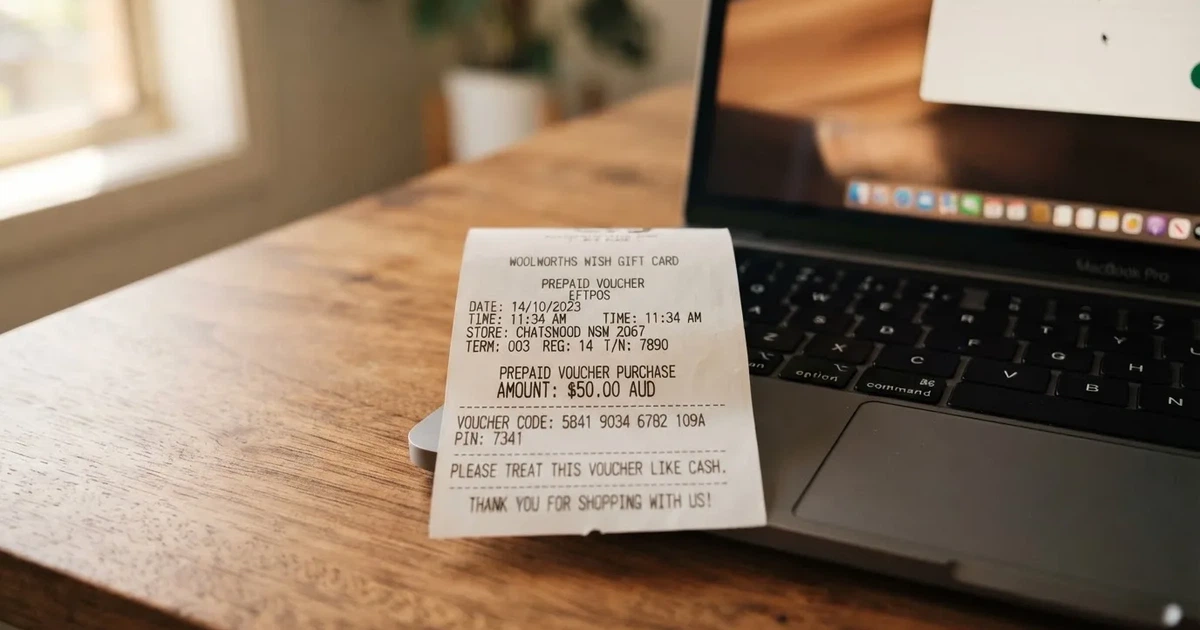
Neosurf is a prepaid voucher. The flow starts at a partner point of sale — a convenience store, a petrol station kiosk, an online reseller — where the user pays cash (or a card) for a sixteen-character code. The standard voucher denominations run from roughly €10 to €150, depending on what the local reseller stocks. The user takes the receipt, opens the casino cashier, types the code, and the funds appear in the casino balance within seconds. From the operator’s side, the receiving end is a Neosurf merchant account; the funds settle to the casino later, on a schedule Neosurf runs rather than the casino. That distinction matters once a player thinks about withdrawals: the inbound and outbound paths are not the same path in reverse.
The deposit itself clears fast because there is no credit check, no card authorisation, and no merchant category code in play. The casino never sees the player’s bank. The receipt is the deposit instrument, and once the code is typed in and accepted, the casino balance reflects the credit immediately. A player who wants a low-friction entry into a casino balance will not find a faster rail than a prepaid voucher.
The platform is operated by SAFE VOUCHER CH AG, and the Neosurf site itself asks for account verification before a first deposit to a Neosurf wallet — that is the deposit-rail verification, not the casino’s. A player who opens a myNeosurf account, skips the verification step, and then deposits at an offshore casino will still see the credit land. The verification matters on the way out, not the way in.
Withdrawing to a Neosurf voucher is not a feature
The Neosurf payment instrument is one-way. Money in via a code; no money back out by the same channel. A player who wants to take winnings out of an offshore casino needs either a myNeosurf account (Neosurf’s optional registered wallet) or a different withdrawal method supported by the casino. The two paths carry different costs.
A myNeosurf account can be opened for free in minutes with no documents required at signup. Full identity verification is systematically required before any refund is processed, and a 5% fee applies to refunds and withdrawals sent back to a bank account. The 5% sits on top of whatever the casino’s own withdrawal terms charge, and it sits between the player and the bank rather than between the player and the casino. A player who deposited A$100, played through, and now wants A$150 out will receive roughly A$142.50 after the Neosurf refund fee, before any currency conversion.
The alternative is to withdraw through a method the casino supports independently of Neosurf. Bank transfer, e-wallet, and at some brands cryptocurrency are the usual options. Each carries its own queue. Bank transfers back to an Australian account run through PayID or Osko, where the receiving bank settles in under a minute once the transfer is sent. E-wallets settle on the wallet’s own schedule, which is usually faster than a casino’s approval but slower than a domestic bank transfer. Cryptocurrency payouts sit outside the regulated Australian payment system entirely, and they convert at the rate the casino sets at the moment of withdrawal — favourable one day, three per cent below spot the next, and with no Australian recourse either way.
What the casino’s approval queue looks like
The bottleneck on the way out is not the rail; it is the casino. Every offshore operator runs manual compliance checks on the first withdrawal, and many require the player to clear a wagering requirement before approving any payout. A casino that advertises “instant withdrawals” still means instant after that first approval; the first approval is where days go.
A player who has just cleared a welcome bonus will run into the wagering requirement first. The bonus terms set the multiplier (how many times the bonus must be turned over), the maximum bet per spin (a common tripwire that voids the bonus if breached), and the game weighting (which games count fully and which count partially). A player who tries to withdraw without meeting the requirement loses the bonus and any winnings tied to it. Some casinos apply a maximum cashout cap on bonus-derived winnings — a ceiling that means the bonus can produce winnings, but only up to a fixed amount.
The compliance check sits behind the wagering check. The casino asks for identification (passport, driver’s licence, proof of address), matches the name against the deposit account, and runs anti-money-laundering screens on the withdrawal amount. The screens are routine; the queue around them is not. A player who supplies documents on day one and waits three business days for approval is on the optimistic end. A player whose deposit and withdrawal names do not match — common where a Neosurf voucher is bought by one person and used by another — is on a much longer queue, and possibly a rejected withdrawal.
What the bank side does, even before the casino sees the request
Australian banks run their own gambling-block systems, and these systems do not wait for the casino. Westpac’s gambling block refuses card authorisation at the merchant category code level — the transaction is declined before the casino ever receives it. The block is self-activated through the banking app and applied immediately. ANZ’s block works at the same point and extends into the digital wallet the card sits behind, including Apple Pay on an eligible card. NAB and Commonwealth Bank offer the same self-activated switch through their apps.
The credit card ban that took effect on 11 June 2024 closes off another path. From that date, Australian-licensed online wagering service providers cannot accept credit cards, credit-linked digital wallets or digital currencies as payment. ACMA enforces the rule, with penalties of up to A$247,500 for non-compliance. Prepaid instruments such as Neosurf sit outside that prohibition because they are not credit products and not digital currencies — they are paid for in cash, in advance, and the user cannot spend more than the voucher is worth.
That leaves debit card, bank transfer, PayID and BPAY as the recognised Australian rails for any licensed operator. None of the eleven brands on this page’s list is licensed in Australia. They accept whatever they accept on their own terms, and the bank-side block is the only friction the Australian payment system applies to the transaction.
What the wallet on the phone adds
Apple Pay and Google Pay route through the underlying card. Where the underlying card carries a gambling block, the wallet payment fails. ANZ’s documentation is explicit on this: a digital wallet on an eligible card is treated the same as the card itself, and the block carries over. Removing ANZ’s block requires a 48-hour cooling-off period, and the bank warns that not all gambling transactions will be blocked and that some non-gambling transactions might be caught in the filter.
By the end of 2025, mobile wallets accounted for around 45 per cent of all card payments in Australia by number. A gambling block that does not cover the wallet is half a block, and most Australian banks have closed that gap. The card that funds the wallet is the card that the block applies to. Apple itself does not charge consumers for using Apple Pay in stores, online or in apps; any surcharge is the merchant’s own card-processing fee, not Apple’s. Apple also states that transaction limits and PIN requirements are set by the card issuer or merchant, not by Apple. The Australian bank’s policy is what binds, and the block is what catches the transaction.
PayID, Osko, and what “instant” actually means on the Australian rail
For withdrawals back to an Australian account, PayID and Osko are the rails that deliver sub-minute settlement. Osko by BPAY sends bank-to-bank transfers that arrive in under a minute, 24/7, whether the payment is addressed to a BSB and account number or to a PayID. The system is owned by New Payments Platform Australia Ltd, became accessible to the public on 13 February 2018, and now runs through Australian Payments Plus after the 2021 merger.
PayID lets a payer address the transfer to a phone number, email or ABN rather than to a BSB and account number, and the receiving account name appears before the transfer is sent. AP+ warns that being asked to transfer money to a PayID on an illegal gambling site almost certainly means a scam site. The warning sits alongside the convenience: PayID is a legitimate Australian rail, and the casino that asks for a PayID deposit is either an Australian-licensed operator or an operator that has chosen to receive payments through the Australian system without being licensed to do so.
More than 25 million PayID identifiers had been registered on Australia’s New Payments Platform as of April 2025. The reach is broad; the legality of the receiving party is a separate question. AUSTRAC’s threshold-transaction-report rule, which requires reporting of transfers of A$10,000 or more, applies only to physical cash; ordinary electronic bank transfers are not subject to that per-transaction reporting requirement, regardless of the amount sent. The A$10,000 figure that lives in the public mind is the cash threshold, not the bank-transfer threshold.
Where Neosurf fits among the alternatives
A player comparing Neosurf to card, bank transfer and e-wallet at an offshore casino is comparing three different friction profiles. Card deposits are fast but expose the bank account to the casino and trigger bank-side blocks; bank transfers are slower on the way in but pre-approve the withdrawal rail; e-wallets sit between the bank and the casino and add a layer of processing. Neosurf sits at the fast-deposit, opaque-bank-statement end of the spectrum.
The trade-off is asymmetric. The fast deposit and the clean bank statement are both real benefits on the way in. The slow withdrawal and the manual compliance check are real costs on the way out. A player who treats Neosurf as a deposit-only instrument and plans the withdrawal route separately has made the right call. A player who treats Neosurf as a closed loop — pay in, play, walk away with the balance — will discover that the loop has only one side.
The fundamentals behind the offshore ranking: eleven brands the ACMA has actually written to
This is not a ranked list. The eleven brands below appear together for one reason: the Australian Communications and Media Authority has issued a formal warning over each of them for offering prohibited interactive gambling services to people in Australia. The choice between them is not “best casino”; it is “which operator the regulator has already acted against, and what action”. The table below sets the record side by side.

| Brand | ACMA action and date | Operator named by the ACMA | Neosurf coverage |
|---|---|---|---|
| RocketPlay | Formal warning, March 2026 | Pulsup Ltd | — |
| Level Up Casino | Formal warning, May 2022 | Dama N.V. | Referenced in Westpac materials |
| Woo Casino | Formal warning, March 2025 | Dama N.V. | — |
| Spirit Casino | Formal warning, May 2025 | Dama N.V. | — |
| National Casino | Formal warning, July 2025 | Consolutetish S.R.L. | Mentioned in AUSTRAC and Wikipedia entries |
| Bizzo Casino | Formal warning, July 2025 (earlier 2022) | Consolutetish S.R.L.; earlier TechSolutions | — |
| Ignition Casino | Formal warning, July 2025 | Bamboo Media | — |
| Instant Casino | Formal warning, February 2025 | EOD Code SRL | Listed by EcoPayz and PayID materials |
| Jackbit | Formal warning, April 2026 | Ryker B.V. | — |
| Casino Intense | Formal warning, April 2025 | Sterplay Holding Ltd | Mentioned in AUSTRAC, ITnews and NAB materials |
| Sky Crown | Formal warning, September 2022 | Hollycorn N.V. | — |
Three of the eleven sit under the same operator at the time of warning: Dama N.V. covers Level Up, Woo and Spirit, with Woo and Spirit coming in 2025 and Level Up dating to 2022. A reader who treats these brands as separate shops is missing the corporate overlap. The same Dama N.V. has also been on the receiving end of a separate Rocketplay warning that names Pulsup Ltd as the operator of RocketPlay — a corporate handover between the two warnings that did not slow the regulator’s correspondence.
Six of the eleven — Woo, Spirit, National, Bizzo, Ignition and Jackbit — received their formal warning in 2025 or 2026. Three of those six are 2026 actions. The ACMA is not slowing down, and the brands receiving warnings are not all newcomers to the list.
The “Neosurf coverage” column is sparse because it is meant to be. Research could not confirm Neosurf acceptance for any of these brands directly from the operator’s own materials. Where a brand surfaces in independent source listings — a Westpac reference for Level Up, an AUSTRAC or Wikipedia mention for National, an EcoPayz or PayID listing for Instant — the column reflects that without claiming it confirms Neosurf acceptance. None of the eleven entries is a confirmation that the cashier will accept a Neosurf voucher; all of them are what source materials say about the brand’s footprint.
The honest framing of the whole comparison is the one the regulator uses. The Interactive Gambling Act 2001 makes it an offence to provide online casino games to a person physically in Australia. The eleven brands above offer exactly that. They run on offshore licences — Curaçao, Anjouan, the occasional Costa Rica — and none of those licences permits Australian players. The brand’s own footer does not change the law, and the ACMA’s letter is the regulator’s view of the conduct, not a final order.
Reading the table against what the ACMA publishes
The ACMA’s formal warnings are not closed cases. A formal warning is the regulator telling the operator to stop, in writing, with the operator’s response on the public record. The brand can continue to operate offshore; the warning is a step in a longer process that includes further enforcement and, eventually, blocking at the ISP level. A reader who treats the warning as a historical artefact misses the fact that the regulator’s correspondence is ongoing.
The date column shows when the warning was issued, not when the conduct ended. A brand warned in May 2022 may have changed its behaviour afterwards, or it may have continued to offer the same product and simply been left alone until the next round of enforcement. The ACMA does not publish a “warnings lifted” register. The fact of the warning is the load-bearing piece of information.
Why the regulator’s correspondence keeps going
The offshore sector’s response to a formal warning is, in most cases, the same: a quiet rebrand, a new corporate vehicle, and the same product on a new domain. The ACMA wrote to Dama N.V. in 2022, then to Dama N.V. again in March 2025, then to Dama N.V. again two months later. The operator did not exit; it absorbed the warning and continued. The regulator’s letters pile up because the operator’s conduct does not change in response. A reader who assumes a warning fixes the underlying behaviour is reading past the offshore sector’s actual model.
What an offshore Neosurf casino actually offers — and what the player is buying into
The offshore Neosurf casino proposition is built around three selling points: a low minimum deposit, fast deposit confirmation, and a casino balance that does not name the player’s bank. Each of these points is real. Each is also a fraction of the picture.
The minimum deposit at the cashier is whatever the casino sets as its floor. A$10 is the figure that comes up across most of these brands for Neosurf specifically — the voucher ceiling of €150 keeps the per-transaction amount sensible. A player depositing the floor amount sees the credit hit in seconds, sees the welcome bonus credited alongside it, and reads the wagering requirement in the bonus terms. At that point the deposit mechanic has done its job. What happens next is the bonus mechanic, and the bonus mechanic is where most of the cost lives.
The casino balance is held in the casino’s internal currency — usually a euro or a US dollar — and a player depositing in Australian dollars catches the conversion at the casino’s rate, not at the mid-market rate. The mark-up is small per transaction but compounds over the life of an account. A player who never converts out, never withdraws, and plays through the balance will not notice. A player who does withdraw will notice on the way out. The same is true of the bonus balance: the bonus is denominated in the casino’s currency, the wagering requirement is denominated in the casino’s currency, and the player’s bank account sees the conversion only at the moment of payout.
The promise of anonymity from the bank side is the third point. Neosurf is paid for in cash at a reseller, the code is typed into a web form, and the player’s card and bank account are not exposed to the casino. The bank-side statement shows a Neosurf top-up rather than a casino name. For a player who values that separation, the route delivers exactly what it says. The same separation is, however, the reason the bank cannot flag the transaction the way it might flag a direct casino debit. A gambling block at the card level does not catch Neosurf because the card never sees the casino. The friction the Australian system applies is invisible here, and what the system cannot see, it cannot stop.
The proposition from the casino’s side
Offshore operators do not turn away Australian customers because they have run out of Australians to chase. They keep the sites, the bonuses and the Neosurf cashier option open because that is how they acquire players. The licence on the operator’s footer is real in the jurisdiction it was issued in, and it is irrelevant to a player in Australia. The footer carries no Australian weight.
For a player who reads the bonus terms carefully, the mechanics at these sites are not mysterious. The bonus is a marketing spend the operator has decided to make on the first deposit; the wagering requirement is the price of being allowed to withdraw the bonus; and the maximum cashout cap, where it exists, is the ceiling on what the operator will pay out from bonus-derived winnings. None of this is novel. The novelty is that the regulatory floor in Australia does not apply, because the operator is not in Australia.
The same offshore licence that gives the operator the right to run an online casino gives the operator the right to set its own terms. A wagering requirement of forty times the bonus is allowed if the operator says so; a maximum cashout of five times the bonus is allowed if the operator says so; a withdrawal queue of seven business days is allowed if the operator says so. The Australian player has signed up to a contract governed by the operator’s jurisdiction, and the regulator that might push back on those terms is on the other side of the world.
What changes once the player stops paying
The cashier at an offshore casino is a one-way door until withdrawal approval. A player who deposits A$10 in Neosurf, plays through it, and ends up with A$30 in the bonus balance has just entered the bonus terms. The wagering requirement, the maximum bet per spin, the game weighting — these all apply before any of the A$30 can be withdrawn. A player who tries to withdraw without meeting the requirement loses the bonus and any winnings tied to it. The casino’s terms make this explicit. The point at which a player notices the terms is usually after the bonus has been claimed.
The terms are not negotiable after the deposit. The bonus was claimed at the moment of deposit, and the casino’s argument is that the player accepted them then. A player who reads the terms before the deposit has more leverage than a player who reads them after. The advice is mundane, and it is the only advice that survives the bonus mechanic.
The deeper point about the bonus mechanic is that it converts what looks like free money into expected loss. A A$100 bonus with a forty-times wagering requirement means the player must turn over A$4,000 before any of the bonus-derived winnings become withdrawable. Across A$4,000 of turnover on a typical slot with a house edge of three to five per cent, the expected loss is in the order of A$120 to A$200, which exceeds the bonus itself. The bonus is not free money; it is a marketing cost the operator has decided to spend, and the player is paying for it through the wagering requirement. A player who treats a bonus as a windfall has misread the maths; a player who treats it as a fee for the right to play has read it correctly.
Prohibition, regulation, and the legal frame around offshore casinos
Online casino is prohibited in Australia. The Interactive Gambling Act 2001, strengthened by the Interactive Gambling Amendment Act 2017, makes it an offence to provide online casino games, online pokies or in-play betting to a person physically in Australia. No state or territory licences these services. What is licensable is wagering on races and sport placed before the event, lotteries and keno — and the practical licensing authority is the Northern Territory Racing and Wagering Commission, which regulates 52 of Australia’s online bookmakers including Sportsbet, Bet365 and Ladbrokes for tax reasons. The commission has no full-time staff and meets once a month in Darwin, which is a useful reminder that “Australian-licensed” covers a narrower and more peculiar regime than the phrase suggests.

The ACMA is the enforcement body. It investigates, issues formal warnings, and directs internet service providers to block illegal sites. As of the ACMA’s June 2026 blocking-round report, a total of 1,751 illegal gambling and affiliate marketing websites had been blocked since the first blocking request in November 2019. The 26 June 2026 round alone added twelve more: 7Signs, ChromaBet, Donbet, Duospin, Freshbet, Slots Gem, Jacks Club, Lucky Start, PointsBetz, Spinrise, Vinyl Casino and Wildsino. More than 230 unlicensed gambling services had left the Australian market since enforcement was strengthened in 2017.
The individual player is not prosecuted. The Interactive Gambling Act targets the provider, not the customer. The practical consequence for a player is the absence of protection rather than the presence of a charge. An offshore site gives no Australian consumer protection, no complaints body and no recourse if a withdrawal is refused. The ACMA can direct the site to be blocked, and a player with a balance on the blocked site has no Australian channel to recover it.
The losses that flow through illegal channels are substantial. H2 Gambling Capital’s 2025 report estimates that Australians lose about A$3.9 billion a year to illegal gambling sites, and that the share of gambling going through legal channels fell from 74 per cent in 2021 to 64 per cent. The arithmetic is not on the regulator’s side. The enforcement effort is.
What changed in 2026
The Interactive Gambling Amendment (Gambling Reform) Bill 2026 passed Parliament on 19 August 2026. Its advertising and inducement measures commence on 1 January 2027. The bill is law with a start date — present on the statute book but not yet in force on a 2026 page. Its reach into offshore operators is constrained by where those operators are based; the bill’s bite is on Australian-facing marketing, inducements and the providers that supply them.
The reform does not change the underlying prohibition on online casino games. It tightens the perimeter around marketing and inducements, which is the lever the regulator already uses against affiliates. A brand that the ACMA has already warned is not suddenly compliant in 2026 because of the 2026 bill; the brand was non-compliant before the bill and will remain non-compliant until it actually stops offering to Australians.
Credit, crypto, and the legal rails
From 11 June 2024, Australian-licensed online wagering service providers have been banned by law from accepting credit cards, credit-linked digital wallets or digital currencies as payment. ACMA enforces the rule, with penalties of up to A$247,500 for non-compliance. Legal deposit routes for licensed wagering are debit card, bank transfer, PayID and BPAY. A site asking an Australian for a credit card or a crypto deposit is operating outside the Australian rules.
Neosurf sits outside the credit ban because it is not a credit product — the user pays for the voucher in cash, in advance, and cannot spend more than the face value. The user does not borrow to fund the deposit. The same is true of prepaid vouchers generally. The ban is on credit instruments, and a Neosurf voucher is a debit instrument in a paper envelope. A player who funds a casino balance through Neosurf is not using a banned rail at the Australian-regulated end; the casino at the receiving end is the problem, not the voucher.
Where licensed wagering and offshore casino diverge
Australian-licensed wagering services (sports and race betting before the event) are a different product from offshore online casinos. The former are legal for Australian residents, regulated by the NTRWC and the ACMA, and bound by Australian consumer law. The latter are prohibited for Australian residents, regulated at most by an offshore licence authority, and not bound by Australian consumer law. A Neosurf deposit at a licensed wagering operator is a different action from a Neosurf deposit at an offshore casino, even when the brand name sounds adjacent.
A player who uses Neosurf to fund a Sportsbet or a Ladbrokes account is using a prepaid instrument on a legal rail. The wagering operator does not accept credit cards, accepts Neosurf as a voucher top-up where supported, and pays out through Australian rails. A player who uses Neosurf to fund one of the eleven brands on this page’s list is funding an offshore operator that has been told to stop offering the product to Australians.
The Reserve Bank of Australia’s July 2025 review of merchant card payment costs and surcharging proposed removing surcharges only on eftpos, Mastercard and Visa card transactions, and explicitly left American Express outside the scope of the proposed surcharge ban. The point is narrow but worth carrying: the Australian payments regulator is active in 2026, and the rules around cards and surcharging are still moving. A player who reads the deposit and withdrawal terms at an offshore casino should not assume the card side of the deal is stable in Australia.
Tax and what a win does to a return
Gambling winnings of a recreational player are not assessable income in Australia. Section 6-5 of the Income Tax Assessment Act 1997 treats them as the result of luck rather than of carrying on a business, and the ATO does not tax them. Losses are similarly not deductible. The exception is a player who carries on a business of gambling — a professional punter, in the ATO’s language — whose activity meets the criteria of a business and whose winnings are assessable.
The offshore operator does not withhold tax on winnings paid to an Australian player. The player is responsible for the return if the winnings are assessable. For a recreational player, that is a non-event; for a business-of-gambling player, it is a bookkeeping event. The rule is straightforward; the model that fits the offshore casino context is “recreational player, no tax, no deduction”, and the only check that matters is whether the ATO’s view of the activity matches the player’s.
Responsible play, self-exclusion, and where help is actually available
BetStop, the National Self-Exclusion Register, has been live since August 2023. It binds Australian-licensed online and phone wagering services — a player can register, set a self-exclusion period, and the licensed operator has to enforce it. The same register does not bind an offshore casino. A player who has registered with BetStop and then sits down at one of the eleven brands on this page will not be stopped by the register. The barrier is at the licensed end; offshore sites are outside it.
The National Gambling Helpline is 1800 858 858. It is free, it is open 24 hours, and the chat service runs through Gambling Help Online. For a player who is spending more than they planned or chasing a withdrawal that will not clear, the helpline is the right first call. The call is confidential and the counsellors are not there to lecture.
The bank-side tools complement the helpline. Westpac, ANZ, NAB and Commonwealth Bank all offer gambling transaction blocks through their apps, with the block usually applied immediately once activated. ANZ’s block extends to Apple Pay and Google Pay on the underlying card, and removing the block requires a 48-hour cooling-off period. A bank block does not catch Neosurf at the cashier, because the card never sees the casino — but it does catch the rest of the deposit and withdrawal activity that runs through the card. A player who funds the casino with Neosurf and then tries to top up a card with gambling-blocked casino income is closing the only remaining gap.
For a player who has decided to stop, the order of operations is straightforward: register with BetStop for the licensed side, activate bank-side blocks for the cards, and tell the helpline what is going on. The offshore side is not in scope of any of these, but a player who removes the friction from the Australian side has removed most of what the Australian system can offer. The remaining exposure is the offshore balance, and the only path back from that is the casino’s own withdrawal queue.
Warning signs that the casual deposit has become something else
The path from a casual A$10 Neosurf deposit to a problem is well-trodden, and it does not announce itself. A player who is chasing losses has stopped treating the deposit as entertainment spending and started treating it as recovery spending. A player who is moving money between offshore brands to chase a bonus has stopped comparing operators and started chasing terms. A player who has lied to a partner or an employer about the activity is past the line where self-monitoring is the right tool.
The honest description of the offshore casino market is that it is built to keep players inside it. The bonuses reload, the loyalty tiers accumulate, and the cashier accepts whatever the player wants to fund it with. The friction that licensed wagering operators are required to put in the way — deposit limits, time-out reminders, affordability checks — does not exist offshore. A player who notices themselves against any of these markers should make the call before the next deposit, not after.
Eleven offshore brands, in detail
The eleven brands below appear together because the ACMA has issued a formal warning over each. The detail for each is the operator name on the warning, the date, and what the page knows about the brand from research. None of the write-ups is a recommendation, and no bonus terms are quoted; the only sources for those terms were affiliate marketing pages.
RocketPlay
The ACMA issued a formal warning to Pulsup Ltd over RocketPlay in March 2026. A separate, earlier Dama N.V. warning from May 2022 also covered Rocketplay. The brand has changed hands at the operator level between those two warnings, which is itself the kind of corporate shuffling the offshore sector is built around. The page has no confirmation that RocketPlay takes Neosurf at the cashier, and the warning covers offering prohibited interactive gambling services to Australians in any case. The reading for an Australian player is that RocketPlay’s status under the IGA has not improved with the operator change; the ACMA wrote to the new operator in 2026. Verdict: RocketPlay is a moving target. Same name, two operators, two warnings three years apart, and the corporate handover did not slow the regulator’s pen.
Level Up Casino
The ACMA’s formal warning to Dama N.V. over Level Up dates to May 2022. Dama N.V. has since taken two more warnings from the ACMA — over Woo Casino in March 2025 and over Spirit Casino in May 2025 — which means the operator continues to run brands into the same market the regulator has asked it to leave. Level Up surfaces in Westpac’s gambling-block materials as a brand that has triggered the merchant category code filter. A player who filters their card’s MCC list will see Level Up on the block history. Whether the brand accepts Neosurf at the cashier is not something the page can confirm. Verdict: Level Up is the oldest of the three Dama warnings on this list, and the Dama pattern has not abated — two more warnings followed in 2025. A reader who is weighing Level Up against the newer Dama brands is choosing an older flag rather than a fresher one.
Woo Casino
The Dama N.V. warning covering Woo Casino was issued in March 2025. Woo sits in the cluster of Dama brands the ACMA has now warned three times in three years. The page has no Neosurf-specific confirmation for Woo; the brand’s footprint is wider than the payment-acceptance question, and the regulator’s letter is the load-bearing fact. Verdict: Woo is the warning that made the Dama cluster a pattern rather than a single incident. A reader who arrived at Woo through a search is unlikely to be told anything by the casino that the ACMA has not already written to the operator.
Spirit Casino
Spirit Casino was added to Dama N.V.’s ACMA correspondence in May 2025, two months after Woo. The pattern — three Dama brands warned in three years, with the rate of warnings rising — is the relevant fact for a reader comparing operators. Spirit’s offering is the same shape as Woo’s; the warning history is two months more recent. Verdict: Spirit sits at the most recent end of the Dama warnings. The fact that Dama took a third warning in fourteen months is the load-bearing piece of information for a reader comparing the three Dama brands.
National Casino
Consolutetish S.R.L. received a formal warning over National Casino in July 2025. National Casino also surfaces in AUSTRAC and Wikipedia materials as a brand that has appeared in the Australian payments and regulatory conversation. The brand’s own footer does not change the warning’s content. Verdict: National is one of two Consolutetish S.R.L. warnings from the same July 2025 round, and the relevant pair is National and Bizzo. A reader choosing between them is choosing between two warnings issued on the same day.
Bizzo Casino
Bizzo Casino received a formal warning to Consolutetish S.R.L. in July 2025. That was the second formal warning tied to the brand — the first ran to TechSolutions (CY) Group Limited and TechSolutions Group N.V. in 2022. A brand that has been warned twice in three years for the same conduct is not a brand the regulator has decided to leave alone. The page has no confirmation of Neosurf acceptance for Bizzo. Verdict: Bizzo is the brand on this list with two formal warnings attached to it — 2022 to TechSolutions and 2025 to Consolutetish S.R.L. The corporate handover did not slow the regulator’s correspondence.
Ignition Casino
The ACMA’s July 2025 warning to Bamboo Media named Ignition Casino. Ignition’s footprint is heavier in the US-facing market than in the Australian-facing one, which is the polite way of saying the brand is not designed around an Australian reader at all. A player who arrives at Ignition through a Neosurf search is arriving at a brand whose regulatory posture in this market has been addressed in writing by the ACMA. Verdict: Ignition’s primary market is not Australia, and the ACMA warning covers its appearance in the Australian-facing side. The regulatory standing is the same as the other brands on this list; the marketing footprint is different.
Instant Casino
EOD Code SRL received the ACMA’s formal warning over Instant Casino in February 2025. Instant Casino surfaces in EcoPayz and PayID materials as a brand that has been referenced in those payments channels’ coverage. The reference does not confirm Neosurf acceptance, and the warning does not narrow what the brand offers — it only confirms what the regulator’s view of the offering is. Verdict: Instant Casino sits in the middle of the warning timeline — earlier than the 2026 cluster, later than the 2022 cluster. The EcoPayz and PayID references do not narrow what the brand offers; they confirm the brand surfaces in payments-channel coverage.
Jackbit
The ACMA wrote to Ryker B.V. over Jackbit and CasinOK in April 2026. The same warning covers both brands, which means the regulator’s view is of the operator rather than of one brand alone. A player who treats Jackbit and CasinOK as separate venues is reading past the operator level. The page has no confirmation that either brand takes Neosurf. Verdict: Jackbit is half of an April 2026 warning that names CasinOK alongside it.
Casino Intense
Sterplay Holding Ltd received the ACMA’s formal warning over Casino Intense in April 2025. Casino Intense surfaces in AUSTRAC, ITnews and NAB materials — three independent Australian reference points that have mentioned the brand. The warning is the most recent action against the brand, and the page has no Neosurf-specific confirmation. Verdict: Casino Intense has three independent Australian reference points — AUSTRAC, ITnews, NAB — that have mentioned the brand. The ACMA warning is the most recent. The brand has had more Australian attention than its small footprint would suggest.
Sky Crown
The ACMA’s formal warning to Hollycorn N.V. named its Sky Crown and Blue Leo casino services. The warning dates to September 2022, which makes it the oldest warning on the list, and Sky Crown has not received a fresh warning since. A reader comparing operators might be tempted to read the older date as a softer signal. Verdict: Sky Crown is the oldest warning on the list, dated September 2022, and the brand has not been re-warned since. A reader who treats the older date as a softer signal is reading the absence of a fresh warning as evidence the regulator has moved on; the regulator’s view of the conduct has not changed.
How fast the ACMA has been blocking, in raw numbers
The ACMA issued its first blocking request in November 2019. By the regulator’s own count in June 2026, a total of 1,751 illegal gambling and affiliate marketing websites had been blocked over the period. The true figure is a band, not a single snapshot.
Across the roughly six and a half years between November 2019 and June 2026, 1,751 sites works out to a long-run average of roughly 265 sites blocked per year, or about 22 per month. That is the average if the regulator’s pace has stayed flat. It has not. Enforcement was strengthened in 2017, the blocking mechanism took shape from 2019, and the pace has accelerated as the regulator’s tooling has matured. The June 2026 round alone added twelve sites; earlier rounds in 2025 added comparable batches.
The honest band is this: across the full life of the regime, roughly 22 sites per month on the long-run average. Across an active year in the 2024–2026 window, somewhere closer to 25 to 30 per month when the regulator is at pace, and less in quieter months. A reader who treats the regulator’s pace as a single number misses both the trend and the variation; a reader who treats the average as a forecast misses that the most recent rounds have run hotter than the average.
The ACMA’s June 2026 count of “more than 230 unlicensed gambling services that had left the Australian market since 2017” is the related figure: that is the number of brands that have withdrawn without a formal blocking request, and it sits separately from the 1,751 blocked sites. The two figures together describe the regulator’s reach — one through the ISP-level block, one through voluntary exit. The blocking total counts the operators the regulator had to remove; the exit total counts the operators who removed themselves.
Frequently asked questions
Is it legal for an online casino to accept Neosurf from a player in Australia?
No. Under the Interactive Gambling Act 2001, online casino games cannot be lawfully provided to a person physically in Australia. Neosurf is a payment instrument and does not change the prohibition; the casino offering the games is the regulated party, not the payment method. A licensed Australian operator cannot offer online casino games at all, with or without Neosurf.
What is the smallest deposit a Neosurf casino site usually asks for?
The standard floor at the offshore brands in this market is A$10, which lines up with Neosurf’s lowest common voucher denomination. Some brands set higher floors; the lowest-possible deposit is set by the brand rather than by Neosurf. The voucher face value at retail runs from roughly €10 to €150, depending on the reseller and the country.
Does a Neosurf withdrawal clear any faster than a card withdrawal at these sites?
There is no Neosurf withdrawal. Neosurf is a deposit-only instrument, and getting funds back out requires either a verified myNeosurf account refund (with a 5% fee) or a withdrawal to another method supported by the casino. The bottleneck on the way out is the casino’s own approval queue, not the rail.
Does depositing with Neosurf add an extra fee at these casino sites?
Neosurf’s published fee structure charges a 5% fee on refunds and withdrawals sent back to a bank account, not on deposits. The casino may add its own fees on top of that. A player who deposits with Neosurf and never withdraws will not pay the 5% fee at all; a player who withdraws will pay it once, on the way out.
What should a player do if a Neosurf deposit does not appear in a casino account?
The first check is the casino’s transaction history — a confirmed voucher code shows up as a pending or completed transaction even if the balance has not refreshed. The second check is the Neosurf receipt. If the code has been used once already, the voucher is spent. If unused, contacting the casino’s support with the receipt is the next step. A player who suspects the casino is holding the deposit in error has no Australian complaints body to escalate to; the operator is offshore and outside Australian consumer law.