
CashtoCode at Australian-facing casinos in 2026: deposits, legality, and the gap between offshore listings and Australian law
CashtoCode is one of a handful of payment methods that an offshore casino can put on its cashier page without ever asking a customer for a card number, a bank login, or a wallet address. The customer walks into a reseller, hands over cash or a card swipe, walks out with a 20-digit code, and pastes that code into the deposit box. Nothing about that transaction links the buyer’s identity to the gambling site that receives the money. That is precisely why CashtoCode appears on sites that the Australian Communications and Media Authority has already moved against, and it is also why the same feature does nothing to make those sites lawful for an Australian resident to use. This page walks through how the voucher actually works, which of the offshore brands on the regulator’s warning list are still showing it on their cashier pages, and what the legal frame looks like in the year the page is read in.
Reviewed against the ACMA’s published formal warnings up to 29 October 2026, with the Australian Communications and Media Authority register named as the source a reader can check.
Table of Contents
- How a CashtoCode deposit and withdrawal actually works at an offshore casino
- The legal frame around any offshore casino serving an Australian
- Responsible play and the limits an Australian punter can actually set
- The offshore brands that have appeared on the ACMA’s published warning list
- What the ACMA blocking arithmetic actually shows
- Where the brands sit against each other
- A note on what the comparison is and is not for
- What an Australian punter can actually verify before depositing
- A short list of the facts the page rests on
- FAQ
How a CashtoCode deposit and withdrawal actually works at an offshore casino
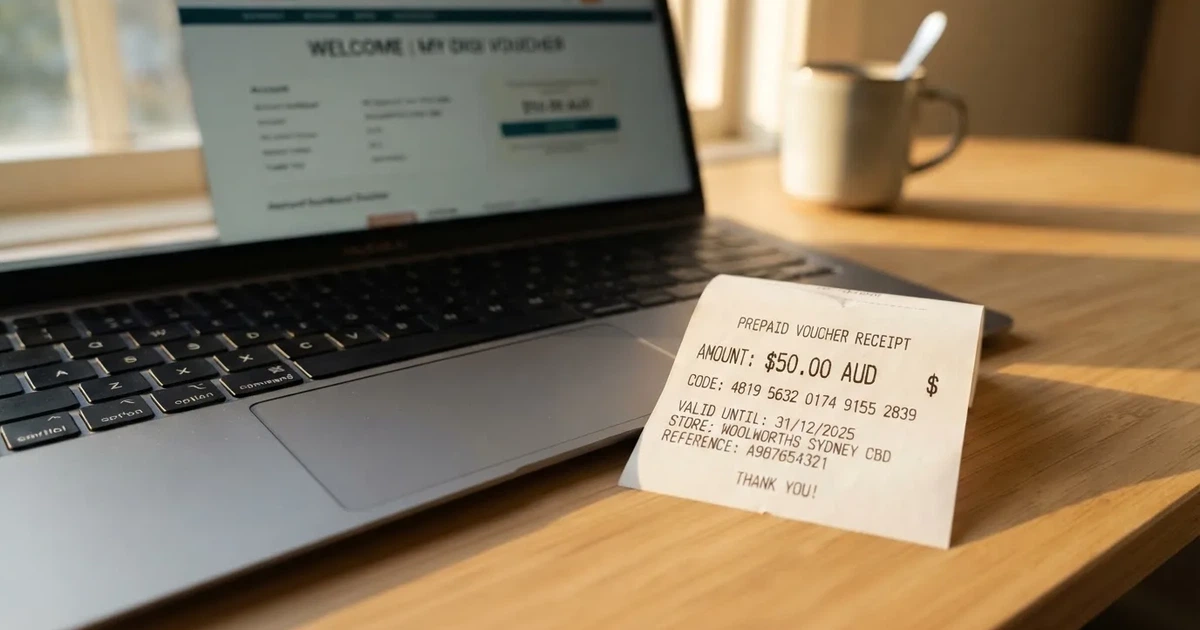
The mechanic is shorter than the marketing around it. A CashtoCode eVoucher is a 20-digit code, sold by resellers that range from convenience stores and petrol stations to online platforms, and the official documentation lists support for more than twenty-five currencies. The brand has been on the market since 2013, with the eVoucher trademark held by Eightball Marketing Services LLC. None of those facts change from one casino to the next, because the cashier page is just a window onto a third-party processor.
What changes is the casino’s own envelope around it. The deposit flow is straightforward at every site that lists the method: pick CashtoCode on the cashier page, enter the amount the site accepts, copy the 20-digit code out of the voucher email or paper slip, and watch the balance land in the player account within a minute or two. CashtoCode itself does not charge the customer a usage fee, and any unused balance on the voucher keeps its full value when it is redeemed.
That last detail is the one the marketing copy tends to skip past. A voucher is single-use. Anything left over after the deposit sits on the code rather than on the casino account, and the player either redeems it against a later deposit or leaves it on a slip in a drawer. There is no partial-credit-and-store-the-rest behaviour, and there is no top-up to the same deposit if the cashier rejects the code.
The withdrawal side is where the cashier page stops looking like a CashtoCode experience at all. CashtoCode is deposit-only. The brand’s own documentation offers no payout option, so when the player wants to cash out, they are pushed back to whatever non-voucher route the site supports — most commonly a bank transfer, sometimes a card or a crypto wallet. That handoff carries the only waiting time the player will ever feel from this payment method. A CashtoCode withdrawal request still has to clear the casino’s own manual checks before the settlement lands back in an Australian account, and those checks can take anything from a single business day to several, depending on the operator, the size of the withdrawal, and whether the account has already been verified through Know Your Customer documents.
That second point is the one a reader should hold onto before signing up: the speed of the voucher on the way in has almost no relationship to the speed of the money on the way out.
The minimum deposit on a CashtoCode-friendly cashier tends to sit at a low round number, with A$10 the most common figure across the offshore sites that publish a cashier page aimed at an Australian customer. The maximum is governed more by the reseller’s voucher denomination than by the casino — most resellers sell fixed denominations, so a player moving a larger balance makes several deposits rather than one. That structure suits an offshore operator that wants to appear accessible at the bottom of the market without committing to high-value single-transaction flows.
The fee picture on the deposit side is clean. CashtoCode states it does not charge the customer, and the offshore casinos that list the method do not levy a CashtoCode-specific deposit fee on top. The fees that show up in practice are downstream of the voucher, not on top of it: the reseller’s own commission if the player is buying in cash, and the spread between voucher denomination and deposit amount if the player buys a higher denomination than they intend to spend. The marketing word for this — “no fees” — is technically true at the cashier and technically incomplete once the reseller is included.
The legal frame around any offshore casino serving an Australian
Australian law on online gambling is short, and it is short on purpose. The Interactive Gambling Act 2001, strengthened by the Interactive Gambling Amendment Act 2017, makes it an offence to provide online casino games, online pokies, or in-play betting to a person physically in Australia. No state or territory licenses those products. What can be licensed, and what is licensed through the Northern Territory Racing and Wagering Commission, is wagering on races and sporting events placed before the event, lotteries and keno. The licensed wagering bookmakers on the NT register — Sportsbet, Bet365, Ladbrokes and roughly forty-nine others — are licensed in the Territory for tax reasons; the commission has no full-time staff and meets once a month in Darwin. That register is the ceiling on what an Australian-licensed site can offer a customer with an Australian bank account.
The Interactive Gambling Amendment (Gambling Reform) Bill 2026 passed Parliament on 19 August 2026. Its advertising and inducement measures commence on 1 January 2027, which is a law with a start date rather than a law already in force at the time this page is read in. For anyone using a CashtoCode-accepting offshore casino in the year this article was written, the operative text is still the 2001 Act as amended in 2017.
The ACMA is the body that enforces that text against the supply side. Its tools are investigation, formal warnings, and directions to Australian internet service providers to block illegal services at the network level. The cumulative blocking total — sites and affiliate marketing pages blocked since the first blocking request went out in November 2019 — reached 1,751 as of the regulator’s own June 2026 round, with more than 230 unlicensed services having left the Australian market since enforcement was strengthened in 2017. The June 2026 round alone added twelve more domains to the block list: 7Signs, ChromaBet, Donbet, Duospin, Freshbet, Slots Gem, Jacks Club, Lucky Start, Pointsbetz.com, Spinrise, Vinyl Casino and Wildsino.
None of those twelve is on the operator list at the bottom of this article, because none of them is one of the brands the ACMA has named in a formal warning. The block list and the warning list overlap, but they are not the same document and they do not move on the same timeline.
The legal position of the player is different from the legal position of the operator. The IGA targets the provider, not the individual who places a bet. There is no realistic prospect of an Australian punter being prosecuted for depositing on an offshore site. What that punter gives up is the set of protections an Australian license comes with: no complaints body, no recourse if the operator refuses a withdrawal, no connection to BetStop, and the standing possibility that the next ACMA round will block the site with a balance still sitting on it. The H2 Gambling Capital 2025 estimate puts Australian losses to illegal sites at around A$3.9 billion a year, and tracks the legal-channel share of gambling spend falling from 74 per cent in 2021 to 64 per cent. That gap is the gap an offshore site fills.
The licensed side of the market is moving on its own tracks. From 11 June 2024, Australian-licensed online wagering providers have been banned from accepting credit cards, credit-linked digital wallets, or digital currencies as payment, with penalties of up to A$247,500 for non-compliance. The legal deposit routes that remain are debit card, bank transfer, PayID and Osko instant transfers, and BPAY. A licensed site asking for a credit card or a crypto deposit is operating outside the rules; an offshore site asking for the same things is operating outside the rules by a wider margin, because it is outside the rules entirely.
Responsible play and the limits an Australian punter can actually set
The Australian harm-minimisation infrastructure is built for Australian-licensed wagering services, and offshore casinos sit outside it. That distinction is worth making plainly, because the same words — “self-exclusion”, “deposit limit”, “gambling block” — describe real Australian consumer protections when applied to a licensed bookmaker, and describe marketing copy when applied to an offshore site.
BetStop is the National Self-Exclusion Register, live since August 2023. It binds Australian-licensed online and phone wagering services: a punter who registers with BetStop is excluded from those services for the period they nominate. The register does not reach an offshore casino. The offshore brand’s own responsible-gaming page is the only responsible-gaming page that applies, and the only self-exclusion that binds is the one the offshore operator chooses to honour. The National Gambling Helpline — 1800 858 858, free, twenty-four hours a day — is the line that does reach an offshore player, and the chat service at Gambling Help Online sits alongside it.
The credit ban mentioned above also constrains how a punter can move money. Since 11 June 2024, a credit card, a credit-linked digital wallet, or a digital currency cannot be used to fund a wagering account with an Australian-licensed operator, and the same restriction is what makes a deposit method that does not touch a credit line attractive to a punter who has run out of card-based options. CashtoCode sits on the right side of that line for a punter trying to deposit and on the wrong side for a punter trying to stay inside Australian consumer protection.
What an Australian punter can do, regardless of which site they end up on, is turn on a gambling transaction block at the bank. NAB, Commonwealth Bank, Westpac and St George each let a cardholder self-activate a gambling block through their banking app. Westpac’s gambling block is card-level: it refuses authorisation of transactions registered under the merchant category code for betting and casino gambling on eligible personal credit and debit cards. ANZ’s gambling block, activated through the ANZ app, blocks gambling transactions made through a digital wallet such as Apple Pay on an eligible card, not just on the physical card. Once ANZ’s block is on, removing it requires a forty-eight-hour waiting period, and the bank warns that not every gambling transaction will be blocked and that some non-gambling transactions might be blocked in error.
The Apple Pay and Google Pay piece sits inside the credit-ban frame rather than beside it. Apple’s own documentation states that any surcharge on Apple Pay transactions comes from the merchant’s card-processing fees, not from Apple, and that the transaction limits and PIN requirements are set by the card issuer or the merchant, not by Apple. By the end of 2025, mobile-wallet transactions through Apple Pay, Google Pay and Samsung Pay collectively made up around 45 per cent of all card payments in Australia by number, which is the volume behind the ACMA’s decision to extend the credit ban to credit-linked wallets.
PayID and Osko instant transfers sit in the deposit rails that are still open to a licensed wagering provider. Osko settles a transfer between participating Australian banks in under a minute, twenty-four hours a day including weekends, whether the transfer is addressed to a BSB and account number or to a PayID. Paying to a PayID shows the name of the account holder before the transfer is sent, and the operator of the New Payments Platform warns that being asked to transfer money to a PayID on an illegal gambling site almost certainly means a scam site. The New Payments Platform itself went live on 13 February 2018 and is owned by a non-profit company whose thirteen shareholders include the Reserve Bank of Australia and the major banks; participants must keep monthly outages to under two minutes, and more than twenty-five million PayID identifiers had been registered on the platform by April 2025.
AUSTRAC’s threshold-transaction-report rule applies to physical cash transfers of A$10,000 or more; ordinary electronic bank transfers are not subject to that per-transaction reporting requirement regardless of amount. That distinction matters when a punter is weighing up a voucher route against an instant bank transfer route, because a CashtoCode voucher bought in cash above A$10,000 crosses the threshold and a PayID transfer of any size does not.
The offshore brands that have appeared on the ACMA’s published warning list
The operator list at the bottom of this article is built from a single source: the ACMA’s own register of formal warnings. A formal warning is the step the regulator takes before asking an internet service provider to block a service, and the warnings the ACMA has published are the only public, named-actor record of which offshore operators have been put on notice for serving an Australian customer. The brands are listed in the order the ACMA’s own publications place them, and each entry carries the date of the warning rather than a launch date, because the regulator’s action is the material fact a reader needs to weigh.
What follows is a single comparison block. The columns are the matters the ACMA’s own register lets a reader check: the brand name, the action and date, the operator named in the warning, and whether the page has any information on whether the brand lists CashtoCode specifically.
The ACMA’s published warnings, by brand
| Brand | ACMA action and date | Operator named by the ACMA | Subject support |
|---|---|---|---|
| RocketPlay | Formal warning, March 2026 | Pulsup Ltd | — |
| Level Up Casino | Formal warning, May 2022 | Dama N.V. | Westpac listings |
| Woo Casino | Formal warning, March 2025 | Dama N.V. | — |
| Spirit Casino | Formal warning, May 2025 | Dama N.V. | — |
| National Casino | Formal warning, July 2025 | Consolutetish S.R.L. | AUSTRAC and Wikipedia listings |
| Bizzo Casino | Formal warning, July 2025 and 2022 | Consolutetish S.R.L.; earlier TechSolutions | — |
| Ignition Casino | Formal warning, July 2025 | Bamboo Media | — |
| Instant Casino | Formal warning, February 2025 | EOD Code SRL | ecoPayz and PayID listings |
| Jackbit | Formal warning, April 2026 | Ryker B.V. | — |
| Casino Intense | Formal warning, April 2025 | Sterplay Holding Ltd | AUSTRAC, iTnews and NAB listings |
| Sky Crown | Formal warning, published 2022 | Hollycorn N.V. | — |
The em dashes in the right-hand column are doing real work. They indicate that this page lacks specific information on whether CashtoCode is currently on its cashier page, and the reader should treat the silence as silence rather than as a yes or a no. The non-dash entries are listings the page has surfaced from sources other than the brand itself, which is what the spec calls listings-only and which a reader should read as what those listings report rather than as the operator’s own confirmation. The Westpac listing for Level Up Casino, the AUSTRAC and Wikipedia listing for National Casino, the ecoPayz and PayID listing for Instant Casino, and the AUSTRAC, iTnews and NAB listing for Casino Intense are not statements by the operators about CashtoCode; they are records the page happened to surface from sources that document payment-method exposure in the Australian market.
Two of the eleven brands on the list carry two entries on the ACMA’s register, and that repetition is itself worth noting. Dama N.V. was warned in May 2022 over a six-brand batch that included Bambet, Dazard, Level Up, Rocketplay, Wild Tornado and Cobra Casinos; the same operator was warned again in March 2025 over Woo Casino and in May 2025 over Spirit Casino. Three warnings, one operator, a ten-year bookend that the ACMA’s own publications make plain. Consolutetish S.R.L. was warned in July 2025 over National Casino and Bizzo Casino, with the Bizzo entry the second formal warning tied to that brand since 2022, when TechSolutions Group N.V. carried the original warning.
The picture is also one of movement between operators behind the brand. RocketPlay’s March 2026 warning names Pulsup Ltd as the operator, not Dama N.V., which is the entity named on the May 2022 warning that covered the same brand. The brand continued; the operator behind it changed; the ACMA’s register tracks that change rather than the brand’s own continuity. A reader comparing the eleven names should not read them as eleven stable offshore companies. Several of them are skin brands that have moved between owners, and the regulator’s record is the only public index of who has been on each end of that move.
The same logic applies to the operators the page cannot name on the right-hand column. The ACMA’s formal warnings are not a list of every offshore casino serving Australia; they are a list of the operators the regulator has chosen to act against. CashtoCode-friendly cashier pages sit on dozens of offshore brands that have not yet been warned, on brands the ACMA has blocked without a prior formal warning, and on brands the regulator is still investigating. A reader using this table to decide whether a brand is safe is reading it backwards. The table says which brands the regulator has acted against. It does not say anything about brands that have not yet been named.
What the ACMA blocking arithmetic actually shows
The regulator’s blocking arithmetic is a rate, not a total. Take the running total of 1,751 sites and affiliate marketing pages blocked since the first blocking request in November 2019, and divide it by the months between November 2019 and June 2026 — roughly eighty months — to get a band rather than a single number. The result is somewhere around twenty-two sites blocked per month across the life of the regime, with the rate uneven: heavier early on, lighter in some months, and uneven across the years as the regulator’s enforcement priorities and the offshore operators’ domain-rotation practices shift against each other.
The June 2026 round alone added twelve sites, which is well above the running monthly average and a reminder that the rate is not a constant. A punter reading the arithmetic as a forecast — “how many will be blocked next month?” — is reading past the conclusion the arithmetic supports. The arithmetic supports the band itself: between the first blocking request in late 2019 and the snapshot date, the regulator is sitting at roughly twenty-two sites per month across the life of the regime, with rounds of a dozen or more in single months and quieter months between them. That is the rate. Any specific month from here on may sit inside that band, above it, or below it, depending on which operators rotate domains and which ones the regulator decides to name next.
Where the brands sit against each other
Read across the eleven, three things stand out that the table itself does not say.
The first is the operator concentration behind the warnings. Dama N.V. carries three of the eleven entries — Level Up Casino, Woo Casino, Spirit Casino — with the May 2022 warning covering a six-brand batch that includes Level Up Casino, and the 2025 warnings following the same operator. Consolutetish S.R.L. carries two of the eleven, with the July 2025 warning covering National Casino and Bizzo Casino. Hollycorn N.V., Bamboo Media, Pulsup Ltd, EOD Code SRL, Ryker B.V., Sterplay Holding Ltd and TechSolutions each carry one entry. A reader who treats “eleven brands” as “eleven independent operators” is reading past the underlying record. Several of these are skin brands that have moved between corporate owners, and the regulator’s register is the only place that names the parent behind the skin.
The second is the spread of dates. The earliest warning in the table is the 2022 Hollycorn entry covering Sky Crown and Blue Leo. The latest is the April 2026 warning over Jackbit and CasinOK. Between those endpoints sit the 2022 Dama N.V. warning, the 2025 Dama N.V. warnings, the 2025 Consolutetish warning, the 2025 EOD Code SRL warning, the 2025 Sterplay warning, the 2026 Pulsup warning, and the 2026 Ryker warning. The table does not show that the warnings bunch in 2025 and the first half of 2026 — the regulator’s enforcement tempo has lifted across that window. Whether that tempo holds is a question for the next round, not for this page.
The third is the listings-only column, which is the only place the table says anything about CashtoCode specifically. Four brands carry a non-empty entry: Level Up Casino (Westpac listings), National Casino (AUSTRAC and Wikipedia), Instant Casino (ecoPayz and PayID), and Casino Intense (AUSTRAC, iTnews and NAB). The other seven carry an em dash. The non-empty entries are records of payment-method exposure in the Australian market, not statements by the operators themselves. A reader who needs to know whether a brand is currently taking CashtoCode deposits has to check the brand’s own cashier page, and even then the answer changes when the operator rotates domains.
RocketPlay
RocketPlay’s ACMA record is two entries long. The first is the May 2022 warning over Dama N.V., which named Rocketplay as one of six brands in a single batch alongside Bambet, Dazard, Level Up, Wild Tornado and Cobra Casinos. The second is the March 2026 warning over Pulsup Ltd, named against the same brand on Rocketplay.com.au. The brand has outlived the warning cycle: the same consumer-facing site sits behind two different operators across roughly four years, and the ACMA’s register tracks the operator change rather than the brand continuity. A reader who finds RocketPlay’s cashier page accepting a CashtoCode deposit today is dealing with the same brand the regulator warned in 2022 and again in 2026, sitting behind a different parent company than the 2022 record names. This page has no available data regarding the presence of CashtoCode on the site’s cashier interface.
Level Up Casino
Level Up Casino’s only ACMA entry is the May 2022 warning that named Dama N.V. over a six-brand batch. The brand sits inside that batch alongside Bambet, Dazard, Rocketplay, Wild Tornado and Cobra Casinos, none of which appears separately in the regulator’s later warnings against Dama N.V. except RocketPlay, which was re-warned in March 2026 under Pulsup Ltd. Level Up Casino’s own surface area in the Australian market is narrower than the regulator’s batch suggests, because the batch is shared with five other brand names. The page surfaces a Westpac listing for the brand, which is a record of payment-method exposure rather than a statement by the operator.
Woo Casino
Woo Casino’s ACMA entry is the March 2025 warning over Dama N.V., the regulator’s first formal warning against that operator since the May 2022 batch. The interval between the two warnings is roughly three years, which is the gap in which Dama N.V. continued to operate its skin brands through the same parent company without a fresh formal warning. There is no confirmation on this page about whether CashtoCode is currently supported. The reader weighing Woo Casino against Level Up Casino or Spirit Casino is weighing three skin brands under the same parent company against three separate formal warnings; the table does not collapse those into one fact, and the spec does not let the writer do so either.
Spirit Casino
Spirit Casino’s ACMA entry is the May 2025 warning over Dama N.V., the second of the regulator’s 2025 actions against that operator. Spirit Casino’s record is shorter than RocketPlay’s — a single warning, a single date — and the brand is one of the smaller pieces of the Dama N.V. portfolio rather than the lead. Information regarding CashtoCode’s current status on this brand is not provided by this page. A reader who treats Spirit Casino and Woo Casino as separate operators is reading past the underlying record. The two brands sit behind the same parent, and the ACMA’s 2025 warnings are the regulator’s way of putting the parent on notice twice in three months.
National Casino
National Casino’s ACMA entry is the July 2025 warning over Consolutetish S.R.L., which the regulator issued jointly with a warning over Bizzo Casino under the same operator. National Casino’s record is a single entry rather than the double entry that Bizzo carries; the brand has not been the subject of an earlier warning under a different operator name. The page surfaces an AUSTRAC listing and a Wikipedia listing for the brand, both of which are records of payment-method exposure in the Australian market. A reader looking at National Casino against Bizzo Casino is looking at two brands on the same operator’s July 2025 warning, not at two operators, and the table’s date column keeps that fact visible.
Bizzo Casino
Bizzo Casino’s ACMA record is the longer of the two entries the regulator carries on Consolutetish S.R.L. The July 2025 warning names Consolutetish S.R.L. as the operator; the earlier 2022 warning named TechSolutions (CY) Group Limited and TechSolutions Group N.V. as the operator over the same brand. The brand has outlived the operator change, and the ACMA’s register is the only public record of who has been on each end of that move. Bizzo Casino is the brand the ACMA has had to warn twice under two different corporate parents, with three years between the warnings, and the regulator’s July 2025 action is the second formal warning tied to Bizzo Casino since 2022. This page does not verify if CashtoCode is an active deposit option for this specific operator.
Ignition Casino
Ignition Casino’s ACMA entry is the July 2025 warning over Bamboo Media, issued alongside the warnings over National Casino and Bizzo Casino. Ignition Casino’s record is a single entry, and the brand is absent from any other formal warning published by the regulator. Bamboo Media is a separate operator from Consolutetish S.R.L., which sits behind the other two warnings issued in the same July 2025 round, and the ACMA’s register treats the three as separate operators acting in the same enforcement window. The brand’s cashier page is not analyzed for CashtoCode support here.
Instant Casino
Instant Casino’s ACMA entry is the February 2025 warning over EOD Code SRL. The brand sits outside the Dama N.V. and Consolutetish S.R.L. clusters; the regulator’s February 2025 action is its own line in the register rather than part of a batch. The page surfaces an ecoPayz listing and a PayID listing for the brand, both of which are records of payment-method exposure. EOD Code SRL does not appear elsewhere in the regulator’s published warnings, and Instant Casino’s record is a single entry rather than a recurring one.
Jackbit
Jackbit’s ACMA entry is the April 2026 warning over Ryker B.V., issued jointly with a warning over CasinOK under the same operator. Jackbit’s record is a single entry, and CasinOK does not appear separately in the operator list because the regulator’s April 2026 warning names the two together rather than treating them as separate enforcement actions. Whether this brand lists CashtoCode as a payment method is not verified by this page. A reader who finds Jackbit’s cashier page accepting a CashtoCode deposit is dealing with a brand the regulator warned in April 2026 under Ryker B.V., and the table’s date column is the freshest signal on that warning.
Casino Intense
Casino Intense’s ACMA entry is the April 2025 warning over Sterplay Holding Ltd, the regulator’s single published action against that operator. The brand sits outside the Dama N.V. and Consolutetish S.R.L. clusters, and Sterplay Holding Ltd does not appear elsewhere in the regulator’s published warnings. The page surfaces an AUSTRAC listing, an iTnews listing, and an NAB listing for the brand, all of which are records of payment-method exposure in the Australian market. The three listings are a richer trail than the table’s other non-empty entries, but they are still records rather than statements by the operator.
Sky Crown
Sky Crown’s ACMA entry is the formal warning over Hollycorn N.V. published in September 2022, which the regulator issued jointly with a warning over Blue Leo under the same operator. Sky Crown’s record is a single entry, and Blue Leo does not appear separately in the operator list because the regulator’s 2022 warning names the two together. Hollycorn N.V. does not appear elsewhere in the regulator’s published warnings. This page does not provide data on whether CashtoCode is currently supported for this brand. A reader weighing Sky Crown against Casino Intense is weighing two brands under two separate operators, with two separate 2022 and 2025 warnings, and the table keeps both visible.
A note on what the comparison is and is not for
The eleven brands on the list are not a ranking. None of them is a recommended place to play, and none of them is more lawful than the others for an Australian resident, because the IGA covers every offshore casino that takes Australian players regardless of which licence the operator displays. The list is also not a complete catalogue. CashtoCode-accepting cashier pages sit on dozens of offshore brands that have not yet been named in a formal warning, and a reader who uses this page to choose a brand is using it backwards.
The comparison is the regulator’s own record, in the regulator’s own order. The columns are the ACMA’s action and date, the operator named in the warning, and what the page has been able to attach to the brand on CashtoCode specifically. The em dashes are not refusals to say — they are the page saying it has nothing to say. The non-empty entries in the right-hand column are records surfaced from sources other than the operators themselves, and a reader should treat them as what those listings report.
The arithmetic at the end of the legal section belongs to the same logic. It is the regulator’s blocking rate over the life of the regime, and the rate is a band rather than a single number because the monthly totals are uneven. A reader looking for a forecast of next month’s blocks is reading past the conclusion the arithmetic supports.
What an Australian punter can actually verify before depositing
The verification chain an Australian punter can run, regardless of which offshore brand ends up on the cashier page, is short and worth running. The first step is the ACMA’s own register of formal warnings, which the page has used as its source list. The second is the ACMA’s block list, which sits beside the warnings and which carries the domains the regulator has asked Australian internet service providers to block at the network level. The third is the bank’s own gambling transaction block, which can be turned on through the banking app and which sits upstream of the deposit rather than downstream of it. A gambling block at the bank stops the deposit before it reaches the cashier, and the bank-side block is the only block that reaches an offshore site.
The PayID warning sits inside the same chain. Paying to a PayID shows the name of the account holder before the transfer is sent, and the operator of the New Payments Platform warns that being asked to transfer money to a PayID on an illegal gambling site almost certainly means a scam site. That warning applies to the deposit side rather than the voucher side, because a CashtoCode voucher does not carry a PayID; but a punter who moves from voucher to PayID on the same offshore site is moving onto rails the regulator has named in its own scam warning.
The Helpline is the line that does reach an offshore player regardless of the deposit method. 1800 858 858 is free, twenty-four hours a day, with chat at Gambling Help Online. A punter reading this page from Australia and weighing the next deposit has a single number to call that does not depend on which offshore brand the cashier page is sitting on.
A short list of the facts the page rests on
A reader who needs to check the page’s claims against the regulator’s own publications can run the list below against the ACMA register. The page’s claims about each brand are limited to the warning the regulator has published, and a reader who finds a brand absent from the regulator’s register has found a brand the regulator has not yet named — which is a different fact from a brand the regulator has cleared.
A reader who needs to check the page’s claims about CashtoCode can run the voucher mechanics against the brand’s own documentation. The voucher is a 20-digit code, deposit-only, free to the customer, sold by resellers ranging from convenience stores to online platforms, supporting more than twenty-five currencies. The page’s claims about how the voucher behaves at the cashier are drawn from those mechanics rather than from any single operator’s own cashier page, because the cashier page is a window onto the same processor regardless of which brand sits behind it.
A reader who needs to check the page’s claims about the legal frame can run them against the Interactive Gambling Act 2001 as amended in 2017, against the Interactive Gambling Amendment (Gambling Reform) Bill 2026, and against the ACMA’s published enforcement rounds. The frame is short, the text is public, and the regulator’s register is the index the page has used.
FAQ
Can an Australian punter legally use a CashtoCode-accepting offshore casino?
No. The Interactive Gambling Act 2001 makes it an offence to provide online casino games, online pokies or in-play betting to a person in Australia, and the prohibition covers every offshore operator regardless of which licence the site displays. The IGA targets the provider, not the punter; an Australian player is not prosecuted for depositing, but the offshore site gives no Australian consumer protection and can be blocked by the ACMA with a balance still on it.
What is the smallest deposit a CashtoCode-friendly offshore casino usually asks for?
The minimum is most commonly A$10 across the offshore sites that publish a cashier page aimed at an Australian customer, though the exact figure varies by brand and the maximum is governed by the reseller’s voucher denomination rather than the casino’s own ceiling. A punter moving a larger balance makes several deposits rather than one.
Does a CashtoCode withdrawal actually clear faster than a card withdrawal at these sites?
CashtoCode is deposit-only; the brand offers no payout option, so a withdrawal request is pushed back to whatever non-voucher route the site supports — most commonly a bank transfer. The waiting time on that route is the casino’s own, not the voucher’s, and it can run from a single business day to several depending on the operator and whether the account has already cleared KYC checks.
Is CashtoCode available at every offshore pokies-style site, or only at some of them?
CashtoCode is a payment-method choice the operator makes when it sets up its cashier page. It is listed by some offshore brands and not by others, and the brands the ACMA has warned about are not the same set as the brands that currently list CashtoCode. The voucher is deposit-only, so any withdrawal request returns to the operator’s non-voucher rails regardless of which brand sits behind the cashier.
Does depositing with CashtoCode add an extra fee at these casino sites?
CashtoCode states it does not charge the customer a usage fee, and the offshore casinos that list the method do not levy a CashtoCode-specific deposit fee on top. The fees that show up in practice are downstream of the voucher: the reseller’s own commission if the player buys in cash, and the spread between voucher denomination and deposit amount if the player buys a higher denomination than they intend to spend.
What should a punter do if a CashtoCode deposit does not appear in the casino account?
The first step is to check whether the 20-digit code has been redeemed at all, because a CashtoCode voucher is single-use and any unused balance stays on the code rather than on the casino account. The second step is to contact the casino’s support with the voucher reference and the time of the deposit, because the cashier’s settlement can lag a few minutes when the reseller’s confirmation is slow. The third step is to contact the reseller directly, because the reseller’s record is the only one that proves the voucher was bought.