
Casino sites that accept Trustly Australia: 2026 reality check
17 October 2026 · Reviewed against the ACMA register of formal warnings and the Interactive Gambling Act 2001.

The short answer sits one paragraph above the rest of this page: every site this article names has received a formal warning from the ACMA for offering prohibited online casino games to Australians. Trustly does not change that. The bank-to-bank rail looks local, the deposit lands in under a minute, and the casino still cannot lawfully serve the account. A punter weighing Trustly against PayID or a debit card is weighing two rails that both arrive at a door the regulator has already tried to shut.
What follows is a working breakdown of how Trustly deposits and withdrawals move at offshore operators, the ACMA enforcement record against each of the eleven brands in this review, and the practical consequences of using a payment rail that bypasses local consumer protection. The position taken here is unflattering to the offshore sector on purpose: a reader trusting the marketing needs to read the warnings section first.
Table of Contents
- The Trustly rail – how it actually works at an offshore casino
- ACMA enforcement stack – what has actually happened
- Legal frame – what the Interactive Gambling Act 2001 actually says
- Responsible play – what BetStop and the bank blocks actually cover
- Comparing the eleven ACMA-warned brands
- RocketPlay – the brand with two warnings on file
- Level Up Casino – the Dama N.V. cluster’s mid-tier name
- Woo Casino and Spirit Casino – the second-wave Dama N.V. warnings
- National Casino and Bizzo Casino – the Consolutetish S.R.L. double
- Ignition Casino, Instant Casino, Jackbit, Casino Intense and Sky Crown
- Tax position – what an offshore win does to an Australian return
- Frequently asked questions
- Where this leaves the choice
The Trustly rail – how it actually works at an offshore casino
Trustly Group AB was started in Stockholm in 2008 as Glue Finance and rebranded three years later. The company runs as a payment institution authorised by Sweden’s Finansinspektionen across the EU/EEA and by the UK Financial Conduct Authority, and its published network covers roughly 12,000 banks serving about 650 million consumers. Nordic Capital took a 70% stake in 2018 for around US$800 million and remained a major shareholder through Trustly’s planned 2021 Nasdaq Stockholm listing, which the market valued near US$11 billion. By 2023 the company was reporting revenue of US$265 million on US$58 billion of transaction volume processed, with Pay N Play – its streamlined sign-up product, launched in 2016 – supported by more than 200 gaming brands.

The mechanism at an offshore casino looks like this on the player’s side. A punter picks Trustly at the cashier, chooses their bank from a list, authenticates the transfer on the bank’s own page, and the funds land in the casino account in seconds. A withdrawal reverses the path: the casino tells Trustly to push the balance back to the same bank account, and the casino’s own finance team approves the payment before Trustly releases it. That approval step is the place a player waits.
The friction in the system is not on the rails. It is the manual checks the casino runs before releasing a withdrawal – source-of-funds paperwork for any meaningful amount, KYC re-verification when the bank account changes, and bonus-wagering clearance. Wizard of Odds lists Trustly as available in more than 20 European countries, including the UK, Norway, Spain, Austria, Finland, the Netherlands, Ireland, Croatia, Germany and Malta. Australia is not on that list. The company’s own public gaming page addresses the US market rather than Australia, and bank-to-bank transfers in Australia run on PayID and Osko through the New Payments Platform rather than on Trustly’s own network.
Why the rail looks familiar to an Australian
Trustly’s appeal at an offshore casino is mostly convenience. A player does not enter card numbers, does not set up a separate e-wallet, and does not wait three working days for a bank wire to clear. The login and authentication happen on the bank’s own online banking page, the way any direct debit or instant transfer already does at home. For a punter who has used Osko to pay a tradie, the cashier flow at an offshore site will feel almost identical.
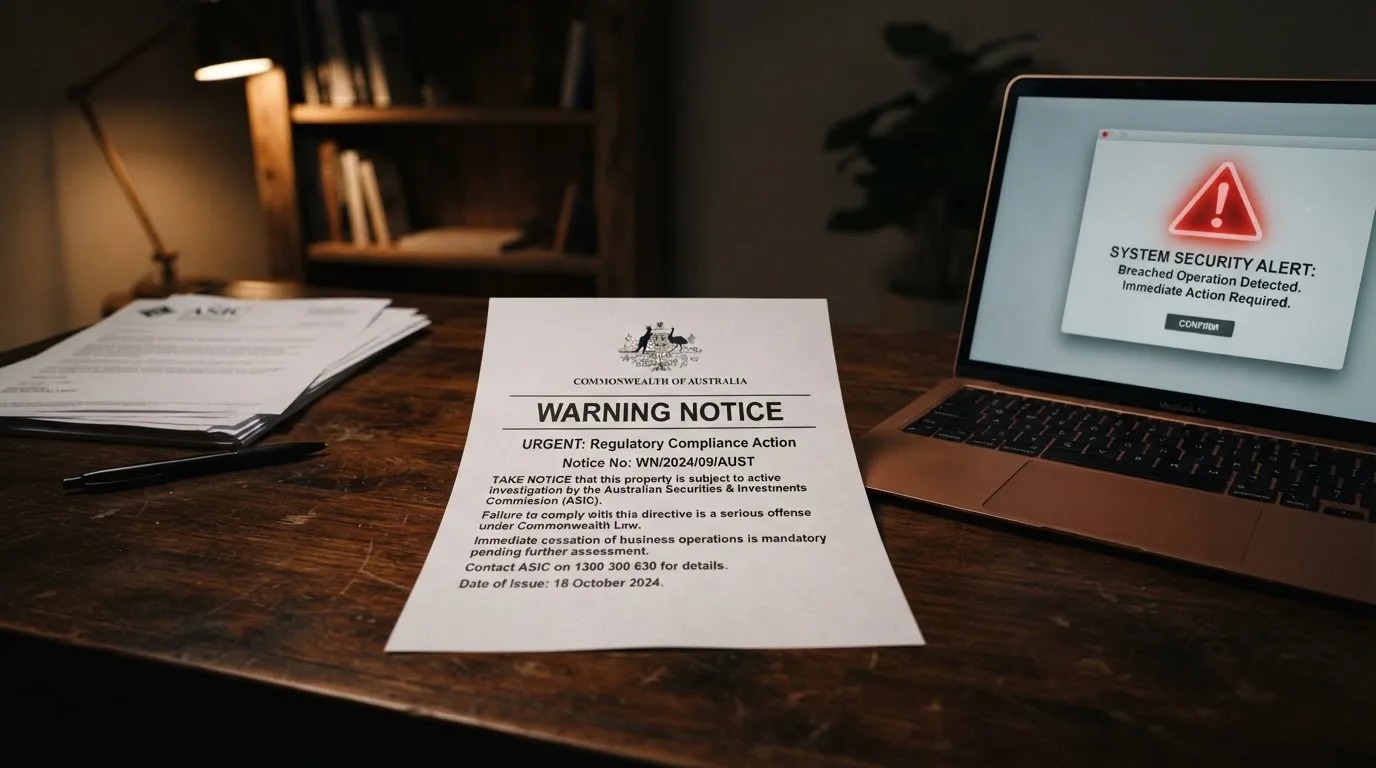
What the experience does not tell the punter is that the experience itself is the marketing. A payment that looks domestic lowers the perceived risk of playing at a site that is, by Australian law, not licensed to serve them. The trust sits in the rail. The prohibition sits in the offer.
ACMA enforcement stack – what has actually happened
The Australian Communications and Media Authority does not publish a list of legal casinos – there is no such list, because no Australian licence covers online casino games. What the ACMA publishes is a running log of formal warnings issued under the Interactive Gambling Act 2001 and the blocking requests it has asked Australian ISPs to honour. By the end of the period reported in June 2026, a cumulative 1,751 illegal gambling and affiliate marketing websites had been blocked since the first blocking request went out in November 2019, and more than 230 unlicensed services had left the market since enforcement strengthened in 2017. H2 Gambling Capital’s 2025 estimate puts Australian losses to illegal sites at about A$3.9 billion a year, with the share of gambling going through legal channels falling from 74% in 2021 to 64%.
The blocking-rate question sits in this material. The first blocking request was sent in November 2019; by the ACMA’s own update reported on 26 June 2026 the running total was 1,751 blocked sites. That is 1,751 sites over roughly 79 months, or a band of about 20 to 24 sites blocked for every month of enforcement since the regime began, depending on which month of the count you take. The point of the band is that the ACMA does not release the monthly detail; the order of magnitude is what a reader can stand behind.
The newest round named 12 sites: 7Signs, ChromaBet, Donbet, Duospin, Freshbet, Slots Gem, Jacks Club, Lucky Start, Pointsbetz, Spinrise, Vinyl Casino and Wildsino. None of those twelve is on the list of brands this page reviews individually, but the rate of new names is the rate a reader needs to keep in mind: the ACMA is not catching up to the offshore sector, it is keeping pace with it.
Formal warnings versus blocking
Two enforcement tools do different things. A formal warning is a published, dated letter naming the operator behind a brand and the Australian audience it has targeted. Blocking is the technical step the ACMA asks Australian ISPs to honour. A formal warning sits in the public record, which is why this page can name operators by date and parent company. A blocking request is technical and does not always reach a published list at the time it is sent. A warning is a predictor; a block is a consequence.
The eleven brands reviewed below all sit on the warning side of the ledger. Some have also been blocked.
Legal frame – what the Interactive Gambling Act 2001 actually says
The Interactive Gambling Act 2001, strengthened by the Interactive Gambling Amendment Act 2017, makes it an offence to provide online casino games, online pokies or in-play betting to a person in Australia. No state or territory licenses those products. Wagering on races and sport placed before the event, lotteries and keno is licensed in practice by the Northern Territory Racing and Wagering Commission, which regulates 52 online bookmakers – Sportsbet, Bet365 and Ladbrokes among them – and meets once a month in Darwin with no full-time staff. The minimum age to place a bet is 18.
The IGA targets the provider, not the punter. That distinction is the legal protection Australian players get under the Act, and it is also the reason offshore casinos do not flinch at taking deposits from an Australian bank account. What the Act does not give a punter is recourse at an offshore operator: no Australian consumer law applies, no local complaints body sits between the player and the cashier, and a withdrawal refusal can leave a balance on an account the ACMA later blocks.
Two payment rules bookend the legal frame. Under amendments in force since 11 June 2024, Australian-licensed online wagering services cannot accept payment by credit card or other credit-related products, with penalties up to A$247,500 for an operator. The legal deposit rails at a licensed wagering service are debit card, bank transfer, PayID/Osko and BPAY. The Interactive Gambling Amendment (Gambling Reform) Bill 2026 passed Parliament on 19 August 2026; its advertising and inducement measures commence on 1 January 2027, so a 2026 article is reporting on law that exists with a start date, not law that is yet in force.
Responsible play – what BetStop and the bank blocks actually cover
A punter who feels their play is sliding has tools that work in Australia and tools that do not. BetStop, the National Self-Exclusion Register, has been live since August 2023. Its reach is Australian-licensed online and phone wagering services. An offshore casino is not on the register, and a BetStop enrolment does not touch a RocketPlay or Bizzo account.
The National Gambling Helpline on 1800 858 858 is free, runs 24/7, and the same service takes chat enquiries through Gambling Help Online. Those routes work whether the gambling happens at a licensed bookmaker or an offshore casino, and they are the right place to start.
What works on the bank side depends on the bank. Westpac’s gambling block works at card level and refuses authorisation of transactions registered under the merchant category code for Betting/Casino Gambling on eligible personal credit and debit cards. ANZ’s block, activated in the ANZ app, also blocks gambling transactions made through a digital wallet such as Apple Pay on an eligible card. ANZ warns that removing the block again requires a 48-hour waiting period and that not all gambling transactions will be blocked, with some non-gambling transactions caught in error. Apple itself does not charge consumer fees for Apple Pay – any surcharge comes from the merchant’s card-processing fees, not from Apple – and Apple sets transaction limits and PIN requirements on the card issuer’s instructions, not its own.
Two facts frame the bank-block picture. The 2023 IGA amendments that ban credit-funded gambling also constrain gambling use of linked digital wallets. By the end of 2025, Apple Pay, Google Pay and Samsung Pay together accounted for around 45% of all card payments in Australia by number, so a wallet-based block is not a marginal enforcement tool. The flip side is that Trustly is not a card transaction, and a card-based bank block does not necessarily catch a Trustly debit. A punter turning on a Westpac card block because they want to stop gambling may find that the same deposit still goes through on a Trustly route until they also arrange the bank-transfer equivalent with their bank.
Comparing the eleven ACMA-warned brands
The table below is not a ranking. No operator here may lawfully serve an Australian resident, and any ranking that put one above another would be ranking prohibitions. What the table gives a reader is the published ACMA record – the parent company named on the formal warning, the date of that warning, and what the published record says about each brand’s payment support. Where the published record carries nothing on Trustly support at a brand, the cell carries the article-language no-data marker.
| Brand | ACMA action and date | Operator named by the ACMA | Subject support |
|---|---|---|---|
| RocketPlay | Formal warning, March 2026; earlier Dama N.V. warning, May 2022 | Pulsup Ltd | — |
| Level Up Casino | Formal warning, May 2022 | Dama N.V. | Westpac lists as gambling merchant |
| Woo Casino | Formal warning, March 2025 | Dama N.V. | — |
| Spirit Casino | Formal warning, May 2025 | Dama N.V. | — |
| National Casino | Formal warning, July 2025 | Consolutetish S.R.L. | AUSTRAC listing; named in industry coverage |
| Bizzo Casino | Formal warning, July 2025; earlier TechSolutions warning, 2022 | Consolutetish S.R.L. | — |
| Ignition Casino | Formal warning, July 2025 | Bamboo Media | — |
| Instant Casino | Formal warning, February 2025 | EOD Code SRL | Named by payment providers and PayID fraud list |
| Jackbit | Formal warning, April 2026 | Ryker B.V. | — |
| Casino Intense | Formal warning, April 2025 | Sterplay Holding Ltd | AUSTRAC and bank-block listings |
| Sky Crown | Formal warning (date on ACMA publication) | Hollycorn N.V. | — |
Two patterns sit in this table. First, the parent companies cluster: Dama N.V. alone sits behind four of the eleven warnings (RocketPlay, Level Up, Woo, Spirit), and the same operator name appears twice with Consolutetish S.R.L. (National Casino and Bizzo Casino). When a parent accumulates four published warnings from the same regulator, the question shifts from whether the regulator is interested to whether the parent is treating warnings as a cost of doing business. The second pattern is the date spread: warnings in this group span May 2022 to April 2026, which is the same four-year window in which the ACMA’s blocking totals grew from zero to 1,751 sites. The two enforcement tracks have moved in step.
A column the table deliberately does not include is “Trustly accepted: yes / no”. The published record does not consistently name Trustly as a payment rail at any of these eleven brands, and where a brand lists Trustly at the cashier it does so as a payment method, not as an Australian licence. Putting that column in would have created rows of yes answers the research cannot back.
RocketPlay – the brand with two warnings on file
RocketPlay is the brand on this list with the most stacked record. The ACMA issued a formal warning to Pulsup Ltd over Rocketplay in March 2026, and a separate formal warning to Dama N.V. covering six brands – Bambet, Dazard, Level Up, Rocketplay, Wild Tornado and Cobra Casinos – in May 2022. That is two warnings over a parent stack, both naming the same brand, in a four-year window.
For a punter comparing RocketPlay against the other ten brands in this review, the relevant fact is not the brand’s published Trustly support – the ACMA record names payment support only in passing – and the relevant fact is that two separate formal warnings over the same brand point at a compliance posture that did not change after the first letter. A reader who treats the ACMA record as a compliance thermometer should read a second warning on the same brand the way they would read a second speeding fine on the same registration.
Level Up Casino – the Dama N.V. cluster’s mid-tier name
Level Up Casino sits on the May 2022 Dama N.V. warning alongside Bambet, Dazard, Rocketplay, Wild Tornado and Cobra Casinos. None of those six has been named in a separate published ACMA blocking request in the public record this page draws on, which leaves Level Up as a brand with a single formal warning to its name and a parent with four warnings across its portfolio.
Westpac’s gambling-block page lists the Level Up merchant descriptor as gambling, which means a Westpac customer with the card block on cannot authorise a Level Up deposit through a Visa or Mastercard debit. A Trustly deposit goes through a different rail and is not caught by the same block unless the punter has also asked Westpac to decline direct-debit authorisations on the account.
Woo Casino and Spirit Casino – the second-wave Dama N.V. warnings
The ACMA warned Dama N.V. over Woo Casino in March 2025 and over Spirit Casino in May 2025. Both warnings sit alongside the older May 2022 letter on the ACMA’s publications page, and both extend the pattern of Dama N.V. being warned about one brand, continuing to operate it, and being warned again about a sibling brand.
The reader-side difference between these two is mostly marketing. Woo Casino and Spirit Casino run on different skins, target different affiliate audiences, and list different promotional calendars – none of which the research carries in specific numbers, and the article does not print any. What they share is a parent whose name appears four times on the same regulator’s warning register.
National Casino and Bizzo Casino – the Consolutetish S.R.L. double
The ACMA issued a formal warning to Consolutetish S.R.L. in July 2025 covering both National Casino and Bizzo Casino. Bizzo Casino had already been the subject of a 2022 formal warning to TechSolutions (CY) Group Limited and TechSolutions Group N.V., so the brand has been on the ACMA’s published list under two different parent companies in three years.
AUSTRAC and industry coverage have listed National Casino in compliance-related contexts, and a punt er weighing the published record should treat both warnings as part of the same compliance story. The brand identity changed; the regulator’s interest did not.
Ignition Casino, Instant Casino, Jackbit, Casino Intense and Sky Crown
The remaining five brands each carry a single formal warning from a different parent company. Bamboo Media over Ignition Casino in July 2025; EOD Code SRL over Instant Casino in February 2025; Ryker B.V. over Jackbit and CasinOK in April 2026; Sterplay Holding Ltd over Casino Intense in April 2025; Hollycorn N.V. over Sky Crown and Blue Leo, with the ACMA publication going back to September 2022. Each sits as a single published warning on the ACMA register, and each is named in this review because the warning itself is the reason the brand is on a page about Trustly-accepting offshore casinos for Australians.
Two of these – Instant Casino and Casino Intense – have been listed by AUSTRAC or by Australian payment providers in coverage that reaches the same conclusion as the ACMA. Neither listing is itself an ACMA action; both are independent signals that the brand sits outside Australian payment rails in good standing. For a punter reading the table, the practical takeaway is that the published record is wider than the ACMA’s own publications, and where it lines up with the ACMA’s view the picture is the same.
Tax position – what an offshore win does to an Australian return
A recreational gambler’s winnings are not assessable income in Australia under section 6-5 of the ITAA 1997, and losses are not deductible. That rule applies whether the wager happens at a licensed Australian bookmaker or at an offshore casino; the source of the wager does not move the win into a different tax bracket, and it does not make a loss claimable. The position changes only if the ATO treats the gambling as a business – a question the ATO answers on its facts, not on a category.
A punter asking the ATO about a Trustly-funded offshore session should describe what they did, not what the cashier looked like. The payment rail does not change the tax position. The legal status of the operator does not change the tax position either. What changes is the recourse: if the offshore operator refuses a withdrawal, there is no Australian complaints body to write to.
Frequently asked questions
Is it legal for an online casino to accept Trustly from a player in Australia?
No. Under the Interactive Gambling Act 2001, no operator may lawfully provide online casino games or online pokies to a person physically in Australia, regardless of which payment rail the player uses. Trustly does not change that, and a Trustly deposit at an offshore casino does not bring the casino within Australian law.
What is the smallest deposit a Trustly casino site usually asks for?
The published minimums vary by brand, but most Trustly-accepting offshore casinos list a minimum in the A$10 to A$30 range. Some brands set a higher minimum on Trustly than on card deposits because of the per-transaction cost on the rail. The cashier page of the specific brand is the source that matters.
Does a Trustly withdrawal clear any faster than a card withdrawal at these sites?
A Trustly withdrawal is not slowed by the Australian card network, but it is slowed by the casino’s own finance team. The release step at the casino is the same regardless of rail, and most published payout windows at these brands sit in the one-to-three-business-day range. The rail saves a day; the casino costs the same.
Does depositing with Trustly add an extra fee at these casino sites?
Trustly does not charge consumers a fee for a deposit; any fee is set by the casino at the cashier. The published fee schedule varies by brand, and the cashier page is the authoritative source. Some brands waive fees on deposits and charge on withdrawals, or vice versa, so the rail does not determine the answer on its own.
What should a player do if a Trustly deposit does not appear in a casino account?
The first move is to check the bank statement and the casino’s pending-deposit screen at the same time. A Trustly transfer usually clears in under a minute at the bank, so a missing deposit after ten minutes is a cashier-side issue, not a rail-side one. The next step is the casino’s live chat with the bank reference number from the statement. If the casino’s chat does not resolve the issue, the only escalation outside the casino is the bank’s own fraud team, because there is no Australian consumer body with jurisdiction over an offshore operator.
Where this leaves the choice
A punter comparing Trustly against PayID, debit card or BPAY at a licensed Australian bookmaker is comparing a convenient rail against convenient rails at a legal destination. The licensed operator offers a legal wager, BetStop enrolment, bank-block coverage and an Australian complaints path. The Trustly route at an offshore casino offers the same rail convenience and none of those protections. The choice that the marketing makes feel obvious is not the choice the law makes legal, and the ACMA’s own enforcement log is the most current statement of where the regulator stands.