
Casino sites that accept Skrill in Australia in 2026: the rails, the risk, and who is on the wrong side of the regulator
Current as of 17 October 2026 against the ACMA’s published enforcement register and Skrill’s Australian fee schedule. This page is a working read of how Skrill behaves as a payment method inside the Australian offshore-casino market, not a recommendation to play. The legal position is settled: online casino games and online pokies cannot be licensed in Australia, no matter what logo sits in a site’s footer. Skrill, like every other e-wallet, is a rail — and a rail does not become lawful because the carriage running on it is licensed somewhere else.
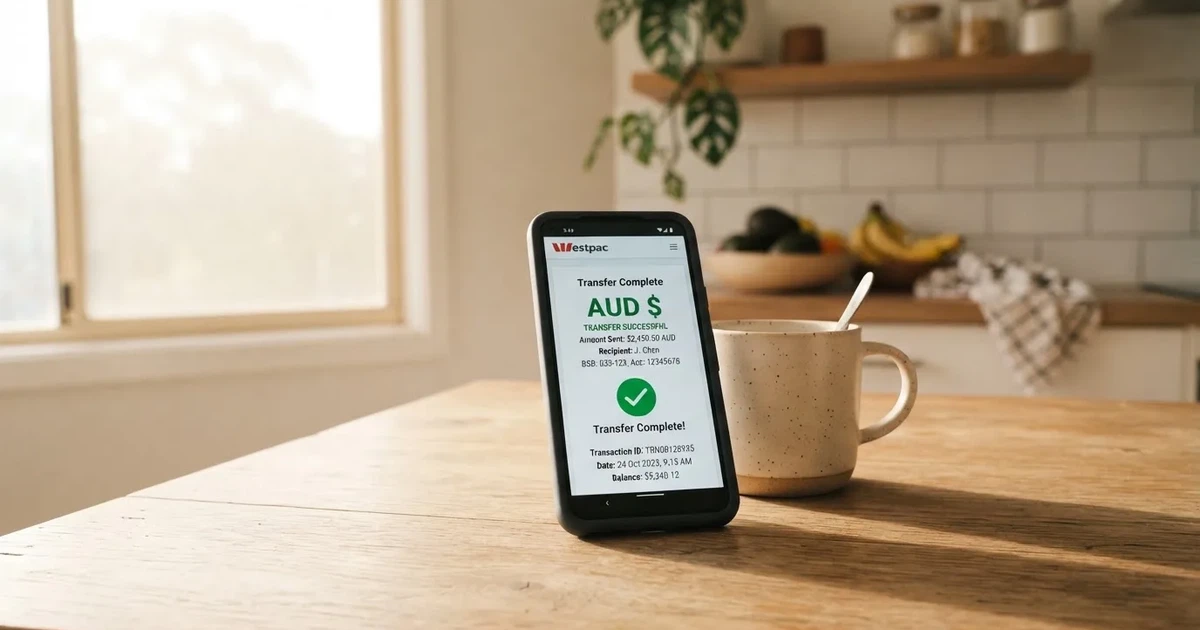
Table of Contents
- How a Skrill deposit and withdrawal actually moves
- How this shortlist of brands is built
- The Australian online casino landscape, and where Skrill fits
- Legality, the IGA, and what an ACMA formal warning actually means
- Responsible gambling supports that actually work for an Australian player
- The brands the ACMA has called out, in its own order
- How fast the ACMA is blocking sites — the arithmetic of the regulator
- Skrill and offshore play — what the player actually controls
- The shape of the legal market in 2026 — what Skrill cannot do there
- What an Australian player comparing offshore casinos should read first
- Frequently asked questions about Skrill at offshore casino sites in Australia
How a Skrill deposit and withdrawal actually moves
Skrill, founded as Moneybookers in 2001 and now a Paysafe subsidiary headquartered in London, sits alongside Neteller and paysafecard inside the same parent group. Its parent is authorised by the UK Financial Conduct Authority as an Electronic Money Institution and reported consolidated FY2022 revenue of around US$1.496 billion across the three brands. None of that history makes it a green light for an Australian player to fund an offshore casino — the rail is regulated, the destination the rail reaches is a different question entirely.
For an Australian player using Skrill at one of these sites, the typical deposit path is the same one Skrill offers anywhere else in the world: a local payment method (debit card, POLi, a bank transfer, sometimes Apple Pay or Google Pay) feeds the Skrill wallet, then the wallet pushes the funds to the casino in a single API call. Settling from Skrill to the casino is usually near-instant on the casino’s side — the credit lands inside minutes. The lag is almost always on the withdrawal leg, where the casino’s own pending period and verification queue do most of the waiting. The few minutes Skrill itself takes to release funds to the player’s wallet once the casino has approved the payout is a small slice of the overall window.

What the player actually pays to use that rail is set by Skrill’s Australian fee page: deposits funded by local Australian methods are charged at up to 5.00 percent, withdrawals at 2.00 percent to 3.00 percent with a minimum fee of EUR 3.50, and a foreign-exchange fee of 4.49 percent applies whenever the wallet has to convert between currencies. Funding the wallet from a credit card adds another layer of cost Skrill explicitly warns about: the card issuer may classify the top-up as a cash advance and add its own fee, which is outside Skrill’s control.
Skrill runs Silver, Gold and Diamond VIP tiers that shave its standard 1.50 percent cryptocurrency-purchase fee down to 1.40 percent at Silver and 1.30 percent at Gold or Diamond. That structure matters mostly for crypto-funded play; for ordinary casino deposits and withdrawals the percentage-based fees above are what bites. There is also an inactivity service fee of EUR 5.00 per month that begins after six months with no login or transaction, which is a non-event for active play but a quiet drag on dormant wallets.
The fee picture has a counterpart in time. Skrill-to-Skrill transfers settle within seconds, the wallet’s pending-to-withdrawal step on the casino’s side typically runs from a few hours to a couple of business days depending on the operator, and the final leg — Skrill paying out to a local Australian bank — is usually another one to three business days. That last leg is where most of the “I requested on Tuesday, where is my money?” complaints originate. Nothing on the Skrill side is slow; the bottleneck sits in the casino’s own approval queue, and at an offshore casino that queue is a single point of failure with no Australian complaints body behind it if it stalls.
A bank can also refuse to play its part. Westpac’s gambling block works at the card level and declines authorisation of any transaction carrying the merchant category code “Betting/Casino Gambling” on eligible personal credit and debit cards. ANZ’s gambling transaction block, activated inside the ANZ app, does the same and explicitly covers transactions made through a digital wallet such as Apple Pay when the underlying card is eligible. Apple’s own terms make clear that transaction limits and PIN requirements for Apple Pay are set by the card issuer or merchant, not by Apple itself, and Apple charges consumers nothing for the payment itself — any surcharge is the merchant’s. Once ANZ’s block is on, the bank requires a 48-hour cooling-off period before it can be removed, and warns in plain language that not all gambling transactions will be blocked and that some non-gambling transactions may be blocked in error. The shape this takes in practice: a player tops up Skrill from a debit card, the card’s issuer matches the merchant code, and the top-up fails — and Skrill’s own deposit confirmation simply never arrives.
How this shortlist of brands is built
The eleven brands covered below are not a ranking of best casinos. They are a list of brands the ACMA itself has named in a formal warning under the Interactive Gambling Act 2001 for offering prohibited interactive gambling services to people in Australia. The criterion is binary: a brand appears because the regulator has acted against it, and the dates and operating-company names in each entry come from the ACMA’s own published enforcement record.

That is a deliberately narrow frame. It excludes many offshore brands that take Skrill and that Australian players use without any public ACMA action against them, and it includes brands that may have closed to Australian traffic since the warning was issued. The point of using the ACMA register as the spine is that it is the only Australian source for the question “who has the regulator actually called out by name?” — and a player who cares about that question gets a list built on the same evidence the regulator acts on, rather than a list built from affiliate marketing.
The order inside the list is the ACMA’s own chronology, most recent action first, with one exception: where a brand has been the subject of more than one warning, both are noted. The columns the comparison carries are: the brand as the ACMA named it, the most recent ACMA action and its date, the operating company named in the ACMA’s warning, and the verified status of Skrill as a payment method on that specific brand.
The Skrill column is the part of this table most often fabricated elsewhere. Where the ACMA’s own register carries no information about a brand’s payment stack, the entry reads as no data, because the only sources available were affiliate listings and the operator’s own marketing — neither of which is reliable evidence about what is actually working for Australian players this week. Where Skrill does appear in a third-party listing the regulator’s file does not contradict, the entry reads as listings-only, with the listing named. A reader comparing brands on payment method is owed an honest column, even when the honest column is mostly gaps.
The Australian online casino landscape, and where Skrill fits
Australia runs two parallel markets. The licensed market covers wagering on sports and racing before the event, lotteries, and keno — in practice licensed by the Northern Territory Racing and Wagering Commission, which regulates 52 of Australia’s online bookmakers including Sportsbet, Bet365 and Ladbrokes from Darwin and has no full-time staff. The unlicensed market is everything else: online casino games, online pokies, and in-play betting on a sporting event after it has started. The Interactive Gambling Act 2001, tightened by the Interactive Gambling Amendment Act 2017, makes the unlicensed side an offence by the provider, and no state or territory issues a licence for it.
Skrill sits inside that landscape as a payment rail for the unlicensed side. The operator end is the offshore casino that accepts Australian traffic without an Australian licence, and the player end is an Australian adult who has opened a Skrill wallet and is moving money into and out of it. Nothing about Skrill itself is illegal in Australia; using Skrill to fund an Australian-licensed sports or racing bookmaker is legal, and using Skrill to fund a prohibited offshore casino product is what the Interactive Gambling Act 2001 targets — at the operator end.
The size of the unlicensed market is large enough to draw a regulator’s attention.
| Market Type | Licensed Scope | Unlicensed Scope |
|---|---|---|
| Regulatory Body | NTRWC (NT) | None (Offshore) |
| Allowed Products | Sports, Racing, Lotteries | Casino, Pokies, In-play |
| Payment Rules | Restricted (No credit cards) | Unregulated |
H2 Gambling Capital’s 2025 report estimates Australians lose about A$3.9 billion a year to illegal gambling sites, and the share of gambling going through legal channels fell from 74 percent in 2021 to 64 percent. That is the channel Skrill mostly runs into, whether the player knows it or not.
The credit-card and digital-wallet rules for the licensed side tighten the picture further. Since 11 June 2024, Australian-licensed online wagering services cannot accept payment by credit card or other credit-related products, with penalties up to A$247,500 for operators, and the same rules constrain gambling use of linked digital wallets such as Apple Pay. The legal deposit routes at a licensed bookmaker are debit card, bank transfer, PayID/Osko and BPAY. None of that stops an offshore site from accepting a credit card funded through Skrill — the offshore site is outside the Australian rules — but it does mean a player funding the wallet from a credit card faces two layers of cost: Skrill’s deposit fee and the card issuer’s possible cash-advance treatment.
The Reserve Bank’s July 2025 review of merchant card payment costs and surcharging proposes removing surcharges only on eftpos, Mastercard and Visa transactions, explicitly leaving American Express outside the scope of the proposed surcharge ban. That is a small piece of the puzzle for a Skrill-funded player because Skrill itself charges the wallet fee on top of whatever the card network charges, and the RBA’s reform does not touch either layer for Amex-funded top-ups.
The rail a Skrill transaction runs on once the money leaves the wallet matters more than most players realise. Osko, the instant-payments service that runs on Australia’s New Payments Platform, settles a bank transfer between participating Australian banks in under a minute, 24 hours a day including weekends, whether it is addressed to a BSB and account number or to a PayID. Paying to a PayID shows the name of the account holder before the transfer is sent; Australian Payments Plus warns that being asked to transfer money to a PayID associated with an illegal gambling site almost certainly means a scam site. PayID-based instant transfers are available at more than 100 Australian financial institutions, and more than 25 million PayID identifiers had been registered on the New Payments Platform as of April 2025. The platform, public since 13 February 2018, is owned by New Payments Platform Australia Ltd, a non-profit whose 13 shareholders include the Reserve Bank of Australia and the major banks; participants must keep monthly outages to no more than two minutes, and the ACCC authorised the 2017 merger of NPP Australia with BPAY and eftpos into Australian Payments Plus. None of that infrastructure is doing anything to slow an offshore-casino withdrawal — it sits on the receiving end, where speed is the player’s friend and where the casino’s own pending period is what actually determines when the funds move.
Legality, the IGA, and what an ACMA formal warning actually means
The Interactive Gambling Act 2001 makes it an offence to provide a prohibited interactive gambling service to a person physically in Australia. The Interactive Gambling Amendment Act 2017 added civil penalty provisions and strengthened enforcement. The minimum age to use a licensed wagering service in Australia is 18. The ACMA investigates suspected breaches, issues formal warnings, and can ask Australian internet service providers to block illegal sites; the individual player is not prosecuted.
A formal warning is the regulator’s opening move. It names the operating company and the brand, states the breach under the Interactive Gambling Act 2001, and is published on the ACMA’s website. The brand is expected to stop offering prohibited services to Australian customers; in many cases the operator simply stops accepting Australian traffic, in others the brand keeps running outside Australia, and in a few the brand carries on as though the warning never happened. None of those responses is enforceable against an Australian player — there is no penalty for an individual who has used one of these sites — but the warning itself is a public record the player can read, and a record that names the operator is what gives the regulator’s later actions their weight.
The blocking requests are the harder step. According to the ACMA as reported in June 2026, a total of 1,751 illegal gambling and affiliate marketing websites had been blocked since the first blocking request in November 2019, and more than 230 unlicensed gambling services had left the Australian market since enforcement was strengthened in 2017. A blocking round reported on 26 June 2026 asked Australian internet service providers to block 12 more sites: 7Signs, ChromaBet, Donbet, Duospin, Freshbet, Slots Gem, Jacks Club, Lucky Start, Pointsbetz, Spinrise, Vinyl Casino and Wildsino. The mechanic of the block is at the network layer: Australian ISPs add the domains to a block list and the site becomes unreachable from a normal Australian internet connection. That is a blunt instrument — a site can be blocked while a balance is still on it, and an Australian player who opened an account yesterday may find the brand unreachable tomorrow with the operator holding the funds.
The legal frame does not change because the offshore casino displays a Curaçao or Malta licence in its footer. The Interactive Gambling Act 2001 applies to the supply of prohibited interactive gambling services to a person in Australia, regardless of where the operator is incorporated. Several of the brands listed below do display offshore licences; those licences regulate the operator in the licensing jurisdiction and do not extend to accepting Australian customers on prohibited products. A footer logo is not an Australian consumer protection.
What the player loses by using an offshore site is the entire Australian consumer-protection stack. There is no Australian complaints body for a refused withdrawal, no Australian regulator to escalate to, no Australian legal aid that can compel an offshore operator to pay out, and no obligation on the operator to honour an Australian court’s order if one is obtained. BetStop — the National Self-Exclusion Register, live since August 2023 — binds only Australian-licensed online and phone wagering services; an offshore casino is not connected to it, and a self-exclusion registered with BetStop does not reach the offshore side.
The 2026 reform the Interactive Gambling Amendment (Gambling Reform) Bill 2026 represents is law passed by Parliament on 19 August 2026, with its advertising and inducement measures commencing on 1 January 2027. That is a piece of law with a start date, not yet in force at the time of writing. Its main effects in scope here are restrictions on how licensed wagering operators advertise and on inducements to open new accounts; it does not legalise online casino games, and it does not change the position of an offshore operator accepting Australian customers.
Tax is the one corner where the law does not punish the player. Gambling winnings of a recreational Australian player are not assessable income under section 6-5 of the ITAA 1997, and losses are not deductible, unless the player carries on a business of gambling. For most readers of this page that is a moot point because the offshore casino is the harder problem; for completeness: check with the ATO before assuming the recreational treatment applies to a particular pattern of play.
Responsible gambling supports that actually work for an Australian player
Responsible-gambling support in Australia lives on the licensed side of the fence. The National Gambling Helpline is 1800 858 858, free, 24/7, with chat available through Gambling Help Online. BetStop, the National Self-Exclusion Register, lets a player exclude themselves from every Australian-licensed online and phone wagering service in a single registration; the exclusion periods run from a minimum of three months up to a lifetime, and once registered a player cannot undo the exclusion early. State and territory self-exclusion schemes — the one run by each state’s casino and gaming regulator — apply to land-based venues.
None of those mechanisms reach an offshore casino. A player who has registered with BetStop can still open an account at an offshore site taking Skrill, and a self-exclusion on a state register does not extend to offshore online play. That is the practical limit of the Australian responsible-gambling infrastructure at the moment: it is built around the licensed market, and the unlicensed market it is built to push players away from has none of the same architecture.
For a player who has used one or more of the offshore brands below and wants to stop, the order of operations is: register with BetStop to lock out the licensed side, contact Gambling Help Online for counselling and a self-exclusion plan that extends to offshore play where the scheme exists, and tell the player’s bank about the gambling block available on eligible cards. ANZ’s gambling block is set up inside the ANZ app and, once on, requires a 48-hour cooling-off period before it can be removed, with the bank’s own caveat that not all gambling transactions will be blocked and some non-gambling transactions may be blocked in error. Westpac’s equivalent works at card level and refuses authorisation of any transaction carrying the merchant category code “Betting/Casino Gambling” on eligible personal credit and debit cards.
Skrill’s own role here is narrow but real. A player can keep a Skrill wallet open and stop funding it from Australian cards, which removes the easiest top-up path; the wallet can still be used for non-gambling payments, and Skrill’s six-month inactivity rule means a dormant gambling-funded wallet starts charging EUR 5.00 per month until it is either logged into or emptied. That is a small administrative cost, not a protection — but for a player trying to keep their money out of an offshore casino it is one more nudge in the right direction.
The brands the ACMA has called out, in its own order
1. RocketPlay
The ACMA issued a formal warning to Pulsup Ltd over RocketPlay in March 2026, and earlier, in May 2022, the ACMA issued a formal warning to Dama N.V. covering RocketPlay among six brands. Two warnings, four years apart, on the same product line. Reliable payment information for this brand is absent from the ACMA register, and third-party claims rely on affiliate listings; treating this payment method as unverified data is the safest approach.
For a player comparing the ACMA’s record, RocketPlay is the most recent formal warning of the set, and the only one with two warnings attached. Two warnings in four years is a regulator telling the same operator the same thing twice.
2. Level Up Casino
Dama N.V. was the subject of a May 2022 formal warning covering Level Up Casino alongside five other brands. The payment-method picture here is listings-only — Skrill has appeared in third-party listings of payment methods at this brand, but the ACMA’s own file carries no independent verification, so the entry stops at what the listings say.
Dama N.V. is a recurring operator in the ACMA’s enforcement record; the same parent has been warned about other brands in this list (Woo Casino, Spirit Casino), which makes the parent company the more durable data point than any one brand.
3. Woo Casino
In March 2025 the ACMA issued a formal warning to Dama N.V. over Woo Casino. Official documentation offers no confirmation of Skrill integration, and as third-party marketing claims lack independent verification, the payment status remains unknown.
Woo Casino’s warning is one of a pair on Dama N.V. in 2025 alone; the regulator has been writing to this operator steadily since 2022, and the pattern is more telling than any single warning.
4. Spirit Casino
In May 2025 the ACMA issued a formal warning to Dama N.V. over Spirit Casino. Independent verification of payment methods is missing from the ACMA file, leaving only unverified affiliate marketing claims to define the site’s Skrill status.
Spirit Casino’s warning lands roughly two months after Woo Casino’s, which makes 2025 a year of escalation against the same parent operator.
5. National Casino
In July 2025 the ACMA issued formal warnings to Consolutetish S.R.L. over National Casino and Bizzo Casino. Skrill support at National Casino is listings-only, and the listings that report it (Australian Transaction Reports and Analysis Centre filings, Wikipedia summaries of payment methods) are not evidence of what is currently working for Australian players.
Consolutetish S.R.L. has only the one ACMA action against it in this set; the more durable data point on this brand is its appearance on the AUSTRAC file rather than on the ACMA’s.
6. Bizzo Casino
In July 2025 the ACMA issued formal warnings to Consolutetish S.R.L. over Bizzo Casino; the brand had already been the subject of a 2022 formal warning to TechSolutions (CY) Group Limited and TechSolutions Group N.V. Two operators, two warnings, four years apart, on the same brand. There is no confirmation of Skrill processing in the regulator’s records, and external marketing claims lack the weight of proof.
The Bizzo Casino history is the clearest case in the list of a brand that has cycled through operating companies without changing its offering to Australian customers.
7. Ignition Casino
In July 2025 the ACMA issued a formal warning to Bamboo Media over Ignition Casino. The ACMA file contains no data on Skrill, and since affiliate sources are unreliable, the site’s support status is effectively unconfirmed.
Ignition Casino is the only brand in this set where Bamboo Media is the named operator; the others are spread across a smaller group of recurring parents.
8. Instant Casino
In February 2025 the ACMA issued a formal warning to EOD Code SRL over Instant Casino. Skrill support is listings-only, and the listings that name it (EcoPayz’s own directory and PayID’s operator page) are not independent verification.
Instant Casino’s warning predates the Dama N.V. pair in 2025 by roughly a year, and is the earliest of the 2025 cluster.
9. Jackbit
In April 2026 the ACMA issued a formal warning to Ryker B.V. over Jackbit and CasinOK. Payment-method verification for Skrill is notably absent from the ACMA record, and we treat affiliate-provided details as unverified.
Ryker B.V. is the most recently named operating company in the list, with two brands covered in the same warning — Jackbit and the closely related CasinOK.
10. Casino Intense
In April 2025 the ACMA issued a formal warning to Sterplay Holding Ltd over Casino Intense. Skrill support is listings-only, and the listings that report it (AUSTRAC, ITNews, NAB) are not current evidence of what works for Australian players this week.
Casino Intense is one of the smaller brands in the list by player volume, and its ACMA action sits in the middle of the 2025 cluster of warnings.
11. Sky Crown
The ACMA issued a formal warning to Hollycorn N.V. over its Sky Crown and Blue Leo casino services. Official register entries omit payment information, and third-party listings currently serve as the only—albeit unconfirmed—source for Skrill availability.
Hollycorn N.V. is a recurring operator in the ACMA’s enforcement record; Sky Crown is one of two brands covered in the same warning, with Blue Leo the other.
| Brand | ACMA action and date | Operator named by the ACMA | Skrill support |
|---|---|---|---|
| RocketPlay | Formal warning, March 2026 (earlier May 2022) | Pulsup Ltd (2026); earlier Dama N.V. (2022) | — |
| Level Up Casino | Formal warning, May 2022 | Dama N.V. | listings-only |
| Woo Casino | Formal warning, March 2025 | Dama N.V. | — |
| Spirit Casino | Formal warning, May 2025 | Dama N.V. | — |
| National Casino | Formal warning, July 2025 | Consolutetish S.R.L. | listings-only |
| Bizzo Casino | Formal warning, July 2025 (earlier 2022) | Consolutetish S.R.L. (2026); earlier TechSolutions (2022) | — |
| Ignition Casino | Formal warning, July 2025 | Bamboo Media | — |
| Instant Casino | Formal warning, February 2025 | EOD Code SRL | listings-only |
| Jackbit | Formal warning, April 2026 | Ryker B.V. | — |
| Casino Intense | Formal warning, April 2025 | Sterplay Holding Ltd | listings-only |
| Sky Crown | Formal warning, September 2022 | Hollycorn N.V. | — |
The shape of the table is itself the message. Skrill support is verifiable in the ACMA’s file for none of the eleven brands; it appears in third-party listings for four (Level Up, National, Instant, Casino Intense) and is no data for the remaining seven. The right reading of that pattern is the honest one: nobody outside the operator’s own marketing pages knows what is actually working at these brands for Australian Skrill deposits and withdrawals in 2026.
How fast the ACMA is blocking sites — the arithmetic of the regulator
The ACMA’s published figure, as reported in June 2026, is 1,751 illegal gambling and affiliate marketing websites blocked since the first blocking request in November 2019. The arithmetic that follows belongs on this page because it is the only number that gives a reader a sense of how quickly the regulator is moving.
The first blocking request was issued in November 2019, and the published total reached 1,751 by June 2026 — a window of roughly six and a half years, or about 78 months. The average blocking rate across the whole period is therefore in the order of 22 blocked sites per month, or roughly one site every 33 hours. That figure flatters the early years, when the rate was much lower, and understates the recent rounds, which have been substantially faster: a single round in June 2026 alone blocked 12 sites.
What that arithmetic means for a player is not “the regulator will catch this site in time.” It means the regulator is removing an average of more than 250 sites a year from Australian reach, and the longer a brand sits on the ACMA’s published warning list without an Australian-facing takedown, the more likely its next appearance will be in a blocking round rather than another warning. A balance held at a blocked site is a balance the player has very limited practical ability to recover.
Skrill and offshore play — what the player actually controls
A player reading this page is probably weighing three things: which brand to try, how the payment method behaves, and what happens if something goes wrong. The first question is settled by the regulator’s list above; the second is settled by Skrill’s own fee schedule and the rail mechanics described at the top of the page; the third is the one with the worst answer.
The recourse map at an offshore casino accepting Skrill is short. Skrill’s own buyer protection does not extend to gambling transactions in the same way it does to merchant purchases; Skrill will investigate a disputed transaction, but the standard protection applies to unauthorised transactions and to goods not received from a merchant, and the gambling category sits awkwardly between the two. The casino’s own complaints process is the first stop, and that is a process the casino designs and runs. Beyond that, the player is filing a complaint with a regulator in Curaçao or Malta that takes months to respond and has no enforcement power against an operator that ignores it.
A bank block on the card funding the wallet changes the picture earlier in the chain. A bank that refuses to authorise a top-up to a merchant flagged as gambling stops the funds from leaving the player’s account before Skrill sees them. That is the only protection layer a player can rely on as a matter of routine: Westpac’s card-level block declines authorisation of any transaction under the “Betting/Casino Gambling” merchant code, and ANZ’s block in the ANZ app blocks gambling transactions made through Apple Pay on an eligible card, not just the physical card, with a 48-hour cooling-off period before removal.
The Skrill wallet itself behaves like any other e-wallet once the money is in it. A player who has a balance at an offshore casino that gets blocked does not have that balance at Skrill — the balance is at the casino, in the casino’s account, and Skrill cannot move it back. A player who has money still in the Skrill wallet and not at the casino can move it out through any of Skrill’s payout rails, subject to the 2.00–3.00 percent withdrawal fee and the EUR 3.50 minimum. The wallet does not, on its own, know or care whether the funds originally came from gambling.
For a player who decides to use an offshore site anyway, the practical moves are: set the bank block on first, fund the wallet from a debit card rather than a credit card to avoid the cash-advance treatment, keep the Skrill-to-casino transfer small enough that a stalled withdrawal does not become a meaningful loss, and read Skrill’s Australian fee page for the current rate before committing — fees change, and a fee schedule from 2026 is not a fee schedule for 2026.
The shape of the legal market in 2026 — what Skrill cannot do there
The licensed Australian market does not include online casino games or online pokies, which means Skrill’s role on the licensed side is as a top-up rail for licensed sports and racing bookmakers. That is a smaller market by transaction count than the unlicensed side, and the licensed bookmakers mostly accept Skrill directly for deposits, then settle withdrawals back to the wallet. The licensed operator’s payment stack includes the same rails an offshore operator advertises — debit card, bank transfer, PayID/Osko, BPAY — but the legal frame is the Interactive Gambling Act 2001’s wagering provisions, and the credit-card ban for licensed wagering since 11 June 2024 means Skrill cannot be used to fund a licensed wagering account from a credit card top-up. The licensed bookmakers must comply with the credit-ban; Skrill is one of the rails they offer, not one of the rules they make.
Skrill’s own VIP structure — Silver, Gold, Diamond — applies across the licensed and unlicensed markets, and the only material concession for an Australian player is the marginal fee reduction on cryptocurrency purchases (1.40 percent at Silver, 1.30 percent at Gold or Diamond against the standard 1.50 percent). For ordinary deposits and withdrawals the percentage fees in the Australian fee schedule are the only tier that matters, and the VIP tier does not touch them.
What an Australian player comparing offshore casinos should read first
The list above is built from the ACMA’s published record. That is the only Australian source for the question of who has been called out by name. A reader who is choosing between an offshore brand in this list and an offshore brand that is not should weigh three things in this order: whether the brand has an ACMA warning or blocking action attached to it; whether the Skrill payment rail actually settles deposits and withdrawals for Australian players in 2026 (which the ACMA’s file does not verify, and which affiliate listings cannot be relied on for); and whether the player’s bank will authorise the top-up to Skrill at all. None of those questions is answered by the brand’s own homepage.
For the brands on this list, the order of risk is also informative. The single most recent ACMA actions are RocketPlay (March 2026), Jackbit (April 2026), and the Woo/Spirit Casino pair (March and May 2025); the longest-running record on the same operator is Dama N.V., with warnings in 2022, 2025 and 2025 across four of the eleven brands. A regulator writing to the same operator repeatedly is not the same as a regulator writing to the same brand, and the pattern of named operators over time is itself part of the picture.
The Skrill column of the comparison table is mostly gaps for a reason. The ACMA’s file does not verify the payment stack at any of these brands, and the third-party listings that do report Skrill are not evidence of what works for Australian players this week. The honest answer is that nobody outside the operator’s own marketing knows what is working. A reader who needs Skrill specifically is owed that honesty, even when the honest answer is mostly no data.
Frequently asked questions about Skrill at offshore casino sites in Australia
Is it legal for an offshore casino site to accept Skrill from an Australian visitor?
No. Under the Interactive Gambling Act 2001 as amended in 2017, it is an offence to provide a prohibited interactive gambling service to a person in Australia; the ACMA enforces that against the operator, not the player. Skrill itself is legal in Australia; using Skrill to fund a prohibited offshore casino product is the conduct the IGA targets at the operator end.
How quickly does a Skrill transaction typically settle?
Skrill-to-casino deposits usually land within minutes on the casino’s side. Withdrawals depend on the casino’s own pending period, which can run from a few hours to several business days, and on the Skrill-to-bank leg, which is typically one to three business days. The bottleneck is almost always the casino’s approval queue, not the rail.
Does using Skrill offer any buyer protection if an offshore site refuses to pay out?
Only the standard Skrill dispute process for unauthorised or unreceived transactions, and gambling disputes sit awkwardly inside that frame. There is no Australian consumer protection body, no Australian regulator with enforcement power over an offshore operator, and no easy recovery path if the casino refuses to pay out.
Can Skrill be used to fund a licensed Australian wagering account the same way it is used offshore?
Skrill can be used to fund a licensed Australian sports or racing bookmaker, subject to the same Interactive Gambling Act 2001 prohibition on credit-funded gambling that took effect on 11 June 2024. Online casino games and online pokies cannot be licensed anywhere in Australia, regardless of how they are paid for.
What deposit limits are commonly attached to Skrill at offshore casino sites?
Skrill does not publish a standard deposit limit at the wallet level; the limit is set by the receiving casino and varies by brand. The Australian fee page charges up to 5.00 percent on deposits, 2.00–3.00 percent on withdrawals (minimum EUR 3.50), 4.49 percent on currency conversion, and EUR 5.00 per month after six months of inactivity.
Why might an Australian bank block a Skrill transaction flagged as gambling-related?
Westpac’s gambling block refuses authorisation at card level on any transaction carrying the “Betting/Casino Gambling” merchant code, and ANZ’s gambling transaction block covers gambling transactions made through Apple Pay on an eligible card, not just the physical card. The bank block stops the top-up before Skrill sees it, which is why a player funding Skrill from a debit card can find the top-up simply fails.