
What a credit card really does at an online casino marketed to Australia
Data current as of 17 October 2026 · verified against the ACMA formal-warning register and Australian Payments Plus publications.
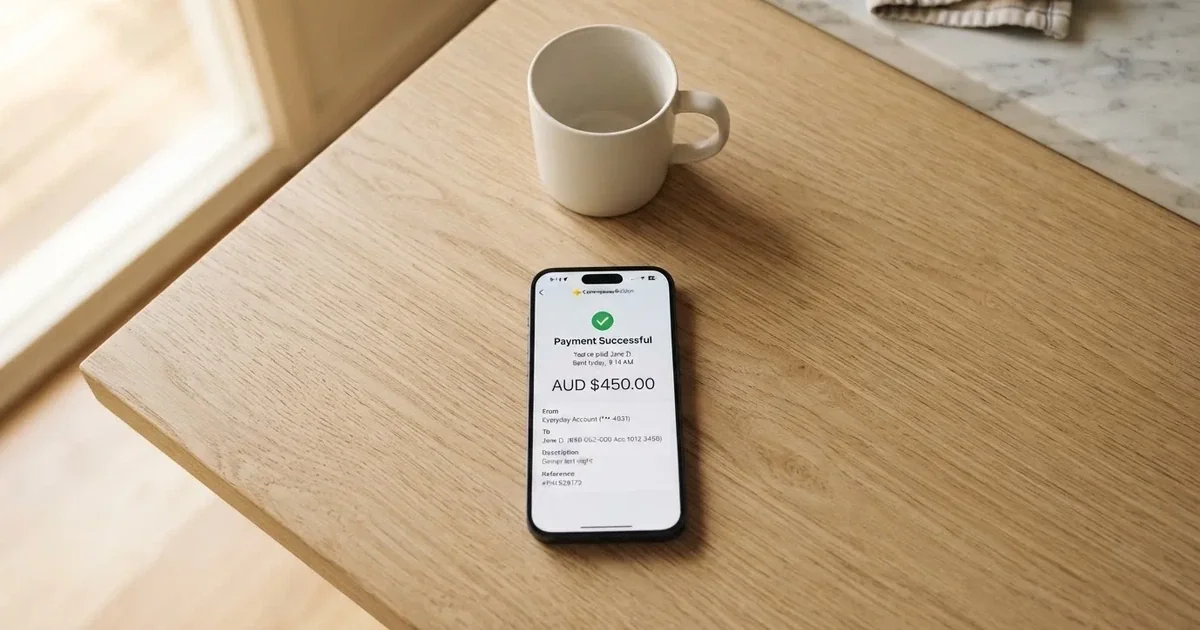
A credit card still arrives as a deposit option at most offshore casino sites that take Australian customers, and the wording around it tends to read like any other payment method — “instant deposits”, “withdraw back to your card”, “Visa and Mastercard welcome”. The plumbing underneath the wording is what decides whether that card actually moves money, and on what terms. Some Australian banks refuse the transaction at the authorisation step. The Interactive Gambling Act makes supplying the very product a different kind of offence from paying for it, so the operator accepting the card is the party the regulator goes after, not the punter. And the bank that issued the card may treat a gambling top-up as a cash advance, with the fees that follow from that classification.
This page walks through the mechanism before it walks through the names. The first section looks at what a credit card actually does at an offshore casino in 2026 — how the deposit settles, why the withdrawal takes longer than the marketing suggests, and where the buyer’s protection that a credit card normally carries quietly disappears. The second covers the legal shape: which gambling products Australia licences at all, what the credit-card ban that took effect on 11 June 2024 actually prohibits, and how the ACMA enforces the line. The third is the responsible-gambling supports a person with a credit card and a gambling account needs to know about — BetStop, the gambling block each of the big four banks now offers, and where to call if a deposit limit feels less like a choice and more like a missing one. The fourth is an eleven-operator comparison: each brand named by the ACMA in a formal warning, sorted by what the regulator’s record actually says about them rather than by the welcome bonus an affiliate page might print. The fifth is the worked calculation the page owes the reader — how fast the ACMA’s blocking pace has translated into a count of dead sites. The FAQ at the foot answers the five questions the topic turns on most often.
Table of Contents
- How a credit card moves money at an offshore casino
- What the Interactive Gambling Act actually prohibits
- Responsible gambling supports that apply to a credit card funded account
- Eleven credit-card-friendly casino brands the ACMA has already named
- How fast the ACMA has been blocking sites
- How a credit card deposit interacts with the alternatives
- Other payment paths at offshore casinos
- A read on the offshore credit-card casino market in 2026
- Frequently asked questions
How a credit card moves money at an offshore casino
The deposit itself is the simple half. A punter types the sixteen digits, the expiry and the CVV, and the offshore casino routes the charge through whatever acquiring bank it uses. Most of these sites run on Visa or Mastercard rails, which is what lets a card with an Australian issuer work from the other side of the world without anything more exotic than a 3-D Secure prompt. The amount typically posts on the card statement inside the same hour, and for the purposes of the cardholder’s available balance it has spent that amount from the moment the authorisation arrives.

The settlement, by which the casino actually receives the funds, is a slower thing. Acquiring banks often hold online gambling merchant settlements for several days against the risk of a chargeback, and the offshore operator’s own payment team usually layers a review on top of that. A deposit that shows as “posted” on the card statement is not the same thing as a deposit that has cleared into the operator’s bank account, and the difference matters when a player tries to withdraw inside the first 48 to 72 hours: the casino will frequently decline the withdrawal as “uncleared funds” until the merchant hold has run its course. This is a structural feature of the offshore payment stack, not a quirk of any one brand.
The withdrawal is the part the marketing language is most careful with. Most sites that take a Visa or Mastercard deposit will let the punter withdraw back to the same card, but the time that takes is a different shape from the deposit. A typical advertised “1–3 business days” means one to three days from when the casino’s payments team approves the withdrawal — not from when the player requests it. Approval itself often takes longer than the bank transfer takes to deliver, and offshore operators routinely queue withdrawals behind a KYC document check, a bonus-wagering audit, or both. A real end-to-end timing on a first withdrawal, from request to funds visible on the card statement, runs from a couple of business days on the fast end to more than a week on the slow end. Subsequent withdrawals, once the documents are on file, tend to fall toward the shorter end of that range.
A credit card also costs the punter in two places the deposit screen does not name. The first is the cash-advance treatment. Skrill’s Australian fee page warns that funding gambling with a credit card can make the card issuer treat the transaction as a cash advance, which means the cash-advance fee, the cash-advance interest rate from day one, and no grace period — the money starts accruing interest immediately, and the rate is typically higher than the rate on purchases. Whether a particular issuer applies that classification is the issuer’s call, and it varies from bank to bank and even from card to card within one bank. The second is the surcharge. From 1 October 2026 the Reserve Bank of Australia is removing surcharges on debit, prepaid and credit card transactions on the eftpos, Mastercard and Visa networks, with American Express, BNPL services and Diners Club left outside the ban. Through the rest of 2026, before that date, a punter paying by credit card at any merchant that still surcharges can pay an extra one to two per cent on top of the deposit.
The buyer’s protection that a credit card normally carries is the part that disappoints most. A chargeback is a real mechanism on a credit card: a cardholder can ask the issuer to reverse a transaction where goods were not delivered or the merchant misrepresented what was sold. A gambling deposit does not fit that frame. The card issuer’s first question in a chargeback is whether the service was provided as advertised, and an offshore casino’s argument is usually that the casino did provide the games, did credit the account, and did process the withdrawals according to its own terms. From the issuer’s perspective the dispute is between the punter and the operator, not between the punter and a merchant who took money for goods never sent. Chargebacks on gambling do get filed; they get honoured less often than they do on retail purchases, and the operator’s response is typically to produce the player’s transaction log and the bonus terms the player accepted at sign-up. Theoustanding card protection on an offshore gambling site is threadbare compared with the same card used at an Australian retailer, and a player who assumes otherwise is the easiest mark on the page.
Where the transaction actually fails
Most failed attempts at a credit-card deposit at an offshore casino never reach the casino. They fail at the authorisation step, when the issuer looks at the merchant category code the transaction is carrying and applies its own policy before the request reaches the operator’s bank. The MCC the casino’s acquirer uses is the standard “Betting/Casino Gambling” code, and a number of Australian banks now refuse to authorise any transaction carrying that code on a credit card. Macquarie Bank was the first major Australian bank to take that step on its credit cards, blocking any transaction classified as gambling under the merchant codes from 1 July of the year of its announcement. Westpac’s gambling block works at the same level, refusing authorisation of transactions registered under the Betting/Casino Gambling merchant category code on eligible personal credit and debit cards. The same block on an ANZ credit card also catches a gambling payment routed through a digital wallet such as Apple Pay on the card, which closes the workaround of adding the card to a phone wallet.

The four big Australian banks now let customers switch the block on or off through their mobile apps: CommBank through NetBank or the CommBank App’s card settings, ANZ through the ANZ App, NAB through the NAB app, and Westpac through online banking’s card services menu. ANZ imposes a 48-hour waiting period before the block can be switched off again, and warns that not all gambling transactions will be blocked and some non-gambling transactions may be blocked in error. The block is set at card level, not at the merchant level — the bank has no way to know in advance which merchant sits behind the MCC, and once the merchant carries the code, every transaction through that merchant is treated as a gambling transaction. Apple Pay, Google Pay and Samsung Pay together accounted for about 45% of all card payments in Australia by number at the end of 2025, and the bigger that share grows, the more relevant the bank-level block on the underlying card becomes.
What the Interactive Gambling Act actually prohibits
The legal picture has two layers that read similarly and do quite different things. The first is the product prohibition. Under the Interactive Gambling Act 2001, as tightened by the Interactive Gambling Amendment Act 2017, it is an offence to provide online casino games, online pokies, or in-play betting to a person physically in Australia, and no state or territory issues a licence to do so. What is licensable in Australia is wagering on races and on sporting events placed before the event — a horse race, a cricket match before the first ball — plus lotteries and keno. The Northern Territory Racing and Wagering Commission regulates 52 of Australia’s online bookmakers, including Sportsbet, Bet365 and Ladbrokes; the commission itself runs without full-time staff and meets once a month in Darwin. Every other form of online gambling an Australian might find on a site advertised at them from Curaçao, from Cyprus, from some combination of the two, is operating against the IGA.
The second layer is the payment prohibition. Since 11 June 2024, Australian-licensed online wagering service providers have been banned from accepting credit cards, credit-related products such as digital wallets, and digital currencies as payment; ACMA oversees compliance and a non-compliant operator can face fines of up to A$247,500. The 2024 reform followed an earlier one from 17 February 2018, which banned licensed wagering providers from offering credit to Australian customers with an exemption carved out for bookmakers under A$30 million annual turnover. The 2024 ban is the specific change that closes the credit-card loop. It does not criminalise the Australian punter — the IGA targets the provider — but it means the entire legitimate side of the Australian wagering market no longer accepts credit cards as a funding method at all. The licensed alternatives for putting money into a wagering account are debit card, bank transfer, PayID, Osko and BPAY.
The offshore operator offering “Visa, Mastercard, Amex” to a person in Australia is not subject to the 2024 ban, because the operator is not Australian-licensed. The ban binds the Australian-licensed side. What binds the offshore side is the IGA itself, which makes it an offence to provide the prohibited product to someone in Australia. The ACMA’s enforcement against that side runs through formal warnings to the operator, formal warnings to the affiliated marketing operation, and requests to Australian internet service providers to block the sites outright. By the end of June 2026, the ACMA had asked ISPs to block 1,751 illegal gambling and affiliate marketing websites since the first blocking request in November 2019, and more than 230 unlicensed gambling services had left the Australian market since enforcement was strengthened in 2017. A single round reported on 26 June 2026 added twelve more sites to that block list: 7Signs, ChromaBet, Donbet, Duospin, Freshbet, Slots Gem, Jacks Club, Lucky Start, Pointsbetz.com, Spinrise, Vinyl Casino and Wildsino.
A practical point that matters when a player looks at a licence badge on an offshore site’s footer: a Curaçao licence, a Costa Rica registration, an Anjouan approval — none of these authorise the site to supply casino games or pokies to a person in Australia. The IGA is a prohibition on supply, not on licence display, and the operator’s own jurisdiction has nothing to say about who the operator takes customers from. A punter reading an offshore licence as a green light is reading it wrong; the licence is a permit to operate from somewhere, not a permit to offer the product to someone in Australia.
Responsible gambling supports that apply to a credit card funded account
A credit card is the funding method the 2024 ban singled out for licensed wagering, and the responsible-gambling infrastructure has caught up to it from the banking side rather than the casino side. The first line of defence sits inside the punter’s own banking app. All four major Australian banks — CommBank, ANZ, NAB and Westpac — now offer a gambling transaction block that the customer switches on through the card or app settings, and the block works by declining authorisation on transactions carrying the gambling MCC. Once ANZ’s block is switched on, removing it requires a 48-hour waiting period; that pause is a deliberate friction built into the design, on the same logic as a cooling-off period on a self-exclusion registration.
BetStop, the National Self-Exclusion Register, has been live since August 2023 and binds every Australian-licensed online and phone wagering service. A person registered with BetStop cannot open a new account with a licensed Australian bookmaker and cannot deposit into an existing one for the period they nominate, which ranges from three months to a permanent exclusion. BetStop does not bind an offshore casino. The offshore operator is not connected to the Australian register, has no obligation to check it, and will accept a deposit from a self-excluded Australian without enquiry. That gap is structural, not a bug to be reported and fixed — the register’s authority extends only as far as the licensing regime it lives under, and that regime does not reach the offshore operator.
The 24-hour counselling line for someone whose gambling has tipped past the point of comfortable control is the National Gambling Helpline at 1800 858 858, free from any Australian phone, twenty-four hours a day, with a chat option at Gambling Help Online. State-level problem-gambling services operate in parallel — Victoria’s responsible gambling site, New South Wales’s GambleAware, Queensland’s Gambling Help — and each of them can refer into financial counselling, into a self-exclusion registration, and into treatment where that is the right next step. None of these supports is specific to the credit-card funding path, but the path is where most of the harm related to online gambling accumulates, because the credit line removes the natural pause a debit card imposes.
A responsible-gambling note specific to credit cards: the cash-advance treatment means the cost of a gambling session paid by credit card is higher than the same session paid by debit card, both because of the cash-advance fee and because interest starts running immediately. The surcharge rules tighten further into 2026 as the Reserve Bank’s 1 October 2026 surcharge ban on eftpos, Mastercard and Visa card transactions approaches; through that period any merchant that still applies a surcharge must display it. A punter who is paying close attention to the cost line on the statement is doing something the marketing never asks them to do, and is doing the part of the work the offshore operator will not.
Eleven credit-card-friendly casino brands the ACMA has already named
Every brand in this section is named here for one reason: the ACMA itself issued a formal warning about it for offering prohibited online gambling services to Australians. This is not a ranking and not a recommendation — it is a record of what the regulator has done, sorted by the date of the most recent action. The product — online casino games, online pokies, in-play betting — is one no Australian-licensed operator is permitted to supply to a person in Australia. A site displaying a Curaçao or other offshore licence is not licensed to supply that product to Australians either; it is licensed to operate from somewhere, which is a different statement. None of the brands below can be played at legally from Australia.
The table below shows the brand, the ACMA action and its date, the operating company the ACMA named in the formal warning, and whether the page’s research turned up any evidence that the brand accepts credit cards as a payment method. Where that field reads as an em dash, the research did not cover the question directly; the absence of an answer is not an answer of “no”.
| Brand | ACMA action and date | Operating company named by the ACMA | Credit card acceptance |
|---|---|---|---|
| Jackbit | Formal warning, April 2026 | Ryker B.V. | — |
| RocketPlay | Formal warning, March 2026; earlier May 2022 under Dama N.V. | Pulsup Ltd | — |
| Casino Intense | Formal warning, April 2025 | Sterplay Holding Ltd | Westpac and NAB pages reference the brand |
| Ignition Casino | Formal warning, July 2025 | Bamboo Media | — |
| National Casino | Formal warning, July 2025 | Consolutetish S.R.L. | AUSTRAC and New Payments Platform pages reference the brand |
| Bizzo Casino | Formal warning, July 2025 under Consolutetish S.R.L.; earlier 2022 under TechSolutions | Consolutetish S.R.L. | — |
| Spirit Casino | Formal warning, May 2025 | Dama N.V. | — |
| Woo Casino | Formal warning, March 2025 | Dama N.V. | Westpac’s blocking reference list mentions the domain |
| Instant Casino | Formal warning, February 2025 | EOD Code SRL | EcoPayz and PayID references |
| Sky Crown | Formal warning, September 2022 | Hollycorn N.V. | — |
| Level Up Casino | Formal warning, May 2022 | Dama N.V. | Westpac’s blocking reference list mentions the domain |
The brands, one by one
RocketPlay sits at the top of the most recent end of the ACMA list for a reason the regulator’s record makes plain: a formal warning was issued to Pulsup Ltd in March 2026 over Rocketplay.com.au, and a separate, earlier warning to Dama N.V. in May 2022 covered six brands that included RocketPlay alongside Bambet, Dazard, Level Up, Wild Tornado and Cobra Casinos. The Rocketplay.com.au domain suggests a deliberate attempt to pass the brand off as Australian-domain, which is itself a tell the ACMA picked up on. Research did not turn up direct evidence of credit-card acceptance terms on the brand’s current site.
Level Up Casino was named in the May 2022 Dama N.V. warning, and Westpac’s blocking reference list includes the domain, which is the kind of bank-level reference that tells you the brand sits inside the gambling MCC rather than outside it. The brand has not been the subject of a more recent ACMA action in the formal-warning record. The 2022 warning does not expire; it sits on the regulator’s register as a historical fact.
Woo Casino picked up a fresh warning to Dama N.V. in March 2025, on top of the 2022 umbrella warning. The two Dama N.V. entries — May 2022 and March 2025 — and the May 2025 Spirit Casino warning together suggest Dama N.V. is the operator behind the largest share of the brands on this list. A bank-side reference on Westpac’s blocking list is the only direct credit-card-context signal the research carried.
Spirit Casino is the second Dama N.V. brand to receive a 2025 warning, this one in May 2025. Like Woo Casino, it was not on the 2022 list but has since drawn the regulator’s attention. Dama N.V. as an operator appears across four of the eleven brands below, which is the single concentration in the operator set.
National Casino carries a July 2025 warning to Consolutetish S.R.L., the same operator behind Bizzo Casino. The brand surfaces in pages on the AUSTRAC threshold-transaction-report rule and on the New Payments Platform, which suggests it is being referenced as a worked example of a payment flow rather than as a recommended deposit route.
Bizzo Casino sits behind the same July 2025 warning as National Casino, with an additional 2022 warning to TechSolutions (CY) Group Limited and TechSolutions Group N.V. Two separate operating-company names across three years is the kind of corporate shape that ends in either a sale or a rebrand, and the regulator’s record reflects both.
Ignition Casino was named in the same July 2025 round of warnings, this one to Bamboo Media rather than Consolutetish S.R.L. Research carried no credit-card-specific evidence for the brand.
Instant Casino picked up a February 2025 warning to EOD Code SRL and is one of the few brands in the list with a direct EcoPayz and PayID reference in the research, which is suggestive of a payment-method footprint wider than the credit card alone.
Jackbit is the newest name on the list, warned about in April 2026 under Ryker B.V., alongside CasinOK. The April 2026 entry keeps the table honest — the ACMA’s pace has not slowed after the larger 2022 round, and Jackbit is the proof.
Casino Intense sits under Sterplay Holding Ltd from an April 2025 warning, and is the brand in this set with the most direct credit-card-context references: Westpac’s blocking reference list, NAB’s responsible-gambling pages, an ITNews piece, and the AUSTRAC threshold-transaction page all reference the brand or the operator. That level of cross-referencing is unusual for a brand on this list and suggests the operator has been a specific case study rather than a passing reference.
Sky Crown is the oldest entry on the table, warned about under Hollycorn N.V. in September 2022 as part of the same formal-warning publication that covered Blue Leo. Research did not turn up a more recent ACMA action on the brand, but the warning itself remains on the register.
What the table tells the reader
Two things stand out once the eleven rows are read together. The first is the spread of operating companies: at least eight distinct operators are named across the eleven brands, with Dama N.V. responsible for four of them and Consolutetish S.R.L. for two. The second is the date distribution: 2022 carries three brands, 2025 carries five, and 2026 already carries two in the four months of the calendar year that the ACMA had reported on by the time of writing. The cadence is not slowing, and the brands on the list are not the same five rotating through fresh domain names — they are different operating companies running different brands, which is the harder of the two enforcement pictures to break. The em-dash entries in the credit-card column are not a “no”; they are the research not having found a credit-card-specific reference for that brand, which is a different thing. A punter looking at the table to decide whether a particular brand takes Visa is reading the wrong column — the legal position is the same in every row.
How fast the ACMA has been blocking sites
The arithmetic the page owes the reader is the rate at which the ACMA has been taking sites off the table since the first blocking request went out in November 2019. By the end of June 2026, the regulator had asked Australian ISPs to block 1,751 illegal gambling and affiliate marketing websites, and more than 230 unlicensed gambling services had left the Australian market on their own initiative since enforcement was strengthened in 2017. The single round reported on 26 June 2026 added twelve more sites to the block list — 7Signs, ChromaBet, Donbet, Duospin, Freshbet, Slots Gem, Jacks Club, Lucky Start, Pointsbetz.com, Spinrise, Vinyl Casino and Wildsino.
A simple pace calculation sets the scale. The first ACMA blocking request went out in November 2019; the count of blocked sites reached 1,751 by June 2026. That is roughly 80 months of enforcement and an average of around 22 blocked sites per month across the whole period, with the underlying monthly rate uneven — heavier in the years when the ACMA was working through larger backlogs of affiliate marketing infrastructure, lighter in between. Treating the calculation as a band rather than a single figure makes the unevenness plain: the blocking pace has ranged from a handful of sites per month in the quieter stretches to the kind of dozen-site single round the June 2026 report describes, and the average overstates the recent cadence. The shorter the window, the more variable the rate becomes.
The point of the calculation is not the exact monthly number. It is that the ACMA’s enforcement is a sustained operation rather than a one-off sweep, and that an offshore site accepting an Australian credit card in 2026 has been operating against that background for years. The block list is not a guarantee that the next site the ACMA names is one this punter was about to use; it is a measure of how many sites the regulator has been willing to put on the list over how long. A punter looking at the figure as a count of dead sites will understate it — affiliate pages and mirror sites inflate the count — but even discounting those, the figure is large.
How a credit card deposit interacts with the alternatives
The payment alternatives a punter in Australia actually has for funding a gambling account divide into two groups: the methods that work at an Australian-licensed wagering service, and the methods that work at an offshore casino. The two groups have stopped overlapping on credit cards since 11 June 2024 — the licensed side no longer accepts them, the offshore side still does, in most cases. That is the cleanest way to read the post-2024 market.
On the licensed side, a punter funding a Sportsbet or a Bet365 account in Australia uses a debit card, a bank transfer, PayID, Osko, or BPAY. A bank transfer via Osko between participating Australian banks arrives in under a minute, twenty-four hours a day including weekends, whether addressed to a BSB and account number or to a PayID. Over 100 Australian financial institutions participate in PayID-based instant transfers. By April 2025, more than 25 million PayID identifiers had been registered on Australia’s New Payments Platform, which went live on 13 February 2018 and is owned by New Payments Platform Australia Ltd — a non-profit whose thirteen shareholders include the Reserve Bank of Australia and the country’s major banks. Paying to a PayID shows the name of the account holder before the transfer is sent; AP+ warns that being asked to transfer money to a PayID on an illegal gambling site almost certainly means a scam site.
On the offshore side, the casino is not connected to the New Payments Platform and does not accept PayID. The deposit methods that typically work at an offshore casino marketed to Australians are credit and debit cards (Visa, Mastercard, sometimes American Express), e-wallets such as Skrill and Neteller, prepaid vouchers, and increasingly crypto. Skrill’s Australian fee page warns that funding gambling with a credit card can trigger the card issuer’s cash-advance fee, which is a separate cost from Skrill’s own fee schedule. AUSTRAC’s threshold-transaction-report rule applies only to physical cash transfers of A$10,000 or more; ordinary electronic bank transfers are not subject to that per-transaction reporting requirement regardless of amount.
The PayID warning is the one a punter most often misses. A request to transfer to a PayID on a site the ACMA has already named is a strong signal the site is a scam operating under a familiar brand name. The warning sits on the official PayID site, and the logic is simple: a legitimate Australian-licensed operator accepts PayID through the New Payments Platform, and an offshore casino does not. A punter who is paying by credit card at an offshore casino is not paying by PayID at the same site — the two payment stacks do not overlap on the offshore side.
Other payment paths at offshore casinos
A credit card is rarely the only deposit option at an offshore casino marketed to Australians. The same sites typically accept e-wallets (Skrill, Neteller, ecoPayz, MuchBetter), prepaid vouchers (Paysafecard, Neosurf), bank transfers, and a range of cryptocurrencies (Bitcoin, Ethereum, Litecoin, Tether). The e-wallet and voucher routes dodge the cash-advance treatment that hits a credit card, because the underlying funding step happens before the gambling top-up — the punter loads the e-wallet from a bank account or buys a voucher with cash, then spends the balance at the casino. The casino sees an e-wallet or voucher transaction, not a credit-card one, which is why this funding stack survives even after some Australian banks started declining the gambling MCC on credit cards.
Crypto adds a different layer. The 2024 ban on digital currencies as payment for licensed Australian wagering applies to the licensed side; an offshore casino that accepts Bitcoin from an Australian punter is on the offshore side and is not bound by that specific rule. Crypto deposits at an offshore casino settle on the blockchain, which means they settle at the speed the blockchain confirms — minutes for Bitcoin, often faster for Ethereum or a stablecoin — and they are not declined by an Australian bank’s MCC filter because they do not pass through the card rails at all. The volatility is the trade-off: a Bitcoin deposit worth A$200 at the time of sending may be worth less or more by the time it is returned as a withdrawal, and the casino’s conversion rate on either side is its own number.
A note on Apple Pay: the wallet itself does not charge the consumer a fee, and the transaction limits and PIN requirements are set by the card issuer or merchant rather than by Apple. The MCC that gets attached to an Apple Pay transaction is the MCC of the underlying merchant, so a casino deposit through Apple Pay on an ANZ card that has the gambling block switched on will be declined — the bank-level block catches the wallet transaction as well as the card-present one. ANZ’s published support page is the place this is stated explicitly. The wallet does not anonymise the transaction from the issuer’s perspective.
A read on the offshore credit-card casino market in 2026
The subtitle of this market in 2026 is that the method has not gone away at the offshore end, but every other layer around it has tightened. Australian banks block more credit-card gambling transactions than they did three years ago, and they do it at the authorisation step rather than after the fact. The Interactive Gambling Act still prohibits the supply of online casino games to Australians and the ACMA still enforces that prohibition through formal warnings and ISP-level blocks. The 2024 credit-card ban closed the funding route on the licensed side, leaving the offshore side as the only place a credit card still works. And the cost to the punter has gone up: cash-advance treatment on the credit card, an interest charge running from day one, the surcharge that the RBA is removing on 1 October 2026 but that still applies in the meantime, and the buyer’s protection that the credit card normally carries reduced to a chargeback argument the operator will win on transaction logs.
The right way to read the eleven brands in the comparison section is as a list of operators the regulator has already taken a position on, not as a list of operators to choose between. They are not legally accessible to a person in Australia. The legal-wagering alternative is a licensed Australian bookmaker funding a sports or racing bet through a debit card or a PayID transfer. The offshore alternative is illegal supply, and the page has laid out what that costs the punter in fees, in time, in recourse and in protection.
Frequently asked questions
Is it legal for an offshore casino site to accept a credit card from an Australian visitor?
No. The Interactive Gambling Act 2001, as tightened in 2017, makes it an offence for an offshore operator to supply online casino games, online pokies, or in-play betting to a person physically in Australia. The credit-card transaction is one element of that offence, but the underlying prohibition is on the supply of the product. The 2024 ban on credit cards as payment for licensed wagering did not change that — it closed the credit-card route on the Australian-licensed side, while the offshore side still accepts credit cards in most cases. The Australian punter is not the party the regulator prosecutes, but the operator is, and the ACMA has issued formal warnings to every brand named on this page.
How quickly does a credit-card transaction typically settle?
The deposit itself usually posts on the card statement within an hour of the casino accepting the transaction, and the available balance on the card falls by that amount immediately. The merchant-side settlement — the point at which the casino’s acquiring bank releases the funds to the casino — typically takes several business days, and many offshore operators will not process a withdrawal until that hold has run its course. A first withdrawal from request to funds visible back on the card typically runs from a couple of business days to over a week, with the bottleneck on the casino’s approval and KYC step rather than on the card network. Subsequent withdrawals, once the documents are on file, tend toward the shorter end of that range.
Can I charge back a credit-card gambling deposit if an offshore site refuses to pay out?
Less than the same card used at an Australian retailer, and the difference is large. A credit-card chargeback is a real mechanism when goods are not delivered or the merchant misrepresented what was sold. A gambling deposit does not fit that frame from the issuer’s perspective: the operator’s defence is that the games were provided, the account was credited, and the withdrawals were processed according to the site’s own terms. The card issuer’s first question in a chargeback is whether the service was provided as advertised, and the casino will produce the transaction log and the bonus terms the player accepted at sign-up. Chargebacks on gambling do get filed, they get honoured less often than they do on retail purchases, and an offshore site gives no Australian consumer protection, no complaints body and no recourse independent of the card issuer.
Can a credit card be used to fund a licensed, land-based venue in Australia the same way it’s used online?
In-person gambling at a licensed Australian venue — a pub with poker machines, a casino in a state jurisdiction, a TAB outlet — runs on a different regulatory frame from online wagering. The 2024 credit-card ban specifically targeted online wagering service providers, and it does not, on its face, extend to land-based gambling transactions. Whether a particular venue or payment terminal accepts a credit card is a venue-level decision and varies by operator and by state. A punter at a land-based venue pays the surcharges the venue still applies on credit-card transactions until the Reserve Bank’s 1 October 2026 surcharge ban takes effect, at which point eftpos, Mastercard and Visa credit-card surcharges are removed at the merchant level.
Why might a bank block a credit-card transaction flagged as gambling-related?
Because the bank’s own policy refuses authorisation on transactions carrying the gambling merchant category code, and that policy applies at the authorisation step before the request reaches the operator’s bank. Macquarie Bank was the first major Australian bank to take that step on its credit cards, blocking any transaction classified as gambling under the merchant codes from 1 July of the year of its announcement. Westpac’s block works at the same card level, refusing authorisation on transactions registered under the Betting/Casino Gambling MCC on eligible personal credit and debit cards. ANZ’s block, once switched on, also catches a gambling payment routed through a digital wallet such as Apple Pay on the card, and a 48-hour waiting period applies before the block can be removed. The block is set at the card level rather than the merchant level, and once the merchant carries the gambling MCC, every transaction through that merchant is treated as gambling.