
Live Blackjack Online Casino Australia 2026: The Honest Map
A live-dealer blackjack table streamed to a phone in Sydney or Perth sits in a peculiar spot in the Australian market. The technology is mature, the studios are real, the dealers are trained, and the cards come out of a shoe held by a human being rather than a random number generator. Everything about the product is genuine. The only thing that is not is the legal standing of playing it for real money from an Australian address.
Current as of 17 October 2026, cross-checked against the register of formal warnings published by the Australian Communications and Media Authority (ACMA) and the regulator’s published blocking orders.
A live blackjack table is not a separate product from the law’s point of view. Under the Interactive Gambling Act 2001 (IGA), as strengthened by the Interactive Gambling Amendment Act 2017, an online casino game is an online casino game whether the cards are dealt by a person on camera or by software in a server rack. The IGA does not draw a line between the two formats. A reader looking for “live blackjack online casino Australia 2026” is, in regulatory terms, looking for the same product the regulator has spent the last several years blocking at the domain level.
The page below works through what that means in practice. It closes the ground the research opens: the fundamentals of the game itself, the legal frame around it, the payment routes that work and the ones that do not, the bonus terms that apply to table games differently than to slots, the live providers and variants on offer, and the eleven brands the ACMA has named in formal warnings — not because any of them is recommended, but because the warnings themselves are the most useful map of where the prohibited market sits.
Table of Contents
- The state of the live dealer product
- What the law actually says
- Player protection and what offshore does not cover
- Crypto, PayID and the payment question
- Bonus terms and what they cost at a live table
- Live variants and what the studios actually offer
- Comparison of ACMA-Named Operators
- The eleven brands the ACMA has named
- What the blocking rate actually looks like
- How a live dealer table actually differs from a digital one
- What a reader comparing live blackjack offers is actually choosing between
- Frequently Asked Questions
The state of the live dealer product
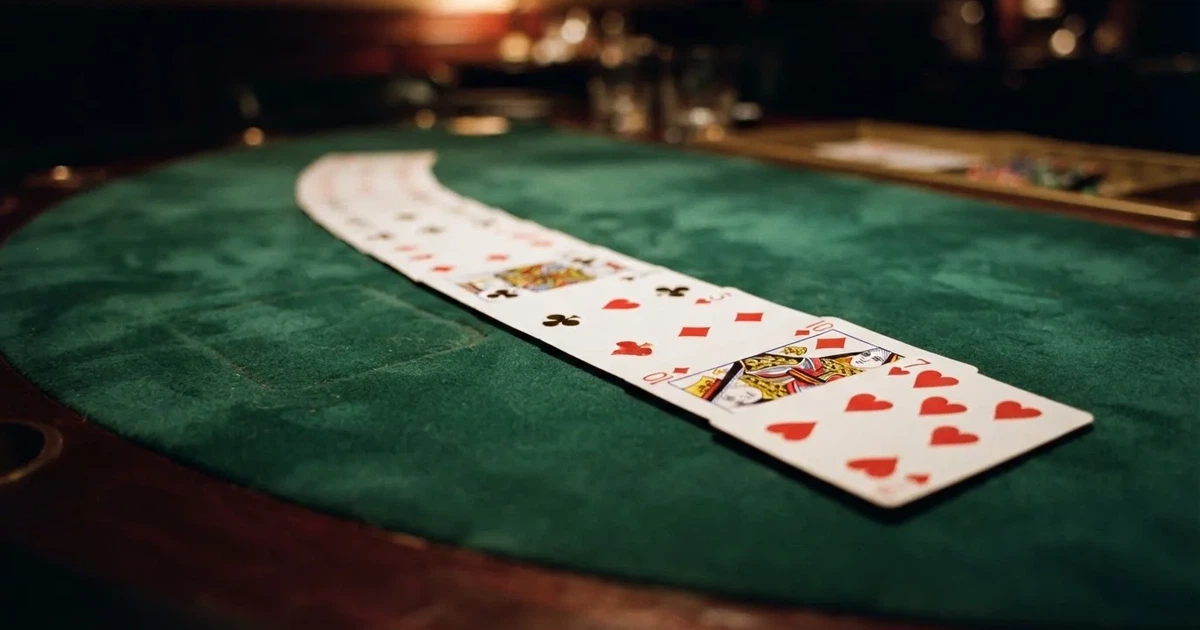
A live blackjack table streams a real dealer from a studio, usually in Malta, Latvia, Georgia, the Philippines or Costa Rica. Players join through a browser or an app, place bets in a betting window before the deal, and watch the cards come out in real time. Multiple players share the same shoe. The dealer deals physical cards, often from an automatic shuffler, and the software overlays the betting grid, the chat box and the player’s running total on top of the video feed.

The appeal is partly sensory and partly trust-based. A human dealer is harder for a sceptical player to distrust than a server, and the social texture of the table — the dealer greeting returning players, the side chat, the visible rhythm of the shoe — feels closer to a land-based casino than a digital table ever has.
The cost is pace. A live blackjack hand takes about fifteen to twenty seconds end to end, including the betting window, the deal, the player decisions and the payout. A computer-generated hand resolves in two or three seconds. Over an hour, that gap compounds. A player handling two hundred hands an hour on a digital table is handling roughly one hundred and eighty on a live one. For a bankroll built around volume — bonus clearing, for instance — the difference matters and is one of the reasons bonuses aimed at table games carry tighter terms.
The other cost is the studio overhead that runs underneath. Live blackjack is more expensive to run than digital blackjack, which is why the minimum stakes on a live table usually start higher than on a digital one. A A$1 chip is common on a digital table; on a live one the floor is typically A$5 or A$10 per hand, sometimes higher outside peak hours.
What the law actually says
The IGA targets the provider, not the player. It is an offence to supply an online casino game — defined broadly enough to cover slots, table games, live dealer games and online pokies — to a customer who is physically present in Australia. The penalties are calibrated to the operator, not the punter: up to A$220,000 a day for an individual and up to A$1.1 million a day for a corporation. There is no comparable offence created for the person sitting at the other end of the stream.
What is licensed in Australia is narrower than most players expect. Wagering on races and sport, placed before the event starts, is licensed — most of it through the Northern Territory Racing and Wagering Commission (NTRWC), which regulates fifty-two online bookmakers including Sportsbet, Bet365 and Ladbrokes. Lotteries and keno are licensed at state level. Online casino games and online pokies are not licensed anywhere in Australia.
The ACMA is the enforcement body. It investigates complaints, issues formal warnings to operators it identifies as providing prohibited services to Australians, and can ask Australian internet service providers to block specific domains. The blocking regime has been running since November 2019, when the first request went to ISPs. By the round reported in June 2026, the running total stood at 1,751 blocked illegal gambling and affiliate marketing websites, and more than 230 unlicensed services had left the Australian market since the 2017 amendments strengthened the regulator’s hand.
A round on 26 June 2026 alone asked ISPs to block twelve more domains: 7Signs, ChromaBet, Donbet, Duospin, Freshbet, Slots Gem, Jacks Club, Lucky Start, Pointsbetz, Spinrise, Vinyl Casino and Wildsino. The pace has not slowed. The pattern is consistent: the ACMA names an operator, the operator rebrands or re-launches on a fresh domain, and the cycle repeats.
A reader comparing offers on the assumption that an offshore licence — Curaçao, Anjouan, the Kahnawake Gaming Commission — makes a site lawful in Australia is reading the wrong document. Those licences regulate what the operator may do in other jurisdictions. None of them confers any standing under the IGA. A site displaying a Curaçao seal is telling the reader something about its commercial registration; it is not telling the reader anything about Australian law.
Player protection and what offshore does not cover
The Australian system layers two protections on top of the licensing regime. BetStop, the National Self-Exclusion Register, has been live since August 2023 and lets a person exclude themselves from every Australian-licensed online and phone wagering service in one registration. The National Gambling Helpline (1800 858 858) runs free, twenty-four hours a day, with a chat option at Gambling Help Online.
Neither of these protections extends to an offshore casino. BetStop binds only Australian-licensed operators — by design, since it is the licence that triggers the obligation. A live blackjack table on an offshore site sits outside the register entirely. A self-excluded Australian who opens an offshore account is not stopped by BetStop; they are stopped only by whatever the offshore operator chooses to enforce. The same gap applies to complaint mechanisms. A dispute over a refused withdrawal on an Australian-licensed bookmaker can be taken to the relevant state or territory regulator and, for sports betting, to an external dispute resolution scheme. An offshore brand offers no equivalent route. The reader’s only leverage is the threat of walking away, and the brand’s only incentive to pay is its own commercial reputation.
There is also the question of balances frozen by blocking. The IGA allows ISPs to block domains, and the ACMA has used the power more than 1,750 times since 2019. When a domain is blocked, any balance a player held on the site becomes harder to recover — not impossible in theory, but substantially harder in practice, since the player’s communication channel with the operator is now severed by their own country’s infrastructure. The brands on the ACMA’s formal warning list below have, between them, several blocking events in their history.
Crypto, PayID and the payment question
The payment landscape around Australian online gambling changed in stages. Since 11 June 2024, credit cards, credit-related products and digital currency have been banned as a funding method for any Australian-licensed online wagering service. Penalties for operators that accept them run up to A$247,500. The legal funding routes for a licensed bookmaker are now debit card, bank transfer, PayID/Osko and BPAY.
The ban binds Australian-licensed operators. An offshore casino is not bound by it. A live blackjack table on an offshore brand will, depending on the brand, accept some combination of credit cards, debit cards, e-wallets, bank transfer, prepaid vouchers and cryptocurrency. A reader who treats the payment-method menu as a proxy for legality will get the wrong answer: a brand that takes a credit card is not, by virtue of taking one, operating lawfully in Australia. The lawful-versus-unlawful line runs through the IGA, not through the cashier.
What the payment method does change is the practical side of getting money in and out. PayID and Osko settle in seconds through the New Payments Platform, which is why they have become the default for Australian-facing licensed bookmakers. An offshore casino using bank transfer will typically take one to three business days to clear a deposit and longer to clear a withdrawal, because the operator runs a manual review on the way out. A crypto deposit lands in minutes; a crypto withdrawal can take anywhere from ten minutes to several hours depending on the coin and the network. The speed gain is real, but it sits on top of a product that the ACMA has explicitly addressed, which is the trade-off the reader is being asked to make.
A bitcoin-funded live blackjack hand deals the same cards as a fiat-funded one. The coin is the rail, not the game. Where the rail matters is on the way out: a withdrawal that takes ten minutes on a weekday afternoon is a different experience from a withdrawal the operator holds for three business days while it reviews a bank transfer from an Australian account it was never supposed to be serving in the first place.
Bonus terms and what they cost at a live table
A blackjack bonus offer usually carries wagering requirements stated as a multiple of the bonus, the deposit or both. The headline figure is the easiest part to find; the part that costs the player is the contribution rate.
Table games, including live blackjack, almost never contribute the full stake toward wagering requirements. Slots typically contribute 100%. A live blackjack hand often contributes 10%, 20% or 0% — depending on the brand. A A$100 bet on a hand that contributes 10% counts as A$10 toward clearing the requirement. The same bet on a slot counts as A$100. A bonus that looks like a 35-times playthrough on a slot offer is, at 10% table contribution, effectively a 350-times playthrough on a live blackjack hand.
The second trap is the max-bet clause. Most bonuses cap the stake per round while the bonus is active — A$5 is a common ceiling — and breach of the cap voids the bonus and any winnings from it. A live blackjack hand at A$10 minimum is already at or above the cap the moment it is dealt. The bonus is unusable at the live table, or usable only at a stake the player would not have chosen.
The third trap is game weighting for the bonus itself. Some brands exclude live dealer games entirely from bonus play, which means the bonus cannot be used on a live blackjack table at all. Others allow it but at a reduced contribution. The reader who reads only the headline figure and the wagering multiple is reading the wrong two lines.
There is also a question of bonus type. Cash bonuses, deposit-gated packages and no-deposit offers each behave differently at a live table, and the terms attached to each vary across the brands below. The research inputs do not carry the operator-level terms for these brands — the only sources for those were affiliate marketing pages — so the section above is about how live blackjack bonuses behave in general, not about any specific offer on any specific brand.
Live variants and what the studios actually offer
The standard live blackjack paytable pays 3:2 on a natural. Some studios offer 6:5 tables, which raise the house edge sharply — by roughly 1.4% on a basic-strategy hand — and a reader who does not check the paytable before sitting down is paying for the privilege of not checking. The rest of the rules vary by studio and by table.
The rule that moves the house edge most is whether the dealer hits or stands on a soft 17. A dealer who stands on soft 17 (often abbreviated S17) gives the house an edge of about 0.28% on a liberal Las Vegas Strip ruleset. A dealer who hits on soft 17 (H17) pushes that figure to about 0.43%. The difference sounds small; over a session of two hundred hands at A$10 a hand, it is roughly A$3 in expected loss on each ruleset, which adds up to meaningful money over an evening.
The other rules that move the figure are doubling — whether the player can double on any two cards or only on specific totals — splitting rules (especially whether aces can be resplit), and whether late surrender is offered. Liberal Las Vegas Strip rules, which include dealer stands on soft 17, double on any two, double after split, resplit aces and late surrender, hold the 0.28% figure. Atlantic City rules, which are slightly tighter, sit at about 0.43%.
Established variants a reader will run into include Spanish 21 (played without 10s but with rules tilted toward the player), Double Exposure (both dealer cards dealt face up, with rule changes to compensate), Blackjack Switch (two hands, with the option to swap the top cards between them) and Super Fun 21 (allows up to four splits). Each carries its own house edge and its own strategy adjustments, and the reader who sits down at one without knowing which rules apply is gambling on the rules as well as on the cards.
The live table also imposes its own discipline. Hands come out of a continuous shoe, which means card counting — already marginal at best in a six- or eight-deck shoe — becomes effectively impossible because the shoe is rarely played to the end before a reshuffle. The edge over the house, on a live table with a 3:2 paytable and liberal rules, is the 0.28% edge plus the discipline of playing perfect basic strategy on every hand. Anything beyond that, on a continuous shoe, is wishful thinking.
Comparison of ACMA-Named Operators
| Brand | ACMA action and date | Operator named by the ACMA | Subject support |
|---|---|---|---|
| RocketPlay | Formal warning March 2026 (Pulsup Ltd); earlier Dama N.V. May 2022 | Pulsup Ltd; Dama N.V. | No-data |
| Level Up Casino | Formal warning May 2022 | Dama N.V. | Listings-only (Bgaming.com) |
| Woo Casino | Formal warning March 2025 | Dama N.V. | No-data |
| Spirit Casino | Formal warning May 2025 | Dama N.V. | No-data |
| National Casino | Formal warning July 2025 | Consolutetish S.R.L. | Listings-only (en.wikipedia.org) |
| Bizzo Casino | Formal warning July 2025; earlier TechSolutions 2022 | Consolutetish S.R.L.; TechSolutions | No-data |
| Ignition Casino | Formal warning July 2025 | Bamboo Media | No-data |
| Instant Casino | Formal warning February 2025 | EOD Code SRL | No-data |
| Jackbit | Formal warning April 2026 | Ryker B.V. | No-data |
| Casino Intense | Formal warning April 2025 | Sterplay Holding Ltd | Listings-only (Abc.net.au, acma.gov.au, Crownmelbourne.com.au) |
| Sky Crown | Formal warning (Hollycorn N.V.) | Hollycorn N.V. | No-data |
The eleven brands the ACMA has named
The list below is not a ranking. It is a record of formal warnings the ACMA has published. Each brand is named because the regulator itself named it in writing. The point of the section is not to recommend any of them — none of them can lawfully offer the product to an Australian resident — but to show, in one place, what the regulator’s enforcement activity has actually targeted over the period covered.
| Brand | ACMA action and date | Operator named by the ACMA | Game / studio support |
|---|---|---|---|
| RocketPlay | Formal warning March 2026 (Pulsup Ltd); earlier Dama N.V. May 2022 | Pulsup Ltd; Dama N.V. | — |
| Level Up Casino | Formal warning May 2022 | Dama N.V. | BGaming listings |
| Woo Casino | Formal warning March 2025 | Dama N.V. | — |
| Spirit Casino | Formal warning May 2025 | Dama N.V. | — |
| National Casino | Formal warning July 2025 | Consolutetish S.R.L. | — |
| Bizzo Casino | Formal warning July 2025; earlier TechSolutions 2022 | Consolutetish S.R.L.; TechSolutions | — |
| Ignition Casino | Formal warning July 2025 | Bamboo Media | — |
| Instant Casino | Formal warning February 2025 | EOD Code SRL | — |
| Jackbit | Formal warning April 2026 | Ryker B.V. | — |
| Casino Intense | Formal warning April 2025 | Sterplay Holding Ltd | — |
| Sky Crown | Formal warning (Hollycorn N.V.) | Hollycorn N.V. | — |
Several patterns are worth pulling out before the per-brand notes. The first is operator overlap: Dama N.V. appears three times in the list (Level Up, Woo Casino, Spirit Casino) across three different years, which suggests a single corporate group cycling brands as the regulator catches each one. Consolutetish S.R.L. appears twice in a single July 2025 round (National Casino, Bizzo Casino), with Bizzo having already been warned in 2022 under TechSolutions. The rebranding strategy is visible in the regulator’s own paperwork.
The second is the time gap between warning and reappearance. Woo Casino was warned in March 2025 and is back under the Dama N.V. umbrella for Spirit Casino in May 2025 — eight weeks later. RocketPlay’s first warning came in May 2022 under Dama N.V. and reappeared in March 2026 under Pulsup Ltd — nearly four years later, under a new corporate wrapper.
RocketPlay
The ACMA issued a formal warning over Rocketplay to Pulsup Ltd in March 2026. The same brand had been the subject of an earlier warning to Dama N.V. in May 2022, one of six casino brands in that round. The 2026 warning covers a domain explicitly registered to the Australian market. The brand’s game-provider relationships are not documented in the inputs.
The reappearance under a different corporate wrapper four years after the first warning is the pattern that the ACMA’s blocking regime is built around. A blocking order on Rocketplay.com.au does not stop Pulsup Ltd from launching on a new domain the next month, and the cycle of warning, blocking and re-launch is the regulator’s working life.
Level Up Casino
Level Up was one of six Dama N.V. brands named in the May 2022 formal warning round. The brand is associated with BGaming content through industry listings, which is the only verified handle on its actual product mix.
For a reader who has encountered Level Up through an affiliate site or a comparison page, the relevant fact is the operator behind it, not the brand on the front of the site. Dama N.V. is the licensee of record for at least six brands the ACMA has acted against in a four-year window.
Woo Casino
Woo Casino was the subject of a formal warning to Dama N.V. in March 2025. The warning sits in the ACMA’s published register alongside the Spirit Casino warning from May 2025 — two brands, one operator, eight weeks apart.
A reader comparing Woo Casino to a brand that has never appeared on the ACMA’s register is not making the comparison the names suggest. They are comparing a brand the regulator has named to one it has not yet got around to naming, or one that operates outside the regulator’s reach. Neither is a recommendation to play at Woo Casino.
Spirit Casino
Spirit Casino’s warning to Dama N.V. in May 2025 came eight weeks after the Woo Casino warning, against the same corporate group. The pattern — two warnings in two months to one operator across two brands — is what a sustained enforcement regime looks like in practice.
For a reader deciding between Spirit Casino and a less-scrutinised brand, the honest comparison is between two unverified offerings. The warning does not tell the reader anything about Spirit Casino’s payout speed or its bonus terms — the inputs do not carry those — but it does tell the reader that the regulator has decided the operator is providing prohibited services to Australians.
National Casino
National Casino was named in a formal warning to Consolutetish S.R.L. in July 2025. The brand appears in industry listings as a casino offering slots and table games, but the live blackjack-specific content of its offering is not documented in the inputs.
The relevant comparison for a reader is the same one that runs through the rest of this list: a brand named by the regulator for offering prohibited services, against the background of a prohibition on offering those services at all.
Bizzo Casino
Bizzo Casino was named in the same July 2025 round as National Casino, against Consolutetish S.R.L. The brand had already been the subject of a 2022 formal warning to TechSolutions (CY) Group Limited and TechSolutions Group N.V., which makes it one of the brands on this list with two warning events in the ACMA’s own paperwork, and one of the few with two different corporate operators named for the same brand.
A reader who sees Bizzo advertised with a “new operator” label after the 2022 warning is looking at the third corporate wrapper the brand has worn in five years. The product on the front of the site may differ from what was on the front of the site in 2022; the legal standing under the IGA has not changed.
Ignition Casino
Ignition Casino was named in a formal warning to Bamboo Media in July 2025. The brand is best known in the market as a poker-and-casino site, but the ACMA’s warning addresses it for casino-style games offered to Australian residents, which is what the regulator’s enforcement covers.
A reader who knows Ignition as a poker site should know that the ACMA’s warning is not about poker but about the casino games alongside it. The product the warning covers is exactly the product the reader is searching for.
Instant Casino
Instant Casino was the subject of a formal warning to EOD Code SRL in February 2025. It is one of the earlier 2025 entries in the ACMA’s register and one of the brands a reader is most likely to encounter in current affiliate marketing, given how recently it was named.
The fresh warning is also the warning that closes the door on the assumption that a recent launch date means a clean record. A brand that launched last year and is already in the ACMA’s register is a brand the regulator has decided is operating in breach of the IGA.
Jackbit
Jackbit was named in a formal warning to Ryker B.V. in April 2026, alongside CasinOK. Ryker B.V. had not appeared in earlier rounds; the warning is its first. Jackbit has built a reputation as a crypto-first casino, which puts it on the crypto-and-live-blackjack overlap the research opens up.
A reader looking for a crypto-funded live blackjack table who lands on Jackbit has landed on a brand the ACMA has named for offering prohibited services to Australians, including the casino games they were looking for. The crypto angle does not change the legal standing; it changes only the rails the money moves on.
Casino Intense
Casino Intense was named in a formal warning to Sterplay Holding Ltd in April 2025. Industry references describe it as a casino with a slots-led offering, and the inputs do not document live blackjack specifically.
For a reader looking specifically for live dealer blackjack, Casino Intense is a brand on the ACMA’s register rather than a documented source of live tables in the inputs.
Sky Crown
Sky Crown was the subject of a formal warning to Hollycorn N.V., alongside Blue Leo. The Hollycorn warning is published on the ACMA’s site as a formal warning PDF. Sky Crown is the brand on this list with the earliest documentation in the regulator’s register.
The Hollycorn group runs a portfolio of brands, and the ACMA’s warning against two of them is the regulator’s way of saying that the group’s house view on Australian customers does not align with the IGA.
What the blocking rate actually looks like
The ACMA’s blocking regime has been running since November 2019. By the round reported on 26 June 2026, the running total of blocked domains stood at 1,751 illegal gambling and affiliate marketing sites. That figure includes affiliate marketing sites as well as operator domains, which is why the headline number is higher than the number of brands named in formal warnings.
The arithmetic that earns its place on the page is the rate at which the regulator has been adding to that total. From the first blocking request in November 2019 to the round reported in June 2026 is roughly six and a half years, or about seventy-eight months. A flat average over that window puts the rate at roughly 22 blocked domains a month. The actual pace has not been flat — early rounds were small and the regime took time to build — but the band the rate has settled into is roughly twenty to twenty-five new blocks a month in the period the regulator has been most active.
That is the figure worth carrying out of this section. The ACMA is not closing the offshore market down; it is reducing its surface area at a steady, measurable rate. A reader who assumes an offshore brand will still be reachable from an Australian ISP a year from now is making an assumption the regulator’s recent activity does not support.
How a live dealer table actually differs from a digital one
The mechanical difference is the source of the randomness. A digital blackjack hand is generated by a random number generator certified by a testing house — usually GLI, eCOGRA or BMM Testlabs. The certification is what gives the digital product its credibility, and a reader who wants to check it can usually find a certification ID in the footer of the casino’s website. A live table generates its randomness the old-fashioned way: an automatic shuffler or a hand shuffle of a real shoe of six or eight decks. The cards are physical, the dealing is visible, and the randomness is whatever a casino-grade shuffler produces, which the studios typically publish to a 1% tolerance on card distribution.
The practical differences are pace, stake floors and the social layer. The pace question is covered in the section above: a live hand is roughly four times slower than a digital one. The stake floor on a live table is typically higher than on a digital one, because the studio has to recover its operating cost per hand. The social layer — chat with the dealer, recognition for returning players, the visible rhythm of the shoe — is the part a digital product has spent years trying to imitate and still falls short of.
For a reader who plays blackjack primarily for the decision-making — basic strategy, the occasional deviation, the satisfaction of a correctly played hand — the live format adds little. The decision tree is identical. For a reader who plays for the atmosphere, the live format is the only one that delivers it. Neither preference changes the legal frame around it.
What a reader comparing live blackjack offers is actually choosing between
Stripped of the marketing, the choice a reader is making is between three paths, and each has a different shape.
The first path is the lawful one: licensed Australian wagering services, which offer sports and race betting but not online casino games. A live blackjack table is not on the menu. The protection regime around it is strong, the payment routes are clean, and the regulator is local.
The second path is the offshore one: a brand licensed in Curaçao, Anjouan or Kahnawake, offering live blackjack and other casino games to Australian residents in breach of the IGA. The game on offer is real, the live studios are real, the cards are real. The protection regime around it is whatever the brand chooses to enforce, and the balance can be stranded if the brand’s domains get added to the ACMA’s blocking list.
The third path is the land-based one: Crown Melbourne in Victoria, with three baccarat variants and an evolving blackjack menu approved by the Victorian Gambling and Casino Control Commission (VGCCC), and the equivalent venues in other states. The recent VGCCC approvals on Crown’s blackjack variants — the renaming of the Perfect Pairs side bet to Crown Pairs on 23 December 2024 and the introduction of the Free Bet option with the Pot of Gold side bet on 25 March 2024 — show how active the rule-approval process is at the venue level. A reader who wants a live blackjack hand in a regulated environment and is willing to travel to a casino floor has a real option there.
A reader who wants a live dealer blackjack table at home, on a phone, for real money, is choosing between the second path and waiting for the law to change. The Interactive Gambling Amendment (Gambling Reform) Bill 2026 passed Parliament on 19 August 2026, but its advertising and inducement measures commence on 1 January 2027 — law with a start date, not yet in force on a 2026 page. The reader is choosing, today, between playing and not playing.
Frequently Asked Questions
Is it legal to play live blackjack for real money at an online casino in Australia?
No. Under the Interactive Gambling Act 2001, an online casino game — live dealer or otherwise — cannot lawfully be supplied to a person in Australia. The offence sits with the provider, not the player, but no state or territory licenses the product, so there is no lawful Australian site offering it. An offshore brand offering live blackjack to Australians is operating in breach of the IGA, whatever licence the brand displays.
How does a live-dealer blackjack table differ from a computer-generated one?
A live table is dealt by a real dealer in a studio, with physical cards from a shoe, streamed to the player’s device. A digital table is generated by a certified random number generator. The decision tree and basic strategy are identical. The differences are pace (live is roughly four times slower), stake floors (typically higher on live), and atmosphere (live has the social layer a digital table cannot replicate).
What dealer rule most affects the house edge in blackjack?
Whether the dealer hits or stands on a soft 17. Standing on soft 17 gives the house an edge of about 0.28% under liberal Las Vegas Strip rules; hitting on soft 17 pushes that figure to about 0.43%. The difference is small per hand but adds up over a session.
Does a blackjack bonus offer usually count table game bets the same as slot bets?
Rarely. Most bonuses apply a 100% contribution rate to slots and a much lower rate — often 10% or 20% — to table games including live blackjack. Some brands exclude live dealer games entirely. A 35-times playthrough on a slot offer, at 10% table contribution, is effectively a 350-times playthrough on a live blackjack hand, which is why live tables are usually a poor venue for clearing bonuses.
Is a live blackjack app a separate product from a site’s browser-based table?
Not usually. The app and the browser version run off the same studio feed and the same game logic; the app is a wrapper around the same live table. The differences tend to be in the interface — bet placement, side bet access, multi-table view — not in the underlying game or its rules.
Can a live blackjack hand be joined partway through a dealer’s shoe?
In most studios, yes. A live blackjack table is dealt from a continuous shoe and players join and leave between hands rather than at scheduled breaks. The trade-off is that card counting, which depends on a shoe played to a meaningful depth, is effectively impossible on a continuously reshuffled shoe.