Best keno online casino Australia: what is actually open to Australian players in 2026
 Available in AU
Typing “keno online casino” into a search bar in Australia returns pages of offshore brands promising a deposit match, a crypto bonus and a live keno draw. Almost every one of those offers the same thing underneath — and the same thing is illegal to provide to anyone in this country. The Interactive Gambling Act 2001 makes online casino games, online pokies and in-play betting a prohibited interactive gambling service; no state or territory issues a licence for them. The freely-circulating “best keno casino” lists do not exist for Australian readers in the way a “best pokies pub” list does, because there is nothing Australian-licensed to rank.
What this page does instead is lay out the gap, plainly. It walks through what online keno looks like and why it is being blocked, then through what keno is actually open to Australians — licensed pubs and clubs, the state-licensed keno operators, the land-based casinos — and through the responsible gambling tools that follow those legal channels rather than the offshore ones. It closes with the ACMA enforcement record on eleven brands that have been formally warned for offering prohibited services, and the arithmetic of how fast the blocklist has grown since the first request in November 2019.
Data current as of 17 October 2026, verified against the Australian Communications and Media Authority’s published enforcement register and H2 Gambling Capital’s 2025 reporting on illegal gambling flows.
Table of Contents
- Safer gambling starts with what is actually licensed
- The crypto shortcut that does not exist for Australians
- What online keno actually is, and why the price tag is what it is
- Eleven brands the ACMA has warned over offering prohibited services to Australians
- What online keno actually looks like in Australia, in practice
- The arithmetic of how fast the blocklist is growing
- What the legal frame looks like from the player’s side
- The honest framing of “best” when nothing is licensed to compete
- Frequently asked questions about keno in Australia
Safer gambling starts with what is actually licensed
The page most people land on when they search for keno is a list of offshore brands. Most of those brands are operating against Australian law, and most of them carry the same fundamental risk that nothing in their terms page reduces: an offshore operator does not answer to an Australian regulator, will not pay out through an Australian complaints body, and can be blocked by an Australian internet service provider while a real-money balance is sitting on the account. The cleanest way for an Australian reader to reduce that risk to zero is to stay on the legal side of the line.

BetStop, the National Self-Exclusion Register, has been live since August 2023 and binds every Australian-licensed online and phone wagering service. A punter who registers is excluded from new account openings, deposits and marketing by those operators for a period they choose, with a minimum of three months and a maximum permanent. The register is run by the Australian Communications and Media Authority and works because it is mandatory for licensed operators; an offshore casino is not on it, and so is not bound by it. The same problem applies to deposit caps, time-outs, reality checks and activity statements — all of them standard at licensed Australian wagering brands, none of them enforceable at a site the ACMA has already moved against.
The other piece of the responsible-gambling picture that an offshore site cannot replicate is the National Gambling Helpline on 1800 858 858, free and staffed around the clock, with online chat through Gambling Help Online. The helpline is the public funnel for financial counselling, referral to face-to-face services in each state and territory, and the formal complaints pathway where one exists. A punter who is using an offshore brand and wants any of that has to step off that brand to get it, which is itself the strongest argument for staying on the legal side.
Deposit rules run the same way. Since 11 June 2024, the Australian Government has banned credit cards, credit-related products and digital currency as a way to fund a licensed online wagering account, with penalties up to $247,500 for an operator that accepts them. The legal routes for a licensed wagering account are debit card, bank transfer, PayID and Osko, and BPAY. The point of the ban is not to make wagering harder for its own sake; it is to cut off the funding pathways most closely tied to impulsive play, the credit line and the coin that cannot be reversed. A site asking for a Bitcoin deposit or a credit card number is, by definition, not running on those rules.
For the players this page is really aimed at — the ones who came looking for keno and would rather not run a balance through an offshore site at the ACMA’s next blocking round — the licensed options below are not a compromise. They are what the law was written to leave open.
The crypto shortcut that does not exist for Australians
A meaningful slice of the search traffic around online keno comes from “bitcoin keno casino”, “crypto casino keno” and the like. The promise is familiar: deposit with Bitcoin or a stablecoin, no identity checks, withdraw to a private wallet, no Australian bank in the loop. The premise is wrong on Australian soil, and the gap matters for reasons that have nothing to do with crypto.
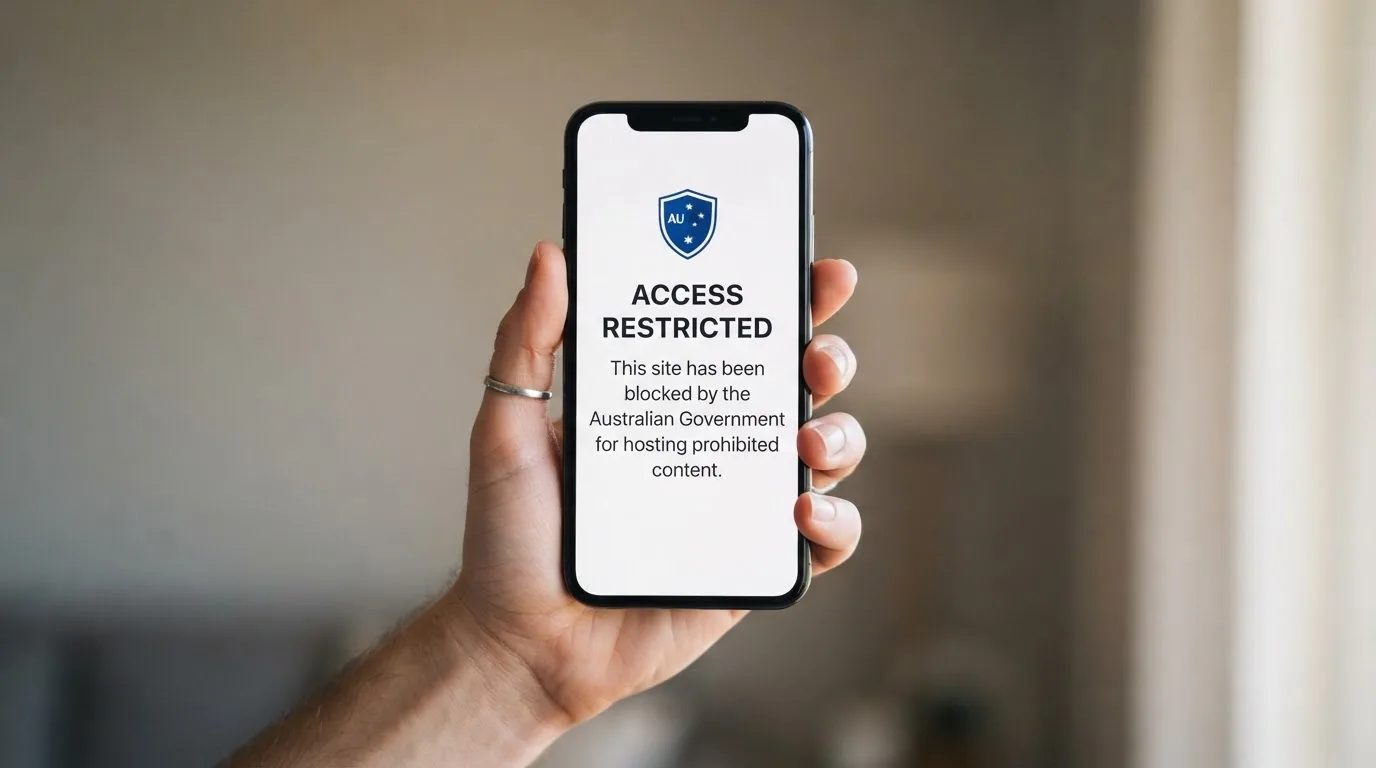
Two things intersect here. The first is the ban on digital currency as a payment method for licensed Australian online wagering, in force since 11 June 2024. A licensed brand cannot accept a Bitcoin deposit; a brand that does is unlicensed for the purposes of the Interactive Gambling Act, regardless of what licence the footer of its website claims. The second is that an offshore site accepting crypto from an Australian customer is offering a prohibited interactive gambling service, and that same site is precisely the kind of brand that ends up on the ACMA’s blocking list. The crypto route is sold as a way around identity and verification; in practice, in Australia, it is a way around the regulator, and the regulator’s next move is the blocklist.
There is a further point. A crypto deposit at an offshore casino is not anonymous in the sense the marketing uses — the wallet is pseudonymous, the exchange on-ramp is not — but it is reversible only by the operator’s own treasury. If the operator declines a withdrawal, freezes the account on a bonus-abuse allegation, or simply goes quiet, the punter has no Australian complaints body to take it to. The credit card chargeback is gone, the bank recall is gone, the Australian Financial Complaints Authority is gone. All that is left is the operator’s own terms page, and the operator’s own terms page is exactly what the punter agreed to. H2 Gambling Capital’s 2025 report on illegal gambling flows estimates Australians lose about A$3.9 billion a year to offshore sites of this kind, with the share of gambling going through legal channels falling from 74% in 2021 to 64%. That decline is the headline that the marketing never reproduces.
For the punter who actually wants what crypto is for — fast settlement, no chargeback friction, no card details shared with a counterparty — the closer fit inside Australian law is PayID or Osko through a licensed wagering brand, both of which settle in seconds through the New Payments Platform. That is not a substitute for everything offshore crypto wagering claims to offer, but it is a substitute for the part that was ever real.
What online keno actually is, and why the price tag is what it is
Online keno is the screen version of a game that has been in Australian clubs for decades. Players mark between one and twenty numbers on a card from a field of one to eighty, the house draws twenty numbers by either a ball machine or a random number generator, and the payout scales with how many of the player’s numbers match the draw. The mechanics look like a lottery because they are a lottery — keno’s working paper trail starts with a Han-dynasty legend crediting strategist Zhang Liang with inventing it during the Chu-Han Contention, with the earliest tickets printed with the first 80 characters of the Thousand Character Classic instead of numerals. Two and a bit thousand years later, the only meaningful change is that the lottery balls have been replaced by a random number generator running server-side.
The economics of the game have not improved with the technology. Wizard of Odds puts the house edge of keno at 25% to 29% under standard Las Vegas rules, the steepest of the common casino games, and its survey of live keno on the Strip found returns ranging from 65% to 80%. Wikipedia’s article on the game gives a band of under 4% to over 35% in online play and 20% to 40% in in-person casino play — the same game, with much wider spread, because the online operator can choose the paytable. For a sense of scale: blackjack’s edge under optimal strategy is roughly 0.28% on the liberal Las Vegas Strip rules and 0.43% under Atlantic City rules; baccarat’s bank is 1.06% on the Banker bet and 1.24% on the Player, with the Tie bet at 14.36%. Keno lives in a different room of the building.
The full-extreme case is worth knowing about, because it is what the marketing tends to print. A twenty-spot ticket that hits all twenty numbers has odds of about 1 in 3.5 quintillion. The prize on that ticket is large; the chance of seeing one is, for practical purposes, none. Smaller hits are routine — a three-spot on a ten-spot card is the kind of outcome that keeps a session running — but the paytable is built so that the smaller hits pay back less than the player has spent getting to them. The reason the edge is what it is comes down to how paytables are set: the operator picks a return percentage, the rest is the spread between payouts and the price of the ticket.
A live keno draw at a real venue is mostly identical in design to an automated online draw, with two differences worth noting. A live draw runs on a physical ball machine with a visible drum, the draw itself is paced across several minutes, and the round is scheduled — players mark a card for the next draw rather than the current one. An automated draw is decided instantly by a random number generator, the player can buy tickets back-to-back, and the payout is credited to the balance in real time. The math on each ticket is the same; what changes is the rhythm of the session, and how easy it is to buy the next one before the previous one has had time to register.
Eleven brands the ACMA has warned over offering prohibited services to Australians
| Brand | ACMA action and date | Operator named by the ACMA | Subject support |
|---|---|---|---|
| RocketPlay | Formal warning, March 2026; earlier warning to Dama N.V., May 2022 | Pulsup Ltd; earlier Dama N.V. | — |
| Level Up Casino | Formal warning, May 2022 | Dama N.V. | Keno listed by software supplier (Bgaming) |
| Woo Casino | Formal warning, March 2025 | Dama N.V. | — |
| Spirit Casino | Formal warning, May 2025 | Dama N.V. | — |
| National Casino | Formal warning, July 2025 | Consolutetish S.R.L. | Keno listed in reference material (Wikipedia) |
| Bizzo Casino | Formal warning, July 2025; earlier warning 2022 | Consolutetish S.R.L.; earlier TechSolutions | — |
| Ignition Casino | Formal warning, July 2025 | Bamboo Media | — |
| Instant Casino | Formal warning, February 2025 | EOD Code SRL | — |
| Jackbit | Formal warning, April 2026 | Ryker B.V. | — |
| Casino Intense | Formal warning, April 2025 | Sterplay Holding Ltd | Keno listed in reference material |
| Sky Crown | Formal warning, September 2022 | Hollycorn N.V. | — |
The table above is not a shortlist. It is a register. Each row is a brand the ACMA has formally warned under the Interactive Gambling Act 2001 for offering prohibited online casino services to Australians, and the operator name and date on each row come from the ACMA’s own published enforcement register rather than from any affiliate page. The “subject support” column records whether the brand carries keno in the third-party listings the research could verify — software-supplier pages, encyclopaedia entries and the operator’s own terms — and an em dash where no such confirmation exists. Most rows are em dashes, because the ACMA does not record which games a brand offers and most affiliate pages on the matter are unreliable.
What the spread of operator names shows, even at this short distance, is how little the licence in a footer has to do with the legal position in Australia. Dama N.V. appears as the warned operator for four of the eleven brands, with three different dates; the company has been on the ACMA’s record since at least 2022 and was warned again over Woo Casino in March 2025 and Spirit Casino in May 2025. Consolutetish S.R.L. draws two brands into a single warning round in July 2025, on top of a 2022 warning to TechSolutions over Bizzo Casino. The site the punter sees at the front of the brand is a different legal entity from the one the ACMA names in the back; both can change, and the offshore corporate vehicle is built to.
RocketPlay
Pulsup Ltd drew a formal warning in March 2026 over RocketPlay, the ACMA’s first action against the operator; an earlier 2022 warning covered Dama N.V. as the prior named entity for the Rocketplay brand. The brand’s home market is offshore, and the same game catalogue it offers to Australians — including keno — sits on a site the Australian regulator has already moved against. The brand’s Australian-facing appeal is that it accepts a credit card or a crypto deposit, both of which are precisely the funding channels the 2024 reforms closed off for licensed Australian wagering. That is the trade the punter is making: speed and convenience at the front end, with the regulator’s next blocking round and no Australian complaints body at the back end.
Level Up Casino
Dama N.V. was warned over Level Up Casino in May 2022, alongside five other brands in the same enforcement round. The game supplier pages show Bgaming lists a keno title in its catalogue; the brand’s own page has not been independently verified as offering keno to Australian customers in any research-grade source. The pattern is the one Dama N.V. has run across all four of its rows in this register: a Curacao-issued licence at the footer, a separate legal action in Australia, and an offshore corporate structure that lets the brand change name without changing the underlying operation.
Woo Casino
Woo Casino drew a fresh Dama N.V. warning in March 2025, three years after the company’s first Australian action. The warning is the regulator telling the operator that offering prohibited interactive gambling services to Australian customers is the offence, not that the brand itself is novel. For a punter reading this row, the salient point is that the same operator has now been warned, in writing, more than once over different brands — and that the offshore structure continues to operate. Woo Casino is one of several Dama N.V. brands whose visibility on a search page is high relative to the regulator’s record of action against it.
Spirit Casino
Spirit Casino joined the Dama N.V. warning register in May 2025, the second of the two warnings the operator drew that year. The short interval between the Woo Casino warning in March and the Spirit Casino warning in May is the regulator following the same operator across more of its brand portfolio rather than across new corporate ground. The game catalogue available to Australians on Spirit Casino is the same kind of catalogue as on the other Dama N.V. brands, with keno typically listed among the table games. Whether the brand markets to Australian customers specifically is harder to verify than the regulator’s own action, which is what the table records.
National Casino
Consolutetish S.R.L. was named by the ACMA in July 2025 over National Casino, alongside Bizzo Casino in the same enforcement round. Keno is listed as one of the games on the brand’s catalogue in the encyclopaedic reference material that exists for the brand, although the ACMA does not record which games a brand offers and the brand’s own terms page is the only authoritative source for what an Australian customer sees in practice. The relevant point for this page’s reader is that the warning was issued, the brand is one of two in the same round under the same operator, and the offshore corporate structure is again the one the regulator is looking through.
Bizzo Casino
Bizzo Casino carries two ACMA warnings — the 2022 action against TechSolutions (CY) Group Limited and TechSolutions Group N.V., and the July 2025 action against Consolutetish S.R.L. The 2022 warning was the operator’s first appearance on the regulator’s record, the 2025 warning is the second under a new corporate vehicle. The shift from one operator name to another, with the brand unchanged at the customer-facing level, is the textbook shape of how an offshore operator absorbs an Australian enforcement action: the warning lands on entity A, the brand continues trading under entity B, and the next warning lands on B. Keno is part of the brand’s catalogue in the third-party listings, but again the catalogue an Australian customer actually sees sits on a site the ACMA has acted against more than once.
Ignition Casino
Bamboo Media drew the July 2025 warning over Ignition Casino, separately from the Consolutetish S.R.L. action in the same month. The brand is one of the better-known offshore names in Australian search results, partly because of its poker-room history and partly because its branding has been carried forward through several offshore operators. None of that changes the legal position: a brand that offers prohibited interactive gambling services to Australians is operating against the Interactive Gambling Act, and the ACMA’s warning is the formal record of the fact. The keno catalogue at the brand is the kind a player would find at any of the brands in this register; the absence of a specific subject-support entry on the table means the research did not find a third-party listing that confirmed keno on the brand independently of the brand’s own materials.
Instant Casino
EOD Code SRL drew the February 2025 warning over Instant Casino, a relatively early action in the post-2024 enforcement tightening. The brand was one of the more aggressive crypto-friendly offers in the Australian search market at the time, with a Bitcoin deposit path and an automated keno draw. That deposit path is exactly the one the 2024 reforms closed for licensed Australian wagering, and exactly the one the regulator is now flagging when the operator accepts it from an Australian customer. A punter who opened an account at Instant Casino in 2024 and tries to withdraw in 2026 is doing so against a brand that has been on the regulator’s record for over a year.
Jackbit
Ryker B.V. drew a formal warning in April 2026 over Jackbit and CasinOK, both brands in the same enforcement round. The brand’s offer is the standard offshore package — a casino with sportsbook, a keno section, a crypto deposit path — and the regulator’s action is the standard offshore response. The timing is recent enough that some affiliate pages still rank Jackbit as a working option for Australian customers; the ACMA’s own register is the more current record. The relevant rule here is the same as for every other row in this table: a licence at the footer of the brand’s site is not an Australian licence, and the regulator’s name in the warning is the operator’s name as the regulator sees it, which may be different again from either.
Casino Intense
Sterplay Holding Ltd drew the April 2025 warning over Casino Intense. Keno is listed in third-party reference material covering the brand’s catalogue, and the ACMA’s action against the operator sits alongside the regulator’s broader campaign across the offshore casino market. The brand’s position in the search rankings is more modest than some of the better-known Dama N.V. brands in this register, but the legal position is identical: a brand offering prohibited services to Australians is operating outside Australian law, and the regulator’s formal warning is the regulator’s standard remedy before the brand moves up to a blocklist.
Sky Crown
Hollycorn N.V. drew the warning over Sky Crown and Blue Leo, in the September 2022 formal warning publication that remains on the regulator’s record. The brand’s catalogue is the same kind of catalogue as the rest of this register, with keno among the standard table-game offering. The Hollycorn N.V. group has stayed on the regulator’s radar across multiple brand and warning cycles since 2022, and Sky Crown is one of the older entries on the table by date. For a reader comparing this row to the more recent ones, the point is that the offshore brand strategy has stayed the same across three years of regulator action: a new brand, the same catalogue, the same marketing, the same warning cycle.
What online keno actually looks like in Australia, in practice
For an Australian reader, the practical answer to “where can I play keno” splits three ways. The first is licensed pubs and clubs, which is where most Australians who play keno have always played it. Keno (QLD) Pty Ltd runs the exclusive Queensland licence under the Keno Act 1996 and the supporting Keno Regulation 2007 and Keno Rule 2010; in NSW the keno operator and product licence was extended to 1 April 2050, with the joint licensees agreeing to pay the state more than $230 million — a $25 million upfront fee plus annual licence duty. In Victoria the 20-year keno licences issued from 15 April 2022 under the Gambling Regulation Act 2003 cover Keno (VIC) Pty Ltd and KenoGo Pty Ltd, the latter the new name of Lottoland Australia from 9 September 2025; the regulator is the Victorian Gambling and Casino Control Commission. Each state and territory has its own operator under its own statute, and the licensed product is run through the venue network in that jurisdiction.
The second is land-based casinos, where keno is one of the standard table products alongside baccarat, blackjack, roulette and the pokies floor. Crown Melbourne, for instance, runs three approved baccarat variants — Traditional Baccarat, Crown Baccarat and 2 to 1 Baccarat — under rules approved by the VGCCC, which replaced the VCGLR as Victoria’s casino regulator on 1 July 2022. The approval process for any new game, including any change to keno rules, sits with the state regulator under each casino’s controlling Act, and patrons are entitled to a copy of the approved rules on request — section 66 of the NSW Casino Control Act 1992 is one of several statutory formulations of the same idea. None of this creates a path to an online keno licence for the casino; the casino runs the table, the regulator approves the rules, and the patron plays at the venue.
The third is the offshore brand list at the top of the search results, which is what this page is about in the first place. These are not Australian licences; they are not Australian-licensed products; the regulator’s enforcement record against them is the table above; the bank or card that funds a deposit is in the position of paying an entity operating against Australian law. A punter who picks this path is doing it knowing all of that, and the only honest framing the page can offer is that the math, the funding rules and the regulator’s track record all push in the same direction.
The arithmetic of how fast the blocklist is growing
The ACMA’s published enforcement record, as reported in the regulator’s June 2026 round, puts the running total of blocked illegal gambling and affiliate marketing websites at 1,751 since the first blocking request in November 2019, with more than 230 unlicensed gambling services having left the Australian market since enforcement was strengthened in 2017. The blocking request is the formal mechanism by which the regulator asks Australian internet service providers to make a domain unreachable for Australian customers, and the first one in November 2019 was the inaugural use of the power.
The arithmetic on this is what the research’s prescribed calculation asks the page to work through. The 1,751-block figure covers a span of roughly six years and seven months from November 2019 to June 2026, which is the window in which the blocklist has been the regulator’s primary tool. Across that window, the effective rate works out to a band between roughly 260 and 280 blocked domains a year — the lower bound from a flat division across the full window, the upper bound from the recent pace of the round-by-round blocking orders, which has been running at the higher end. The June 2026 round alone added twelve sites — 7Signs, ChromaBet, Donbet, Duospin, Freshbet, Slots Gem, Jacks Club, Lucky Start, Pointsbetz, Spinrise, Vinyl Casino and Wildsino — and the 2025 rounds issued warnings over Dama N.V. twice (Woo Casino in March, Spirit Casino in May), Bamboo Media once and Consolutetish S.R.L. once, plus a separate February 2025 warning over Instant Casino.
The condition on the band matters. The flat-rate lower bound treats the six-and-a-half-year window as even, which it was not; the regulator’s blocking activity has accelerated, particularly since 2023, and the upper bound reflects the more recent pace rather than the lifetime average. Either way, the order of magnitude is the same: a couple of hundred offshore brands and affiliate pages coming off the visible Australian web every year, with formal warnings running ahead of the blocklist as the regulator’s softer tool. The condition that drives the pace is the regulator’s own resourcing and the offshore industry’s willingness to keep registering fresh domains, both of which are moving rather than fixed.
For a punter thinking about an offshore keno brand, the calculation’s relevance is direct. The rate at which the blocklist is growing is the rate at which a brand’s deposit URL stops working for Australian customers. A formal warning is the regulator’s first move; the block request is the second, and the gap between them is typically months rather than years. The 1,751 figure is the cumulative count, not the current count, because every blocked site stays on the list and the regulator does not unblock them when the operator moves to a new domain. The current count is larger still.
What the legal frame looks like from the player’s side
The Interactive Gambling Act 2001 is the federal statute, and the Interactive Gambling Amendment Act 2017 strengthened it. Together they prohibit providing online casino games, online pokies and in-play betting to a person in Australia; the prohibited service is named in the Act as a prohibited interactive gambling service. What is licensable is wagering on races and sport placed before the event, lotteries and keno — in practice licensed by the Northern Territory, where the Northern Territory Racing and Wagering Commission regulates 52 of Australia’s online bookmakers, including Sportsbet, Bet365 and Ladbrokes, all licensed in the Territory for tax reasons. The NTRWC runs with no full-time staff and meets once a month in Darwin, which is one of the more peculiar features of the Australian framework and one that has drawn parliamentary attention.
The 2026 reform layer is in motion. The Interactive Gambling Amendment (Gambling Reform) Bill 2026 passed Parliament on 19 August 2026, with the advertising and inducement measures commencing on 1 January 2027. For most of 2026 the law is a passed Bill rather than a commenced Act, and a 2026 page records it that way. The Bill covers advertising and inducements, and the commencement is a calendar date rather than a contingent event.
The minimum age for any gambling product in Australia is 18. The individual player is not prosecuted under the IGA — the Act targets the provider, not the customer — but an Australian punter using an offshore brand gives up the protections of the Australian consumer and banking framework: no Australian Financial Complaints Authority, no bank chargeback for a refused withdrawal, no eSafety-style intervention if the brand’s marketing crosses the line. The site can be blocked while a real-money balance sits on it, and the block is unilateral.
Tax treatment for the recreational punter is straightforward. Gambling winnings of a recreational player are not assessable income under section 6-5 of the Income Tax Assessment Act 1997, and losses are not deductible. The exception is a punter carrying on a business of gambling, which is the model professional punter case and a much narrower set of facts than the marketing suggests. The ATO is the right body for any tax question that gets close to this line, and any framework like this page’s that tries to make the line clearer than the ATO does is overreaching.
The honest framing of “best” when nothing is licensed to compete
The standard “best keno online casino” page presents a ranking: a list of brands, a comparison table, a winner. For an Australian reader in 2026, that frame is dishonest before a single brand is named. The reason is the table above. Eleven of the brands an Australian reader is likely to be offered are on the ACMA’s formal warning register. Several carry warnings from more than one operator-name. The regulator’s own published enforcement record is the more authoritative ranking than any affiliate page, and on that ranking none of the eleven comes out ahead.
What does come out ahead, on any honest reading of the same evidence, is the licensed route. Keno (QLD) Pty Ltd in Queensland, the joint NSW licensees under their 2050 extension, the Victorian licensees under the Gambling Regulation Act 2003, the land-based casinos with regulator-approved rules, the licensed wagering brands under NTRWC oversight where keno is offered through the venue network — these are the keno offers that the Australian legal frame is built around. They are the offers BetStop and the National Gambling Helpline are built around. They are the offers that take debit cards, PayID and BPAY rather than credit cards and crypto. They are the offers the regulator does not need to warn the public about, because they are the ones the regulator has licensed.
The shape of a “best keno online casino” page written honestly for an Australian reader in 2026 is therefore not a ranking of brands at all. It is a description of what keno is, what the law allows, what the regulator is doing about the offers the law does not allow, and where the punter who actually wants to play keno this week in Australia can do so without crossing the regulator. The closing of this page is not a verdict on which offshore brand is best; it is the observation that the offshore brand list is not the answer to the question, and that the legal frame is the answer.
Frequently asked questions about keno in Australia
How high is the keno house edge compared with other casino games?
Wizard of Odds puts keno’s edge at 25% to 29% under standard Las Vegas rules, with returns on live keno on the Strip running between 65% and 80%; Wikipedia gives a wider band of under 4% to over 35% online and 20% to 40% in casino play, because the operator picks the paytable. By comparison, blackjack’s edge under optimal strategy is roughly 0.28% on liberal Strip rules, baccarat’s Banker bet is 1.06% and the Player bet 1.24%, and even baccarat’s worst bet (Tie, 14.36%) sits well under the keno floor.
Is keno available at licensed Australian pubs and clubs, not just casinos?
Yes, and the licensed-venue route is in fact where most keno has been played in Australia for decades. Keno (QLD) Pty Ltd runs the exclusive Queensland licence under the Keno Act 1996; in NSW the operator and product licence was extended to 1 April 2050 against more than $230 million in fees and duty; in Victoria the 20-year licences issued from 15 April 2022 cover Keno (VIC) Pty Ltd and KenoGo Pty Ltd under the Gambling Regulation Act 2003. Each state and territory runs its own operator under its own statute, generally through the pub and club network rather than through dedicated keno halls.
Can an offshore online casino legally offer keno to players in Australia?
No. The Interactive Gambling Act 2001, as strengthened by the Interactive Gambling Amendment Act 2017, makes it an offence to provide online casino games — including keno — to a person physically in Australia; no state or territory issues a licence for the activity. The ACMA’s enforcement arm investigates, issues formal warnings and asks Australian internet service providers to block offending sites, with a cumulative 1,751 domains blocked since the first blocking request in November 2019. The individual player is not the target of the law, but the offshore site is not bound by Australian consumer or banking protections either.
How is live keno different from an automated keno draw?
A live draw uses a physical ball machine in a visible drum, with the draw itself paced across several minutes and the round scheduled — players buy a ticket for the next draw rather than the current one. An automated draw is decided by a server-side random number generator, with tickets buying back-to-back and the payout credited to the balance in real time. The mathematics on each ticket is the same; what changes is the rhythm of the session, the visibility of the draw and how easy it is to buy the next ticket before the previous one has registered.
Can keno be played with a Bitcoin deposit at a site accessible from Australia?
The short answer is that an offshore site accepting Bitcoin from an Australian customer is offering a prohibited interactive gambling service and is operating outside the Australian rules; licensed Australian wagering brands cannot accept digital currency at all since 11 June 2024. The longer answer is that the practical case for a crypto deposit at an offshore brand is the inverse of what the marketing suggests: the deposit is fast and the withdrawal depends on the offshore operator’s own treasury, with no Australian complaints body to escalate to and no bank chargeback if the operator declines. PayID and Osko through a licensed wagering brand settle in seconds and keep the punter inside the Australian framework.
Why do keno return percentages vary so widely between operators?
Because the operator chooses the paytable. Standard rules — picking one to twenty numbers from a field of one to eighty, the house drawing twenty, payouts scaled to matches — are common across the industry, but the payout for any given match pattern is set by the operator and is the single biggest determinant of the house edge. Wizard of Odds finds a 25% to 29% edge under standard Strip rules; Wikipedia’s wider band of under 4% to over 35% in online play is essentially the spread of how aggressive the paytable is at each site. A punter who cannot see the paytable before buying a ticket is taking the edge on faith, which is what makes offshore brands cheaper than they look.
Written by the editors at Casino Jackpot Hub.