
Easy withdrawal casinos Australia 2026: paths, paperwork, and the part the marketing page skips
A “fast withdrawal” button on an offshore casino landing page does two things at once. It promises a player the cash-out step will not get in the way of winning, and it does so on a site that has no Australian licence to cash out to anyone. The cleanest way to think about this market in 2026 is to separate what the cash-out page actually controls from what it cannot: a withdrawal request is a queue inside one operator’s payments team, and the IGA puts the operator itself outside Australian law. Both are true, and both matter, in different places.

Current as of 17 October 2026 against the ACMA’s published formal warning list.
Table of Contents
- What an “easy withdrawal” really means at an offshore casino
- How Australian payment rails shape what “easy” looks like
- Why an easy cash-out does not make a casino safe
- The local market: how Australians actually gamble online
- Brands the ACMA has formally warned
- How to read the cash-out page at any offshore casino
- What changes if a player walks away from the offshore casino
- The trade-offs that define the choice
- Picking the right rail for a legal withdrawal
- Where the marketing claim meets the rule
- The calculus of the IGA in 2026
- The bottom line on “easy withdrawal casinos Australia 2026”
- Frequently asked questions
What an “easy withdrawal” really means at an offshore casino
A withdrawal feels easy for one of three reasons, and only the first two are properties of the operator.
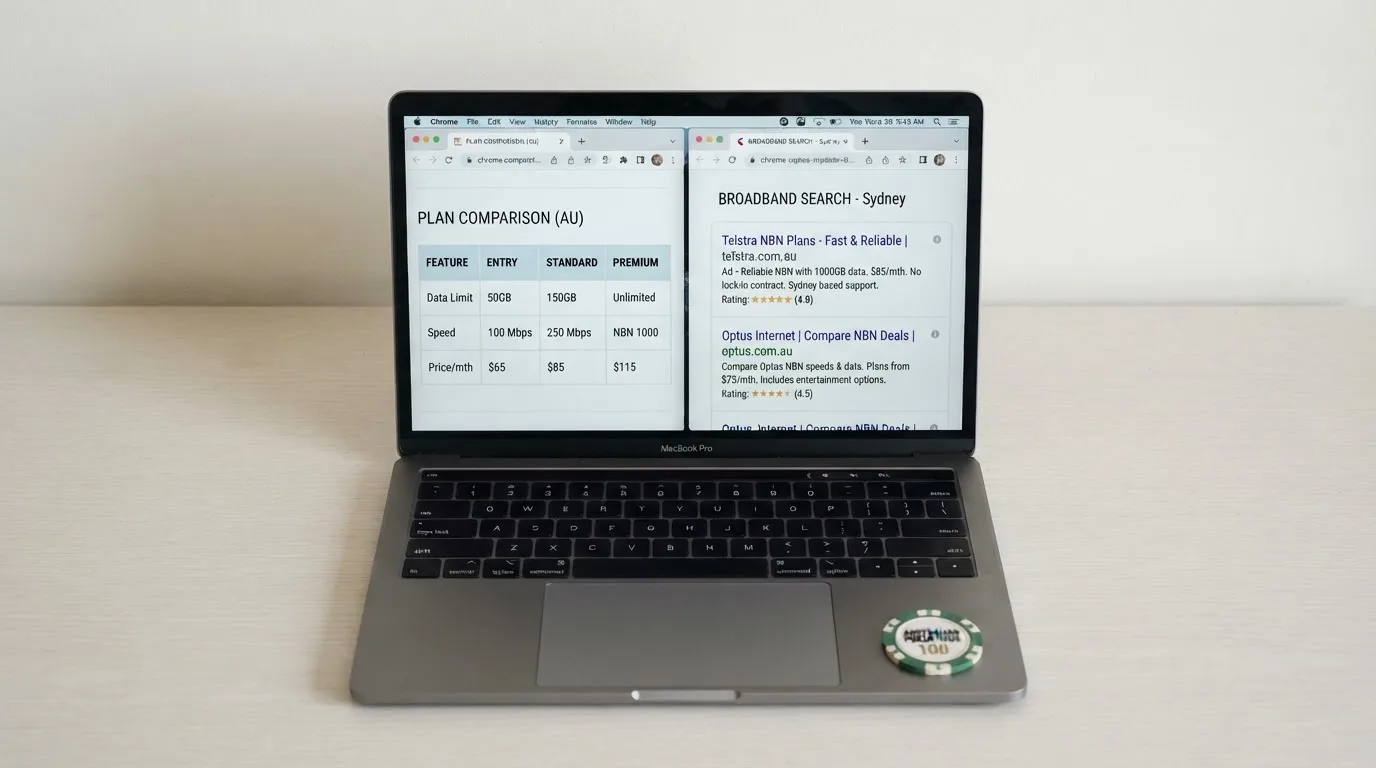
The first is processing. Most offshore casinos hold a pending period of 24 to 72 hours after a cash-out is requested, during which staff can still reverse the payment or ask for documents. Sites that compress or skip that window — same-hour approvals on a first request, no internal review queue — look fast on paper but cannot actually move the funds faster than the rail below them. They just stop pausing.
The second is the rail. A PayID or Osko transfer between Australian banks settles in under a minute, including weekends. The same operator using an offshore wire takes three to five business days, and the wire’s intermediary bank can deduct its own fee on the way through. The rail choice is the single biggest determinant of how soon the money lands, and it sits below the “fast withdrawal” toggle in any operator’s settings.
The third is verification. Almost every step that players notice — uploading a driver’s licence, a selfie holding the card, a bank statement, a utility bill — is part of KYC, the “know your customer” check that licensed operators run. A first-time request almost always triggers a full KYC even when deposits have gone through unverified. The check is mandatory for any operator that touches a real banking system, and it is the part of the process most marketing pages try to make invisible.
Easy, in the practical sense, is the intersection of all three: short pending window, fast rail, KYC already done. A site can engineer two of those, and players will still wait on the third.
What the cash-out page usually asks for
The first withdrawal from any operator that handles real money will, in practice, ask for proof of identity, proof of address, and proof of payment method. The names vary — “KYC”, “verification”, “source of funds” — but the underlying list is consistent:
- A government photo ID, usually a driver’s licence or passport.
- A recent utility bill or bank statement showing the player’s name and address.
- A photo of the card used to deposit, with the middle digits and the CVV covered; or, for e-wallet deposits, a screenshot of the account.
- Sometimes a selfie holding the same ID, dated.
None of this is optional in any meaningful sense. Anti-money-laundering law makes the operator liable if it pays out without it, and offshore licences are no exception — Curaçao and Anjouan operators run the same KYC queue as everyone else, just on their own timelines.
Where the cash-out can stall
Three places, in order of how often players meet them.
The pending window. Some sites reserve the right to hold a withdrawal for internal review for up to several days; during that window the request can be reversed by the player or, on a few sites, by the operator. A long pending window is the most common reason a “fast” site does not feel fast.
Bonus terms. A withdrawal submitted while an active bonus is still being wagered is held until the wagering multiple is met, or the bonus is forfeited. Marketing pages describe the bonus in cash terms; the cash-out page enforces the multiple.
Source-of-wealth checks. For larger balances — typically A$2,000 and up at offshore sites, sometimes lower — the operator may ask where the money being deposited originally came from. Payslips, sale documents, or an inheritance record are common asks, and the queue for this review is staffed by fewer people than the standard KYC queue.
How Australian payment rails shape what “easy” looks like
The payment layer matters more than the operator’s own settings, because the operator cannot make money travel faster than the rail it uses. In Australia, three rails matter: PayID and Osko for speed, BPAY for bill-style payments to registered billers, and the card networks for everything else. None of them were built for offshore casinos, and each one interacts with a gambling block somewhere in the chain.
PayID and Osko are the speed layer. A bank-to-bank transfer using PayID, routed through Osko, arrives in under a minute at over 100 Australian financial institutions, twenty-four hours a day, including weekends. The system went live on 13 February 2018 under the New Payments Platform, and by April 2025 over 25 million PayID identifiers had been registered. Operators that support PayID for withdrawal can put money into a player’s account inside a lunch break, and that part genuinely is easy. PayID also shows the name attached to the receiving account before the player confirms the transfer, which is itself a useful defence against the scam sites that mimic licensed operators.
BPAY sits one step away from the cash-out path. It is a bill-payment system rather than a peer-to-peer transfer: the payer enters a Biller Code and a Customer Reference Number in their own online banking, and the funds settle overnight. BPAY has been live since November 1997, is available in over 140 banks’ online banking, and is now run by Australian Payments Plus, the same operator that runs PayID and Osko. For casino withdrawals, BPAY is rare — the operator has to be a registered biller, and few are — but it shows up on legal Australian wagering sites and on a handful of well-established offshore ones. When it does, the cash arrives next business day.
Card networks are the fallback. Visa and Mastercard allow gambling transactions in most jurisdictions, and Australian-licensed wagering still routes deposits through debit cards. The Interactive Gambling Act 2001, as amended in 2023, blocks credit cards and credit-related products from being used for licensed online wagering, a rule that took effect on 11 June 2024 with operator penalties of up to A$247,500. The credit-card ban also constrains linked digital wallets such as Apple Pay, because the card underneath is still a credit instrument. For an offshore casino, none of this applies directly — the operator is not Australian-licensed — but the banks do, which is why Westpac, ANZ and Commonwealth Bank all offer gambling blocks at card level that refuse authorisation on transactions in the merchant category “Betting/Casino Gambling”.
Apple Pay and Google Pay add a layer that confuses the picture. The wallets themselves do not charge consumers; any surcharge at checkout is the merchant’s own card-processing fee, which is one reason the Reserve Bank’s July 2025 review proposed removing surcharges on eftpos, Mastercard and Visa transactions while leaving American Express outside the scope. By the end of 2025, wallet payments accounted for around 45% of all card payments in Australia by number, so a card block that misses the wallet catches a much smaller share of transactions than it used to. ANZ’s gambling block, activated in the app, does block transactions made through a wallet on an eligible card, not just the plastic — and once turned on, it stays on for 48 hours even if the customer tries to remove it.
American Express is a separate case. It is a three-party scheme, issuing cards and processing transactions itself rather than running the four-party network Visa and Mastercard use, and it sits outside the Reserve Bank’s proposed surcharge ban. It is also not a card that Australian-licensed wagering accepts in the first place, which makes the surcharge question academic for the legal market. Offshore casinos that market Amex deposit support are not subject to that exclusion, but the bank blocks in the chain still apply.
What an Australian bank will and will not block
Each of the four major Australian banks runs its gambling block differently, and the differences are not all in the customer’s favour. Westpac’s block sits at the card level and refuses authorisation on transactions registered under the merchant category code for betting and casino gambling. ANZ’s block, activated in the app, covers both the physical card and the same card inside a digital wallet, with a 48-hour cooling-off period on removal. Commonwealth Bank’s CommBank app has a gambling lock that blocks most gambling transactions on eligible cards, and explicitly warns it cannot guarantee all gambling-related purchases will be stopped. None of the three banks publishes a number for what proportion of gambling transactions their block catches; the bank’s own caveat is that some will get through and some non-gambling transactions will be wrongly declined.
The aggregate picture: a bank block is a friction layer on top of the cash-out path, not a firewall around it. For a player at an offshore casino, the block may slow deposits or refuse them outright, and may catch a withdrawal refund the casino tries to push back through the original card. It does not stop the player from initiating the transfer on a different rail.
Why an easy cash-out does not make a casino safe
The website that releases a withdrawal in ten minutes and the website that vanishes with the balance both run inside the same legal vacuum in Australia. The Interactive Gambling Act 2001, strengthened in 2017, makes it an offence to provide online casino games, online pokies or in-play betting to a person in Australia, and no state or territory issues licences for any of those products. What is licensable is wagering on races and sporting events placed before the event, lotteries and keno — in practice licensed through the Northern Territory Racing and Wagering Commission, which regulates 52 online bookmakers including Sportsbet, Bet365 and Ladbrokes, has no full-time staff and meets once a month in Darwin.
The ACMA is the enforcement body. It investigates complaints, issues formal warnings, and directs Australian internet service providers to block illegal sites at the network level. In a round reported on 26 June 2026 the regulator asked ISPs to block 12 more websites: 7Signs, ChromaBet, Donbet, Duospin, Freshbet, Slots Gem, Jacks Club, Lucky Start, Pointsbetz, Spinrise, Vinyl Casino and Wildsino. That takes the running total of blocked sites and affiliate marketing pages to 1,751 since the first blocking request in November 2019, with more than 230 unlicensed services having left the Australian market since enforcement was strengthened in 2017.
A rough arithmetic on that running total, using only the figures the ACMA publishes and the date it gives for the first blocking request, puts the average pace of blockings somewhere between roughly 260 and 290 sites per year over the period from late 2019 to mid-2026. The lower bound assumes the 1,751 figure is a calendar-year snapshot at 26 June 2026 and counts only the full years from 2020 through 2025; the upper bound extends to the full elapsed window of about six and a half years. What the band does not say is what proportion of those sites would have been called “easy withdrawal” casinos while they were live, and that is the point — the regulator blocks on legality, not on payout speed.
Formal warnings the ACMA has issued over individual operators
The list is long, and it includes most of the brands that still rank on offshore comparison pages. In March 2026 the regulator formally warned Pulsup Ltd over Rocketplay, an operator that had already been the subject of a May 2022 warning to its previous operator Dama N.V. Dama N.V. itself received further warnings over Woo Casino in March 2025 and over Spirit Casino in May 2025. Consolutetish S.R.L. was warned over National Casino and Bizzo Casino in July 2025; Bizzo had previously been the subject of a 2022 warning to TechSolutions. Bamboo Media was warned over Ignition Casino that same month. EOD Code SRL was warned over Instant Casino in February 2025. Sterplay Holding Ltd was warned over Casino Intense in April 2025. Ryker B.V. was warned over Jackbit and CasinOK in April 2026. Hollycorn N.V. has been warned over Sky Crown and Blue Leo Casino.
The pattern across those cases is consistent enough to be useful. Warnings tend to follow a brand to a new operator shell within a year or two — Dama N.V.’s 2022 warning over Rocketplay became Pulsup Ltd’s 2026 warning over the same brand. From the player’s perspective, the change of operator name is invisible; from the regulator’s perspective, it is the same underlying service under a different corporate wrapper.
What protection an Australian player actually has offshore
None, in the practical sense. The IGA targets the provider, not the player, so there is no criminal penalty for an Australian who opens an account at an offshore casino. There is also no Australian complaints body to take a withdrawal dispute to, no local regulator to enforce a payout, and no guarantee that a balance on the site is recoverable if the site is blocked while the player is still playing. The site may pay out quickly; it may also vanish. The same speed that makes the cash-out feel easy is the speed at which a closed operator exits with the remaining balance.
BetStop, the National Self-Exclusion Register, has been live since August 2023 and is the cleanest player-protection tool in the Australian system. It binds every Australian-licensed online and phone wagering service. An offshore casino is not on the register, and a BetStop exclusion does not follow the player onto it. Self-exclusion at the offshore site is, in every case reviewed, a per-site setting that the operator may or may not honour.
The National Gambling Helpline is 1800 858 858, free, 24/7, with chat at Gambling Help Online. It is the same number for anyone who needs it, whether the gambling has been on a legal wagering site or an offshore casino.
The local market: how Australians actually gamble online
The legal market is racing and sport, not casino. H2 Gambling Capital’s 2025 report estimates Australians lose around A$3.9 billion a year to illegal offshore gambling sites, and that the share of gambling going through legal Australian channels fell from 74% in 2021 to 64%. The figure is an estimate, not an audited number, and it sits alongside the ACMA’s blocking total as a rough sense of scale rather than a precise measure.
What the legal market does offer is a tightly regulated alternative. Licensed bookmakers are bound by the credit-card ban that took effect on 11 June 2024, are connected to BetStop for self-exclusion, accept deposits only via debit card, bank transfer, PayID, Osko and BPAY, and can be complained about to the local regulator if a withdrawal goes wrong. None of those protections extend to an offshore casino.
The Interactive Gambling Amendment (Gambling Reform) Bill 2026
The bill passed Parliament on 19 August 2026. Its advertising and inducement measures take effect from 1 January 2027, so for the rest of 2026 it is a law with a start date, not yet in force. The practical effect on offshore operators is modest — they already operate outside Australian law — but the bill tightens inducement rules around licensed wagering, which changes the marketing environment around Australian-facing affiliate sites.
Brands the ACMA has formally warned
The brands below have each received an ACMA formal warning under the Interactive Gambling Act 2001 for offering prohibited online casino services to people in Australia. None of them is licensed in Australia to offer online casino games, online pokies or in-play betting, and the licence an offshore site displays — Curaçao, Anjouan, Costa Rica — does not cover Australian residents. This is not a ranking of which brand pays out fastest. It is the regulator’s own record of who has been told to stop.
| Brand | ACMA action and date | Operator named by the ACMA | Subject support |
|---|---|---|---|
| RocketPlay | Formal warning March 2026 (earlier Dama N.V. warning May 2022) | Pulsup Ltd | listings-only (GamblingInsider) |
| Level Up Casino | Formal warning May 2022 | Dama N.V. | listings-only (Westpac) |
| Woo Casino | Formal warning March 2025 | Dama N.V. | no-data |
| Spirit Casino | Formal warning May 2025 | Dama N.V. | no-data |
| National Casino | Formal warning July 2025 | Consolutetish S.R.L. | listings-only (acma.gov.au, austrac.gov.au, betstop.gov.au) |
| Bizzo Casino | Formal warning July 2025 (earlier TechSolutions warning 2022) | Consolutetish S.R.L. | listings-only (GamblingInsider) |
| Ignition Casino | Formal warning July 2025 | Bamboo Media | no-data |
| Instant Casino | Formal warning February 2025 | EOD Code SRL | listings-only (Ecopayz, PayID) |
| Jackbit | Formal warning April 2026 | Ryker B.V. | no-data |
| Casino Intense | Formal warning April 2025 | Sterplay Holding Ltd | listings-only (austrac.gov.au, betstop.gov.au, GamblingInsider) |
| Sky Crown | Formal warning September 2022 | Hollycorn N.V. | no-data |
The “Subject support” column reflects what the listings consulted for this page actually reported about payment methods at each brand, and nothing more. Where it reads “no-data”, those listings said nothing usable about the brand’s payment or withdrawal setup, and the brand is presented on the other columns only.
Reading the table
Eleven brands, two operators that show up more than once. Dama N.V. covers four of the eleven entries: Level Up Casino (May 2022), Woo Casino (March 2025) and Spirit Casino (May 2025), plus the earlier 2022 warning over Rocketplay that became Pulsup Ltd’s 2026 warning over the same brand. Hollycorn N.V. covers Sky Crown, and Ryker B.V. covers Jackbit and CasinOK together in a single April 2026 warning. The implication for a player comparing cash-out pages across these brands is that operator history is more informative than brand history: the same payments team tends to run the same queue, with the same weak spots, across the brands under one corporate wrapper.
AUSTRAC’s threshold-transaction-report rule applies only to physical cash transfers of A$10,000 or more. Ordinary electronic bank transfers — including PayID and Osko — are not subject to that per-transaction reporting requirement, regardless of the amount sent. That detail is more useful to a player than it sounds, because the offshore operators that describe “large withdrawal review” tend to invoke AUSTRAC as the reason. The rule does not actually require it.
The few constants across the set
Every brand on the table is offshore, and every one of them displays a non-Australian licence of some kind. None of those licences grants access to the Australian market, and none of them places the operator under the ACMA’s jurisdiction in the way that an Australian-licensed bookmaker sits under it. The legal posture is uniform, even where the marketing varies.
How to read the cash-out page at any offshore casino
A practical pass through the page tells a reader more than the brand’s banner does. Four checks cover the ground.
First, find the pending period. The cash-out terms usually sit one or two clicks below the banking page. A pending period under 24 hours is rare and tends to belong to operators that resolve KYC before the first withdrawal is ever submitted. A pending period over 72 hours is the most common source of a “fast” site that does not feel fast.
Second, find the withdrawal rail list. PayID and Osko are the fast options in Australia; a wire or a SWIFT transfer is the slow one. Cards and e-wallets sit somewhere in between, and the e-wallet list is often shorter than the deposit list — operators accept more on the way in than they will pay out on the way back.
Third, find the bonus-while-withdrawal clause. If a player has an active bonus, the cash-out will wait for the wagering multiple or the bonus is forfeit. The arithmetic on whether to forfeit is straightforward, but it has to be done before submitting the request.
Fourth, find the source-of-funds threshold. Most offshore sites set this around A$2,000 to A$10,000 cumulative withdrawals. Below the threshold, the standard KYC list is enough. Above it, additional documents will be asked for, and the queue is slower.
If the page is missing any of those four, that is information in itself. A site that does not publish a pending period is running an open-ended one. A site that lists deposit methods but no withdrawal methods is reserving the right to pick the rail after the request comes in.
What changes if a player walks away from the offshore casino
The legal Australian alternative is narrower than the offshore menu, and it is also more constrained. Online casino games and online pokies are not legal in Australia at all, which is the entire reason this guide exists. Wagering on races and sports before the event is legal, lotteries and keno are legal, and that is the full list. A player who decides to stay inside Australian law is choosing among licensed bookmakers — Sportsbet, Bet365, Ladbrokes and 49 others regulated through the Northern Territory — rather than among the eleven brands above.
The deposit layer is simpler. Debit card, bank transfer, PayID, Osko and BPAY are the routes the licensed market accepts. Credit cards are blocked under the 2024 rule. Crypto is blocked. Apple Pay works only where the underlying card is a debit instrument, and the bank block at the card level still applies. Withdrawals go back through the same rails, with PayID and Osko clearing in under a minute and BPAY settling overnight.
Self-exclusion through BetStop is the single player-protection tool that offshore sites do not match. Once registered, the exclusion applies to every Australian-licensed online and phone wagering service. The register is free, takes a few minutes to set up, and lasts for a chosen period of three months or longer. It does not extend to offshore casinos.
Tax handling is the one area that works in the player’s favour. Recreational gambling winnings are not assessable income in Australia, and losses are not deductible, unless the person carries on a business of gambling. For the typical player, the ATO does not need to be involved at all.
The trade-offs that define the choice
A few lines summarise the comparison a reader is actually making.
Speed versus legality. PayID and Osko are the fastest rails available to an Australian player at any site, offshore or licensed. Only licensed wagering is legal.
Convenience versus protection. An offshore casino’s marketing page is built around a single action — deposit, play, withdraw — and a single number: how long the withdrawal takes. A licensed bookmaker’s page is built around a longer list of obligations, and the cash-out speed is rarely the headline.
Bonus value versus recourse. Offshore sites carry higher headline bonuses, often with a wagering multiple that consumes them in practice. Licensed bookmakers carry smaller offers and a complaints body.
Familiarity versus novelty. The eleven brands in the ACMA table are well-known to anyone who has searched for an offshore casino. The licensed bookmakers are well-known to anyone who watches sport. The two lists do not overlap.
None of those trade-offs disappears because the cash-out page is fast. The page can move money quickly; it cannot move the player inside Australian law.
Picking the right rail for a legal withdrawal
For an Australian player using a licensed bookmaker, three rails cover almost every withdrawal.
PayID or Osko is the default for amounts under A$10,000 in practice. The transfer clears inside a minute, twenty-four hours a day. The receiving name is shown before the player confirms the transfer, which catches the scam sites that mimic licensed brands.
BPAY is the right choice for overnight settlement at any size. The payer’s own bank does the work, the funds clear next business day, and the operator does not see the player’s full bank account details.
Direct bank transfer is the fallback for large amounts. It takes longer, often a business day or more, and the intermediary bank may deduct a fee. For amounts that exceed a PayID or BPAY limit at the operator, it is the only rail available.
Card refunds sit in a fourth category. Some operators will refund winnings to the original debit card; the time it takes is the card network’s settlement time, typically one to three business days. Apple Pay and Google Pay are not direct withdrawal rails — they reflect the card underneath, so a refund to “Apple Pay” is a refund to the linked card.
When the rail itself becomes a problem
A bank block on gambling transactions can intercept a withdrawal refund routed back through the original card, because from the bank’s perspective a refund looks like a transaction in the same merchant category. A player whose bank runs a gambling block at card level should expect a refund to bounce, and should plan the withdrawal around PayID or BPAY from the start.
The interaction between a bank block and a digital wallet is uneven. ANZ’s block, activated in the app, covers both the physical card and the same card inside Apple Pay, with a 48-hour cooling-off period on removal. Westpac’s block and Commonwealth Bank’s gambling lock behave similarly, though each bank’s documentation warns in its own words that not all gambling transactions will be caught and some non-gambling transactions will be wrongly declined. The protection is real; it is also not total.
Where the marketing claim meets the rule
A few specific marketing phrases have to be read against the Australian framework, and the reading is the same each time.
“Fast payout” usually means a short pending window at the operator, not a fast rail. The rail is fixed by the operator’s banking setup, and most of them use the same wire and card networks.
“Withdrawal in minutes” usually applies to a small first withdrawal at an operator that already has the player’s KYC on file. The second withdrawal, or a larger one, may take longer because of source-of-funds review.
“No fees” usually means no fee on the operator’s side. The receiving bank, the card network, or an intermediary bank on a wire may still deduct a fee.
“Instant withdrawal” is the marketing word most likely to be misleading. PayID and Osko are instant at the Australian end; the operator’s pending window sits on top of them. The two together are rarely less than thirty minutes, and are often several hours for a first withdrawal.
The phrasing changes from site to site. The arithmetic behind it does not.
The calculus of the IGA in 2026
The Interactive Gambling Act 2001 is the frame around every choice on this page. The 2017 amendments tightened what counts as a prohibited service; the 2023 amendments added the credit-card ban that took effect on 11 June 2024; the 2026 amendment bill tightened advertising rules for 2026+1. Each amendment has shifted the legal market closer to licensed wagering and pushed offshore operators further outside it.
For a player, the practical effect is that the eleven brands above are not Australian options in any sense, regardless of how clean the cash-out page looks. The legal Australian product set is licensed wagering, lotteries, and keno, and the deposit and withdrawal layer for that set is PayID, Osko, BPAY, debit card, and bank transfer.
The cash-out page at an offshore casino can be fast. It cannot change which side of the law the player is on.
The bottom line on “easy withdrawal casinos Australia 2026”
The phrase covers a real category — operators whose cash-out page is engineered for speed — and it covers an impossible one in Australian law. A reader looking for an easy cash-out should weight three things.
First, the rail. PayID and Osko are the speed layer in Australia, and any operator that supports them for withdrawals is closer to “easy” than one that does not. The rail choice is the biggest single determinant of how soon money lands.
Second, the verification queue. A player who has done KYC before the first withdrawal request will see a faster cash-out than one who has not. Submitting documents early, before the request, is the only reliable way to compress the verification step.
Third, the legal status. The eleven brands in the ACMA warnings table are not Australian options. A licensed bookmaker is the alternative inside the law, and the speed difference is smaller than the marketing makes it sound — PayID and Osko clear at the same speed, and the licensed bookmaker’s protections are real.
The cash-out page can be easy. It is always cheaper, in the long sense, for an Australian player to be easy about the right thing.
Frequently asked questions
What usually makes a casino withdrawal count as easy?
A short pending window at the operator, a fast rail such as PayID or Osko, and KYC already cleared before the request goes in. Two of those three are properties of the operator; the third is something the player controls by submitting documents early.
Why do some casino sites ask for identity documents before releasing a withdrawal?
Anti-money-laundering law makes the operator liable if it pays out without verifying who it is paying. A first-time withdrawal almost always triggers a full KYC check, and offshore sites run the same queue as everyone else, on their own timelines.
Is a one-click withdrawal process a sign that a casino site is well run?
It is a sign that the operator has compressed the pending window, not that the rail underneath is faster. The transfer still has to clear through a payment network, and a slow rail will not be rescued by a one-click button.
Does an easy withdrawal process mean fewer fees are taken out along the way?
Not necessarily. “No fees” on the operator’s side leaves any bank or card-network fee in place, and a wire transfer routed through an intermediary bank will often lose a percentage of the amount on the way through.
Can a withdrawal request be cancelled after it has been submitted?
It depends on the operator’s pending window. Most sites allow a player to cancel a withdrawal during the pending period, and a few allow the operator to do the same. Once the funds have left the operator’s account, the request is effectively final.
What paperwork is most commonly requested before a first withdrawal is approved?
A government photo ID, a recent utility bill or bank statement showing name and address, and a photo of the card or e-wallet used to deposit, with sensitive digits covered. Larger balances may also trigger a source-of-funds review.