
Fast Payouts and Legal Casinos in Australia 2026
The fastest payout is the one that arrives. In Australia, that is an Osko transfer through the New Payments Platform — a few seconds between participating banks, twenty-four hours a day, weekends included. The catch is the destination. Online casino games and online pokies cannot be lawfully offered to anyone in Australia; the Interactive Gambling Act 2001 prohibits it, and the Australian Communications and Media Authority keeps a running list of brands it has warned and sites it has had blocked. A reader asking for the best fast payout online casino Australia has, on paper, a clear technical answer (Osko, a couple of seconds) and a much harder legal one (no Australian licence covers this product). This page works through that.

Current as of 17 October 2026; verified against the ACMA’s formal warning register and the Reserve Bank of Australia’s payments publications.
Table of Contents
- What the search is really asking
- The legal frame in plain terms
- The payments stack an Australian punter actually meets
- Crypto, anonymity and what those words actually mean
- Where the ACMA has acted, and what that means
- The arithmetic behind the block list
- Responsible play, and the tools that work where they bind
- The brands the ACMA has named
- What an Australian punter is left with
- What changes in 2026
- A short note on the figures used here
- Frequently asked questions
What the search is really asking
“Fast payout” is one of those phrases the marketing side has drained of meaning. Every offshore casino site advertises it. Most of them publish a number, an hour count or a “within minutes” line somewhere in the footer, and almost none of them publish a third-party figure to back it up. The phrase does useful work when it describes how a payment rail settles — Osko, PayID, BPAY, a same-day EFT — and it does nothing useful when it describes how a marketing department feels about itself.
Two pieces of confusion travel with the phrase. The first is that fast means guaranteed. It does not: an offshore operator can quote “instant payouts” and still hold a withdrawal for review, especially on the first one, and there is no Australian regulator to complain to if it does. The second is that payout and payout time are the same thing. They are not. The rail settles in a second; the operator’s internal processing — identity re-checks, anti-money-laundering reviews, source-of-funds questions on a large win — is what determines the hour count the player actually sees.

A reader who keeps those two apart can read a payout promise honestly: how long the rail takes, and how long the operator usually takes over the top. The order matters. The rail is the small part.
The legal frame in plain terms
The Interactive Gambling Act 2001, as tightened by the Interactive Gambling Amendment Act 2017, makes it an offence for a provider to offer online casino games, online pokies or in-play wagering to a person who is physically in Australia. No state or territory licence covers this product. A Curacao or Kahnawake seal in a footer does not change that — those regimes license the operator in their own jurisdiction, and they license nothing for an Australian consumer. The prohibition targets the provider, not the player, so the legal exposure of an individual punter who opens an account is low. The exposure that matters — a refused withdrawal, a closed account, a balance stranded on a domain the ACMA has just had blocked — sits squarely with the player.
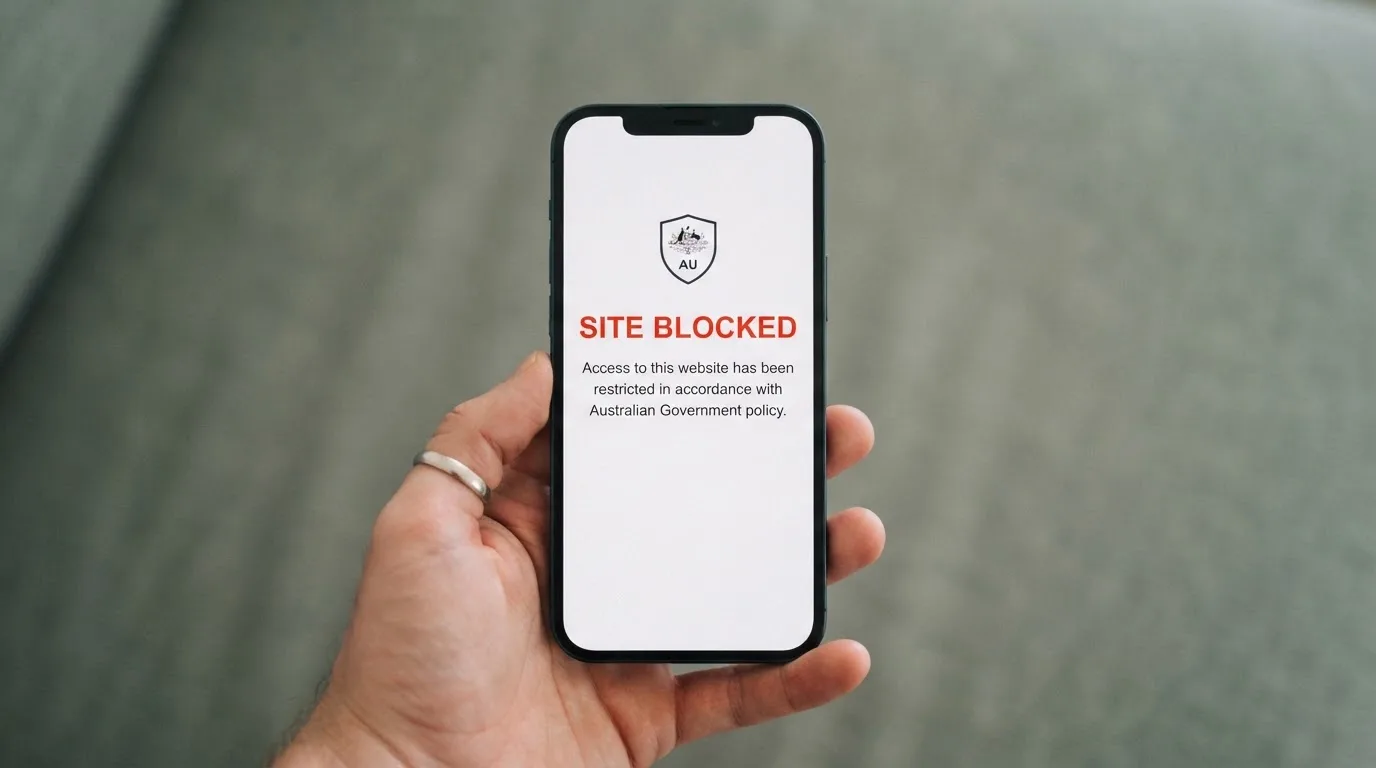
Enforcement is the ACMA’s job. The agency investigates complaints, issues formal warnings, and asks Australian internet service providers to block offending sites. A formal warning is the first step in that escalation. A block request is later, after the warning has not produced a change. From the first blocking request in November 2019 to the snapshot taken in June 2026, the ACMA reported 1,751 illegal gambling and affiliate-marketing websites blocked and more than 230 unlicensed services having left the Australian market since 2017. The pace has not slowed. The June 2026 round alone added twelve names — 7Signs, ChromaBet, Donbet, Duospin, Freshbet, Slots Gem, Jacks Club, Lucky Start, Pointsbetz, Spinrise, Vinyl Casino and Wildsino — to a list that keeps growing.
What is licensable in Australia is wagering on races and sport before the event, lotteries and keno. In practice the Northern Territory Racing and Wagering Commission does most of that licensing — fifty-two online bookmakers, including Sportsbet, Bet365 and Ladbrokes — even though the commission has no full-time staff and meets once a month in Darwin. Online casino is not on that list. The legal floor for active sport in-play is also outside it.
The Interactive Gambling Amendment (Gambling Reform) Bill 2026, which passed Parliament on 19 August 2026, adds advertising and inducement measures that commence on 1 January 2027. On a 2026 page that is law with a future start date, not law in force today. Worth noting for what comes next; not the rule a reader acts under tonight.
The payments stack an Australian punter actually meets
A page on payout speed has to start with the rails, because the rail decides the ceiling. Three of them sit inside Australia: Osko via the New Payments Platform, PayID, and same-day EFT. A fourth — BPAY — sits beside them as a deposit and bill-payment service rather than a payout destination. Offshore operators sitting outside Australia can only offer whatever cards and e-wallets a player is willing to push money through; the inbound leg of an Australian player’s deposit is unconstrained, the outbound leg of an Australian player’s withdrawal is what this section is about.
Osko and the New Payments Platform
Osko is the instant-transfer service that sits on top of the New Payments Platform, the real-time settlement system that went live to the public on 13 February 2018. A bank transfer between participating Australian banks using Osko arrives in under a minute, twenty-four hours a day, including weekends and public holidays, whether the payer addresses it to a BSB and account number or to a PayID. Over one hundred Australian financial institutions participate. New Payments Platform Australia — now part of Australian Payments Plus after the 2021 merger authorised by the ACCC — runs the show; its shareholders include the Reserve Bank of Australia and the major banks. The platform’s monthly outages are capped at two minutes, which is the operational discipline that lets a payment land on a Saturday evening rather than queue until Monday.
The speed is real. What Osko does not do is identity review. That belongs to the operator.
PayID
PayID is the addressing layer on top of Osko and ordinary NPP transfers. A PayID can be a mobile number, an email address, an organisation identifier or an ABN, and it resolves to a single account at the holder’s bank. By April 2025 more than twenty-five million PayID identifiers had been registered on the platform.
The feature that matters most for a payout page is the name display: paying to a PayID shows the name of the account holder before the transfer is sent. Australian Payments Plus — the operator of both Osko and PayID — warns that being asked to transfer money to a PayID on an illegal gambling site is almost certainly a scam signal. The reason is mechanical. A legitimate operator has nothing to hide behind a PayID match. A site asking a punter to send funds to a PayID whose registered name does not match the brand is asking for the money to disappear.
BPAY
BPAY is the bill-payment service that has run inside Australian online banking since 18 November 1997. A payer enters the Biller Code and the Customer Reference Number printed on the bill and the funds arrive at the biller the next business day. It is available in the online banking of over 140 banks and credit unions and is offered by over 95,000 businesses. The shareholders of its parent company Cardlink Services Limited are the four major banks — ANZ, Commonwealth Bank, National Australia Bank and Westpac — and the service has been part of Australian Payments Plus since 2021.
BPAY’s role on this page is small. It is one-way — a payer pushes money to a biller — and it is a deposit rail rather than a payout rail. An offshore casino that offers BPAY as a deposit method is letting the player fund the account in Australian dollars via a bill-payment flow; the casino then has to find a way to return winnings, which is where the same rails reappear in reverse. Worth knowing for the deposit side; less relevant to the payout question.
Cards, wallets and the credit ban
Australian-licensed online wagering services cannot accept payment by credit card or other credit-related products, a restriction that took its current shape with the 2023 amendments to the Interactive Gambling Act and that, since 11 June 2024, also covers linked digital wallets such as Apple Pay on the same card. Penalties for licensed operators taking credit-tainted deposits run up to A$247,500 per breach. An offshore casino is outside this regime, but the practical effect is that the same card that funded deposits on a licensed sports book will not fund a deposit on a credit-tinged path elsewhere — the bank, not the regulator, will refuse the transaction.
Two of the big-four Australian banks apply their own gambling blocks on top of that, and the implementation matters. Westpac’s gambling block refuses authorisation of transactions registered under the merchant category code “Betting/Casino Gambling” on eligible personal credit and debit cards. ANZ’s equivalent, activated in the ANZ app, also blocks gambling transactions made through a digital wallet such as Apple Pay on an eligible card — not just on the physical card — and, once turned on, requires a 48-hour waiting period to remove. Commonwealth Bank lets customers apply a gambling lock to eligible cards through the CommBank app, with the same caveat: the bank says it cannot guarantee that every gambling-related purchase will be stopped. Each bank, in its own words, warns that some non-gambling transactions might be blocked in error.
The credit ban, the merchant category filters and the in-app gambling locks are three layers doing different jobs. The credit ban is a law. The merchant category filter is a card-network rule that lets a bank decline by category. The in-app lock is a customer-driven setting. An Australian punter who finds a deposit failing on a perfectly ordinary card is more often meeting the third of those than the first.
Apple Pay, Google Pay and Samsung Pay
Apple, Google and Samsung Pay collectively accounted for around 45% of all card payments in Australia by number at the end of 2025, which makes the digital-wallet question a deposit question for almost half the card-using market. Apple does not charge consumers fees for using Apple Pay in stores, online or in apps — any surcharge comes from the merchant’s card-processing cost, not from Apple. Transaction limits and PIN requirements for Apple Pay are set by the card issuer or by the merchant, not by Apple itself.
The relevance to a payout page is the chain of attribution. A digital wallet sits in front of a card. The card sits behind a credit or debit product. The product sits behind the bank. The same chain decides whether a gambling transaction is permitted: where the underlying product is credit, the wallet transaction is credit; where the bank has a gambling block on the card, the wallet transaction is blocked. Apple Pay itself does not decide. The card and the bank do, by reference to the merchant category and the product type.
American Express, separately
American Express runs a three-party scheme rather than the four-party model that Visa and Mastercard use: it issues the card and processes the transaction itself, which is why it sits outside the Reserve Bank of Australia’s July 2025 surcharge review. The review proposes removing surcharges on eftpos, Mastercard and Visa transactions and explicitly leaves American Express outside the proposed ban. For a player, the practical difference is that surcharging on Amex is not under review the same way, and an Amex-funded deposit or refund is the one path where the surcharge question has not been reopened. The company’s own history is older than most of this page: founded in 1850 as a freight-forwarding business, Amex issued its first charge card on 1 October 1958.
Crypto, anonymity and what those words actually mean
A reader searching for “fast payout crypto casino” or “bitcoin casino fast payout” is asking two questions at once. The first is whether cryptocurrency settles faster than the Australian banking rails. It can. The second is whether a crypto route is anonymous. It mostly is not.
Settlement on a major blockchain is a function of the chain’s block time and of confirmations, and either can be faster or slower than Osko depending on the coin and the congestion. Bitcoin at typical fee levels clears in under an hour, Ethereum’s L2s in seconds to minutes. The throughput is not in doubt; the regulatory treatment is. The Interactive Gambling Act regime bans credit and credit-related products as payment for licensed online wagering; the legal status of cryptocurrency as a deposit method for offshore operators has been the subject of enforcement action in other jurisdictions but, in Australia, the practical barriers the ACMA uses are the IGA itself and the blocking of sites, not the banning of coins. AUSTRAC’s threshold-transaction-report rule applies to physical cash transfers of A$10,000 or more; ordinary electronic bank transfers are not subject to that per-transaction reporting rule, regardless of the amount. Crypto transfers sit in a different reporting frame.
Anonymity is a weaker claim than it used to be. Blockchain analysis is a routine part of any serious operator’s compliance posture; address clustering, fiat on- and off-ramps and chain-analytics vendors mean that the practical anonymity of a casino wallet is the practical anonymity of a public ledger that anyone can read. A punter who treats a crypto deposit as a way to hide a gambling habit from a bank statement is gambling with a regulation. The path that looks opaque from the bank side is wide open from the chain side.
Two consequences follow. A crypto withdrawal that arrives in minutes is still a withdrawal from an operator that the ACMA can have blocked at the domain level; the speed of the rail does not save the balance if the site disappears. And a crypto deposit to an offshore casino still has to come from somewhere, and the source-of-funds trail at the on-ramp — a bank transfer into a local exchange, the exchange’s own KYC, the chain analytics on the other side — is the place an Australian punter’s anonymity, in practice, runs out.
Where the ACMA has acted, and what that means
The table below is not a ranking. It is the ACMA’s own record of formal warnings issued under the Interactive Gambling Act 2001 to operators offering prohibited online casino games to Australians. Each row is a brand the regulator has named in writing.
| Brand | ACMA action and date | Operator named by the ACMA | Subject support |
|---|---|---|---|
| RocketPlay | Formal warning, March 2026 (earlier May 2022 over Dama N.V. brands) | Pulsup Ltd | listings-only (Gambling Insider) |
| Level Up Casino | Formal warning, May 2022 | Dama N.V. | listings-only (Westpac) |
| Woo Casino | Formal warning, March 2025 | Dama N.V. | — |
| Spirit Casino | Formal warning, May 2025 | Dama N.V. | — |
| National Casino | Formal warning, July 2025 | Consolutetish S.R.L. | listings-only (acma.gov.au, austrac.gov.au, betstop.gov.au) |
| Bizzo Casino | Formal warning, July 2025 (earlier 2022 over TechSolutions) | Consolutetish S.R.L. | listings-only (Gambling Insider) |
| Ignition Casino | Formal warning, July 2025 | Bamboo Media | — |
| Instant Casino | Formal warning, February 2025 | EOD Code SRL | listings-only (EcoPayz, PayID) |
| Jackbit | Formal warning, April 2026 | Ryker B.V. | — |
| Casino Intense | Formal warning, April 2025 | Sterplay Holding Ltd | listings-only (austrac.gov.au, betstop.gov.au, Gambling Insider) |
| Sky Crown | Formal warning (date as published) | Hollycorn N.V. | — |
A few things fall out of that record. The Dama N.V. cluster recurs across multiple warnings and across multiple years, which is one of the reasons the ACMA has escalated from warnings to blocking requests over several of those brands. The same operator appearing under different brand names is not a fresh market; it is the same market with a different logo. The Consolutetish S.R.L. entry for National Casino and Bizzo Casino in July 2025 brought a second warning for Bizzo Casino, whose 2022 warning went to a different corporate entity — TechSolutions (CY) Group Limited and TechSolutions Group N.V. — at an earlier address.
The right reading of the table is not “which of these is least bad.” It is the regulator’s own written acknowledgement that each of these brands was, at the time of warning, offering a product that cannot be lawfully offered to a person in Australia. The detail that varies between rows — the operator named, the date, whether the brand had been warned before — is what changes the texture of the warning, not its substance.
The arithmetic behind the block list
The ACMA’s blocking rate shows the intensity of the regulator’s intervention. From the first blocking request in November 2019 to the snapshot reported in June 2026, the regulator asked Australian internet service providers to block 1,751 illegal gambling and affiliate-marketing websites. That figure covers both gambling sites and affiliate-marketing sites pointing at them, which is the ACMA’s own frame; reading it as a count of casino brands alone overstates the brand side of the count.
Spread over the roughly eighty months between November 2019 and the June 2026 snapshot, the rate is in the band of roughly twenty to twenty-two sites blocked per month on average. That average hides the shape of the curve. The pace was slow at the start of the regime, when the first few block rounds each covered a handful of sites, and faster later, with single rounds clearing twenty or more. A reader who wants a single figure gets the cumulative one (1,751 sites since November 2019) and the average rate that falls out of it (a band, not a point). The cumulative figure is the regulator’s; the rate is the arithmetic.
Two limits on the figure deserve stating. The first is that the ACMA’s reported number rounds in different places at different times; the 1,751 figure is the snapshot, not the running tally. The second is that not every blocked URL is a casino — affiliate sites, mirror sites and rebrands inflate the count. A block request over one brand can clear several domains.
Responsible play, and the tools that work where they bind
The product on this page is illegal in Australia. The responsible-gaming tools that bind it are limited, and that limitation is itself the lesson.
BetStop, the National Self-Exclusion Register, went live in August 2023 and lets a person register once to be excluded from every Australian-licensed online and phone wagering service. The register is binding on its members — those services cannot accept a deposit or place a bet from a registered person. The register does not bind an offshore casino; BetStop is a domestic arrangement, and an operator that has no presence in Australia has nothing to bar. A punter who has registered with BetStop is therefore protected against the licensed Australian sports and race books and is not protected against every site this page lists. The two halves of that sentence are the entire shape of the protection.
The National Gambling Helpline on 1800 858 858 is free, twenty-four hours a day, with chat at Gambling Help Online. The helpline is the part that binds whether or not the operator does. State and territory gambling help services sit beside it. None of those services will refund a balance on an offshore site, none of them will negotiate a withdrawal, and none of them will make a Curacao regulator move. They will talk, and they will point at financial counselling and at the tools the registered brands are required to honour.
A few practical points follow. The ACMA’s block rounds happen because complaints have been made or because the regulator’s monitoring has caught a new entrant. A punter who sees a brand on the ACMA’s list and still opens an account has, by that point, very little Australian recourse. A punter who has registered with BetStop and notices a deposit going through anyway is seeing an offshore site — the register’s design assumes the bind runs only the other way. The responsible-gaming section of a page on prohibited products is, by construction, the place to talk about the tools that bind and the tools that do not.
The brands the ACMA has named
The brands below are the same brands the table above records, treated one at a time. The point of each write-up is what the ACMA’s record shows, what a reader comparing these brands can take from it, and the one thing each block ends on: a verdict on what the regulator’s file means for a punter in Australia.
RocketPlay
Pulsup Ltd was the operator named in the ACMA’s formal warning over RocketPlay in March 2026. The brand had already surfaced under Dama N.V. in the May 2022 warning covering six brands, including Rocketplay itself. Two warnings over one brand, three years apart, in front of two different corporate parents, is not the shape of a business that has moved out of the Australian market. The ACMA’s record says it has not. The brand belongs to the prohibited end of any list an Australian reader is looking at, and the prior warning makes the second one harder to read as a one-off.
Level Up Casino
Level Up Casino was one of the six Dama N.V. brands caught in the May 2022 warning alongside Bambet, Dazard, Rocketplay, Wild Tornado and Cobra Casinos. The cluster matters: a regulator does not name six brands in one warning without believing they share more than a payment processor, and the ACMA’s subsequent warnings over other Dama N.V. brands (Woo Casino in March 2025, Spirit Casino in May 2025) confirm that the cluster has not dissolved. The verdict on Level Up Casino is the verdict on the cluster: the regulator has the operator’s address, the regulator has the brand list, and the regulator has had four years to act.
Woo Casino
Woo Casino drew the March 2025 warning over Dama N.V., four years on from the operator’s first formal warning. The earlier warning was over a different brand list; this one narrows onto Woo Casino specifically. The ACMA’s pattern over Dama N.V. — a 2022 cluster warning, then a series of single-brand warnings over 2025 and into 2026 — is the regulator tightening the screw one brand at a time. Woo Casino is one of those turns.
Spirit Casino
Spirit Casino drew the May 2025 warning, also over Dama N.V., two months after the Woo Casino warning. The pattern is the same: single-brand, single-operator, one year apart. The regulator’s record says the operator was warned and warned again, with the same legal address and a different brand on the front. Spirit Casino’s own standing for an Australian reader follows from Dama N.V.’s, not from itself.
National Casino
National Casino drew a July 2025 warning over Consolutetish S.R.L., the same month as the Bizzo Casino warning. The two warnings share an operator and a date. The brand had not been on the ACMA’s earlier lists, which means this was a fresh warning rather than a renewal — the regulator’s first formal letter to Consolutetish S.R.L. over National Casino specifically. The verdict is the same shape as the cluster: a regulator that has just discovered a brand at this address has the brand on file and is unlikely to need a third warning to act on it.
Bizzo Casino
Bizzo Casino carries two warnings and two different corporate parents: the earlier 2022 warning over TechSolutions (CY) Group Limited and TechSolutions Group N.V., and the July 2025 warning over Consolutetish S.R.L. The brand has changed hands. The product has not. Two operators, two addresses, one brand on the regulator’s list, and the second operator warned in the same letter as National Casino. A brand that has been warned once and rebranded once is the same brand with a different signature on the front.
Ignition Casino
Bamboo Media was the operator named in the July 2025 warning over Ignition Casino. Ignition had not appeared on the earlier ACMA lists carried by this research, so the warning reads as a first-time formal action against this operator at this brand. That does not make the brand any more lawful than the others on this page; it makes the regulator’s file on it one warning thinner, which is a different and weaker kind of reassurance.
Instant Casino
EOD Code SRL drew the February 2025 warning over Instant Casino. The brand had not surfaced on the ACMA’s earlier lists in this research. First-time warnings are the regulator’s quietest kind — no prior escalation, no history of action — and a first warning is, by construction, the first step of a process the ACMA has shown it is willing to keep walking.
Jackbit
Ryker B.V. drew the April 2026 warning over Jackbit and, in the same letter, CasinOK. The pairing matters: a single warning covering two brands at one operator is the regulator treating the operator as the unit, not the brand. A punter who sees Jackbit on the regulator’s file today is seeing one of two names the same operator is being warned about.
Casino Intense
Sterplay Holding Ltd drew the April 2025 warning over Casino Intense. The brand had not been on the ACMA’s earlier lists. The verdict is the same shape as the first-time warnings elsewhere on this page: a fresh entry, a single warning, and a regulator that has shown it escalates from warnings to blocks when the warning is ignored.
Sky Crown
Hollycorn N.V. drew the warning the ACMA published over Sky Crown and, in the same correspondence, Blue Leo. The date of publication sits at the older end of this research’s record. Two brands, one operator, one letter — the same shape as the Jackbit and CasinOK pairing and the same implication for an Australian reader.
What an Australian punter is left with
The honest answer to the search this page is built around is that the product asked for cannot be lawfully supplied in Australia, and the regulator’s record on the brands most often supplied with it is a long one. The honest follow-up is what an Australian reader who actually wants to play games of chance can lawfully do.
Three doors are open. The first is the licensed clubs and hotels of each state, where pokies operate under state-level regulation. The second is the land-based casinos, which are licensed separately in each state and territory and which have been the legal home of casino gaming in Australia since well before the Interactive Gambling Act. The third is the licensed wagering market — sports and race bookmakers licensed by the Northern Territory Racing and Wagering Commission — for sports and race betting before the event, with lotteries and keno as a separate category.
None of those is an “online casino fast payout” in the sense the search phrase imagines. They are not the same product and they do not run on the same rails. They do, however, run under a regime that requires identity checks, allows complaints to be made to the relevant state regulator, and binds the operator to the responsible-gaming tools the ACMA and the state bodies require. A page that pretended otherwise would be a page that misrepresented the strategic environment to the reader it claimed to serve.
What changes in 2026
The headline change is the Interactive Gambling Amendment (Gambling Reform) Bill 2026, passed 19 August 2026, with advertising and inducement measures commencing 1 January 2027. The substantive prohibition on offering online casino games to Australians was already in force; the bill’s 2026 effect is the new framework around advertising, inducements and the related enforcement tools. A reader reading this in 2026 is reading under the current IGA regime; a reader reading this after 1 January 2027 will be reading under the new advertising rules as well.
The RBA’s July 2025 surcharge review, proposing removal of surcharges on eftpos, Mastercard and Visa and explicitly leaving American Express outside, is the other open piece. If implemented in 2026 or after, the practical effect for gambling transactions is small — gambling transactions are not where surcharges were the obstacle — but it is worth noting because it changes what an Australian consumer sees on every other card transaction, and a reader who notices that change is hitting the same review.
The credit-card ban on licensed wagering, in force since 11 June 2024, is the piece of the picture that does most of the work in 2026. The card network, the bank and the operator each play a part, and the in-app gambling locks from Westpac, ANZ and Commonwealth Bank are the customer-facing layer on top. Each of those locks carries a bank-side caveat: not every gambling transaction will be blocked, and some non-gambling transactions might be blocked in error. The right reading is that the locks catch most of what they are aimed at and miss some of the rest, and that the legal prohibition is doing the work for the transactions the locks miss.
A short note on the figures used here
The figures in this page come from the ACMA’s published formal warnings and blocking rounds, the Reserve Bank of Australia’s payments publications, Australian Payments Plus’s operator pages for Osko and PayID, and the relevant big-four Australian banks’ own support pages for their gambling-block features. Where a fact is sourced from an external outlet — the H2 Gambling Capital 2025 estimate of A$3.9 billion a year in losses to illegal gambling sites, the 1,751-site cumulative block count from the June 2026 round, the April 2025 PayID registration count — it is reported with the source attached. Where a fact is contested — the practical anonymity of cryptocurrency deposits, the exact share of Australian gambling going through illegal channels — it is reported as contested rather than pinned down.
What this page has not done is name a single offshore brand as a recommendation, quote a bonus, or print a working code. The reasons are in §7 of the underlying research: online casino games cannot be licensed in Australia, and the only sources for bonus terms were affiliate-marketing pages. Both reasons are reasons the page is built the way it is.
Frequently asked questions
What counts as a fast payout time for a casino transaction?
A useful definition splits the rail from the operator. The rail — Osko via the New Payments Platform — settles inside a minute between banks, twenty-four hours a day. The operator’s internal processing sits over the top and is where most of the hours in any “fast payout” promise come from. A realistic working figure for an Australian bank transfer is the rail’s time plus whatever processing the operator runs.
How quickly does an Osko bank transfer arrive between Australian banks?
Under a minute, including weekends and public holidays, addressed either to a BSB and account number or to a PayID. The service has run on the New Payments Platform since the platform went live to the public on 13 February 2018. Over one hundred Australian financial institutions participate, and the platform’s monthly outage budget is capped at two minutes.
Is it legal for an online casino to offer fast payouts to players in Australia?
No. The Interactive Gambling Act 2001 prohibits offering online casino games, online pokies or in-play wagering to a person in Australia. A Curacao or other offshore licence does not change that. The ACMA enforces the prohibition through formal warnings and blocking requests; an offshore brand with an Australian-facing site is operating outside the Australian rules regardless of the payout promise.
Do faster payout claims make an offshore casino any safer to use?
No. The speed of a payout rail is the speed of the rail. Whether a withdrawal is actually paid, in what currency, to which account, on which side of an identity re-check, is a separate question and is the question an offshore operator’s licence does not answer. An Australian punter using an offshore casino has no domestic complaints body and no recourse if a withdrawal is refused.
What payment method typically settles quickest into an Australian bank account?
For inbound transfers from an Australian-domiciled source, Osko via the New Payments Platform, addressed either to BSB and account number or to a PayID, with under a minute typical. For an offshore payout, the Australian side is still Osko once the funds reach a participating Australian bank; the offshore operator’s processing over the top is what determines how long the overall payout takes.
Where can someone check whether a payment provider is genuinely trustworthy?
For an Australian bank or a domestic payments service, the Australian Prudential Regulation Authority’s register of authorised deposit-taking institutions and Australian Payments Plus’s participant pages. For an offshore operator, no Australian register is meaningful; the relevant register is the ACMA’s formal-warning and blocking list, and a brand on it is a brand the regulator has named. For a payment provider with no Australian authorisation, the absence of a domestic register is itself the answer.