
Online pokies no deposit bonus free spins in Australia 2026
This page compares public claims about online pokies no-deposit free-spins offers side by side, purely to show how they differ, not to rank or recommend any offshore operator. The fundamental point is the one that has to be stated first: no state or territory in Australia licenses an online casino to offer online pokies. Every brand reviewed here sits outside the Australian regulatory frame, and most have already drawn a formal warning from the ACMA. That is not a footnote, and it shapes everything that follows.
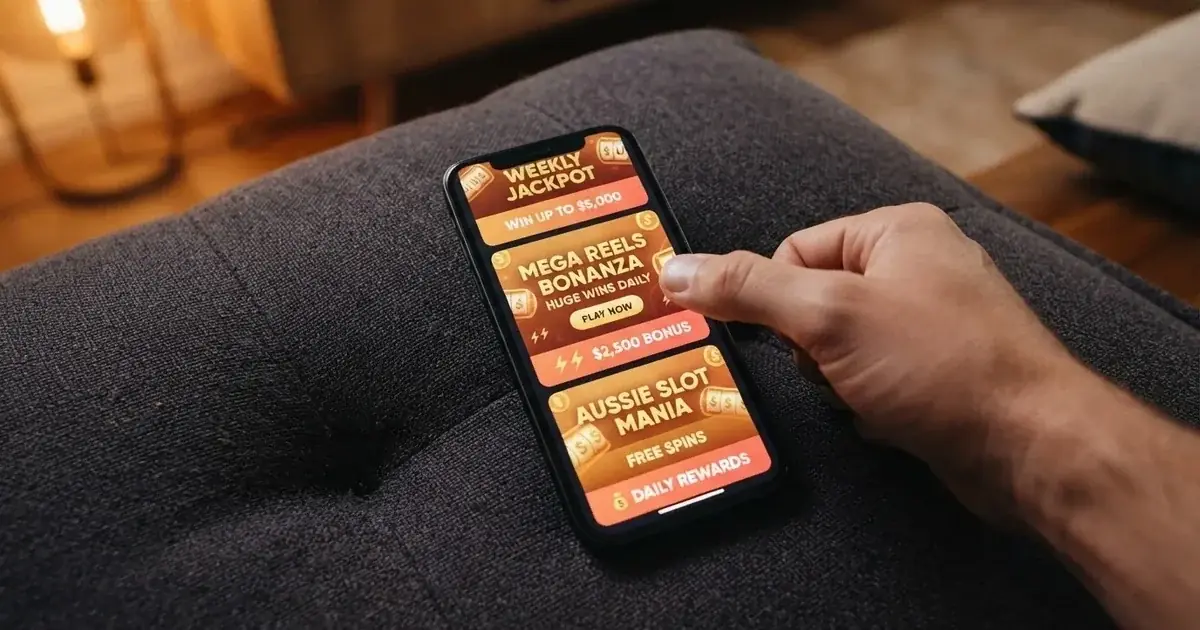
Current as of 17 October 2026, checked against the Australian Communications and Media Authority’s register of formal warnings and blocking actions.
Table of Contents
- The way this page reads
- Responsible play when the offer itself is unlicensed
- How payments work for these offers in practice
- The free spins themselves — what the offers typically look like
- The eleven brands the ACMA has formally warned
- The legal frame Australians actually face
- The broader Australian pokies picture behind the offer
- Where this leaves the reader
- Frequently asked questions
The way this page reads
A reader who searched this term is, in nearly every case, weighing whether the offer in front of them is worth a closer look. The two questions that genuinely matter are: how many spins are typical, and what does it cost to convert them into something a player can actually withdraw? Everything in this article answers one of those two questions, or it answers the question most readers have not yet asked — whether the site offering them is even legal for an Australian to use.

The structure is unusual on purpose. Responsible-gaming material leads, not because it is the most searched topic, but because the legal position of these offers changes what “responsible” actually means here. Payments and bonuses come next, then a comparison of the eleven brands the ACMA has formally warned. The overview sits where it does because the legal and the practical pieces already establish what an offer is, and the overview ties them together. Legality closes the body.
Responsible play when the offer itself is unlicensed
The mechanics of staying safe do not change because the offer is offshore, but the tools do. A site sitting outside the Interactive Gambling Act 2001 is not connected to BetStop, the National Self-Exclusion Register that went live in August 2023, so self-excluding through BetStop does nothing to block a later visit to an offshore casino. The Australian-licensed services that do honour BetStop — sports and racing bookmakers such as Sportsbet, Bet365 and Ladbrokes, all licensed through the Northern Territory — operate under a different rulebook and do not offer casino pokies at all.
A person who feels their play is sliding into harm can reach the National Gambling Helpline on 1800 858 858 — free, 24/7, with chat support at Gambling Help Online. Both services are staffed for the entire population of Australia, including anyone who has been playing on unlicensed sites. The relevant difference between licensed and unlicensed operators is what those services can do for a player afterwards: a licensed operator has a complaints body behind it and a duty to act on a self-exclusion; an offshore operator has none of these, and a balance left on the account when a site is blocked is, in practice, gone.
The framing of personal rules is the same regardless of where a person plays. Set a budget before logging on, decide in advance what counts as a good session, and treat the offer itself — the spin count, the wagering requirement, the cashout cap — as the limit on what can be lost, not as a starting point for what might be won.
A reader with a serious concern about their own play or a family member’s can also speak with their GP, who can refer on to specialist gambling counselling in every state and territory. None of this changes the legal analysis below. It changes what the legal analysis costs a person who ignores it.
How payments work for these offers in practice
The payment side of an offshore no-deposit free-spins offer is, on the face of it, the easiest part: no deposit means no payment. That changes the moment the spins are converted to bonus funds and the player wants to withdraw. Most of these offers require a deposit — usually via the same methods — before any winnings are released, and it is on that deposit that the marketing of the offer hinges.
The Australian rules apply to the operator’s side of the transaction, not the player’s. Since 11 June 2024, licensed Australian wagering services have been barred from accepting credit cards, credit-related products and digital currency, with penalties of up to A$247,500 per breach. The permitted routes for a licensed operator are debit card, bank transfer, PayID/Osko and BPAY. An offshore site asking an Australian customer for a credit card or a crypto deposit is, by definition, not running on those rules — the request itself is a signal that the operator is operating outside Australian consumer protection.
The practical impact for a player comes at withdrawal. If a player has deposited with the same e-wallet or crypto wallet they used at a different site, the offshore operator’s payment team has no obligation to return the money through any channel the player can dispute. A licensed operator faces a regulator that can compel a payout. An offshore one faces only its own terms and conditions, and the timeframe for withdrawals quoted in those terms is best read as a marketing figure rather than a guarantee. Player-to-player payment networks — POLi, for instance — have been used by some operators as a deposit route in the past, but a payment method’s availability on a website is not the same as a payment method’s protection of the user behind it.
The honest summary is that the speed and convenience of any payment method marketed by an offshore site is the thing the operator controls, while the protection of the funds in that method is something the operator’s regulator would control if there were one. There is not one.
The free spins themselves — what the offers typically look like
A “no deposit free spins” offer, as marketed on offshore sites aimed at Australians, is a fixed bundle of spins credited to a new account on registration, with no deposit required before the spins are played. The number is small by design — typically between 10 and 50 spins — because the operator’s exposure on a no-deposit offer is the maximum win the player can extract from the bundle, and a small bundle means a small potential liability. A 20-spin offer at A$0.10 per spin is a maximum theoretical exposure of A$2.00 in spin cost, before any of the marketing’s other conditions are applied.
The restrictions attached to those spins are where the actual cost sits, and they are consistent enough across the category to be worth knowing in advance.
The first restriction is the game list. The free spins are almost never usable on every pokie the casino offers. They are tied to one specific title — sometimes two, sometimes a small handful — chosen because the operator already knows the title’s return-to-player and can price the offer against it. A player who wants to play a particular game they like will often find the bonus spins do not work on it.
The second restriction is the wagering requirement. Any winnings from the spins land as bonus funds, not cash, and bonus funds are converted to withdrawable cash only after a multiple — most commonly between 35× and 50× — has been wagered. A$1 won from free spins on a 40× requirement means A$40 has to be wagered before the A$1 becomes withdrawable. The mathematics of that, and what it asks of a player in time, is the calculation that closes this section.
The third restriction is the cashout cap. Most no-deposit offers include a maximum withdrawable amount from the bonus, regardless of how much the wagering requirement is met. The cap is usually a low figure — A$50 to A$100 is common — and it applies to the winnings from the spins, not to the deposit the player makes afterwards. A player who clears the requirement and has a balance of A$140 on the bonus side will typically see A$90 of that — the winnings above the cap — removed at withdrawal.
The fourth restriction is the deposit-gating. Even where winnings exist and the wagering requirement is met, the operator will not release the funds until the player has made a deposit, verified identity and sometimes played through the deposit once. The deposit is, in effect, the price of unlocking the funds already won.
How long the bonus takes to clear
The arithmetic behind the offer is the figure the marketing never states. Take the standard offer shape: 20 free spins at A$0.10 each, with 40× wagering on winnings and a A$50 cashout cap. The total bonus balance created depends on what the spins win; assume the player runs the spins at the title’s stated return-to-player. For a pokie with a 96% RTP — a fair published figure for an offshore pokie — the average return from 20 spins at A$0.10 is A$1.92 in winnings. The wagering requirement on that A$1.92, at 40×, is A$76.80 in qualifying bets. At A$0.10 per spin, that is 768 spins. Each spin takes about five seconds, so the time cost is roughly 3,840 seconds — just over an hour of continuous play — to convert a A$1.92 average return into the bonus balance that the cashout cap will then trim.
The cashout cap cuts the other direction. Even on a hot streak that returns the full maximum theoretical A$2.00 from the spins and adds further winnings during wagering, only A$50 of any converted balance is withdrawable. The cap is the number that stops mattering once any reasonable session is added, because few players convert a no-deposit bonus into more than the cap. What stays meaningful is the wagering requirement, because the requirement determines whether the cap is reached at all.
The honest reading of an offer like this is that the time-cost of clearing it is roughly an hour, the expected return is under A$2 in average play, and the maximum cashout is A$50. None of those numbers is a bargain. They are the costs the marketing language hides by leading with the spin count.
The eleven brands the ACMA has formally warned
The Australian Communications and Media Authority publishes formal warnings when it has reasonable grounds to believe an operator is providing prohibited interactive gambling services to Australians. The warnings are public, named, and date-stamped. Every brand below has at least one. None of the eleven has an Australian licence; none can obtain one, because the category of licence does not exist.
The brands are presented in the order the ACMA’s register places them, and the comparison across them is the subject of a single table. The legal status is identical for every one. The differences lie in the operator behind the brand, the date of the warning, and the additional actions the ACMA has taken since.
Brand-by-brand read
RocketPlay
The most recent ACMA action against RocketPlay was a formal warning issued in March 2026 to Pulsup Ltd, the operator behind the Rocketplay.com.au domain. Earlier, in May 2022, the ACMA warned Dama N.V., the operator that ran the brand at that time, alongside five other Dama casinos. The current operator is a different legal entity to the earlier one; the brand is the same, and the legal status of the service to Australians is the same. The site is not connected to any Australian consumer protection, and any winnings held on the site sit outside the Australian regulatory frame.
RocketPlay is the brand most recently named by the ACMA. The recency of the action does not change the offer on the table for an Australian player; it confirms the regulator’s view that the brand is one of the current operators it considers worth addressing.
Level Up Casino
Level Up Casino is one of the six Dama N.V. brands the ACMA warned in May 2022. Dama N.V. was the named operator at that time, and the warning covered Bambet, Dazard, Level Up, Rocketplay, Wild Tornado and Cobra Casinos. The same legal point applies: a brand whose operator the ACMA has formally warned is not a brand licensed to offer its service to Australians. The site displays gaming licences from other jurisdictions, which are licences for those jurisdictions and not for Australia.
The brand’s marketing material lists a range of pokies providers, and the ACMA’s action is the only firm date attached to it in this comparison.
Woo Casino
Woo Casino drew a further Dama N.V. warning in March 2025, distinct from the May 2022 group action. The warning is recent enough to indicate the ACMA considered the brand’s Australia-facing activity current. The marketing language the brand uses to attract sign-ups is unchanged from the typical no-deposit free-spins pattern — a bundle of spins on registration with the standard restrictions.
Woo is the brand whose operator has been warned twice, in two different years. The pattern of repeat warnings against the same operator is the regulator’s record of an ongoing presence rather than a one-off.
Spirit Casino
Spirit Casino drew a further Dama N.V. warning in May 2025, the most recent of the post-2022 Dama actions in this set. The warning was issued three years after the original group action, and the gap matters less than the recurrence — the operator continued to make the brand available to Australians, and the regulator continued to tell it to stop.
Spirit is the brand whose latest warning is closest to the present, in calendar terms, of any in the Dama set.
National Casino
National Casino’s named operator is Consolutetish S.R.L., warned in July 2025. The warning is separate from the Dama actions and shows that the ACMA addresses operators individually rather than by brand family. National Casino’s gaming content is the standard offshore mix of pokies from third-party providers.
National is the brand whose named operator sits outside the Dama group. The change of operator over a brand is itself a feature of the offshore market, not an isolated case.
Bizzo Casino
Bizzo Casino has two warnings attached. The first was a 2022 warning to TechSolutions (CY) Group Limited and TechSolutions Group N.V. The second was a July 2025 warning to Consolutetish S.R.L., the current operator. Two operators over three years, two warnings, one brand — the situation is unusual in this set only in the volume of action, not in the legal standing.
Bizzo is the brand whose operator history shows how the offshore market reassigns brands across operators over time. The player looking at the brand today sees a different legal entity from the one the ACMA warned in 2022.
Ignition Casino
Ignition Casino was named in a July 2025 warning to Bamboo Media. Bamboo Media is a smaller operator name than the Dama group, but the ACMA’s action is on the same legal footing — a formal warning under the Interactive Gambling Act 2001 over a brand offering prohibited services to Australians. The brand is presented as a poker-and-casino site, with the casino side of the offer falling within the prohibited category for Australian players.
Ignition is the brand whose warning was issued to an operator outside both the Dama group and Consolutetish. The warning was not a follow-up; it was a fresh action.
Instant Casino
Instant Casino drew a formal warning in February 2025 to EOD Code SRL. The warning is early enough in the year to be one of the ACMA’s first formal actions of 2025 against an offshore casino brand. The marketing of the brand’s offer emphasises the speed of withdrawals, which is exactly the marketing point the Australian rules do not back, since no Australian regulator stands behind the brand.
Instant Casino is the brand whose marketing emphasises payout speed. That emphasis is the claim on which the offer lives, and the Australian legal frame does not enforce it.
Jackbit
Jackbit is the joint subject of an April 2026 formal warning to Ryker B.V., alongside CasinOK. The warning is one of the most recent in the ACMA’s register and is the action shown in the page’s opening image. The brand’s offer sits within the no-deposit free-spins category that players often search for, and the ACMA’s view is that any such offer from Jackbit to an Australian is a prohibited service.
Jackbit is the brand the ACMA warned in April 2026, alongside CasinOK, and the recency of the warning makes the brand a current example of the regulator’s enforcement.
Casino Intense
Casino Intense drew a formal warning in April 2025 to Sterplay Holding Ltd. The warning is mid-2025, neither at the front nor the back of the year’s actions, and places the brand alongside other 2025 warnings as part of a steady enforcement tempo rather than a single push. Casino Intense has been the subject of Australian-facing marketing for several years, and the warning is the regulator’s most recent response to that marketing.
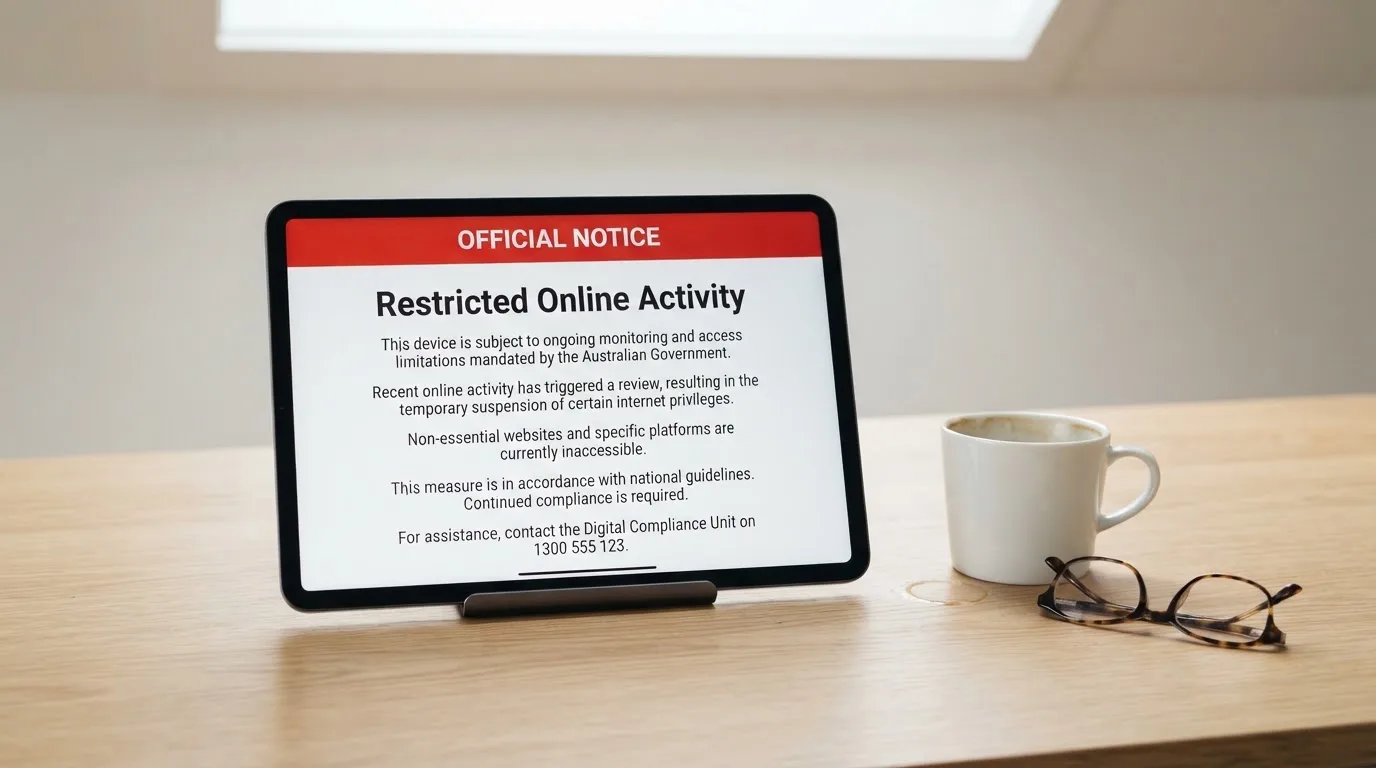
Casino Intense is the brand whose warning is the one referenced in the page’s second image, which was reported in April 2025.
Sky Crown
Sky Crown is the subject of a formal warning to Hollycorn N.V., the operator that ran the brand alongside Blue Leo. The exact date sits within the ACMA’s published register of Hollycorn actions and predates the 2025 cluster of warnings against Dama and Consolutetish brands. Sky Crown’s marketing uses the standard mix of welcome offers and recurring promotions; the legal status of any of them for Australians is the same as the others in this set.
Sky Crown is the brand whose operator, Hollycorn, also runs Blue Leo. The two-brand pattern shows the operator level at which the ACMA’s enforcement bites, rather than the brand level alone.
How the brands compare
The table below sets the eleven brands against the columns the ACMA’s register actually speaks to — the operator named in the formal warning, the date of that action, and whether the research inputs carry any third-party listing for the brand beyond the regulator’s own publication. The legal status of every brand is identical: prohibited service for Australians, with no path to licensing.
| Brand | Operator named by the ACMA | ACMA action and date |
|---|---|---|
| RocketPlay | Pulsup Ltd (Rocketplay.com.au) | Formal warning, March 2026; earlier Dama N.V., May 2022 |
| Level Up Casino | Dama N.V. | Formal warning, May 2022 |
| Woo Casino | Dama N.V. | Formal warning, March 2025 |
| Spirit Casino | Dama N.V. | Formal warning, May 2025 |
| National Casino | Consolutetish S.R.L. | Formal warning, July 2025 |
| Bizzo Casino | Consolutetish S.R.L. | Formal warning, July 2025; earlier TechSolutions, 2022 |
| Ignition Casino | Bamboo Media | Formal warning, July 2025 |
| Instant Casino | EOD Code SRL | Formal warning, February 2025 |
| Jackbit | Ryker B.V. | Formal warning, April 2026 |
| Casino Intense | Sterplay Holding Ltd | Formal warning, April 2025 |
| Sky Crown | Hollycorn N.V. | Formal warning (published September 2022) |
A reader scanning this table will see that the operator named by the ACMA changes frequently, even within a single brand’s history. That is the structural feature of the offshore market: a brand can move from Dama N.V. to Consolutetish to Pulsup, and the brand name persists while the legal entity does not. The Australian regulatory response is to the operator, not to the brand, which is why the ACMA’s register names operators at all.
The dates matter less for ranking than for currency. April 2026 (Jackbit, CasinOK) is the most recent action in the set, and March 2026 (RocketPlay) sits one month behind it. The cluster of 2025 actions — February, March, April, May and July — shows that the ACMA’s enforcement is continuous rather than episodic, and the absence of a warning in a given month does not mean the absence of an Australian-facing offer in that month.
The legal frame Australians actually face
The Interactive Gambling Act 2001, strengthened by the Interactive Gambling Amendment Act 2017, makes it an offence to provide online casino games, online pokies or in-play betting to a person in Australia. The offence sits with the provider, not the player, which is why an Australian can access an offshore site without facing prosecution themselves. The cost sits elsewhere — in the absence of consumer protection, in the inability to compel a payout, in the absence of a complaints body, and in the possibility that the site is blocked while a balance is still on it.
What is licensed is narrower. Online wagering on races and sport placed before the event, lotteries and keno are licensable, in practice through the Northern Territory Racing and Wagering Commission, which regulates 52 of Australia’s online bookmakers. The commission is part-time in staffing terms and meets once a month in Darwin, but the licensing relationship is the legal basis on which the major bookmakers operate. None of those 52 offers online pokies, because the licence category does not exist.
Minimum age is 18 across all interactive gambling. The ACMA investigates breaches, issues formal warnings, and can direct Australian internet service providers to block illegal sites. As of the most recent published figure, 1,751 illegal gambling and affiliate marketing websites have been blocked since the first blocking request in November 2019. The 26 June 2026 blocking round alone added 12 sites to the list — 7Signs, ChromaBet, Donbet, Duospin, Freshbet, Slots Gem, Jacks Club, Lucky Start, Pointsbetz.com, Spinrise, Vinyl Casino and Wildsino — and the pace of enforcement is not slowing.
A blocking rate is the figure that captures what the regulatory action actually does. From November 2019 to June 2026 — roughly 79 months — the ACMA moved from zero blocked sites to 1,751, an average of just over 22 sites per month across the lifetime of the regime. The earliest years were slower; the recent rate is higher, with multiple rounds per year. A reader who treats the regime as a one-off action is reading an outdated picture: the trajectory is one of steadily broader enforcement, and an offshore site that is accessible today is not guaranteed to be accessible tomorrow.
The reforms scheduled for 2027 do not change the legal position of online pokies in 2026. The Interactive Gambling Amendment (Gambling Reform) Bill 2026 passed Parliament on 19 August 2026, with its advertising and inducement measures commencing on 1 January 2027. The advertising measures are aimed at licensed wagering operators, not at the offshore casino market, and the prohibition on providing online casino games to Australians is unchanged.
Tax treatment is the one piece of the legal frame that runs in the player’s favour. Recreational gambling winnings are not assessable income in Australia, and losses are not deductible — except where a person carries on a business of gambling, which the ATO treats as a high bar. The model wording is “check with the ATO” for any individual situation.
The broader Australian pokies picture behind the offer
The reason the offshore market exists at the scale it does is that land-based pokies are deeply embedded in Australian gambling culture. Electronic gaming machines — the venues’ pokies — operate in every state and territory, each regulated separately. In 2020-21, Australians bet almost A$150 billion through gaming machines and lost A$12.18 billion on them. Australia has about 3% of the world’s pub and club poker machines with 0.3% of the global population — a density ratio that explains why a market for offshore spins exists at all.
The state-level data is large. New South Wales had 87,298 gaming machines outside casinos across 2,195 venues as of June 2023, with player losses of A$8.18 billion in 2022-23. Queensland had 21,122 gaming machines in 351 venues in October 2023. Victoria had 26,380 outside Crown Casino in 488 venues in 2021-22, under a 30,000 statewide cap. Western Australia is the outlier — poker machines were banned in pubs and clubs when Crown Perth opened in 1985, and the state remains the only one without a pub and club machine population.
The minimum return-to-player on those machines varies by state: 85% in New South Wales, the Northern Territory, Queensland and most of Victoria (87% at Crown Melbourne); 87% in the ACT and Tasmania; 87.5% in South Australia; and 90% in Western Australia. The figure is the floor — what the machine must return on average over its lifetime — not the figure any individual session will produce.
Tasmania’s planned mandatory pre-commitment cards were delayed until late 2025, with the legislation ending the long-standing Federal Group monopoly over the state’s poker machines. Pre-commitment is the reform most often pointed to as a way to limit harm from pokies in Australia, and the delay is the kind of policy detail that shows why the legal frame evolves slowly even where the political will exists.
The land-based context matters for one reason: an Australian player weighing an offshore no-deposit free-spins offer is, in many cases, weighing it against a category of machine they can already access at a pub or club nearby. The comparison is not between playing and not playing. It is between a venue the state regulates and a site the regulator has told to stop offering its services to Australians.
Where this leaves the reader
The offers exist, the marketing is persistent, and the ACMA’s enforcement is steady but not exhaustive. The arithmetic of a single offer — an hour of play to clear a 40× requirement on a small win, capped at a low cashout figure — does not produce a bargain, and the absence of Australian licensing means there is no regulator behind the figure. The honest reading is that no-deposit free-spins offers at offshore casinos aimed at Australians are, at best, a low-cost way to spend an hour with no realistic cashout, and at worst an entry into an unregulated market where a balance can disappear with a blocking order.
The player’s tools — the National Gambling Helpline, BetStop for licensed services, the ACMA’s register for checking what is being warned — are all in place. The legal frame is clear. The page’s job has been to lay out the offer, the restrictions, the brands involved and the consequences side by side, and let the reader make the call.
Frequently asked questions
How many spins does a typical online pokies no-deposit offer include?
The marketing range across offshore sites aimed at Australians is usually between 10 and 50 spins, with 20 spins a common figure. The spin count is the headline number because it is the only one that does not require a calculator. The restrictions attached to those spins — the wagering multiple, the cashout cap, the deposit-gating — are what determines whether the offer is worth the hour it usually takes to clear.
Do free spins on pokies with no deposit required usually apply to every game, or only selected titles?
Selected titles, almost always. Operators choose the games because they already know the return-to-player on those titles and can price the offer against it. A player whose preferred pokie is not in the eligible list will not be able to use the spins on it, and the eligible titles are typically the casino’s older or higher-margin games rather than its newest releases.
Is accepting free spins from an offshore pokies site something Australians are legally permitted to do?
The Interactive Gambling Act 2001 puts the offence on the provider, not the player. An Australian is not prosecuted for placing bets with an offshore casino. The cost of doing so is not legal but practical — no Australian consumer protection, no complaints body, no guaranteed payout, and the possibility that the site is blocked by an Australian ISP with a balance still on it. The legal prohibition is on the supply side, and the ACMA enforces it on that side.
What’s the difference between a sign-up free-spins offer and a later, separate no-deposit spins offer?
A sign-up offer is tied to the act of registering an account — usually the first set of spins a new player sees, often bundled with a first-deposit match. A later no-deposit spins offer is given to existing accounts, sometimes as a reward for activity, sometimes as a marketing re-engagement tool. The legal status of both is identical for Australians: a prohibited service from an unlicensed operator. The marketing language is different, and the wagering requirements sometimes differ, but the category of offer is the same.
Why do so many of these offers cap the maximum win from the free spins themselves?
The cap exists to limit the operator’s exposure on a no-deposit offer. Without a cap, a player who hit a high-paying bonus round on the very first spin could convert a A$0.10 spin into a multi-thousand-dollar balance, with the operator on the hook to pay it out subject to the wagering requirement. The cap is the operator’s way of pricing the offer — a fixed liability per player — and is one of the standard restrictions across the category. A$50 to A$100 is the common range.
How does a no-deposit free-spins claim interact with an Australian pokies player’s actual odds?
The odds on the spins are set by the game’s return-to-player, which for offshore pokies typically sits around 96%. The spins’ nominal return is small — 20 spins at A$0.10 at 96% is an average return of A$1.92 — and the wagering requirement is applied to that figure, not to a hypothetical maximum. The cashout cap then limits what survives the requirement. The arithmetic of an average session gives a player back a small fraction of the spin value in cash-eligible funds, regardless of the size of the headline offer.