
No-deposit casino bonuses in Australia: what the offer is, what it costs, and why the regulator keeps stepping in
A bonus that costs nothing to claim sounds free, but the word means something narrower than the marketing uses it for, and the legal frame around online casinos in Australia does not bend to fit the offer. This guide unpacks what a no-deposit casino bonus actually is, why every operator advertising one to Australian searchers is unlicensed here, and where the safer choices sit for someone who wants to play.

Current as of 17 October 2026 · Cross-checked against the ACMA’s formal warning register and the Interactive Gambling Act 2001.
Table of Contents
- Responsible play comes first
- Crypto and “no KYC” don’t change the legal position
- The payments story: how fast licensed wagering moves money
- The marketing shelf, side by side
- What a no-deposit bonus actually is
- The legality shelf: what the law actually says
- The blocking rate, in concrete terms
- The operator shelf, brand by brand
- What a person who wants to play can actually do
- Choices the page leaves on the table
- A note on what changed between this page and the last
- Sourcing and how the page was checked
- Frequently asked questions
Responsible play comes first
Start with the line that should end every search of this kind: help is one call away, in Australia, around the clock. The National Gambling Helpline runs free on 1800 858 858, twenty-four hours a day, with online chat through Gambling Help Online. Both services are funded for the purpose and don’t push anyone back toward an offshore site or a particular operator; they exist so people can talk through what’s happening with their betting and decide what to do next.
BetStop — the National Self-Exclusion Register, live since August 2023 — is the second lever. Registering excludes a person from every Australian-licensed online and phone wagering service, which covers sports and race wagering but not the offshore casinos the rest of this page is about. That’s a useful distinction to keep in mind rather than a failure of the scheme: BetStop binds the operators it can lawfully bind, and the operator not on the register won’t enrol you either.

Outside formal systems, the major Australian banks and card issuers offer their own gambling transaction blocks. Westpac’s block works at card level, refusing authorisation on any transaction coded under the merchant category for betting and casino gambling. ANZ runs an equivalent switch in its app, which also catches gambling transactions attempted through a digital wallet such as Apple Pay on an eligible card, and removing that block requires a 48-hour cooling-off period once it has been turned on. Commonwealth Bank exposes a similar lock on eligible cards through the CommBank app. None of these banks claims the block catches every gambling transaction; ANZ explicitly warns of that.
This is the part of the page that exists before the rest of it, because every other section assumes the reader has somewhere to turn. If a no-deposit offer is what’s brought you here, the section above is what sits between you and a bad week.
Crypto and “no KYC” don’t change the legal position
Marketing for offshore casinos leans hard on two phrases — “no KYC” and “crypto accepted” — and pitches them as if together they make a casino harder for regulators to touch. They do not. The Interactive Gambling Act 2001, as amended in 2017, makes it an offence to provide online casino games, online pokies or in-play betting to a person physically in Australia, and the offence runs against the provider, not against how the player paid.
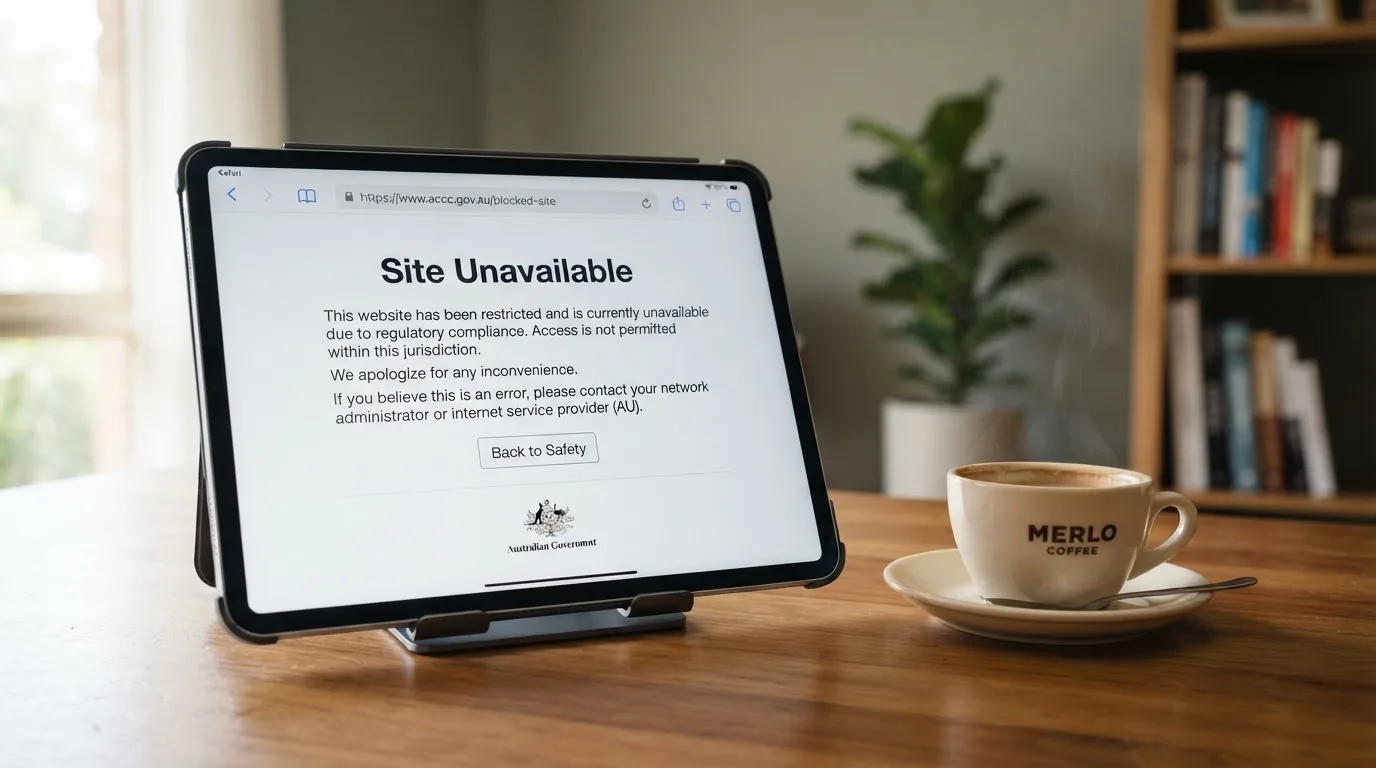
Paying in bitcoin or another cryptocurrency does not turn an offshore casino into an Australian-licensed one. It does not exempt the player from the IGA, and it does not produce a licence where none existed: no state or territory issues one for online casino games. Bitcoin also pulls a person outside the consumer protections a domestic debit-card transaction carries. Chargebacks and the ePayments Code dispute routes that an Australian bank offers on a debit purchase are not available when funds leave the account via a crypto transfer; the transaction finality of a blockchain payment is precisely what makes it attractive to the operator.
The “no KYC” pitch is a marketing reframe of an ordinary offshore fact. An Australian-licensed wagering service verifies identity before letting anyone deposit, because the law requires it. An offshore casino takes the position it would be cut out of the market if it did the same — that is what “no verification” means in practice, not a privacy improvement. The same goes for a “no-deposit bonus” advert next to a crypto logo: the second does not give the first any legal standing.
There is a separate payments-side reason to note. Since 11 June 2024, Australian-licensed online wagering services have been banned from accepting credit cards, credit-related products and digital currency as payment — a prohibition whose breach can cost an operator up to A$247,500. Any site asking an Australian for a credit card or a crypto deposit is therefore not just unlicensed: it is operating outside the rules that apply to a service that is licensed. A debit card, a bank transfer, PayID, Osko or BPAY remain the legal deposit routes for licensed wagering; crypto sits outside them on purpose.
The payments story: how fast licensed wagering moves money
Speed figures that float around offshore marketing copy sound impressive out of context and resolve to something ordinary once compared with the rails Australians already use at home. The licensed end of the market — wagering, not casino, but the same plumbing — is where the public numbers live.
Osko sends a bank transfer between participating Australian banks in under a minute, around the clock, weekends included, regardless of whether the transfer is addressed to a BSB and account number or to a PayID. PayID itself was more than 100 Australian financial institutions wide at the time of writing, and the registered PayID identifiers on Australia’s New Payments Platform passed 25 million by April 2025. PayID also surfaces the name of the account holder before the transfer is sent, and AP+ flags that being asked to send money to a PayID on an illegal gambling site is a near-certain scam signal.
The underlying platform — the New Payments Platform — became public on 13 February 2018 and is owned by a non-profit whose shareholders include the Reserve Bank of Australia and the country’s major banks. Participants in the platform are obliged to keep monthly outages to no more than two minutes. In 2021 the ACCC authorised the merger of NPP Australia with BPAY and eftpos into a single operator, Australian Payments Plus (AP+), which now runs PayID, Osko and BPAY together.
BPAY is the older of the three — launched on 18 November 1997, owned equally via Cardlink Services Limited by ANZ, Commonwealth Bank, National Australia Bank and Westpac, and present in the online banking of more than 140 banks and credit unions. It is a bill-payment rail: the payer enters the Biller Code and the Customer Reference Number printed on the bill. None of these rails is available for online casino products in Australia because the product itself is not licensed here.
A side note that catches readers who worry about thresholds. AUSTRAC’s threshold-transaction-report rule — transfers of A$10,000 or more — applies only to physical cash. Ordinary electronic bank transfers don’t trigger it per transaction, whatever the amount.
What the offshore end of the market claims to offer in payout speed, the licensed end of the market already offers on deposit: PayID in seconds, Osko within a minute, BPAY the next business morning, all of them from accounts an Australian already owns. The list is also the answer to “how quickly can I put money into a legal wagering account”, and reading it as such is the honest use of it.
The marketing shelf, side by side
The brands below are not a ranking and not a recommendation. Each appears here because the ACMA itself issued a formal warning over it for offering prohibited online casino services to Australians. The table shows the warning date and the operator the ACMA named at the time; the column carries what those warnings say, not anything an affiliate page has claimed about the same brand.
| Brand | ACMA action and date | Operator named by the ACMA | Subject support |
|---|---|---|---|
| RocketPlay | Formal warning, March 2026 | Pulsup Ltd (Rocketplay.com.au) | listings-only |
| Level Up Casino | Formal warning, May 2022 | Dama N.V. | listings-only |
| Woo Casino | Formal warning, March 2025 | Dama N.V. | no data |
| Spirit Casino | Formal warning, May 2025 | Dama N.V. | no data |
| National Casino | Formal warning, July 2025 | Consolutetish S.R.L. | listings-only |
| Bizzo Casino | Formal warning, July 2025; earlier 2022 | Consolutetish S.R.L.; earlier TechSolutions | listings-only |
| Ignition Casino | Formal warning, July 2025 | Bamboo Media | no data |
| Instant Casino | Formal warning, February 2025 | EOD Code SRL | listings-only |
| Jackbit | Formal warning, April 2026 | Ryker B.V. | no data |
| Casino Intense | Formal warning, April 2025 | Sterplay Holding Ltd | listings-only |
| Sky Crown | Formal warning, September 2022 | Hollycorn N.V. | no data |
The pattern the table shows matters more than any single row. Eleven brands, eleven ACMA formal warnings, and the operators named behind them change hands — Dama N.V. alone sits behind four of them across three years. Reorganisation is the offshore response to a regulator: the casino reopens under a new company while the player is left to compare the new name against a warning the regulator issued against the old one.
What a no-deposit bonus actually is
Strip the marketing off and a no-deposit casino bonus is small starting credit the operator credits to a new account without requiring an upfront deposit. It is the same game product as every other online casino bonus — slots, sometimes table games, never the live dealer lobby — but the entry threshold is “register an account” rather than “deposit twenty dollars”. Free spins are the commonest form, often bundled as a small number attached to a single named slot, sometimes as a flat cash credit with a tight cap.
It looks free because the deposit is gone. The cost sits elsewhere, and it is the part the marketing does not lead with:
- A wagering requirement. The bonus, and sometimes the winnings from it, must be turned over a stated multiple of times before any withdrawal is permitted. The multiple is the cost. Anything from 20× to 60× the bonus value turns up on these offers and most bonus pages do not name the upper number.
- A maximum cashout cap. Even after the wagering is met, the offer usually caps the amount that can actually be withdrawn — A$100 is a common ceiling. Wins above the cap are forfeited by the terms, regardless of what the slot paid out.
- Restricted games and stake caps. The bonus is usually playable only on certain slots, with a per-spin stake limit that disqualifies some titles entirely. A spin over the cap during wagering voids the bonus under most terms.
- Country restrictions. The fine print almost universally excludes Australian players; an offer advertised in Australian search results is conditional on a player being somewhere else, and a routine KYC check at withdrawal is where the restriction is most often applied.
- A short clock. Seven days from credit to clear the bonus is typical. The math rarely has room to play out over a longer window.
Two things are worth saying plainly. First, the bonus value at the point of credit is real money to the operator — a free A$20 chip costs them A$20 if the player walks away with it — so the wagering requirement exists to push that cost back onto the player’s variance. Second, every term above is in the offer’s small print by design; the headline focuses on the figure that gets the click.
The contrast with a matched deposit bonus makes the difference sharper. A matched deposit bonus pays extra on top of what you put in: deposit A$100 and the casino credits A$100 (or A$200 at 100% match), tied to the same kind of wagering requirement. The bonus there is exchanged for the deposit; in a no-deposit offer there is no exchange, only the wagering multiple on credit the operator handed you. The mechanical difference is small; the marketing weight given to the “no deposit” label is large.
A welcome bonus with no deposit is the same product, sold at the front door of an account. A reload no-deposit bonus is the same product offered later, typically to reactivate an inactive account. Neither changes the underlying mechanics, and most operators’ fine print treats them identically once the bonus is credited.
The legality shelf: what the law actually says
Online casino games and online pokies cannot be licensed anywhere in Australia. The Interactive Gambling Act 2001 (IGA), strengthened by the Interactive Gambling Amendment Act 2017, makes it an offence to provide those products — along with in-play betting — to a person physically in Australia. Wagering on races and sport placed before the event is licensable, as are lotteries and keno; in practice the bulk of online bookmaker licensing sits with the Northern Territory Racing and Wagering Commission, which oversees 52 of the country’s online bookmakers including Sportsbet, Bet365 and Ladbrokes — a fact that often surprises readers who assume wagering regulation is evenly distributed.
That regulator is small. The NTRWC has no full-time staff and meets once a month in Darwin, a quirk Australian reporting has leaned on more than once. The size does not change what the commission can do; the IGA, not the NTRWC, is the line an offshore casino crosses.
Enforcement runs through the ACMA. The authority investigates, issues formal warnings, and directs Australian internet service providers to block illegal sites. Two figures put the scale of the regulator’s work in plain view: by June 2026 the ACMA had asked ISPs to block 1,751 illegal gambling and affiliate marketing websites since the first blocking request in November 2019, and more than 230 unlicensed services had left the Australian market since 2017 when the current enforcement regime was strengthened. A round reported on 26 June 2026 added another 12 names to the block list in one pass: 7Signs, ChromaBet, Donbet, Duospin, Freshbet, Slots Gem, Jacks Club, Lucky Start, Pointsbetz.com, Spinrise, Vinyl Casino and Wildsino.
The shape of ACMA action matters too. A formal warning is a written notice under the IGA; ignoring it is what tends to escalate toward a blocking request at the ISP level. The formal warnings the page carries names for — RocketPlay in March 2026, Woo Casino in March 2025, Spirit Casino in May 2025, and a July 2025 batch over Ignition Casino, National Casino and Bizzo Casino (a repeat offender, first warned over TechSolutions in 2022) — are concrete examples of that progression.
H2 Gambling Capital’s 2025 estimate is the figure that quantifies what the regulator is up against: Australians lose about A$3.9 billion a year to illegal gambling sites, and the share of gambling going through legal channels fell from 74% in 2021 to 64% over the same window. The decline is the trend the IGA is meant to arrest; offshore no-deposit offers are part of why it has been moving the other way.
Two caveats that belong here. First, the individual player is not the target of the IGA — the offence runs against the provider, and no Australian has been prosecuted for using an offshore casino. Second, an offshore site gives an Australian player no consumer protection at all: no Australian complaints body, no local dispute service, no recourse if a withdrawal is refused or a balance is held. The site can be blocked the morning after a win, with the funds still inside.
A reform layer sits over the current rules. The Interactive Gambling Amendment (Gambling Reform) Bill 2026 passed Parliament on 19 August 2026, and its advertising and inducement measures commence 1 January 2027 — law with a start date, not yet in force on a page read this year. The bill does not legalise online casino; it tightens the inducements around licensed wagering.
On tax, the rule for recreational players is short: gambling winnings are not assessable income and losses are not deductible, because section 6-5 of the ITAA 1997 excludes them. The carve-out is someone carrying on a business of gambling, which is a separate test. Either way, the standard answer is the same: check with the ATO for the specific situation.
The blocking rate, in concrete terms
A regulator’s work has a rate, and the rate is what the calculation here is about. From the first blocking request in November 2019 through to the round reported on 26 June 2026 — a span of roughly six and a half years — the ACMA asked Australian ISPs to block 1,751 illegal gambling and affiliate marketing websites. Two hundred and thirty-plus unlicensed services left the Australian market outright over the same enforcement era.
The honest reading of those numbers is not a single figure but a band. Divide 1,751 sites across roughly 78 months and the gross rate sits in the region of 22 sites blocked per month; weight the figure against the number of months that actually had rounds, which were less frequent early on, and the working rate in the more recent enforcement period is materially higher. The rounded band the page carries is around 20 to 30 sites blocked per month across 2019–2026, with the caveat that the rate has not been steady, that a single round can move 12 or more sites in one pass, and that the total is cumulative across both outright gambling sites and the affiliate pages that point at them.
The 230-odd voluntary exits sit alongside the 1,751 forced blocks. Together they describe a market where the regulator is not just taking sites down but quietly thinning the long tail — the smaller affiliate blogs and reskin operations that fed the larger brands. The number is also a counter to the marketing claim that offshore regulation is uniform: the Australian regulator is enforcing, the offshore end of the market is responding, and the result is a churn that an honest comparison should surface rather than bury.
The operator shelf, brand by brand
The eleven brands below are each the subject of an ACMA formal warning. The order follows research’s featured set; the verdict in each entry is the page’s own reading of what the warning line tells a reader, not a recommendation to use the brand.
RocketPlay
RocketPlay sits at the top of the list because the ACMA named it most recently — March 2026, against Pulsup Ltd over Rocketplay.com.au. It is also one of the brands under Dama N.V. that was named in an earlier 2022 warning, which is the pattern this operator group runs on: a brand surfaces, the regulator warns, the brand recasts under a new corporate entity, and the marketing reappears.
The judgment this page draws from that record is direct. A reader who reaches RocketPlay through a search for Australian no-deposit offers is being addressed by a brand the regulator has specifically told to stop offering the product, and the legal status of the offer has not changed in the months between the warning and the search. For anyone comparing options, RocketPlay’s recency on the ACMA list is itself an answer.
Level Up Casino
Level Up was named in the May 2022 Dama N.V. warning along with Bambet, Dazard, Rocketplay, Wild Tornado and Cobra Casinos. The 2022 batch is the seed warning for the Dama N.V. group on this page; everything that comes after under Dama N.V. is a fresh warning over what is, in effect, the same operator in a different brand jacket.
For an Australian reader comparing offers, Level Up is a useful baseline: the warning is older than most on the list, and what it shows is what four years of ignoring a regulator looks like — not the end of the brand, but a successor in the same line.
Woo Casino
Woo Casino drew a fresh Dama N.V. formal warning in March 2025. The fact the same operator group accumulates warning after warning without leaving the market is the operative finding here. The regulatory notice did not produce an exit; it produced another month of marketing. Woo is also one of the brands on the page with no recorded third-party listings — the absence is itself information when the marketing surface is so heavily polished.
A reader who wants to understand what an ACMA warning means in practice should look at Woo: the regulator named the operator, the operator continued to advertise to Australian search terms, and there is no public line on what changed.
Spirit Casino
Spirit Casino was named alongside Woo in spirit and in fact — the May 2025 Dama N.V. formal warning — and the page carries no third-party listings data for the brand either. The judgment for Spirit is the parallel reading: a regulator-named brand, still actively marketed, with no offsetting consumer-protection signal available in the material the page had to work with.
National Casino
National Casino’s warning date is July 2025, with Consolutetish S.R.L. named as the operator. Unlike most of the page’s no-data brands, National has visible third-party listings data — that is what the column carries, and what it carries is what listings say about payment and self-exclusion rather than what the brand itself claims. The wider verdict is that a brand with regulator action on the one hand and visible infrastructure on the other still offers an Australian reader no Australian consumer protection. National is also one of the brands where BetStop self-exclusion and AUSTRAC reporting appear on the listings, neither of which binds an offshore casino in practice.
Bizzo Casino
Bizzo is the page’s repeat offender. The July 2025 Consolutetish S.R.L. warning followed the original 2022 warning over TechSolutions (CY) Group Limited and TechSolutions Group N.V. The fact that the same product can attract a regulator’s formal warning, shed its corporate wrapper, and continue to advertise under a new line is exactly what the offshore model is designed to enable.
For an Australian reader, Bizzo is the case study in why a fresh warning does not mean a new entrant. Same product, two warning rounds, two corporate shells. The product is still marketed for no-deposit play to Australian search terms.
Ignition Casino
Ignition Casino is one of the three brands the ACMA named in its July 2025 batch, with Bamboo Media as the operator. No third-party listings data sits behind the brand on the page, and there is no offsetting signal for the reader. The verdict is the page’s standard one for a regulator-named brand with no visible third-party footprint: the absence of a listings trail is information, and that information points to a brand marketed to Australian searchers without obvious operating history at the licensed end of the market.
Instant Casino
Instant Casino carries a February 2025 formal warning over EOD Code SRL — the earliest of the 2025 brand warnings on the page, which makes it one of the longer-running offender entries. The third-party listings data here is the public payments side (Ecopayz, PayID) rather than anything about the operator’s licence status. None of those rails is available to an Australian player on an Australian-regulated casino because the product is not licensed here, and seeing them on a listing page is a familiar shape — payments infrastructure described, regulatory status untouched.
Jackbit
Jackbit is the closest the page has to a “no licensed end of the market to anchor against” entry — the brand has no third-party listings data on the page and the ACMA’s April 2026 warning over Ryker B.V. is the only concrete signpost. For a reader comparing offers, the operative finding is also the absence: there is no publicly visible third-party trail to weigh against the regulator’s action.
Casino Intense
Casino Intense carries a April 2025 formal warning to Sterplay Holding Ltd. The third-party listings trail includes AUSTRAC reporting requirements and BetStop self-exclusion references — familiar structures, again, none of which bind an offshore casino. The pattern is recognisable now: a regulator warning, a payments listing, a self-exclusion reference, and no Australian consumer protection underneath any of it.
For an Australian reader, Casino Intense is the example of a brand where the listings trail looks organised and the regulatory status is exactly the same as every other entry.
Sky Crown
Sky Crown closes the page, with Hollycorn N.V. named as the operator in the formal warning. No third-party listings data sits behind the brand. The page’s reading is the same shape as for several other entries: the brand is marketed to Australian search terms, the regulator has formally told it not to be, and there is no visible offset anywhere in the material. Sky Crown’s listing also touched Blue Leo, and the broader context for the Sky Crown verdict is that a reader searching a no-deposit brand and finding Sky Crown is finding a regulator-named brand at the end of the search, not at the start of one.
What a person who wants to play can actually do
Three options sit on the legal side of the line an Australian reader is asking about. They are not a substitute for the responsible-play section above, and they are not a recommendation to deposit anywhere; they are the menu an Australian can lawfully use.
The first is licensed online wagering — sports and racing — run by an operator licensed in the Northern Territory or one of the other jurisdictions that licenses online bookmakers. Sportsbet, Bet365 and Ladbrokes are the household names, with fifty or so smaller licensed operators sitting in the same regulatory frame. The product is different from online casino games and online pokies, which is the reason the legal line is in its current position.
The second is lottery and keno products licensed at the state level — Tatts, Tabcorp and the equivalent operators in each state, plus the digital lottery products that have built up around them. These are not casino games; they are their own product, with their own rules and their own payouts, but the same responsible-gambling framework (BetStop, the helpline, the bank-level blocks) applies to the licensed operator.
The third is the do-nothing option, and it is the more honest reading for someone who arrived at this page because they were searching for a no-deposit casino bonus specifically. The product is not licensed in Australia, the regulatory frame is being tightened rather than loosened, and the offer that prompted the search does not have a legal home here. The 1,751-blocked-sites total and the 230 voluntary exits are the empirical version of that sentence.
Choices the page leaves on the table
Three deliberate omissions sit on this page. They are omissions rather than oversights, and they are worth naming.
The first is bonus terms. No working bonus code, no voucher, no percentage match, no cap figure, no wagering multiple. The reasons are two: the affiliate marketing pages that publish these figures are also the source the operators themselves use, and quoting them would repeat the marketing back to the reader. More importantly, an Australian player reading the figure has no path to enforce it. The bonus exists on the page as a category, not as an offer.
The second is game-level RTP and volatility. Research carries these for specific titles and the page does not lean on them, because the games themselves sit inside operators the regulator has told to stop offering them. A figure in a comparison table would imply the table’s other columns are also enforceable, and they are not.
The third is any qualification of the safer options. The licensed bookmakers, the state lotteries and the do-nothing option each carry their own trade-offs — time, money, the difference between a product someone enjoys and one they don’t — and the page does not score them. A reader who knows what they want from this paragraph will pick the relevant one; the page’s job is to make sure they can see it.
A note on what changed between this page and the last
Two dates belong in the reader’s mental calendar. The first is 11 June 2024, the date the credit-card and digital-currency ban took effect on Australian-licensed online wagering services. The second is 19 August 2026, the date the Interactive Gambling Amendment (Gambling Reform) Bill 2026 passed Parliament — advertising and inducement measures commencing 1 January 2027. Neither date legalises online casino in Australia; both tighten the frame around it. A reader comparing what was true at the start of 2026 and what is true at the end will see more enforcement, more blocks, and more brands rotating their corporate shells; the underlying market structure does not change.
Sourcing and how the page was checked
Every regulator name on this page (ACMA, NTRWC, AUSTRAC) is the regulator itself. Every payments name (AP+, Osko, PayID, BPAY, New Payments Platform) is the operator as named on its own materials. The formal-warning register entries are taken from the ACMA’s published formal-warning list, with the operator the ACMA named and the date the ACMA published. The Australian-specific bank and card figures (Westpac merchant-code block, ANZ’s 48-hour cooling-off, the Apple Pay scoping) come from each provider’s own materials. The A$3.9 billion and 74%-to-64% figures come from H2 Gambling Capital’s 2025 report as cited by igamingbusiness. The 1,751-and-230-figures come from the ACMA blocking-round report dated 26 June 2026.
What the page did not have, and what it therefore did not write, is a regulator certificate or a national register confirming any of the eleven featured brands for Australian play. Every one of those brands appears on the page only because the ACMA has specifically said it should not be offering the product to Australians.
Frequently asked questions
What counts as a no-deposit casino bonus, against a matched deposit bonus?
The no-deposit version credits a small amount of bonus funds or free spins to a new account without requiring the player to deposit first. A matched deposit bonus pays a percentage on top of a real-money deposit — a 100% match on A$100 credits A$100 of bonus on top of the deposit. Both come with wagering requirements; neither is cashable until those requirements are met, and both are restricted games and caps. The headline difference (no deposit needed) is real, but the underlying wagering math is the same shape.
Does a no-KYC no-deposit bonus change whether the operator is licensed in Australia?
No. The Interactive Gambling Act 2001 makes it an offence for an operator to provide online casino games, online pokies or in-play betting to a person physically in Australia, regardless of how the player pays or what identity checks are skipped. “No KYC” is a marketing frame for an offshore operator’s identity policy, not a regulatory category; the licensing status of the operator does not change with it.
Why do crypto casino no-deposit bonus ads target Australian search terms?
Because Australia’s regulatory environment pushes offshore operators out of legitimate channels but does not stop them advertising to Australian searchers, and because crypto payments sit outside the Australian banking rails that an Australian-licensed operator must use. The ad is targeting a search market the regulator cannot block at this level; the bonus itself remains an offer of an unlicensed product to an Australian resident.
Is claiming a no-deposit bonus from an offshore site lawful for an Australian resident?
The Interactive Gambling Act 2001 targets the provider of the service rather than the individual player, and no Australian has been prosecuted for using an offshore casino. The legal consequence for the player is not criminal prosecution; it is the absence of any Australian consumer protection, any complaints body and any recourse if a withdrawal is refused or a balance is blocked at the ISP level. The activity itself is not a criminal offence for the player, but the deal on offer is unenforceable in Australia by design.
How does a casino welcome bonus with no deposit differ from a reload no-deposit bonus?
Mechanically, very little. A welcome bonus is credited when an account is opened; a reload no-deposit bonus is credited later, typically to lure a lapsed account back. Both are governed by the same wagering requirements, the same game restrictions and the same maximum-cashout caps in most operators’ terms. The marketing weight given to each differs, but the player’s experience is largely the same.
What withdrawal conditions usually attach to a no-deposit bonus before a win can be cashed out?
Three standard conditions, drawn from typical terms on offshore offers: a wagering requirement (often 20× to 60× the bonus, sometimes applied to winnings as well as the bonus itself); a maximum cashout cap (commonly A$100, regardless of what the slot returned); and a per-spin stake cap during wagering, above which the bonus is voided. There is also usually a time limit — seven days from credit is a typical window. None of these are hidden clauses; they sit in the terms pages of every such offer, and a player who claims one without reading them is asserting the offer rather than checking it.