
Newest Online Casinos with No-Deposit Bonus Claims: What Australian Players Actually Find
The newest offshore casinos that advertise no-deposit bonus offers to Australian players sit outside the law the moment they accept a punter. The Interactive Gambling Act 2001 makes it an offence to provide online casino games, online pokies or in-play betting to a person physically in Australia, and no state or territory issues a licence for any of it. A site’s “newness” is a marketing story, not a legal status. What changes for the Australian player is the surface — the brand name, the bonus line, the colour scheme — and what does not change is the absence of an Australian licence, an Australian complaints body and any path to a refund if a withdrawal stalls.

Current as of 17 October 2026, checked against the Australian Communications and Media Authority’s published enforcement actions.
Table of Contents
- The Australian Prohibition: What “Newest Online Casinos” Are Selling Into
- Responsible Gaming: What the Offshore “Newest Casino” Cannot Offer
- Payments and Payout Speed: What a Newest-Casino Payment Page Lists
- Games, Providers and Live Tables: What “Newest Slots” Pages Spotlight
- The “Newest Casino” Pattern: How New Sites Actually Launch
- The Australian Casino Market: What Is Licensed and What Is Not
- Top Eleven Newest-Casino Brands the ACMA Has Acted Against
- How Fast Is the ACMA Actually Closing New Casino Sites?
- How a Punter Reads a “Newest Online Casino No Deposit Bonus” Offer in Australia
- Tax: What a Recreational Punter Owes the ATO
- Frequently Asked Questions
The Australian Prohibition: What “Newest Online Casinos” Are Selling Into
The Interactive Gambling Act 2001, as tightened by the Interactive Gambling Amendment Act 2017, prohibits the supply of online casino games to Australians. What it permits, in practice, is wagering on races and sporting events placed before the event, lotteries and keno. The Northern Territory Racing and Wagering Commission regulates fifty-two of Australia’s online bookmakers — including Sportsbet, Bet365 and Ladbrokes — but those are wagering licences for pre-event sports and racing, not casino licences. The commission itself runs with no full-time staff and meets monthly in Darwin, which tells its own story about how thin the local casino licensing layer actually is. The minimum age to use any Australian-licensed wagering service is eighteen.
The prohibition targets the provider, not the punter. An individual Australian who opens an offshore casino account is not personally prosecuted, but the offshore site offers none of the consumer protections a licensed wagering service does: no Australian complaints body, no guaranteed payout pathway, no recourse if a balance is held and no guarantee the site will still resolve the next dispute. The site can also be blocked by an Australian internet service provider with a balance still sitting on it.
How the ACMA Enforces Against New Casino Sites
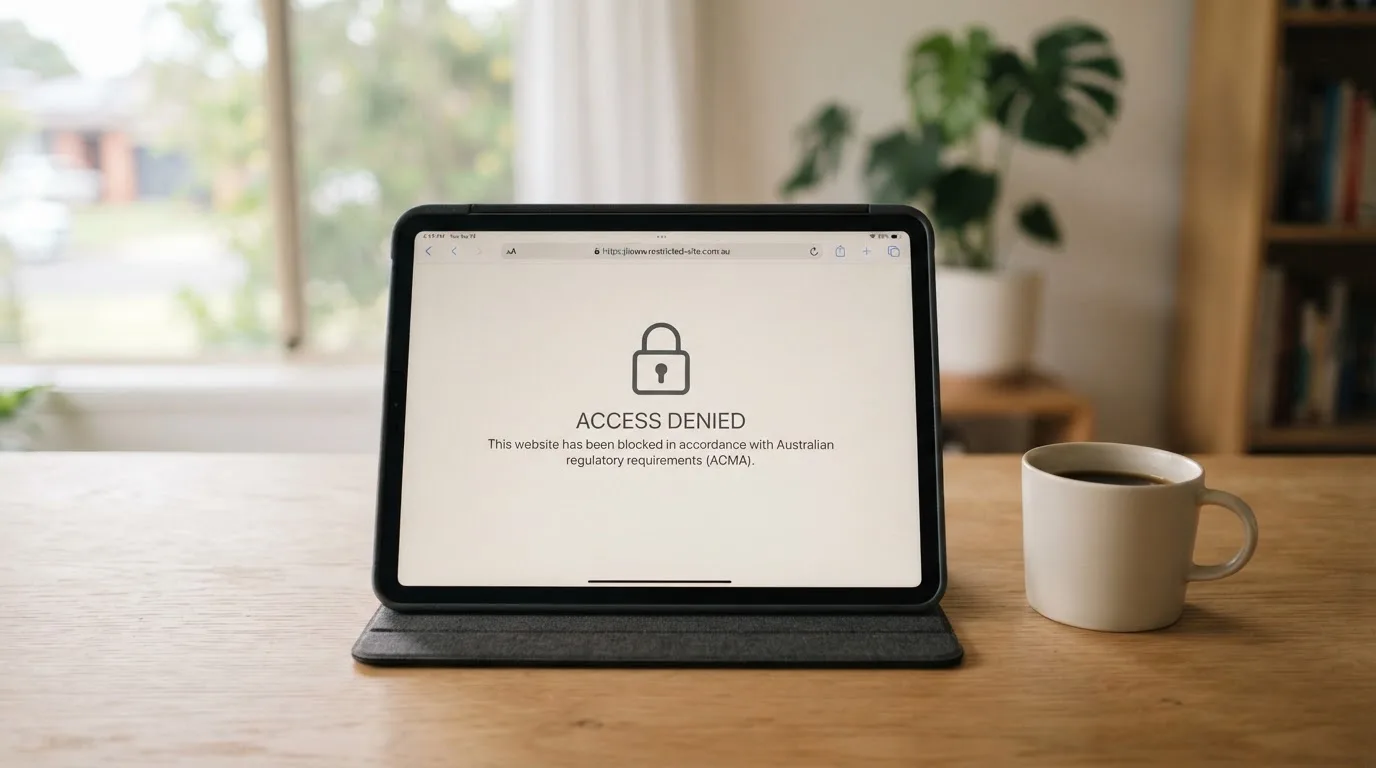
The Australian Communications and Media Authority investigates, issues formal warnings, and directs ISPs to block illegal services. By June 2026 the ACMA had asked ISPs to block 1,751 illegal gambling and affiliate marketing websites since the first blocking request in November 2019, and more than 230 unlicensed services had left the Australian market since enforcement was strengthened in 2017. A round reported on 26 June 2026 alone added twelve more domains to the blocking list: 7Signs, ChromaBet, Donbet, Duospin, Freshbet, Slots Gem, Jacks Club, Lucky Start, Pointsbetz, Spinrise, Vinyl Casino and Wildsino.

The point of those numbers is that “newest online casino” is a moving target the ACMA is already pursuing. A site that opened this month can be on a blocking list next month, with Australian ISPs refusing to resolve its domain for everyone in the country.
The H2 Gambling Capital Estimate of What Flows Around the Blockade
H2 Gambling Capital’s 2025 report puts Australians’ annual losses to illegal offshore gambling sites at roughly A$3.9 billion. The share of gambling going through legal Australian channels fell from seventy-four per cent in 2021 to sixty-four per cent by the time the estimate was compiled, which means more than a third of what Australians now spend on gambling goes to offshore operators the ACMA is actively trying to block. Newest-casino advertising is the channel that growth has run through.
The 2026 Reform: What the New Bill Changes
The Interactive Gambling Amendment (Gambling Reform) Bill 2026 passed Parliament on 19 August 2026. Its advertising and inducement measures commence on 1 January 2027. The bill is law with a start date, not a measure in force on a 2026 page — but it tightens the regime the newest no-deposit bonus sites are already selling against.
Responsible Gaming: What the Offshore “Newest Casino” Cannot Offer
The Australian-licensed wagering layer carries two consumer protections that an offshore casino does not.
BetStop, the National Self-Exclusion Register, has been live since August 2023 and binds every Australian-licensed online and phone wagering service. A person who registers is barred from opening new accounts and from placing new bets with the participating operators. An offshore casino is not connected to BetStop; self-exclusion on a BetStop-registered bookmaker does not extend to the offshore site the same punter may also be using. The other side of the same coin is that the offshore site does not enforce BetStop on its own — the bar only works where the law requires the operator to honour it.
The National Gambling Helpline is 1800 858 858 — free, twenty-four hours a day — and chat is available through Gambling Help Online. Those services work whether or not a punter is also using offshore sites, and they are the cleanest route for someone who wants the gambling to stop, full stop.
What offshore sites add, in the gap left by BetStop not reaching them, is the absence of any Australian-mandated deposit ceiling, mandatory break-in-play reminders or affordability checks. The marketing line about “new” is, in part, a marketing line about a product that has fewer of the friction points the licensed layer has had bolted onto it.
Payments and Payout Speed: What a Newest-Casino Payment Page Lists
The newest no-deposit bonus casinos carry payment pages built around the same Australian rails a punter would use for any domestic transfer. They are also where the IGA’s credit-card ban, and the bank gambling blocks, bite hardest.
PayID and Osko: The Instant Bank Transfer
PayID is a New Payments Platform identifier — a phone number, an email or an ABN — that maps to a bank account. The recipient’s name appears before the transfer is sent. Australian Payments Plus warns that being asked to send money to a PayID on an illegal gambling site almost certainly means the destination is a scam, because no licensed Australian operator routes a deposit that way. With Osko, a bank transfer between participating Australian banks arrives in under a minute, twenty-four hours a day, weekends included — whether addressed to a BSB and account number or to a PayID. PayID instant transfers are available at over a hundred Australian financial institutions. By April 2025 more than twenty-five million PayID identifiers had been registered on the New Payments Platform.
The New Payments Platform itself went live on 13 February 2018 and is owned by New Payments Platform Australia Ltd, a non-profit company whose thirteen shareholders include the Reserve Bank of Australia and the major banks. Participants must keep the platform’s monthly outages to no more than two minutes; in 2021 the ACCC authorised merging NPP Australia with BPAY and eftpos under a single holding company, Australian Payments Plus.
BPAY: The Bill-Payment Route
BPAY has operated in Australia since 1997 and is available in the online banking of over 140 banks and financial institutions, offered by over 95,000 businesses. The payer enters the Biller Code and the Customer Reference Number printed on the bill. It is run by Australian Payments Plus, the same operator that runs PayID and Osko, and is owned equally, via parent company Cardlink Services Limited, by ANZ, Commonwealth Bank, National Australia Bank and Westpac. In September 2021 the ACCC authorised the merger of BPAY Group, eftpos and NPP Australia into Australian Payments Plus.
Apple Pay and Google Pay: The Wallet Layer on Top of the Card
Apple Pay, Google Pay and Samsung Pay together accounted for around forty-five per cent of all card payments in Australia by number at the end of 2025. Apple does not charge consumers a fee for using Apple Pay in stores, online or in apps; any surcharge comes from the merchant’s card-processing costs, not from Apple itself. Transaction limits and PIN requirements for Apple Pay purchases are set by the card issuer or merchant, not by Apple. Under the Interactive Gambling Act 2001 as amended in 2023, Australian-licensed online wagering services cannot accept payment by credit card or other credit-related products — a restriction that also constrains gambling use of linked digital wallets like Apple Pay.
Bank Gambling Blocks: Where the Card Itself Refuses
The major Australian banks run gambling blocks that act at the card level rather than the merchant level. Westpac’s gambling block refuses authorisation of transactions registered under the merchant category code “Betting/Casino Gambling” on eligible personal credit and debit cards. ANZ’s gambling transaction block, activated in the ANZ app, also blocks gambling transactions made through a digital wallet such as Apple Pay on an eligible card, not just the physical card — and once turned on, removing it again requires a forty-eight-hour waiting period. ANZ warns that not all gambling transactions will be blocked and some non-gambling transactions might be blocked in error. Commonwealth Bank lets customers apply a gambling lock to eligible cards via the CommBank app, which automatically blocks most gambling transactions, though the bank states it cannot guarantee all gambling-related purchases will be stopped.
The practical effect: an Australian punter who has any of these blocks on will see an offshore casino deposit decline at the authorisation step, regardless of the casino’s payment page. The block sits between the punter’s card and the merchant code, not on the casino’s side.
AUSTRAC Reporting and the A$10,000 Threshold
AUSTRAC’s threshold-transaction-report rule requires reporting of transfers of A$10,000 or more, but the rule applies only to physical cash. Ordinary electronic bank transfers are not subject to that per-transaction reporting requirement regardless of the amount sent — meaning a single bank transfer of any size to an offshore casino does not, on its own, trigger a reporting line.
American Express and the Surcharge Question
American Express was established in 1850 as a freight-forwarding company, became a card issuer and launched its first charge card on 1 October 1958. Unlike Visa or Mastercard’s four-party network, Amex traditionally issues cards and processes transactions itself as a three-party scheme. The Reserve Bank of Australia’s July 2025 review proposes removing surcharges only on eftpos, Mastercard and Visa card transactions, explicitly leaving American Express outside the scope of the proposed surcharge ban — so an Amex surcharge, where one is applied by a merchant, sits outside the proposed reform.
Games, Providers and Live Tables: What “Newest Slots” Pages Spotlight
The newest online pokies pages and the newest RTG casino pages tend to surface the same set of titles and the same handful of providers — Realtime Gaming among them — across multiple offshore brands. The marketing logic is that “newest” is a slot list, not a software stack.
Australian readers should note two things the marketing does not say out loud. First, the term “newest online pokies” is an Australian colloquial label for what the broader market calls slots; an offshore site that takes Australian dollars but is licensed elsewhere will still call them slots in its help pages. Second, RTG — Realtime Gaming — is a long-established supplier whose catalogue is repackaged under new brand fronts rather than re-engineered. A “newest RTG casino” is, in most cases, a new skin over an old game library.
What the cluster of “newest slot” pages does is foreground titles that already exist elsewhere under another operator. The novelty is in the offer — the headline, the welcome package, the no-deposit line — not in the games themselves.
The “Newest Casino” Pattern: How New Sites Actually Launch
The offshore market is full of sites that open, advertise a no-deposit bonus to capture sign-ups, and either continue, get blocked by the ACMA or quietly leave the Australian market when the blocking directive lands. The launch pattern is the marketing line, not the legal position.
How a “New” Site Differs From a Reskin
A genuinely new casino site carries a freshly registered domain, a new operator name on its terms page and an untested payment pipeline. A reskin is a previously warned brand wrapped in a new URL and sometimes a new operating company, with the same game library and the same bonus scaffolding. The clearest signal that a “newest” casino is a reskin is an ACMA warning history under a previous operator of record that the new name does not acknowledge in its marketing.
The Australian Casino Market: What Is Licensed and What Is Not
What is licensed in Australia is wagering on races and sporting events placed before the event, lotteries and keno — in practice licensed by the Northern Territory. The Northern Territory Racing and Wagering Commission regulates fifty-two online bookmakers, including Sportsbet, Bet365 and Ladbrokes, for tax reasons. It is a de facto regulator: no casino licences are issued under any state or territory regime.
The newest-casino page a punter lands on is selling casino games — slots, table games, live dealer rooms — which are not licensable in Australia at all. The site’s offshore licence, where one is displayed, is a licence issued by another jurisdiction and means nothing about the Australian status of the offer.
Credit Cards, Crypto and the IGA’s Payment Ban
Under the Interactive Gambling Act 2001 as amended in 2023, Australian-licensed online wagering services cannot accept payment by credit card or other credit-related products, with penalties up to A$247,500 for operators. Legal deposit routes for licensed wagering are debit card, bank transfer, PayID/Osko and BPAY. A site asking an Australian for a credit card or a crypto deposit is operating outside the Australian rules regardless of how the marketing page reads.
Top Eleven Newest-Casino Brands the ACMA Has Acted Against
Each brand below sits in this ranking because the ACMA itself issued a formal warning over it for offering prohibited interactive gambling services to Australians. None of the offshore licences these sites display changes their status under the Interactive Gambling Act 2001. The ranking is a record of enforcement, not a recommendation to play.
| Brand | ACMA action and date | Operator named by the ACMA | Subject support |
|---|---|---|---|
| RocketPlay | Formal warning, March 2026 | Pulsup Ltd (Rocketplay) | Listings-only (Gamblinginsider.com) |
| Level Up Casino | Formal warning, May 2022 | Dama N.V. | Listings-only (Westpac.com.au) |
| Woo Casino | Formal warning, March 2025 | Dama N.V. | — |
| Spirit Casino | Formal warning, May 2025 | Dama N.V. | — |
| National Casino | Formal warning, July 2025 | Consolutetish S.R.L. | Listings-only (acma.gov.au, austrac.gov.au, betstop.gov.au) |
| Bizzo Casino | Formal warning, July 2025; earlier 2022 | Consolutetish S.R.L. (2025); TechSolutions (2022) | Listings-only (Gamblinginsider.com) |
| Ignition Casino | Formal warning, July 2025 | Bamboo Media | — |
| Instant Casino | Formal warning, February 2025 | EOD Code SRL | Listings-only (Ecopayz.com, Payid.com.au) |
| Jackbit | Formal warning, April 2026 | Ryker B.V. | — |
| Casino Intense | Formal warning, April 2025 | Sterplay Holding Ltd | Listings-only (austrac.gov.au, betstop.gov.au, Gamblinginsider.com) |
| Sky Crown | Formal warning, September 2022 | Hollycorn N.V. | — |
The “Subject support” column shows where each brand appears on third-party listings and registers the audit found — affiliate sites, payment processor pages, regulator pages — not any claim about the brand itself. A blank cell means the audit did not find a third-party listing for that subject.
RocketPlay
The ACMA issued a formal warning to Pulsup Ltd over Rocketplay.com.au in March 2026, on top of an earlier May 2022 warning to Dama N.V. covering Rocketplay among other brands. The brand is listed on Gamblinginsider.com — a third-party affiliate listing rather than any endorsement by the ACMA. RocketPlay is, by both ACMA actions, an offshore operator that has been told twice to stop offering prohibited interactive gambling services to Australians.
Level Up Casino
The ACMA’s May 2022 warning to Dama N.V. covered Level Up alongside Bambet, Dazard, Rocketplay, Wild Tornado and Cobra Casinos. The brand appears on Westpac.com.au, where the bank’s gambling-block page lists merchant categories the block refuses — Level Up’s presence there signals a card-level refusal rather than a recommendation. The ACMA action remains the binding signal: Level Up is an offshore brand warned for offering prohibited services.
Woo Casino
The ACMA issued a formal warning to Dama N.V. over Woo Casino in March 2025. The audit did not find a third-party listing tying Woo Casino to a particular subject — payment processor, regulator page or affiliate index — beyond the ACMA’s own record. The warning itself is the only ground the brand sits on in this ranking.
Spirit Casino
Dama N.V. drew a further formal warning over Spirit Casino in May 2025, on top of the 2022 batch and the March 2025 Woo Casino action. Spirit Casino carries no third-party listing the audit could find for the subjects covered here. Like Woo Casino, the only anchor for Spirit Casino in this ranking is the ACMA’s own enforcement record.
National Casino
The ACMA issued a formal warning to Consolutetish S.R.L. over National Casino in July 2025. National Casino appears on acma.gov.au’s own enforcement register, on austrac.gov.au (the financial intelligence agency that oversees transfer reporting) and on betstop.gov.au (the National Self-Exclusion Register). The presence on BetStop is the more telling line: BetStop’s remit is Australian-licensed wagering services, and a brand showing up there is one Australian players have tried to self-exclude from — which is itself a signal that Australians are reaching the site.
Bizzo Casino
Consolutetish S.R.L. drew a July 2025 warning over Bizzo Casino, but Bizzo Casino had already been the subject of a 2022 formal warning to TechSolutions (CY) Group Limited and TechSolutions Group N.V. The brand sits on Gamblinginsider.com as a third-party affiliate listing. Two operators, two warnings, the same brand — Bizzo is a worked example of the reskin pattern this page flags as the chief tell of a “newest” site.
Ignition Casino
The ACMA issued a formal warning to Bamboo Media over Ignition Casino in July 2025. The audit did not find a third-party listing for Ignition Casino across the subjects covered here. The warning is the only ground the brand sits on in this ranking, and it is the cleanest illustration of the cluster of “newest casino” pages surfacing an already-warned brand under fresh marketing.
Instant Casino
The ACMA issued a formal warning to EOD Code SRL over Instant Casino in February 2025. Instant Casino appears on Ecopayz.com (a payment-processor page) and on Payid.com.au (the Australian Payments Plus register) — the PayID presence reinforces the AP+ warning that an offshore casino asking an Australian for a PayID transfer is almost certainly a scam site. Instant Casino is the case where the third-party listing tells the reader more than the bonus line does.
Jackbit
The ACMA issued a formal warning to Ryker B.V. over Jackbit and CasinOK in April 2026. Jackbit carries no third-party listing the audit found across the subjects covered here. The warning is the binding record.
Casino Intense
The ACMA issued a formal warning to Sterplay Holding Ltd over Casino Intense in April 2025. Casino Intense appears on austrac.gov.au, on betstop.gov.au and on Gamblinginsider.com — three different third-party signals, the BetStop presence again being the one that tells a reader the brand has been reached by Australian self-exclusion traffic. A site showing up on BetStop is not a licensed Australian operator, but it is a site Australians have used and tried to leave.
Sky Crown
The ACMA issued a formal warning to Hollycorn N.V. over its Sky Crown and Blue Leo casino services, published in a September 2022 PDF. Sky Crown carries no third-party listing the audit found. The warning is the only ground the brand sits on here, and it is the oldest formal warning in the set — a reminder that an offshore warning does not close the file on a brand, and that “newness” is a marketing claim not an enforcement outcome.
How Fast Is the ACMA Actually Closing New Casino Sites?
The arithmetic belongs to this page and to the data the ACMA publishes. Between the first blocking request in November 2019 and the count reported in June 2026, the ACMA asked Australian ISPs to block 1,751 illegal gambling and affiliate marketing websites. That spans roughly six years and seven months, or about eighty months. Dividing 1,751 blocking directives by eighty months gives an average of roughly twenty-two blocking requests per month across the full period — a steady drip of enforcement rather than a single sweep. A more recent run, the twelve domains added in the 26 June 2026 round alone, is closer to that same monthly average in one directive.
The result is a band rather than a single number, because the ACMA does not publish monthly cadence data: the only fixed anchors are the November 2019 start and the June 2026 total. The block-rate band sits around twenty blocking directives per month averaged across the full enforcement window, with individual rounds of between roughly four and twelve domains each.
For a punter comparing “newest” casinos, the practical reading is that a brand-new site is, on average, weeks to a few months away from a possible ACMA action rather than years. “Newest” is a marketing window, not a safe harbour.
How a Punter Reads a “Newest Online Casino No Deposit Bonus” Offer in Australia
The first question is not whether the bonus exists. It is whether the site taking the deposit is one the IGA permits to offer casino games to Australians — and the answer for every offshore casino is no. The rest of the read flows from that.
What the offshore bonus line is, in practice, is a marketing enticement that an Australian cannot enforce through any Australian body if the bonus terms are not honoured or if the withdrawal stalls. The site’s terms page governs; the punter has agreed to offshore jurisdiction when signing up. The bank gambling block may refuse the deposit at the authorisation step, regardless of how persuasive the offer reads.
For someone who decides to play anyway, the practical order is: read the ACMA register for the operator name, not just the brand; read the bank’s gambling block setting before the deposit; check whether the payment page is asking for a credit card or crypto, both of which fall outside the Australian rules; and treat any no-deposit “free spins” claim as a marketing line whose terms are written into the small print, not as a right that survives a withdrawal dispute.
Tax: What a Recreational Punter Owes the ATO
Gambling winnings of a recreational player are not assessable income in Australia (section 6-5 ITAA 1997) and losses are not deductible. The exception is a person who carries on a business of gambling, which is a much higher bar than casual play. For a punter using the newest offshore no-deposit bonus sites recreationally, the ATO position is that winnings are tax-free and losses are not claimable. The ATO itself is the right place to confirm a position for any individual case.
Frequently Asked Questions
What usually changes first when a casino site is brand new — its bonus terms or its game library?
The bonus terms. A new offshore brand almost always opens with an aggressive headline offer to seed sign-ups, and rewrites that offer as soon as it sees how players clear it. The game library, by contrast, is rented from the same handful of providers the rest of the offshore market rents from, and changes only when a new skin is wrapped around an old catalogue.
Do the newest online pokies and slot titles advertised on these sites actually differ from older ones?
Rarely. Newest-slot pages tend to foreground titles that already exist on other offshore brands, often from the same provider list — Realtime Gaming among them. The novelty on a newest-casino page is in the offer line, not in the games themselves, and the same title reappears across multiple brands.
Is a newest-online-casino no-deposit bonus claim from an offshore site enforceable for an Australian player?
Only in the sense that any contract is enforceable through the offshore site’s own terms and through whatever jurisdiction the site’s licence names. There is no Australian complaints body, no Australian regulator that can compel a withdrawal, and no path to a refund if a balance is held. An offshore site is blocked at the ISP level, which can leave a balance stranded if the site disappears from the Australian web.
How can someone tell a genuinely new casino site from a reskin of an older, already-warned one?
The cleanest signal is the ACMA register. A “new” brand is, in many cases, a previously warned operator wrapped in a new URL, sometimes with a new operating company. Two formal warnings over different operators for the same brand — Bizzo Casino is the clearest example — is the working pattern of a reskin rather than a fresh launch.
Why do newest RTG casino pages and newest online slot pages so often overlap on the same domains?
Because Realtime Gaming supplies a fixed catalogue that any of the offshore skins can wrap itself around. Newest-RTG-casino pages list the brands that carry RTG titles; newest-slot pages list the titles RTG ships. The two pages overlap because the supply chain is shared, not because the marketing is co-ordinated.
What should change in how cautious someone is, simply because a casino site is new rather than established?
The default caution should rise, not fall. A brand-new offshore casino has no Australian track record, no Australian complaints history and no Australian withdrawal history. The bank gambling block may refuse the deposit; the ACMA may add the site to a blocking round within weeks; and the bonus line is set by the site’s own terms in a jurisdiction an Australian punter cannot reach. Established offshore brands carry the same legal status but, in some cases, a longer record of paying out — itself a separate question from whether they should be used at all.